Sale 1150
| Chicago
| Chicago
Estimate$60,000 – $80,000
We are grateful for the research conducted by Susan Weininger, Professor Emerita, Roosevelt University.
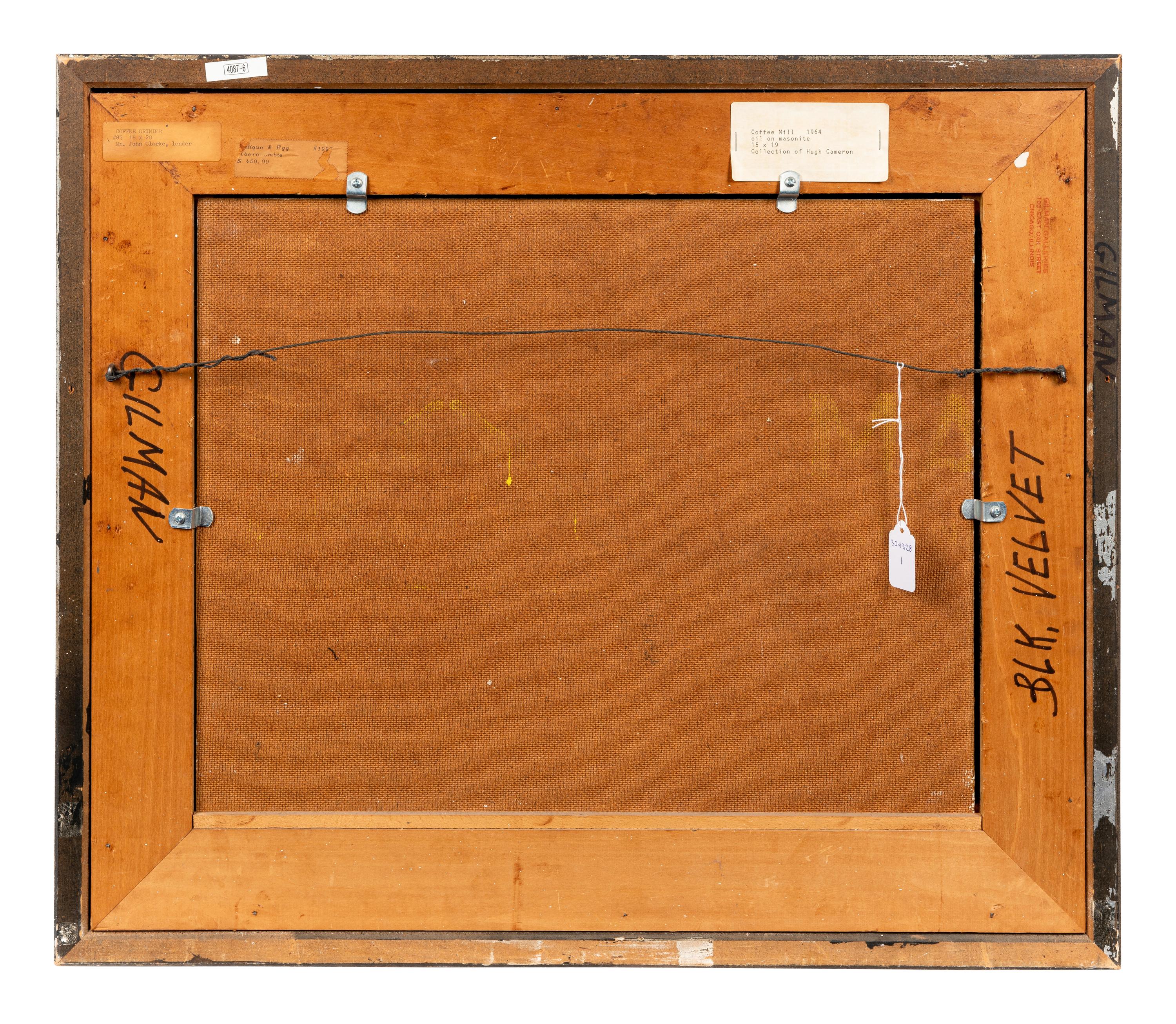
Provenance:Gilman Galleries, Chicago
John Clarke
Miriam Andreas
Hugh Cameron, Benton Harbor, Michigan
Thence by descent to the present owner
Exhibited:
(probably) Chicago, Gilman Galleries, Primitives,1965
Chicago, Illinois, Hyde Park Art Center, Gertrude Abercrombie, A Retrospective Exhibition, January 28 - March 5, 1977, no. 85
Chicago, Illinois, State of Illinois Art Gallery, Gertrude Abercrombie, March 18 - May 17, 1991 (also traveled to Springfield, Illinois State Museum, July 28 - October 15, 1991), p. 95
New York, New York, Karma, Gertrude Abercrombie, August 9 - September 23, 2018
Literature:
Robert Storr, Susan Weininger, Robert Cozzolino, Dinah Livingston, Studs Terkel, Gertrude Abercrombie, New York, 2018, p. 457, illus.
Lot Essay:
Coffee for One
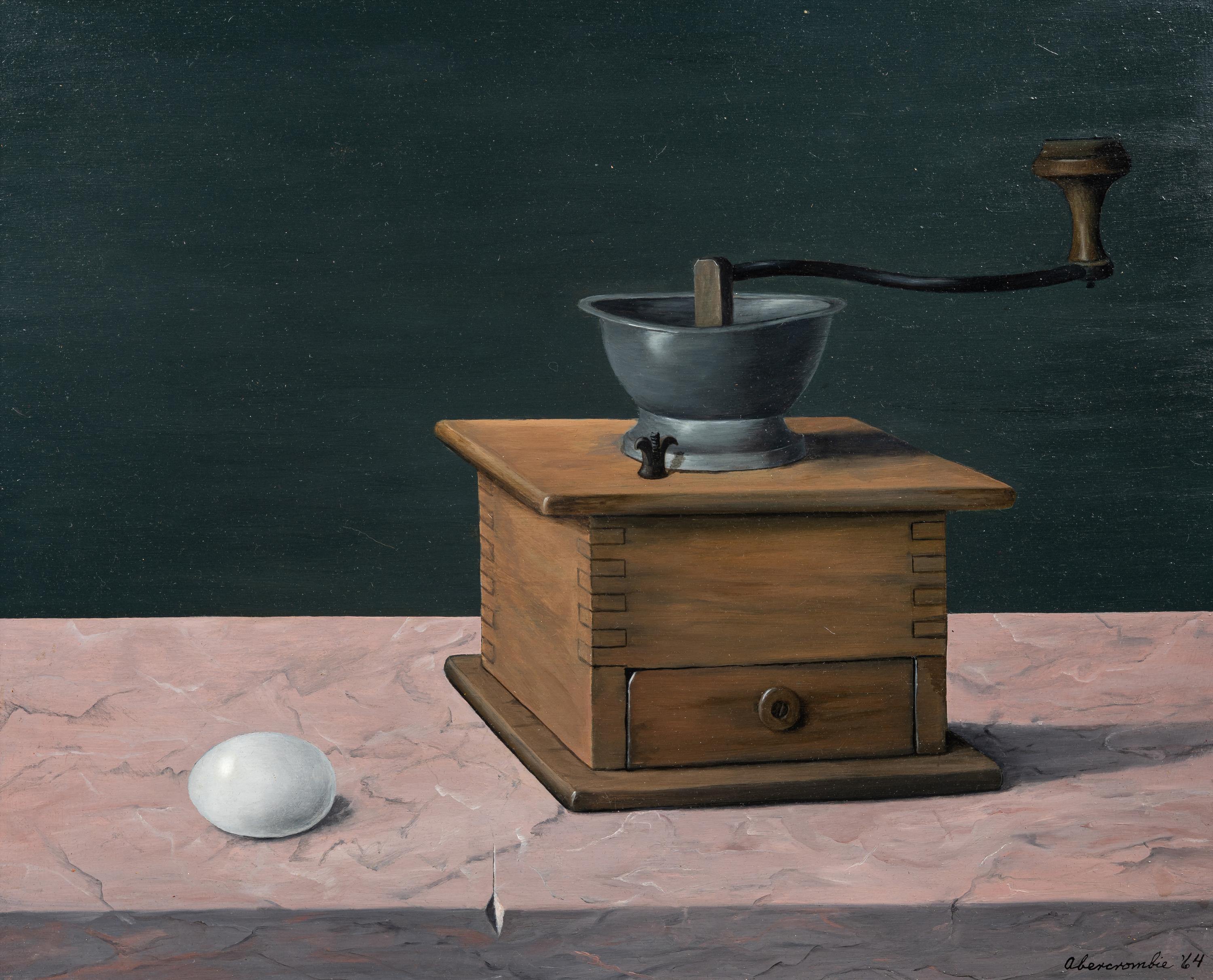
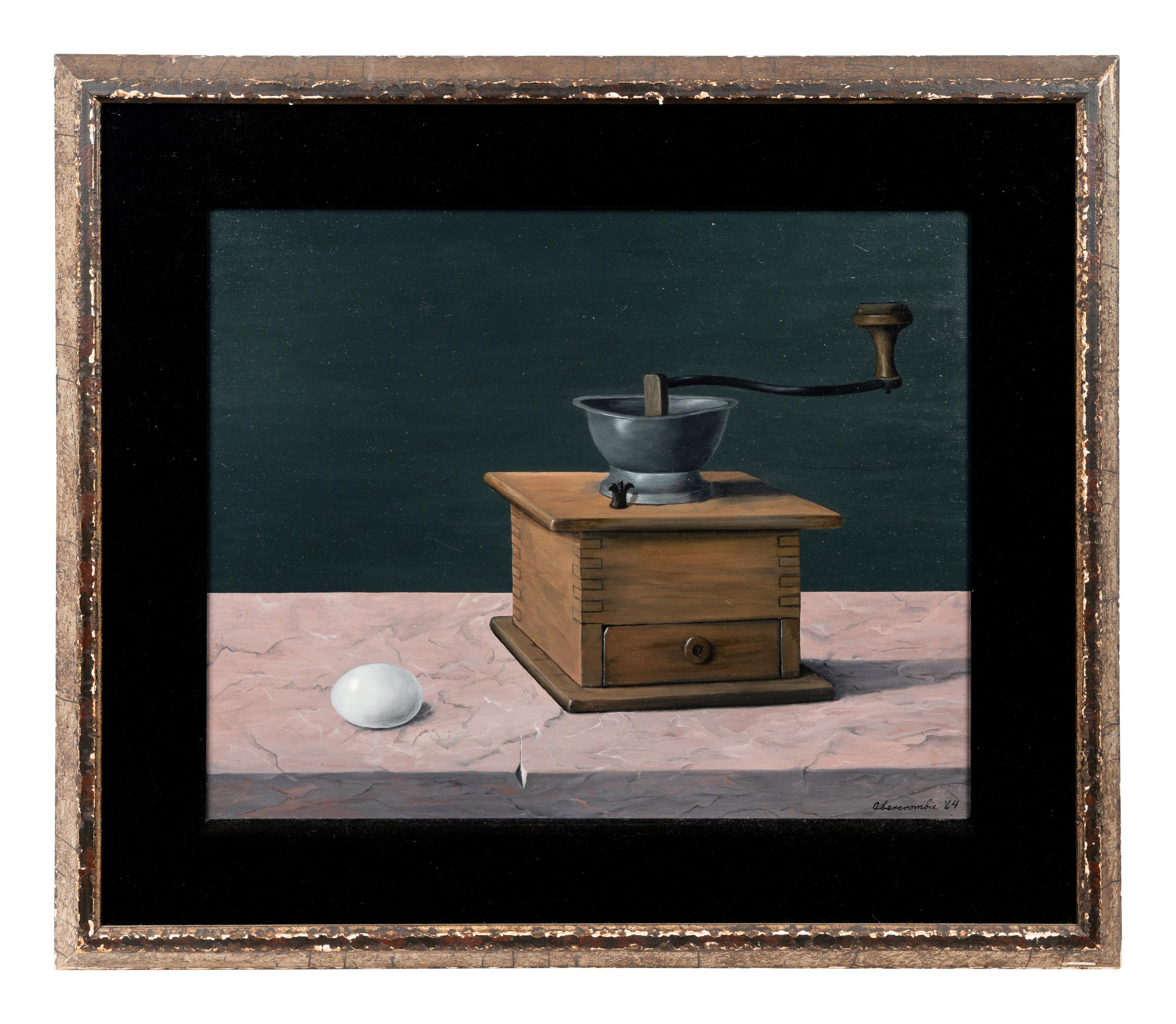
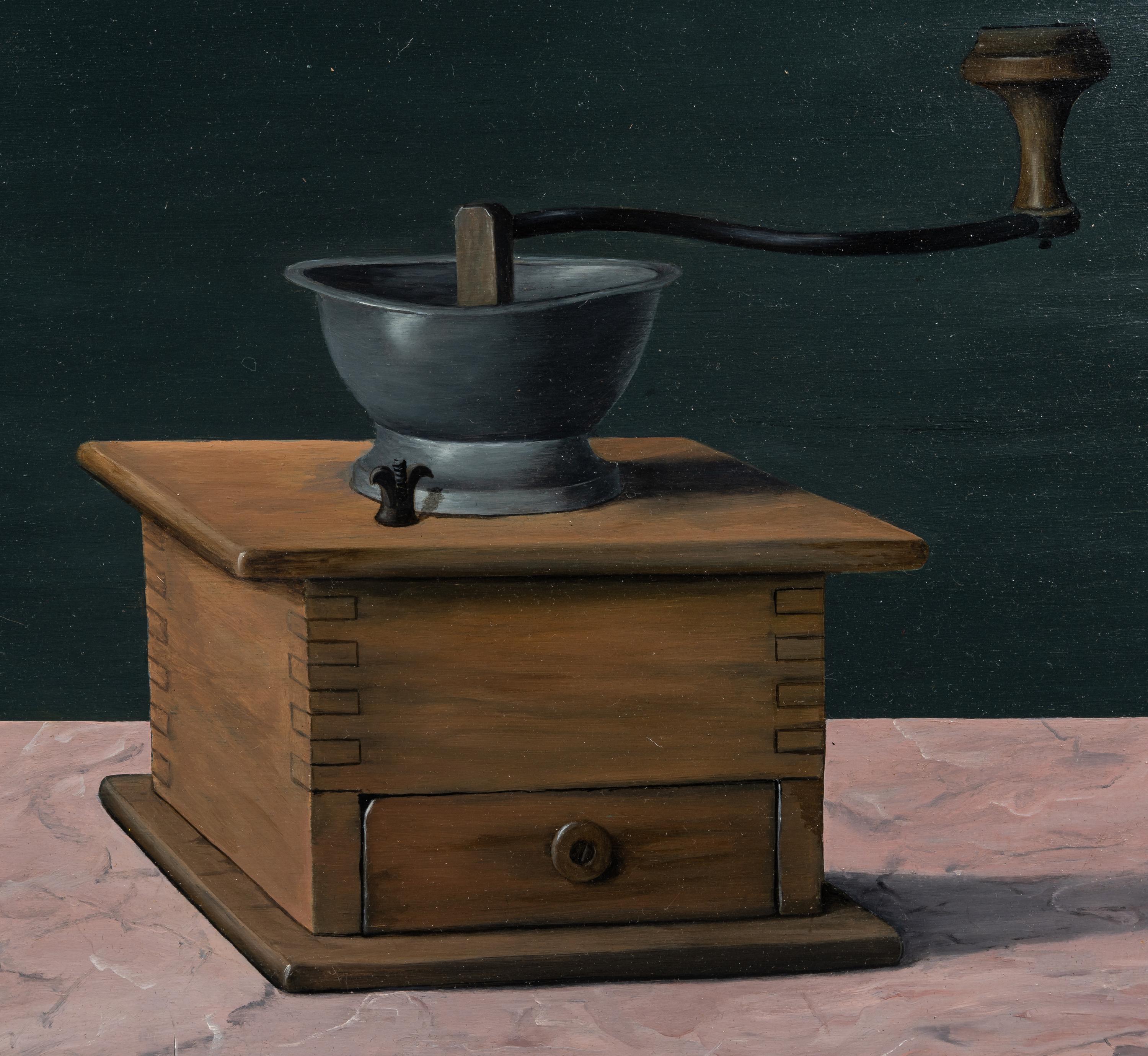
Coffee Mill, 1964, (also titled Coffee Grinder by the artist) is a striking image of an antique coffee mill, the most elaborate of a few she made of this object, which was probably one of her own possessions. It falls into the same category as several other antique objects that she painted with great care in the mid 1950s: the Old Phonograph, called Inheritance in its largest iteration (Blake School, Minnesota, 1955); and Old Telephone, a wall mounted wooden contrivance. These objects, like the ubiquitous cats, gloves, carnations, and white stoneware in her work, take on personal significance and become stand-ins for the artist, whose work is always about herself on some level.
The painting called Inheritance provides a clue to the further importance of this kind of object. This is a family heirloom with links to the Victorian past, a period that was of importance to Abercrombie, who collected and often included her own Victorian furniture and objects in her work. That these items were part of her connection to her own past makes the personal element evident and important. These were not just inanimate objects but a reflection of the artist’s life and family. While the coffee mill is simply a useful object made striking in Abercrombie’s composition, the other two antiques are communication devices, silenced in her paintings of them.
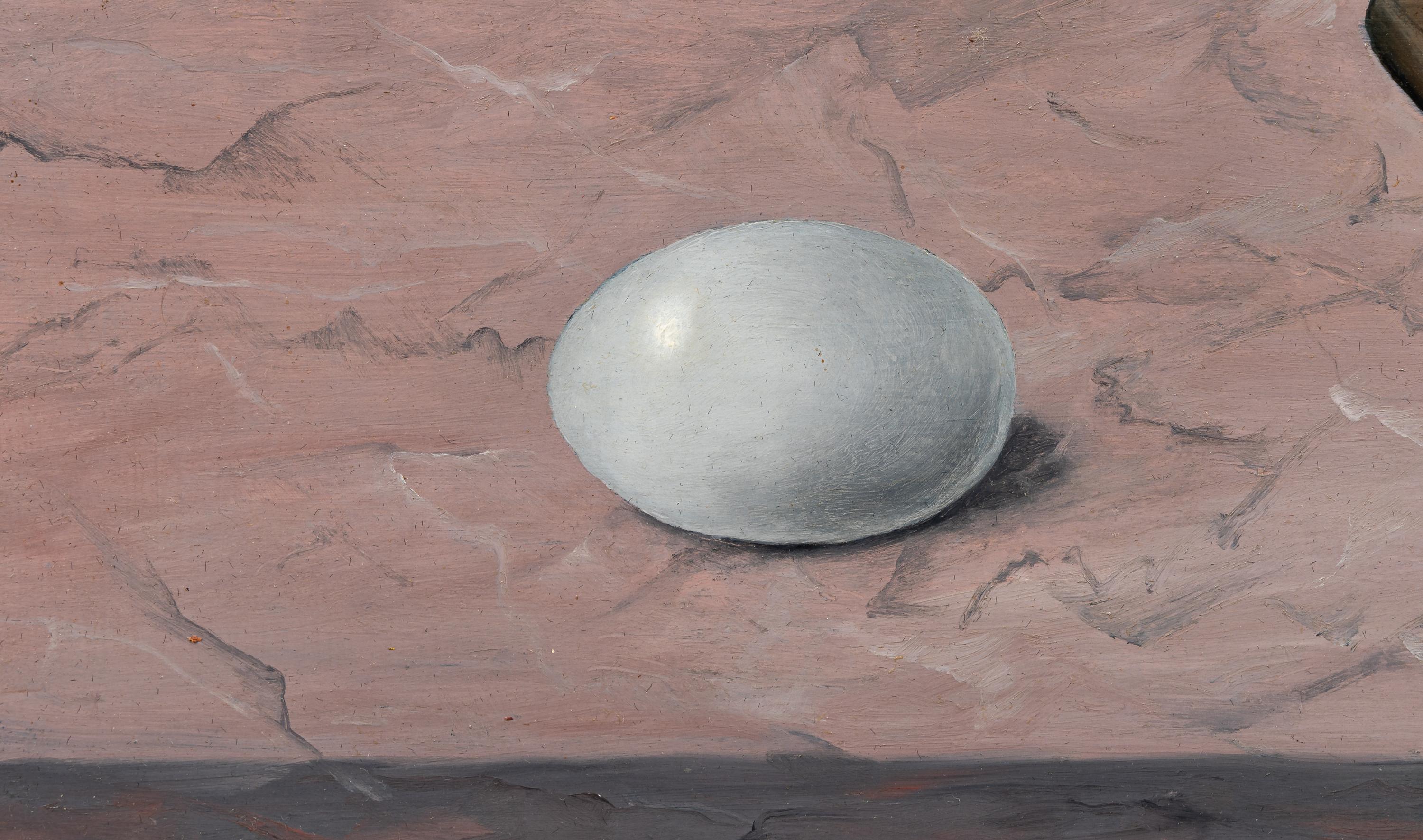
Like many of the artist’s work, Coffee Mill consists of a select few elements aside from its subject. The central object sits on a pink marble surface on which the only other item is a simple white egg. According to Don Baum, the gray background seen in the composition was formulated by Abercrombie from cerulean blue and burnt umber to create a unique and unusual hue. The marble topped table, which appears in many of her works, usually as a surface on which magic occurs, was also a real possession. Eggs appear in numerous still lifes beginning in the 1950s and serve as an enclosure paralleling the closed rooms she painted throughout her career, a metaphor for her own isolation and inability to connect. The painting conveys both her powerful connection to the past, especially to her extended family in Aledo, Illinois, where some of these objects originated, as well as her feeling of loneliness. Holding two conflicting ideas at one time contributes to the power, mystery, and resonance of the present work.
The painting is done in the careful and precise style she practiced at her best in the 1950s and 1960s. The elegant color scheme, juxtaposing the gray veined pink marble, the shiny gray metal bowl of the coffee grinder, and its gray shadow with the matte gray background helps to balance the painting. The careful creation of the grinder and the egg as fully realized, three dimensional objects are evidence of Abercrombie’s technical skill and add additional stability to the composition. This is characteristic of the deceptive simplicity typical of Abercrombie’s work, layered with meaning, ambiguity, and mystery.
Framed: 23 1/4 x 27 inches.
The physical condition of lots in our auctions can vary due to age, normal wear and tear, previous damage, and restoration/repair. All lots are sold "AS IS," in the condition they are in at the time of the auction, and we and the seller make no representation or warranty and assume no liability of any kind as to a lot's condition. Any reference to condition in a catalogue description or a condition report shall not amount to a full accounting of condition. Condition reports prepared by Freeman's staff are provided as a convenience and may be requested from the Department prior to bidding.
The absence of a posted condition report on the Freeman's website or in our catalogues should not be interpreted as commentary on an item's condition. Prospective buyers are responsible for inspecting a lot or sending their agent or conservator to inspect the lot on their behalf, and for ensuring that they have requested, received and understood any condition report provided by Freeman's.
Please email [email protected] for any additional information or questions you may have regarding this lot.