
To request further details about this lot, please email [email protected]

Madalina Lazen
VP Head of Department, Old Masters & 19th Century European Art
Sale 1175
| Chicago
| Chicago
To request further details about this lot, please email [email protected]
Madalina Lazen
VP Head of Department, Old Masters & 19th Century European Art
Estimate$150,000 – $200,000
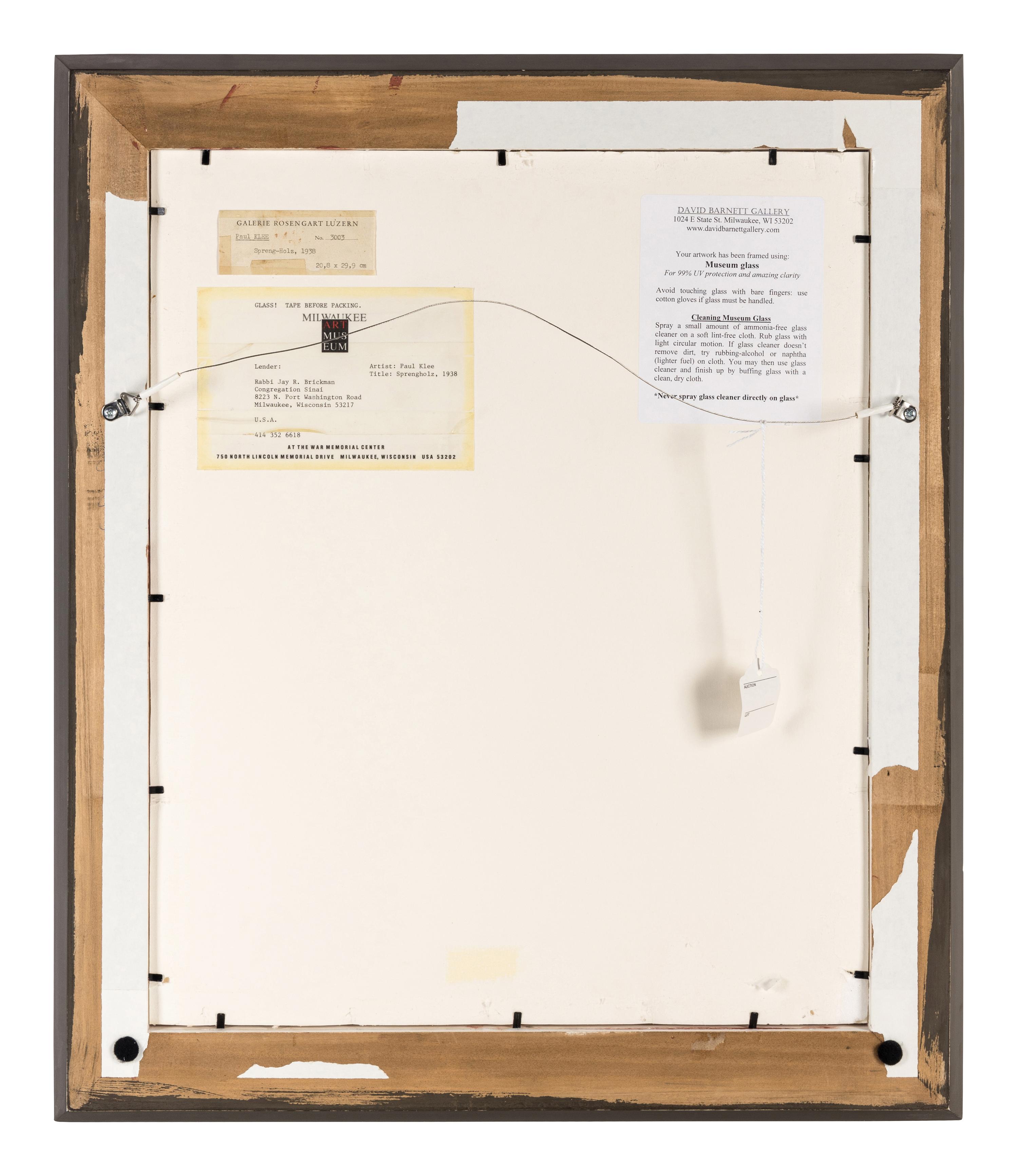
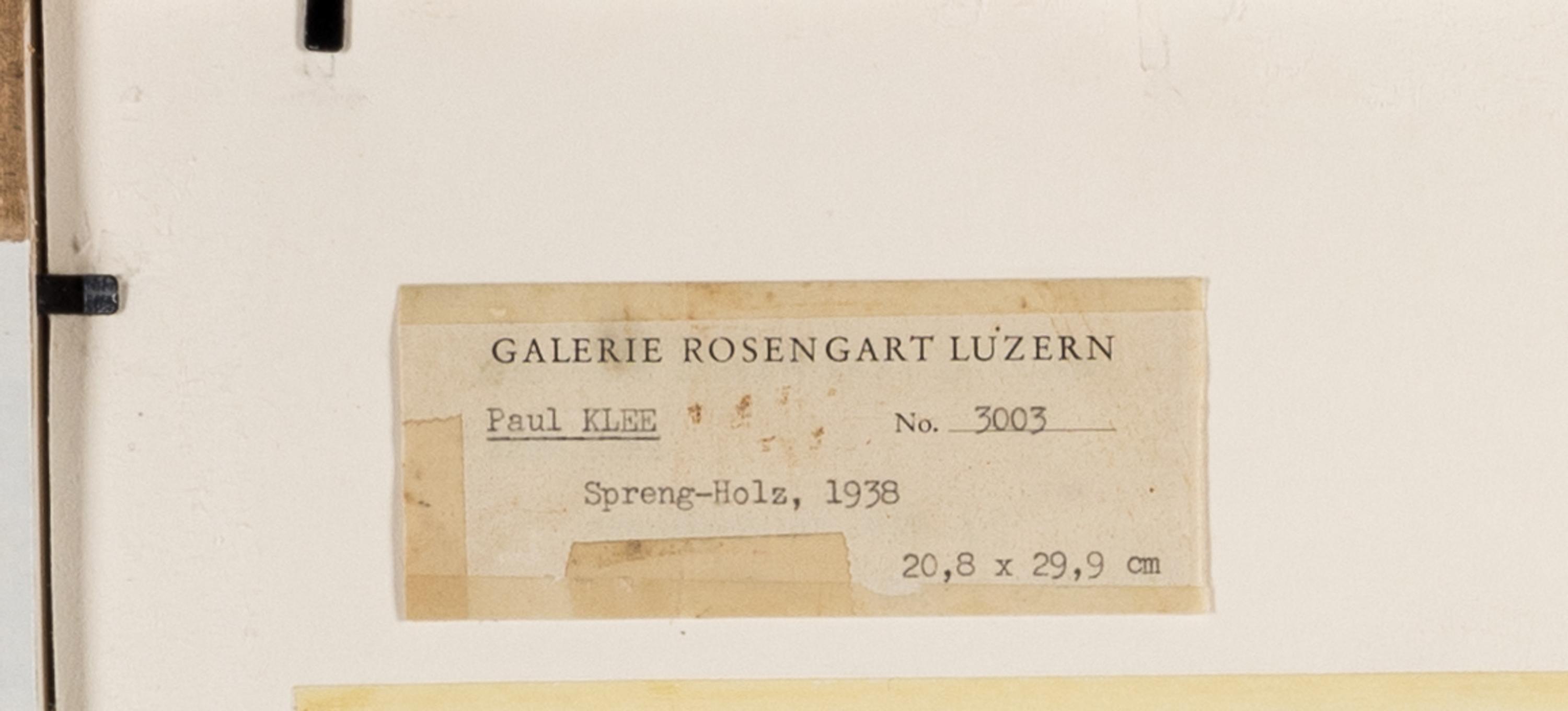
Provenance:
Berner collection, until 1952
Galerie Rosengart, Lucerne, 1952-1970
Martin Katz, Milwaukee, Wisconsin, 1970
Rabbi and Mrs. Jay R. Brickman
Thence by descent to the current owner
Exhibited:
Stuttgart, Germany, Württemberg Art Association Stuttgart, Paul Klee, Late Work. Works on Paper. 1937-1939, October 25, 1990 - January 13, 1991 (also traveled to Emden Art Museum, February 10 - April 21, 1991), pp. 237; 529, no. 107, illus.
Literature:
The Paul Klee Foundation (ed.), Paul Klee. Catalogue raisonné, Volume 7, 1934-1938, Bern, 2003, p. 482, no. 7587, illus.
Lot note:
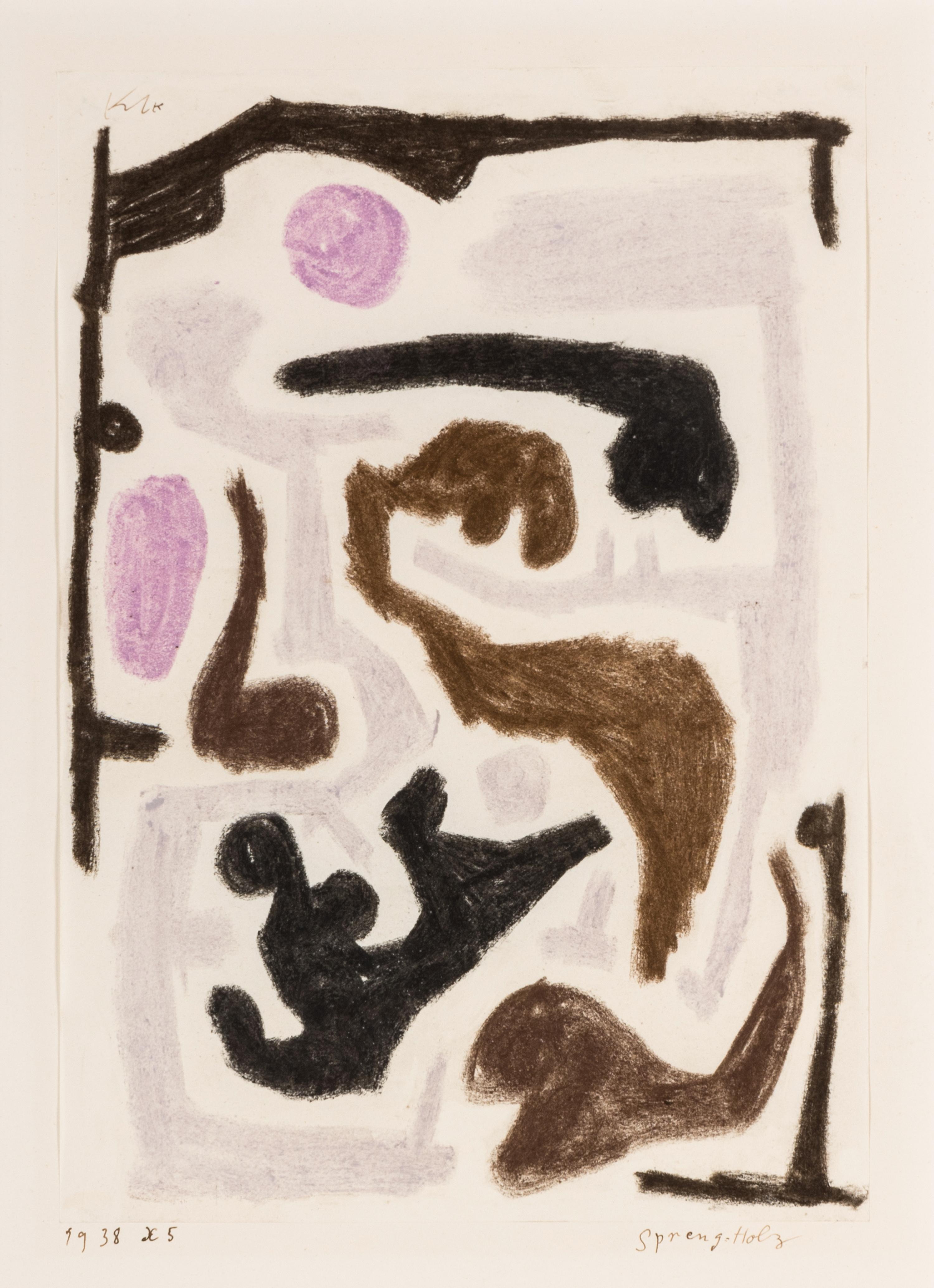
During the final years of his life, Paul Klee created a voluminous body of work, including Spreng-Holz (Explosive Wood), executed in 1938. Prior to this, in 1935, the artist was diagnosed with scleroderma, a rare skin disease that left him incapacitated. By 1937, Klee recovered enough to work while sitting at a large drawing table instead of painting in front of an easel. He completed a vast number of artworks, finishing 489 in 1938 alone, and over 1200 the following year. In a letter to his son Felix, the artist described his extraordinary creative output: “Productivity is accelerating in range and at a highly accelerated tempo; I can no longer entirely keep up with these children of mine. They run away with me. There is a certain adaptation taking place, in that drawings predominate. Twelve hundred items in 1939 is really something of a record performance” (Klee, quoted in F. Klee, Paul Klee: His Life and Work in Documents, New York, 1962, p. 72).
Artworks created during this extremely productive period display Klee’s singular pictorial language of simplified, abstract shapes and marks. As a child, he had been a musical prodigy, but gave up the violin to study art in Munich in 1898. While there, Klee became influenced by the Jugendstil’s ideas of higher spiritual realities beyond the visible world, which resulted in the development of his own complex artistic theories. In his 1920 essay, “Creative Confession,” the artist compared the creation of a work of art to a journey through space and thereby time, concluding, “The pictorial work sprang from movement, it is itself fixed movement and it is grasped by movement (eye muscles)” (Klee, “Schöpferische Konfession,” Tribüne der Kunst und Zeit, Berlin, 1920, pp. 34-35).
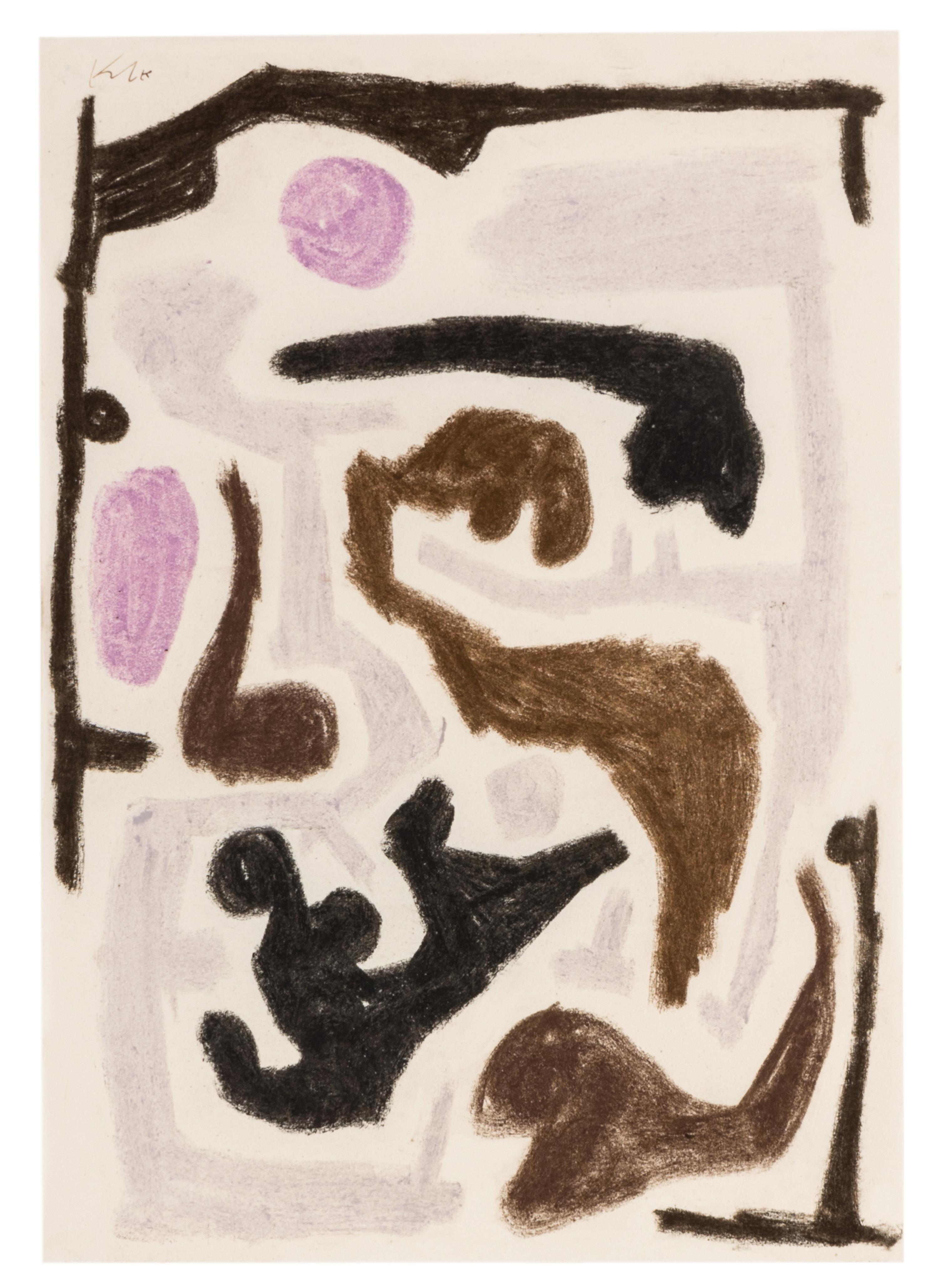
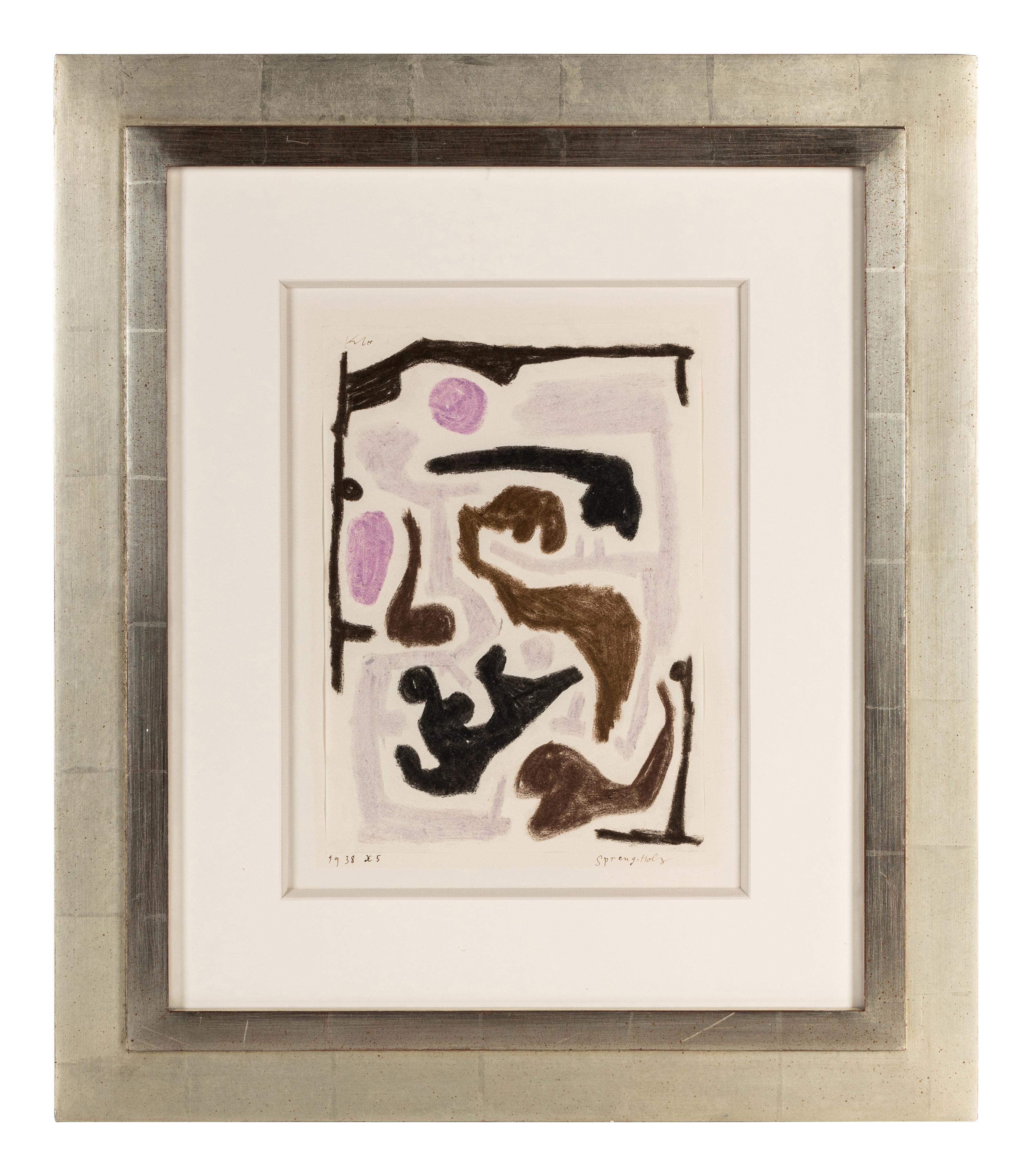
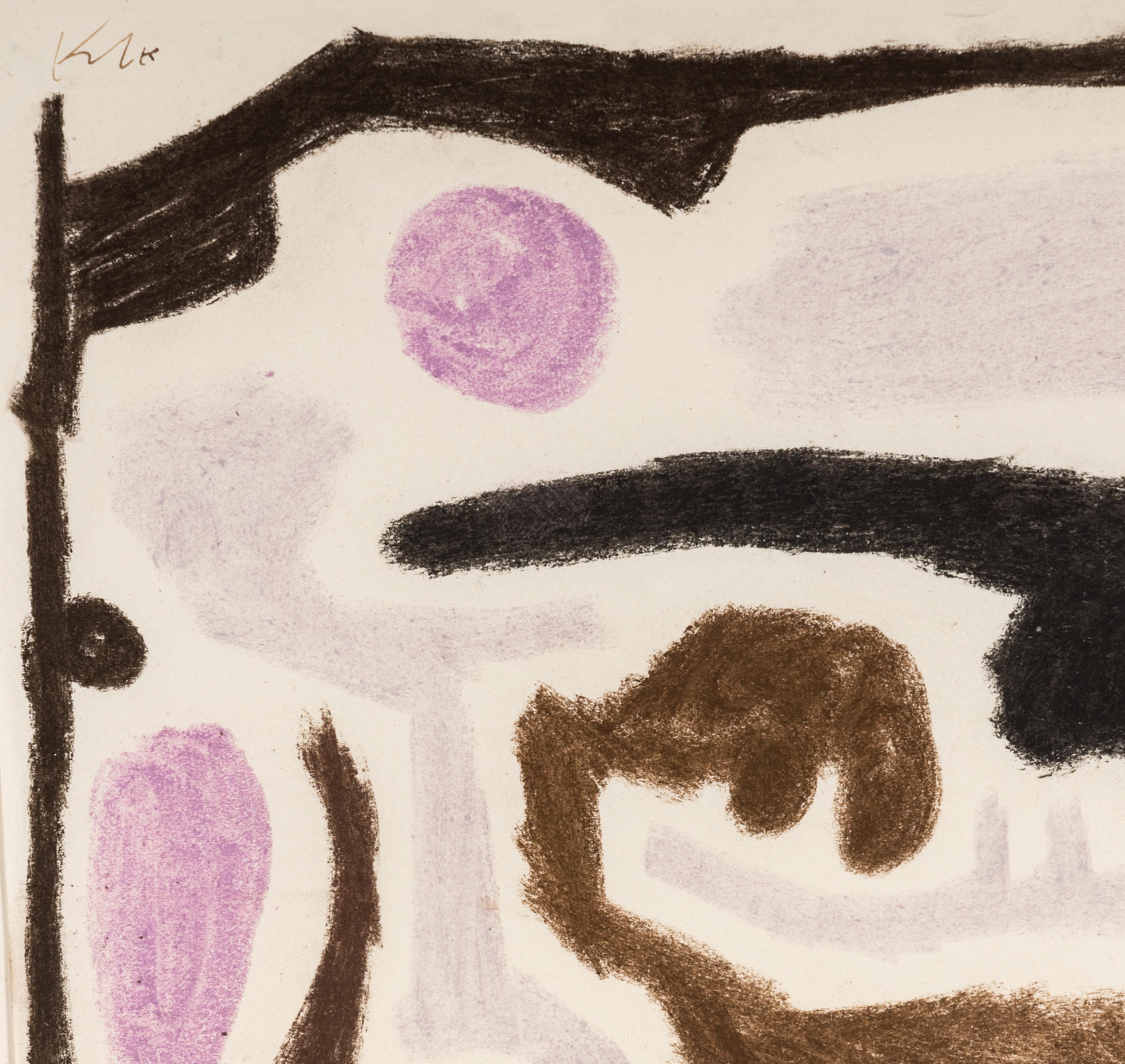
In Spreng-Holz, movement is generated through the undulating brown, black, and purple amorphous shapes. The artist has left the paper untouched by pigment to outline these shapes and placed a field of lavender that flows between the interstices. The lighter, pastel pigment makes the darker, free-form patches of color appear to float against the white of the paper. Through the use of multiple areas of colors, Klee has created structural rhythms that lead the eye continuously around the composition. With their irregular edges and painterly application, these forms also express the artist’s energetic, semi-automatic creativeness. The result captures Klee’s irrepressible spontaneity and vigor as he channeled his immense creativity near the end of his life.
Framed: 23 1/2 x 20 inches.
The physical condition of lots in our auctions can vary due to age, normal wear and tear, previous damage, and restoration/repair. All lots are sold "AS IS," in the condition they are in at the time of the auction, and we and the seller make no representation or warranty and assume no liability of any kind as to a lot's condition. Any reference to condition in a catalogue description or a condition report shall not amount to a full accounting of condition. Condition reports prepared by Freeman's staff are provided as a convenience and may be requested from the Department prior to bidding.
The absence of a posted condition report on the Freeman's website or in our catalogues should not be interpreted as commentary on an item's condition. Prospective buyers are responsible for inspecting a lot or sending their agent or conservator to inspect the lot on their behalf, and for ensuring that they have requested, received and understood any condition report provided by Freeman's.
Please email [email protected] for any additional information or questions you may have regarding this lot.