To request further details about this lot, please email [email protected]
Please email [email protected] for any additional information or questions you may have
Sale 2720
| Philadelphia
| Philadelphia
To request further details about this lot, please email [email protected]
Please email [email protected] for any additional information or questions you may have
Estimate$15,000 – $25,000
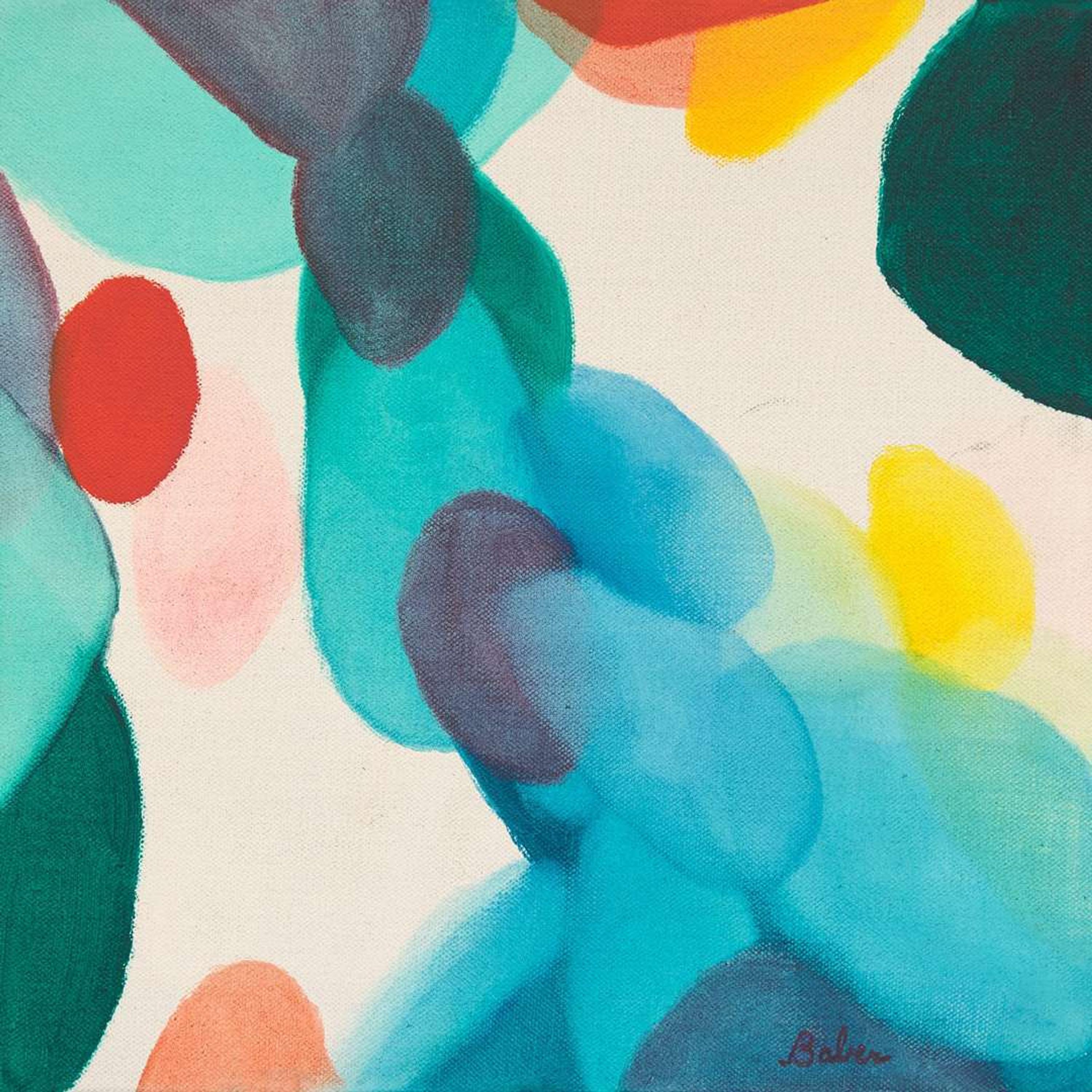
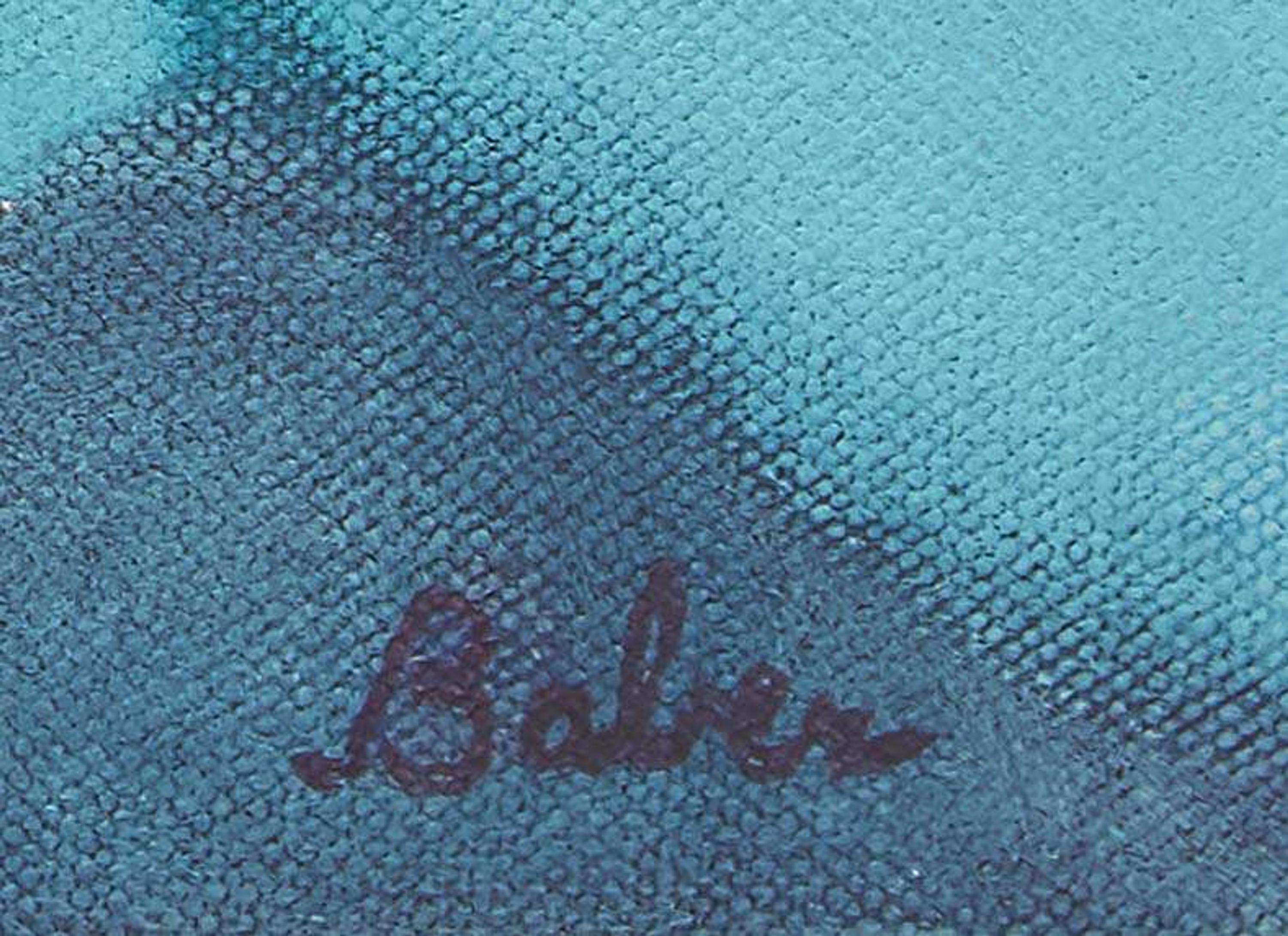
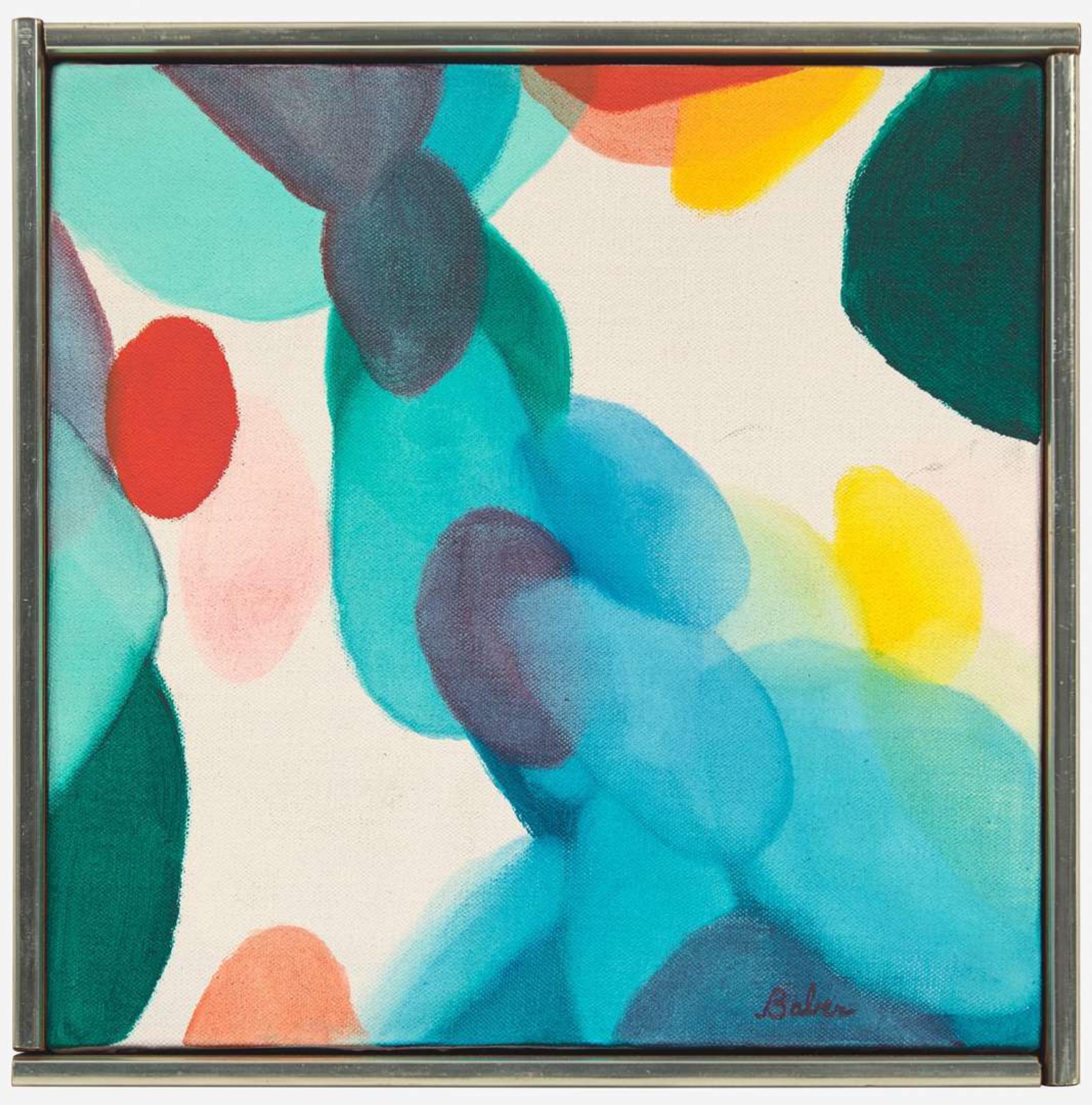
Signed ‘Baber’ bottom right; also signed on stretcher verso, and signed again, dated ‘1957’ and titled on canvas overhang verso, acrylic on canvas
10 x 10 in. (25.4 x 25.4cm)
This work will be included in The Alice Baber Project.
Baber and Paul Jenkins shared a close personal and professional relationship that lasted for many years. They first met in the late 1950s and quickly formed a bond based on their mutual passion for abstract painting and experimentation with techniques and materials. While they maintained separate artistic practices, their relationship was characterized by collaboration, exchange of ideas, and mutual respect, and the two eventually married in 1964. Throughout the 1960s and 1970s, Baber and Jenkins often exhibited together and participated in various group shows alongside other prominent artists of their generation. Their work shared certain affinities, such as a focus on luminosity, transparency, and the interplay of color and form. However, both artists had a personal and distinct style and approach to abstraction, with Baber’s work often characterized by structure and Jenkins’s by a fluid, gestural quality.
Blue Float, painted in 1967, is a prime example of Baber’s innovative use of color and form. The small, playful canvas is bisected by a stream of calm blue and green ovals, while more vibrant reds and yellows punctuate the space. The colors maintain a soft oval shape throughout, creating a feeling of autonomy, before overlapping and gently blending together. A sense of freedom was essential, not only to Baber’s process but to the experience of her work. Interpretation, too, was a shared responsibility; for the artist, it was up to “the viewer to create part of the meaning.” It is not difficult to imagine why Sidney Rotherg was drawn to this ethereal and color-driven composition, particularly given its small and accessible scale.
Like Baber, Jenkins was deeply committed to exploring the expressive potential of color and form in his work. Known for his luminous, fluid compositions, Jenkins developed a signature technique of pouring thinned paint onto canvas, allowing the colors to bleed and merge organically. Sidney Rothberg was likely attracted to Phenomena Shanghai for Scorpio because of the way this work showcases Jenkins’s signature technique.
The work, created in 1974, features a stream of deep and rich jewel-tones, which bleed together as they traverse an otherwise empty canvas. Almost echoing a hilly landscape, Jenkins has allowed the colors to flow independently and to create their own forms, while still overlapping and finally blending together, much like the colors in Baber’s Blue Float. Both artists have also allowed their colors to punctuate otherwise empty and stark canvases, thus emphasizing the presence of color and the lack thereof.
Although their romantic relationship ended in 1968, Baber and Jenkins remained friends and continued to support each other’s artistic endeavors throughout their lives.
Collection of Harold Rosenberg.
The Estate of Harold Rosenberg.
Sotheby’s Arcade, New York, sale of June 14, 1995, lot 360/ii (part lot).
Acquired directly from the above sale.
The Collection of Sidney Rothberg, Philadelphia, Pennsylvania.
The unlined canvas in excellent original condition with no sign of inpainting as seen under UV light. Minor scuff visible on the canvas (white part) at center right (non distractive).
The physical condition of lots in our auctions can vary due to age, normal wear and tear, previous damage, and restoration/repair. All lots are sold "AS IS," in the condition they are in at the time of the auction, and we and the seller make no representation or warranty and assume no liability of any kind as to a lot's condition. Any reference to condition in a catalogue description or a condition report shall not amount to a full accounting of condition. Condition reports prepared by Freeman's staff are provided as a convenience and may be requested from the Department prior to bidding.
The absence of a posted condition report on the Freeman's website or in our catalogues should not be interpreted as commentary on an item's condition. Prospective buyers are responsible for inspecting a lot or sending their agent or conservator to inspect the lot on their behalf, and for ensuring that they have requested, received and understood any condition report provided by Freeman's.
Please email for any additional information or questions you may have regarding this lot.