To request further details about this lot, please email [email protected]
Please email [email protected] for any additional information or questions you may have
Sale 2506
| Philadelphia
| Philadelphia
To request further details about this lot, please email [email protected]
Please email [email protected] for any additional information or questions you may have
Estimate$10,000 – $15,000
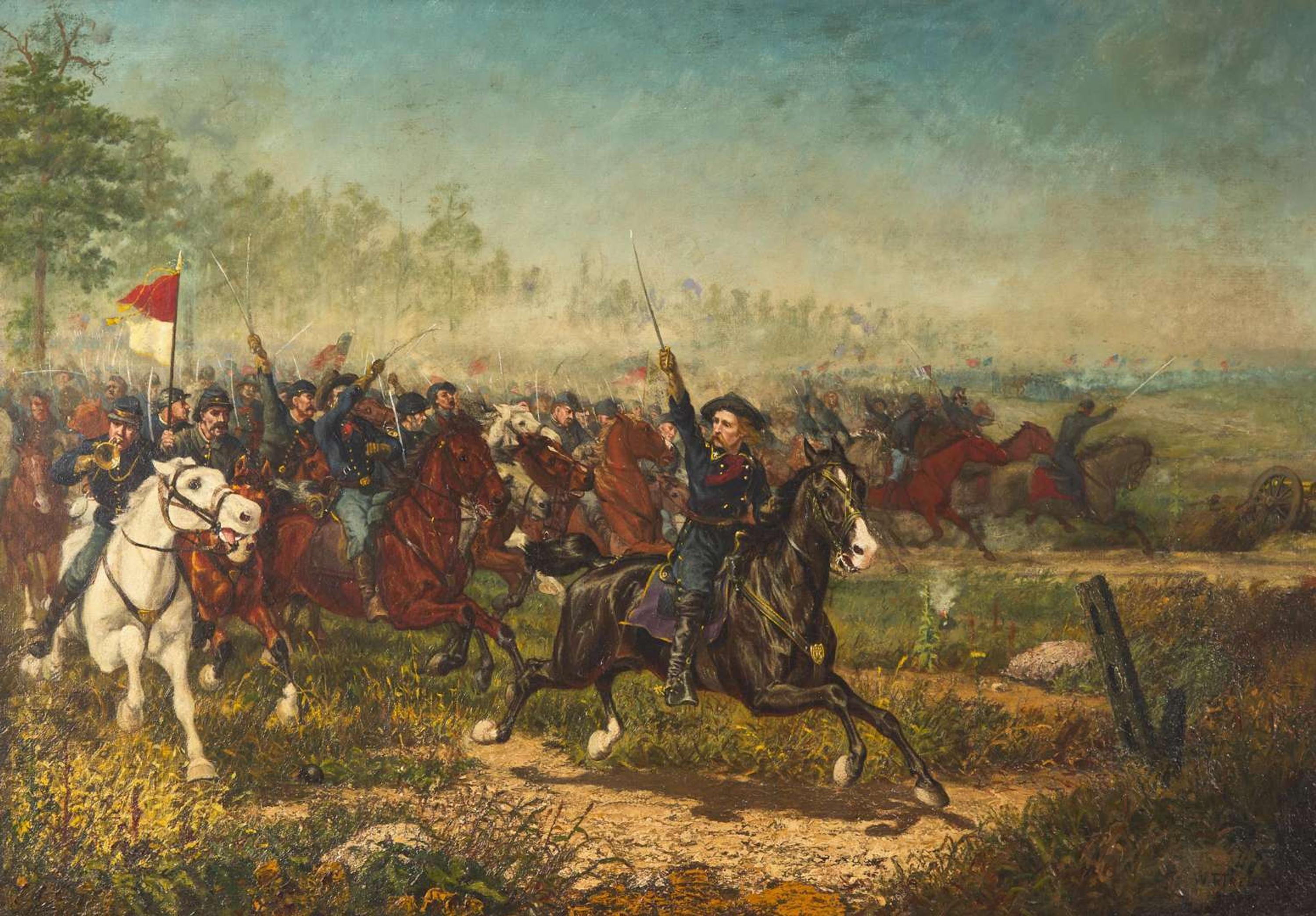
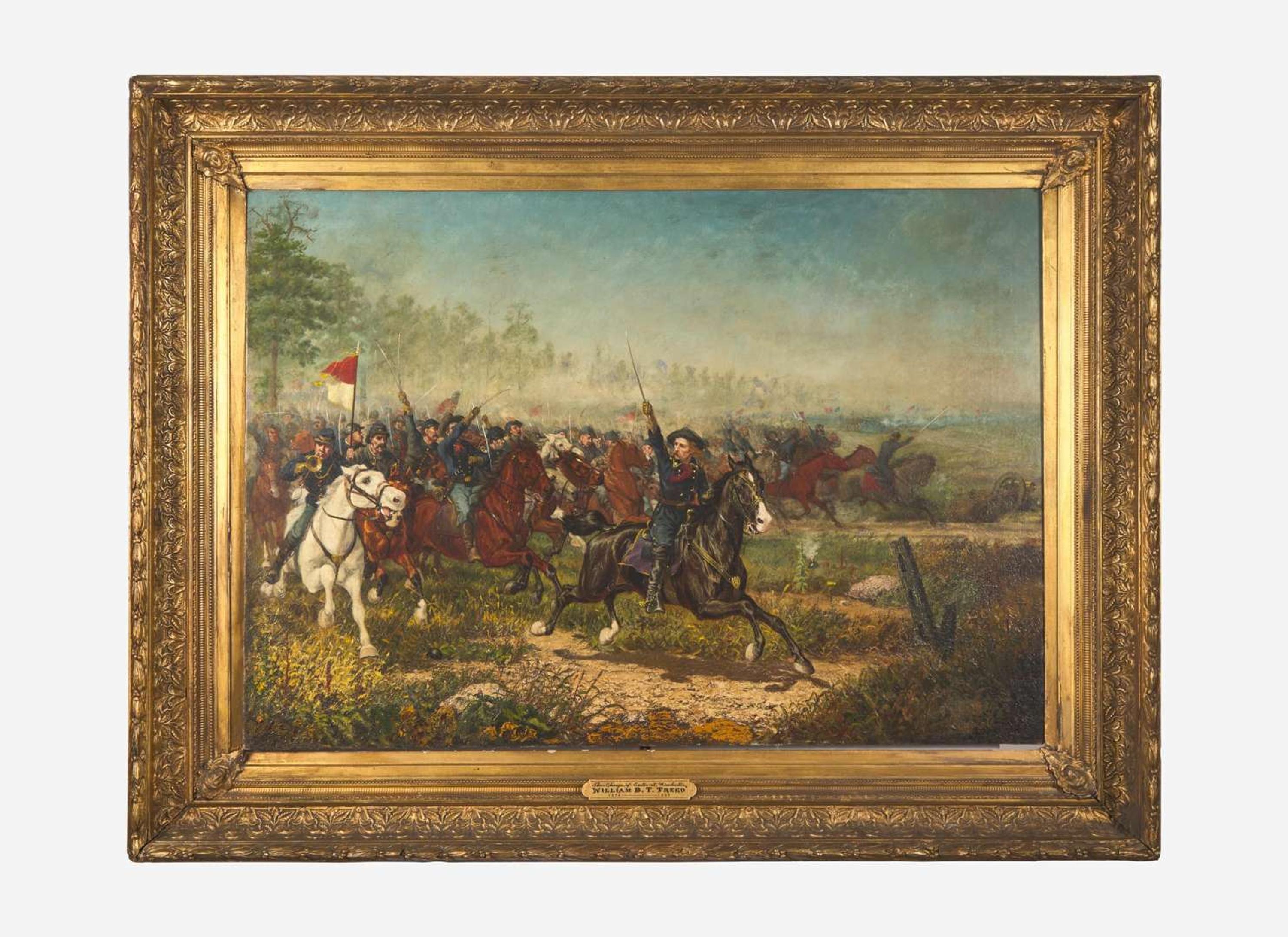
Dubbed the “best historical painting in oil,” The Charge of Custer at Winchester, which recently reappeared on the market after having vanished for decades, was the work that sensationally launched Trego’s career at age 20. When on view at the Michigan State Fair in 1879, the painting was such a hit that the city of Detroit itself made an attempt to purchase it for permanent display in a local venue. It was ultimately John C. White, Secretary to the American Legation in Brazil, who acquired the painting for one thousand dollars several years later in 1884.
The scene depicts the Third Battle of Winchester, otherwise known as the Battle of Opequon, which took place in the Shenandoah Valley, near Winchester, Virginia on September 19, 1864. Due to its location, the Shenandoah Valley was a region of contention during the war, and played a key role in the strategy of the Confederates. Considered the breadbasket of the South, it enjoyed continued agricultural production, thus providing a substantial amount of food to civilians and soldiers, whereas other areas lost labor to the war effort. Because of its surrounding mountain range, the Valley also offered protection as troops and supplies could be screened from the enemy, which allowed the Confederacy to threaten Washington.
Led by Philip Henry Sheridan, the battle was an important victory for the Union against the Confederate forces, but is also remembered as one of the bloodiest events of the Civil War, with almost 10,000 casualties between the two sides. The painting depicts the moment when yellow-haired chieftain, General George Armstrong Custer, is dashing on his dark horse across the field at the head of his regiment. His saber raised in the air–a weapon many of the southerners did not have–“expresses all the fire and lofty courage and enthusiasm which characterized the man, and made him pre-eminent as a cavalry leader,” according to the Cleveland Free Press.
Collection of John C. White.
Collection of Adlai Ewing, New York, New York and Bloomington, Illinois, late 1880s.
Bloomington Public Library, Bloomington, Illinois, circa 1888 (by donation).
Hindman, Chicago, sale of March 30, 2023, lot 76.
Acquired directly from the above sale.
Private Collection, New York.
The relined canvas in overall good condition. The canvas doesn't properly sit in the frame, which is too big for the canvas, which means we can see the work's tacking edge at left. Examination under UV light reveals restoration in the sky across the top (some broad inpainting, some other more localized, pinpoint retouching). The figures are untouched, all covered up by a loose layer of old greenish varnish. With a minor repair at bottom right, to the left of the signature. See Specialist's pictures for more details.
The physical condition of lots in our auctions can vary due to age, normal wear and tear, previous damage, and restoration/repair. All lots are sold "AS IS," in the condition they are in at the time of the auction, and we and the seller make no representation or warranty and assume no liability of any kind as to a lot's condition. Any reference to condition in a catalogue description or a condition report shall not amount to a full accounting of condition. Condition reports prepared by Freeman's staff are provided as a convenience and may be requested from the Department prior to bidding.
The absence of a posted condition report on the Freeman's website or in our catalogues should not be interpreted as commentary on an item's condition. Prospective buyers are responsible for inspecting a lot or sending their agent or conservator to inspect the lot on their behalf, and for ensuring that they have requested, received and understood any condition report provided by Freeman's.
Please email for any additional information or questions you may have regarding this lot.