To request further details about this lot, please email [email protected]


Adam Veil
VP, Head of Department, American Art and Pennsylvania Impressionists
Sale 6338
| Philadelphia
| Philadelphia
To request further details about this lot, please email [email protected]
Adam Veil
VP, Head of Department, American Art and Pennsylvania Impressionists
Estimate$60,000 – $100,000
Provenance:
Collection of Amy and Robert Charles.
Literature:
Brian H. Peterson, The Cities, the Towns, the Crowds: The Paintings of Robert Spencer, Philadelphia, 2004, pg. 60, pl. 25 (illustrated).
Lot Note:
Robert Spencer held a prominent position among the Pennsylvania Impressionists working in Bucks County, where he rubbed elbows with fellow artists Charles Rosen, Daniel Garber, William Lathrop and others. A leading figure of the New Hope art colony, his aesthetic was nonetheless quite different from that of his peers, as it mostly eschewed the charming and picturesque qualities of the rural surroundings, focusing instead on the grit and tedium of early 20th century industrial subjects in and around New Hope. Through and through, Spencer was indeed a painter of the working people, whom he portrayed with both candor and compassion.
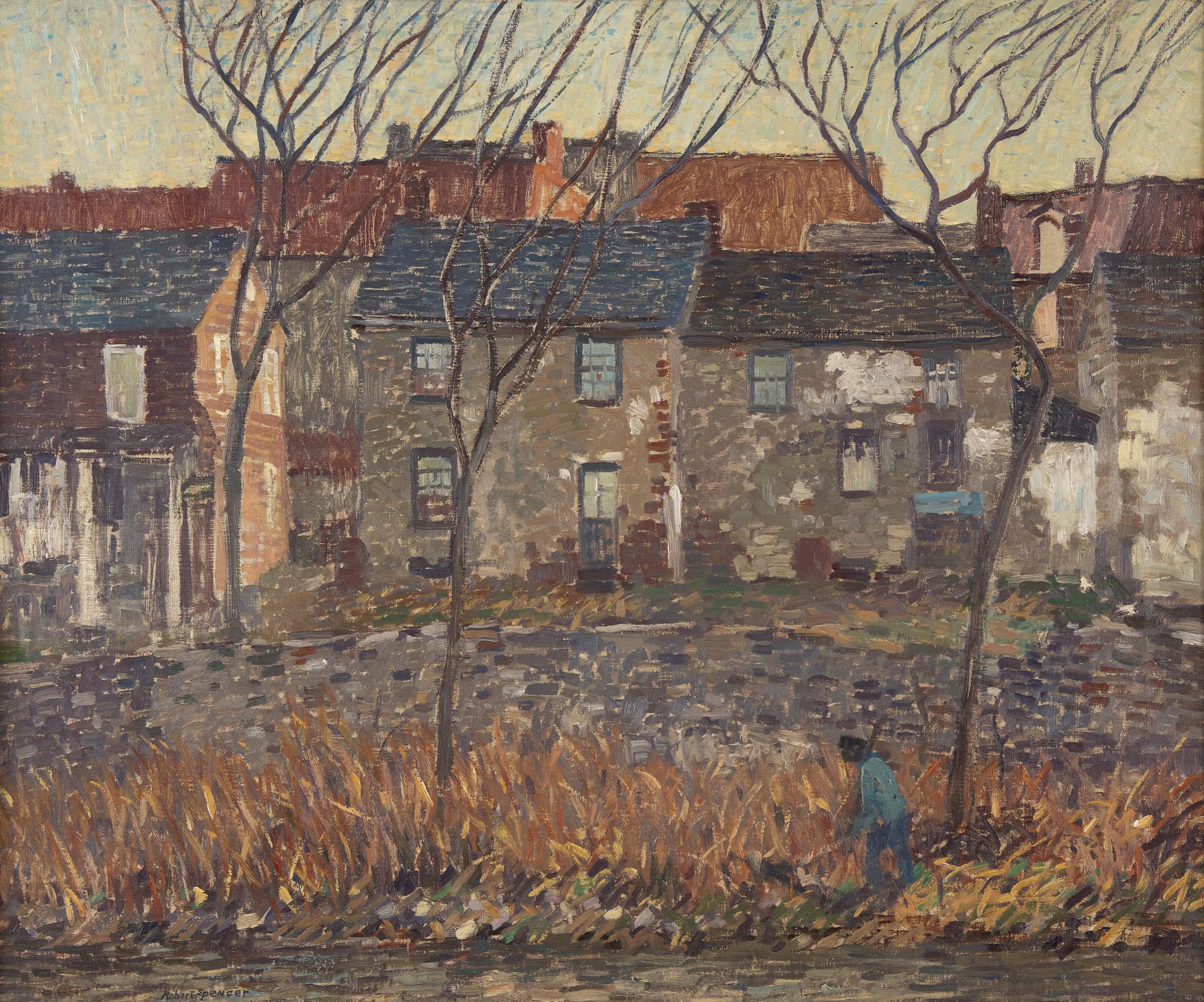
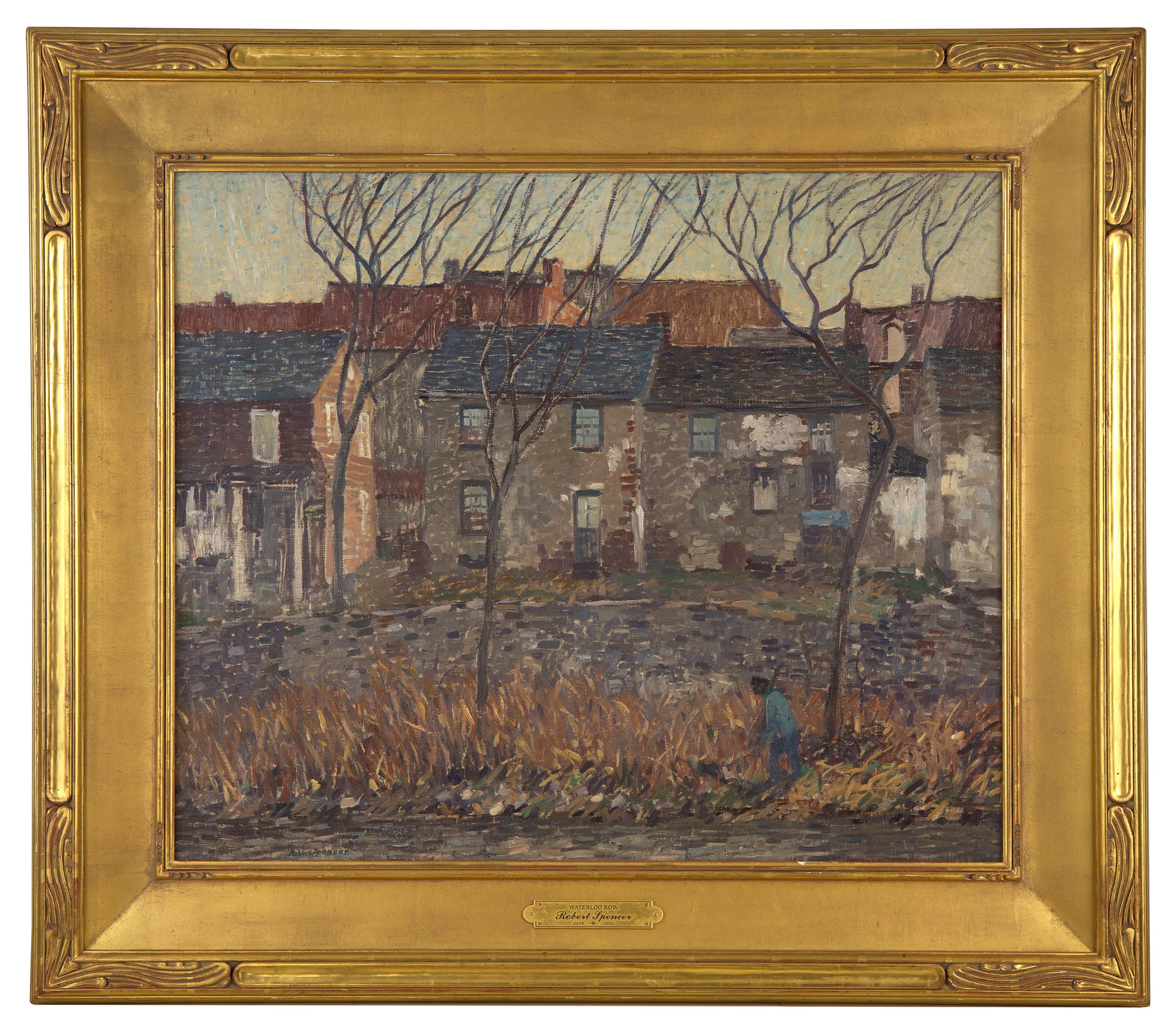
In Waterloo Row, Spencer used his distinctive muted palette and broken brushstrokes to depict a row of tenements in the town of New Hope. The scene, commonplace and rather unsentimental, is rendered through a plain composition of horizontal layers—the sky, roofs, facades, road and band of vegetation—intersected by the frail yet piercing vertical lines of three bare trees. Thus, the painting, in its grid-like structure, devoid of excessive flourishes, exudes an unnerving sense of penury, casting the tenement row in a dreary light, as if to reflect the harsh living and working conditions that are likely afflicting its inhabitants.
But beyond these geometric constraints, a certain spontaneity emerges. The lone figure and subtly warming sky suggest that the scene takes place shortly after dawn, just before the rising bustle. The white blotches of paint on the façades, the grasses dancing in the wind, and the curvy branches all contrast with the erect tree trunks and neatly rectangular windows and chimneys. They convey a gentle motion stirring in the stillness, the faint sounds of the early hours auguring the busy day of toiling to come, a budding liveliness at odds with the seemingly dull composition.
Spencer’s ambition was to draw attention to the ordinary squalor that characterized tenements and industrial settings. Far from minimizing the indigence he witnessed, he sought to highlight the dignity and verve evident in the midst of destitution. Waterloo Row, an unvarnished rendition of working-class living quarters, was executed in 1917, at the heart of a pivotal decade for the advancement of workers’ rights in the United States.
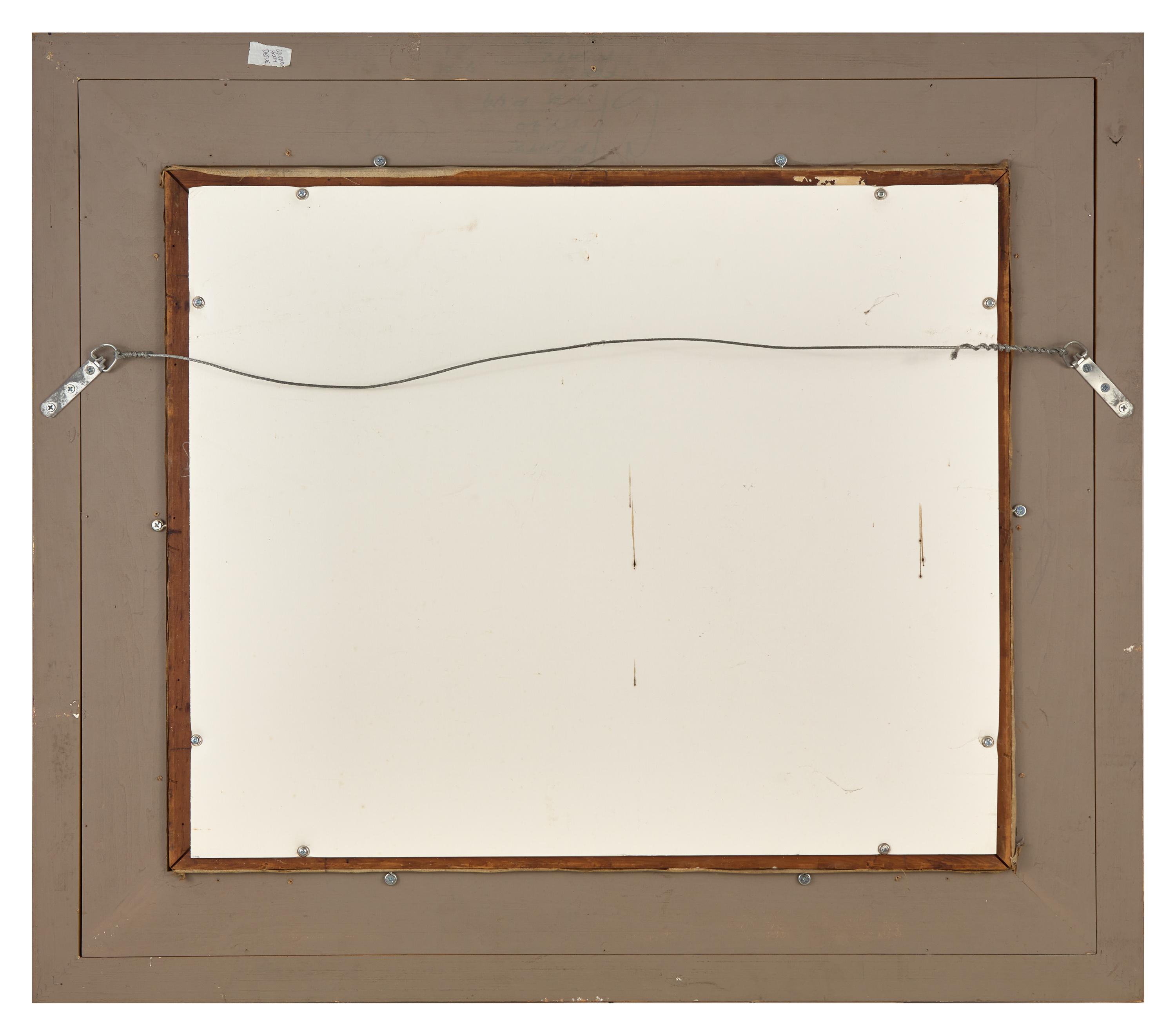
The apparently unlined canvas in overall excellent condition. Faint, nearly imperceptible stretcher bar stress along upper register of composition (in sky/roofline), approximately 2-2 1/2 inches from top edge of frame. UV: nothing remarkable. Additional images available upon request.
The physical condition of lots in our auctions can vary due to age, normal wear and tear, previous damage, and restoration/repair. All lots are sold "AS IS," in the condition they are in at the time of the auction, and we and the seller make no representation or warranty and assume no liability of any kind as to a lot's condition. Any reference to condition in a catalogue description or a condition report shall not amount to a full accounting of condition. Condition reports prepared by Freeman's staff are provided as a convenience and may be requested from the Department prior to bidding.
The absence of a posted condition report on the Freeman's website or in our catalogues should not be interpreted as commentary on an item's condition. Prospective buyers are responsible for inspecting a lot or sending their agent or conservator to inspect the lot on their behalf, and for ensuring that they have requested, received and understood any condition report provided by Freeman's.
Please email [email protected] for any additional information or questions you may have regarding this lot.