Sale 6379
| New York
| New York
Estimate$12,000 – $18,000
We wish to thank Professor Luis–Martín Lozano for his kind assistance in the research and cataloguing of the present lot.
Provenance:
Christie's, London, sale of December 10, 1968, lot 242.
Acquired directly from the above sale by the family of the present owner.
Exhibition:
Exposición de Pintura y Escultura, [unknown gallery], Santa Clara Street, Mexico City, Mexico, May 7 - May 14, 1906, cat. no. 3 (organized by painter Gerardo Murillo for the Savia Moderna monthly art magazine).
Lot essay:
Beginning his training at the age of eleven, Rivera attended drawing lessons at the Old Academy of San Carlos [Escuela Nacional de Bellas Artes], studying under some of the most renowned Mexican artists of the era such as Julio Ruelas, a distinguished Art Nouveau and Symbolist draughtsman, and the experienced Catalan Antonio Fabrés, who had recently become director of painting and implemented a new curriculum.
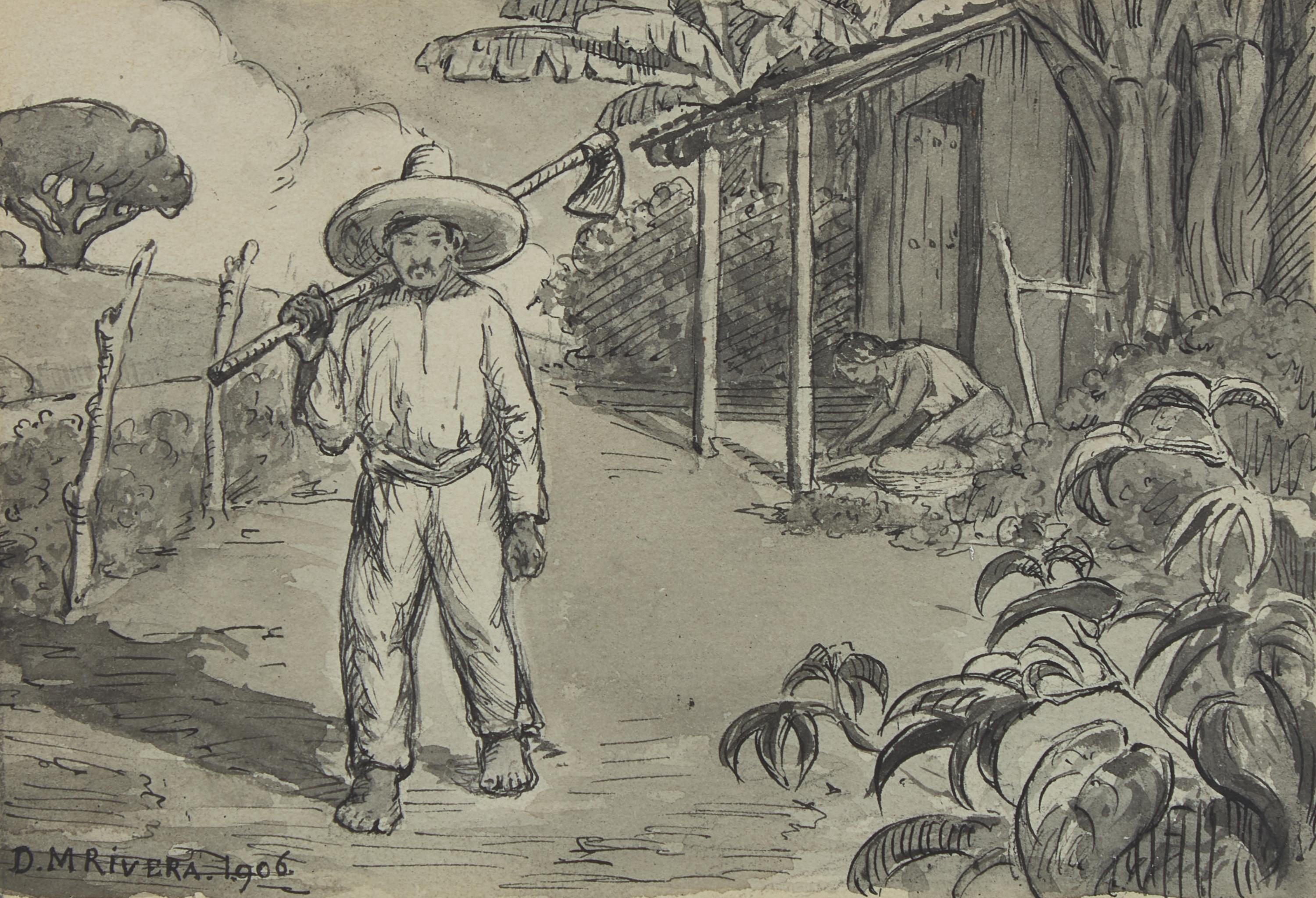
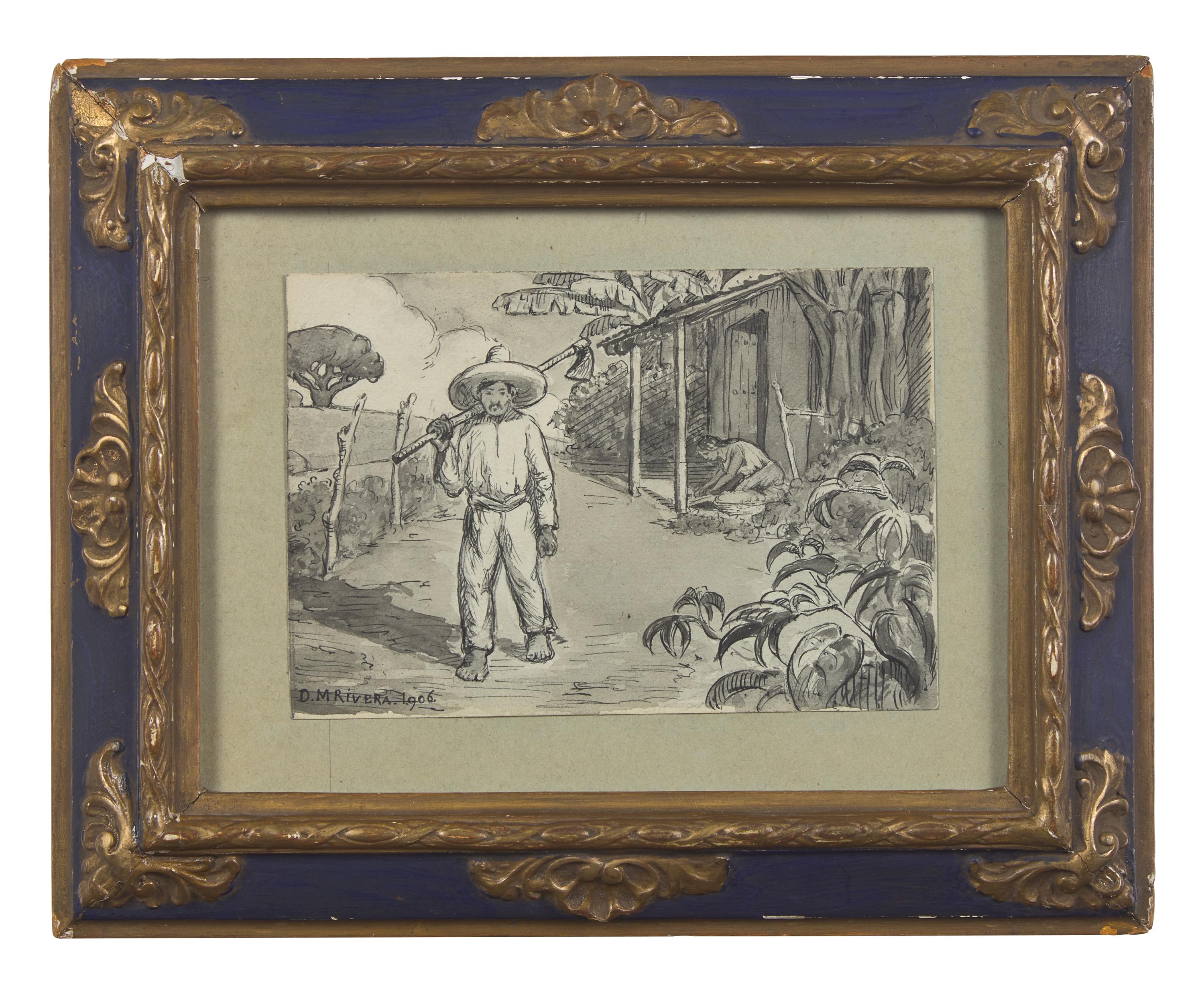
Under Fabrés Rivera learned the scientific “Pillet Method,” developed by French artist Jules Jean Désiré Pillet, which emphasized real life observation over copying classical statues or lithographs. Between 1903 and 1906, Rivera produced early works that capture landscapes and everyday activities of ordinary people, as exemplified by the present work, which illustrates Rivera’s application of European trends to his own Mexican reality. This 1906 rural scene, executed shortly before his departure to Europe, exemplifies Rivera’s drawing method grounded in direct observation. Here, the artist depicts common Mexican life—peasants working the land and a woman grinding corn—a subject that would later become central to Rivera’s iconography after his return to Mexico in 1921, particularly within the Mexican Modern School and the frescoes of the Mural Movement.
By November 1906, Rivera participated in a celebrated group exhibition at the Escuela Nacional de Bellas Artes, presenting paintings, pastels, and watercolors. While only a few of these works were reviewed in contemporary newspapers and magazines, some have resurfaced over the past century, while others remain undiscovered. It is plausible that this drawing was among Rivera’s contributions to his final exhibition at his training school, executed under Fabrés’s innovative approach to drawing.
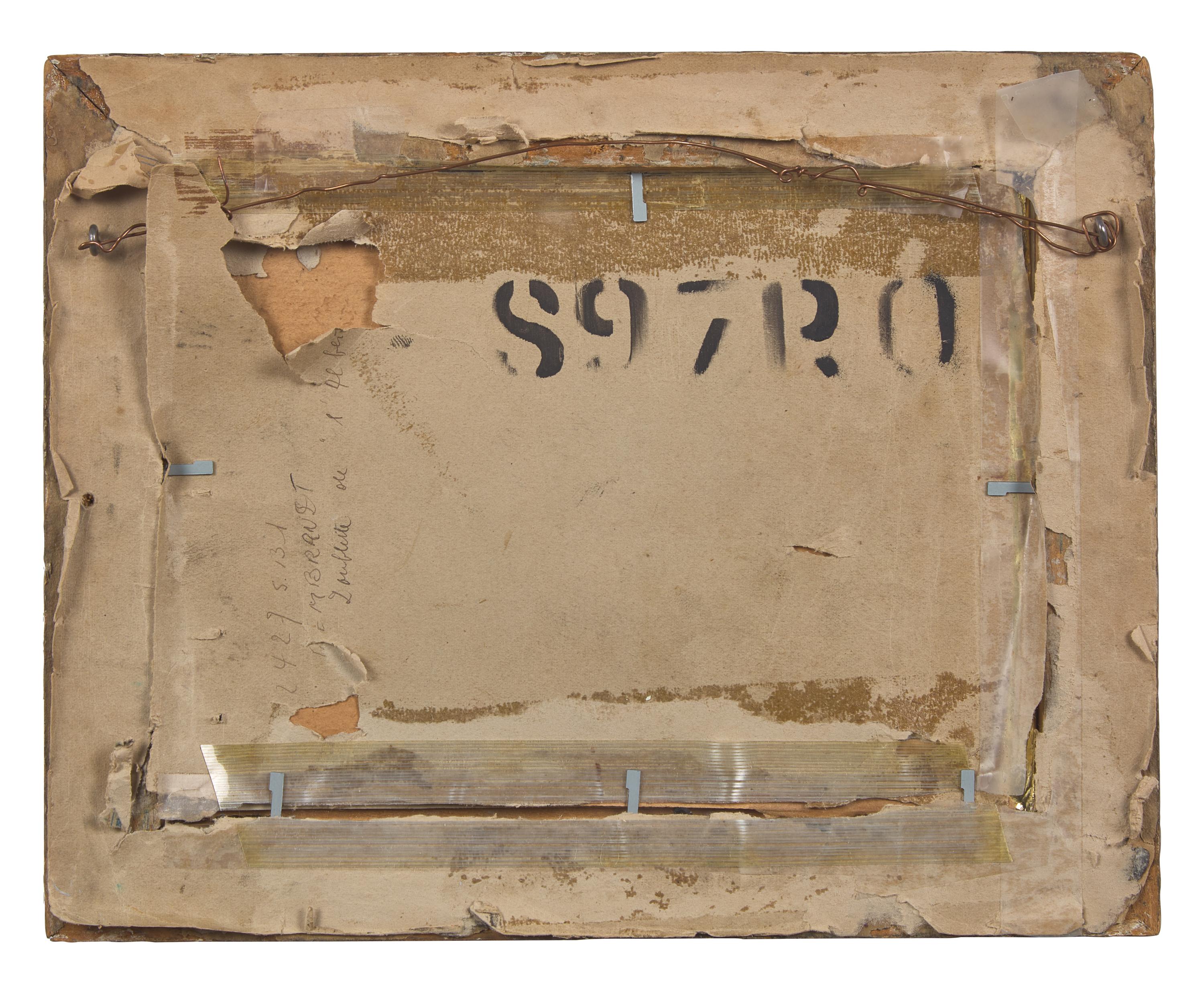
The sheet is loose, only resting on a larger sheet of paper, itself protected by cardboard. With even edges and all corners present. We notice old remnants of glue on the back (six circles precisely), some of them accompanied by remnants of blue paper (likely the one the sheet was laid down/affixed to). Evidence of handling, and light toning on the back. No evidence of loss, repair, or restoration. Additional images available upon request.
The physical condition of lots in our auctions can vary due to age, normal wear and tear, previous damage, and restoration/repair. All lots are sold "AS IS," in the condition they are in at the time of the auction, and we and the seller make no representation or warranty and assume no liability of any kind as to a lot's condition. Any reference to condition in a catalogue description or a condition report shall not amount to a full accounting of condition. Condition reports prepared by Freeman's staff are provided as a convenience and may be requested from the Department prior to bidding.
The absence of a posted condition report on the Freeman's website or in our catalogues should not be interpreted as commentary on an item's condition. Prospective buyers are responsible for inspecting a lot or sending their agent or conservator to inspect the lot on their behalf, and for ensuring that they have requested, received and understood any condition report provided by Freeman's.
Please email [email protected] for any additional information or questions you may have regarding this lot.