Sale 6380
| Philadelphia
| Philadelphia
Estimate$20,000 – $30,000
Provenance:
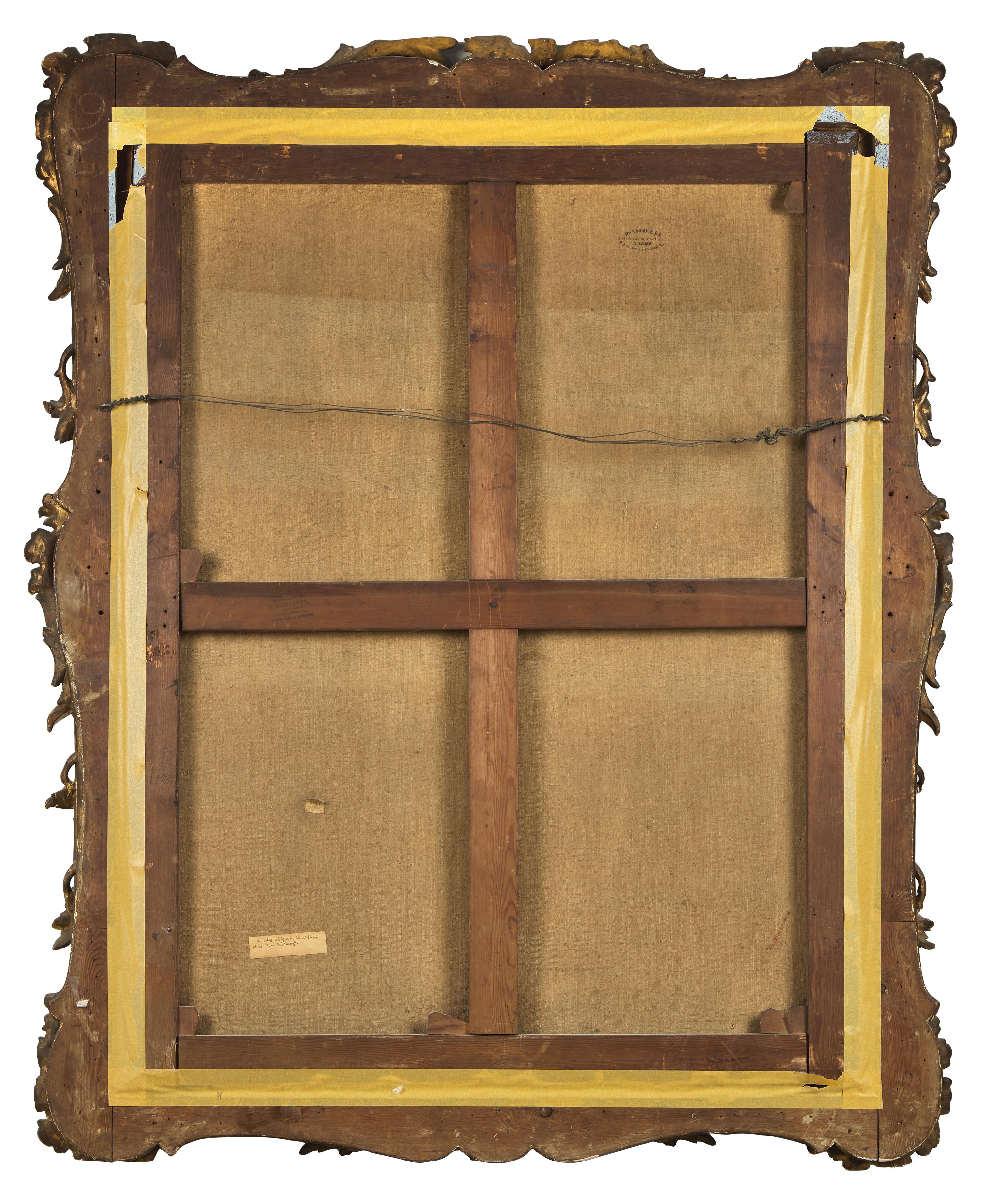
(Possibly) Collection of Princesse Marie Wassilievna Woronzow.
(Possibly) Collection of Nicolas Stolypine, Duc de Montelfi, son of the above.
Lot Essay:
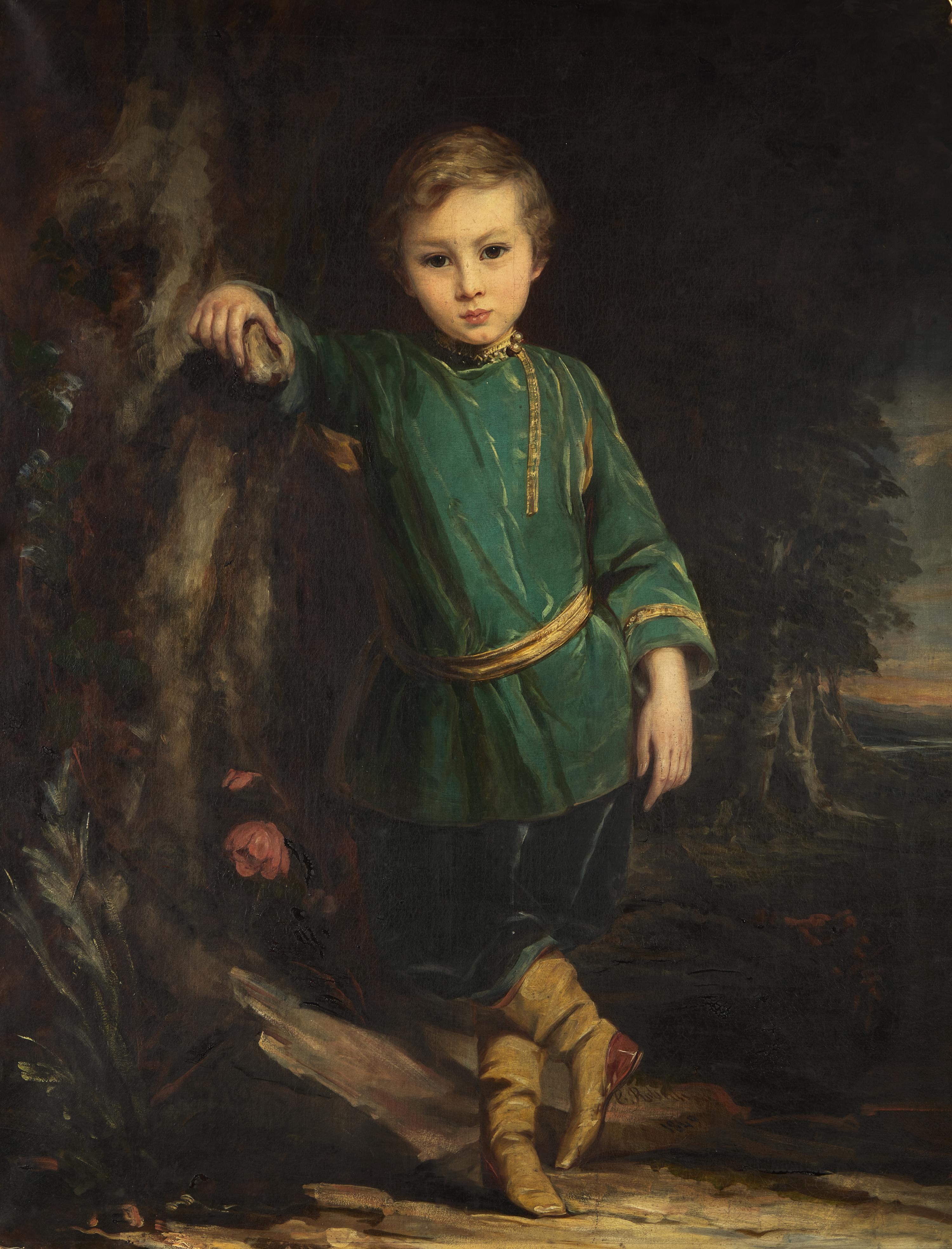
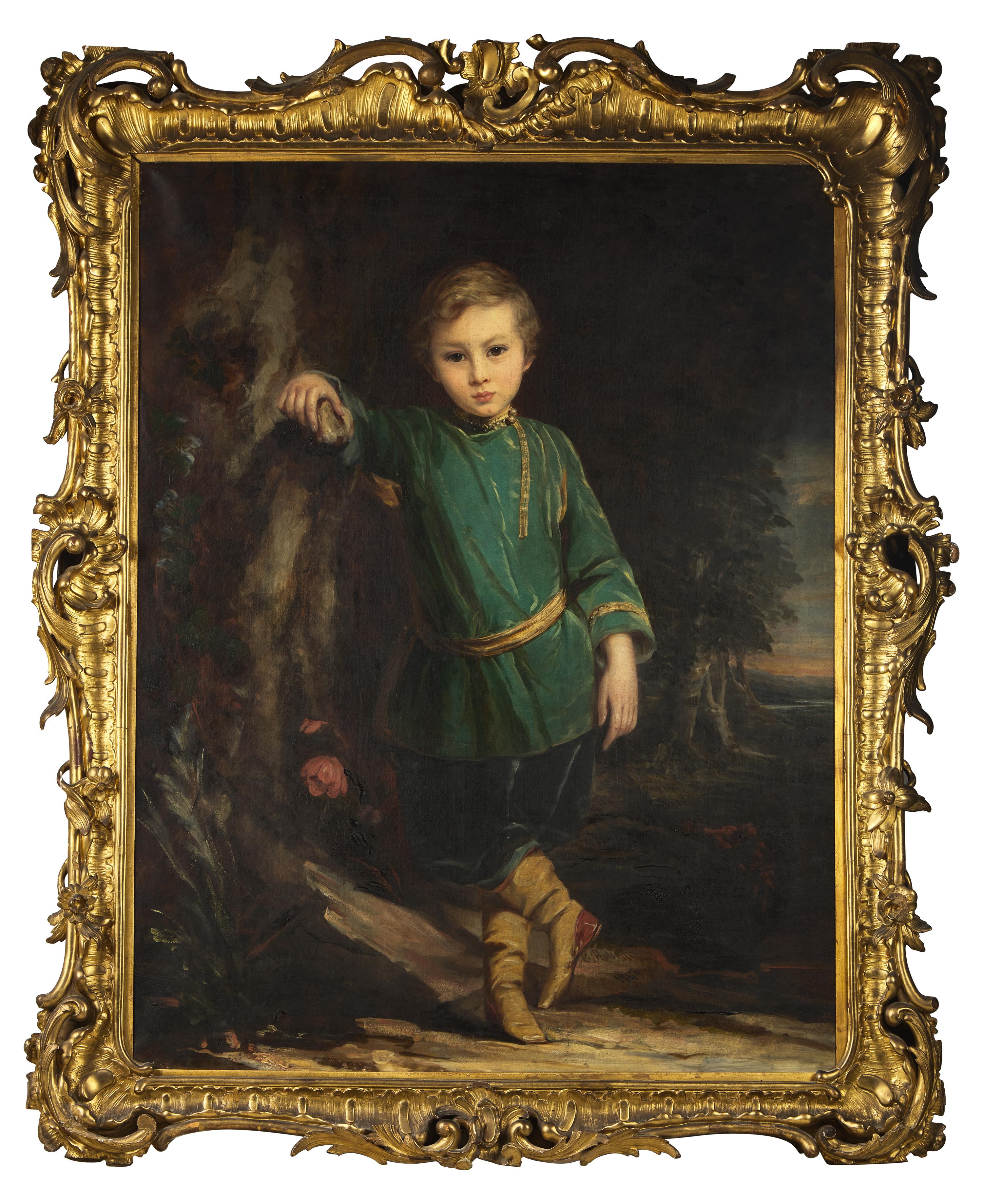
Portrait of Nikolai Alekseevich Stolypin, 1849, is fascinating work that represents both 19th century artistic cross-cultural currents and the work of woman artist who was famous during her time but now little known. Christina Robertson was born in 1796 in Kinghorn, Scotland, and was possibly trained by her London-based uncle, George Sa(u)nders. She quickly established a reputation as portrait and miniature painter, with a flow of commissions from Scottish patrons. By 1823, she had married the artist James Robertson, whose own career was soon to be eclipsed by his wife’s. In 1828, Robertson had her own studio and the following year, she became the first honorary woman member of the Royal Scottish Academy.
After the birth of her eighth child (four children lived past infancy), the artist traveled to France to broaden her career. During a length stay in Paris starting in 1835, she painted a number of notables, including various members of St. Petersburg society that were resident there. In 1839, Robertson made the journey to Russia, likely encouraged by the positive reactions her Paris portraits of Russian nobility. She was at the height of her popularity at this time, in part due to engravings that were made after her paintings, which appeared in numerous illustrated lady’s journals and albums of the 1830s and 1840s that circulated both at home and abroad. Several volumes of Heath’s Book of Beauty, for instance, once belonged to Empress Alexandra Fyodorovna, wife of Nicholas I.
Robertson was very well received at the Russian court of Tsar Nicholas I and his empress, which at the time was gripped by Anglomania. The British artist’s ability to match current fashionable trends, paired with her depictions of delicate, elegant female images, were just what was wanted at the Russian court. From 1839 to 1841, Robertson was in St. Petersburg, where she carried out full-length portraits of Tsar Nicholas I and Empress Alexandra and her three daughters, Maria, Olga, and Alexandria. In his review of the 1839 exhibition at the Imperial Academy of Arts in St. Petersburg, the critic Pavel Kamensky wrote that Robertson’s portrait of Maria Kochubey, née Baryatinskaya, was the best portrait of all those shown:
This might confidently be placed alongside Rembrandt, and it would lose little from such a dangerous comparison. What a bold, powerful brush! How all is simple, natural what superb colouring! And who would have thought? All this is the work of a weak woman’s hand! Or, more correctly, only a woman could paint this: a man would not be capable of so much feeling... It is immediately clear that Mrs Robertson is an Englishwoman [sic], that she was brought up in the traditions of sublime portrait painting, that she studied mastery of the brush in the land of Reynolds and Lawrence. (P. P. Kamensky, Exhibition of Russian Works of Art in St Petersburg and Rome 1839, Readers’ Library, vol. 37, 1839, section II, pp. 53-54)
In 1841, she was the first, and only woman, to be made an honorary member, of the Imperial Academy of Arts. The same year, Robertson returned to her family and home in London in 1841, where she worked until her second visit to Russia, from 1847 to 1854. She found success again with Russia’s noble families, presenting society beauties in their best light. Her skillful depictions include the women’s fashionable garments, luxurious gold bracelets, and shining pearls, as well as other opulent accessories, such as vases, candelabra, and especially flowers, dogs, and parrots. Robertson died in St. Petersburg in 1854.
The present portrait of Nikolai Alekseevich Stolypin dates from this second trip. Nikolai was born in 1843 to Maria Vasilievna (née Trobetskaya) and Alexey Stolypin, who married in 1839. Maria had grown up in the Imperial court, and was a favorite of the tsar’s family, especially of Grand Duchess Maria Nikolaevna, the eldest daughter of Nicholas I. Already a prominent figure in high society, in 1835, she became a lady-in-waiting to Empress Alexandra. Alexey Stolypin was a Staff Captain of the Life Guards Hussar Regiment, and thanks to his wife’s closeness to the royal family, Stolypin rose in social status, eventually becoming adjutant to Duke Maximilian of Leuchtenberg, who was married to the Grand Duchess Maria. This was to only further intertwine the lives of the Stoylpins with the royal court. Alexey died in 1847, however, and his widow subsequently married Colonel Prince Semyon Mikhailovich Vorontsov, thus making her a princess.
The couple and Nikolai settled in Crimea, in their palace, Alupka, where they frequently hosted lavish gala dinners. Upon Vorontsov’s death in 1882, Maria inherited his vast wealth and estates. She and Nikolai then traveled abroad to her properties in Paris, Geneva, Nice, and Sorrento, and from the mid-1880s, Maria spent most of her time at the Villa Margherita in Florence. Nikolai remained a bachelor, and in 1884, he received the title of Duke of Montelfi from King Umberto I of Italy. The mother and son died within a few years of each other, Maria in 1895 and Nikolai in 1898. In 1900, the property in the Florentine villa was auctioned, though the present portrait was not included in the sale. It is possible that the portrait was left at another one of the family’s properties, and eventually made its way to the United States at an unknown time.
Framed: 60 1/2 x 50 1/2 x 4 in.
The physical condition of lots in our auctions can vary due to age, normal wear and tear, previous damage, and restoration/repair. All lots are sold "AS IS," in the condition they are in at the time of the auction, and we and the seller make no representation or warranty and assume no liability of any kind as to a lot's condition. Any reference to condition in a catalogue description or a condition report shall not amount to a full accounting of condition. Condition reports prepared by Freeman's staff are provided as a convenience and may be requested from the Department prior to bidding.
The absence of a posted condition report on the Freeman's website or in our catalogues should not be interpreted as commentary on an item's condition. Prospective buyers are responsible for inspecting a lot or sending their agent or conservator to inspect the lot on their behalf, and for ensuring that they have requested, received and understood any condition report provided by Freeman's.
Please email [email protected] for any additional information or questions you may have regarding this lot.