Sale 6383
| New York
| New York
Estimate$150,000 – $250,000
Provenance:
The Artist
The Collection of Larry Warsh
A Gift from the above to the present owner’s husband
Private Collection, New York City
Lot essay:
“The ability to look at a black America as something that not only can be mined in a very sort of cynical, cold way, but also embraced in a very personal, love-driven way; but also sort of critiqued. And additionally, to be used as a starting point to look at broader pictures globally. The ability to look at certain patterns with regards to urban fashion, with regards to swagger, with regards to cultural hegemony, with regards to the ways in which young people look at resistance culture as a pattern that should be mimicked and admired.” - Kehinde Wiley
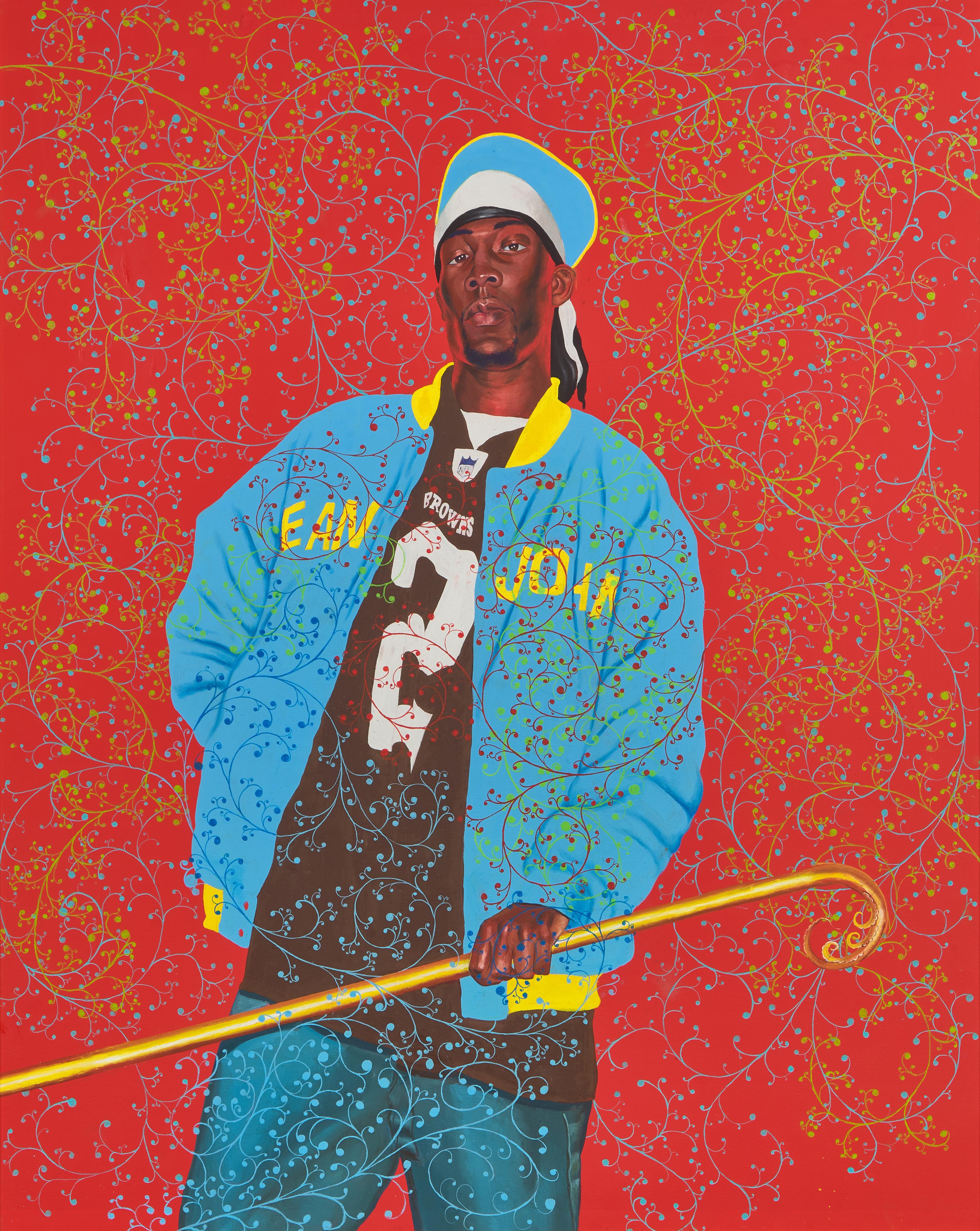
Kehinde Wiley’s portraiture redefines the traditions of Western art history by placing Black subjects at the center of power, beauty, and reverence. Drawing on the visual language of Old Master painting—from Renaissance portraiture to 19th-century European realism—Wiley replaces historical figures of authority with contemporary Black men and women. This substitution both critiques and revises the canonical history of art, exposing how representation has long excluded nonwhite bodies while concurrently celebrating their presence and dignity.
Wiley’s use of luminous color, ornate patterning, and meticulous realism imbues his subjects with a disposition of grandeur traditionally reserved for monarchs or saints. His compositions often feature lush, decorative backdrops that merge with the figures, symbolizing both cultural entanglement and aesthetic empowerment. By combining classical technique with modern sensibilities—hip-hop style, urban fashion, and contemporary gesture—Wiley bridges historical art and present-day identity politics.
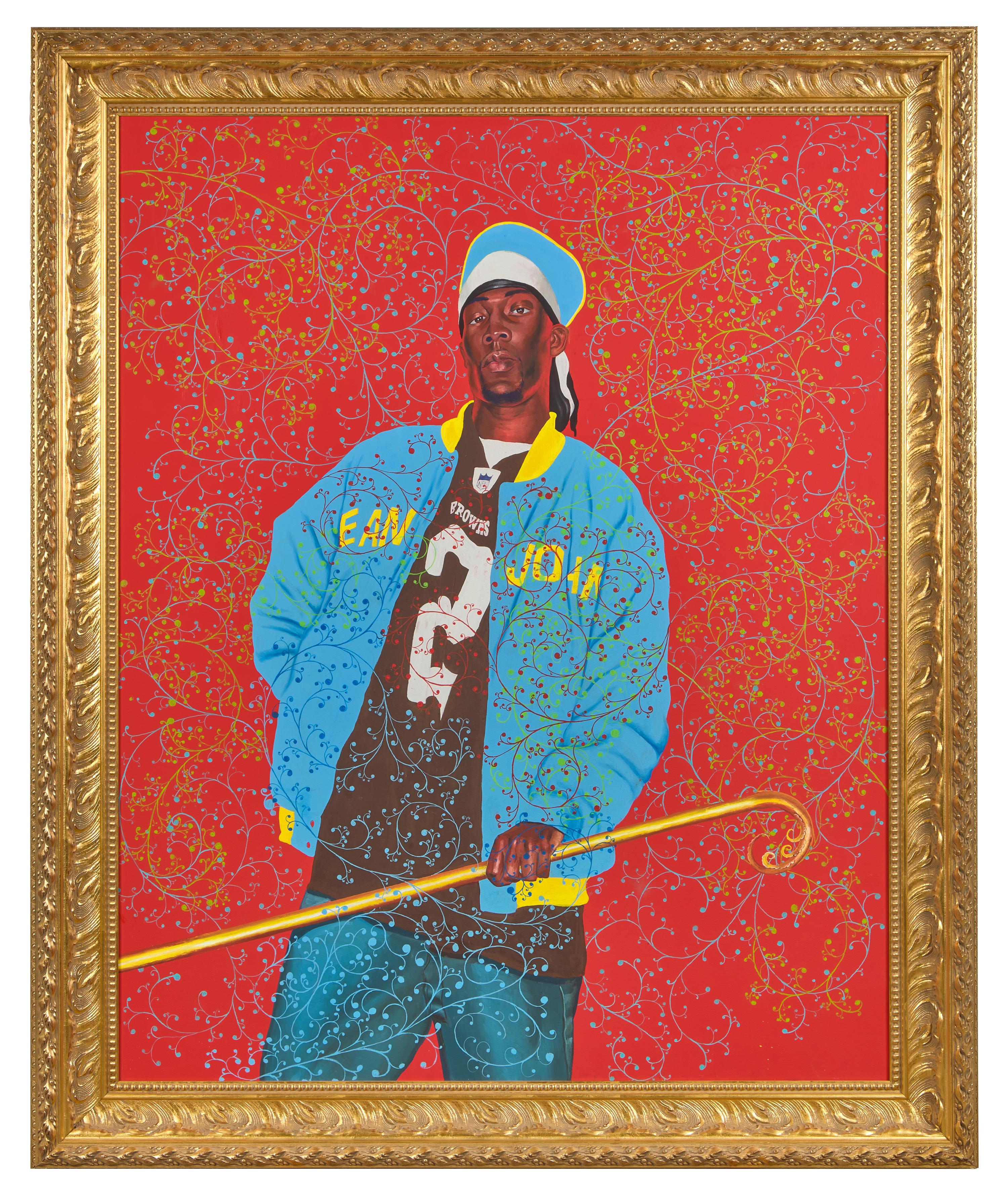
His work, and as shown in Street Thug through the subject’s dignified, confident stance and prosperous disposition, reclaims portraiture as a space of visibility and sovereignty for Black individuals. As a result, Wiley transforms the act of being seen into a form of resistance and cultural affirmation, positioning his subjects not as just symbols of marginality but as embodiments of beauty, strength, and history.
Framed: 70 x 58 inches.
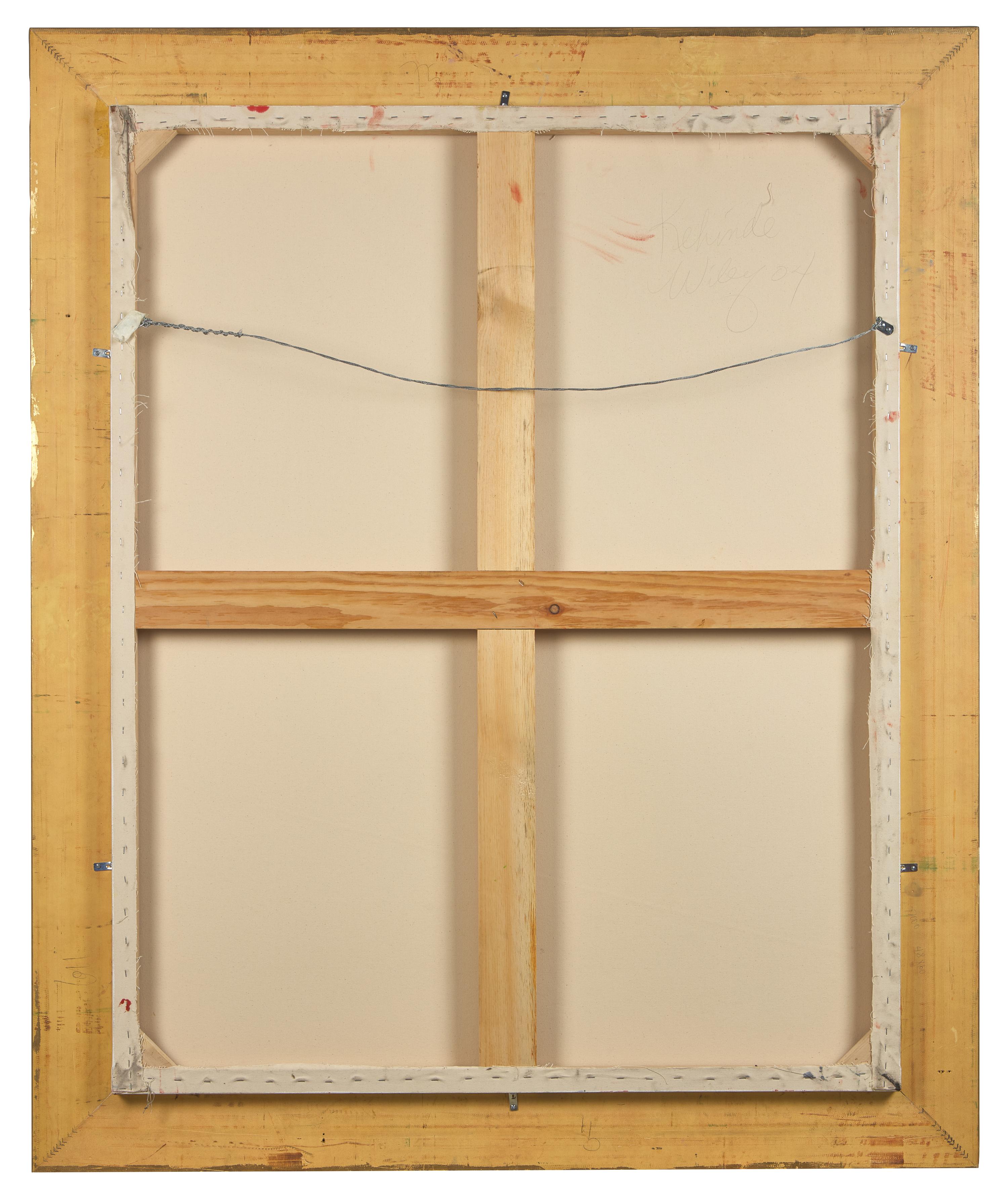
Please contact [email protected] to request a condition report with additional images.
The physical condition of lots in our auctions can vary due to age, normal wear and tear, previous damage, and restoration/repair. All lots are sold "AS IS," in the condition they are in at the time of the auction, and we and the seller make no representation or warranty and assume no liability of any kind as to a lot's condition. Any reference to condition in a catalogue description or a condition report shall not amount to a full accounting of condition. Condition reports prepared by Freeman's staff are provided as a convenience and may be requested from the Department prior to bidding.
The absence of a posted condition report on the Freeman's website or in our catalogues should not be interpreted as commentary on an item's condition. Prospective buyers are responsible for inspecting a lot or sending their agent or conservator to inspect the lot on their behalf, and for ensuring that they have requested, received and understood any condition report provided by Freeman's.
Please email [email protected] for any additional information or questions you may have regarding this lot.