Sale 6383
| New York
| New York
Estimate$60,000 – $80,000
We are grateful for the research conducted by Susan Weininger, Professor Emerita, Roosevelt University.
Provenance:
The Artist, until 1949
Dudley Huppler, purchased from the Artist, until 1988
Powell S. Bridges, Winnetka, Illinois, acquired before 1993
Harlan J. Berk, Chicago, c. 1993-2016
Private Collection
Richard Norton Gallery, Chicago
Acquired from the above by the present owner
Exhibited:
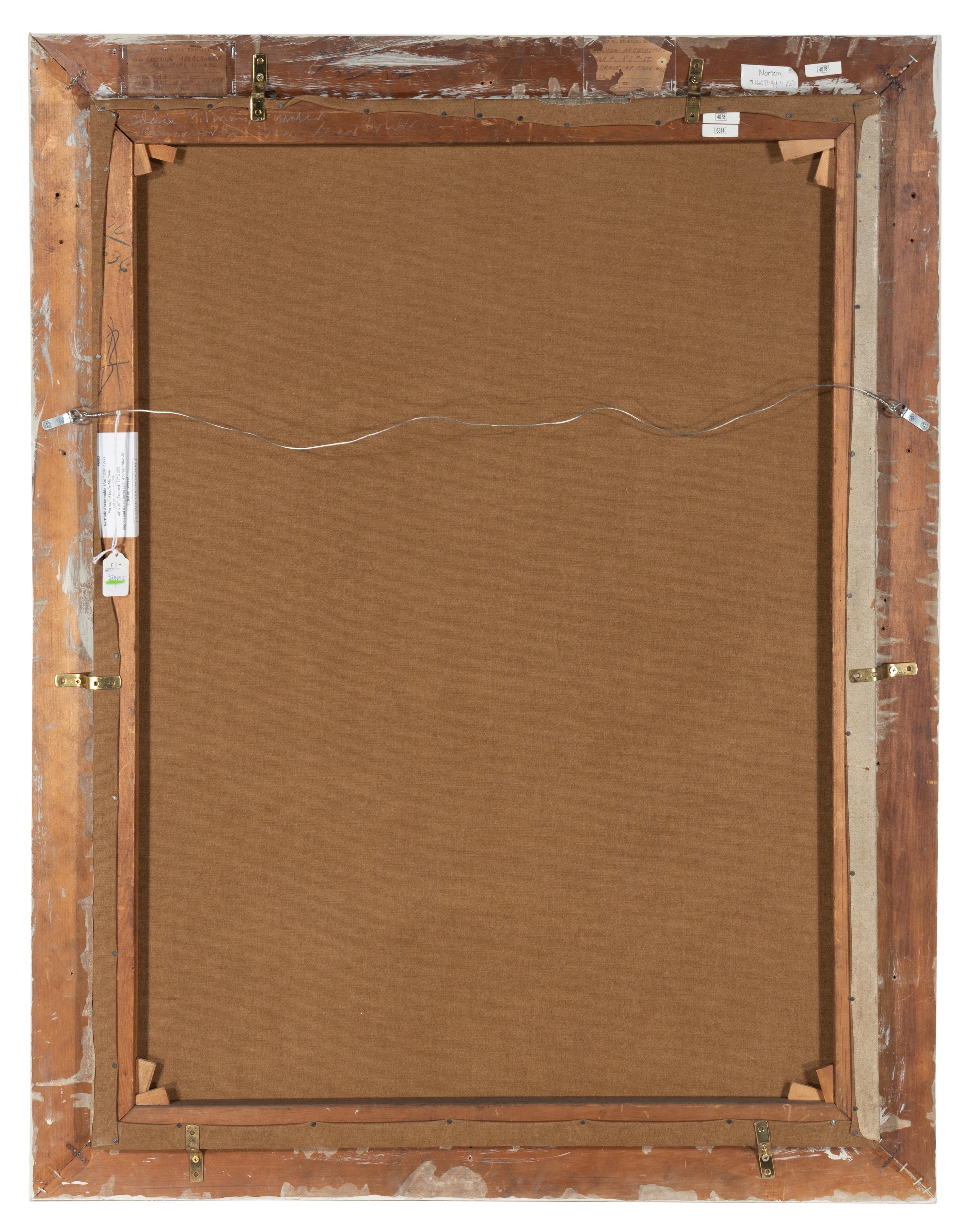
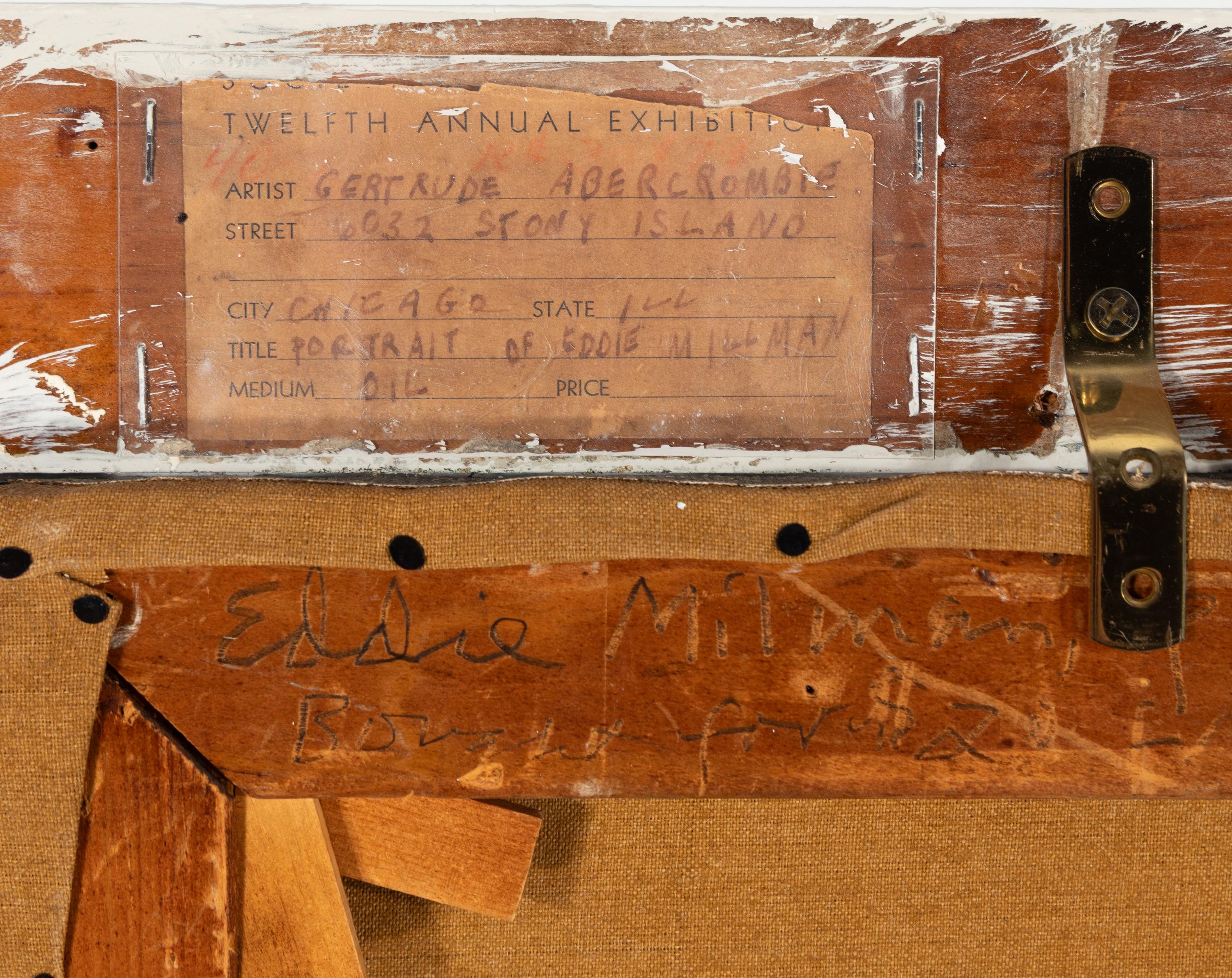
Chicago, The Chicago No-Jury Society of Artists, Twelfth Annual Exhibition, June 13 - June 27, 1936, no. 1
Chicago, The Chicago Society of Artists 50th Exhibition, April 1939, no. 2
New York, Karma, Gertrude Abercrombie, August 9-September 23, 2018, p. 127, illus.
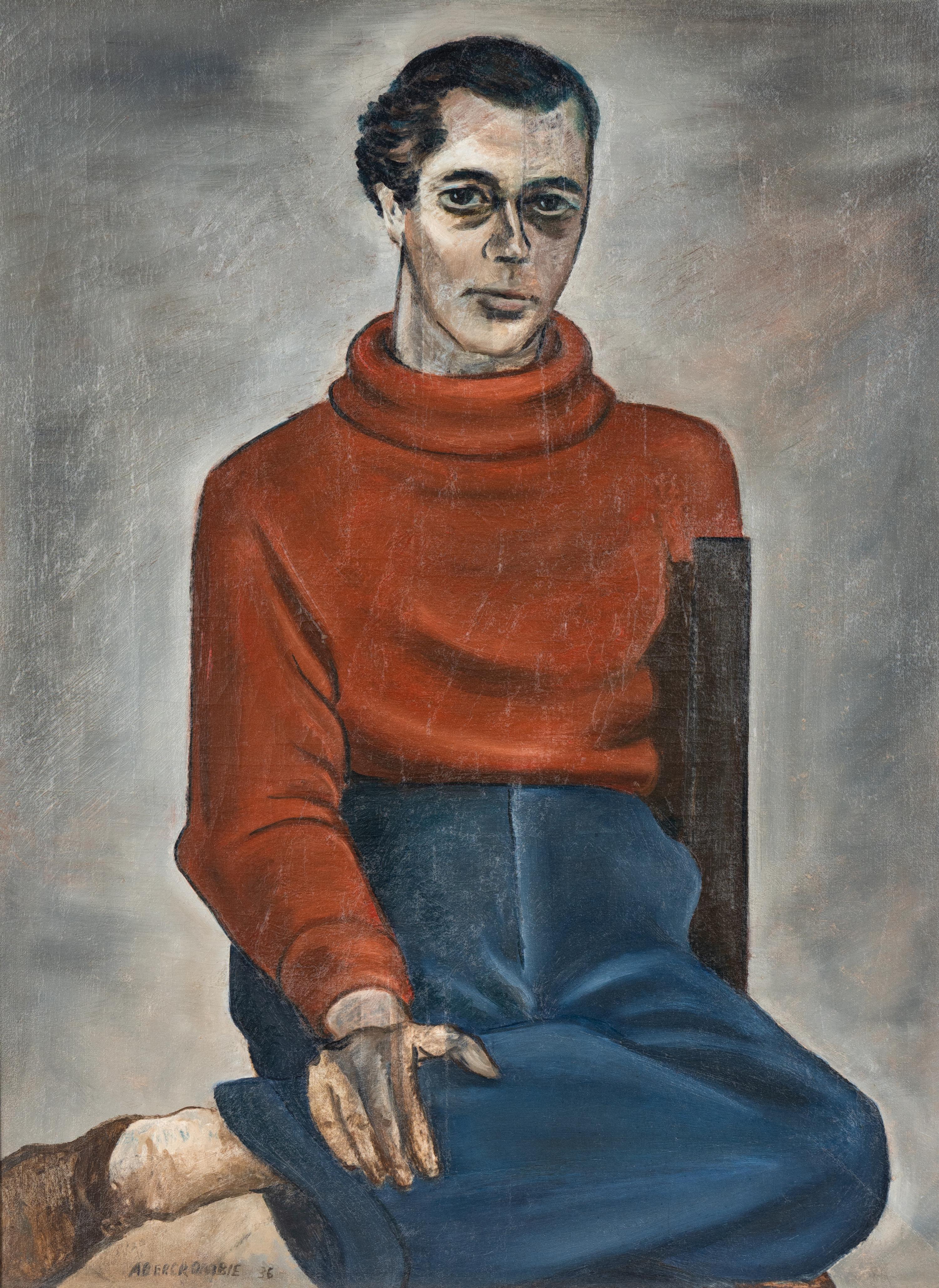
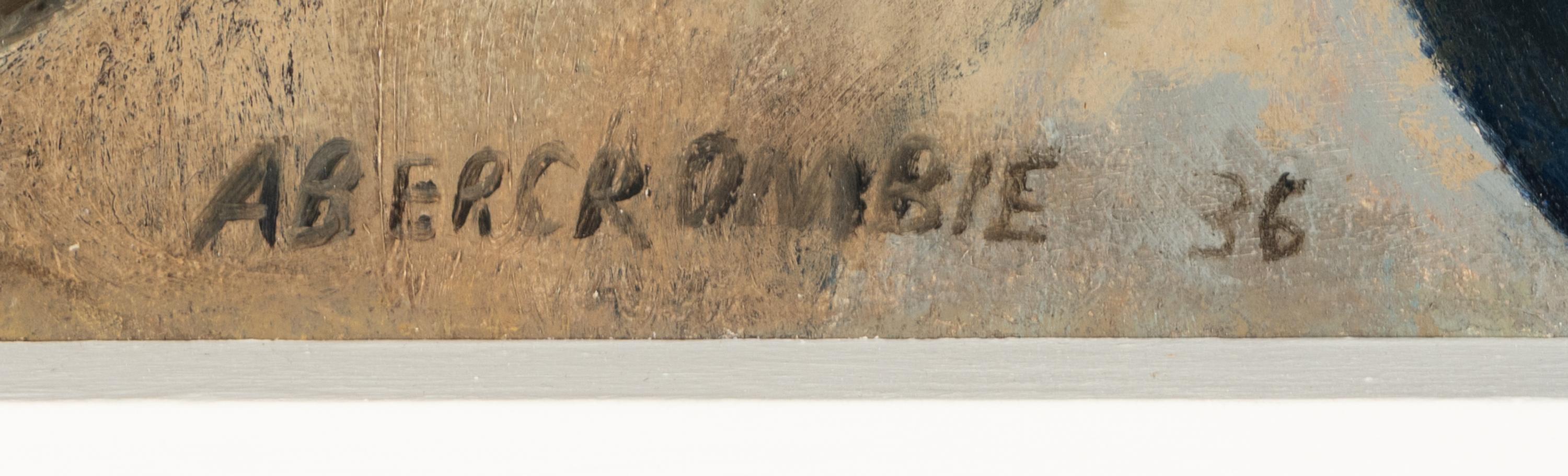
At the time the present portrait was executed, in 1936, Gertrude Abercrombie had been working on the New Deal government art projects for almost two years, initially for the Public Works of Art Project, followed in 1935 by the Illinois Art Project (IAP) of the Works Progress Administration (WPA). In contrast to Abercrombie’s later work, which is often small in scale and painted on Masonite panels, the works made for the project were paintings on canvas of a standard size, ranging from 24 x 20 inches to 30 x 40 inches. The WPA required one painting a month from each artist employed on the easel painting project, which left most artists with quite a bit of free time to produce other work. As Abercrombie was used to the format mandated by the projects, her independent work tended to be on canvas and of this size. She continued to paint on this scale, at least some of the time, into the mid 1940s.
Abercrombie’s appointment to the PWAP and its regular monthly paycheck not only gave her the imprimatur of a legitimate artist, but it also allowed her to move out of her parents’ home and into an apartment of her own in the Weinstein Building in Hyde Park, which was home to many artists and writers. It was there that she met lifelong friends and made many connections with other artists and writers. Like many artists in the early stages of their careers, Abercrombie’s early work includes many portraits, both of herself and of these new friends and colleagues, who were willing subjects and offered her the opportunity to hone her skills. Her earliest work includes portraits of artists Tud Kempf, Macena Barton, Rudolph Weisenborn, Franklin Van Court Brown, Charles Sebree, and John Pratt. She also painted writer friends such as Thornton Wilder, Gertrude Stein, Wendell Wilcox, and James Purdy. Other portraits from this early period include art world figures like Cati Mount, Helen Mann, Inez Cunningham Stark, actors Grace Cornell and Davis Roberts, as well as family members Laura and Maurine Campbell and Elinor Porter Carlberg. This not only attests to the varied and noteworthy social connections she established in the first decade of her career, but from the beginning her portraits were distinctive, penetrating, and often idiosyncratic, usually offering an extremely intimate image of the sitter. Almost all of them include just the head or a small portion of the upper body of the sitter, sometimes with a disconnected arm or hand (see Thornton Wilder, for example, whose chin rests on a hand that emerges from the bottom of the painting and could be an inanimate object) which often have expressive purposes.
By 1936, Edward (Eddie) Millman was already a well-established presence in the art world of Chicago. The year after designing murals for the 1933 Century of Progress World’s Fair, he traveled to Mexico to study with Diego Rivera. Upon his return, he became one of the most productive artists on the government supported projects, creating both easel paintings for the Illinois Art Project and murals for the competitive national Treasury Section for Painting and Sculpture. By the time Abercrombie painted his portrait, Millman had executed murals for the post offices in Moline (1935) and Decatur (1936). It’s possible that they became acquainted through their work on the IAP, or through other artist friends.
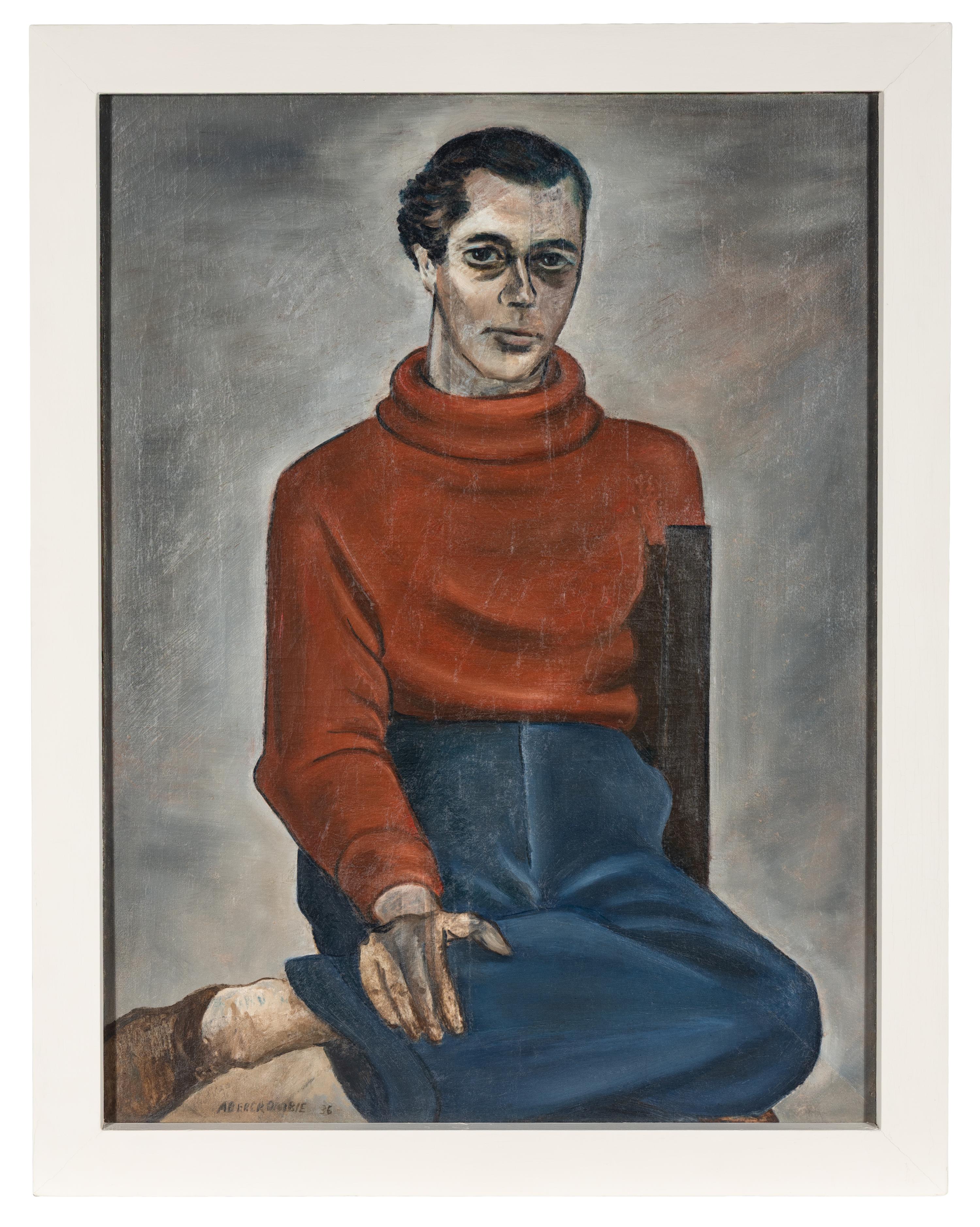
While the present portrait is like that of other art world friends or acquaintances of Abercrombie’s, it is likely the only portrait image that includes the sitter’s entire body, in this case literally from head to foot. And while Eddie Millman’s entire form is visible, it is distorted in a way that may reveal several things: Abercrombie’s own difficulty with the human form; an effort to experiment with modernist distortion; and her interest in conveying something more than a strict likeness in her portrait. Although she excelled at the traditional techniques of chiaroscuro and perspective, which she learned through numerous art classes, she struggled with the human form. The artist avoids the complexities of anatomical accuracy in the many later paintings where she represents herself in a landscape or interior scene, by developing a simplified flattened form. In this painting, Millman seemingly sits sideways, his left arm draped over the back of the chair, his left leg crossed over his right. Abercrombie’s difficulty with creating a lap for the figure makes it look almost as if the upper body and the lower body have been pieced together without a midsection. This may also point to her interest in experimenting with modernist modes. This can be seen in her attempt to incorporate an avantgarde style in other work of the time, such as Self Portrait with Cat (She and I), c. 1934 in which she introduces an angularity reminiscent of Cubism; Nude with Guitar, c. 1934, an experiment in creating a full length nude; and her Self Portrait in Green, 1938 (Illinois State Museum), in which the large three quarter length figure shows some familiarity with a post-Cubist Picasso. Abercrombie, despite developing a recognizable mature style, had a curiosity that drove her to explore different modes of expression throughout her career. This may be another example of that experimentation.
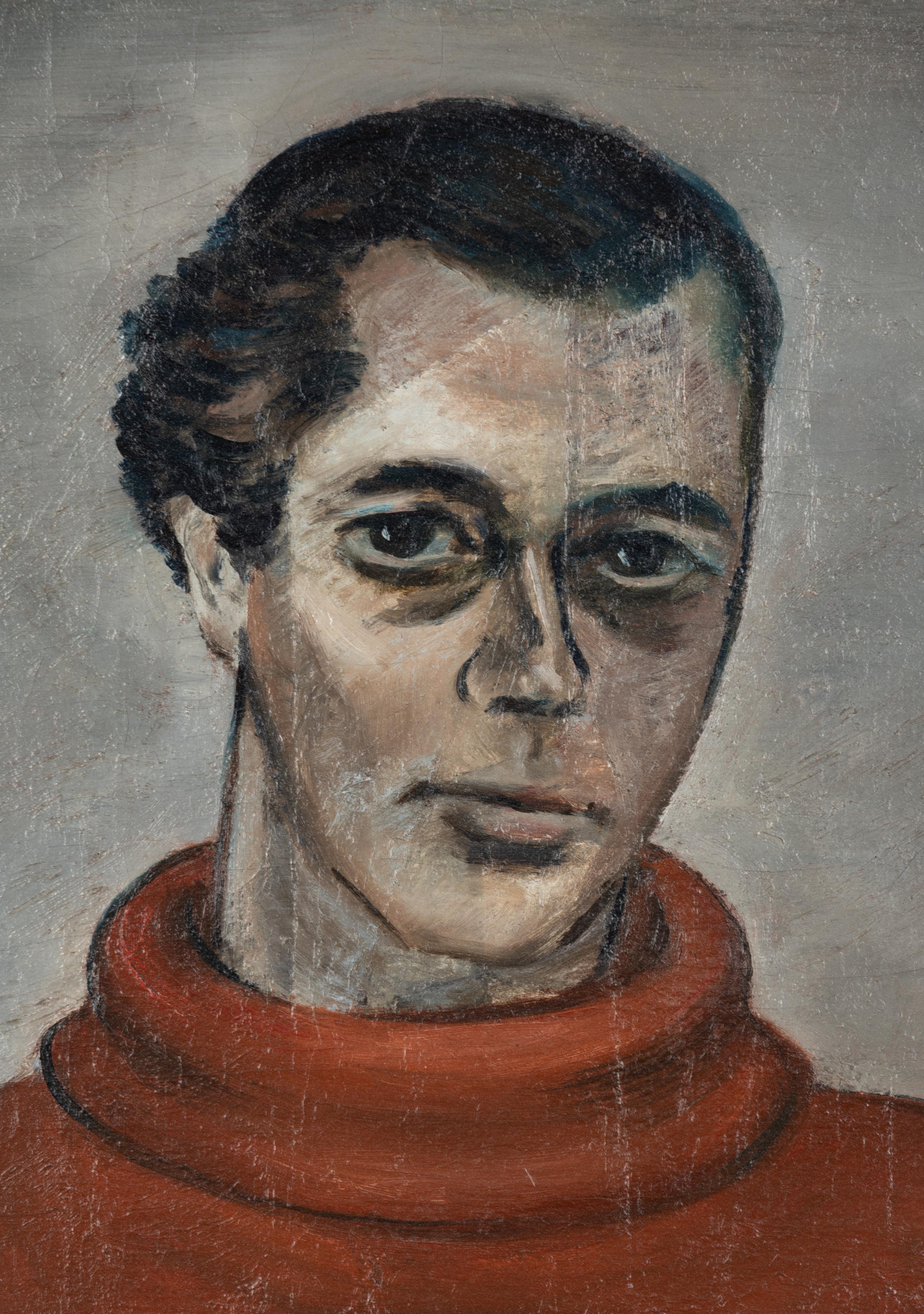
But the real achievement in the Portrait of Eddie Millman is in the creation of a figure who is complex, his body an abstracted combination of shapes, while his face displays a direct, open, honest gaze, that of a man with whom the viewer can connect. Whether intentional or not, the distortions of his body contrast with his straightforward countenance to project the competent, intelligent artist as a multifaceted, modern, complicated individual. and Portrait of Eddie Millman is an exceptional example of Abercrombie’s early proficiency to reveal multiple, even conflicting, ideas in the same work.
Framed: 45 x 35 inches.
Please contact [email protected] to request a condition report with additional images.
The physical condition of lots in our auctions can vary due to age, normal wear and tear, previous damage, and restoration/repair. All lots are sold "AS IS," in the condition they are in at the time of the auction, and we and the seller make no representation or warranty and assume no liability of any kind as to a lot's condition. Any reference to condition in a catalogue description or a condition report shall not amount to a full accounting of condition. Condition reports prepared by Freeman's staff are provided as a convenience and may be requested from the Department prior to bidding.
The absence of a posted condition report on the Freeman's website or in our catalogues should not be interpreted as commentary on an item's condition. Prospective buyers are responsible for inspecting a lot or sending their agent or conservator to inspect the lot on their behalf, and for ensuring that they have requested, received and understood any condition report provided by Freeman's.
Please email [email protected] for any additional information or questions you may have regarding this lot.