To request further details about this lot, please email [email protected]

Jacob Coley
Senior Vice President, Head of Department, Antiquities and Ancient Art
Sale 6428
| Chicago
| Chicago
To request further details about this lot, please email [email protected]
Jacob Coley
Senior Vice President, Head of Department, Antiquities and Ancient Art
Estimate$20,000 – $30,000
Provenance:
Private Collection, Switzerland, 1970s.
Private Collection, New York, prior to 2007.
Phoenix Ancient Art, Geneva, 2010 (Phoenix Ancient Art, vol. 1, pp. 34-35, no. 24).
Phoenix Ancient Art, New York, 2017 (Crystal 7, pp. 92-97, no. 15); where acquired by the present owner.
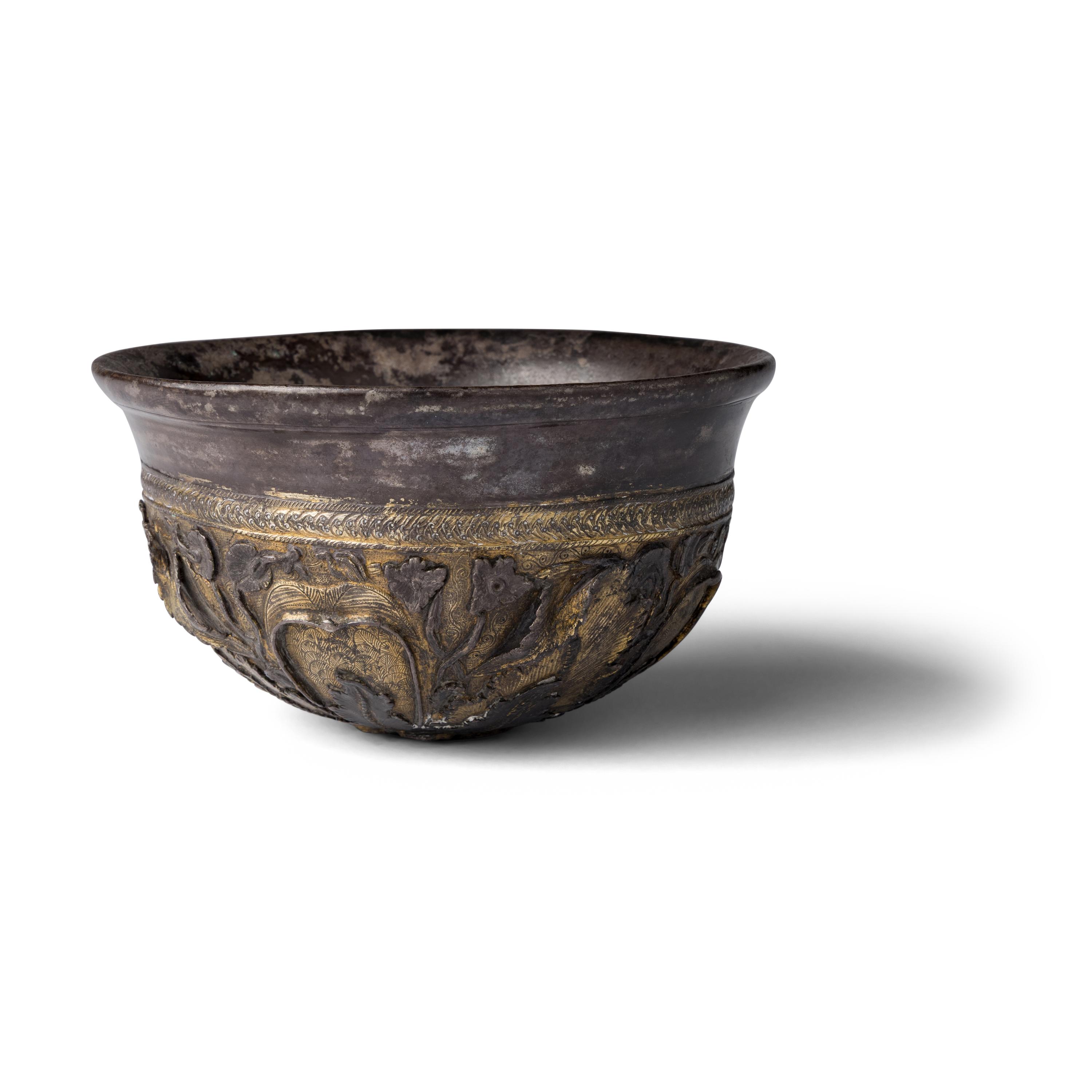
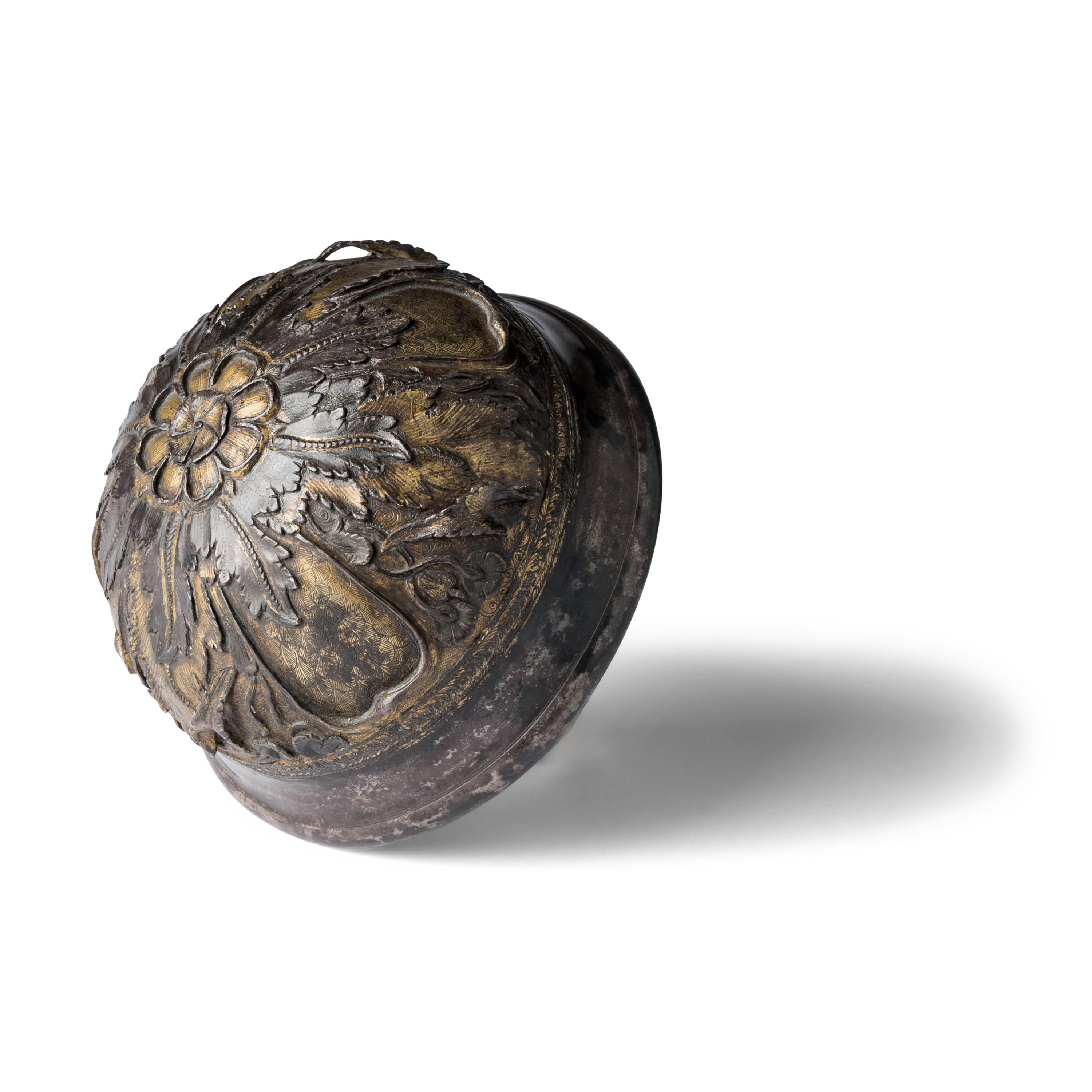
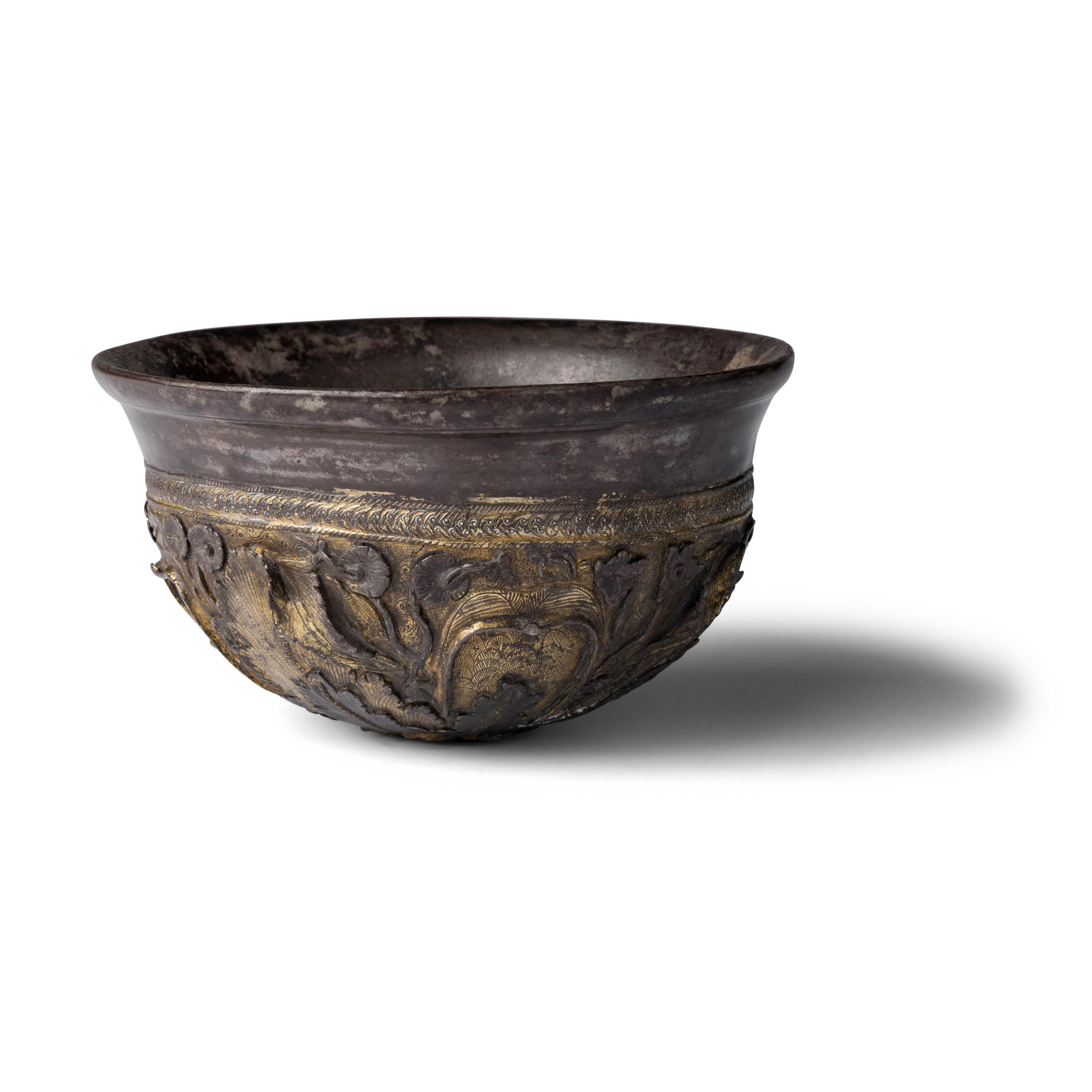
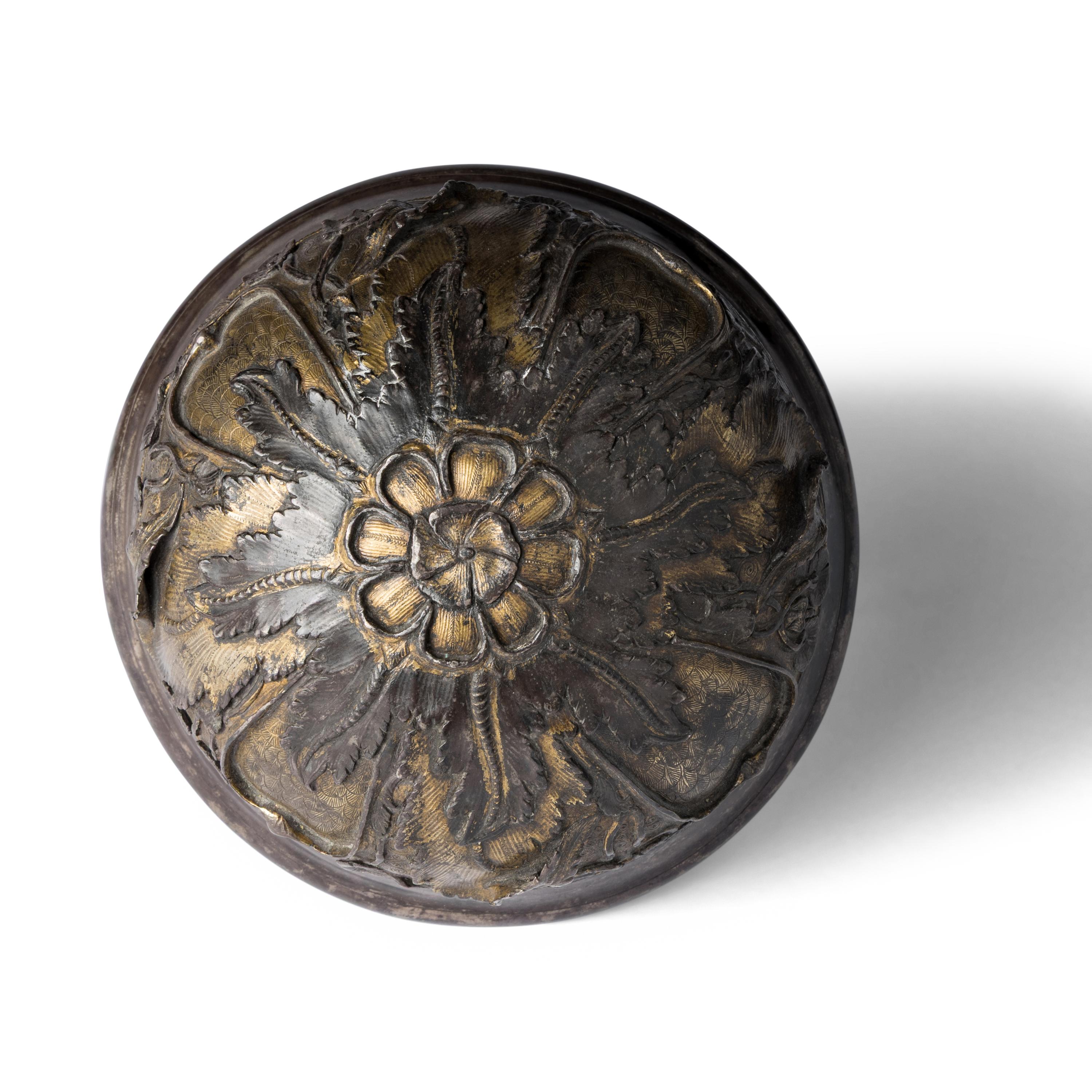
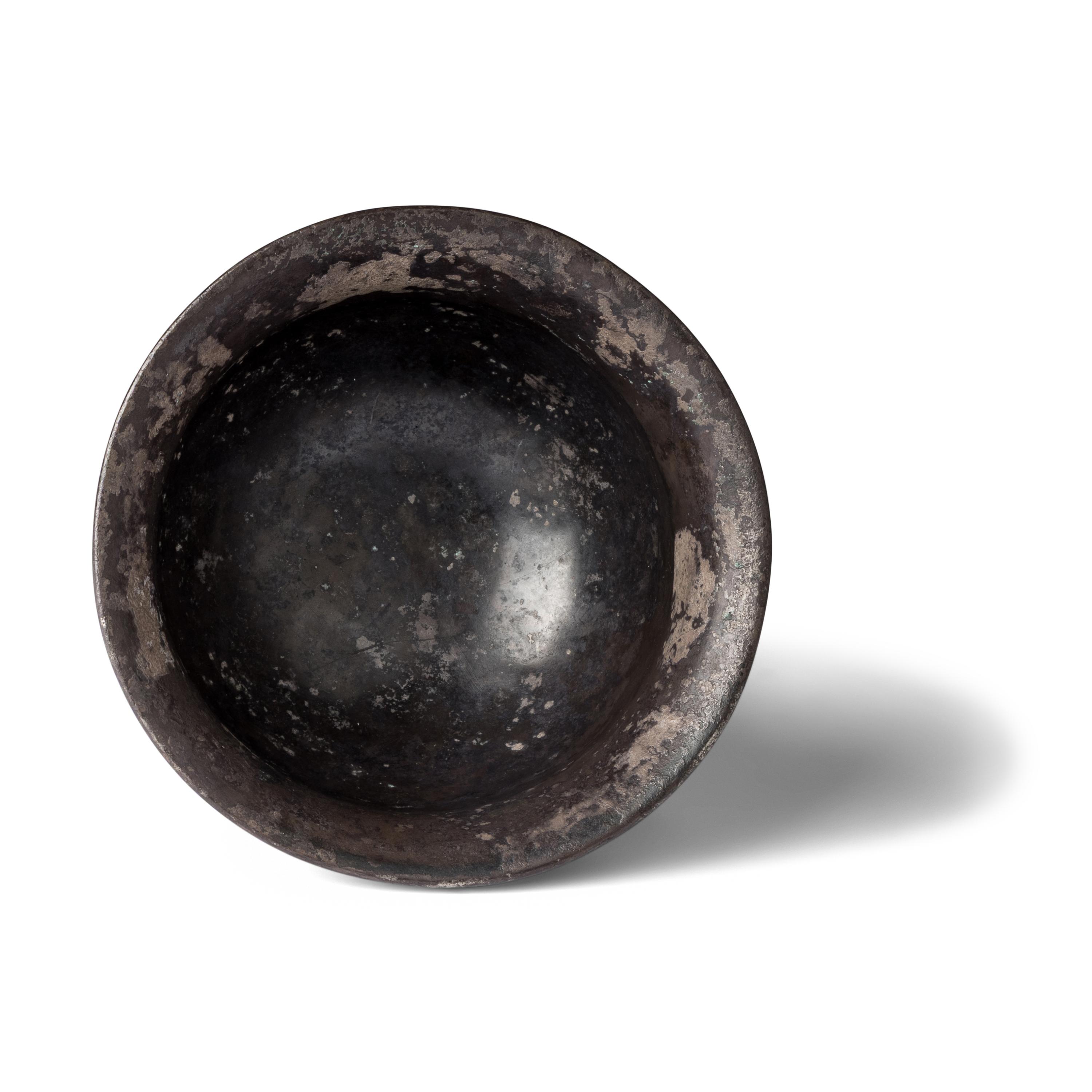
Exhibiting the finest craftsmanship of the Hellenistic period, this cup is composed of multiple layers of silver – the more robust body is a single solid piece, with the exterior decorated in high relief and featuring light gilding throughout. The spiky acanthus leaves take on a bewitching naturalism, with crisp serrated edges and veining. Tendrils and leaves are whimsically included throughout, and the artist has further enlivened the surface by stippling the interior of some leaves and a feathered motif on others. An ornate guilloche band neatly separates the vigorous vegetal decoration from the everted silver lip, and the bottom of the cup features a decorative rosette where it would have been cupped in the hand of the lucky drinker.
The present example is strikingly similar in conception and decoration to the famous cups found in Falerii Novi in 1810 (now in Naples, Museo Archeologico Nazionale inv. nos. 25284, 25285, 25288), which are thought to be of Pergamene craftsmanship. These three examples preserve a garnet cabochon at the center of the bottom rosette, and it is rather likely that such a gem was originally included in the present example but has since been lost.
Certainly, the luxurious design exemplifies the famous tryphe of the Hellenistic courts, and cups such as these were intended for royal banquet tables. Silver table services were enthusiastically adopted by the cultured upper classes in Rome during the heady years of the Late Republic and early principate (the ‘Cena Trimalchionis’ in Petronius’ Satyricon being one of the most famous descriptions of such luxurious banqueting), consciously emulating the style of the Hellenistic royal courts. The survival of such vessels is rare, with most having been melted down and the precious raw materials reused in times of economic hardship. Like the Falerii Novi examples, this exquisite cup likely survived because its shrewd owner buried it in times of incipient political turmoil.
Inspected under UV light and 10x loupe. Complete; the gilding is in an excellent state of preservation; the acanthus leaves incised near the center are blackened ; traces of black oxidation partially cover the edge of the cup; some tarnish on the silver surface; no restorations or repairs. Overall in very fine and attractive condition with mild encrustation and wear typical of age. See additional images.
The physical condition of lots in our auctions can vary due to age, normal wear and tear, previous damage, and restoration/repair. All lots are sold "AS IS," in the condition they are in at the time of the auction, and we and the seller make no representation or warranty and assume no liability of any kind as to a lot's condition. Any reference to condition in a catalogue description or a condition report shall not amount to a full accounting of condition. Condition reports prepared by Freeman's staff are provided as a convenience and may be requested from the Department prior to bidding.
The absence of a posted condition report on the Freeman's website or in our catalogues should not be interpreted as commentary on an item's condition. Prospective buyers are responsible for inspecting a lot or sending their agent or conservator to inspect the lot on their behalf, and for ensuring that they have requested, received and understood any condition report provided by Freeman's.
Please email [email protected] for any additional information or questions you may have regarding this lot.