To request further details about this lot, please email [email protected]

Adam Veil
VP, Head of Department, American Art and Pennsylvania Impressionists
Sale 6582
| Philadelphia
| Philadelphia
To request further details about this lot, please email [email protected]
Adam Veil
VP, Head of Department, American Art and Pennsylvania Impressionists
Estimate$50,000 – $70,000
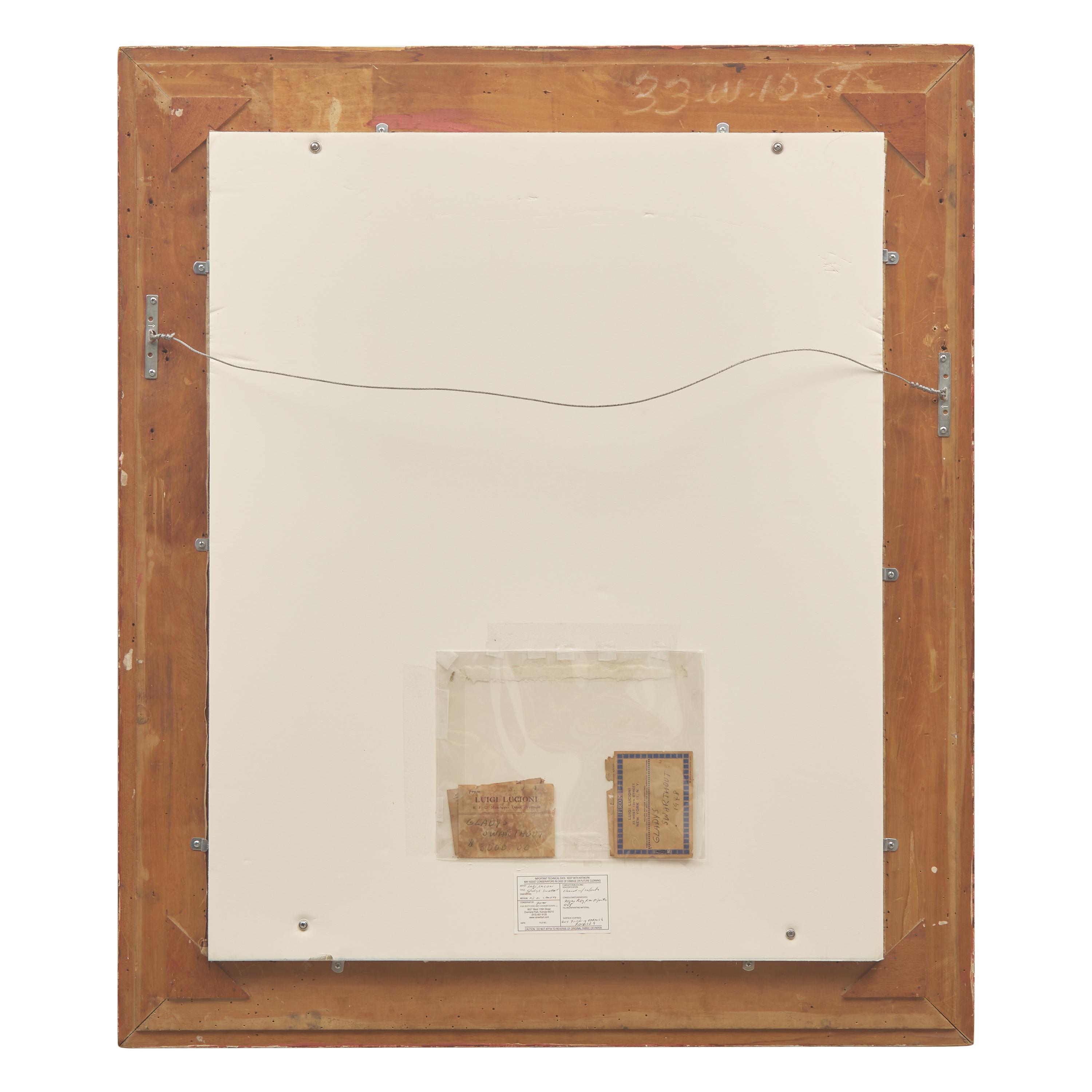
Provenance:
The Artist.
Gladys Swarthout, New York.
Roma Lee Swarthout, sister of the above.
By descent to the present owner, Virginia.
Exhibited:
Pittsburgh, Carnegie Institute, Painting in the United States, 1948, October 14 - December 12, 1948, no. 211.
New York, Associated American Artists, Twenty-Five Years of Painting, 1951, no. 36.
New York, National Academy of Design, 123rd Annual Exhibition, First Half, March 10 - March 23, 1949, no. 52.
Literature:
Carnegie Magazine, vol. 22, no. 110 (November 1948), illustrated.
Luigi Lucioni: A Contribution Towards a Catalogue Raisonné, 2006, no. 48.22; p. 171, 189, illustrated.
Lot Note:
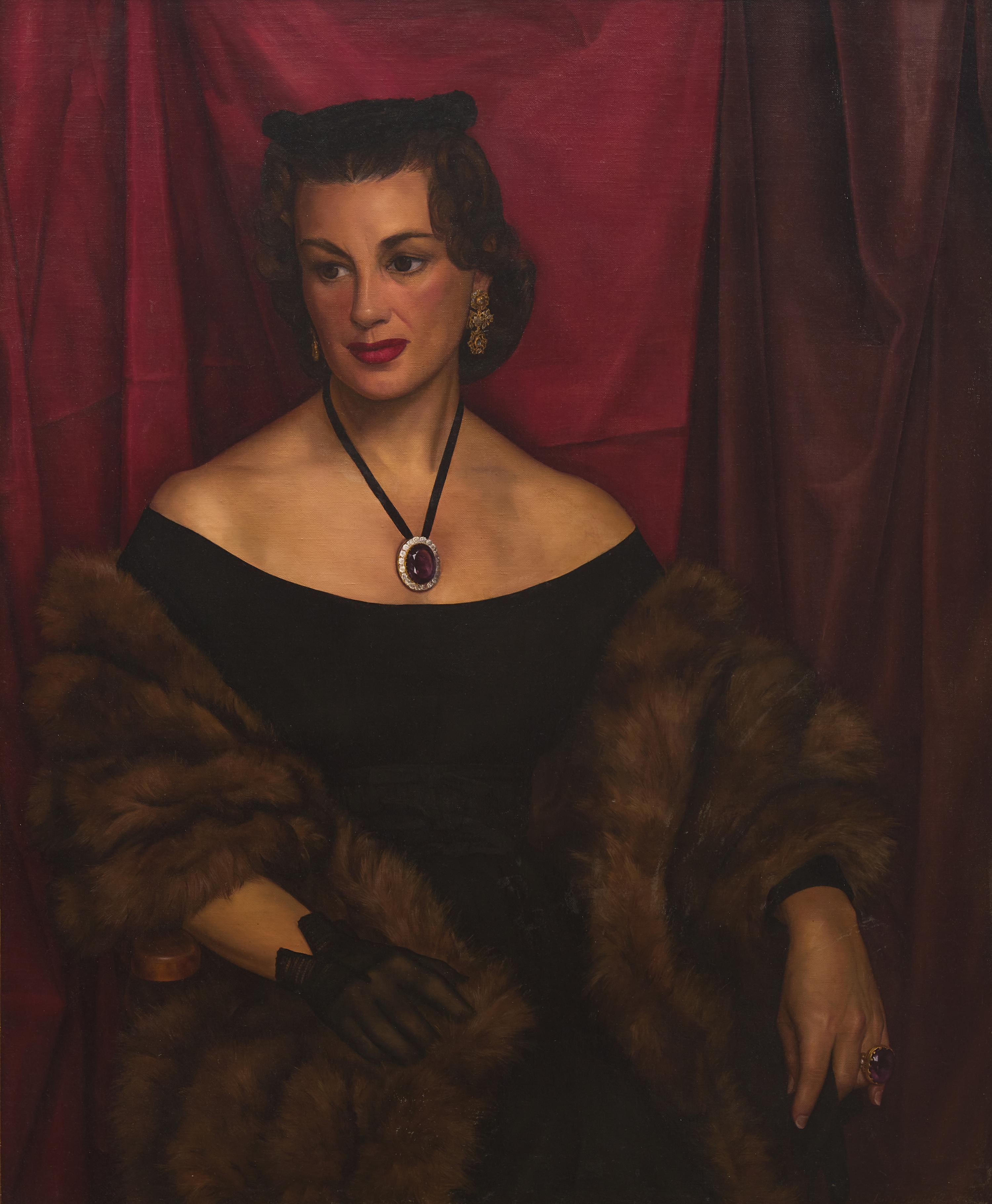
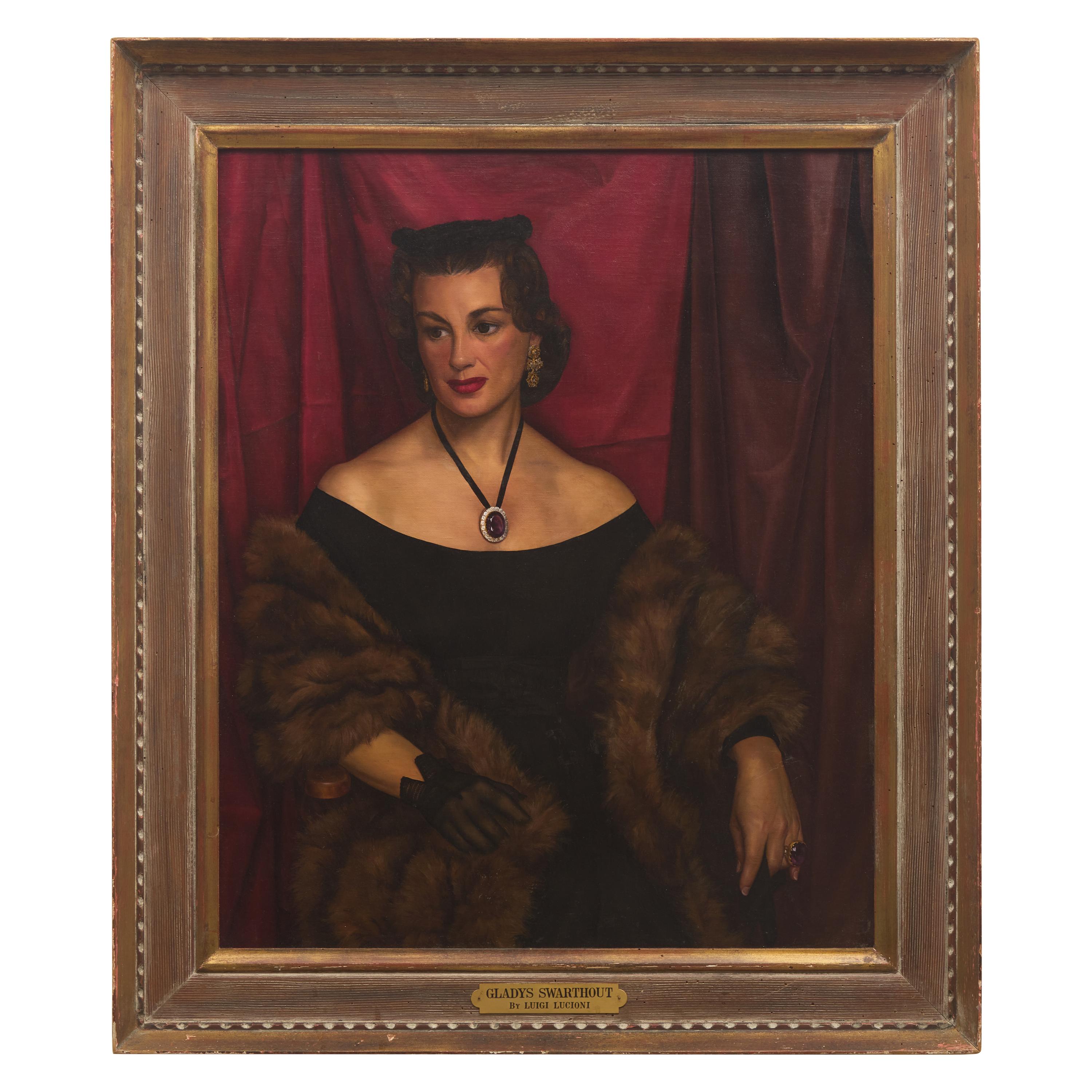
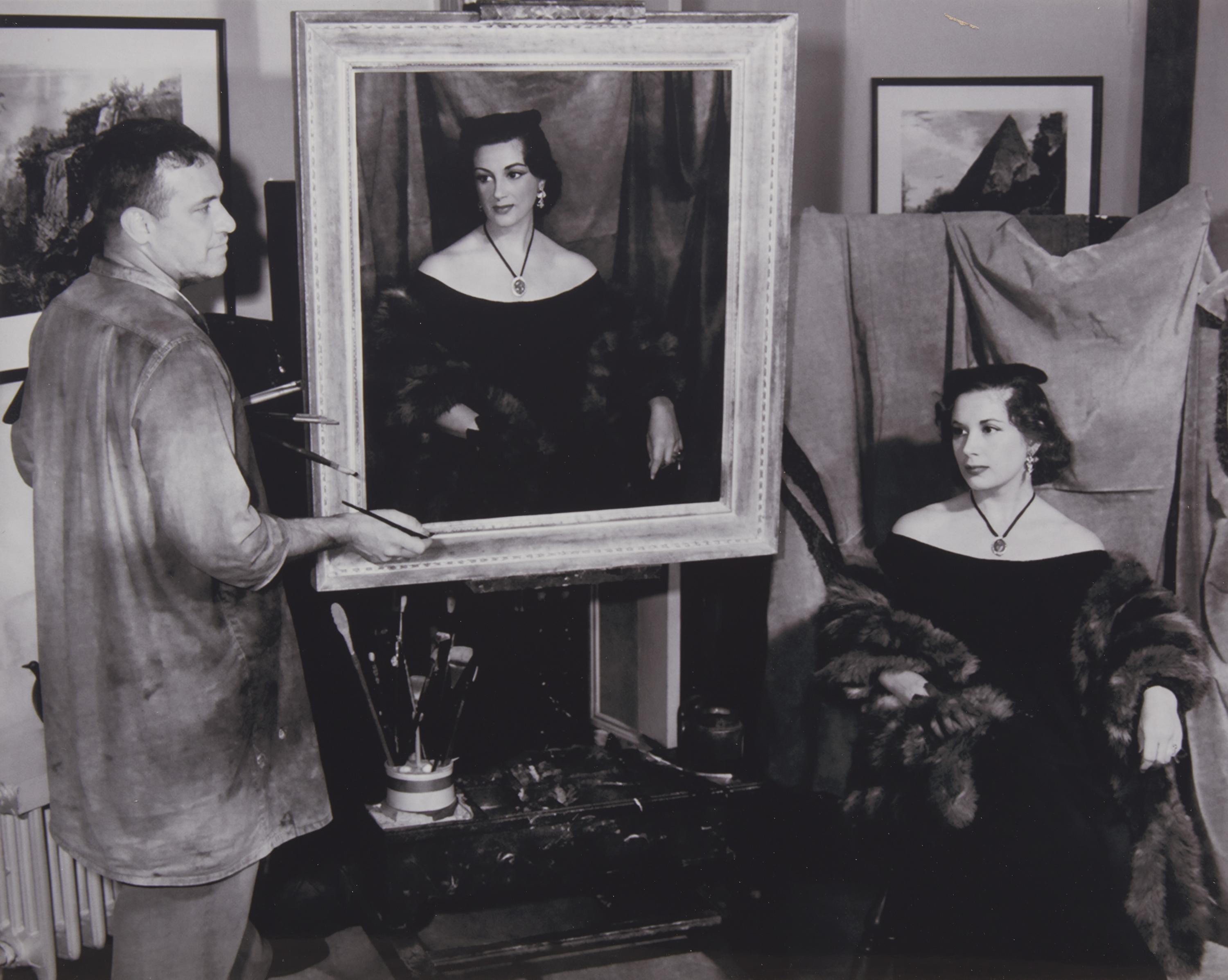
Executed in 1948, Luigi Lucioni’s Portrait of Gladys Swarthout unites two towering figures of mid-century American cultural life at the intersection of Italianate academic precision and New York theatrical glamour. Born in Malnate, Italy, and trained at Cooper Union and the National Academy of Design, Lucioni forged a distinctive brand of heightened realism—often aligned with Precisionism and Magic Realism—that earned him widespread acclaim across the 1930s and 1940s. Alongside his celebrated Vermont landscapes and still lifes, Lucioni maintained a lifelong passion for grand opera, cultivating close friendships and correspondence with leading Metropolitan Opera stars including Giovanni Martinelli, Cesare Valletti, and Swarthout herself. By 1948, the American mezzo-soprano was at the pinnacle of her fame, having captivated audiences on the Met stage, in Hollywood films, and on national radio broadcasts, making her an ideal subject for an artist deeply attuned to both operatic drama and sartorial refinement.
In his approach to the portrait, Lucioni consciously invokes the grand-manner conventions of the Italian Renaissance and Baroque masters he revered during his formative travels abroad—most notably Bronzino, Raphael, and Titian—while translating them into a distinctly postwar American idiom. Seated against a theatrical backdrop of crimson and burgundy drapery, Swarthout commands the composition in an off-the-shoulder black evening gown, a voluminous sable wrap, and a single sheer black glove, accented by an oval amethyst-and-diamond pendant and matching cocktail ring. Rather than relying on bravura painterly brushwork, Lucioni builds form through disciplined, nearly invisible glazes and razor-sharp linear control, contrasting the porcelain smoothness of the singer’s shoulders and composed countenance against the tactile plushness of the fur and the heavy, sculptural folds of the silk curtain behind her.
Within the broader trajectory of mid-century American portraiture, Portrait of Gladys Swarthout offers a counterpoint to the rising tide of Abstract Expressionism in New York during the late 1940s. Where avant-garde contemporaries prioritized gestural spontaneity and surface flatness, Lucioni emphasized draughtsmanship, psychological poise, and Old Master illusionism—qualities that had already propelled his Portrait of Ethel Waters (1939) into the canon of twentieth-century American figure painting. Here, the result is neither a stiff society likeness nor a fleeting celebrity snapshot, but a measured, enduring character study that honors Swarthout’s public stature while preserving the quiet, introspective dignity that defines Lucioni’s finest portraits.
Framed: 42 x 35 3/4 x 2 3/4 in.
The physical condition of lots in our auctions can vary due to age, normal wear and tear, previous damage, and restoration/repair. All lots are sold "AS IS," in the condition they are in at the time of the auction, and we and the seller make no representation or warranty and assume no liability of any kind as to a lot's condition. Any reference to condition in a catalogue description or a condition report shall not amount to a full accounting of condition. Condition reports prepared by Freeman's staff are provided as a convenience and may be requested from the Department prior to bidding.
The absence of a posted condition report on the Freeman's website or in our catalogues should not be interpreted as commentary on an item's condition. Prospective buyers are responsible for inspecting a lot or sending their agent or conservator to inspect the lot on their behalf, and for ensuring that they have requested, received and understood any condition report provided by Freeman's.
Please email [email protected] for any additional information or questions you may have regarding this lot.