Sale 6329
| New York
| New York
Estimate$80,000 – $120,000
Provenance:
Mr. and Mrs. JL Hurschler, Pasadena, California
Acquired from the above by a Private Collector, Los Angeles in 1974
Thence by descent to the present owner
Exhibited:
San Francisco, California, Plaza Gallery, International Contemporary Tapestries by Artist Weavers from the Hurschler Collection, July 1 - August 23, 1975
Lot Essay:
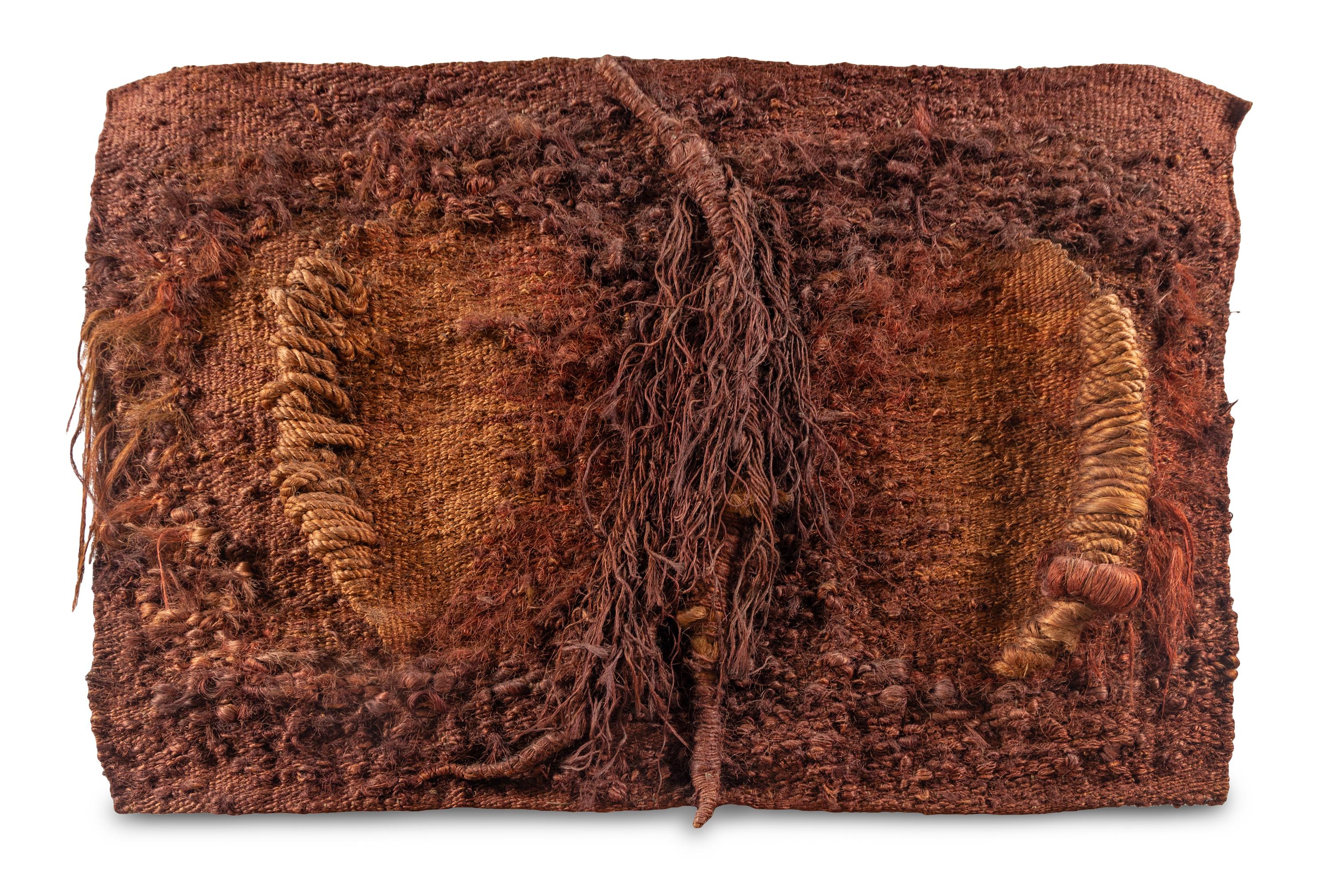
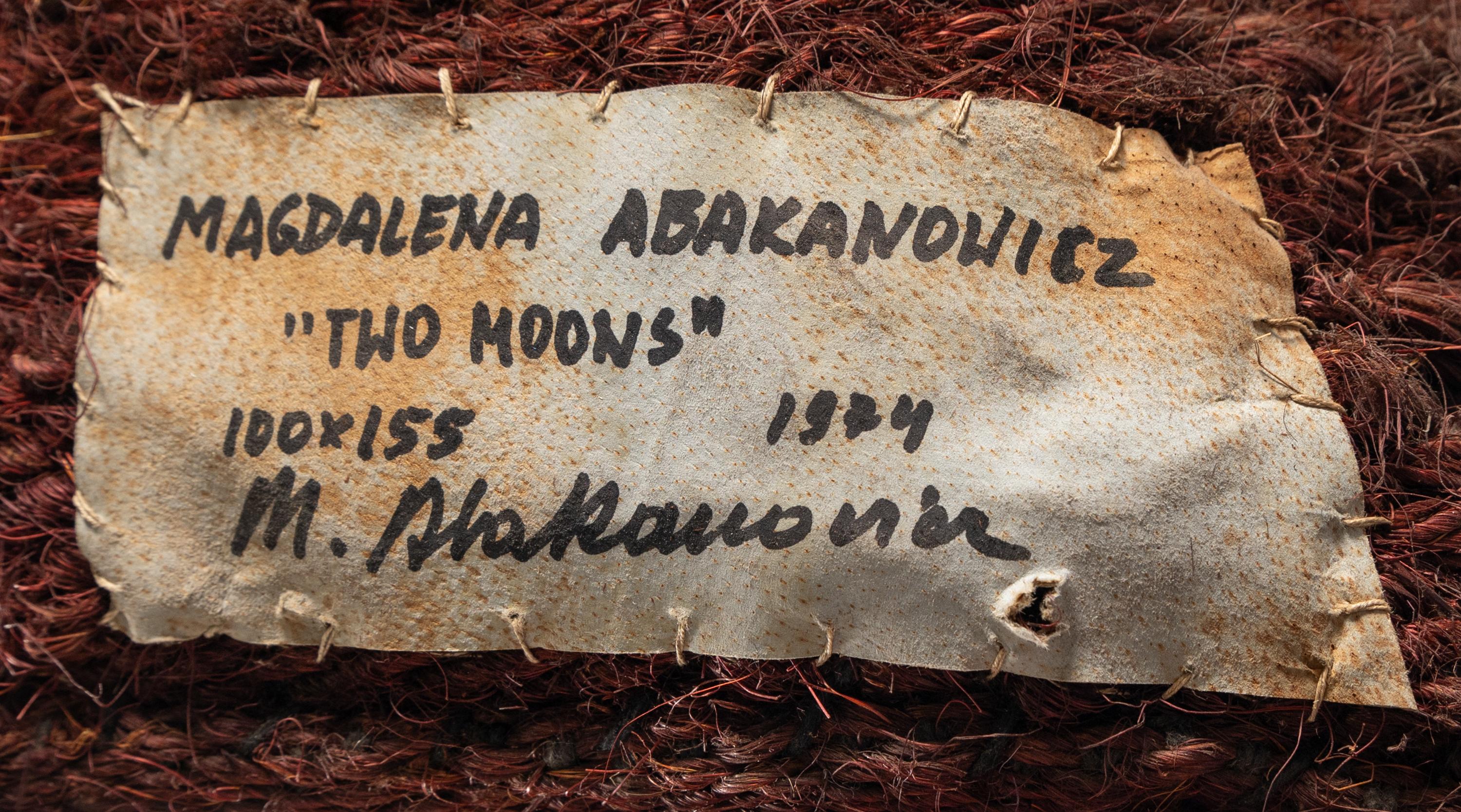
Magdalena Abakanowicz (Polish, 1930–2017) reshaped the language of installation art, creating works that are not simply seen, but felt—visceral experiences that live somewhere between the deeply personal and the overwhelmingly universal. In this sale, we are pleased to present Two Moons (1974), a work that exemplifies this duality.
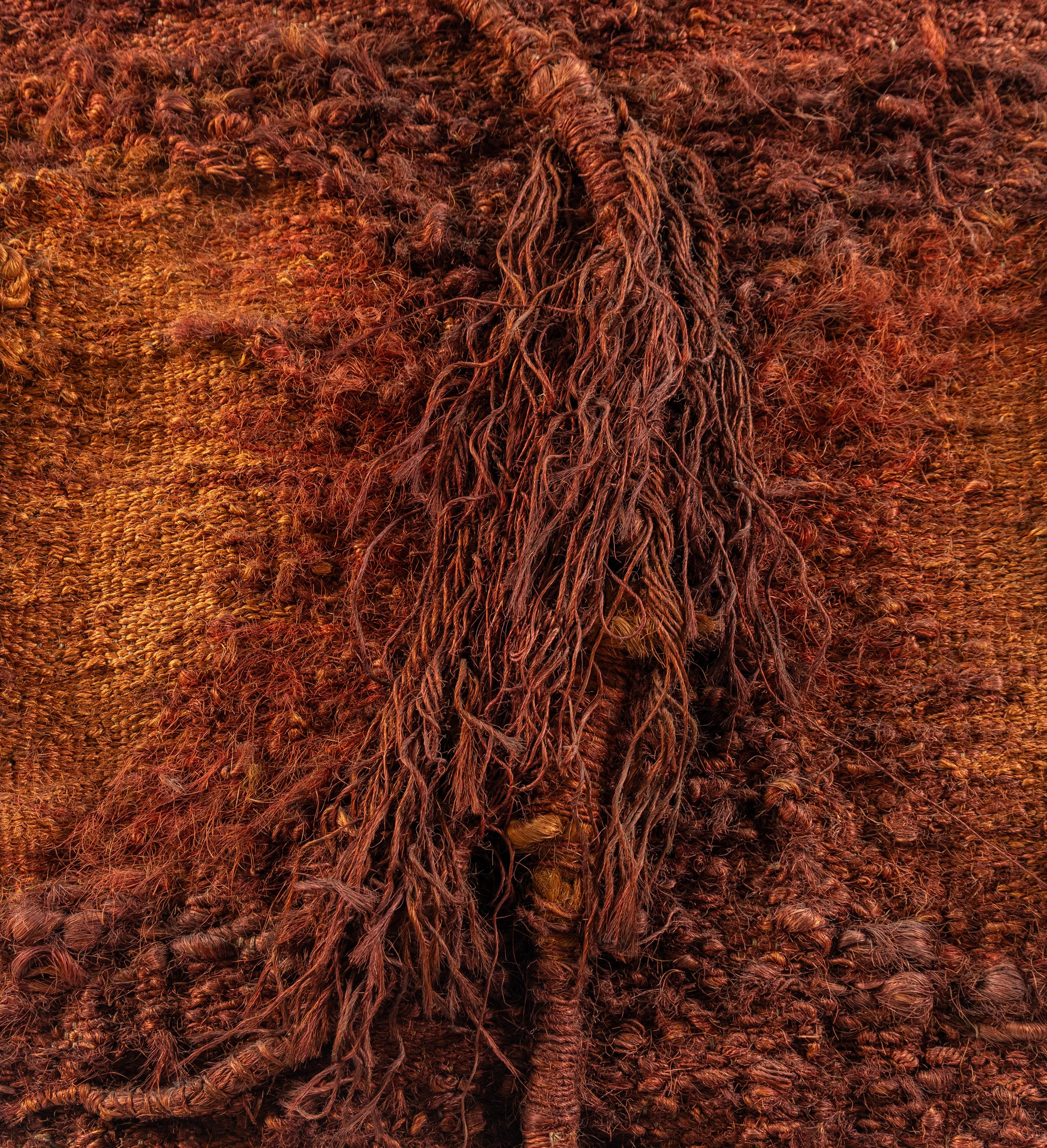
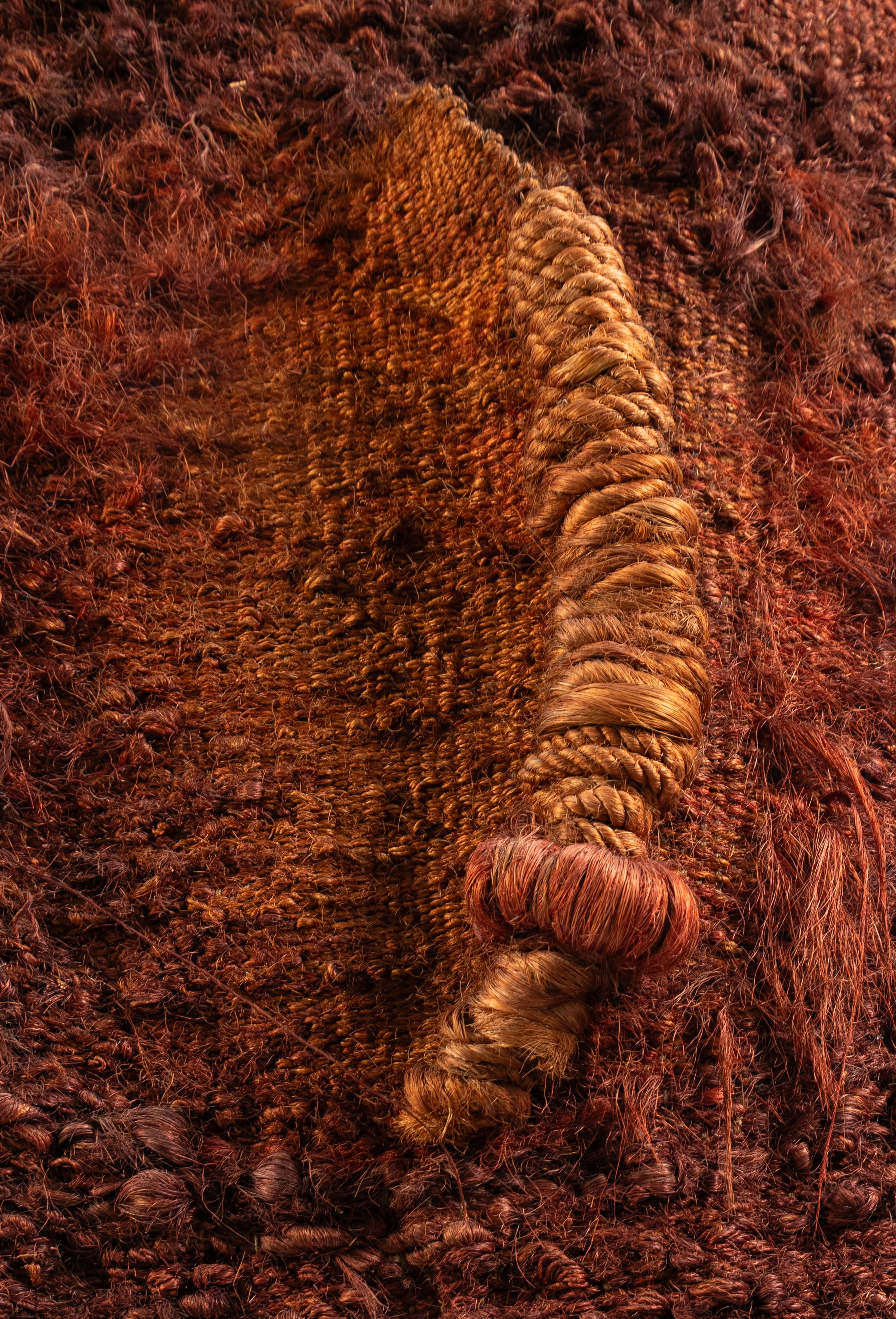
Two Moons is rooted in the artist’s radical experimentation with fiber in the 1960s and ’70s, a period that saw her pushing against the limits of traditional tapestry. Coarse, layered, and deliberately constructed, the piece invites an intimate encounter with material and form. Originally acquired by Mr. and Mrs. JL Hurschler of Pasadena, California, it was exhibited the following year in International Contemporary Tapestries by Artist Weavers from the Hurschler Collection at the Plaza Gallery in San Francisco. This early exposure situates the work within the arc of Abakanowicz’s ascent, when her textile-based practice was gaining critical international recognition.
Born into a noble family just outside of Warsaw, Abakanowicz—then Marta—spent her early childhood in relative peace before the violence of World War II engulfed her world. By age fourteen, she was serving as a nurse’s aide in a war hospital, witnessing atrocities up close. Her mother was shot by a German soldier, and the family fled through shifting frontlines. After the war, she changed her name to Magdalena, took on physical labor to survive in postwar Warsaw, and eventually enrolled at the Academy of Fine Arts.
Though discouraged from pursuing painting—deemed too “masculine”—Abakanowicz embraced fiber, a medium historically coded as feminine and craft-based, and transformed it into something powerful and sculptural. Free from the ideological confines of Socialist Realism, she created a visual language that was tactile, mysterious, and entirely her own.
Her early works in weaving, along with gouaches and watercolors, were shown in her first solo exhibition in Warsaw in 1960. Two years later, her inclusion in the inaugural Biennale Internationale de la Tapisserie in Lausanne marked a turning point. It was there that the monumental Abakans took form—suspended, fleshy structures woven from found and natural materials like sisal, hemp, and horsehair.
These towering fiber forms—some stretching over thirteen feet—evoke bodies, wombs, skins. They envelop the viewer, suggesting both protection and unease. Two Moons operates in this same lineage, with its densely worked surface and biomorphic presence. It is a space in an of itself, one the viewer is compelled to enter, physically or psychologically.
Abakanowicz often said her work explored the human condition by dissecting it. “When examining man, I am in fact examining myself,” she explained. “My forms are the skins I strip off myself one by one, marking the milestones along my road.” That sense of stripping down, of revealing something raw beneath the surface, is palpable in Two Moons.
Later in her career, Abakanowicz turned increasingly to figurative sculpture, creating groups of fragmented bodies that stand together yet remain emotionally isolated. Agora (2004–06), her permanent installation of 106 headless iron figures in Chicago’s Grant Park, is a haunting monument to presence and absence, individuality and collectivity.
Abakanowicz died in Warsaw in 2017, leaving behind a vast, shape-shifting body of work that continues to influence contemporary sculpture, fiber art, and installation. Her legacy lies not only in what she made, but in how she made it—and how her work compels us to feel, to inhabit, and to reflect.
Please note this work lacks a hanging mechanism.
The physical condition of lots in our auctions can vary due to age, normal wear and tear, previous damage, and restoration/repair. All lots are sold "AS IS," in the condition they are in at the time of the auction, and we and the seller make no representation or warranty and assume no liability of any kind as to a lot's condition. Any reference to condition in a catalogue description or a condition report shall not amount to a full accounting of condition. Condition reports prepared by Freeman's staff are provided as a convenience and may be requested from the Department prior to bidding.
The absence of a posted condition report on the Freeman's website or in our catalogues should not be interpreted as commentary on an item's condition. Prospective buyers are responsible for inspecting a lot or sending their agent or conservator to inspect the lot on their behalf, and for ensuring that they have requested, received and understood any condition report provided by Freeman's.
Please email [email protected] for any additional information or questions you may have regarding this lot.