Sale 6380
| Philadelphia
| Philadelphia
Estimate$70,000 – $100,000
Provenance:
Frost & Reed, Ltd., London
Acquired directly from the above by the present owner in 1984.
Literature:
Ron Ranson, The Maritime Paintings of Montague Dawson, Newton Abbot, Devon, 1993, pp. 64-65, illus.
Lot Essay:
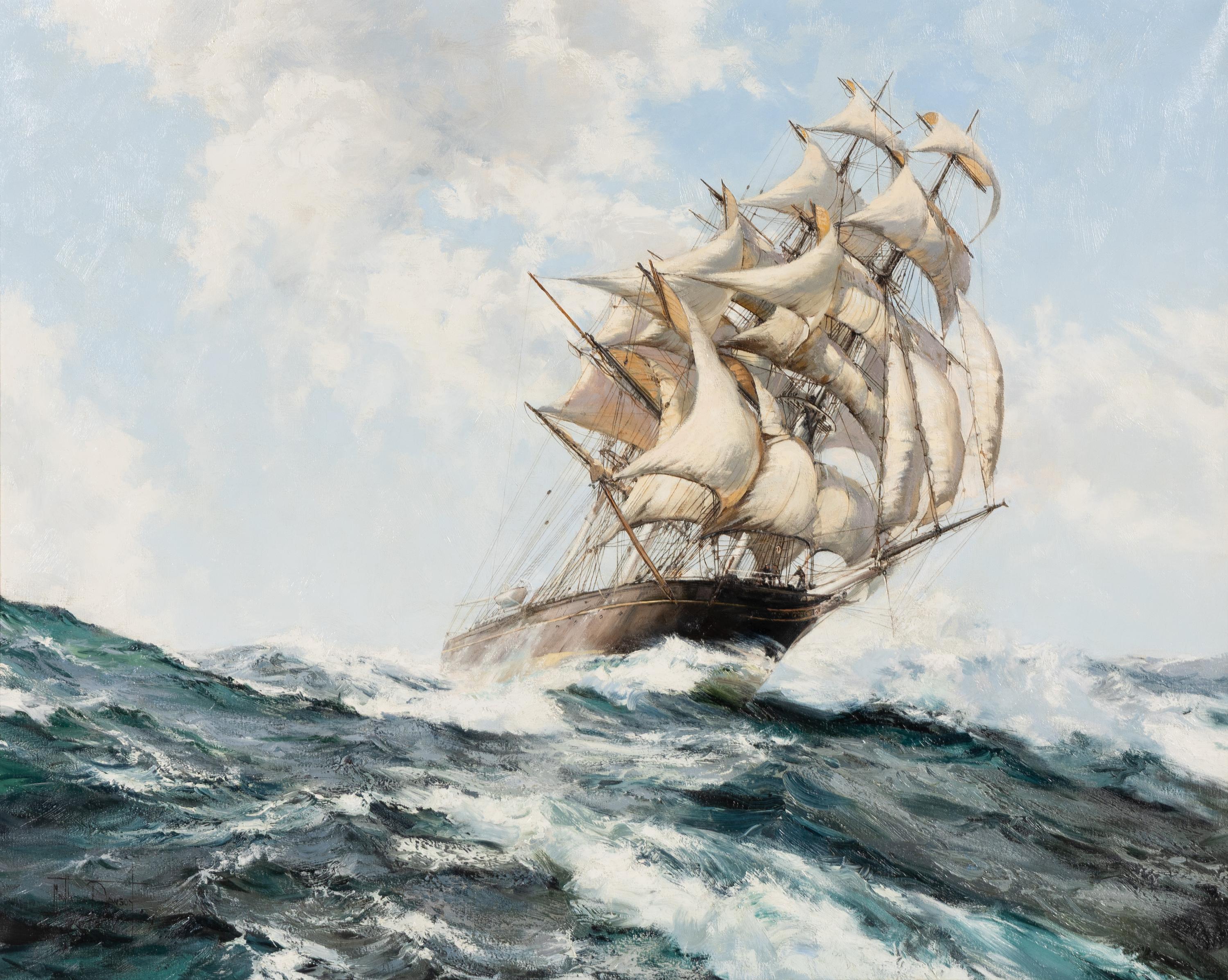
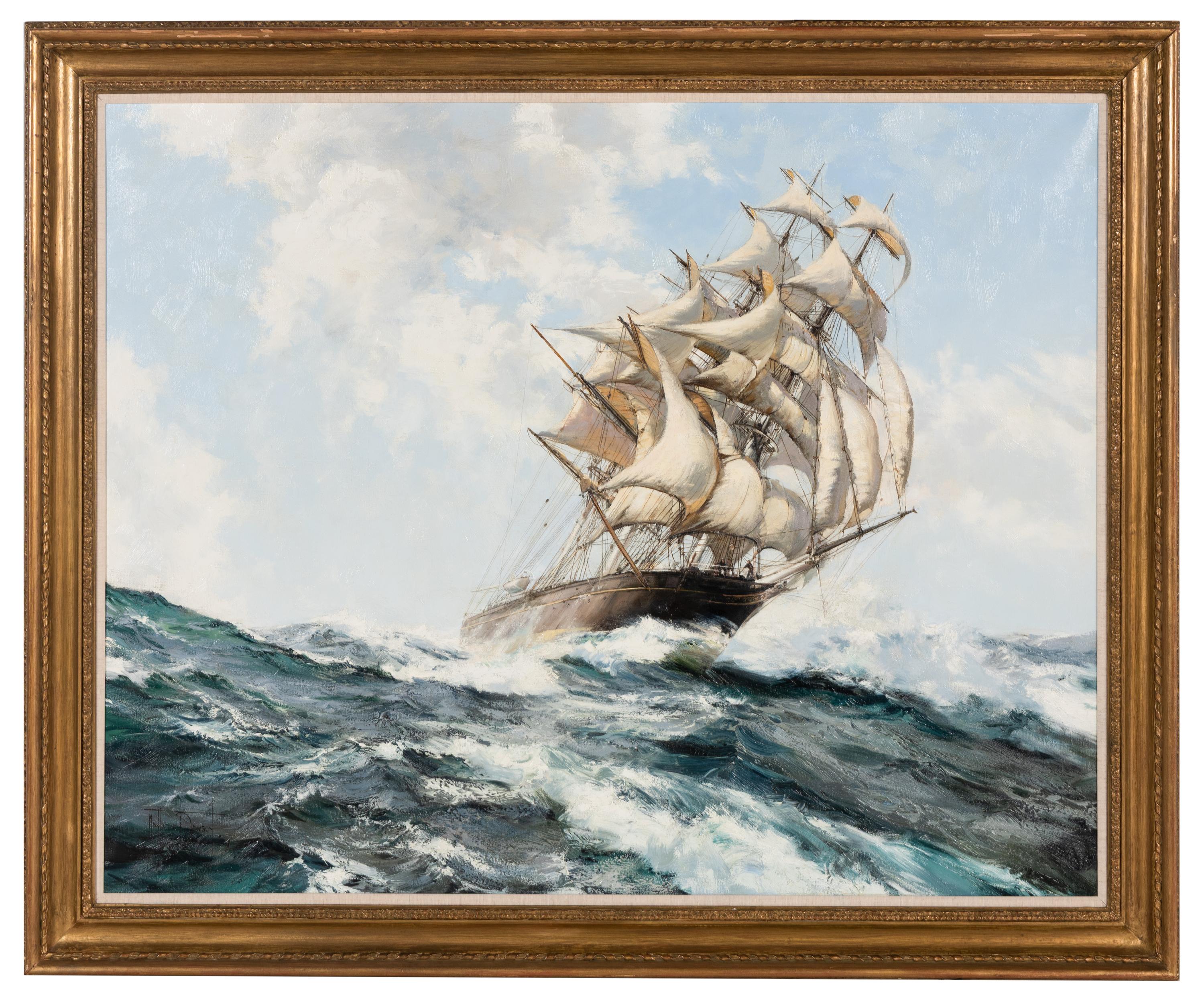
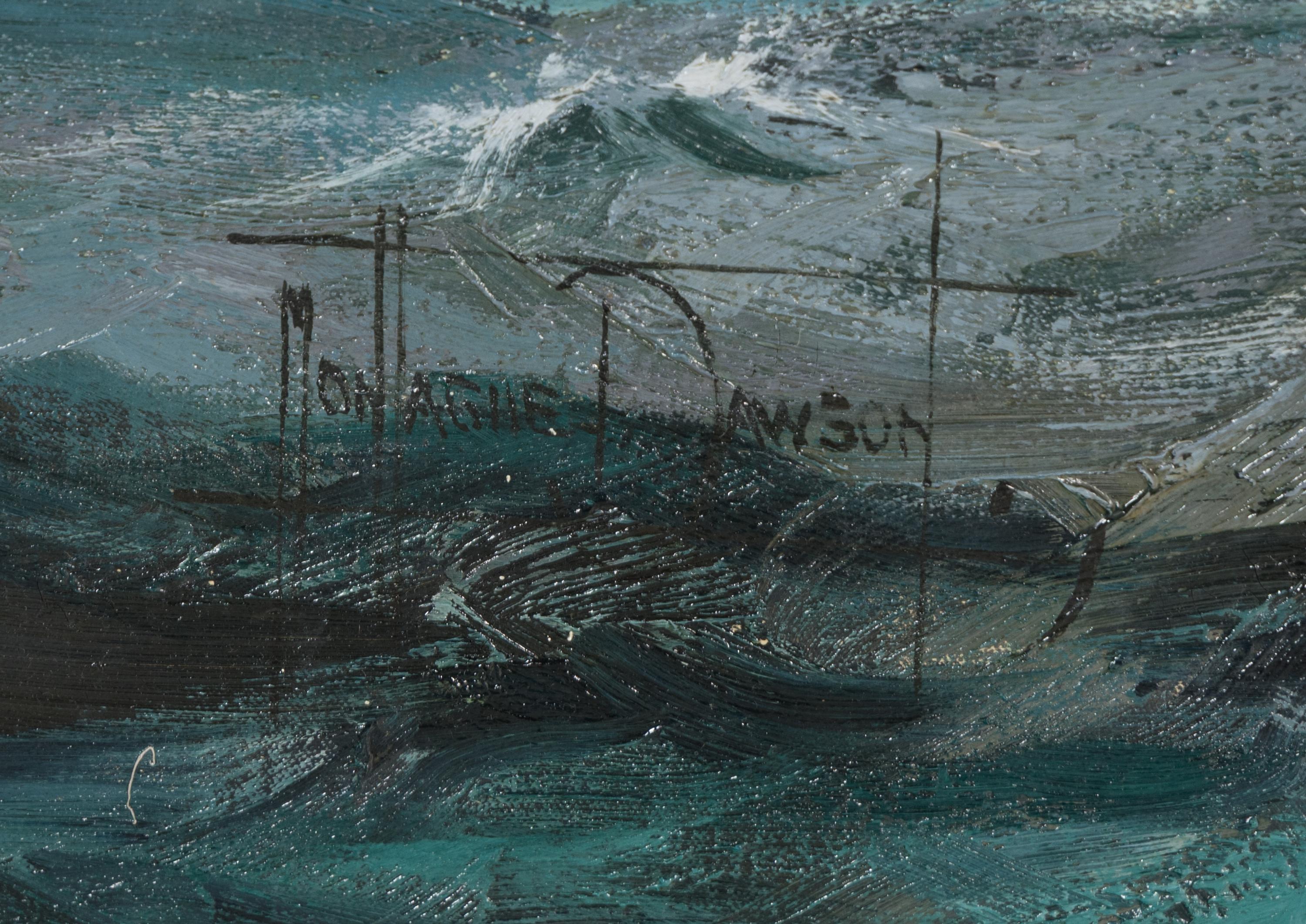
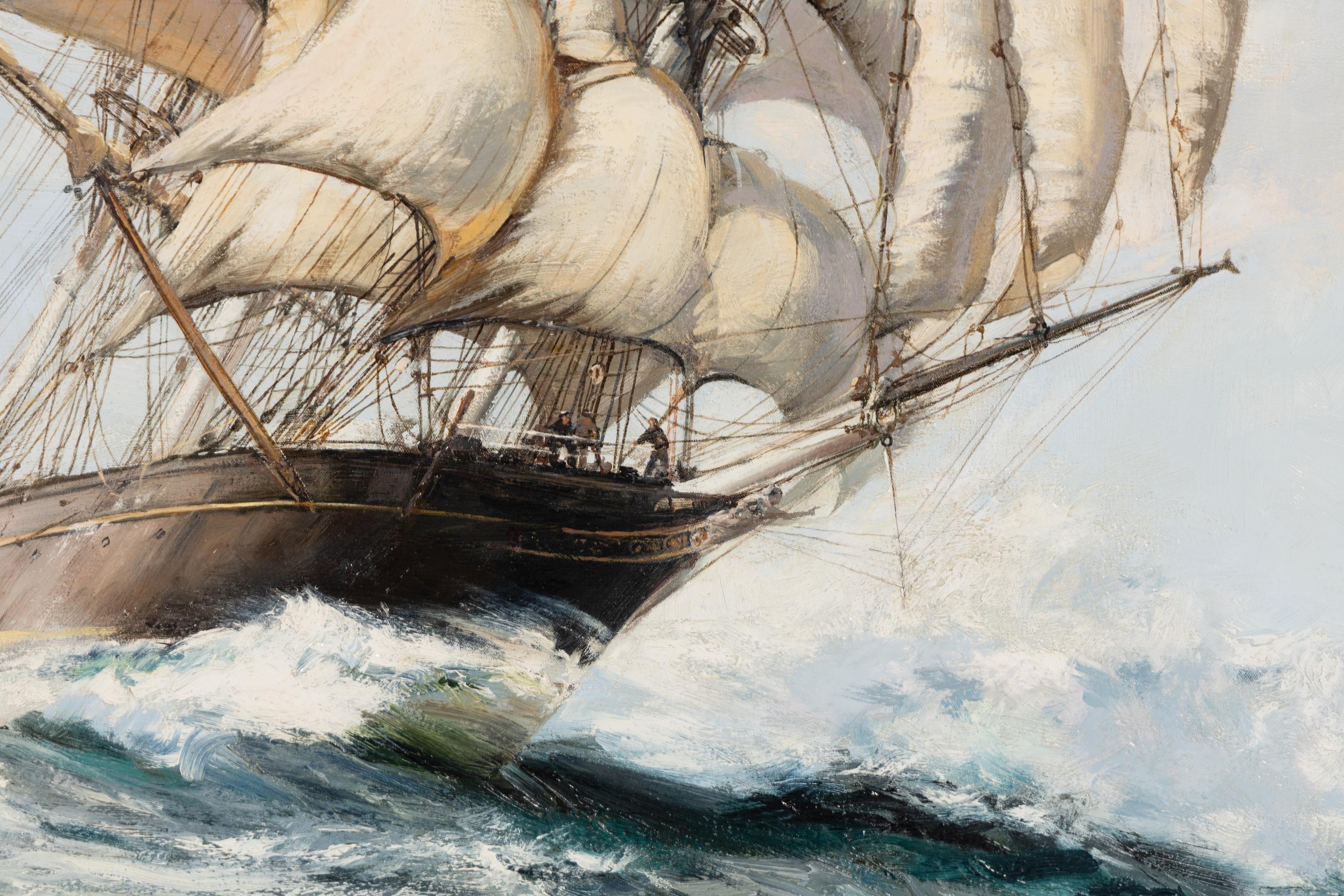
Painted by Montague Dawson, one of the foremost nautical painters of the 20th century, The Flying Clipper “The Cutty Sark” is a dynamic depiction of the clipper as she races back towards England in an attempt to win another of the great Tea Races. The Scottish shipbuilding firm Scott & Linton of Dumbarton was commissioned by Captain John Willis in 1869 to build the ship, whose famous racing career began with her first voyage to China in 1870. The name of the Cutty Sark is taken from one of Robbie Burns’s most famous poems, in which Tam o’Shanter’s beautiful witch dances in her ‘cutty sark,’ or short chemise. In this guise, she formed the figurehead of the new clipper, which can be seen with long hair and chemise flowing in the wind.
Although at first thought to be either unlucky or a failure due to not making the voyage from Shanghai to England in less than a hundred days, she later proved to be one of the fastest ships ever built. One of Cutty Sark’s outstanding voyages was to China in the winter of 1870/71, when she took only 98 days from London to Shanghai. During this voyage she encountered strong gales, snow, thundery squalls, and was also becalmed outside the Manipa Strait. n 1895, the clipper was sold to a firm in Lisbon, and her name changed to Ferreira. Under both names, the clipper was to go on to transport thousands of tons of goods all over the world, with a career often characterized by lucky escapes. The Suez Canal forced it from the tea trade for which it had been built, yet it thrived as a cargo ship bringing Australian wool to the UK. In 1906 it survived a hurricane in Florida which killed 134 people. Then, in 1916, it was laid up for over two years after nearly sinking off the coast of South Africa (however, this meant it avoided the threat of German U-boats).
In 1922, the aging clipper was purchased by Captain Wilfred Dowman of Trevissone, near Plymouth. On its penultimate voyage, the ship had been damaged in a storm and called into Falmouth for repairs, where she was recognized by the captain. 27 years previously, Dowman had been an apprentice on board the sailing ship Hawksdale, when Cutty Sark surged past, leaving a lasting impression on the young man. He re-rigged her to her original sail and spar plan, in the hopes of racing her to Port Jackson. However, in 1936 Dowman died before being able to do so. His widow, Catherine Dowman, then presented the Cutty in 1938 to the Thames Nautical College, in Greenwich, where she was to be used as a training ship for boys seeking careers in the Royal and Merchant Navies.
The outbreak of World War II led to the boys being moved ashore, and the Cutty Sark again began to fall again into disrepair. Eventually, Frank Carr, the determined Director of the National Maritime Museum, in Greenwich, raised funds and interest for the ship’s preservation, and in 1954 she was installed at a dry dock located outside the museum. The sole surviving tea clipper in the world was opened to the public in 1957 by HM The Queen in 1957, where she can still be visited today.
Framed: 47 x 56 3/4 in.
The physical condition of lots in our auctions can vary due to age, normal wear and tear, previous damage, and restoration/repair. All lots are sold "AS IS," in the condition they are in at the time of the auction, and we and the seller make no representation or warranty and assume no liability of any kind as to a lot's condition. Any reference to condition in a catalogue description or a condition report shall not amount to a full accounting of condition. Condition reports prepared by Freeman's staff are provided as a convenience and may be requested from the Department prior to bidding.
The absence of a posted condition report on the Freeman's website or in our catalogues should not be interpreted as commentary on an item's condition. Prospective buyers are responsible for inspecting a lot or sending their agent or conservator to inspect the lot on their behalf, and for ensuring that they have requested, received and understood any condition report provided by Freeman's.
Please email [email protected] for any additional information or questions you may have regarding this lot.