To request further details about this lot, please email [email protected]

Jacob Coley
Senior Vice President, Head of Department, Antiquities and Ancient Art
Sale 6428
| Chicago
| Chicago
To request further details about this lot, please email [email protected]
Jacob Coley
Senior Vice President, Head of Department, Antiquities and Ancient Art
Estimate$40,000 – $60,000
Provenance:
Omar Pascha Sultan, Paris, prior to 1929.
Mathias Komor, New York, 1969. [Inv. no. C875]
Mrs. Sidney F. Brody (1916-2009), California.
Christie’s, New York, Antiquities: Including Property from the Collection of Max Palevsky, 9 December 2010, Lot 22.
Published:
Collection de feu Omar Pacha Sultan, Catalogue descriptif, Paris, 1929, no. 81, pl. XIV.
R. Bianchi, "A Bronze Reliquary for an Ichneumon Dedicated to the Egyptian Goddess Wadjet" Arts 11, 2022.
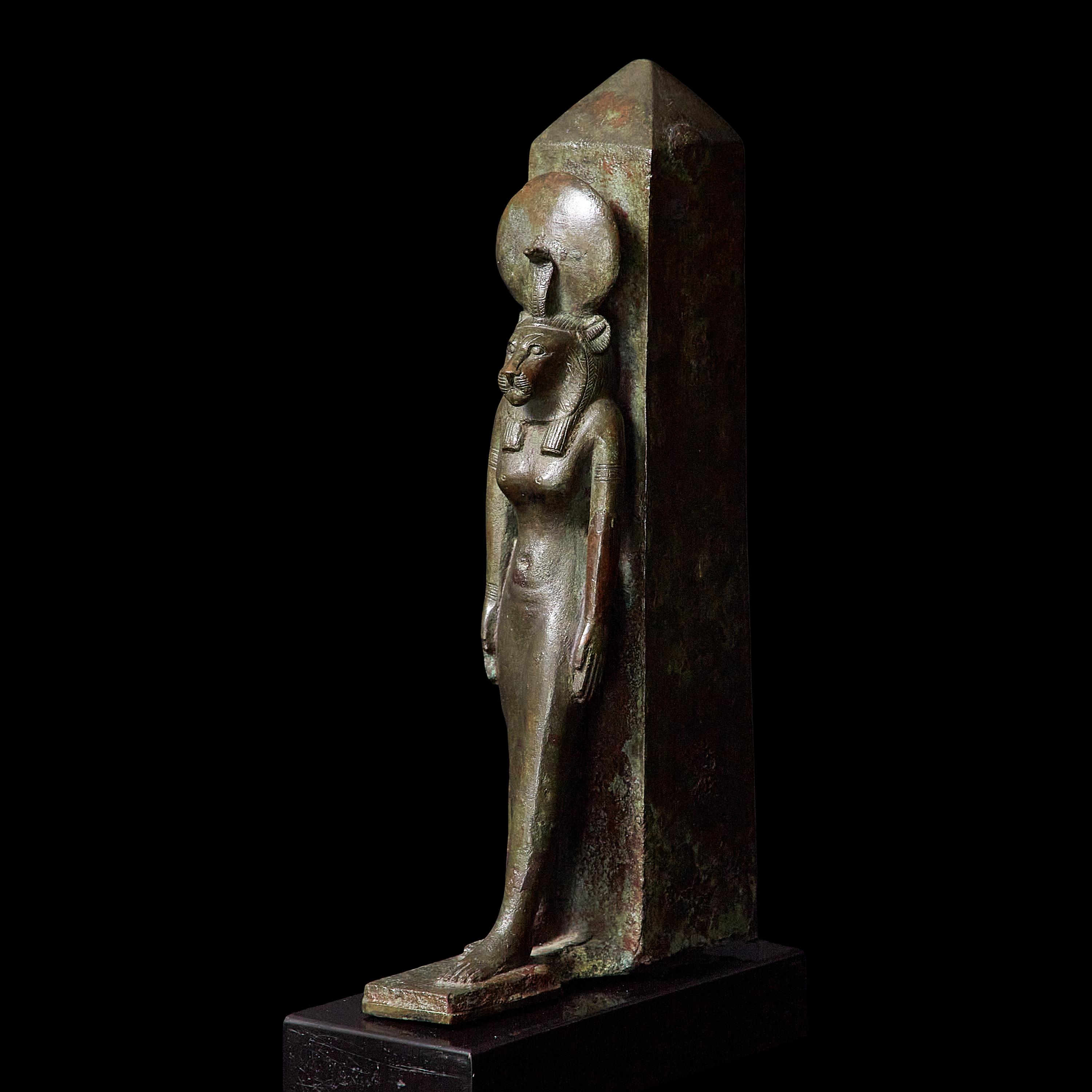
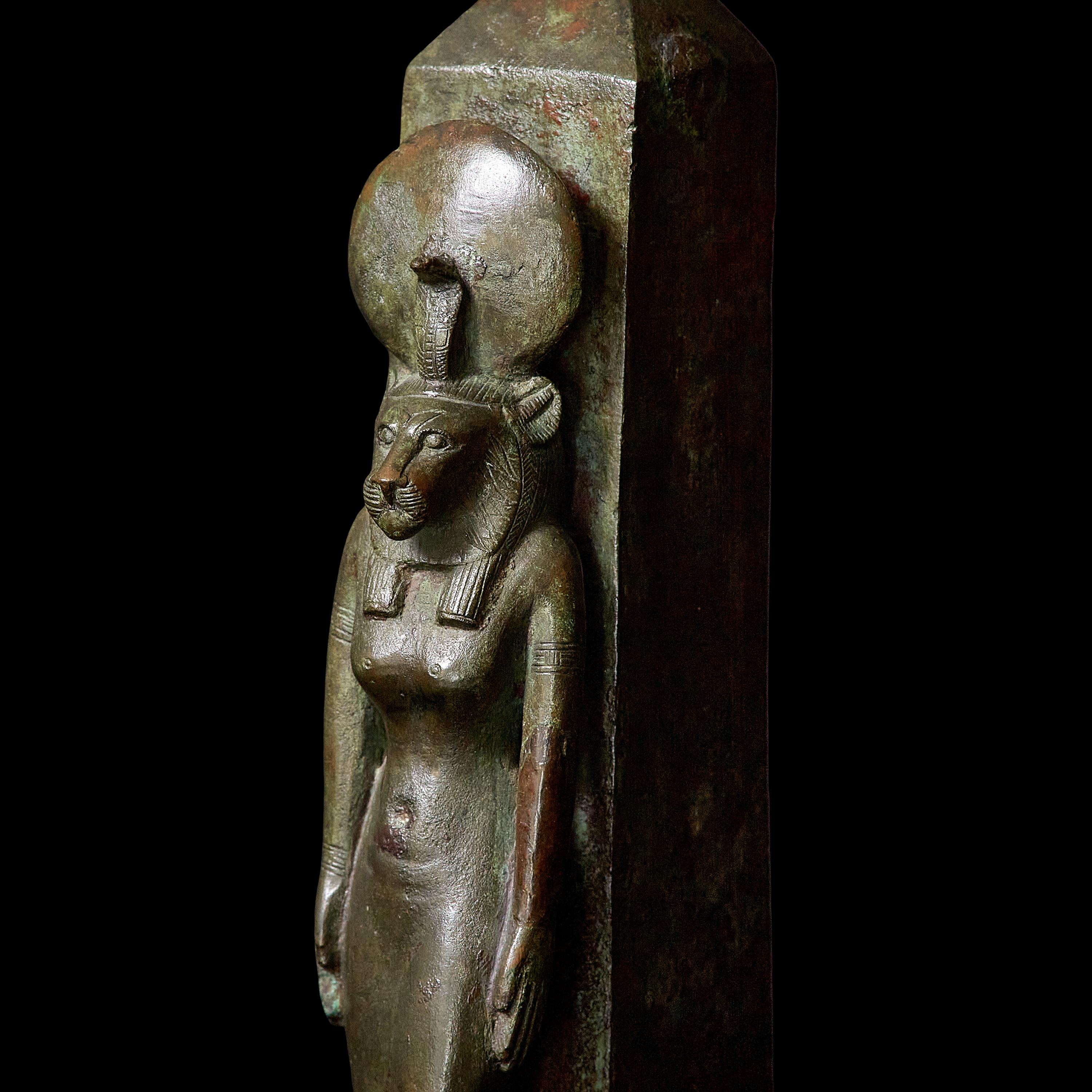
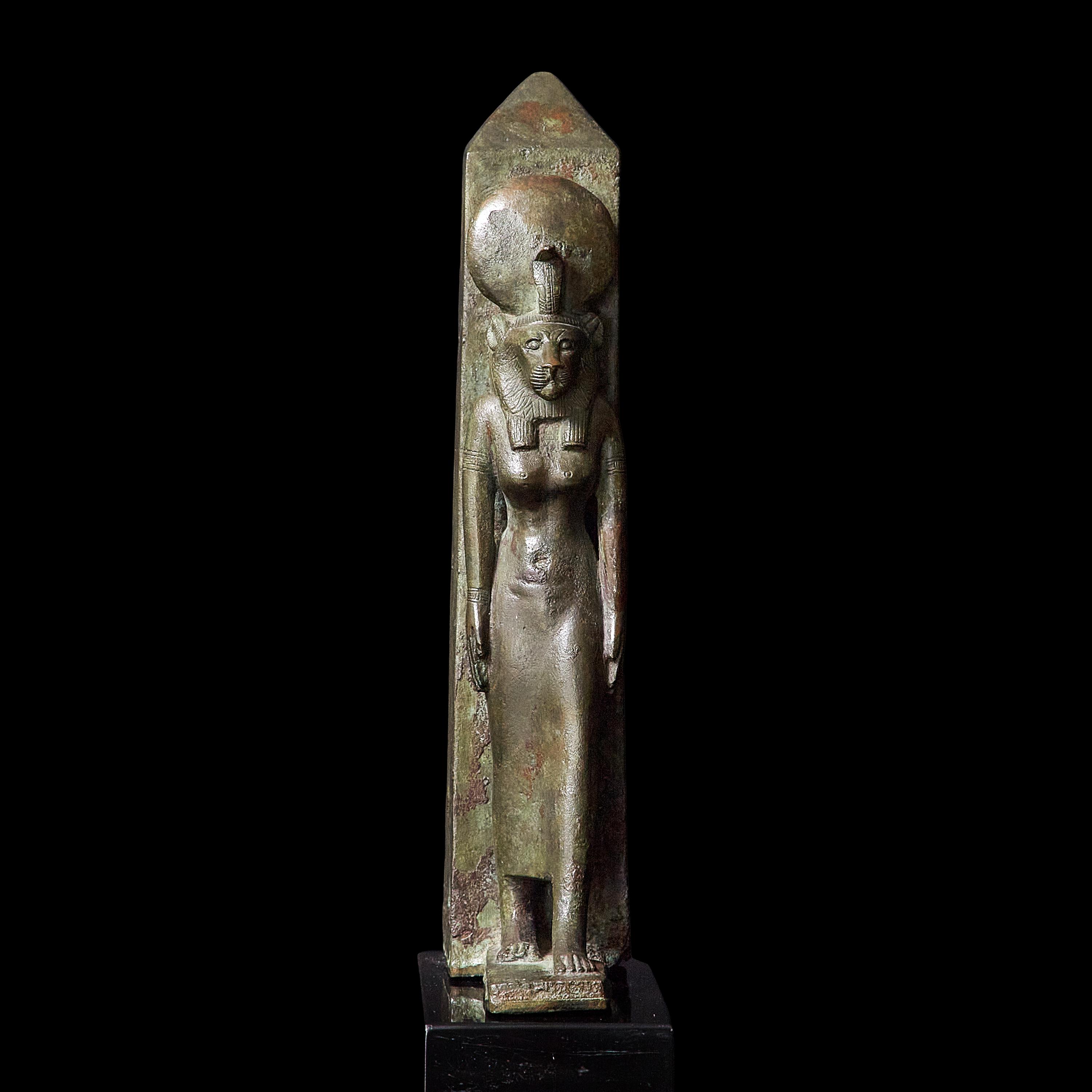
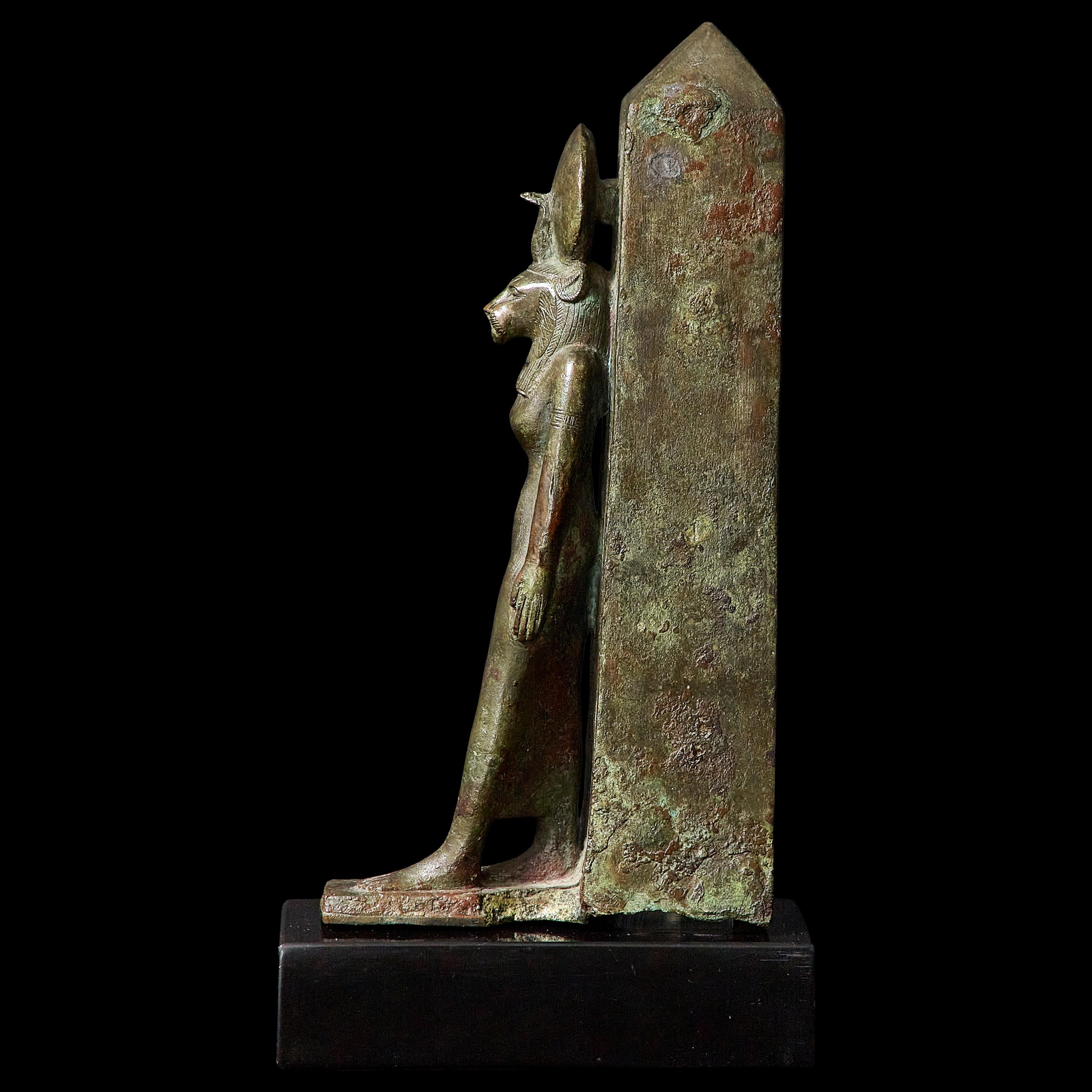
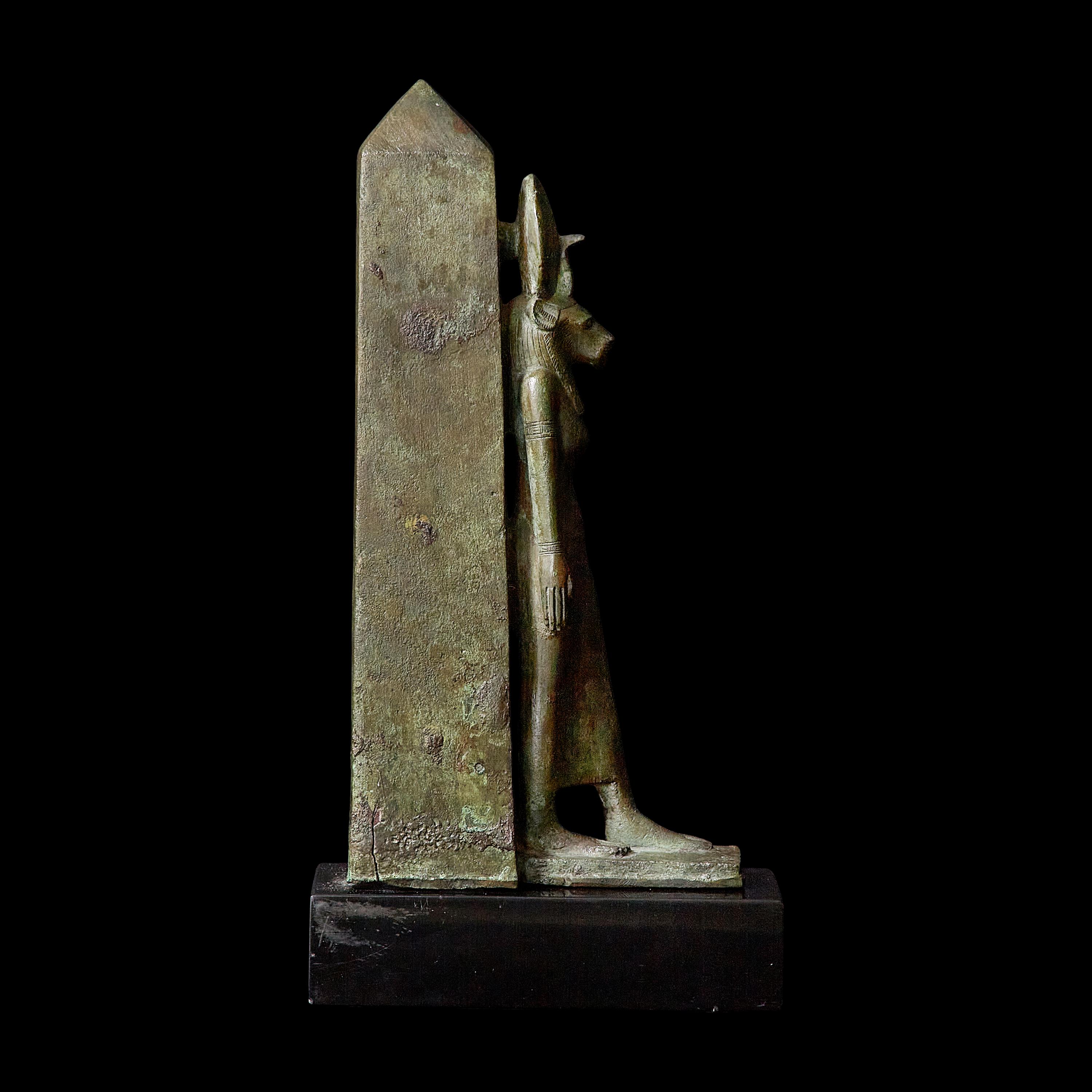
This bronze reliquary features a striking depiction of a lion-headed goddess emerging from an obelisk, a powerful symbol of the sun's rays. The representation of goddesses with feline heads—such as Sekhmet, Tefnut, Bastet, and Wadjet—reflects their protective and nurturing attributes. The pronounced cobra rising from her sun-disk headdress suggests a strong connection to Wadjet, a deity associated with protection for both the sun god Ra and the pharaoh. In her cobra form, known as the uraeus, she served as a powerful emblem of royalty, often seen adorning pharaonic crowns.
The ichneumon (Egyptian mongoose), which may have once been housed within this reliquary, symbolizes protection against snakes, illustrating the duality of the goddess and her sacred predator. This votive offering likely aimed to ensure divine safeguarding. While such reliquaries were produced in large numbers during the Late Period, this example exemplifies remarkable individual craftsmanship. The intricate details—the tripartite wig, the cobra's textured body, and the geometric designs on the bracelets—demonstrate the advanced lost-wax casting technique recently perfected in Egypt, solidifying the artistry of this significant goddess.
For further insights on this bronze reliquary, see R. Bianchi, "A Bronze Reliquary for an Ichneumon Dedicated to the Egyptian Goddess Wadjet," Arts 11, 2022, no. 1, p. 21. For similar examples of bronze lion-headed goddesses with obelisks, see The Walters Art Museum, Baltimore (Acc. no. 54.993), and Rijksmuseum van Oudheden, Leiden (Acc. no. F 1953/5.2).
Inspected under UV light and 10x loupe. Loss to small section of plinth behind proper left leg. Proper right back corner of obelisk with minor crack and loss not affecting overall stability. Areas of oxidation with varying patina typical of age. Overall in very fine and attractive condition. With Mathias Komor inventory label affixed to bottom of proper back interior of obelisk. Height with stand 24.8 cm (9 3/4 inches).
The physical condition of lots in our auctions can vary due to age, normal wear and tear, previous damage, and restoration/repair. All lots are sold "AS IS," in the condition they are in at the time of the auction, and we and the seller make no representation or warranty and assume no liability of any kind as to a lot's condition. Any reference to condition in a catalogue description or a condition report shall not amount to a full accounting of condition. Condition reports prepared by Freeman's staff are provided as a convenience and may be requested from the Department prior to bidding.
The absence of a posted condition report on the Freeman's website or in our catalogues should not be interpreted as commentary on an item's condition. Prospective buyers are responsible for inspecting a lot or sending their agent or conservator to inspect the lot on their behalf, and for ensuring that they have requested, received and understood any condition report provided by Freeman's.
Please email [email protected] for any additional information or questions you may have regarding this lot.