To request further details about this lot, please email [email protected]

Nick Coombs
Vice President, Senior Specialist, European Furniture & Decorative Arts
Sale 6448
| Chicago
| Chicago
To request further details about this lot, please email [email protected]
Nick Coombs
Vice President, Senior Specialist, European Furniture & Decorative Arts
Estimate$4,000 – $6,000
Provenance:
The Country Seat, Oxfordshire, November 10, 1993
Note:
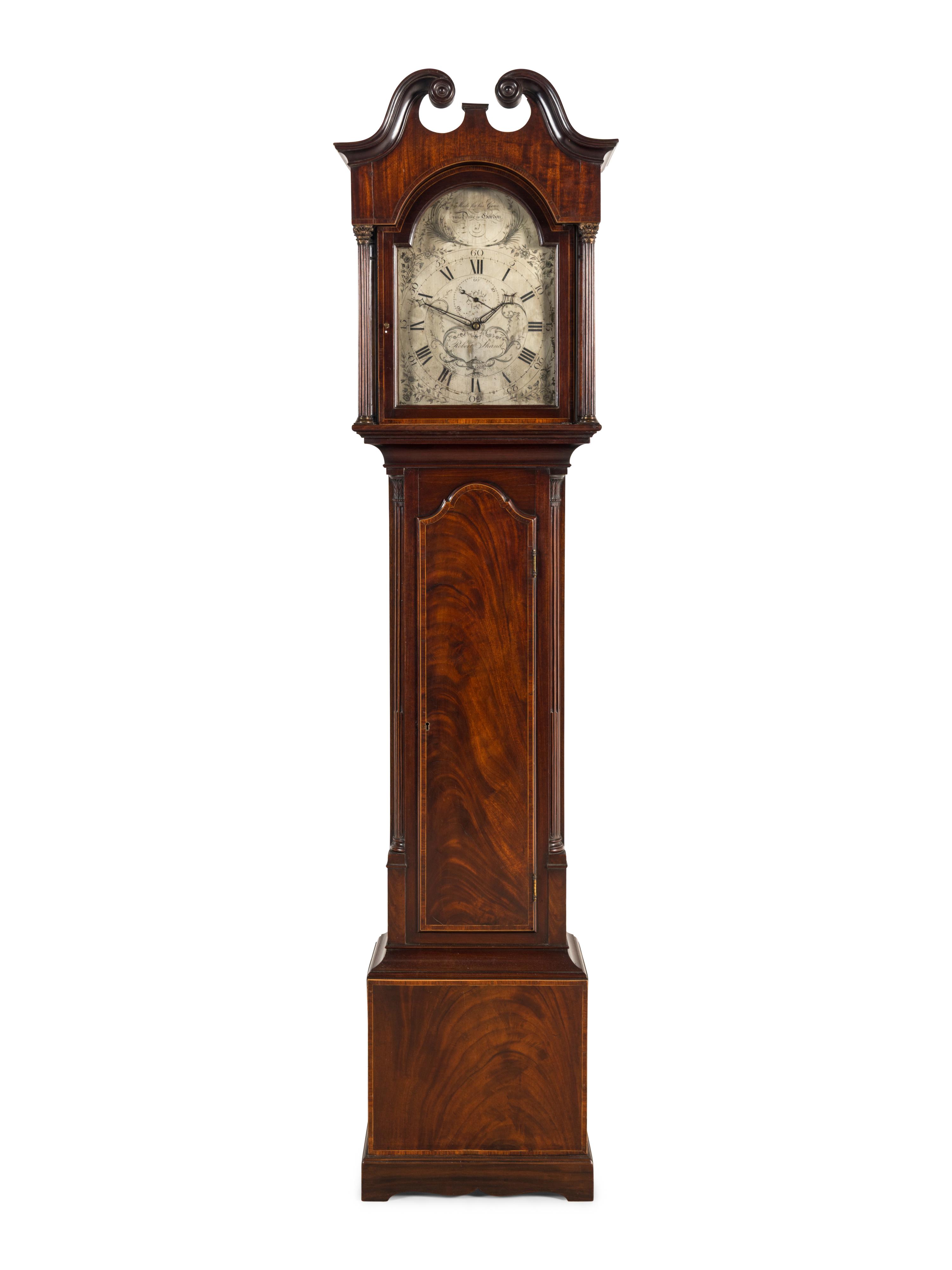
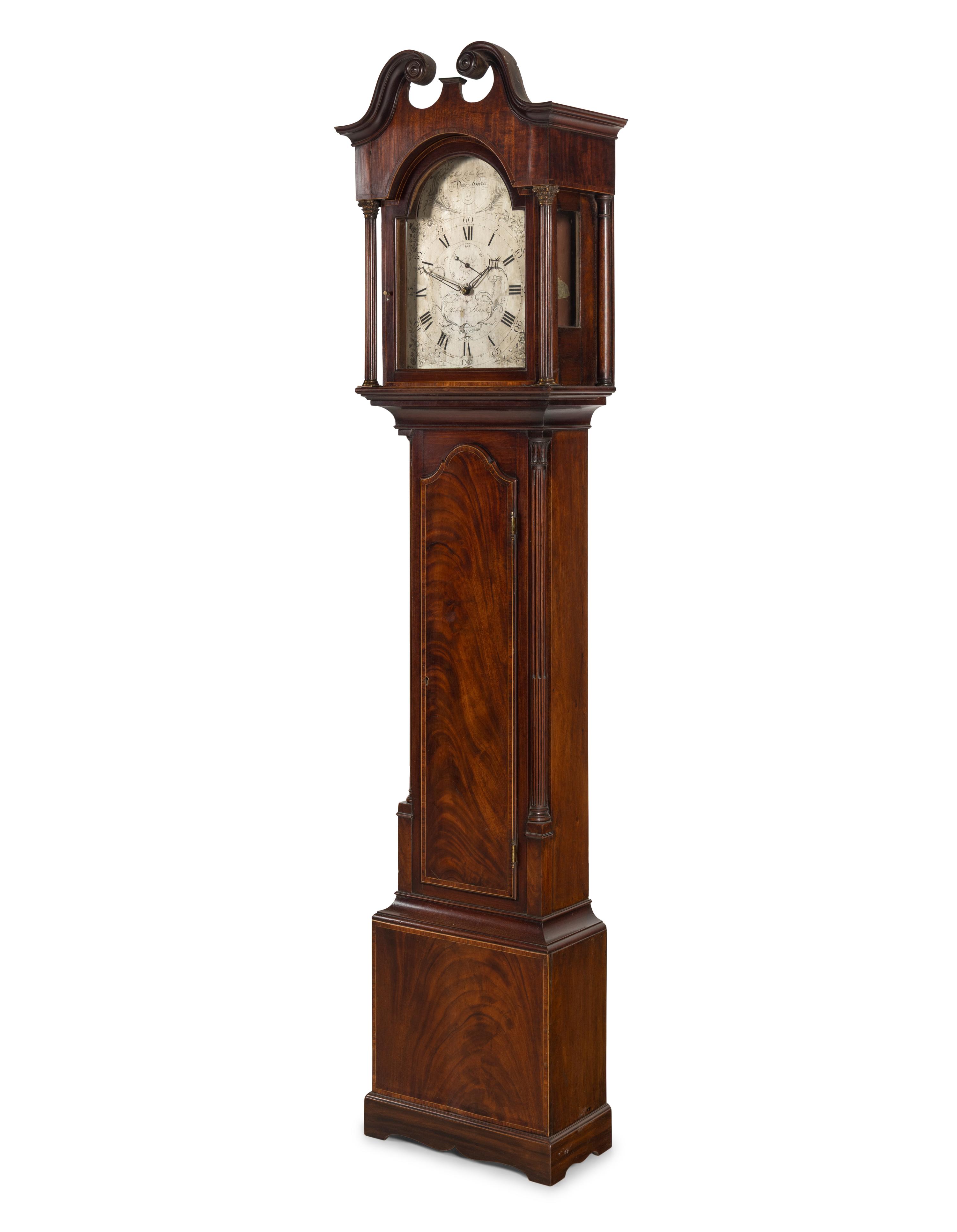
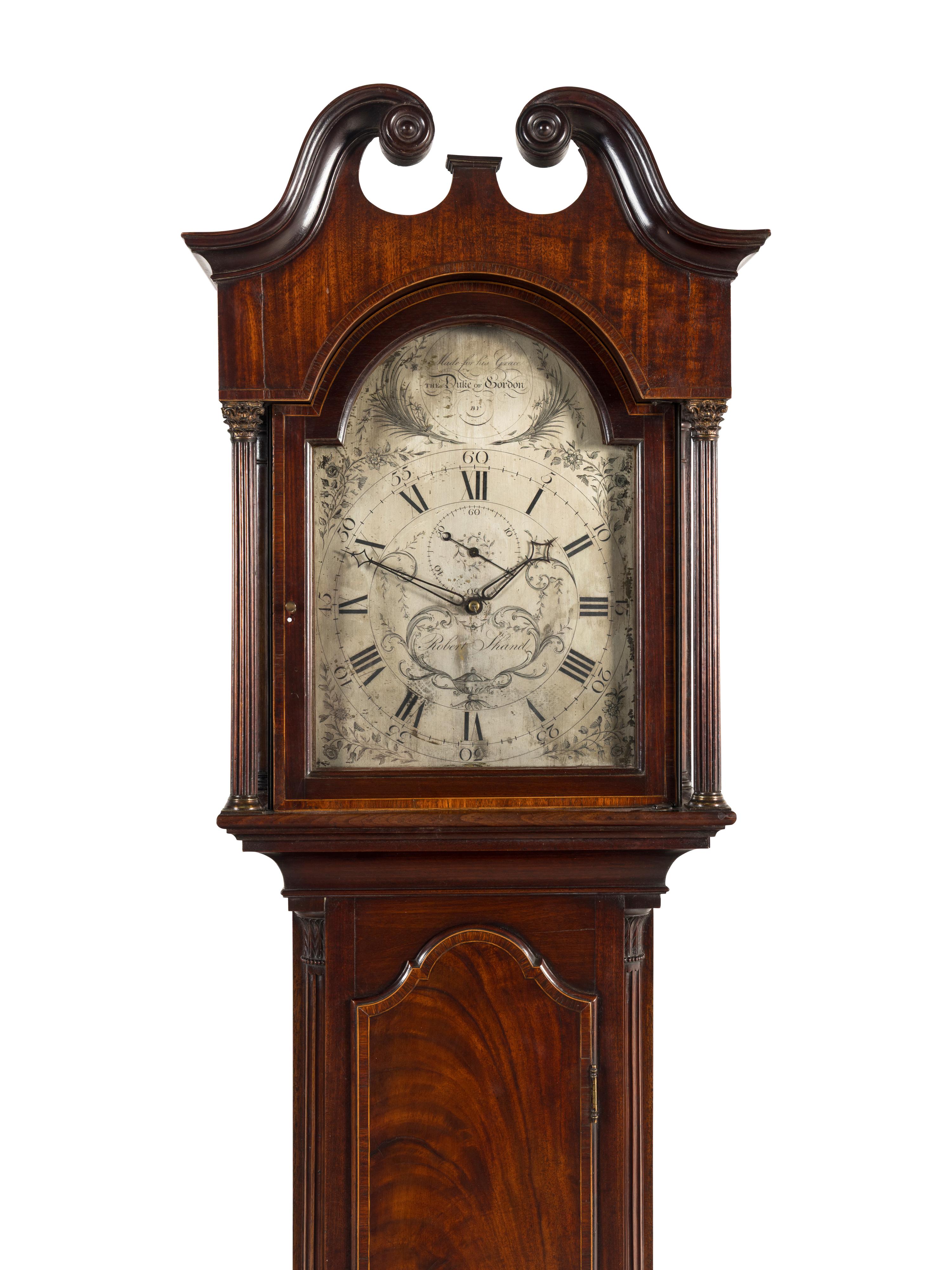
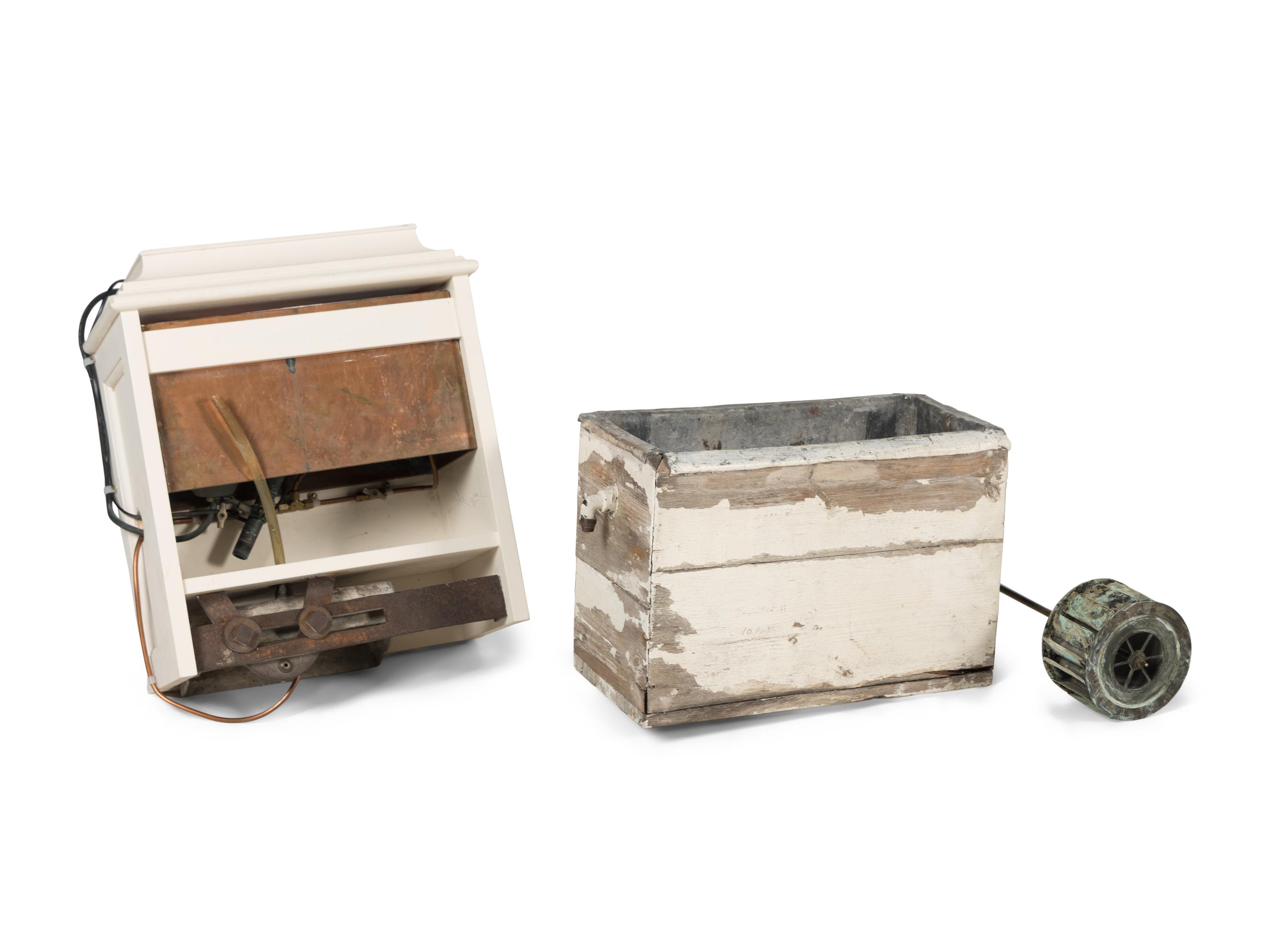
The clock itself looks mundane on the surface. The handsome, but typical, mahogany case does not belie the cultural brilliance beneath the hood. The dial with black-enamel fill is topped with an engraved roundel reading “Made for His Grace/ The Duke of Gordon”. This likely corresponds to Alexander Gordon, 4th Duke of Gordon (1743-1827). The generic features of the clock conceal the whimsical and technological audacity beneath the hood. Where weights would regularly be suspended from the works, a brass rod attaches through the back plate and extends outside of the case itself. The rod is connected to a lead and wood water wheel a mere 5 inches in diameter. The wheel is then suspended within a catch-basin where water can move the wheel to turn the clock instead of the normal weight and spring movement. This seemingly unique method of powering a tall-case clock is emblematic of the Scottish Enlightenment ideals permeating the country at the time.
The Scottish Enlightment is regularly referenced as a period of artistic, social, and technological advancement in the 18th century. Typically personified through the poetic works of Robert Burns (1759-1796), the philosopher David Hume (1711-1776) and larger scientific advancement. Throughout the 18th century, as Scotland established itself as a leading scientific and empirical capital to the Western world, a thread of romanticism continued to shine through the logical advancements [1]. The present clock builds on the principles of the Scottish Enlightenment through its attempt to use a natural source of water to power the mechanical movement of the clock.
It is not known where the Duke of Gordon used this clock. He was instrumental in the rebuilding the ruins of of Castle Gordon on the Bog of Gight in the mid-18th century; but also possessed other water-adjacent properties throughout Britain including an estate on the Glen Feshie river in North East Scotland [2] that might have provided the necessary hydrodynamic forces needed to power the clock. Furthermore, the maker of the clock ‘Robert Shand’ does not appear in any registers for Scottish clock makers in the 18th or 19th century. This “unknown” maker further highlights the tendencies of the Scottish Enlightenment, it is entirely possible that Robert Shand did not make clocks professionally thus freeing him to make such an audacious technological modification to the clock.
The clock found its way to Mountain Meadow in 1994 when art advisor Tim Corfield found it in an antiques shop in Oxfordshire. Correspondence between Corfield and Betty and Gordon Moore shows that Gordon took a particular enjoyment in the inscription to the “Duke of Gordon” on the dial as it felt like something was made for him centuries before he would create his own technological revolution thousands of miles away from Scotland. The seemingly unique method of powering the clock further piqued Gordon’s engineering and inventive personality. The Moore’s had the clock installed into a wall on the upper-floor and built a new catch-basin and pump system to replace the centuries old example.
By harnessing the spirit of the Scottish Enlightenment of the 18th century, the clock found a new owner nearly 200 years later who not only appreciated the technological rarity of the water-powered mechanism; but would also make their own impact on the world through technology.
1) Miles, Glendinning and Aonghus MacKechnie. Scotch Baronial: Architecture and National Identity in Scotland. Bloomsbury Visual Arts. London. 2004. Pp. 100
2) Taylor, David. The People are Not There: The Transformation of Badenoch 1800-1863. Birlinn Ltd. Edinburgh. 2022. Pp. 33-34.