Sale 6380
| Philadelphia
| Philadelphia
Estimate$50,000 – $70,000
Provenance:
Don Maxime del Campo, Chile (died 1935.
R.E. Gravel, Detroit.
Sotheby's, New York, sale of May 22, 1997, lot 68.
Acquired directly from the above sale.
Property from a Private European Residence.
Sotheby's, London, sale of March 3, 2006, lot 101.
Acquired directly from the above sale by the present owner.
Lot Essay:
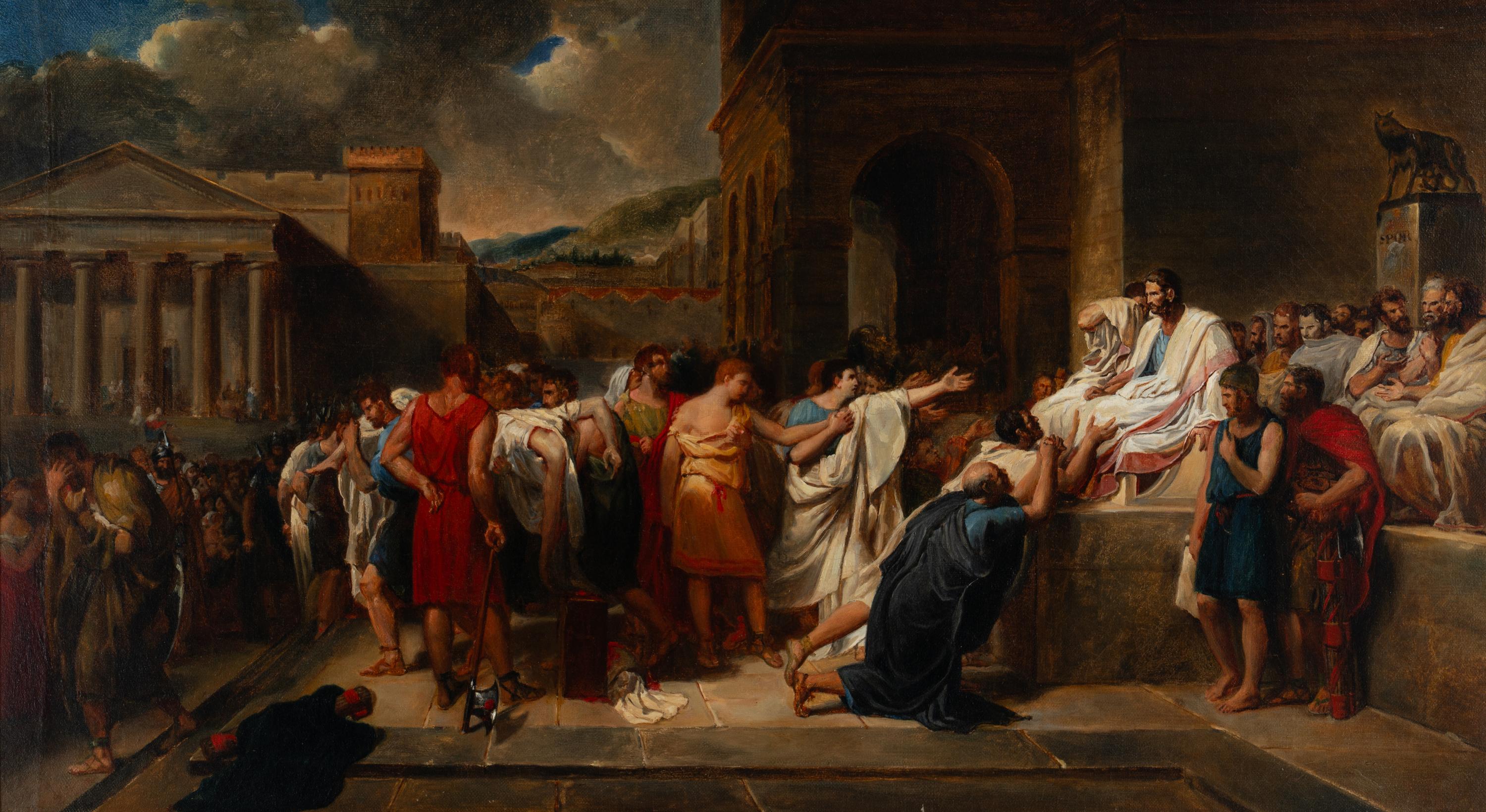
Hailed as one of the “great authorities of his day” by the French art critic Charles Blanc, Guillaume Guillon-Lethière was a painter and draftsman whose work was part of the Neoclassical movement in France, which first emerged in the 1740s and reached popularity from around 1760-1830, a period which nearly coincides exactly with the artist’s life dates. Proponents of Neoclassicism, such as Jacques-Louis David - an artist known to Guillon-Lethiere from his frequent visits to the former’s studio and who would later become Guillon-Lethiere’s rival – focused their efforts on scenes from ancient Greece and Rome and emphasized themes of sacrifice, stoicism, civic duty, and heroism. The style was in stark contrast to, and a repudiation of, the lightness and frivolity associated with Rococo art.
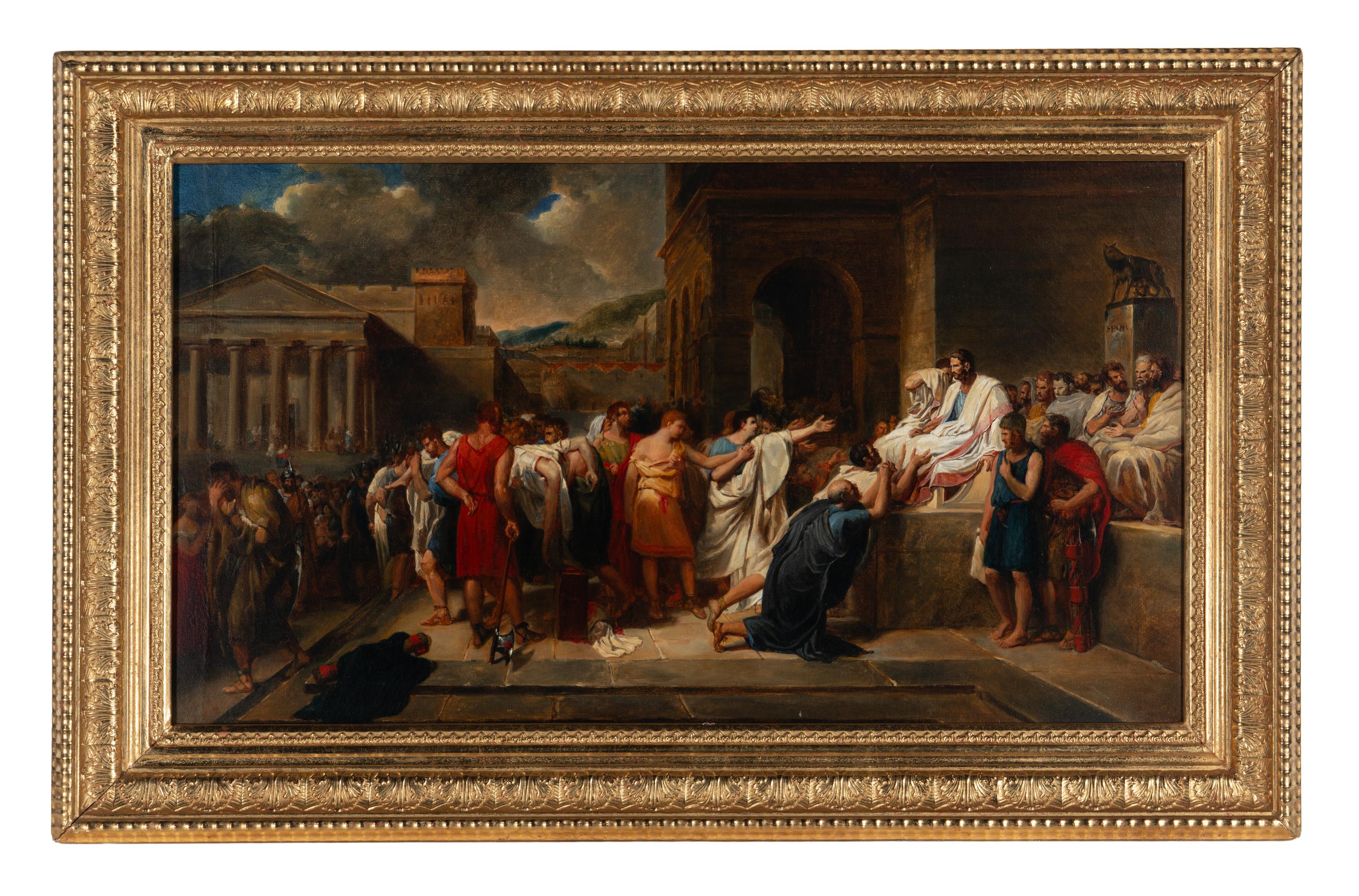
Brutus Condemning His Sons to Death depicts Lucius Junius Brutus, who led a revolt to overthrow the last Roman king and establish the Roman Republic, witnessing the executions of his sons, Tiberius Junius and Titus Junius, who had sought to restore the Tarquin monarchy. While the French public found the composition to be gruesome, it remains one of Guillon-Lethière’s masterpieces with its emphasis on stoicism, duty, and rule of law over self-interest. Two other examples of the same subject painted by Guillon-Lethiere are located in public collections: the Louvre, Paris, and the Clark Art Institute, Williamstown, Massachusetts, museums which also held the first ever exhibition of the artist’s work in Spring, 2024-Winter, 2025, Guillon-Lethiere, Born in Guadeloupe. The present painting most closely follows the composition in the Louvre, while in the Clark Art Institute version, the executioner is seen at left, holding the severed head of one of Brutus’s sons.
Guillon-Lethière’s story is an interesting one: he was a mixed-race son of a white plantation owner and a freed slave of African descent, and was born in the French colony of Guadeloupe. He became a professor at the École de Beaux-Arts and director of the Académie de France in Rome, as well as serving in an advisory capacity to Lucien Bonaparte, the younger brother of Napoleon, helping him to build an art collection.
Framed: 25 1/4 x 39 1/2 x 2 3/4 in.
The physical condition of lots in our auctions can vary due to age, normal wear and tear, previous damage, and restoration/repair. All lots are sold "AS IS," in the condition they are in at the time of the auction, and we and the seller make no representation or warranty and assume no liability of any kind as to a lot's condition. Any reference to condition in a catalogue description or a condition report shall not amount to a full accounting of condition. Condition reports prepared by Freeman's staff are provided as a convenience and may be requested from the Department prior to bidding.
The absence of a posted condition report on the Freeman's website or in our catalogues should not be interpreted as commentary on an item's condition. Prospective buyers are responsible for inspecting a lot or sending their agent or conservator to inspect the lot on their behalf, and for ensuring that they have requested, received and understood any condition report provided by Freeman's.
Please email [email protected] for any additional information or questions you may have regarding this lot.