Sale 6559
| New York
| New York
Estimate$20,000 – $30,000
Achim Moeller, Managing Principal of The Lyonel Feininger Project LLC, New York – Berlin has confirmed the authenticity of this work, which is registered under no. 1891-01-30-24. A certificate of authenticity accompanies the work. Additional information was provided by Achim Moeller, The Lyonel Feininger Project LLC, New York – Berlin.
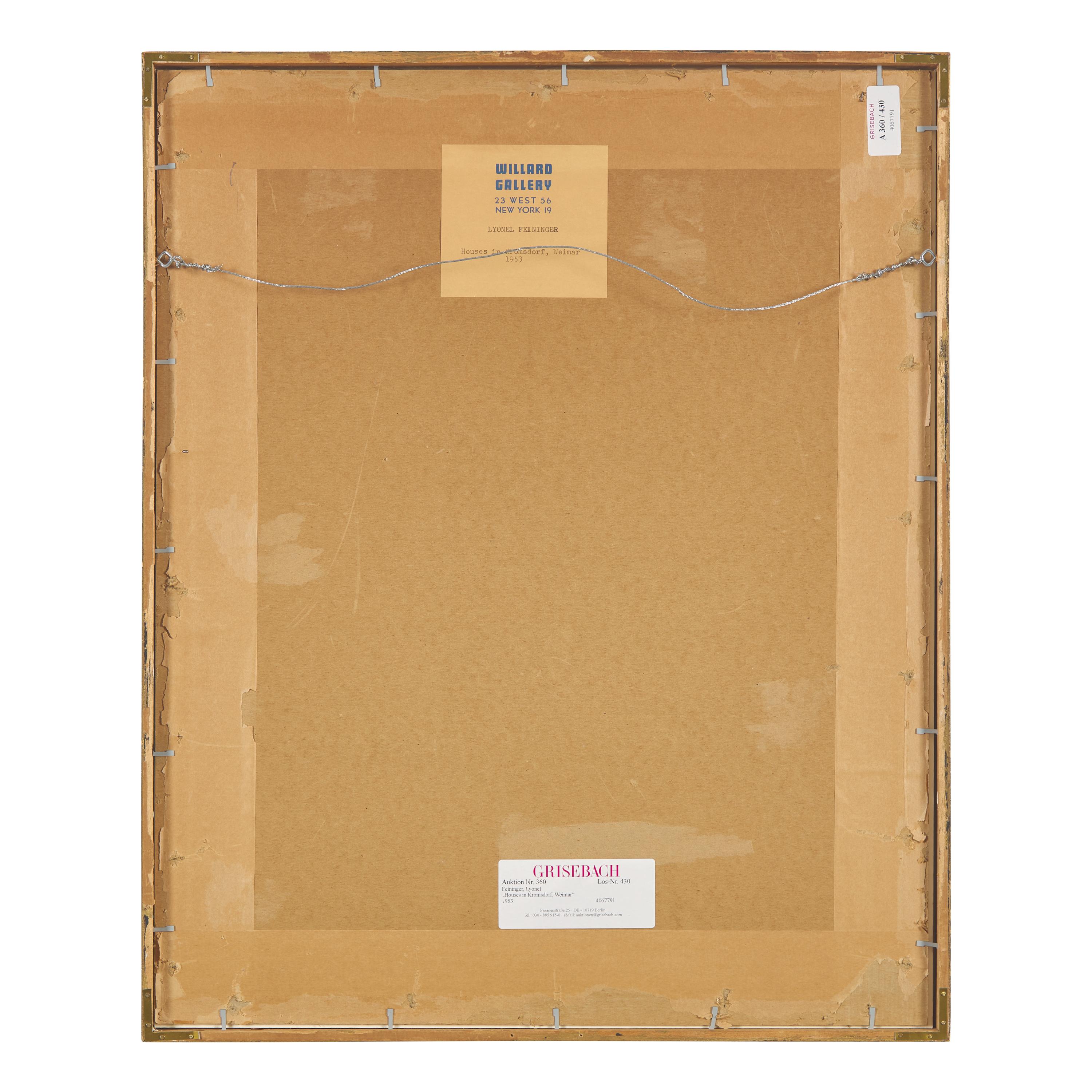
Provenance:
Willard Gallery, New York.
Acquired directly from the above in 1956.
Private Collection, New York.
Exhibited:
New York, Willard Gallery, A Group of Exceptional Drawings, January 3 - 28, 1956, no. 5 (as Kromsdorf), n.p.
Lot Note:
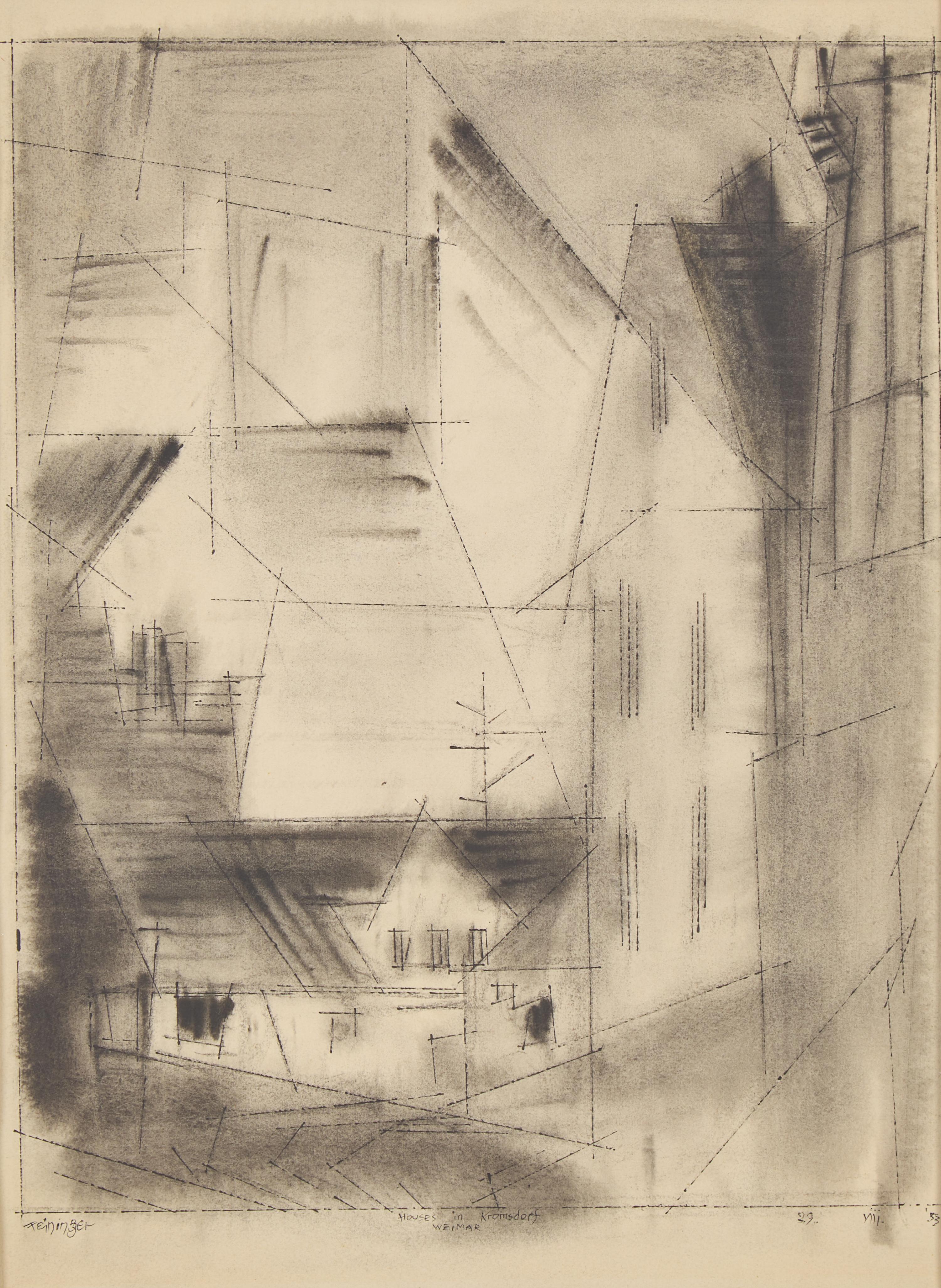
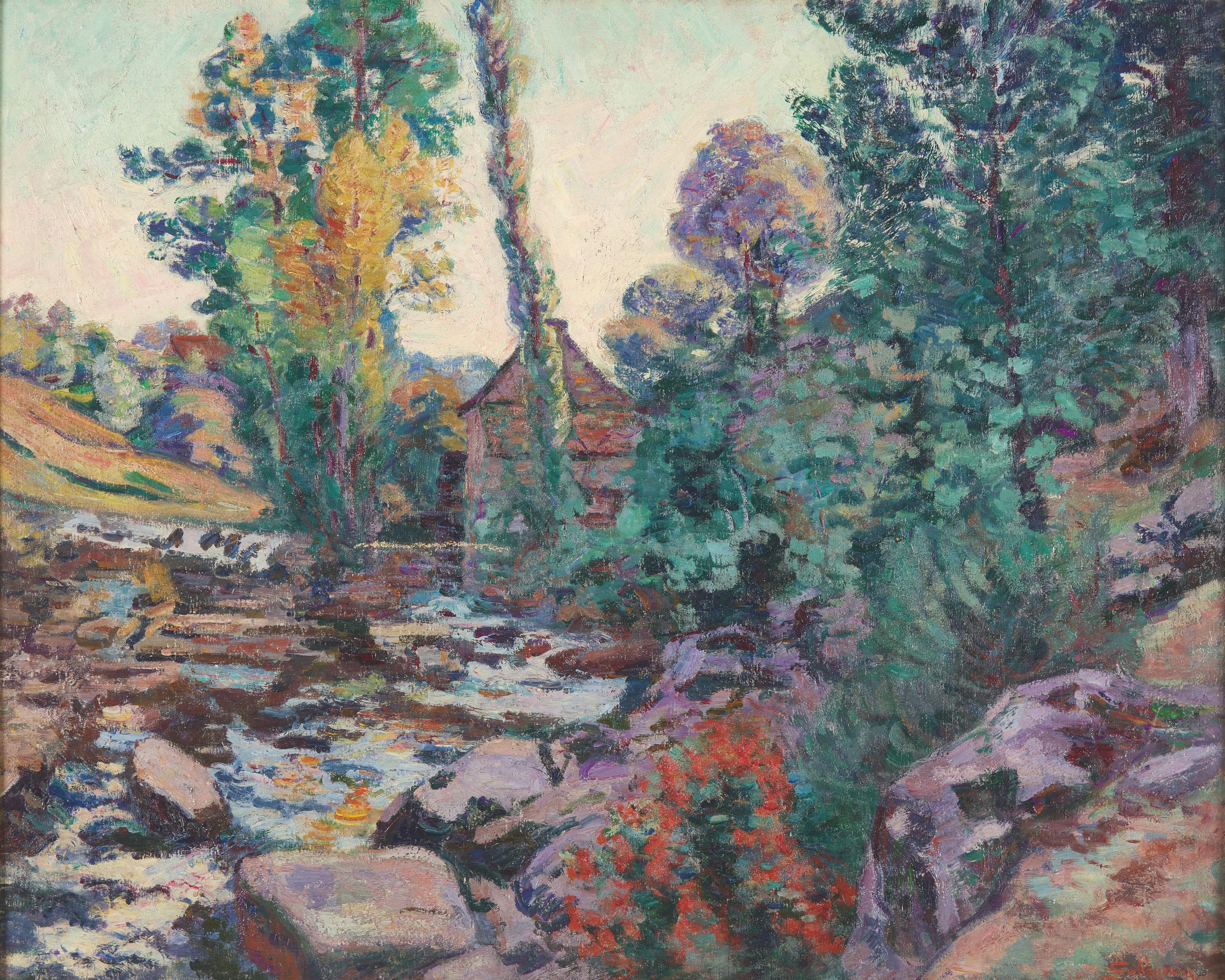
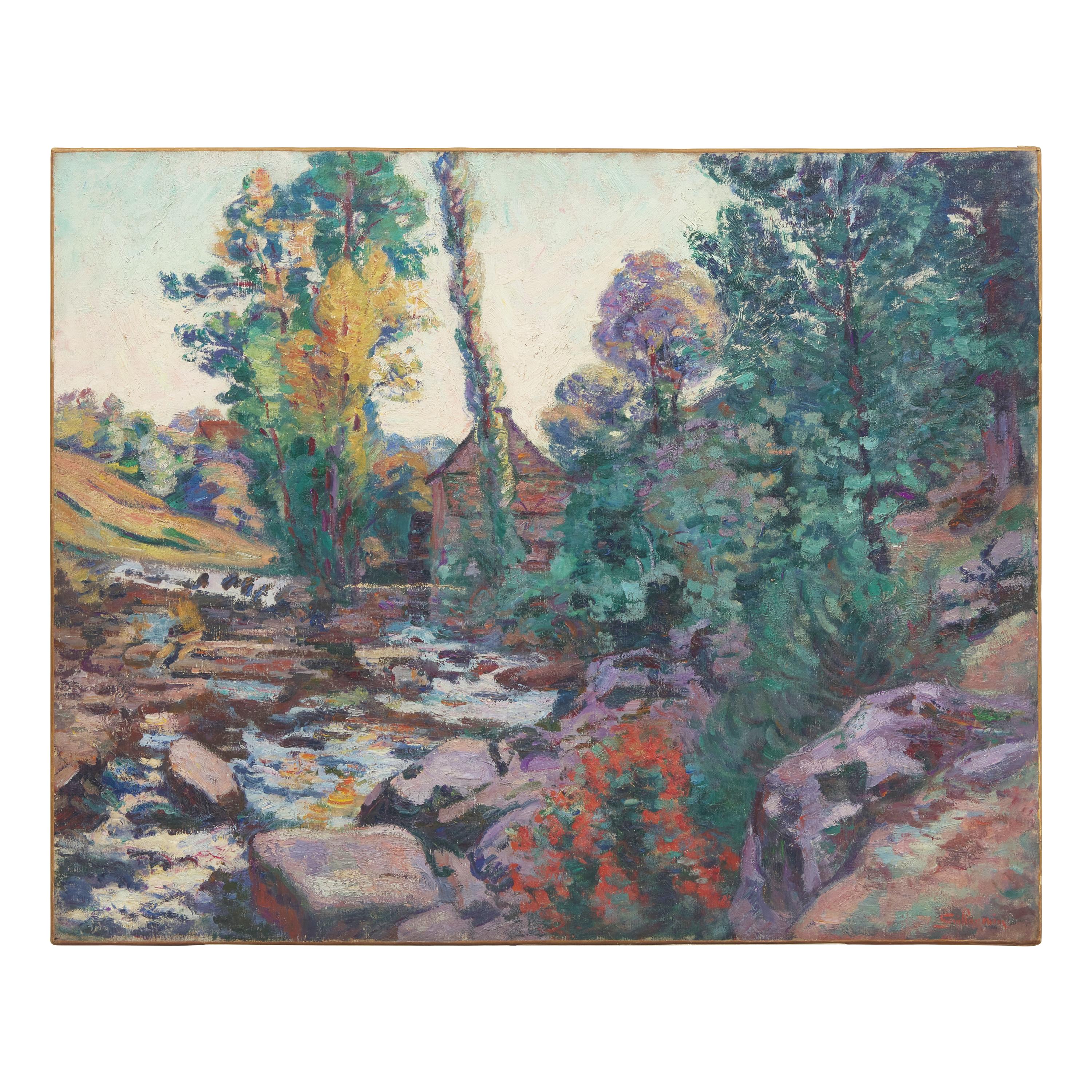
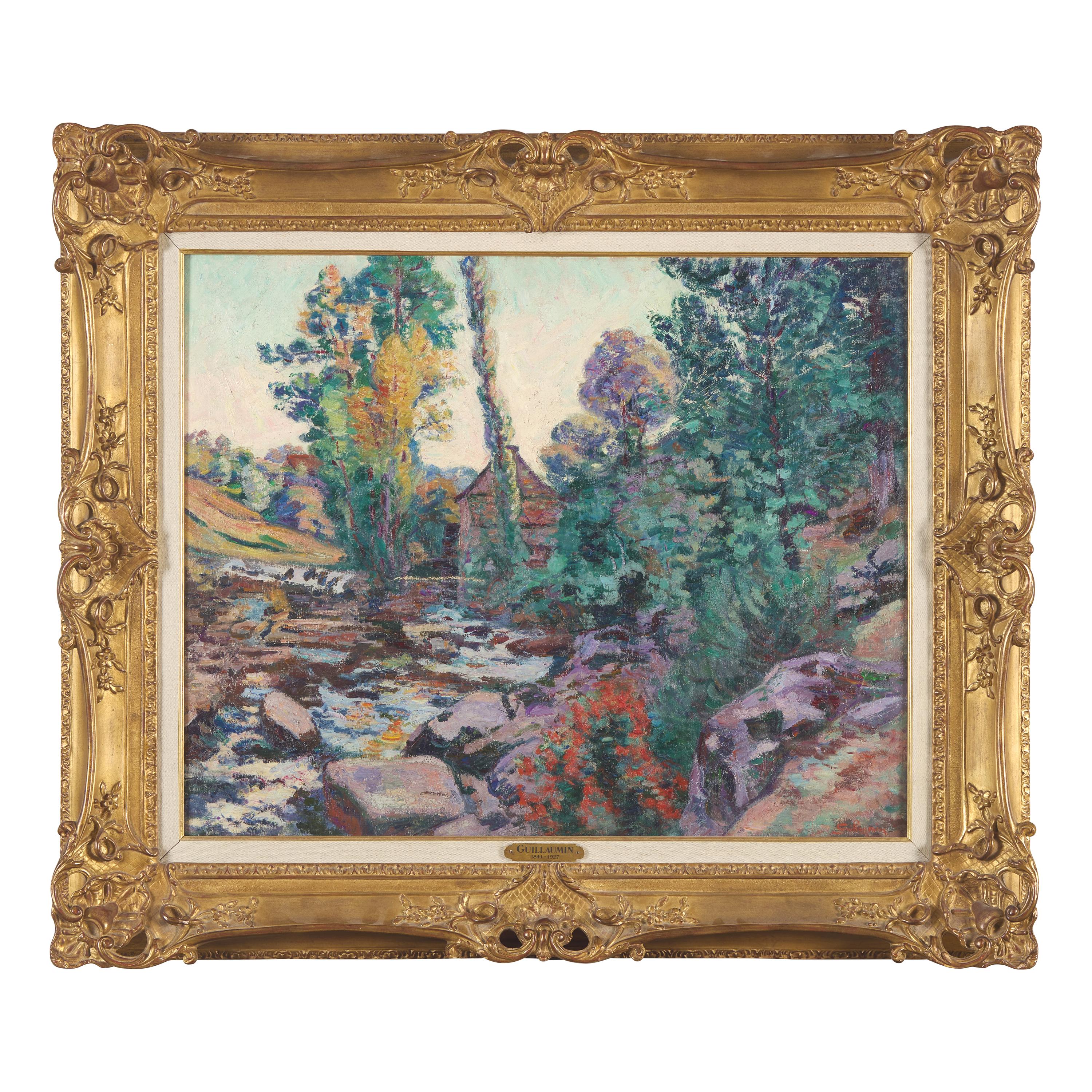
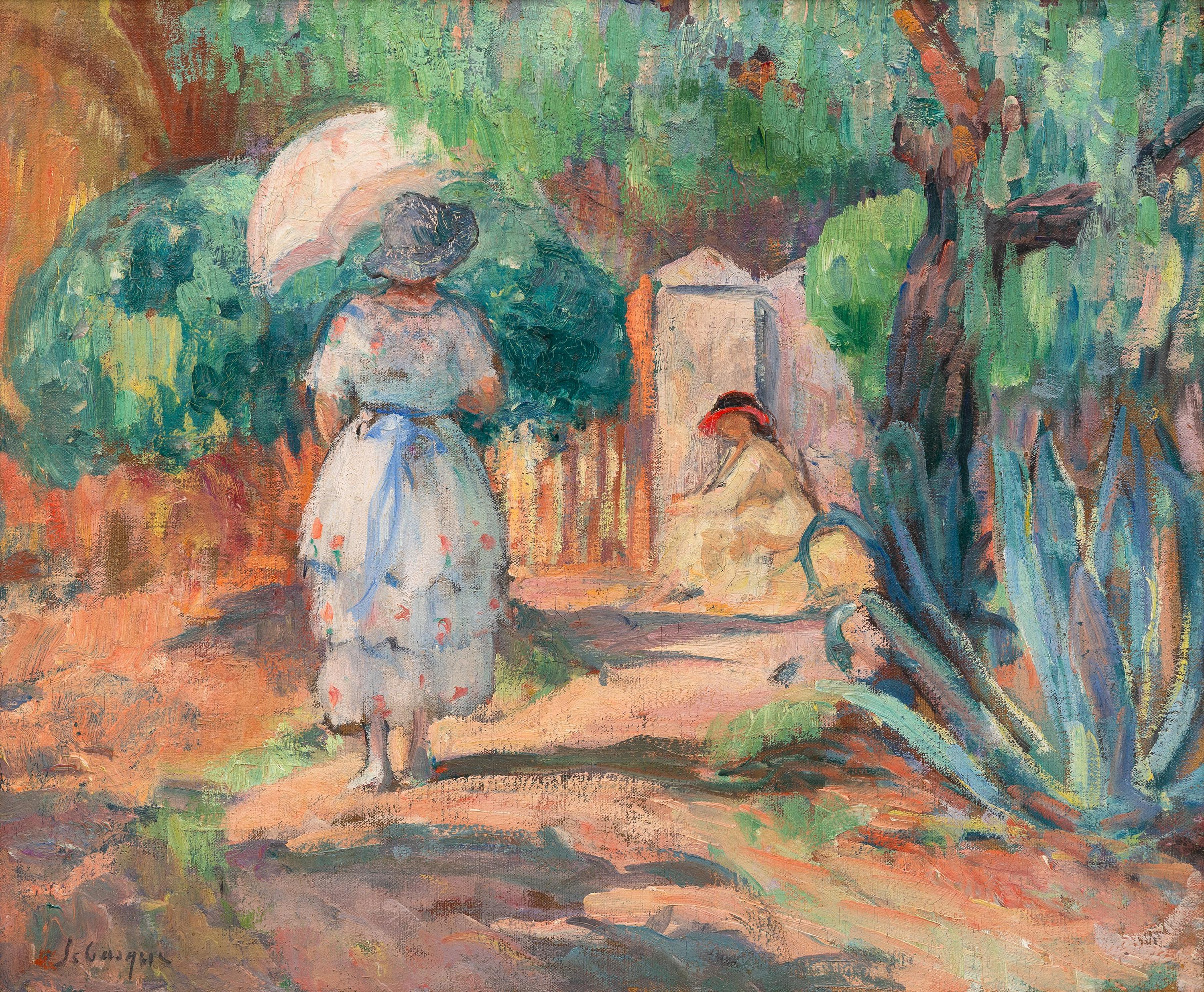
The present drawing shows a street in Kromsdorf, a village three miles northeast of Weimar in Thuringia. It is one of the hamlets Feininger explored by bicycle in the years before the First World War. He first recorded the motif in a pencil sketch on May 23, 1913, one of the rapid Natur-Notizen, or "nature notes," that served as the raw material for his paintings. From it came a charcoal drawing in 1914 and two canvases, Großkromsdorf II (1915; Moeller 161) and Großkromsdorf III (1921; Moeller 232).
Forty years after that first sketch, Feininger returned to the motif in New York. He had settled there after leaving Germany in 1937 and never went back. He had long trusted such notes to hold an image in reserve. As early as 1906 he wrote to his future wife, Julia, that "the image lies within the note itself."¹ Houses in Kromsdorf bears out that conviction: a village street, set down in minutes in 1913, still yields a composition four decades later. Even the inscription, written in English, measures the distance between the place and the man remembering it.
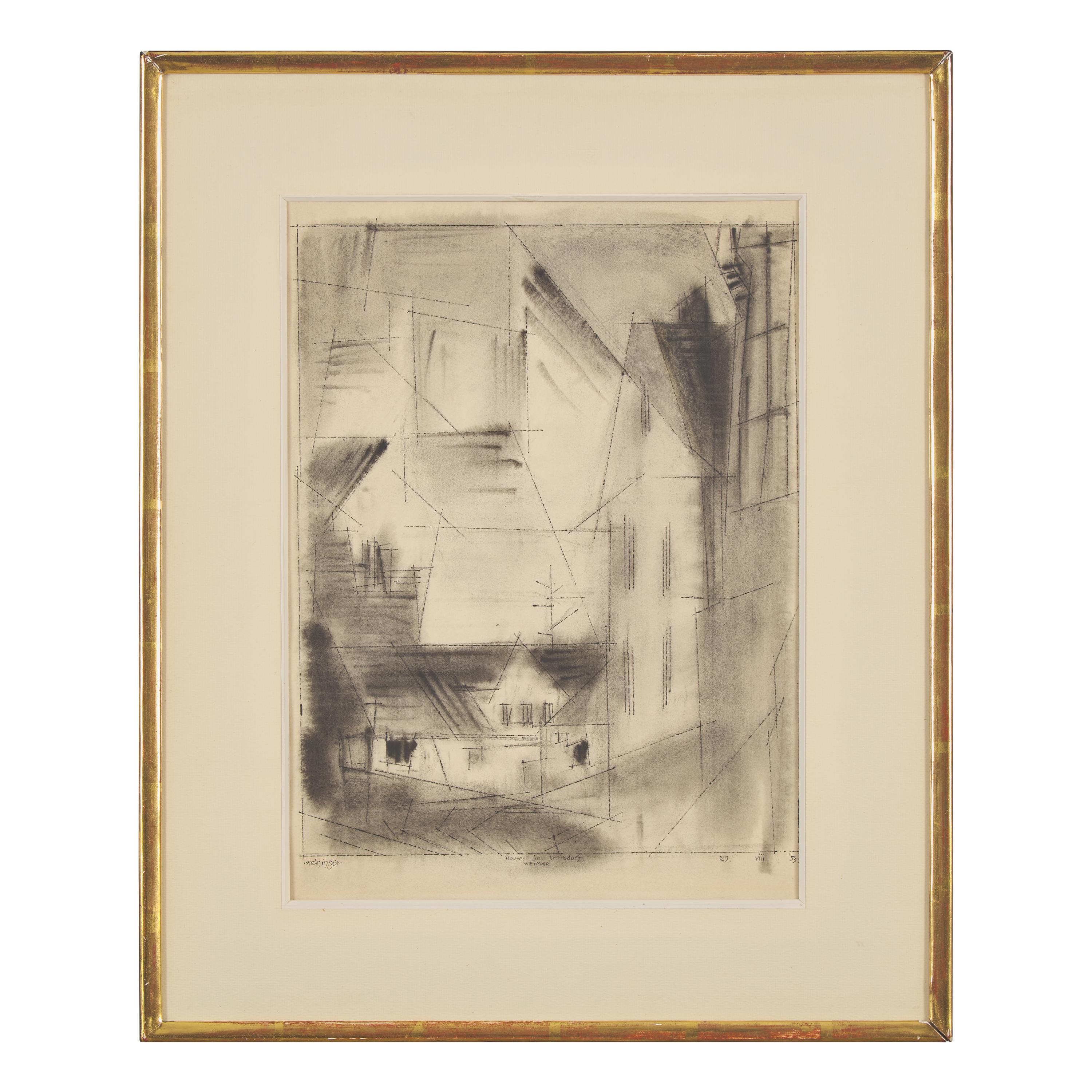
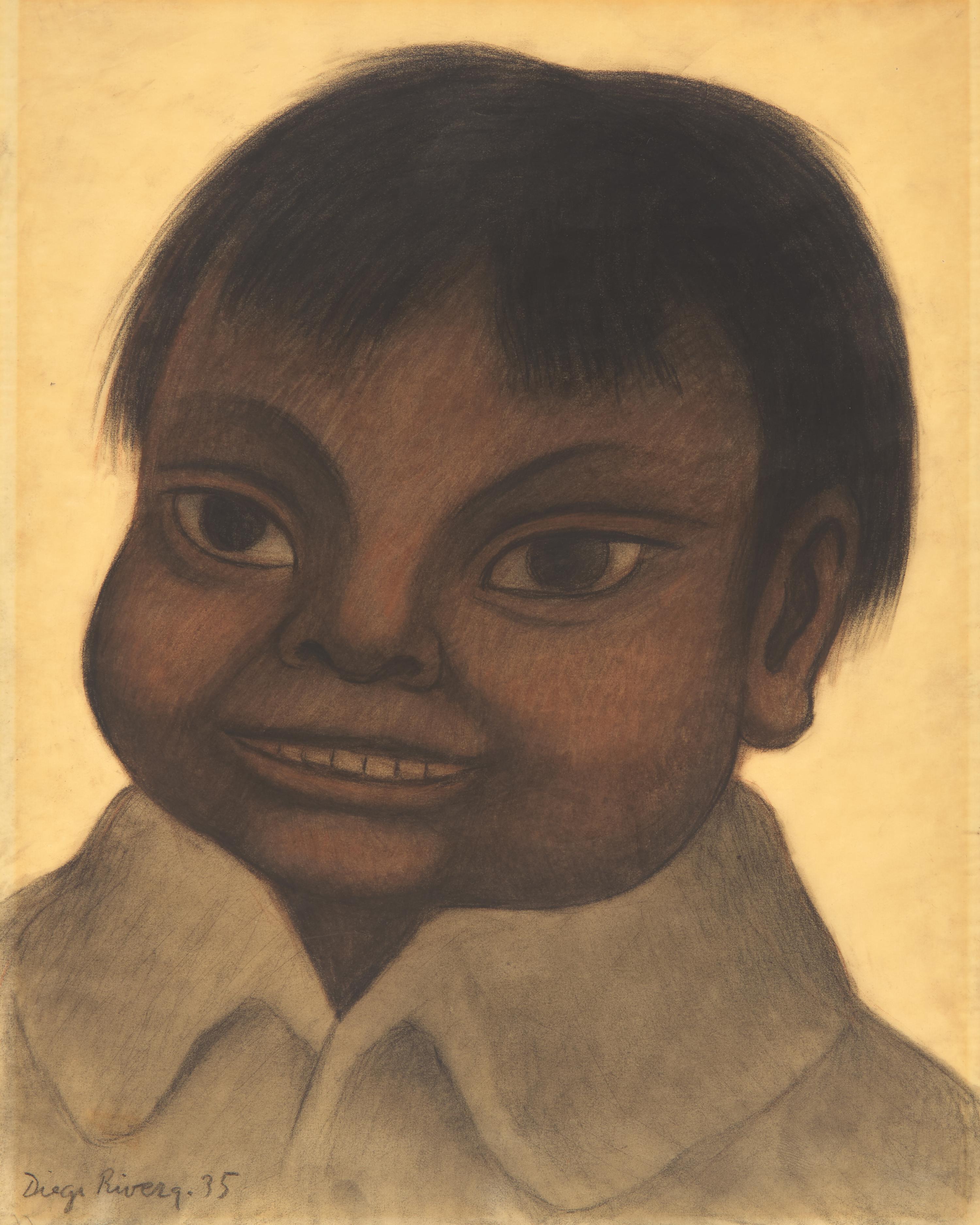
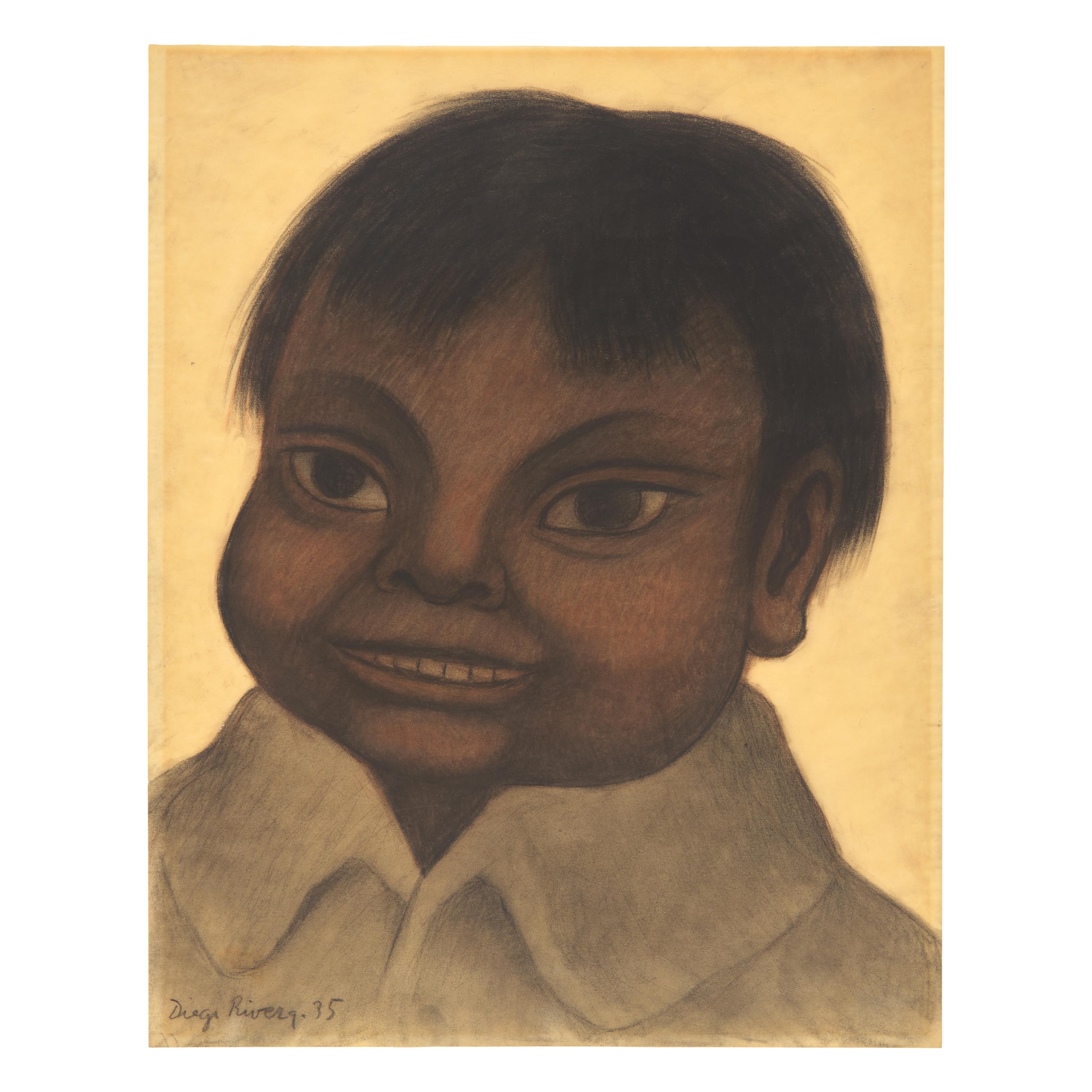
The sheet shows the hallmarks of his late graphic style. Broad passages of rubbed charcoal establish volume and atmosphere. Over them runs a scaffolding of fine, broken ink lines, ruled and stippled, that holds the gabled houses within a lattice of intersecting planes. The steep roofs and blank façades remain legible, yet they dissolve at their edges into light. The result is less a view than a crystallized memory, true to Feininger's conviction that what one sees "must be transformed in the mind."
Made just over two years before his death, the drawing completes a motif that runs from 1913 to 1953. It joins the Thuringian village studies that formed his mature vision to the luminous, spectral architectures of his final decade.
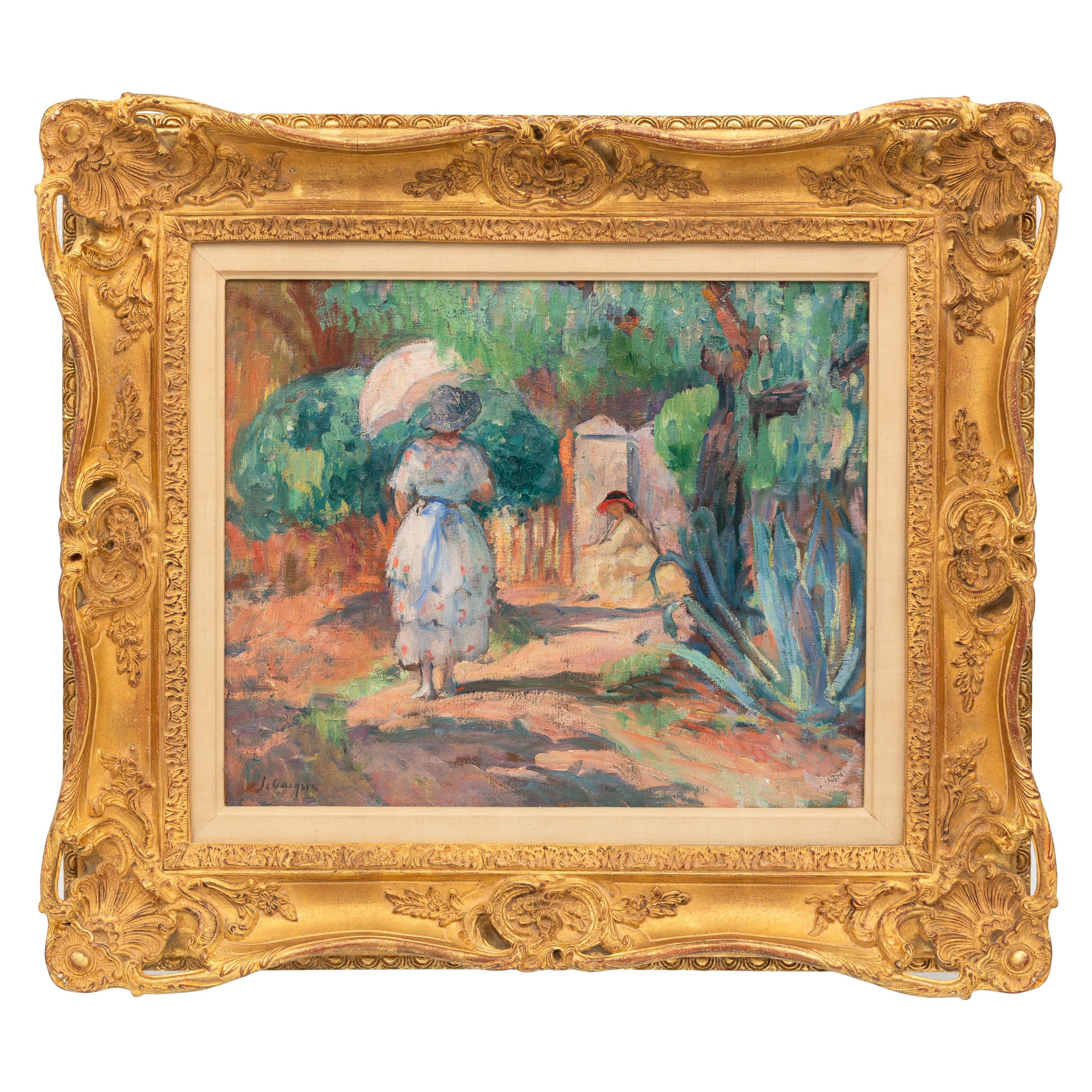
Framed: 23 x 19 x 1 in.
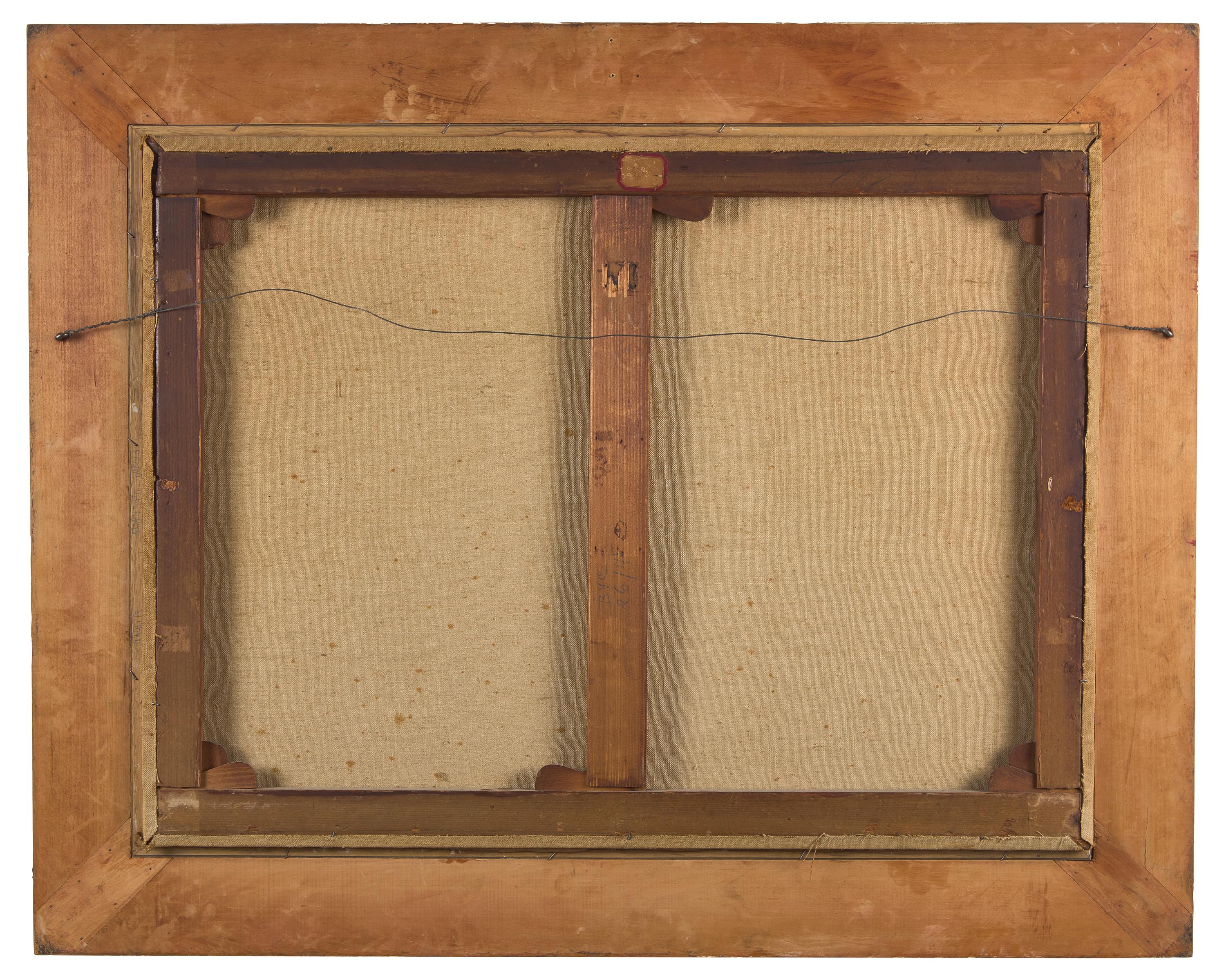
The drawing is in overall good condition. The paper is hinged to the mat in two places at the top two corners. The paper has tape affixed to its outer edges. There is a tear to the paper at the top left, approx. 4 in. long which has been taped, with a loss to the paper at the top center, approx. 1 in. long. The paper is toned and there are a few creases to the paper, particularly at the top two corners. There are pin holes at the bottom two corners. On verso there are a few scattered foxmarks visible. Additional images available upon request.
The physical condition of lots in our auctions can vary due to age, normal wear and tear, previous damage, and restoration/repair. All lots are sold "AS IS," in the condition they are in at the time of the auction, and we and the seller make no representation or warranty and assume no liability of any kind as to a lot's condition. Any reference to condition in a catalogue description or a condition report shall not amount to a full accounting of condition. Condition reports prepared by Freeman's staff are provided as a convenience and may be requested from the Department prior to bidding.
The absence of a posted condition report on the Freeman's website or in our catalogues should not be interpreted as commentary on an item's condition. Prospective buyers are responsible for inspecting a lot or sending their agent or conservator to inspect the lot on their behalf, and for ensuring that they have requested, received and understood any condition report provided by Freeman's.
Please email [email protected] for any additional information or questions you may have regarding this lot.