New & Noteworthy
Stay up to date with news, highlights, & features from across Freeman's.
Stay up to date with news, highlights, & features from across Freeman's.
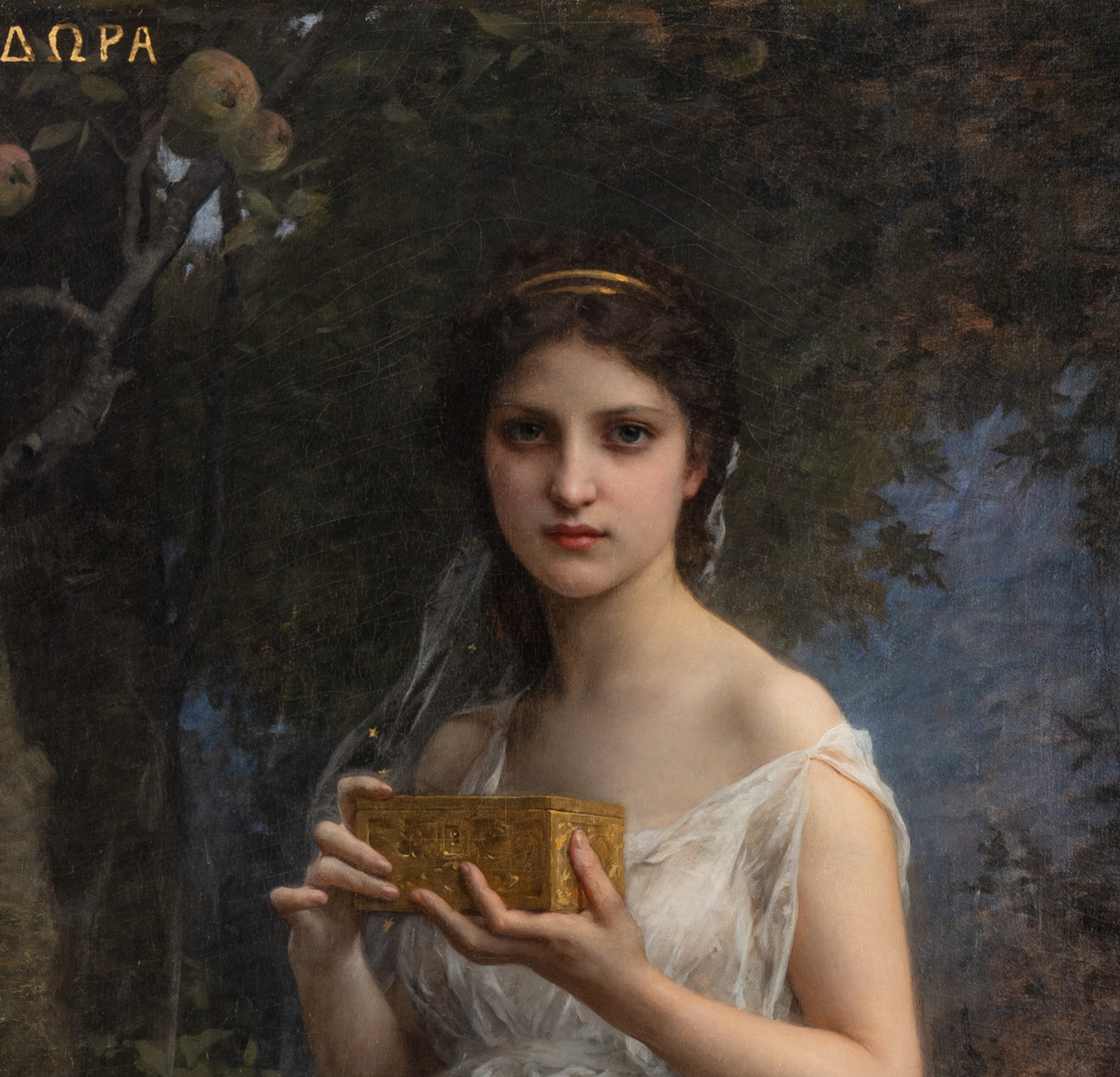
Hindman is pleased to present Pandora by Charles Amable Lenoir, available in our May 18th European Art auction. Join us as we explore Lenoir's trajectory as artist as well as dive deeper into the meaning behind this enigmatic work. In Charles Amable Lenoir’s Pandora, 1902, the namesake subject solemnly gazes at the viewer as she delicately holds the gold box that contains all the world’s evils. Above her, an apple tree in full fruit can be seen, the symbol of Eve. Pandora’s porcelain skin and the smoothly painted surfaces throughout recall the teachings of William-Adolphe Bouguereau, with whom Lenoir studied at the Académie Julian, beginning in 1882. The son of a customs officer and a seamstress, Lenoir began his career not as an artist but as a teacher. He eventually saved enough money to pursue his true interest, to become an artist, and entered the École des Beaux Arts in Paris in 1881. His tenacity and talent eventually led him to win the Second Prix de Rome in 1889 for his painting, Jésus et le paralytique (Jesus and a Sick Man with Palsy), and then the First Prix de Rome the following year for Le Reniement de Saint Pierre (The Denial of St. Peter). In 1887, Lenoir made his debut at the Paris Salon, where he exhibited mostly portraits, but then later focused on genre paintings, as well as religious and mythological subjects. After experimenting with other styles, including Romanticism and the Rococo, he eventually devoted himself to academic painting in the style of his teacher Bouguereau. Lenoir’s paintings reflect the academic values of accurate drawing, contour, and smooth paint surfaces. These paintings also echo the appeal of feminine beauty during the nineteenth century, for “a continuing fondness for the ‘keepsake’ tradition of the depiction of beauty, gentle, sweet and somewhat coy” (Philip Hook and Mark Pottimore, Popular 19th Century Painting: A Dictionary of European Genre Painters, Woodbridge, 1986, p. 58). Lenoir favored images of beautiful women and girls, coyly erotic nudes, and cupids, as well as allegorical, religious, and mythological scenes, such as Pandora. Lot 18 | Charles Amable Lenoir (French, 1861–1940) | Pandora, 1902 | Estimate: $60,000 - $80,000 In Greek mythology, Zeus commands Hephaestus, god of blacksmithing and metallurgy, to mold from earth a “beautiful evil,” a woman to punish humankind after they receive the stolen gift of fire from Prometheus. Athena then dresses Pandora in a silvery gown, an embroidered veil, garland, and an ornate crown. According to Hesiod’s Works and Days, she was “sheer guile, not to be withstood by men.” She came with a jar (later corruptly translated to a box), given to her by Zeus, that contains countless plagues. Presented as a wife to Epimetheus, Pandora promptly opens the container and scatters all the sins of the world. Depicted in varied guises throughout the centuries in art, by the late 19th century, Pandora was idealized as a dangerous beauty, usually naked or semi-naked. In Lenoir’s version, Pandora appears less threatening than mysteriously beguiling as she looks forthrightly at the viewer. Her gown slips slightly to reveal a smooth, white shoulder and the diaphanous white fabric of this gown provides a tantalizing glimpse of well-shaped legs above delicate, bare feet. A gauzy veil, spangled with silver stars, quivers in a breeze behind her lithe figure. The apples that hang above her dark hair knowingly point to Pandora’s comparison to Eve, who also unwittingly released evil, and knowledge, into the world. A virtuoso example of French Academic mythological painting, Lenoir’s Pandora is a symbol of provocative beauty that comes with an equal measure of unknown risk.
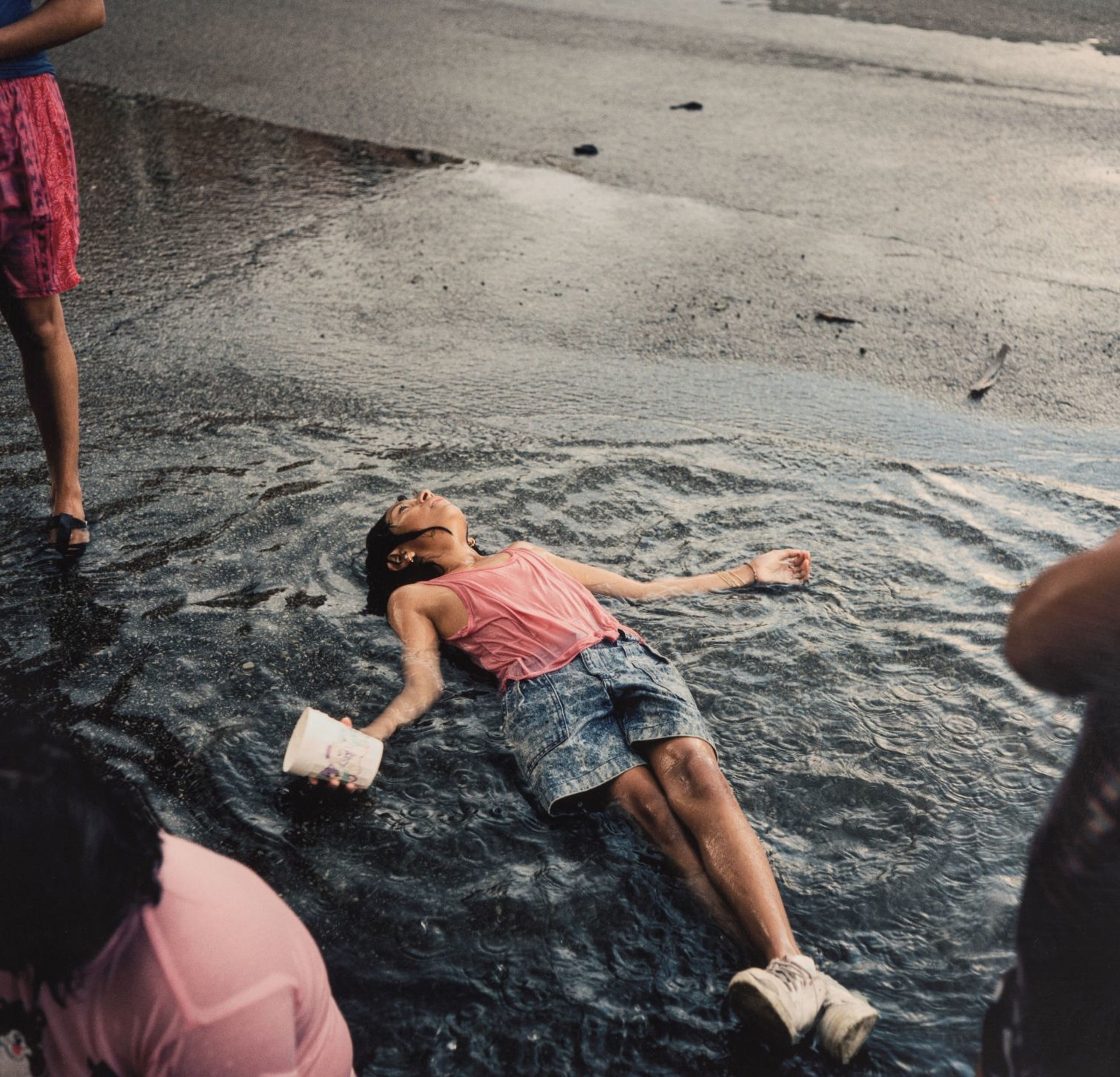
Hindman is pleased to present our first Photographs auction of 2023, this May 2 at 10 AM CT. Featuring photography from the inception of the medium in the 19th century to the present day, learn more about the iconic artists showcased below. Lot 8 | Ezra Stoller (1915-2004) | Guggenheim Museum, Frank Lloyd Wright, New York, NY, 1959 | Estimate: $1,000 - $1,500 During his long career as an architectural photographer, Chicago-born photographer Ezra Stoller worked closely with many of the leading architects of the day, including Frank Lloyd Wright, Paul Rudolph, Marcel Breuer, I.M. Pei, Gordon Bunshaft, Eero Saarinen, Richard Meier and Mies van der Rohe. Originally trained as an industrial designer, Stoller's architectural studies are testament both to his formidable attention to detail and his keen understanding of how the buildings were actually constructed. Lot 14 | Vik Muniz (born 1961) | Madalena, from the series "Aftermath," 1998 | Estimate: $12,000 - $18,000 Muniz's series Aftermath features images of street children in Brazil whom Muniz first photographed in the style of their favorite subject from art history books. Using a light box, Muniz then carefully reconstructed these portraits with garbage found on the streets of Rio after Carnivale and photographed the result. Lot 27 | James Van Der Zee (1886-1983) | "James Van Der Zee: Eighteen Photographs, 1905-1939"; and selected studio portraits | Estimate: $25,000 - $35,000 James Van Der Zee created a rich portrait of African American life in Harlem during the first half of the 20th century. Catering to the growing population of the neighborhood, he used painted backdrops and photographic manipulation to make cosmopolitan portraits in his studio. Van Der Zee also photographed Harlem storefronts and local athletic, spiritual, social, and political groups. Lot 39 | Toshio Shibata (born 1949) | Enzan City, Yamanashi Prefecture, 2000; and Ekawasuchi Town, Ehima Prefecture, 1998 | Estimate: $3,000 - $5,000 The photographs of Toshio Shibata focus on the interweaving of natural forces with man-made structures. His long exposures capture the strength and innate grace of water as it flows over constructed sluices and channels. Using a large format camera, Shibata eliminates most references to scale, sky, and horizon while providing crisp detail and texture. Under his eye, the contemporary landscape becomes a mysterious abstract composition - the merging of natural and manmade form. Lot 34 | Hai-Bo (born 1962) | The Uncle, 2006 | Estimate: $6,000 - $8,000 Hai Bo, a Beijing-based photographer, specializes in highly conceptual photographs that document the changing social, economic, and environmental climate of contemporary Chinese society. Hai often re-stages photographs taken decades earlier, creating a juxtaposition of past and present in diptych compositions that emphasize China's rapid growth and change. Hai also records the passage of time, as in this bittersweet diptych of his elderly uncle, once a powerful figure in his youth. Featured: Lot 55 | Paul D'Amato (born 1956) | Girl in Rain, Chicago, 1991 | Estimate: $4,000 - $6,000
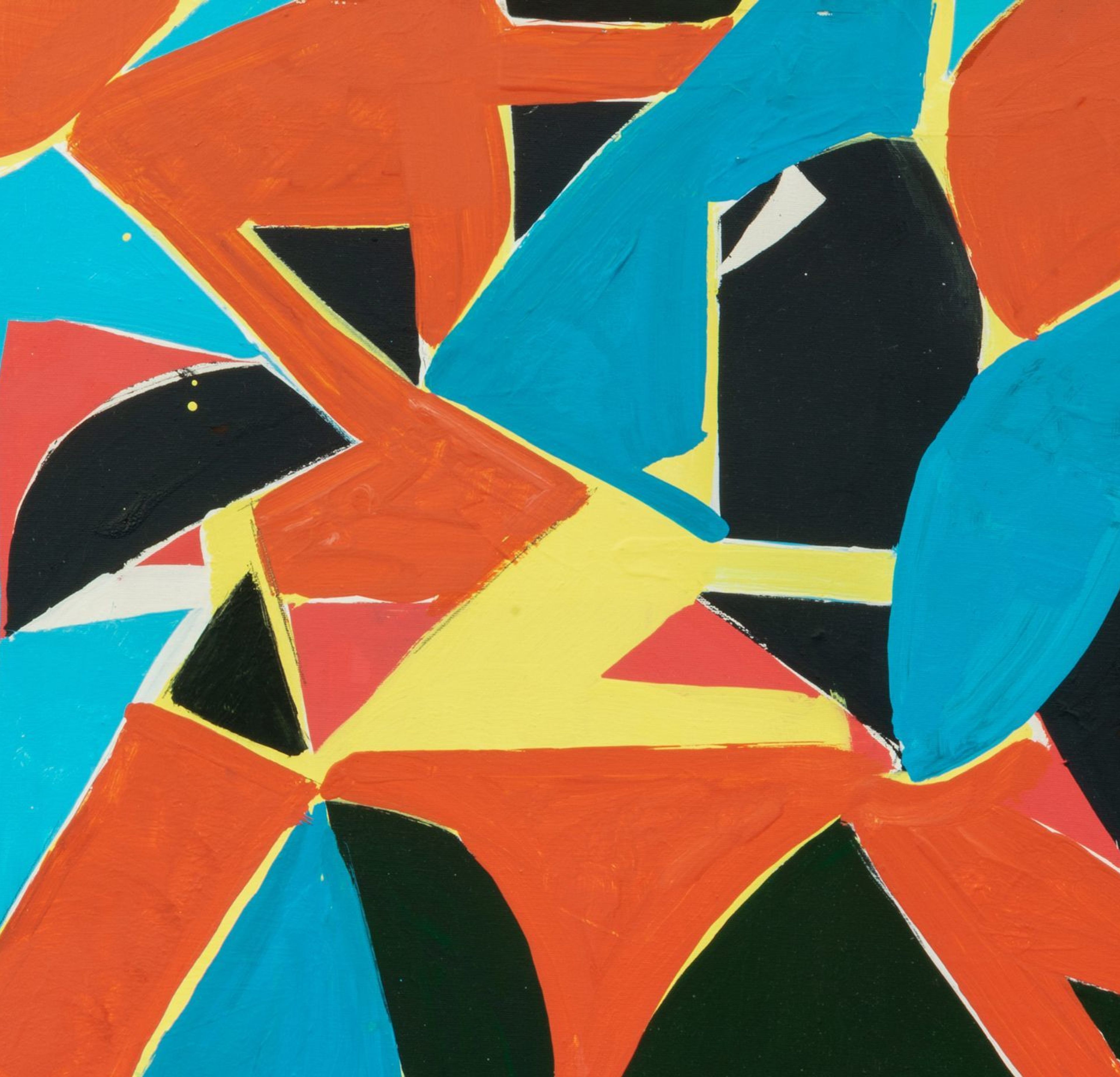
These six works of Beatrice Mandelman (American, 1912-1998), offered here on behalf of the Mandelman - Ribak Collection, provide insight into Mandelman’s fascinating preoccupation with color, form, and scale, uniquely filtering the tenets of abstraction through the influence of the western landscape of Taos, New Mexico. Lot 178 | Beatrice Mandelman(American, 1912-1998) | Intimate Echose XVII, circa 1980 | Estimate: $1,500 - $2,500 Like many artists who would champion abstraction in the latter half of the twentieth century, Mandelman was part of the Works Progress Administration, working as a muralist and a printmaker from 1935 to 1942. She was friends with artists such as Jackson Pollock, Lee Krasner, Elaine de Kooning, and was responsible for giving them jobs when she worked at the WPA. In 1942 she married Louis Ribak (American, 1902-1979), a fellow artist, and both soon relocated to Taos, New Mexico. Though she was well on her way to meet the same renown as her companions in the WPA, Mandelman ultimately stepped away from the excitement of the New York art scene; she exchanged her connection to the art scene of the big city for the inspiration of the remote southwestern landscape. Lot 179 | Beatrice Mandelman (American, 1912-1998) | Untitled, circa 1960 | Estimate: $800 - $1,200 Though it was already established as an artistic community, with artists being drawn to the area for the local desert vistas punctuated by the Pueblo architecture of the longstanding Native American population, during the 1940s Taos did not have any dedicated gallery spaces representing abstract art. Mandelman and Ribak closed this gap by creating their own epicenter of modern artists: the Taos Moderns. They founded and operated the Taos Valley Art School from 1947 to 1953, continuing to host artists in their own home thereafter. Though influenced by Cubism and Abstract Expressionism, Mandelman’s works are indebted mostly to the Taos landscape in their focus on horizontality, lively colors, and bold geometry. Lot 182 | Beatrice Mandelman (American, 1912-1998) | Prokofiev, circa 1970 | Estimate: $3,000 - $5,000 Beatrice Mandelman brought the monumentality of muralism to a smaller scale, to allow closer study of color and texture. Though each of these six works are vertically oriented, each features strong horizontals and diagonals cutting through the plane, echoing the long horizons of the western landscape. The colors also echo a more western palette—vivid sky blues, dusty creams, blazing oranges, and rich scarlets. Mandelman’s colors delight the eye while also revealing her fascination with surface and texture. With the strength of the purity of each background layer—the blues of No.7 Blue and Rift #8 (Lots 181 and 184), the creams of Intimate Echose XVII and Rift #6 (Lots 179 and 182), etc.—Mandelman expertly controls the viewer’s access into each of these works, teasing interesting pops of color and texture through geometric shapes scattered throughout the surface, culminating with this texture erupting into the picture plane in the untitled collage, circa 1960 (Lot 180). These bold geometric forms themselves are often reminiscent of the regular adobe buildings so ubiquitous amid the local environment. Each of these works thus bridge the gap between American abstraction movements and the regional love of the native landscape, as emblematic of the rest of Mandelman’s oeuvre. To explore & register to bid for Hindman's Western & Contemporary Native American Art auction this May 4, click here. Featured image: Lot 183 | Beatrice Mandelman (American, 1912-1998) | Rift #8, circa 1980 | Estimate: $4,000 - $6,000
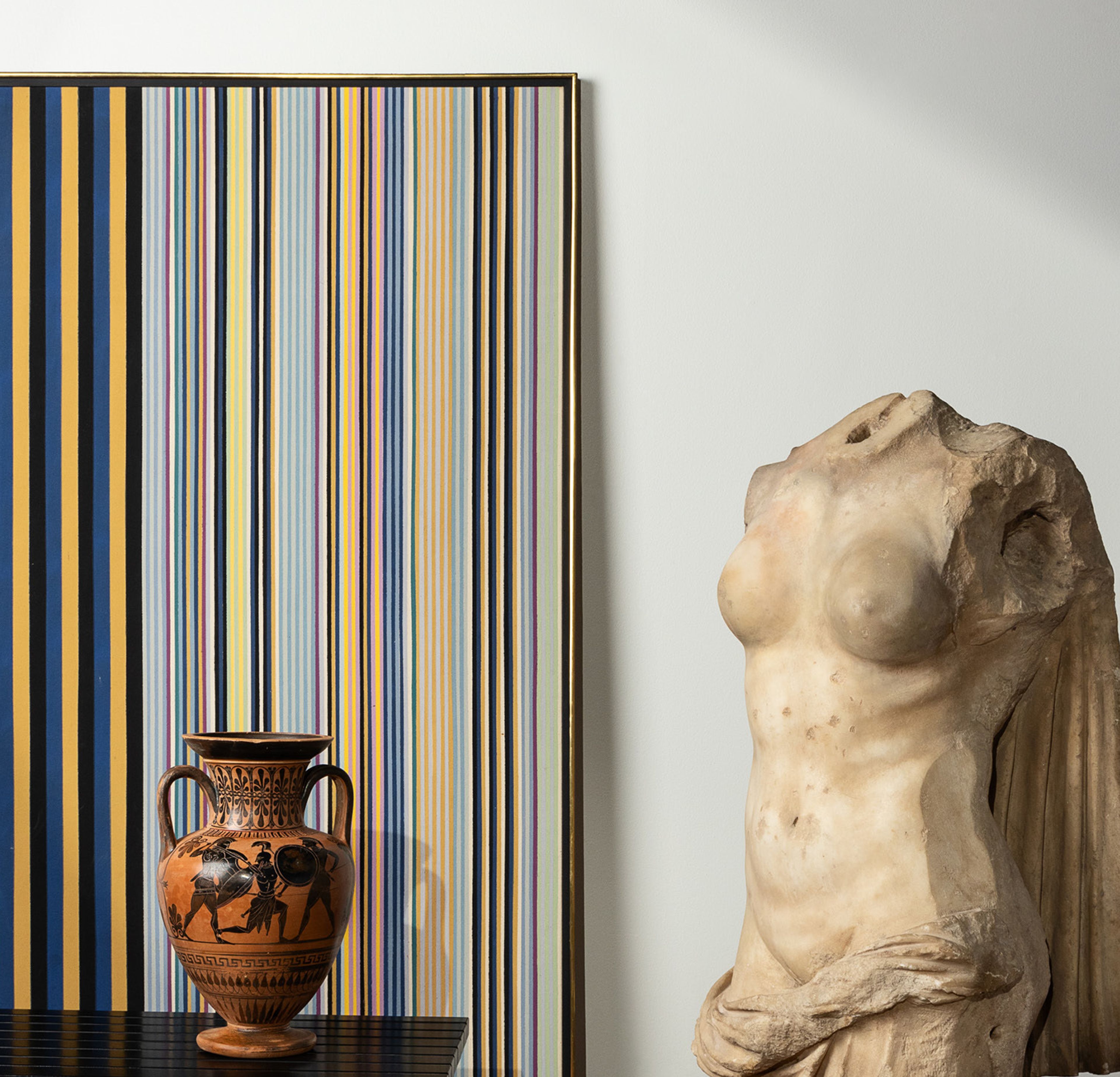
To Our Dear Clients and Friends, On the heels of our best year yet, Hindman is off to a fantastic start for 2023. During my first quarter as CEO, I’m thrilled to have overseen our expansion into new regions and numerous, exciting auctions that far exceeded expectations. Themed sales captured the attention of bidders across the globe. Jewelry Through the Ages, spotlighting the evolution of jewelry from the 1st millennium BC to the 21st century, was 133% sold by value with some truly spectacular ancient pieces skyrocketing past estimates. Grails and Goats, a single-owner collection of sports cards and autographs honoring some of the greatest athletes of all time, was impressively 94% sold by lot and highlighted by an Unopened Box of 1986-87 Fleer Basketball cards which achieved $114,000. Similarly, the private collection of the late Fred A. Krehbiel and his wife Kay Krehbiel including European furniture and decorative arts realized $3.5 million, more than double its expected total across three days of sales. Overall, the auctions were 97% sold, with 58% of lots selling at or above the high estimate. The collection brought in bidders from 39 countries, with 28% of all buyers new to Hindman. With the launch of a pop-up gallery this spring and auctions set to begin in the fall, Hindman has firmly established itself in New York. This March, we presented highlight exhibitions and exclusive events in our pop-up at High Line Nine Galleries in Chelsea. Notably, Hindman was pleased to host an event in conjunction with the Outsider Art Fair—of which we were a leading sponsor—in celebration of the single-owner auction Roadside Attractions: The Susann Craig Collection, the personal collection of the esteemed outsider art collector and a founder of Intuit: The Center for Intuitive and Outsider Art. That sale was 148% sold by value, demonstrating the broad appeal of the property. The beginning of spring kicks off one of our busiest seasons of auctions. We’re excited to offer Kerry James Marshall’s mixed media and glitter work on paper, Curtained Window in our April 19 Post War & Contemporary Art sale. Known for pushing the boundaries of the art historical tradition with his innovative approach to medium and style, the painting is sure to pique the interest of international bidders. Also in the second quarter, property from Linden House, a Palladian-influenced, 41,000 square foot villa near Indianapolis, will be prominently featured in a series of Fine Art and Furniture & Decorative Arts sales. This is just a fraction of the property going under the gavel in Hindman’s salerooms across the country this April. We invite you to visit us online or in our galleries to explore the full range of property slated for sale this spring. If you are in the New York region, we hope that you will stop by our pop-up space to preview highlights across categories through the end of April. Sincerely, Upcoming Featured Auctions: Post War & Contemporary Art | April 19 | Live + Online Prints & Multiples | April 20 | Live + Online Photographs | May 2 | Live + Online Important Jewelry | May 16 | Live + Online European Art | May 18 | Live + Online American Art | May 19 | Live + Online Modern Design | May 24 | Live + Online
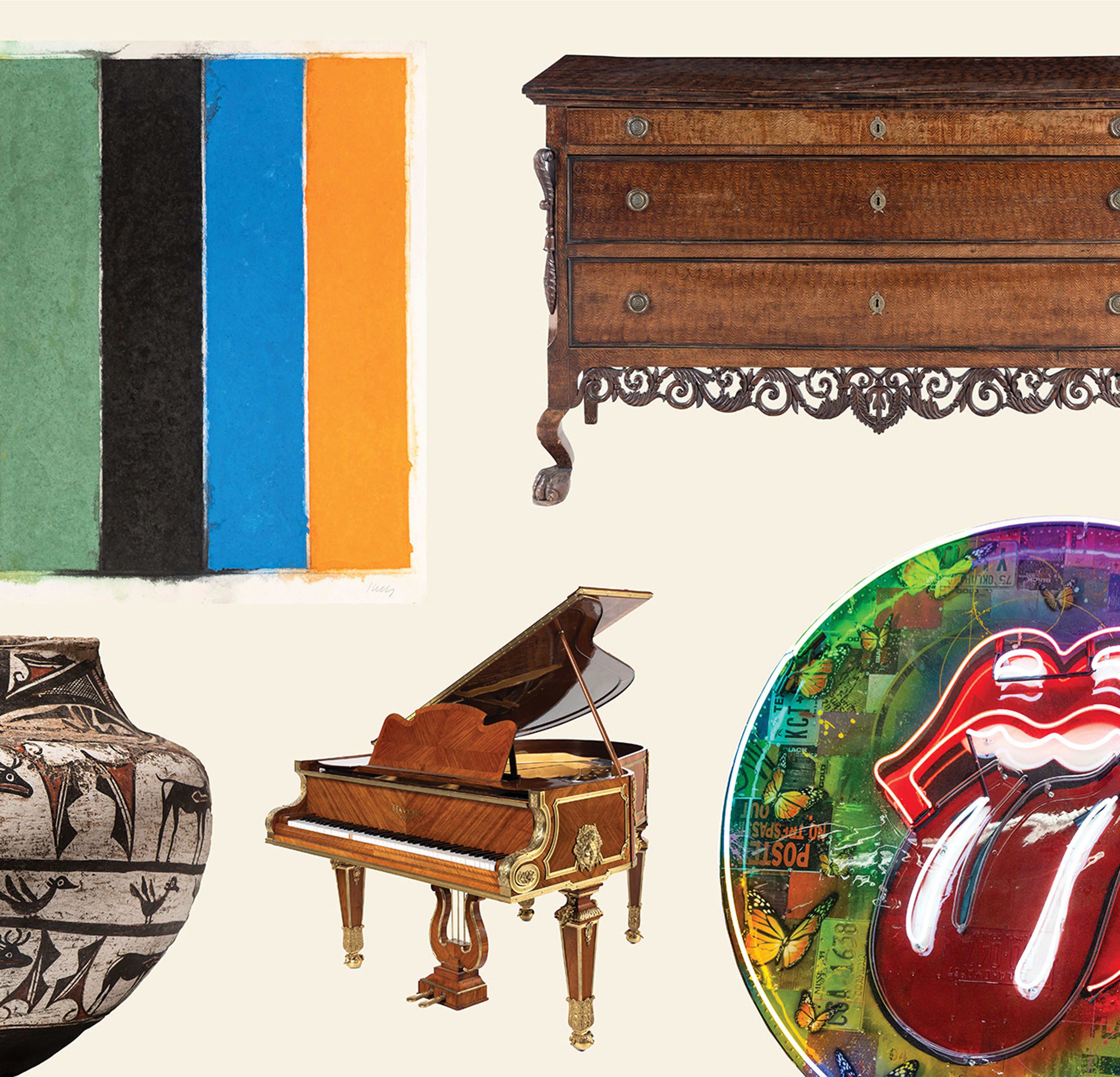
As we enter the spring season at Hindman, I am pleased to present selections from our upcoming auctions that both entice and delight. Explore our New & Noteworthy blog every quarter for an eclectic mix of property from our 52 collecting categories. Within my role as Deputy Chairman, I hope to showcase the breadth and depth of all Hindman has to offer. Sincerely, Featured auctions: European Furniture & Decorative Arts, including Property from Linden House | April 13 | Chicago Post War & Contemporary Art | April 19 | Chicago Prints & Multiples | April 20 | Chicago Native American Art, Session I | April 21 | Cincinnati Western & Contemporary Native American Art | May 4 | Denver Fine Printed Books & Manuscripts, including Americana | May 11 | Chicago European Art | May 18 | Chicago American Art | May 19 | Chicago Antiquities & Ancient Art | May 25 | Chicago
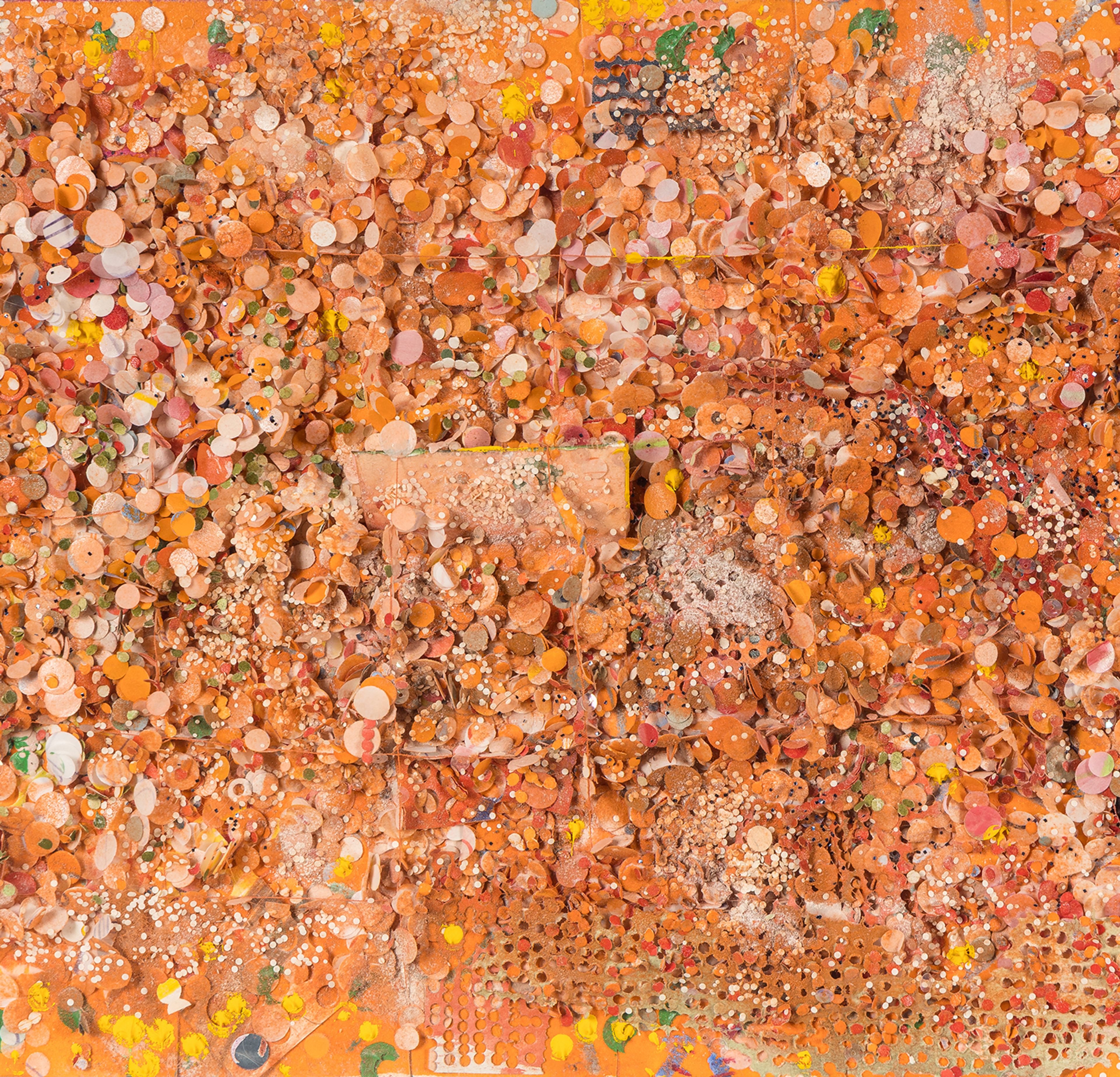
As we celebrate Women’s History Month and look towards our Post War & Contemporary Art auction next month, Hindman is delighted to showcase the work of five trailblazing women artists who will be reflected in the April 19th sale. From abstractionists to surrealists to textile artists, the works to be offered highlight the talents of women who have been pioneers within the industry and who have dedicated their lives to lifting up fellow women artists. Howardena Pindell Howardena Pindell (American, b. 1943) | Kensington Series #3, 1974 | Estimate: $30,000-50,000 With an oeuvre that confronts social and structural issues from racism to feminism, Howardena Pindell is renowned for her abstract, mixed media and video artworks. In her roles as an artist, educator, and curator, social justice is a key thread throughout Pindell’s career. During her time as the first Black woman curator at the Museum of Modern Art, New York, Pindell collected information from art institutions and galleries in New York state about their representation of nonwhite artists and designers. Her work extended to co-founding A.I.R., the first artist-centered gallery concentrating on providing women a non-commercial space to curate and show work. Through A.IR, she organized an exhibition titled The Dialectics of Isolation: An Exhibition of Third World Women Artists of the US, reflecting on her own experience with tokenism and racism even within the feminist movement. While her colorful dot collages reflect her fascination with the concept of regeneration, they also stem from her own early experiences with racism. Pindell recalled how the circle first stood out to her in an October 2020 New York Times article, saying that she had first “experienced [them] as a scary thing.” At a root beer stand with her father as a child, she noticed red dots stuck to the bottom of their mugs, which were markers of which glassware was appropriate for use by nonwhites in Jim Crow’s America. The circles also reference the need for renewal after Pindell experienced physical trauma following a car accident in 1979. Much like the revitalization represented in the circles, she also had to enter the recovery process. Pindell reclaimed the circle within her own art, and her circle collages have captured the imagination of viewers around the world at museum exhibitions and at auction. Magdalena Abakanowicz Magdalena Abakanowic (Polish, 1930-2017) | NANA (Red with Black), 1970-80 | Estimate: $30,000-50,000 “The godmother of installation art,” Magdalena Abakanowicz will be another great women artist in the auction. Known for her experimental and experiential sculptures, Abakanowicz created massive, womb-like three-dimensional fiber works called Abakans. NANA (Red with Black) (lot 64) is a behemoth, a true Abakan, roughhewn and laboriously stitched, and an excellent example of the type of experience the artist wished to create for viewers. The second work by Abakanowicz, Untitled (Face) (2005) (lot 115), comes from a private collection, gifted directly from the artist during her tenure in Chicago when she was creating Agora, a celebrated installation of 106 headless and armless iron sculptures in Grant Park and the largest figurative sculpture of its time. Untitled (Face) is an amalgamation of the artist’s study of the human form, disembodied and fragile, close-mouthed, and creased with concern. Gertrude Abercrombie Gertrude Abercrombie (American, 1909-1977) | Birds Eggs and Dominoes with Pyramid, 1963 | Estimate: $50,000-70,000 Hindman is no stranger to offering works by “the Queen of the Bohemians,” Gertrude Abercrombie. Following the presentation of the most significant collection of works by the artist last September and a new world auction record in December, we will offer six exquisitely composed Abercrombie works this spring. The paintings capture important themes and objects for Abercrombie, such as eggs, dominos, and owls, that have become so associated with this rediscovered Surrealist. Birds Eggs and Dominoes with Pyramid, 1963 (lot 30), is a strong display of the evolution of Abercrombie’s work. The austere landscape, which we see frequently in her paintings, is made more unique with the depiction of a pyramid, which only appears in a handful of her works. The eggs are almost a metaphor for an enclosure or home. From the composition to the colors, this seemingly simple still life fuses the everyday with the exotic, while also conveying the artist’s own fears and insecurities. Miyoko Ito Miyoko Ito (American, 1918-1983) | E.E. 179 (the ken), 1976 | Estimate: $50,000-70,000 Full of expressive colors and remarkable precision, Miyoko Ito’s paintings have garnered significant attention in recent years. The Chicago artist’s work often conveys scenes of interiors, landscapes and the human body. While often vibrantly colored, her works still evoke a sense of mystery and isolation. The delicately layered striations of sensitive hues in E.E. 179 (the ken) (lot 65) initially present as beguiling abstraction. Deeper examination of the composition reveals structural references to architecture and landscape and a combination of interior and exterior space. The painting serves as a window into Ito’s intensely personal dream world in dusk and dawn tones. As the world auction record holder for Ito, the firm expects this to be a closely watched lot ahead of the sale. Alice Baber Alice Baber (American,1928-1982) | Dance of the Wind Cave, 1973 | Estimate: $30,000-50,000 “Anything you remember well you remember in very vivid color, and anything that’s particularly sort of gloomy becomes very gray,” Alice Baber said in a 1973 interview with the Smithsonian Archives of American Art. Another revered abstractionist, Baber had an obsession with color that informed her work. Baber also identified as a feminist and was dedicated to amplifying the voices of women artists through the organization of numerous exhibitions. Baber’s 1973 Dance of the Wind Cave (lot 59) is a beautifully fluid acrylic on canvas that perfectly captures her tendency to satisfy what she termed “color hunger.” She had a strong desire to use and understand color in ways that were both concrete and atmospheric throughout her work. Dance of the Wind Cave is also archetypical of those she made during the prime of her career – there is a balance of positive and negative space, with shifting forms of color that have a kaleidoscope-like quality. View the entire April Post War & Contemporary art auction. Featured image: Howardena Pindell (American, b. 1943) | Untitled #83, 1977 | Estimate: $40,000-60,000
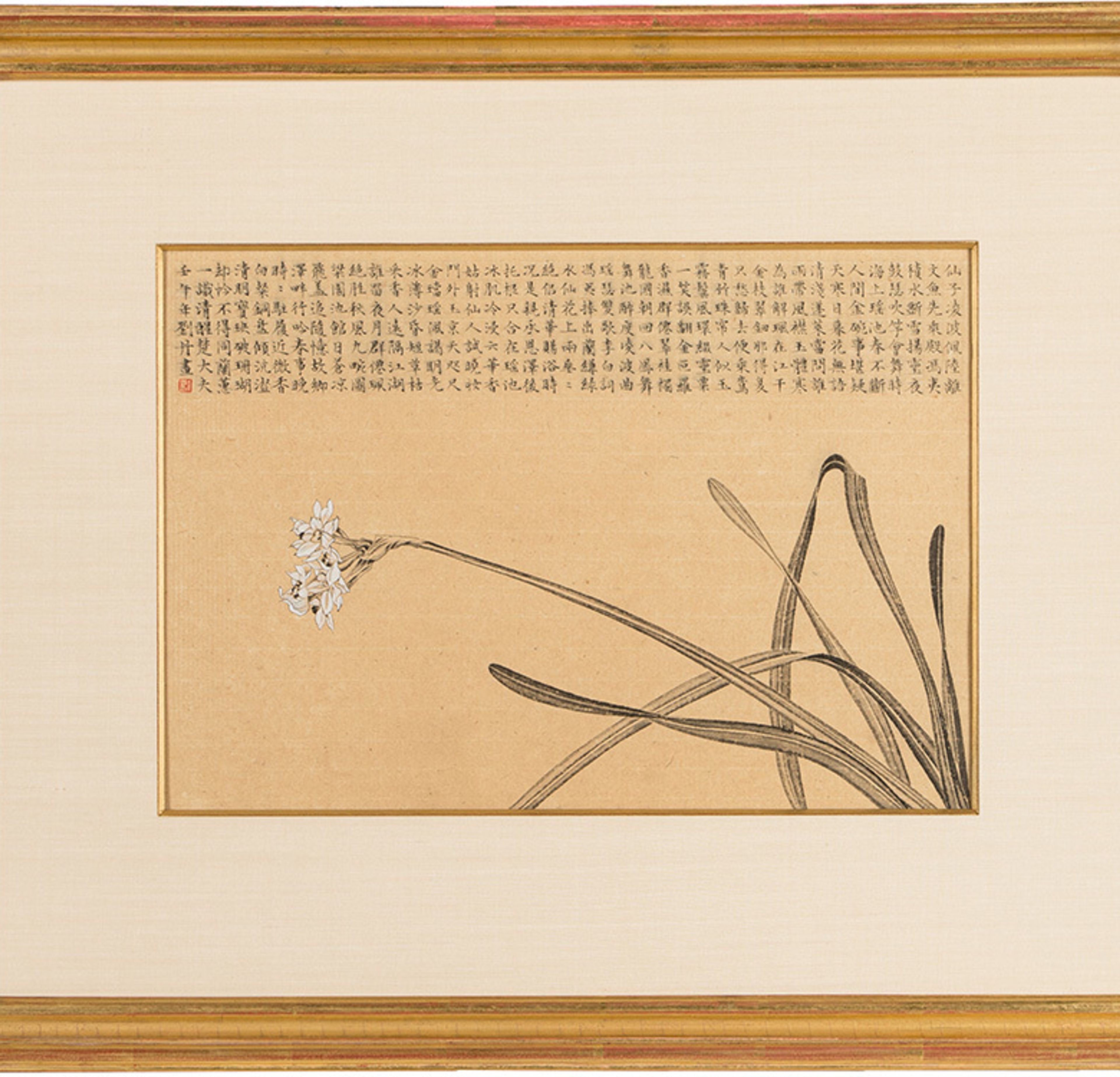
The works in the field of Chinese ink paintings range from classical paintings through to contemporary paintings that employ archaic themes, materials, and techniques. Classical Chinese paintings usually encompass styles from the 12th through 19th centuries, whereas artistic works produced in the 20th century onward are generally considered Chinese modern art. At the turn of the 20th century, under continuous military, economic, and cultural pressures from the West, Chinese intellectuals and artists began to seek help from the modern world to revive their weakening tradition. Most narratives of Chinese contemporary art stem from the end of the 1970s -- the sudden exposure of western art history resulted in a rapid turnover of artistic styles. Some scholars believe that the Maoist ideology that prevailed around the 1960s to the 1970s directly influenced the first generation of Chinese contemporary artists who were born in the 1950s. Most of these artists came of age in the wake of the state’s “Opening of China” period of the late 1970s and early 1980s, and their works from the following decades reflect on China’s evolving social and cultural traditions. The seven artists below have rewritten the rules of classical Chinese ink painting and are featured in our upcoming Asian Art auction this March 28th. Liu Dan (b. 1953), Narcissus, ink and color on paper, signed and inscribed, 11 x 16 in. (28 x 40.5 cm), estimate $80,000-$120,000. Whether it is from a life sketch or from a photograph, [the flowers’] shapes are formed initially in order not to forget. Now what has been painted has become the remembered. – Liu Dan Liu Dan studied Confucian classics and calligraphy at an early age, and later attended the Jiangsu Traditional Chinese Painting Institute where he studied under artist Ya Ming. However, it was only after moving to the United States in 1981 that he began to associate his art with classical Chinese painting. It was there that he found new opportunities to learn from museum collections of classical paintings. Painted in 2002, this Narcissus belongs to a series of flower paintings that Liu Dan began in the late 1990s when he was living in New York. Liu delicately painted the slender leaves and the cluster of flowers blooming from an elegant stem, along with fine calligraphy of poems and ancient verses about the narcissus flower. Offering the promise of spring, the narcissus is known in Chinese culture as the "water goddess" (shuixian) or the "goddess who stands above the waves" (lingbo xianzi). The flowers depicted by Liu appear to be more beautiful than in reality. Blossoms are usually transient, and capturing the moments blurs the line between imagination and experience. The portrait of the narcissus appears almost timeless with a serene spiritual energy. Pu Ru (1896-1963), Landscape, ink and color on paper, 26 1/2 x 11 1/2 in. (67.3 x 29.2 cm.), estimate $5,000-$7,000. Property from the Collection of Cheng Bao-nan, Taiwan, thence by descent. Chinese painter and calligrapher Pu Ru creates works featuring contemplative themes, landscapes, garden stones, and poems. Born in 1896 in Beijing, the artist began his professional career studying astronomy and biology at the University of Berlin. Returning to the east, the artist began his journey into studying calligraphy and painting and eventually became a professor at National Taiwan Normal University in 1949. Blending natural lush landscapes with striking calligraphy, his work was formally recognized in 1963 with a comprehensive exhibition of his art at the National Museum of History in Taipei. Landscape by Pu Ru features a towering mountain landscape, craggy rocks, and small vignettes of pastoral life. Wu Changshuo (1844-1927), Chrysanthemums, ink and color on paper, 87 x 20 1/2 in. (221 x 52 cm.), estimate $20,000-$30,000. Property from a Private Collection, Taiwan. Wu Changshuo is best known as a Chinese seal carver, painter, and calligrapher who rose to prominence in the 20th century. Born to a scholarly Chinese family, Wu learned seal carving from Zhe and Anhui schools, thus developing “Wu style” which combined refined artistry with robust forcefulness. The artist arrived at painting later in life at the age of 30, with his work showcasing elements of his calligraphic style. Wu learned from master Zhao Zhiqian (1829-1884), the leading scholar-artist in the late Qing Dynasty, and went on to incorporate the style of epigraphy into his work. Seen in his work Chrysanthemums, Wu’s style shines in his use of sharp contrasts and mix of bold & simple brushstrokes. The contrast of bold, small leaves within this composition with the dainty petals of the chrysanthemums is punctuated with two pronounced lines of calligraphy to the left, structuring the scroll. Huang Junbi (1898-1991), Lady, ink and color on paper, 18 1/2 x 7 in. (47 x 17.8 cm.), estimate $1,500-$2,000. Property from the Collection of Cheng Bao-nan, Taiwan, thence by descent. Considered one of the most influential painters of Modern China, Huang Junbi began his artistic career at an early age. Huang established the Guihai Cooperative Society with several artists in the 1920s, with the aim of championing Chinese painting education. Huang Junbi’s influence is incredibly expansive. Considered a renaissance man, Huang traveled across China examining its natural wonders and informing his work with these landscapes. He studied ancient masters of Chinese painting, eventually developing his renowned “Cloud Mountains and Waterfall” style. His work Lady, an ink and color on paper, shows the back of a distinguished female subject looking out onto a sparse landscape. This exquisite work is relished in its simplicity and contemplative nature. Qian Songyan (1899-1985), Riverscape Scene, ink and color on paper, 32 1/4 in x 15 1/4 in. (82 x 38.7 cm.), estimate $3,000-$5,000. Property from the Estate of Richard S. Ravenal, Livingston Manor, New York. Qian Songyan’s artistic path began at the turn of the 20th century. Learning from his father, Qian went on to graduate from the Jiangsu Provincial No. Three Normal College in 1923 and went on to even teach at art academies throughout his career. His style frequently features bright splashes of color, robust textural elements, and architectural structures throughout his pieces. Riverscape Scenes opens the viewers up to an expanse of water with three boats dotting the scene. Framed by tree branches, craggy rocks, and a faraway hilly stretch, this scene feels like a moment trapped in time. Zhao Shao'ang (1908-1998), Mantis on Bamboo, ink and color on paper, 31 1/2 x 11 1/2, 80 x 29 cm. estimate $7,000-$9,000. Property from the Collection of Cheng Bao-nan, Taiwan, thence by descent. Considered one of the preeminent flower and bird painters of his era, Zhao Shao’ang was active throughout the 20th century. His work blends impressionism, swaths of vivid color, and strong line work. As an adolescent, Zhao studied with the master Gao Qifeng and eventually became a teacher at Fushan Art Academy in his early 20s. Throughout his career, the artist has held solo exhibitions in China, Europe, and New Zealand but eventually settled in Hong Kong to complete his career. Coming up for auction this March 28th, Mantis on Bamboo is a study of tranquil nature scenes. Utilizing subtle colors and intricate linework, Zhao’s work is striking in its simultaneous complexity and simplicity. He Huaishuo (b. 1941), Landscape, ink and color on paper, framed signed with a dedication, dated 1978, with three artist seals, Shuo, He, Huaishuo, Estimate: $2,000 - $4,000 He Huaishuo graduated from the National Taiwan Normal University before furthering his education in the United States. The artist is known for rendering elements of traditional Chinese landscape paintings with new techniques and perspectives, whether depicting lone figures or twilight landscapes. Following in the footsteps of Fu Baoshi, Huang Binhong, and Lin Fengmian, He is most influenced by the latter’s overtly poetic and emotionally expressive images that incorporate Western techniques with ink painting. Like Lin and other modern artists, He’s images fill the picture in rejection of the preferred tradition of balancing negative and positive space. Landscape presents He’s style of traditional in material and contemporary in composition. The fraught landscape depicts an ominous scene marked by an aesthetic of bitter expressionism.
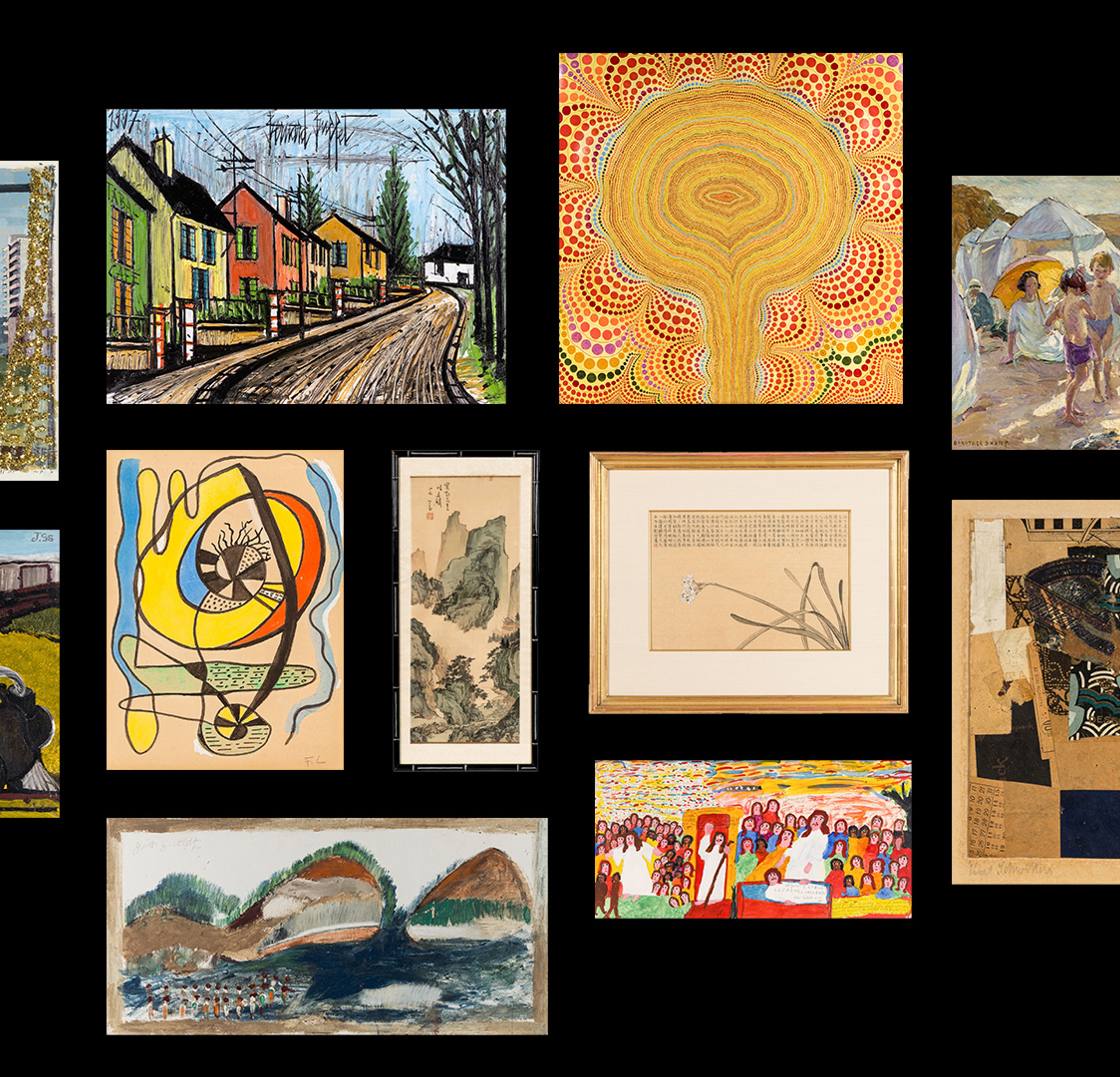
Dear Hindman Community, Time has flown by in our first six months at Hindman New York, which began with a dynamic press announcement and interview with Barron’s Penta. Then, the pleasure of client meetings to spread the word, conducting appraisals and word-of-mouth recommendations assisted in growing our book of business. It has also been a time to listen and reflect: who are our clients? What are their needs? How can we meet them? I’m so grateful to the many dealers, designers, decorators, clients, friends, art advisors and trusts and estates professionals who have been generous with their time and candor – you continue to shape our thoughts on how to build an innovative auction room in New York City that can answer those important questions in a fresh and meaningful way. The new year began with the exciting announcement of Alyssa Quinlan’s appointment as Hindman’s CEO. This was followed by our sponsorship of the Winter Show – back at the Armory with indomitable spirit and inimitable flair – with Hindman there on opening night, sponsoring programming including a lively panel discussion on the topic of the art world eco-system. After what can hardly be described as a New York winter, the crocuses and snowdrops are coming up as we announce our doors opening for the first time in the historic arts district of Chelsea. From March 2 to April 28, we are showcasing material sourced from around the country at High Line Nine Galleries on West 27th Street. The preview launches with the Collection of Susann Craig, one of the founders of Intuit: The Center for Intuitive and Outsider Art in Chicago. We look forward to celebrating her life and legacy in collaboration with New York’s Outsider Art Fair. The exhibition will also feature highlights from our spring season including Prints & Multiples, Post War & Contemporary Art, and Asian Art to coincide with Asia Week and more. We look forward to welcoming you at Hindman New York and seeing you face to face! Sincerely, Viewing Dates: Roadside Attractions: The Susann Craig Collection, Chicago, IL – March 2-5 Asian Works of Art – March 16-18 Post-War & Contemporary Art | Prints and Multiples - March 2-April 8 Important Jewelry – April 27 Photographs - March 28-April 28 American Art & European Art - April 11-28 Viewing Hours: Tuesday - Friday: 10 - 6 PM Saturday: 12 - 6 PM To explore highlights on view in New York this March 2 through April 28, see below: Lot 16, 122, 65, 74, 191, 30 Asian Works of Art Post-War & Contemporary Art American & European Art Photographs
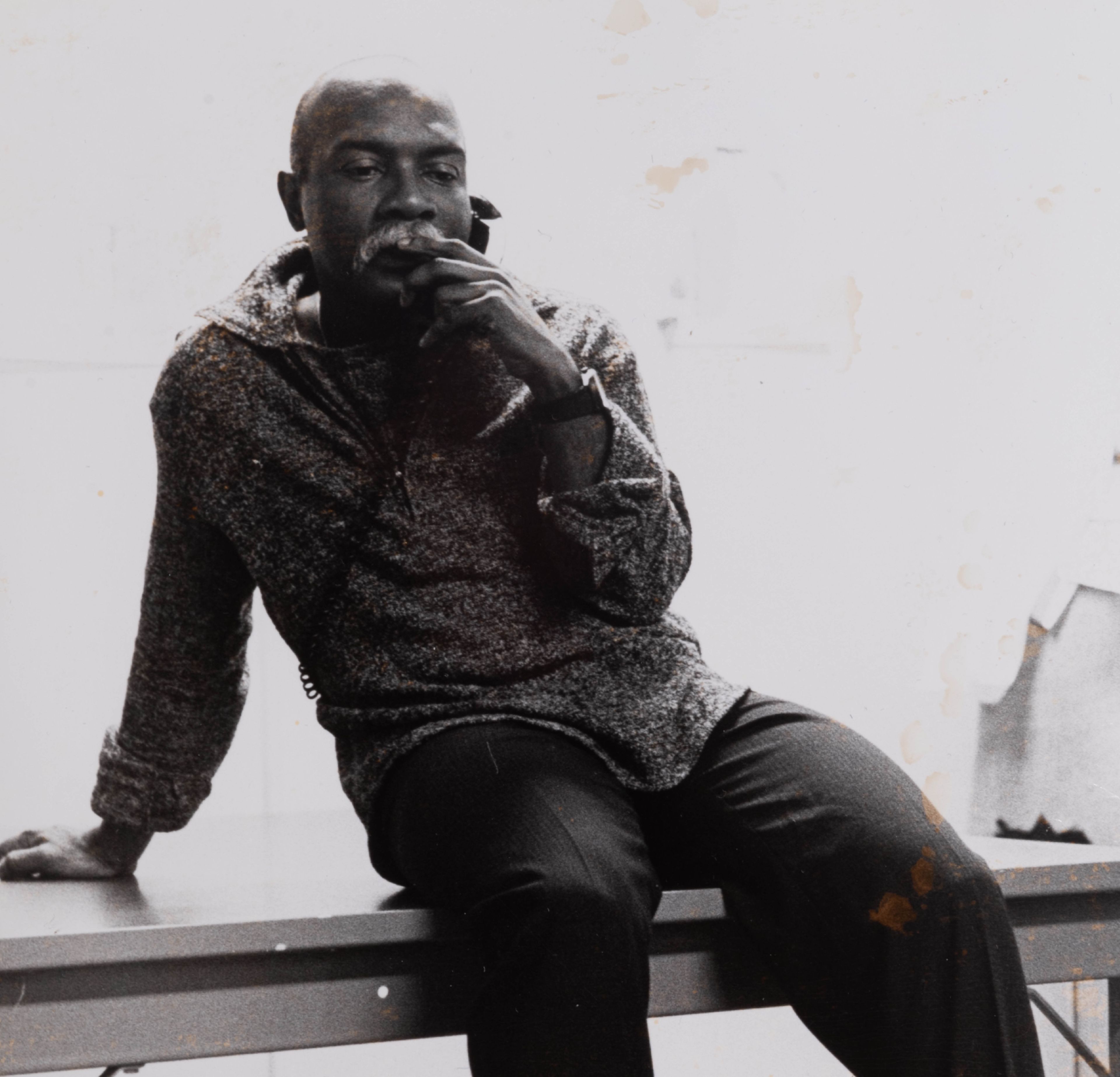
Hindman’s March 14 Spring Fashion auction celebrates two hundred years of fashion history with important collections that are new to the market and gathered from around the United States. Headlining the sale is a collection of designs created by Arthur McGee (1933-2019), an American fashion designer known as the “Grandfather of Fashion Designers of Color”. In addition to the 45 ensembles in this sale that were created by Arthur McGee between the 1970s and the 1990s, the sale also includes McGee’s archive, with design sketches and inspiration, hundreds of photographs from throughout McGee’s career, a collection of letters written to the designer, business documents, and several prestigious awards given to McGee later in his career. Brought to Hindman by consignors and longtime friends of McGee, Johnetta Shearer and Maxine Gordon have carefully preserved this collection for years and even established an LLC to preserve his legacy. The net proceeds of the sale of the collection will be donated to the Arthur McGee Legacy Scholarship Fund to support the career of an emerging designer. Explore select highlights of his collection up for auction below. Unraveling the Legacy A trailblazer in his designing talent and professional determination, Arthur McGee became the first African American to oversee a design room of an established New York Seventh Avenue apparel company at just 24 years old. Garnering acclaim from Harold Koda, the former curator at the head of the Costume Institute of the Metropolitan Museum of Art, “Arthur was not a firebrand, instead his confidence in his own talents was like water seeping into the hard rock of racism — effortless seeming, but effective in breaking through.” Over his expansive career, McGee touched the lives of many and inspired a myriad of designers that proceeded him. McGee was known for incorporating into his designs, elements of African and Japanese-inspired textiles, patterns, and techniques, which came to characterize his signature works. We see this specifically in garments included in Lots 1, 2, 7, 10, and 16 below. The designs in Lot 7 feature traditional West African Indigo dying techniques, including starch- and tie-resist dyes, while McGee’s archive in Lot 1 and the designs in Lot 16 provide evidence of McGee’s interest in studying origami and using it in his design process. Featured Lots: 1, 2, 3, 4, 6, 7, 10, 15, 16
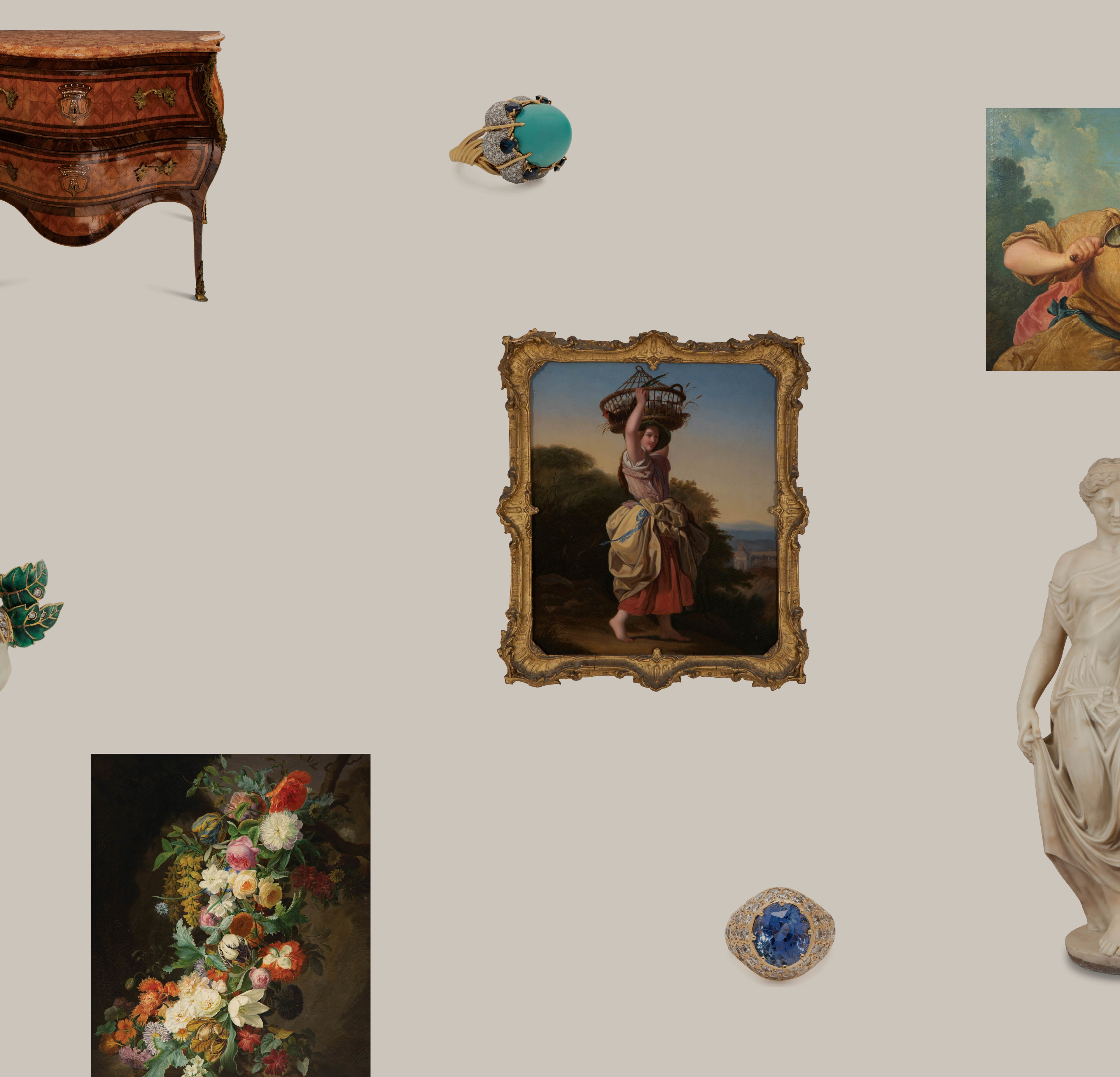
Hindman is pleased to present Palm Beach Auction Week this February 18—23, live at our Palm Beach saleroom (1608 South Dixie Highway Palm Beach, FL 33401.) Visit our office to preview highlights from our Palm Beach Furniture & Decorative Arts, Fine Art, and Jewelry auctions. To explore highlights from all three auctions and opening hours, see below. Palm Beach Furniture & Decorative Arts Auction | February 21, 2023 | 10 AM ET From left to right: Lot 84, Lot 36, Lot 146 Hindman’s February 21 Palm Beach Furniture & Decorative Arts auction features the collections of Hermé de Wyman Miro, Palm Beach; Carl Moore, Hillsboro Beach; a private Palm Beach collector and many more. Palm Beach Fine Art Auction | February 22, 2023 | 10 AM ET From left to right: Lot 11, Lot 160, Lot 2 Our first Palm Beach Fine Art sale features Old Masters, 19th century paintings, impressionist, and modern, contemporary and emerging art, all priced attractively for collectors of all ages and tastes. The sale also includes an exquisite group of Outsider Art from the collection of Edith S. Peiser of Boca Raton, Florida. The group features many paintings by the celebrated outsider artist, Purvis Young. Palm Beach Jewelry Auction | February 23, 2023 | 10 AM ET From left to right: Lot 108, Lot 51, Lot 24 Hindman’s curated Palm Beach Jewelry auction includes pieces selected to evoke the tropics through the use of yellow gold, turquoise, coral and pearls. On offer are signed pieces from David Webb, Seaman Schepps, Tiffany & Co., Elizabeth Locke, Angela Cummings and an array of easy to wear jewelry suited for 'fun in the sun', casual entertaining and today's lifestyles. Preview Hours: FEB 18—FEB 22 11AM - 4PM
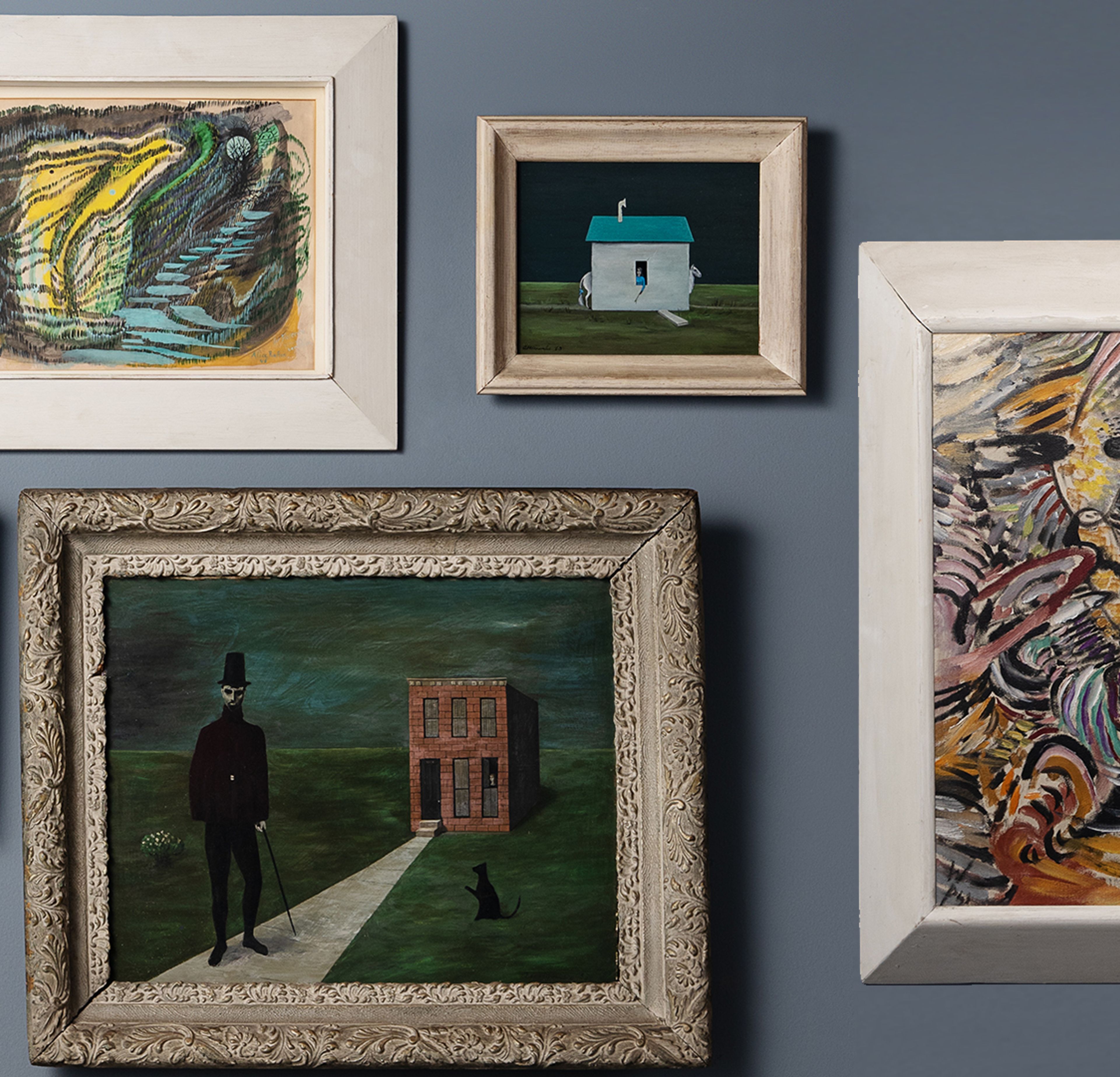
Widely known for her expertise in Latin American studies, Florence Arquin (1900-1974) went by many titles throughout her life—painter, documentary photographer, educator, writer, and critic. A renaissance woman of the 20th century, Arquin spent most of her life in Chicago and Mexico where she cultivated a robust social network of artistic friends including Diego Rivera, Frida Kahlo, Wolfgang Paalen, Alice Rahon, and Carlos Mérida, among others. Beyond Latin America, Arquin’s presence was felt in the Chicago art world where she cultivated a similar network of friendships with individuals including Kathleen Blackshear and Ethel Spears. Showcased in Hindman’s February 10th auction Figuratively Speaking, Arquin’s network of artistic talent is seen in the 21 avant-garde and surrealist works on sale from the Carol Williams Collection. Explore offerings from this collection, including insights into the lives of these talented artists below: Lot 66 – Wolfgang Paalen (Austrian/Mexican, 1905-1959) | Untitled, 1943 Of Austrian origin, Parisian beginnings, and Latin American endings, Wolfgang Paalen’s journey as an artist is one of winding roads and vibrancy. Meeting his wife Alice Rahon in 1934 whilst in Paris, Paalen was an instrumental figure in the country’s burgeoning surrealist movement. Surrounding themselves with icons of the movement, Paalen and Rahon became fast friends with Andre Breton, Juan Miró, Man Ray, and Pablo Picasso, thus developing a teeming ecosystem of artistry. After establishing a base in Europe, Paalen, and Rahon traveled to the United States and Latin America where their artistic influences began to evolve. Throughout their travels the duo was profoundly affected by totemic and indigenous imagery. This trip resulted in them engaging with and befriending Frida Kahlo and Diego Rivera, further developing their artistic practice and social circle. Seen above, Untitled by Wolfgang Paalen represents the confluence of a myriad of geographic influences. Gifted to friend Florence Arquin, Untitled (1943) is emotive and meticulous, featuring splashes of movement and color. Through Arquin’s preservation of her gifts, she gives the viewer a glimpse into the lives of these enigmatic artistic powerhouses. Lot 55 – Alice Rahon (French/Mexican, 1904-1987) | Untitled, 1946 Untitled (1946) by Alice Rahon exemplifies the previously mentioned confluence of regional influences in the artist’s practice. Characterized by windows of bright yellow and shimmering blue, the work showcases both the vibrancy of the surrealist movement and the organic influence of the Americas wrapped up in one composition. Known as a shapeshifter to her cohort, Alice Rahon’s life and work reflects this in her ability to make friends with a wide cast of characters. In her travels to Mexico with Paalen, Rahon quickly befriended surrealist icon Frida Kahlo, commiserating over their shared childhood experiences and shared artistic influence. Her tenderness and fondness for her friends extends to the work above, gifted to Arquin with the word cariñoso (caring) inscribed in the lower right corner. Her unique viewpoint as artist is reflected in the two works highlighted in Figuratively Speaking, carefully preserved by confident Florence Arquin. Lot 10 – Kathleen Blackshear (American, 1897-1988) | Portrait (Florence Arquin) The portrait seen above by American artist Kathleen Blackshear features friend and patron Florence Arquin seated and posed with a colorfully patterned collared dress. This work reflects the artist’s interest in portraiture and connection to Arquin through the Chicago art scene. A fellow artist-educator, Blackshear exhibited this work at the Thirty-Seventh Annual Exhibition by Artists of Chicago and Vicinity in 1933. Lot 4 – Florence Arquin (American, 1900-1974) | Untitled (City View with Churches) Born in New York City and a woman of many talents, Florence Arquin’s artistic prowess cannot be understated. Seen in Untitled (City View with Churches), Arquin’s landscape exhibits her “ardent work and exuberance of style” as dubbed by friend Diego Rivera. Expanding on his characterization, Rivera commented on her work during a 1943 solo exhibition in Mexico City stating “Florence Arquin sees with every pore of her skin. Her nerves absorb the vibration of color, the inflections of the forms, the quality of the earth, of the air, and of the light, for the purpose of synthesizing all of these in her painting.” Such reverence for her and her practice shines a light on her skill as artist as well as her capacity for meaningful and long-lasting friendship. Lot 22 – Diego Rivera (Mexican, 1886-1957) | Men at Work, 1956 Rounding out this dazzling social network is Diego Rivera, an iconic figure of 20th century Mexican art. A champion of Arquin’s work and titan of mural painting, Rivera showcases his extensive artistic process in Men at Work (1956) seen above. This preliminary drawing detailing two men engaged in outdoor physical labor gives the viewer a glimpse into the artist’s micro to macro range with murals, as well as his relationship with Arquin. Lovingly inscribed into the painting is the phrase “a Florence Arquin con todo mi amor” (to Florence Arquin with all my love.)
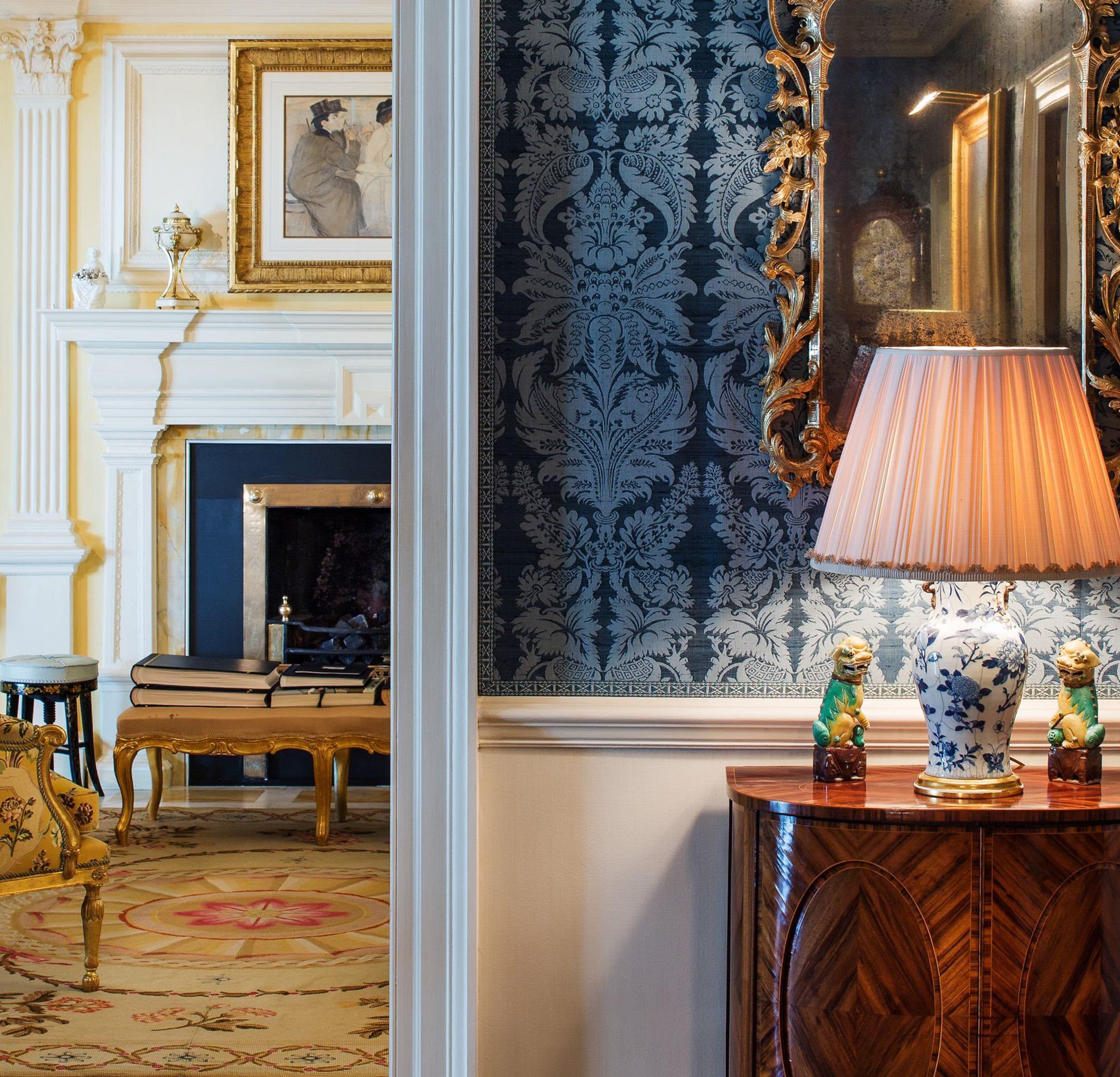
To Our Dear Clients and Friends, 2022 was a historic year for Hindman. After celebrating a milestone 40th anniversary in October, we achieved record revenues for the second year in a row, with $100 million in sales over 140 auctions. We also broadened our reach in key regions across the country with three new locations opening in 2022 including Miami, Boston, and New York City. I’m pleased to share news that Gemma Sudlow, star auctioneer and industry veteran, will launch our full-service New York location. I’m looking forward to partnering with Gemma and her team to build upon Hindman’s existing network of collectors, advisors, and institutions in the art market capital of the world. Looking ahead to 2023, I am excited to announce the appointment of a new CEO at Hindman. As we advance into the company’s fifth decade, I am passing the reins to the extremely capable hands of Alyssa D. Quinlan who has served as Chief Business Development Officer and Executive Vice President for the last three years and worked at the firm for over ten years. With a background in banking coupled with her time at an international art advisory firm, Alyssa has re-energized our Business Development efforts across the country, expanding our core business to record levels. Further, she was instrumental in re-launching our appraisals department with Hindman Appraisals, which will be entering its second year as an independent entity in 2023 allowing us to readily provide impartial and objective appraisals. Meanwhile, I will transition into a new role as Hindman’s Executive Chairman. I leave the position of CEO with full confidence that the firm will grow in new and exciting ways under Alyssa’s leadership. Likewise, in the new year, Hindman will be hitting the road once again. Our Specialist and Business Development teams are looking forward to a full season of attending the many shows, conferences, and fairs that make the art world so vibrant. You can expect to see Hindman at several events throughout the year including the Winter Show in New York, EXPO Chicago, the Charleston Antiques Show, and the Las Vegas Antique Arms Show, to name a few. Hindman’s success and steady growth are no accident—they are the collective effort of our hardworking and tenured team of 175 professionals across our 16 locations. We are consistently presenting fresh-to-the-market property at auction while utilizing leading-edge technology to make bidding and buying easier from anywhere in the world. Still, as we continue to innovate and expand our reach across the globe, our top priority is, and always will be, providing dedicated attention and holistic, end-to-end solutions for our loyal clients. Lastly, we want to thank you for your continued support of Hindman. As we begin the new year, we will bring the same commitment to service and dedication to maintaining the highest standards of integrity and ethics in the industry, as we help you navigate your own personal collecting journey. Early indications once again point to a strong year at Hindman, so we hope to see you at one of our 130 auctions in 2023, and indeed for years to come. Sincerely, Jay F. Krehbiel Executive Chairman To explore our 2023 auction schedule, click here. Header Photo by Tom Rossiter
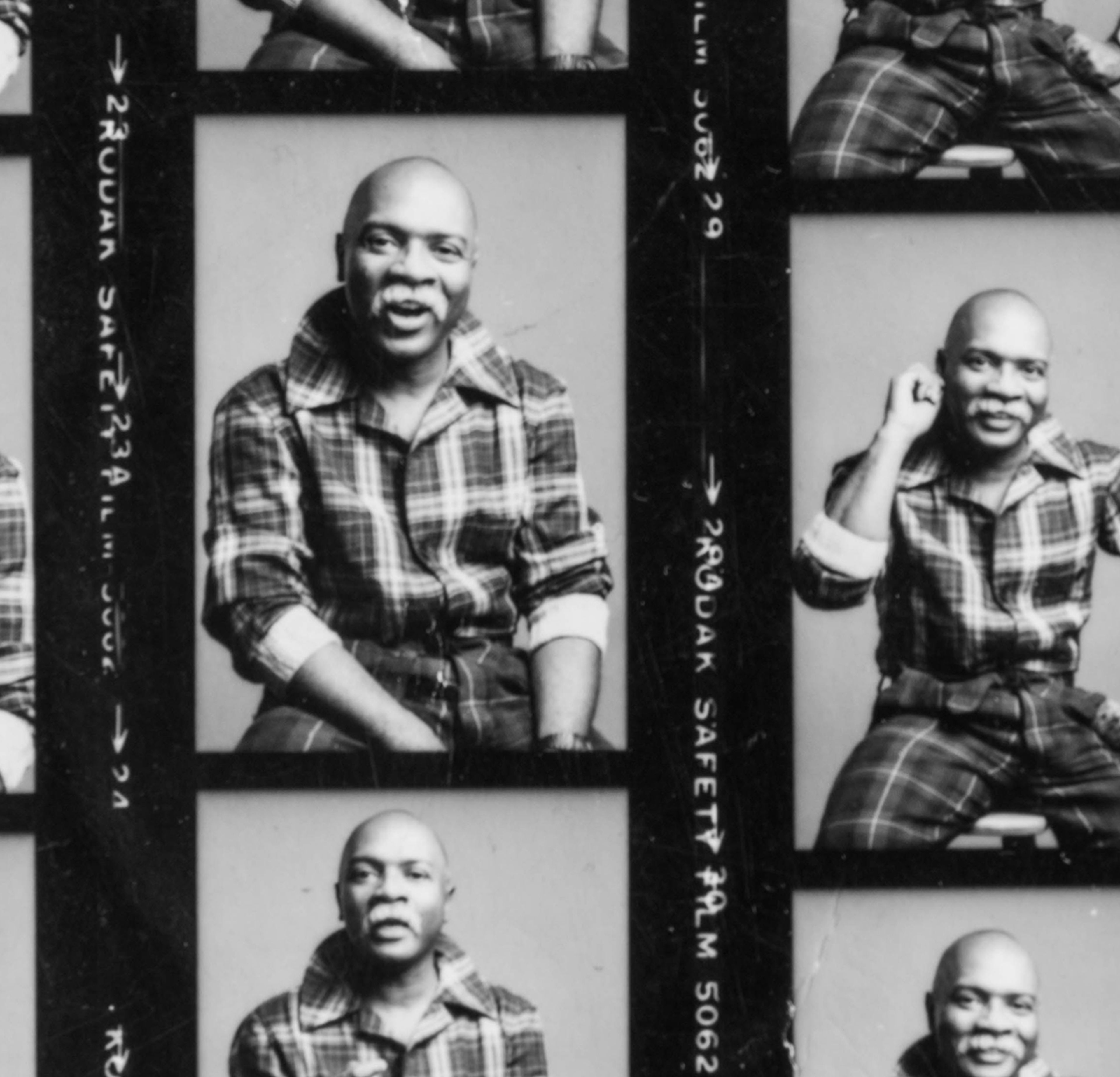
Hindman is pleased to present our first Couture & Luxury Accessories auction of the year, Spring Fashion & Accessories this March 14, 2023. Featuring property from three notable collections, here is your first look at this historic auction. Black Fashion Designers Hindman’s March 14 Spring Fashion auction celebrates two hundred years of fashion history with important collections that are new to the market and gathered from around the United States. Headlining the sale is a collection of designs created by Arthur McGee (1933-2019), an American fashion designer known as the “Grandfather of Fashion Designers of Color”. In addition to the 45 ensembles in this sale that were created by Arthur McGee between the 1970s and the 1990s, the sale also includes McGee’s archive, with design sketches and inspiration, hundreds of photographs from throughout McGee’s career, a collection of letters written to the designer, business documents, and several prestigious awards given to McGee later in his career. The auction also contains several designs from other black fashion designers who worked in the United States during the mid-20th century, some of whom were inspired by Arthur McGee, including Scott Barrie, Willi Smith, Jeffrey Banks, and Fabrice Simon. A Touch of the Gilded Age Hindman is also very proud to bring to auction a rare collection of Chicago history items connected to two emblematic protagonists of the Gilded Age: Bertha and Potter Palmer. Their possessions and belongings are now in the collections of important museums, such as the Art Institute of Chicago and the Chicago History Museum. Carefully preserved in the family for generations, these items, which also include material related to the Chicago 1893 World’s Columbian Exhibition, document the Palmers' private and public spheres through a rare collection of embroidered sheets and linens used in the family’s home, to artifacts that document Bertha Palmer’s travels and activities as the President of the Board of Lady Managers at the 1893 World’s Fair. Also included in this collection are several high fashion and haute couture garments created for Bertha and Potter Palmer’s children and grandchildren, including several rare designs by the Parisian house of Callot Soeurs. Treasures from a Historic Museum The sale also boasts an important collection from the Valentine Museum in Richmond, Virginia, deaccessioned from the museum to benefit collections care, preservation, and future acquisitions. Opened in 1898, the Valentine Museum was one of the first museums in Richmond and is now dedicated to collecting, preserving, and interpreting Richmond’s history. The items offered in this collection document over 150 years of fashion history, including designs from throughout the 19th century and more contemporary works by designers such as Paquin, Pingat, Henriette Favre, Liberty of London, Jean Desses, Norman Hartnell, Balenciaga, Hanae Mori, Halston, and Chanel.
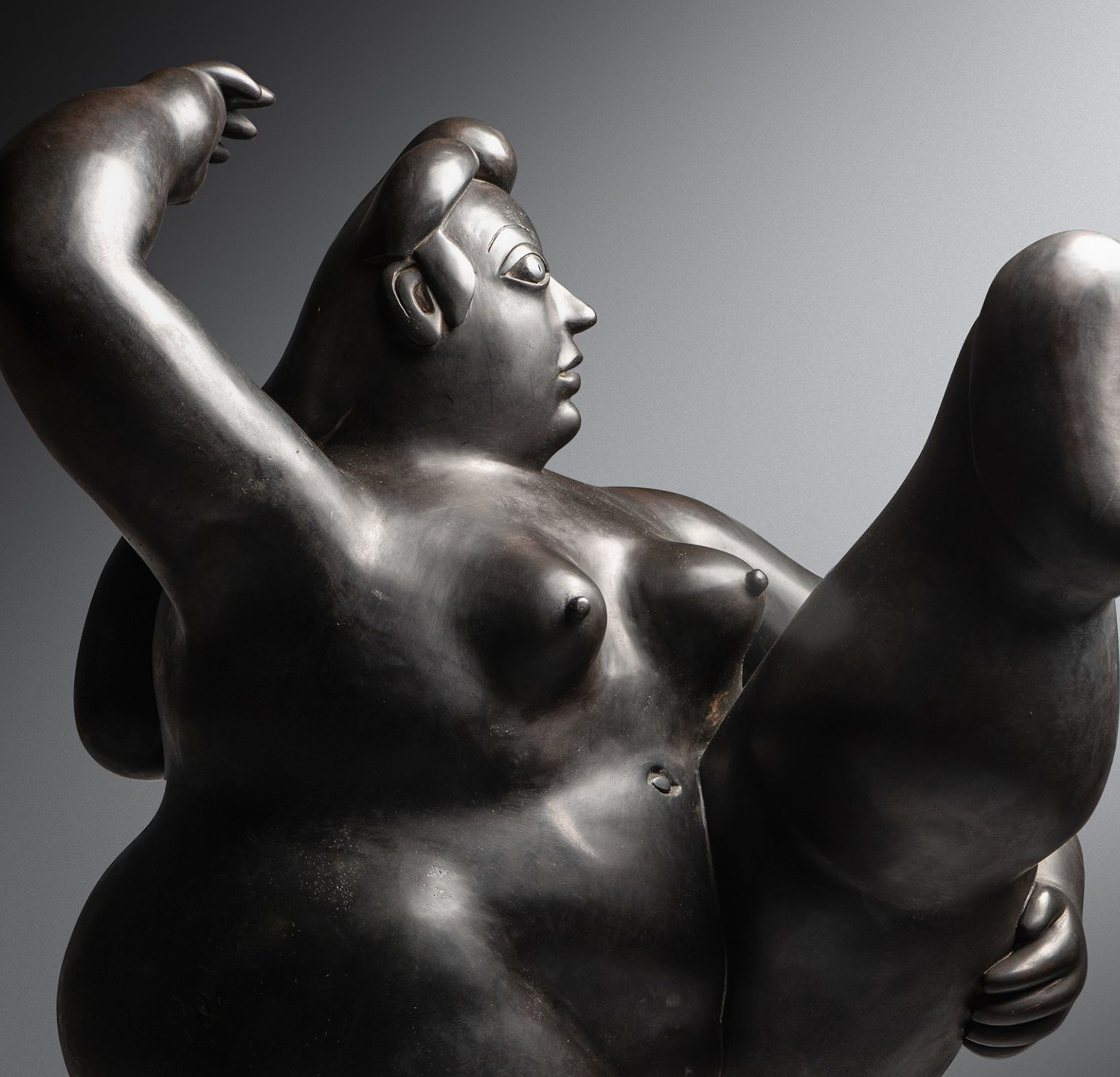
Married in January of 1988, Ted and Sherri Pincus loved to travel the world and began collecting art early in their marriage. Ted was the Chairman and CEO of the Financial Relations Board, an international public relations firm based in Chicago, with offices throughout the United States. Sherri, his wife, has extensive experience as a professional chef, cooking teacher, and cookbook author. During one trip, they visited a large, outdoor Fernando Botero exhibit in Florence, Italy and decided that one day they would acquire one of his pieces for their collection. Purchased in 1998 from Irving Galleries in Palm Beach, Florida, the lovely Ballerina appealed to them because of her voluptuous grace and balance. Ballerina, 1981, is representative of Botero’s distinctive style of volumetric, over-sized shapes with unexpected shifts in scale. Drawing from art historical themes that range from the Middle Ages, the Italian quattrocento, and Latin American colonial art to the modern trends of the 20th century, the artist’s large cast of characters form one of the most unique bodies of work in 20th and 21st century art. Botero’s interest in art began in Colombia, where he was born in 1932. It was here that he was exposed to pre-Columbian and Spanish colonial art and began to make his own drawings and watercolors at an early age. In 1952, he was awarded a Second Prize at the National Salon in Bogotá. With the money Botero earned from this award, the young artist traveled to Europe, where he encountered the work of the Old Masters, as well as the avant-garde art of Picasso and Braque. As a result, much of his work contains references to such European masters as Jan Van Eyck and Peter Paul Rubens and embraces the Renaissance tradition of abundantly fleshed nudes and statuesque figures. It was also during these formative years in Europe that Botero began to simplify his images and developed his signature style of monumental, smoothly rounded figures and inflated shapes that expand across the composition. In the 1970s, Botero’s dedication to the expression of volume and mass led to the translation of his oversized images on canvas into sculpture, producing enormous bronze figures and animals. The simplicity and dimensions of Ballerina can be linked to pre-Columbian works, in which broad torsos and flared hips and thighs are common features. Likewise, the dancer’s almond-shaped eyes that stare resolutely ahead recall those of the Tolita-Tumaco figures from ancient Columbia and Ecuador. However, Botero has modernized his sculpture in its subject matter. With her left leg and right arm upraised, Ballerina gracefully balances on her powerfully muscular right leg. The stance is similar to those of Degas’ dancers, who are seemingly suspended in uncertain mid-motion, in danger of losing balance. With his desire to represent tangible volume in monumental form, Botero’s dancer instead confidently possesses the space in which she exists. The artist has distilled the essence of shape and volume, the figure’s plastic form a celebration of strength and vigor. “Sculpture enables me to create real volumes,” Botero once reflected. “Sculpture is like a caress. You touch the form, you can give the forms the softness, the sensuality you want. It’s magnificent.” Join us this December 14th for our Post-War & Contemporary Art auction featuring Ballerina by Fernando Botero.
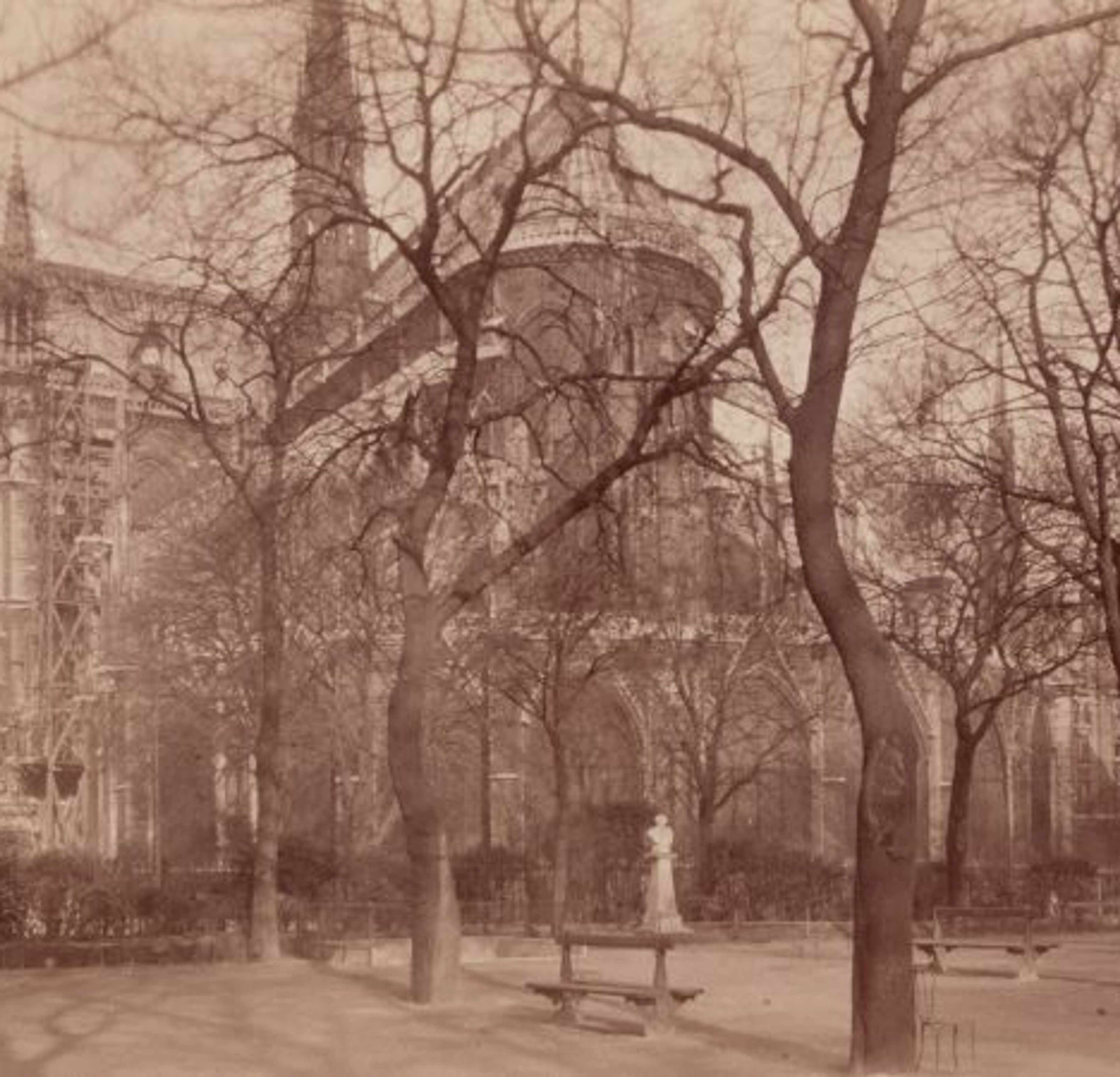
“The Atget prints are direct and emotionally clean records of a rare and subtle perception, and represent perhaps the earliest expression of true photographic art.” – Ansel Adams Born in Libourne, near Bordeaux in 1857 and orphaned as a child, Jean Eugène August Atget was raised by an uncle. He left school in his teens, working first as a cabin boy at sea before training as an actor at the National Conservatory of Music and Drama in Paris. In the late 1880s, Atget abandoned the stage for art, first taking up painting before turning to photography where he found inspiration in the street life and architecture of the capital. Atget’s initial intention was to supply photographs (or “documents”, as he termed them) to artists, architects and stage designers as source material for their own work. His focus expanded around 1900, however, in the face of the increasing modern transformation of Paris and consequent demolition of the city’s older neighborhoods in favor of grand facades, broad boulevards, and public parks. Atget became determined that his photographs should now become an enduring and encyclopedic record of the city’s rapidly vanishing architectural and cultural history. Atget’s ambitious goal was accomplished using rudimentary, cumbersome and increasingly obsolete equipment. Rising before dawn, Atget lugged a bulky view camera, a tripod and glass negatives in their heavy wooden holders – almost forty pounds of equipment — through the city and into the surrounding countryside, often as far as Versailles and Saint-Cloud. These glass plates were later developed in his workroom and contact-printed on albumen papers on his roof. Atget’s living was always meager; he sold to whomever saw merit in his work – to libraries and historical societies, who embraced its documentary aspects, and to other artists who admired its other more painterly qualities. Before World War I, enthusiasts included Henri Matisse, George Braque and Andre Derain. By the mid 1920s, Atget had become a favorite of the Surrealists, particularly Man Ray, who found his “naive” pictures revelatory and had a number of them published in La Révolution surréaliste in 1926. Berenice Abbott, Man Ray’s assistant, also a devotee, recalled that: “My excitement at seeing these few photographs would not let me rest. Who was this man? I learned that Atget lived up the street from where I worked — at 17 bis rue Campagne Premiere and that his prints were for sale. Perhaps I could own some. I wanted to see more and lost no time in seeking him out. I mounted the four flights to his fifth-floor apartment. On the door was a modest handmade sign, ‘Documents pour Artistes’. He ushered me into a room approximately fifteen feet long, the ordinary room of a small apartment, sparsely and simply furnished. Atget, slightly stooped, impressed me as being tired, sad, remote, appealing. He was not talkative. He did not try to ‘sell’ anything. He showed me some albums, which he had made himself, and I selected as many prints as I could afford to pay for from my meager wages as a photographer’s assistant.” Abbott remained Atget’s committed champion after his death, fighting to preserve his archive of around 5,000 vintage prints and more than 1,000 glass plate negatives, and initiating their transfer to New York City. Thanks to this intervention, Atget’s work was highly influential on successive generations of American photographers, from Walker Evans to Lee Friedlander. The Museum of Modern Art, New York, purchased Atget’s archive from Abbott and Julien Levy in 1968 and it is from this core group that this extraordinary selection of photographs, being sold on behalf of The Museum of Fine Art, Houston, originates. The selection presented here offers some significant highlights from Atget’s career – richly toned studies, all inscribed in pencil in his distinctive spidery hand – of such familiar Paris landmarks as Notre-Dame, Fête de la Villette, Moulin Rouge and Versailles, as well as a fascinating glimpses into less familiar places and preoccupations – a shadowy stairwell on the rue des Archives, a stark alleyway in the Gobelins, primroses in full bloom, a wintry tree at St. Cloud, or a jocular flower-seller. This auction offers collectors the unique opportunity to acquire significant examples of Eugene’s Atget’s work from a distinguished source, and Hindman is honored to have been entrusted with this important sale. Join us this December 6th for Eugène Atget Photographs Sold by the Museum of Fine Arts, Houston.
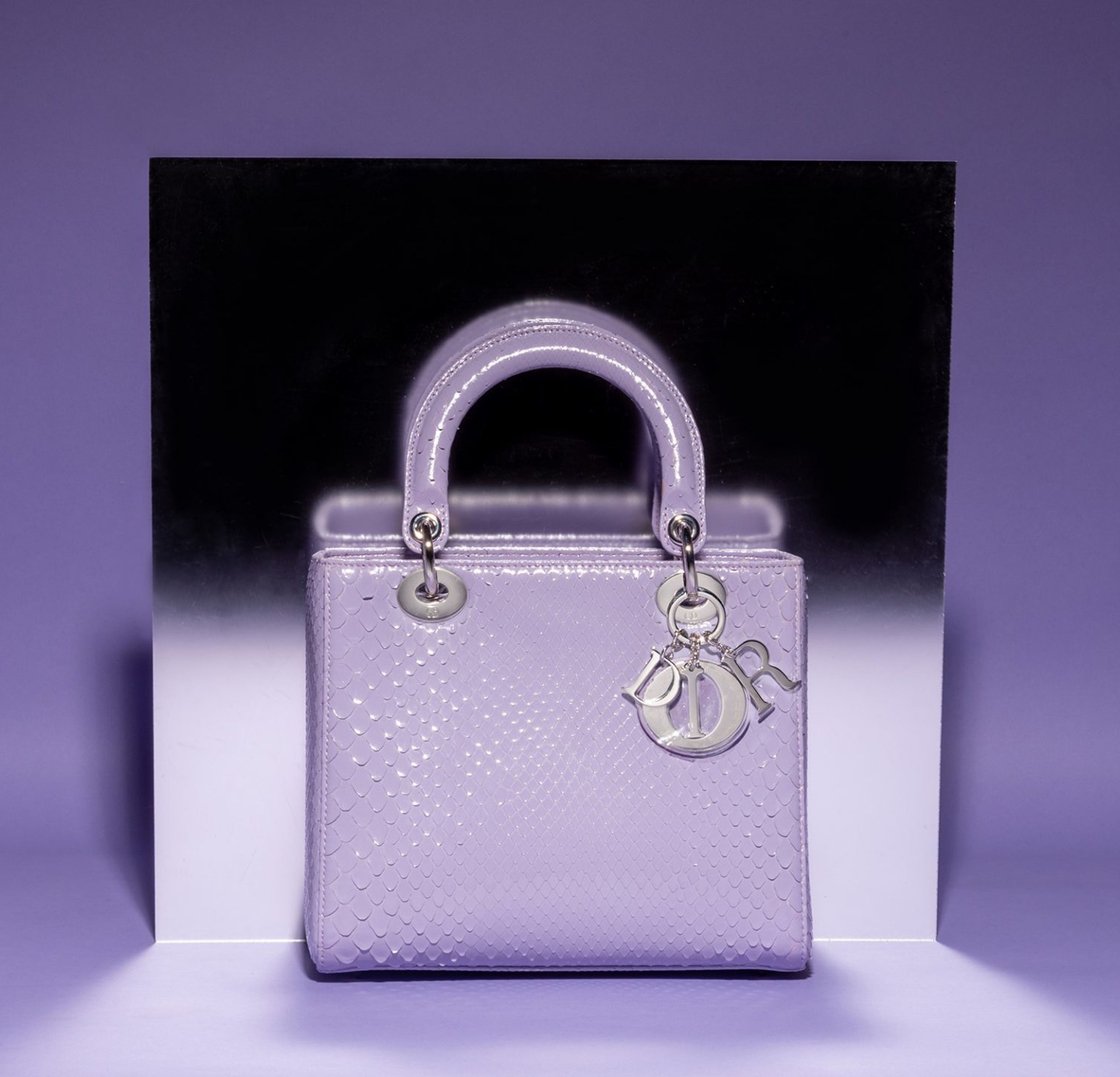
Hindman is pleased to present our Luxe Holiday auction this December 1st. Featuring a single-owner suite of Dior handbags, including a selection of the house’s rarest output by John Galliano, Raf Simons and Maria Grazia Chiuri, this auction is brimming with designer gems for any collection. With selections from Dior, Chanel, Hermès and Judith Leiber to name a few, the luxury handbags showcased in this sale were inspired by and are designed by powerhouse women in the industry. Join us as we explore the myriad of muses behind some of the most iconic bags of the 20th and 21st centuries. Princess Diana and the Lady Dior Bag The Dior Lady Bag first debuted in 1995 as the Chouchou bag, and was presented to Princess Diana by Bernadette Chirac, then-First Lady of France. It was renamed in 1996 to honor the late princess. It was launched during Gianfranco Ferré’s tenure using the ‘cannage’ pattern inspired by the cane-backed chairs favored by Christian Dior in his salons. The bag has since been canonized as a house staple, reinvented each season by successive creative directors. Diana’s favorite handbag, this purse would frequently be seen carried by this member of the British Royal family and most recently was featured in the smash hit tv show The Crown on Netflix. The Lady Dior bag honors the timeless style of Diana with its classic silhouette and is the hallmark of this year’s Luxe Holiday auction. Elizabeth Taylor and Judith Leiber Judith Leiber, the first woman member of the Hungarian Handbag Guild, fled Nazi occupation with her family during World War II and eventually went on to establish her own line in 1963. Expertly designed and flawlessly handcrafted, her popular handbags are made with Swarovski crystal and have gained international acclaim. Leiber’s quirky and fun handbags have been sported by celebrities like the Kardashians, Lupita Nyong’o and Beyonce. With 50 to choose from at Hindman, these novelty purses offer the collector an opportunity to stand out in the crowd. Adding to the star power in this auction, lots 342, 354, 355, and 356 feature selections from Elizabeth Taylor’s handbag collection. An icon of the silver screen, Taylor’s fashion sense and lavish lifestyle allowed her to amass an impressive collection of couture and luxury goods throughout her lifetime. Her commitment to glamour is seen in the wonderful handbags showcased in this sale, which include Judith Leiber and Fendi. Grace Kelly and the Hermès Kelly Bag Highly prestigious and exclusive, the Hermès Kelly bag was originally designed in the 1930s by Robert Dumas. The handbag features a trapezoid shape with two triangular gussets, a cutout flap, and a handle with two side straps and was made famous by Grace Kelly, Princess of Monaco. Intended as a functional bag, the Kelly was created for the independent, energetic women of the time. Its classic silhouette has made it one of the most sought-after bags of our modern era alongside its sister handbag, seen above, the Birkin. Worn by Kelly until her death in 1982, this handbag (lots 199, 200, 201, 202) is a staple for any luxe collector who wants to own a piece of history.