
New & Noteworthy
Stay up to date with news, highlights, & features from across Freeman's.
Stay up to date with news, highlights, & features from across Freeman's.
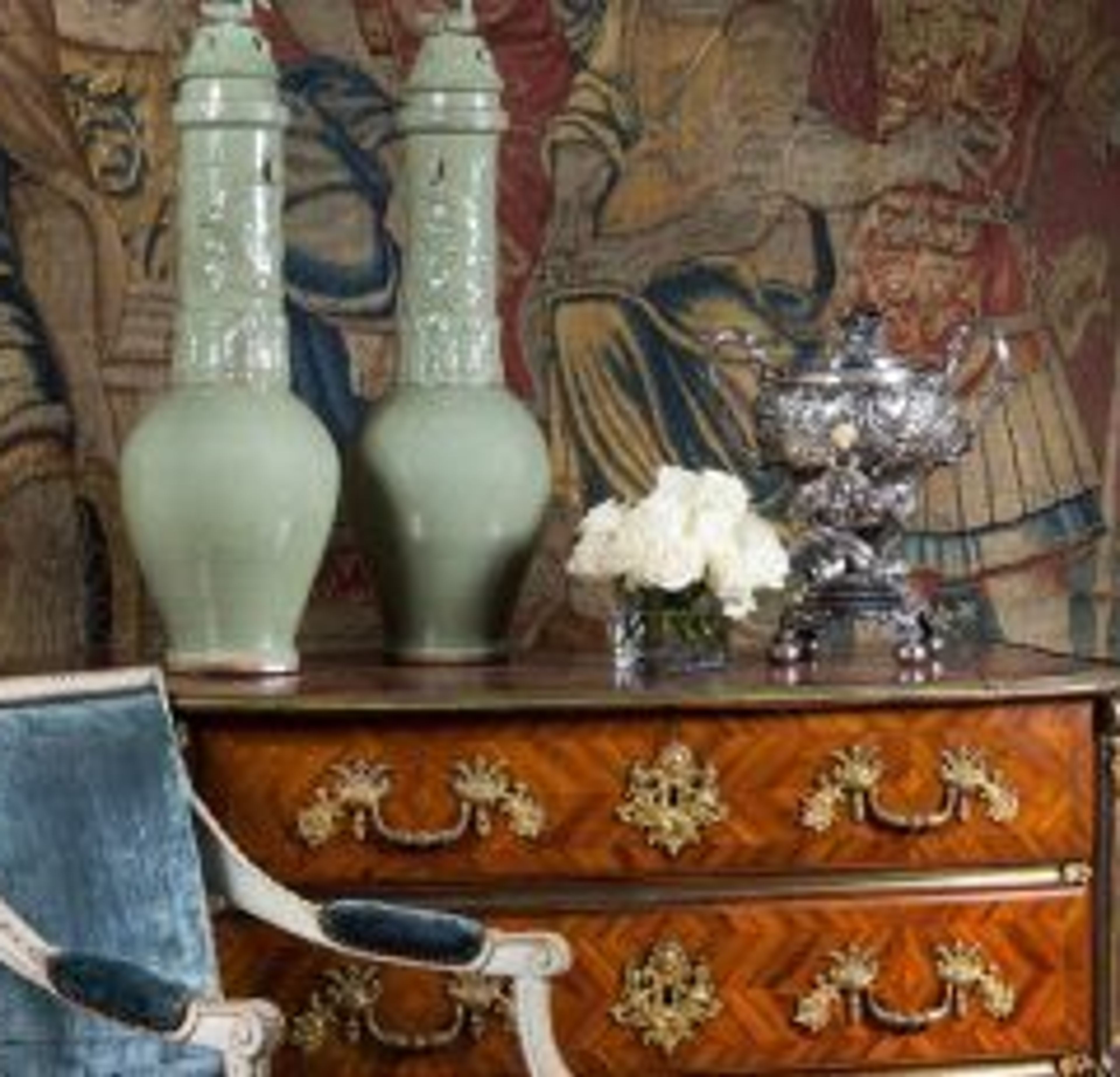
In the exhibition and collection catalogue Bridge of Dreams, published in conjunction with the 2000 Metropolitan Museum of Art’s Masterpieces of Japanese Art from the Mary Griggs Burke Collection, Burke credits her mother, Mary Livingston Griggs, for developing her astute eye and passion for collecting. Livingston Griggs raised the family in her St. Paul, Minnesota childhood home and filled it with old master paintings and European furniture collected from her travels. In 1968, Mary Griggs Burke bequeathed the home to the Minnesota Historical Society as a museum. Our upcoming Fine Furniture, Decorative Arts and Silver auction will feature a collection of works from the Burbank-Livingston-Griggs House. Of her childhood home, Mary Griggs Burke wrote, “Throughout mother’s life she found much pleasure in collecting antiques, which on a large scale included complete eighteenth-century paneled European rooms, which were-cleverly and amazingly- installed in the Victorian house.” Regarding the house’s influence on her collecting, she said, “By the time Mother had finished redoing it, the mid-nineteenth century house contained such a variety of styles and objects from different cultures, including a few Chinese ceramics, that it was like a museum. Living in such an environment undoubtedly helped me to develop a respect for rare, carefully crafted objects, and being surrounded by so many interesting things probably gave me an eclectic taste. Collecting was in my blood.” The objects in our upcoming auction from the Mary Griggs Burke collection provide a glimpse into the family’s appreciation for variety, craftsmanship and historic preservation. This eighteenth-century French commode features an intricate design of parquetry throughout and gilt adornments of cornucopias, female sphinxes and foliage. Similarly, this pair of Japanned wine cisterns is decorated with elaborate garden motifs. In addition to these works, Mary Livingston Griggs also collected paintings such as this Italian school seventeenth-century canvas. Influenced by her mother’s own collecting and the eclectic home where she was raised, Mary Griggs Burke went on to become her own prolific collector. Later known as “the Mother of Japanese Art in America,” her donation of objects to the Met provided the museum with one of the most impressive collections of Japanese art in the world. Professor Emerita at Columbia University Miyeko Murase commented many times on Mary Griggs Burke’s natural ability to understand aesthetics and therefore collect with discerning taste. Property that influenced this from the Burbank-Livingston-Griggs home will be available in our July 17 – 18 Fine Furniture, Decorative Arts and Silver auction, offered by the Minnesota Historical Society. Auction: Fine Furniture, Decorative Arts and Silver July 17 and 18, 2017 Leslie Hindman Auctioneers[/vc_column_text][/vc_column][/vc_row]
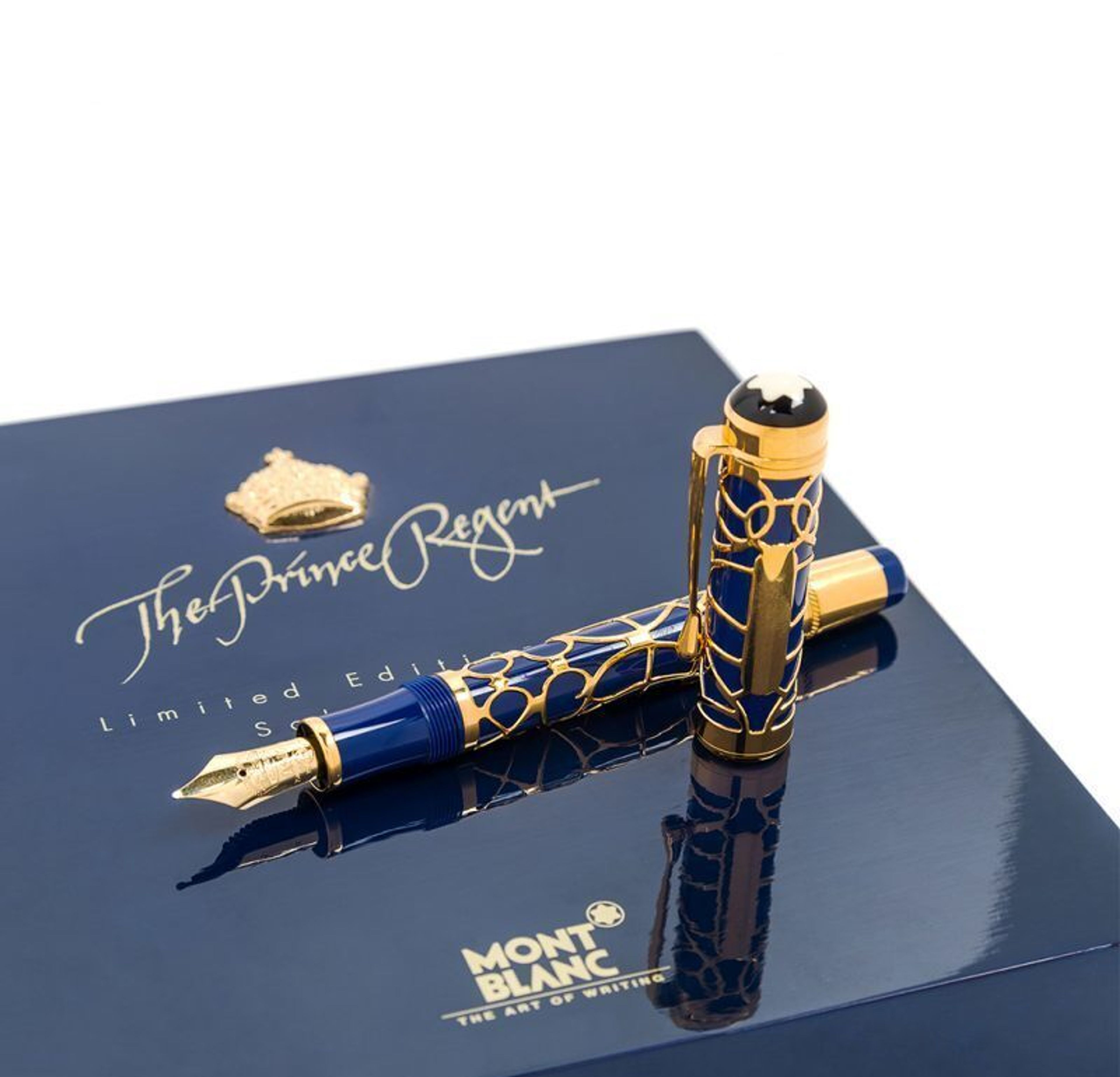
As communication becomes more and more digitized, it might be a surprise to learn that the pen market has increased in recent years, especially among luxury brands such as Montblanc, Krone and Omas. What was once a practical tool, pens have also become a luxury accessory and status symbol. Beginning April 17, Leslie Hindman Auctioneers will host a timed online-only auction of writing instruments. The collection comes from the late Dr. Harari, a successful investor whose passions in life were education and collecting. Among his collection, the sale will include a series of Krone limited edition fountain pens. The unique collection draws inspiration from historical figures and time periods, creating personality pens in addition to their luxury appeal. The muses range from the cult classic “The Wizard of Oz” to Napoleon as well as the highly sought after limited edition Toulouse-Lautrec and John Hancock pens. The Toulouse-Lautrec Limited Edition pen captures the opulence, revelry and aesthetic of Toulouse-Lautrec’s beloved Montmare in the 19th century. The pen comes in two colors, sterling silver and gold magnum, both of which will be available at the upcoming auction. The sterling silver caps are silhouettes of Montmarte and Le Moulin Rougue’s most potent symbol, the windmill. The Mother of Pearl barrel is adorned with precious and semi-precious stones and a delicate depiction of the French bourgeois. Just over 200 hundred of these pens were ever created and less than 20 in the gold magnum. Comparing the Krone pens to Toulouse-Lautrec prints, one can see the penmaker’s pristine execution and attention to detail in capturing the artist’s point of view. The John Hancock Sterling Silver Limited Edition pen is decorated with patriotic emblems including red, white and blue resin acrylic, an “E Pluribus Unum” inscription and an eagle claw holding the pen nib. However, the most irresistible quality of this pen is the piece of John Hancock’s desk embedded within the sterling silver clip. Less than 350 John Hancock Sterling Silver Limited Edition pens are available today. The shards of Hancock’s desk elevate this pen beyond luxury status into the realm of presidential memorabilia. One can imagine the weight of inscribing with a presidential hand. The April 17 – April 26 Fine Writing Instruments sale will be available on Bidsquare as a timed auction. The bidding will begin to close at 10am on Wednesday, April 26, and bidders will be notified if they are outbid during the duration of the sale. For more information on how to participate in a timed auction you can read instructions here. Preview in Chicago: Thursday, April 20, 2017, 10am – 5pm Friday, April 21, 2017, 10am – 5pm Saturday, April 22, 2017, 10am – 3pm Sunday, April 23, 2017, 12pm – 4pm Monday, April 24, 2017, 10am – 5pm
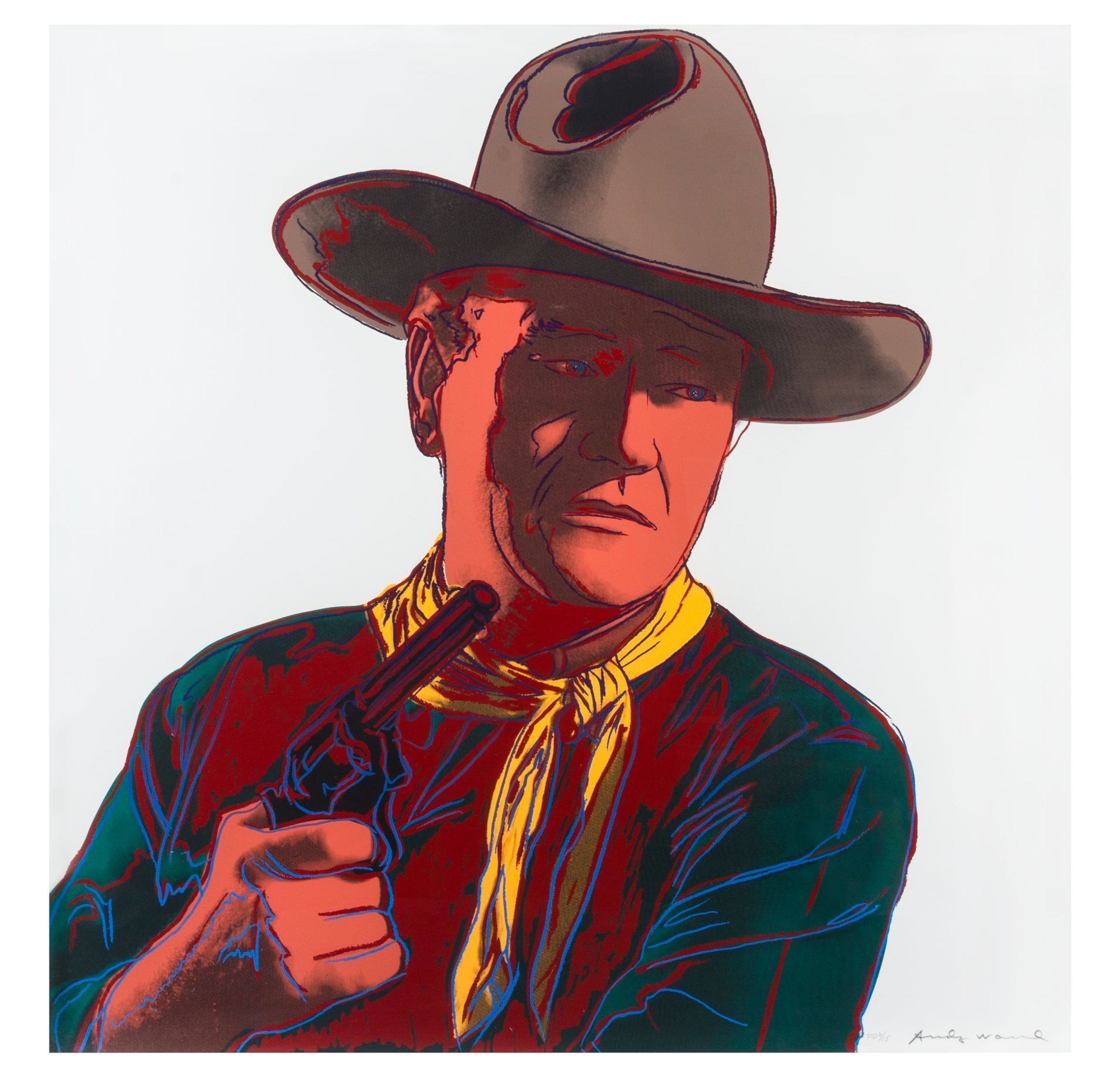
This winter, our specialists have been traveling across the country discovering important collections, family heirlooms and exciting novelties. After a season of conducting appraisal events nationwide, our spring auction lineup is filled with exciting highlights and unique objects that will be sold in over a dozen auctions in Chicago, Palm Beach, St. Louis and Denver. From a rare “Paul Newman” Daytona Rolex to a historic collection of circus memorabilia, there is something for everyone this spring. Explore some of our specialists’ favorites, and stay in touch for more auction announcements by joining our email list. NAPLES, FLORIDA These Andy Warhol prints will be sold in our May 23 Fine Prints auction. The portraits of John Wayne and Annie Oakley are two of ten works from Warhol’s Cowboys and Indians series. The other portraits include those of Teddy Roosevelt and General George Custer. Additional prints in the series depict Native American motifs and images, some of which Warhol photographed himself from a museum archive. The series was printed in 1986 and is recognized as one of the last series the artist worked on before his death in 1987. ST. LOUIS, MISSOURI [/vc_column_text][vc_single_image image=”10200″ img_size=”full” alignment=”center”][vc_column_text]The Daytona, the holy grail for Rolex collectors and watch enthusiasts worldwide, is presented here with the highly coveted “Paul Newman” exotic dial. This iconic timepiece is an outstanding example of stylish design and brand prestige made all the more rare given its unpolished original finish, accompanying box and papers, and single-owner provenance. This “Paul Newman” Daytona will be sold in our April 24 Fine Timepieces evening sale. DENVER, COLORADO Property sold to benefit the acquisition fund of the Denver Art Museum will be sold in two of our upcoming sales this spring. American Indian highlights from the museum’s collection will be sold in our May 6 – 7 Arts of the American West sale conducted in Denver. Included in this sale is this Kwakwaka’wakw painted wood mask. African and Oceanic property from the museum will be previewed in Chicago and sold in a timed online-only auction May 14 – 19. As an unmatched cultural and creative resource for the seven-state Rocky Mountain region, the Denver Art Museum is committed to the continual refinement and enhancement of its collections. MILWAUKEE, WISCONSIN While the Ringling Bros. and Barnum & Bailey circus is making its last stop in cities across the country, we are gearing up to offer an impressive collection of circus memorabilia from Baraboo, Wisconsin. Consigned by one of the few remaining friends of the Ringling family, Mr. Richard Bennett, the collection includes circus posters and broadsides, photographs, circus equipment and ephemera. The collection represents circuses such as the Cole Bros. Circus, Adam and Seils, Tom Mix, and Sells Floto circuses, but the majority of property is from the Ringling Bros. and Barnum & Bailey circuses. The “Greatest Show on Earth” will close in May 2017 after 146 years of entertaining. This collection will be sold as a session in our May 4 Fine Books & Manuscripts auction. WICHITA, KANSAS Theodoros Stamos was a first generation Greek painter and the youngest member of the first wave of Abstract Expressionists comprising the New York School. High Snow-Low Sun A depicts the sun as a fiery orange explosion of flame on a stark white textured backdrop of snow with intersecting bands of color implying the stasis of a moment. The 1961 painting is part of the artist’s High Snow -Low Sun series. The early 60s saw a transition from the gentler abstraction employed by Stamos in the 50s to a more visceral and energetic approach to mark making and pallet, also laying a spirited foundation for the hard edged abstraction of the Rothko influenced Sun Box series to follow. This painting will be offered May 23 in the Post War and Contemporary Art auction in Chicago. For more information on how to consign with Leslie Hindman Auctioneers, click here. For auction appraisals in your area or to fill out a property evaluation form, visit our website.
In 1976, Haeger Potteries set a Guinness World Record for the world’s largest hand-thrown vase. It stood more than eight feet tall and weighed over 650 pounds. Now, this colossal vase will be sold at auction as part of the Haeger Potteries Collection, February 24, 2017. After 145 years of providing innovative ceramic products and becoming the best-selling artware company in America, Haeger Potteries and the Haeger Pottery Museum officially closed their doors in 2016. But the company’s legacy is rich with historic moments. Their initial success came from manufacturing bricks that would rebuild the city after the great Chicago fire. During the 1934 Chicago’s World Fair, Haeger Potteries constructed a state-of-the-art pottery factory where they demonstrated both ancient and modern pottery techniques. They employed some of pottery’s best known designers of the 20th century, including Royal Hickman, Eric Olsen, Sebastiano Maglio and Harding Black. All the while, they retained family ownership and kept products American made. The 1976 title of world’s largest hand-thrown vase is just one feather in the cap of a company that was whole-heartedly devoted to the art and technological advancement of its craft. Since the inception of the Guinness Book of World Records, humans have been fascinated with feats and accomplishments that push the boundaries of what we believe is possible, and the art world is no exception. In celebration of this, we’ve compiled an abbreviated list of these achievements attained by those who go beyond the possible to celebrate art and its impact on the world. MOST POTS THROWN IN ONE HOUR BY AN INDIVIDUAL In March of 2016, Joel Cherrico threw 159 pots in one hour after over 10,000 hours of practice developing his skills. HIGHEST CONTEMPORARY ART GALLERY The highest contemporary art gallery is The Nautilus, resting over 14,100 feet above sea level at the base camp of Plaza de Mulas in Argentina. LARGEST ART COMPETITION The largest art competition took place in India in December of 2011 and included 4,850,271 entrants across various mediums. LARGEST SPRAY PAINT MURAL BY A TEAM At 51 feet in height and stretching 560 feet in width, the largest spray paint mural by a team was completed in 2016 to celebrate the Olympic games in Rio de Jainero. LARGEST CROCHET BLANKET The largest crochet blanket was completed in 2016 by Mother India’s Crochet Queens, measuring 120,001 square feet. Afterward, the blanket was taken apart and the individual squares were donated to those in need through NGO charities. For those who want to retain a piece of record breaking history, or just be a part of a legacy that’s lasted over 145 years, the online catalogue for the Haeger Potteries Collection can be viewed here. The auction will be held on February 24 in Chicago. Preview information: Tuesday, February 21 | 10am – 7pm Wednesday, February 22 | 10am – 5pm Thursday, February 23 | 10am – 5pm
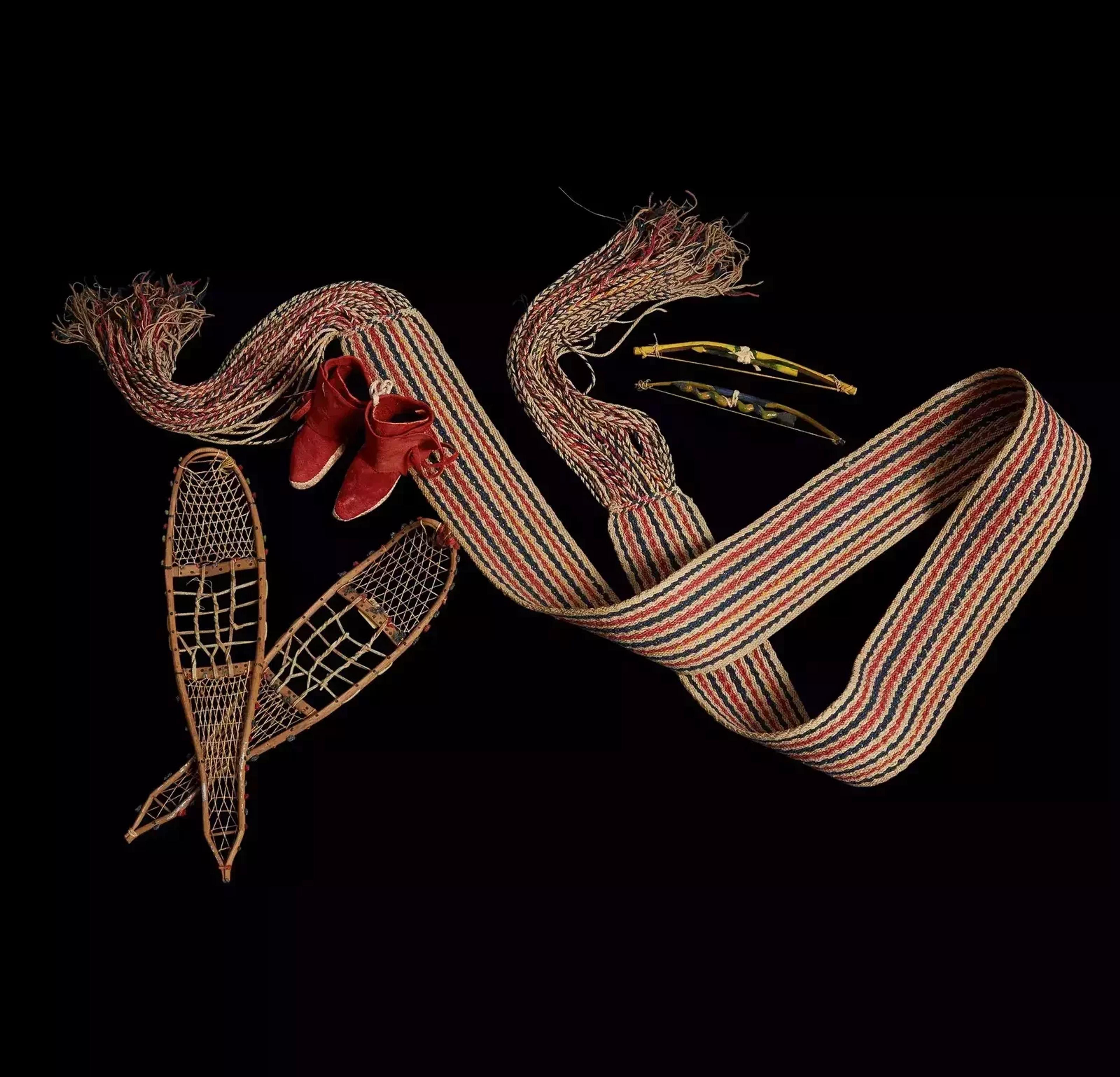
From Affluent Philadelphian to Saint Katharine Drexel was born in 1858 to one of Philadelphia’s wealthiest and most prominent families: her father, Francis Anthony Drexel, was a business partner of J.P. Morgan. A pampered, well-tutored and much-traveled child, Katharine and her siblings were raised with a strong sense of social responsibility. The Drexels offered food, clothing, and money to the needy from their home at 1503 Walnut Street on a weekly schedule. Katharine’s youthful travels across the United States made her acutely aware of the inequalities and struggles experienced by Native and African Americans in particular; this understanding undoubtedly influenced her shocking decision to become a Roman Catholic nun and join the Sisters of Mercy Convent in Pittsburgh. The Sisters of the Blessed Sacrament Determined to use her inheritance to better the educational opportunities and social conditions of minorities in this country, Drexel established a religious order, The Sisters of the Blessed Sacrament for Indians and Colored People, in 1891. That same year, Mother Katherine Drexel, as she was then called, purchased forty-four acres in Bensalem, Pennsylvania to build a Motherhouse and administrative headquarters for the order. From 1891 to 1933, the campus grew to ten buildings and at its peak, had 600 Sisters running schools around the country and in Haiti. For 60 years, Drexel used her wealth to build and support schools and missions. The first, St. Catherine's Indian School, was a boarding school in Santa Fe, New Mexico that opened in 1894. In total, Drexel built 145 missions, 45 elementary schools, 12 high schools, and a university. At her death in 1955, Drexel was laid to rest in the Motherhouse chapel. She was canonized as a Saint in 2000, and the Motherhouse complex became known as the National Shrine of Saint Katharine Drexel. After 125 years, declining membership and the financial pressures straining many Catholic orders brought about the decision by the Sisters of the Blessed Sacrament to sell the National Shrine of Saint Katharine Drexel in Bensalem, as well as an additional property outside of Richmond, Virginia. A Fundraising Sale In 2017, Freeman’s offered a large collection of Native American–made items formerly exhibited and stored onsite at the National Shrine. Representing the Native American arts traditions and crafts that the Sisters of the Blessed Sacrament encouraged in all of their schools, this collection, consisted of pottery, beadwork, weavings and basketry, that was largely by Hopi, Navajo and Pueblo artisans, and the items were presented to the Sisters from many of the schools and missions they supported over the years. Proceeds from the sale went toward the Sisters of the Blessed Sacrament’s ministry work, as well as the support of its retired Sisters, about fifty of whom still live in the Motherhouse complex. The National Shrine of Saint Katharine Drexel of the Motherhouse campus remained open to visitors through 2017. The remains of Saint Katherine Drexel were eventually moved to the Cathedral Basilica of Saints Peter and Paul in Philadelphia, and selections of the Sisters of the Blessed Sacrament archives were entrusted to the Philadelphia Archdiocese of Philadelphia.

Bigger is not always better, but bigger rarely goes unnoticed. For years, interior designers and collectors alike have been utilizing large works of art to impact space—a pop, an accent or a statement to an aesthetic. Sometimes it is the focal point of a room, giving a minimalist space one awe-inspiring feature. Other times it can act as a mural, enhancing an already richly decorated space. Taking up physical space or reaching monumental scale has been a challenge and call to innovation for ages. Large paintings push the boundaries of materials, installation and technique. Scale can also disorient. Proportional to everything else around it, the idea of what large-scale is can even fluctuate. Regardless, content often becomes secondary to how the rest of our senses are impacted by large works of art in their own environments. The details in the grandness do not go unnoticed and a large-scale painting can become a disruption—demanding attention within a room. Bigger can be bold and powerful and an exciting addition to any space, which is why we love the large-scale works that “disrupt” our gallery walls at Leslie Hindman Auctioneers. Here are a few of our favorites from the upcoming Post War and Contemporary Art auction on December 14. Preview Times: Saturday, December 10, 10am – 3pm Sunday, December 11, 12pm – 4pm Monday, December 12, 10am – 5pm Tuesday, December 13, 10am – 5pm Preview Location: 1338 West Lake Street Chicago, Illinois 60607
Director of the Important Jewelry and Fine Timepieces department, Alexander Eblen, explains characteristics of antique jewelry and what to look for when buying these unique heirlooms at auction. Working with true antique jewelry that is 100+ years old is a great joy for the jewelry team at Leslie Hindman Auctioneers. Many people find antique jewelry intimidating or hard to understand. These guidelines will help you learn what to look for as you discover the incredible beauty, quality and value that lies in buying antique jewelry. The September 11-12 Important Jewelry sale at Leslie Hindman Auctioneers will offer a variety of antique jewelry—from brooches and pins to diamonds and gold. Here are the basics of what to look for and consider when bidding on one of these beautiful items. 1.) ORIGINALITY AND “MARRIAGES” Over time, jewelry has become incredibly recyclable and dynamic. With each passing decade, designers have combined fashions and trends to create new styles that define a time period. For example, Art Deco brooches and charms from the 1920s were sometimes beautifully mounted on wide rose and yellow gold bangles in the 1940s, inventing a chic look for a new generation not content with wearing “mother’s jewelry”. A Retro Yellow Gold Bangle with Attached Art Deco Platinum, Diamond and Multigem Charms. Sold for $8,125. In the jewelry trade, combinations such as these are referred to as a “marriage” and, just like people, some are a better fit than others. When buying antique jewelry, remember the likelihood that the item you are considering has been changed, altered, or combined with another piece of jewelry is very high. There is nothing wrong with these alterations and combining different elements can be aesthetically pleasing. However, serious collectors will often seek out those rare few items that have survived intact and unaltered. A wearable time capsule of sorts, these are a prize! 2.) A PRECIOUS METAL “SANDWICH” As Jewelry specialists, we are trained to pick up on the little details that help differentiate items from different eras. Aesthetics change wildly from one generation to another and so too do the construction techniques that jewelry makers have utilized over time. One technique that we find fascinating is the process of using gold as the base of a jewel and topping it with white metal setting work, making a laminate or “sandwich,” so that the diamonds and colored stones are beautifully contrasted. This technique can be seen first with silver-topped gold from the Georgian and Victorian eras. Keep in mind, silver can look dark or even black from oxidation, but this can be restored to its gleaming white tone with an expert’s help. A Victorian Silver Topped Gold, Black Opal and Diamond Ring. Sold for $10,625. This oxidation and a growing skill in a new metal alternative led to silver’s replacement with platinum at the start of the 20th century. Edwardian jewels do not suffer from oxidation—their diamonds and gems are secure in everlasting bright white. You can easily see the layers in silver or platinum topped jewelry with a loupe and even sometimes with the naked eye. Marvel at the intricate melding of metal done by masterful hands creating wearable fine art. The artisans responsible for these creations had such incredible skill, one that is exhibited in their magnificent designs. 3.) ANTIQUE CUTS AND “LOST” GEMS There is something instantly recognizable when looking at antique jewelry set with diamonds and gems. The stones look different and echo a simpler time when jewelry was handmade and antique stones are known for the fact that each one is slightly different in shape and size. Have you ever looked at a round or cushion shape diamond in a grandmother’s or great grandmother’s ring and wondered what that “hole” in the bottom of the stone is? Rest assured that it is an illusion caused by the flat bottom of the stone, called the culet, found in two elegant cuts called the old European (round) and its precursor, the old mine (pillow shaped). These cuts, among several others, dominated the diamond scene during the Georgian, Victorian, Edwardian and Art Deco timeframes, lending their unique looks to countless treasures. Eventually they gave way to the modern round brilliant cut of today, but are coveted because of their “old school” charm. A Pair of Victorian Silver Topped Gold and Diamond Earrings. Sold for $52,500. Finally, touching on my favorite topic of colored gems, antique jewels provide the opportunity to own gemstones from classic sources long since exhausted. Whether it be tiny accents or larger center stones, the jewelry world was completely spoiled in the past, with the “best of the best” gem materials, using them in jewelry of all price points. Keep your eyes open for a glorious example of Edwardian jewelry set with brilliant green Demantoid from the original Russian find. Or that late Victorian or Edwardian piece with Montana sapphires of shocking color and crystal clarity. Enjoy the vivid pink-red hues of Burmese ruby and intense greens of Colombian emeralds with the knowledge that they are most likely in their pure, untreated forms unlike the commonly treated examples used today. An Important Belle Époque Platinum, Montana Sapphire and Diamond Bracelet, Circa 1910. Sold for $81,250. Contact us for a free appraisal of your antique jewelry and for more information on our jewelry auctions, click here or sign up to join our mailing list.

Ryan Beshel Principal at SIX4 Creative, LLC Formerly the Digital Marketing Lead for Purely Fashion, the first in-house publicist for the iconic 900 North Michigan Shops and runway model agent for Agency Galatea, Ryan is now catering his talents to his new business, SIX4 Creative. Ryan enjoys showcasing his thoughts on style, trends and celebrity fashion on reputable networks such as FOX, NBC and ABC, as well as contributing quotes, fashion recaps and reports to publications such as Women’s Wear Daily, Racked and Refinery29. Ryan came by the auction house to preview our Happy Hour Couture Tag Sale, including labels such as Chanel, Gucci, Oscar de la Renta, Ralph Lauren, Zegna and Bill Blass and give us some of his favorite items. Follow his picks @RyanBeshel