New & Noteworthy
Stay up to date with news, highlights, & features from across Freeman's.
Stay up to date with news, highlights, & features from across Freeman's.
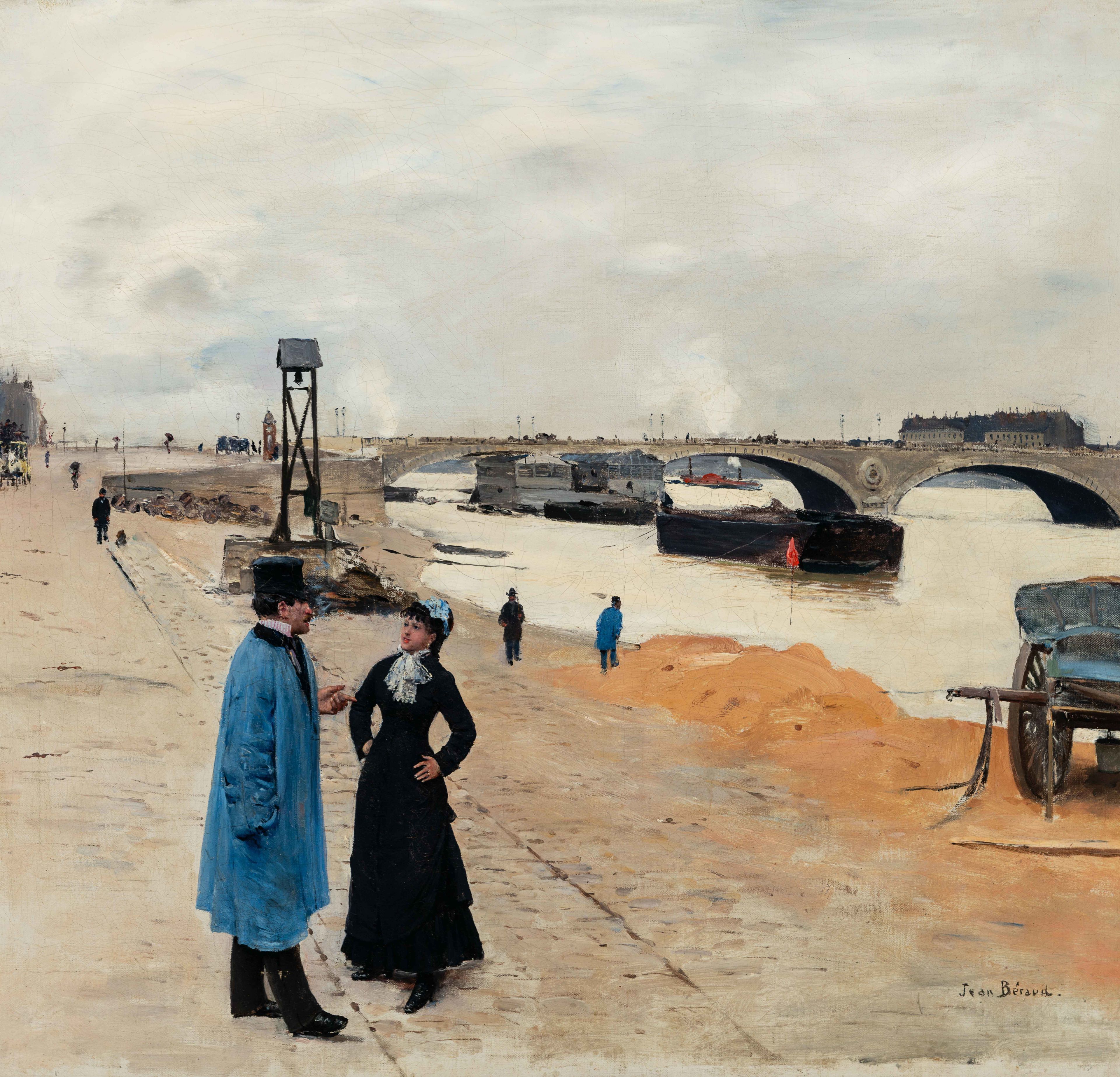
Described as "a sophisticated Parisian who knows where to go and has the gift for observation," Jean Béraud captured in his lively paintings the grand boulevards and stylish denizens of Belle Epoque Paris. Originally trained as an Academic artist, early in his career Beraud was influenced by the Impressionists, with their quick brushstrokes and urban themes. He was a close friend of Edouard Manet and frequented the same cafes as Edgar Degas, Pierre Renoir, and Henri de Toulouse-Lautrec. Like them, Béraud sought to objectively convey the modernization of Paris caused by Baron Hausmann's physical reconfiguration of the city. Le Pont de Bercy displays Béraud's talent for depicting everyday life in Paris without sentimentality or picturesqueness. A man in a blue working smock converses with a smartly but soberly dressed woman. They stand on the banks of the Seine at Bercy, upstream from Paris. Originally a small, separate commune, Bercy was annexed in 1860 by the Second Empire. By the 1870s, it was developing into a residential and commercial quarter of Paris. Behind the couple can be seen the Pont de Bercy, completed in 1864, with a steady stream of traffic. Barges placidly float on the river and an idle work cart stands at the ready along the still incomplete river embankments. From the Impressionists, Béraud also developed an interest in Japanese ukiyo-e prints, with their asymmetrical compositions. In the present work, elements of the Eastern art form can be seen in the artist's use of large expanses of empty space punctuated by dark figures, as well as the diagonal lines of the bridge and tram lines cutting across the canvas. The candid grouping of the couple, off-center focus, and deep perspective, likewise owe something to the new art of photography pioneered by Nicéphore Niépce, Daguerre, and Fox Talbot. Béraud was known to sit and sketch in a hired carriage for hours in order to capture spontaneous fragments of the city's life, as if he himself was a roving camera. In both its subject matter and compositional structure, Le Pont de Bercy reveals the artist as one of the great nineteenth-century painters of modern life. Featured: Lot 34 | Jean Béraud (French, 1849-1936) | Le Pont de Bercy, c. 1880 | Estimate: $120,000 - $180,000
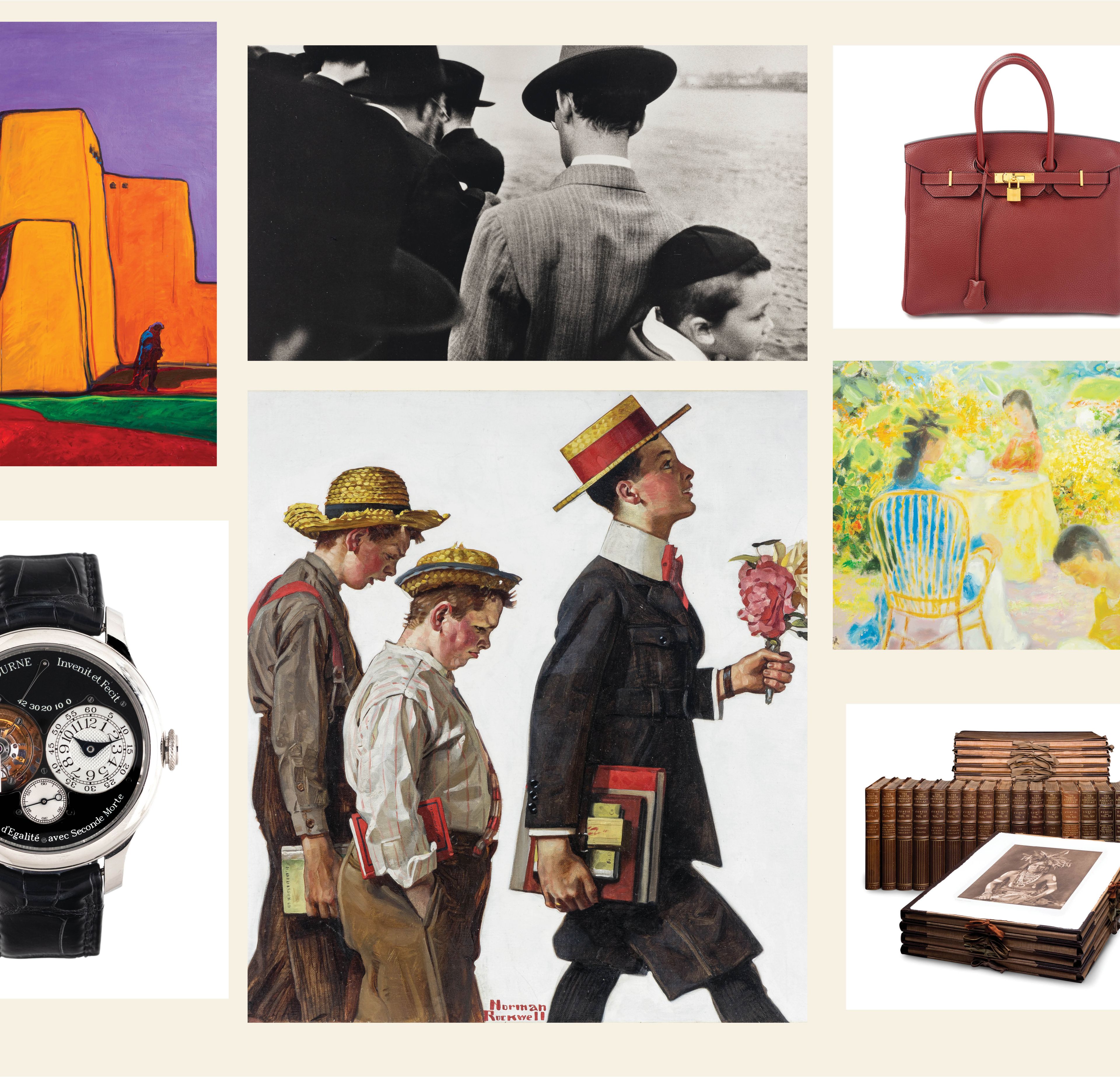
As we kick off a robust fall season at Hindman, I am pleased to present selections from our upcoming auctions that both entice and delight. Explore our New & Noteworthy blog every quarter for an eclectic mix of property from our 52 collecting categories. Within my role as Deputy Chairman, I hope to showcase the breadth and depth of all Hindman has to offer. Sincerely, Featured Auctions: Fall Fashion & Accessories | Lots Begin to Close October 3 American Furniture, Folk & Decorative Arts | October 4 European Furniture & Decorative Arts | October 10 Pre-Columbian & Ethnographic Art | Lots Close October 12 American Art | October 17 European Art | October 17 Time & Space: Watches from the Collection of Glen de Vries | October 18 Forever Young: Photographs from the Joe Baio Collection | October 19 Canvas & Clay: The Collection of Judith and Philip Sieg, Bellefonte, Pennsylvania | October 26 Western & Contemporary Native American Art | November 1 Fine Books from the Dorros Family Collection | November 9
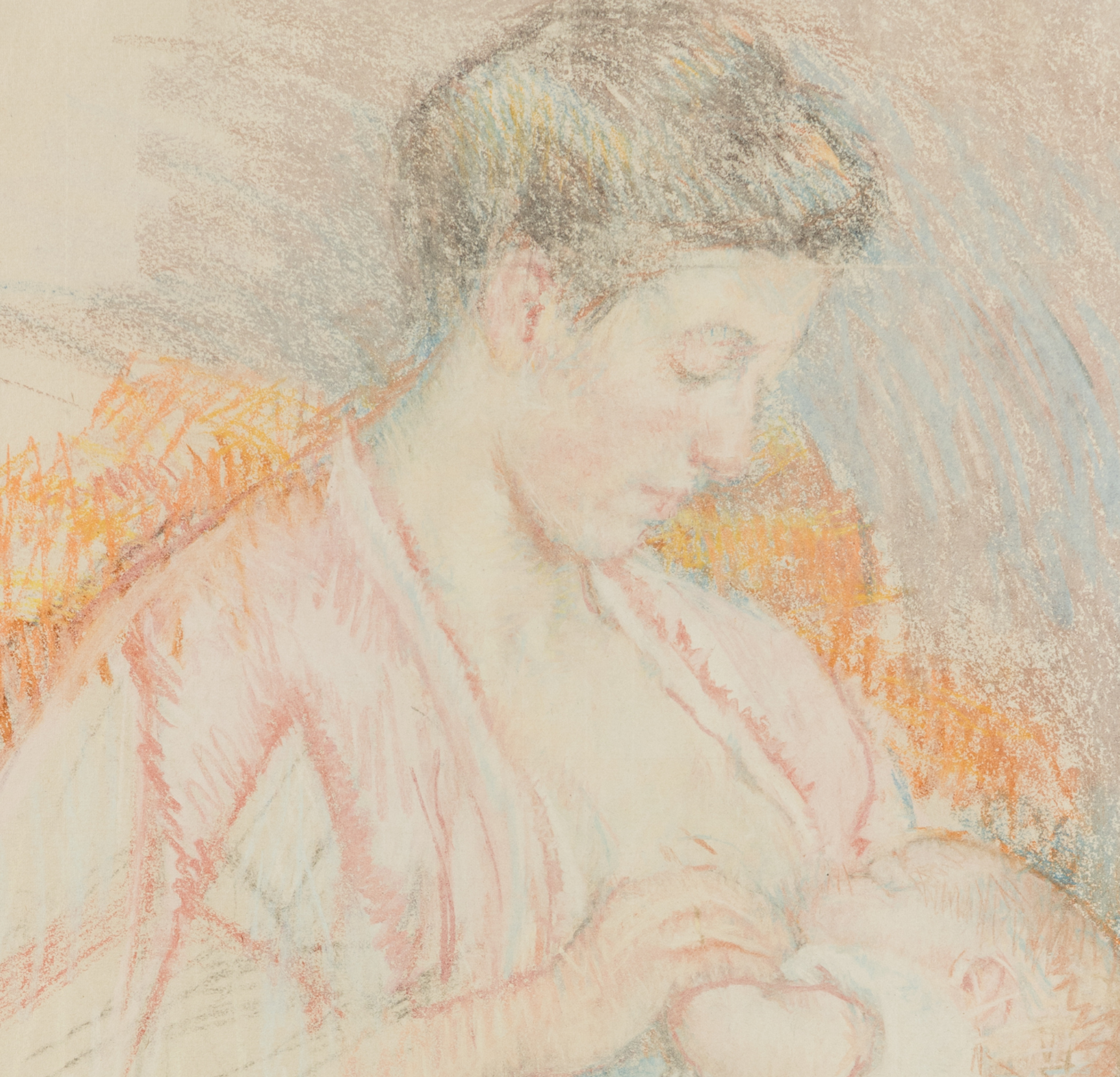
Hindman is pleased to present the work of Mary Cassatt in our American Art auction this October 17. To learn more about her technique and the variety of her artistic practice, explore below! In addition to her extensive work in oil, Mary Cassatt also excelled at the printed medium, especially favoring etching and drypoint and ramping up her production during the 1890s. Her Parisian dealer, Ambroise Vollard, became instrumental in her interest in printmaking. He noticed the high appeal of prints, which were perceived as a bridge between fine art and popular trends, and saw an opportunity: while large productions of prints would sell well, he insisted on connoisseurship and artistic vision as well. It is no surprise, then, that Vollard also championed Cassatt’s production of pastel counterproofs, approximately between 1889 and 1913. A counterproof is created by applying a damp sheet of paper to the surface of a work in pastel before rubbing or running it through a press, resulting in a mirror image of the original. It is not an exact mirror, however, since the image is rendered in flatter and softer tones. The pastel medium, which fell out of favor with the advent of Romanticism, became fashionable again with the Impressionists, as it allowed for subtle palettes and airy visual effects. Renoir and Degas, Cassatt’s close friend, are also known to have produced pastel counterproofs. In 2004, Adelson Galleries curated “Art in a Mirror,” a landmark exhibition of Cassatt’s pastel counterproofs, shedding light on this little-known medium and practice by the artist. The exhibition recorded more than 130 counterproofs, from 67 pastels, and a substantial number of counterproofs are believed to be the only remaining trace of the original pastel. Among the counterproofs offered here, only Young Woman Reflecting (lot 55) and Head of Adèle (No. 4) (lot 58) are from known pastels listed in the Breeskin catalogue raisonné, while the rest are from pastels that are unaccounted for. Though technically derived from pre-existing original works, Cassatt’s counterproofs are arguably works of art in their own right, not mere reproductions. Jay E. Cantor, in his essay “Vollard is a Genius in his Line” published in the Adelson exhibition catalogue, speculates that she likely viewed the medium as a worthy creative experiment: the counterproofs “offered an occasion for innovative reworking. Since the image was reversed, it became, in effect, an entirely different and original work to be confronted on its own term” even though “there is no clear evidence of the degree to which [they] may have been used in this way.” (p. 18). Stylistically, the counterproof process further flattened the image and amplified the evocative, subdued, ethereal tones already displayed in the pastel works. These features, reminiscent of the symbolist aesthetic of the time, especially in the Vollard circle, make Cassatt’s counterproofs a distinct body of work within her oeuvre. The imagery of motherhood and early childhood is recognizably personal to Cassatt, and the present selection offers a glimpse into her characteristic handling of the subject. As argued by Pamela Ivinsky in her “After Impressionism: Cassatt’s Counterproofs and her Later Career,” also featured in the exhibition catalogue, her rendering of motherhood emphasizes its engrossing element, with the use of the profile and of the maternal gaze directed at the child, not at the viewer. It is a depiction imbued with utmost sensitivity and intimacy, making the maternal bond intangible, nearly lost to viewers as it resides strictly in the space shared by the absorbed mother and her child. The immaterial depth of the maternal bond reflects the diaphanous aesthetic of the image, coalescing in one gesture the narrative and artistic elements of Cassatt’s work. Featured: Lot 1053 | Mary Cassatt(American, 1844-1926) | Mother Jeanne Nursing Her child (Profile Left) (No. 3), c. 1908 | Estimate: $20,000 - $30,000
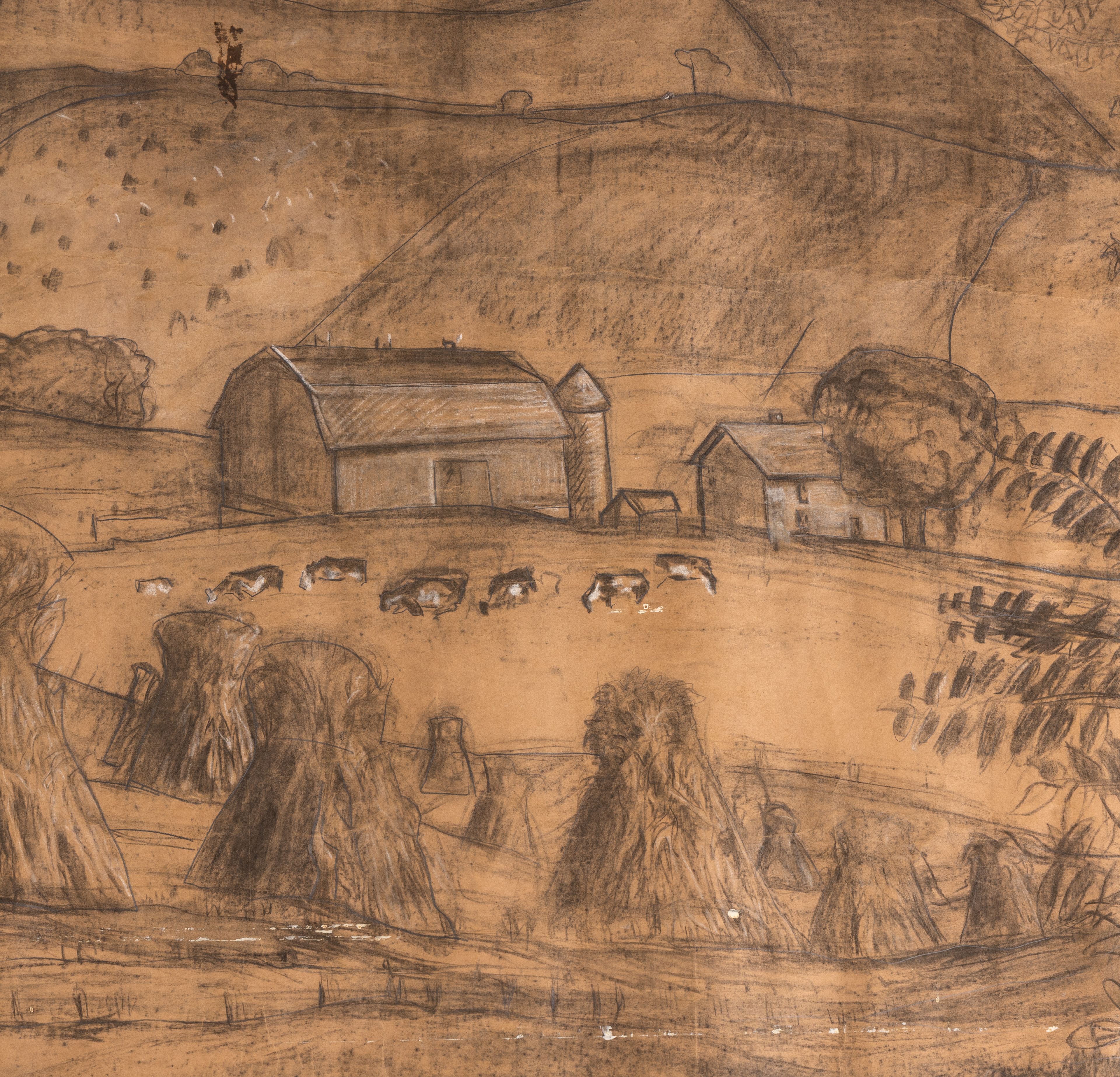
Hindman is pleased to present Wisconsin Farm Scene (Study) by John Steuart Curry this October 17 in our American Art auction. Scroll to learn more about this work's unique history in the American canon of art. The present lot is a to-scale study for a three-part mural for the First National Bank, Madison, Wisconsin, painted in 1941. Curry had previously established his artistic reputation as a regionalist, along with Thomas Hart Benton and Grant Wood, in Kansas before he was lured to Madison in 1936 for the position of artist-in-residence at the University of Wisconsin (the first such post in the country). The hire came under the auspices of the College of Agriculture with the goal of using his work to educate rural communities and promote state-of-the-art farming practices. Lot 1036A | John Steuart Curry (American, 1897-1946) | Wisconsin Farm Scene (Study), c. 1941 | Estimate: $10,000 - $15,000 It was during his tenure in Madison (1936-46) that he created the study and the finished mural for the First National Bank. As a regionalist artist, Curry strove to create a universal art with his depictions of local landscapes and events with which the public could identify. The impressive scale of the study allows for an expansive view of a bucolic Wisconsin landscape that features orderly haystacks, prosperous farms, and healthy cows. The complete mural also depicted a panoramic view of Madison with its lakes and capitol, as well as smaller side panels that showed fall birds and crops. The painted mural panel of the same scene is now in the collection of the Chazen Museum, University of Wisconsin, Madison.
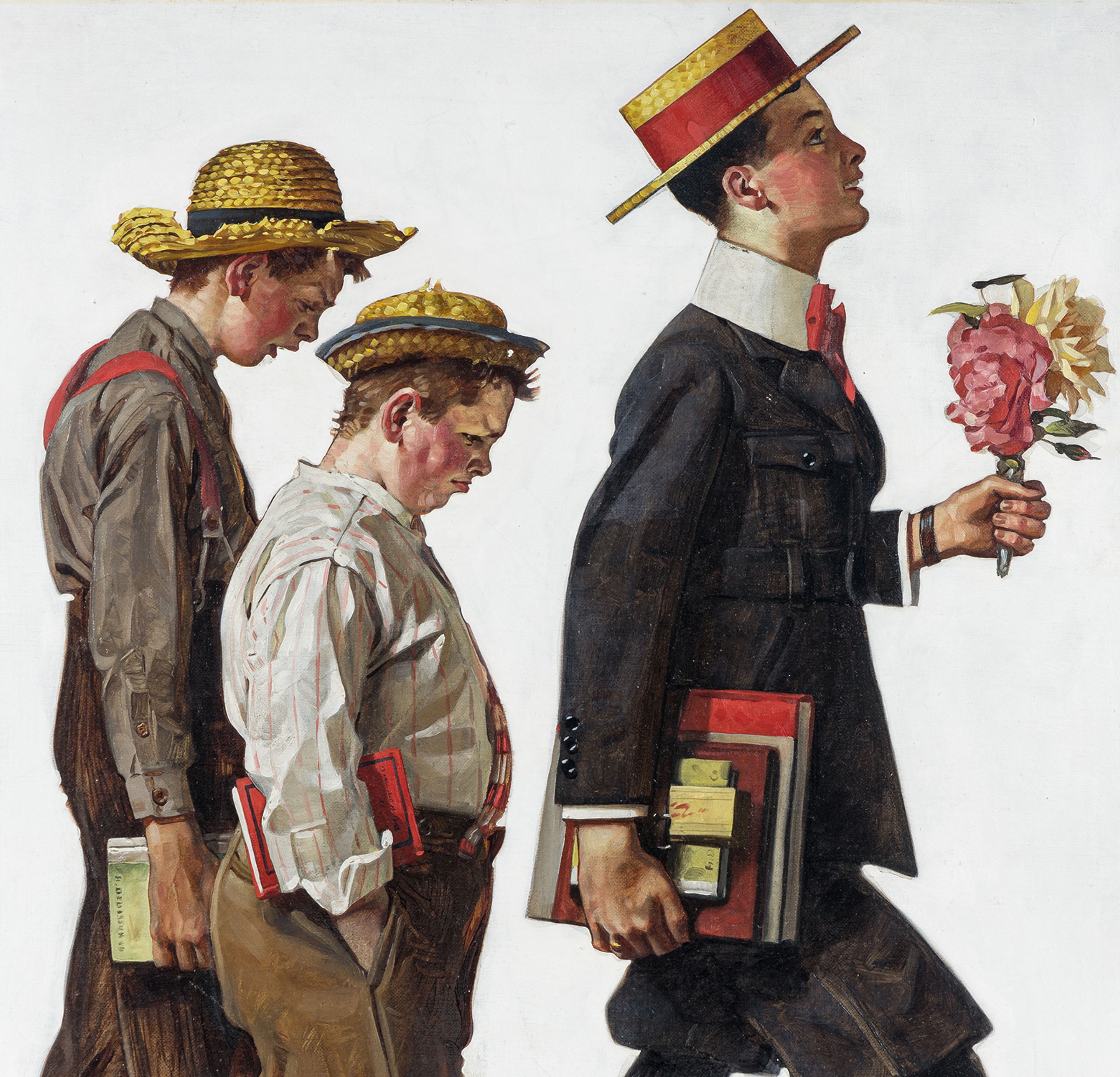
Hindman is pleased to present One More Week of School and Then..., 1919 by Norman Rockwell in our October 17th American Art auction. Explore an example of Rockwell's iconic style below. Lot 1048 | Norman Rockwell (American, 1894-1978) | One More Week of School and Then..., 1919 | Estimate: $300,000 - $500,000 Painted in 1919, when Norman Rockwell was just 25 years old, Only One More Week of School and Then… was made for the June 14th cover of Country Gentleman. Although the young artist would go on to create covers for Life Magazine and The Saturday Evening Post throughout his career, he only produced paintings for Country Gentleman from 1917 to 1922. These playful covers centered around the adventures (and misadventures) of Cousin Reginald Claude Fitzhugh, a know-it-all city boy, and his country cousins, Chuck Peterskin and the spirited Doolittle brothers. The characters were first introduced in the magazine's August 25, 1917, issue, with Cousin Reginald usually depicted as the unwilling butt of his cousin’s practical jokes. Only One More Week of School and Then… represents Rockwell’s light-hearted, charming narratives featuring children. Rockwell’s ability to render the universally understood emotions of young boys, ranging from misery to delight, is on full display here. The upturned, sprightly face of brown-nosing Reginald, who firmly carries in one hand his schoolbooks and with the other, a bouquet for Teacher, contrasts sharply to the downcast, petulant demeanors of his bumpkin cousins, who are miserable at the thought of another week of school before summer vacation. The next and last painting in the series after the present work, Vacation!, swaps the emotions of the boys, with a despondent Reginald trailing behind a jubilant Tubby and Rusty. Completed early in the artist’s career, the present painting also demonstrates the more expressive and painterly execution that characterizes Rockwell’s work from the late 1910s to early 1930s, before he adopted photography into his technical process. Even without the aid of a camera, the naturalistic detail with which the three boys are carefully rendered–from Reginald’s immaculate suit to the tattered straw hats of the other two boys—reveals the artist’s ability to capture the varied glory of America’s youth. Through these keen observations, Rockwell created scenes that resonated with his audience, and what ultimately made him one of the most commercially successful artists of the 20th century.
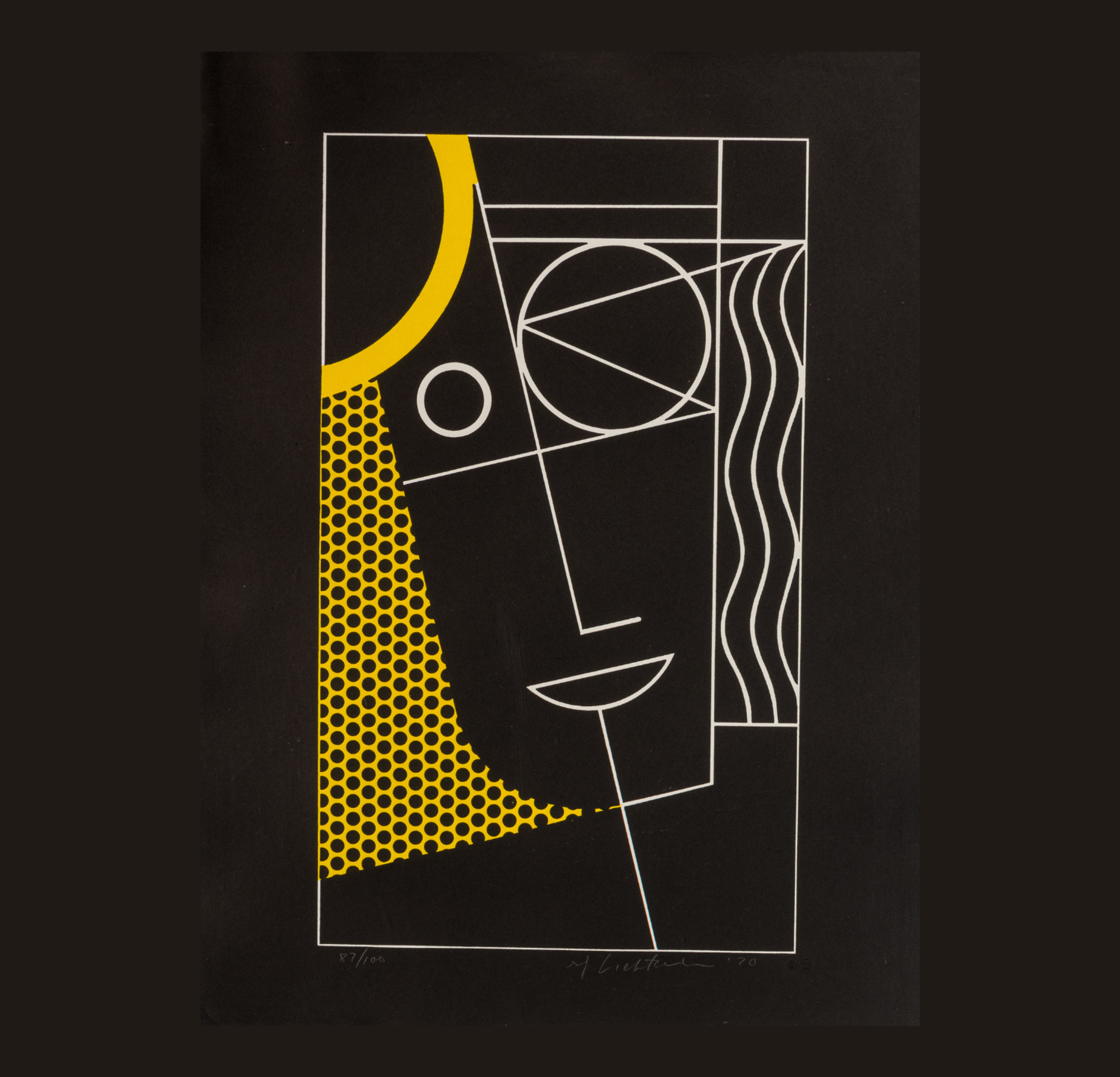
Hindman is excited to offer works from the Collection of Dr. And Mrs. Herbert Gursky in our Prints & Multiples auction this September 21. The quality and breadth of the seventy-two lots presented here is a testament to the passion that Herbert and Flora Gursky had not only for collecting but also for their life and work. Dr. And Mrs. Herbert Gursky Flora Gursky, born in Brooklyn, New York, was a graduate of Brooklyn College and Columbia University. While at Columbia, majoring in Biology and Marine Biology, she met and went on to marry Dr. Herbert Gursky in 1958. Herbert was lecturing on Physics at the time that he met his future wife and surely their keen interest in science and curiosity for all things around them helped to fuel their passion for modern art. Lot 27 | Cy Twombly (American, 1928-2011) | Roman Notes II, 1970 | Estimate: $40,000 - $60,000 Dr. Gursky completed his PhD in Physics at Princeton University in 1958 and became one of the most respected astrophysicists of his time. His primary research interests were in the area of X-ray astronomy. Importantly, in 1961, he was a member of the group in Cambridge, Mass, that made the discovery of cosmic X-ray sources. From there he went on to be a leader in his field, not only through his research, but also through his ‘ability to distill and seize the most important nuggets from any research program and envision its application to a variety of new problems and directions.’[1] Lot 31 | Josef Albers (American/German, 1888-1976) | A group of four prints from Die Oberfläche (Attic; Silent; Opalescent; Chrysoprase), 1965 | Estimate: $6,000 - $8,000 It is no surprise, when looking at the collection, that minds such as Flora’s and Herbert’s would find the universe of Modern art so intriguing. Their collection reads as a roster of the great artists of the Modern era from the minimalist approaches of Frank Stella and Josef Albers to the defined California aesthetic of Ed Ruscha and Wayne Thiebaud; from the Abstract Expressionism of Willem de Kooning and Pierre Soulages to the fantastical landscapes of Enrico Baj, Claes Oldenburg, and Niki de Saint Phalle. Many of these artworks, when first acquired, were by little-known artists who became memorialized in the canon of art history well after Gursky’s acquisition. There is a true passion for art, a deep knowledge of its past and present, and a mark of keen connoisseurship present in the Gursky’s well-curated collection which we are honored to present here. [1] Doschek, George; Dahlburg, Jill, “Obituary: Herbert Gursky, 1930-2006,” Bulletin of the American Astronomical Society, December 2007, v.39, no. 4, p. 1060. Featured Image: Lot 19 | Roy Lichtenstein (American, 1923-1997) | Modern Head #2 (from the Modern Head series), 1970 | Estimate: $10,000 - $15,000
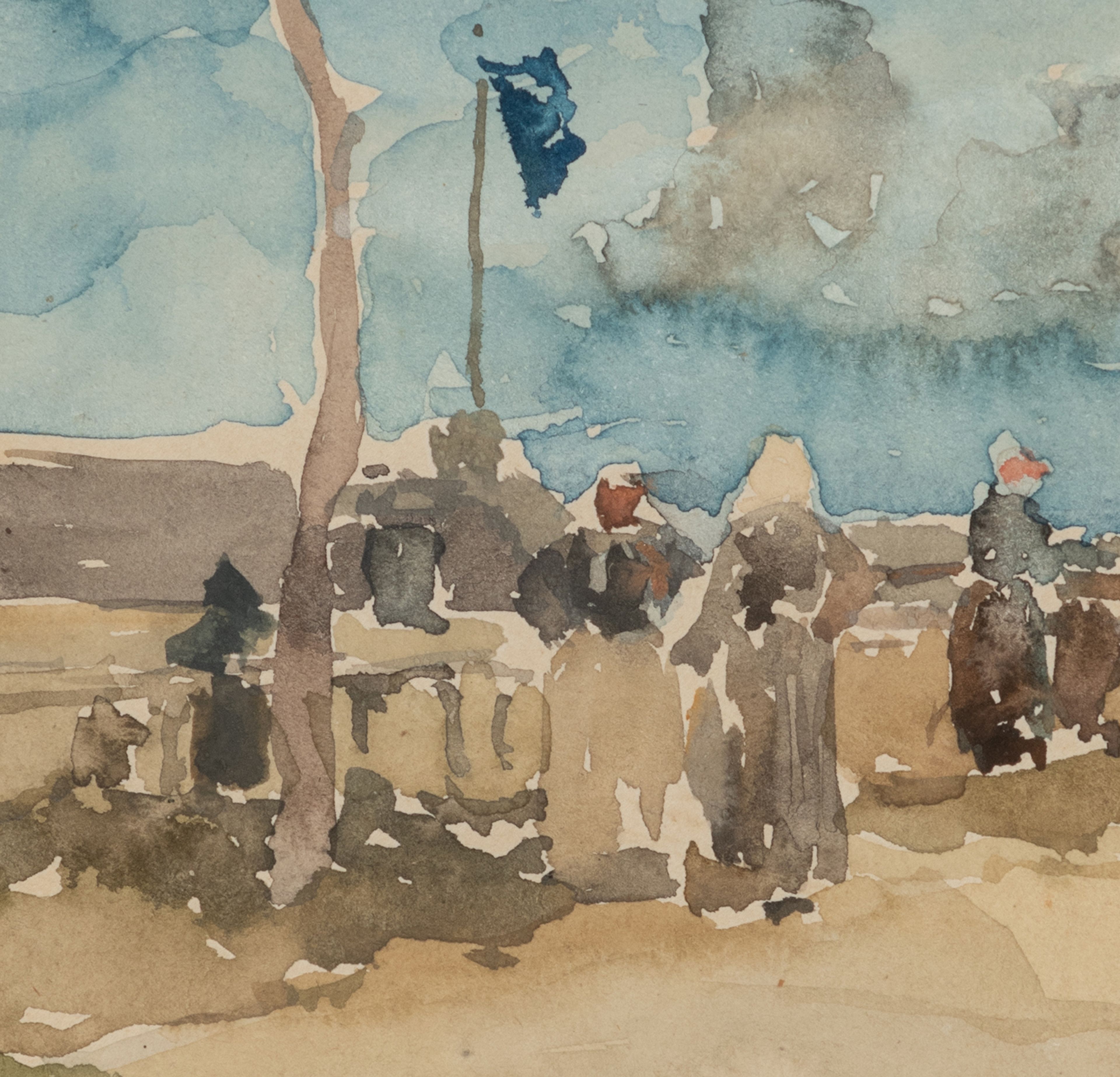
Hindman is proud to announce its first New York auction season, anchored by single-owner sales across fine art, design, and luxury. These inaugural New York sales expand on Hindman’s impressive presence across the United States, serving a global buyer base. Hindman will present the auctions at 21 Greene Street in Soho from October 18-26. Gemma Sudlow, Managing Director, New York Region commented: “We are honored to be entrusted with these prestigious New York and East Coast collections at Hindman. Each sale boasts magnificent examples of works built by passionate collectors who were inspired by a myriad of different disciplines and styles. Our New York season sales are a testament to Hindman’s commitment to delivering a full-service suite of offerings for clients in the Northeast.” Since launching Hindman New York last October, Sudlow and the team have grown to include specialists across multiple collecting categories and have held several special exhibitions and partnerships with High Line Nine Galleries, The Winter Show, Carolina Herrera, and Sterling | Boos. Time & Space: Watches from the Collection of Glen de Vries | October 18 Time & Space: Watches from the Collection of Glen de Vries encompasses more than 100 watches and 30 watchmakers from the collection of this trailblazing entrepreneur, displaying de Vries’ passion for science, space, aviation, and speed. The sale features watches by top manufacturers including F.P. Journe, Richard Mille, A. Lange & Söhne, De Bethune, Patek Philippe, Urwerk, Audemars Piguet, Hublot, Vacheron Constantin, and H. Moser & Cie. __________ Forever Young: Photographs from the Joe Baio Collection | October 19 The following day, Hindman will offer Forever Young: Photographs from the Joe Baio Collection, featuring a stunning selection of 101 photographs from the collection of Joe Baio, one of the most extensive and notable private photography collections in the world. Baio has collected photography since the mid-80s, focusing on the theme of childhood and adolescence, inspired by raising and photographing his own children. Today, nearly every available inch of the 2,100 square-feet of wall space in Baio’s legendary New York apartment is filled with a photograph from his 6,000-piece collection. It includes examples from the dawn of the medium by pioneers such as Nadar and Julia Margaret Cameron, to modern and contemporary works by artists such as Diane Arbus, Henri Cartier-Bresson, Bruce Davidson, Robert Frank, LaToya Ruby Frazier, Sally Mann, and Angela Strassheim. __________ Canvas & Clay: The Collection of Philip and Judith Sieg, Bellefonte, Pennsylvania | October 26 Canvas & Clay: The Collection of Judith and Philip Sieg will be offered on October 26. Over the course of their lives, Judith and Philip Sieg amassed an enviable selection of fine art and modern pottery, headlined by significant pieces from some of the most important American artists of the late 19th and early 20th centuries and an almost encyclopedic overview of Scandinavian studio pottery. Highlights from the fine art session includes works by Charles Prendergast, James Abbott McNeill Whistler, Albert York, Claudio Bravo, and Bill Traylor. In addition to fine art, the Siegs were avid collectors of modern pottery. Notable artists featured include Wilhelm Kåge, Lucie Rie, Bodil Manz, Alev Siesbye, and Gertrud Vasegaard.
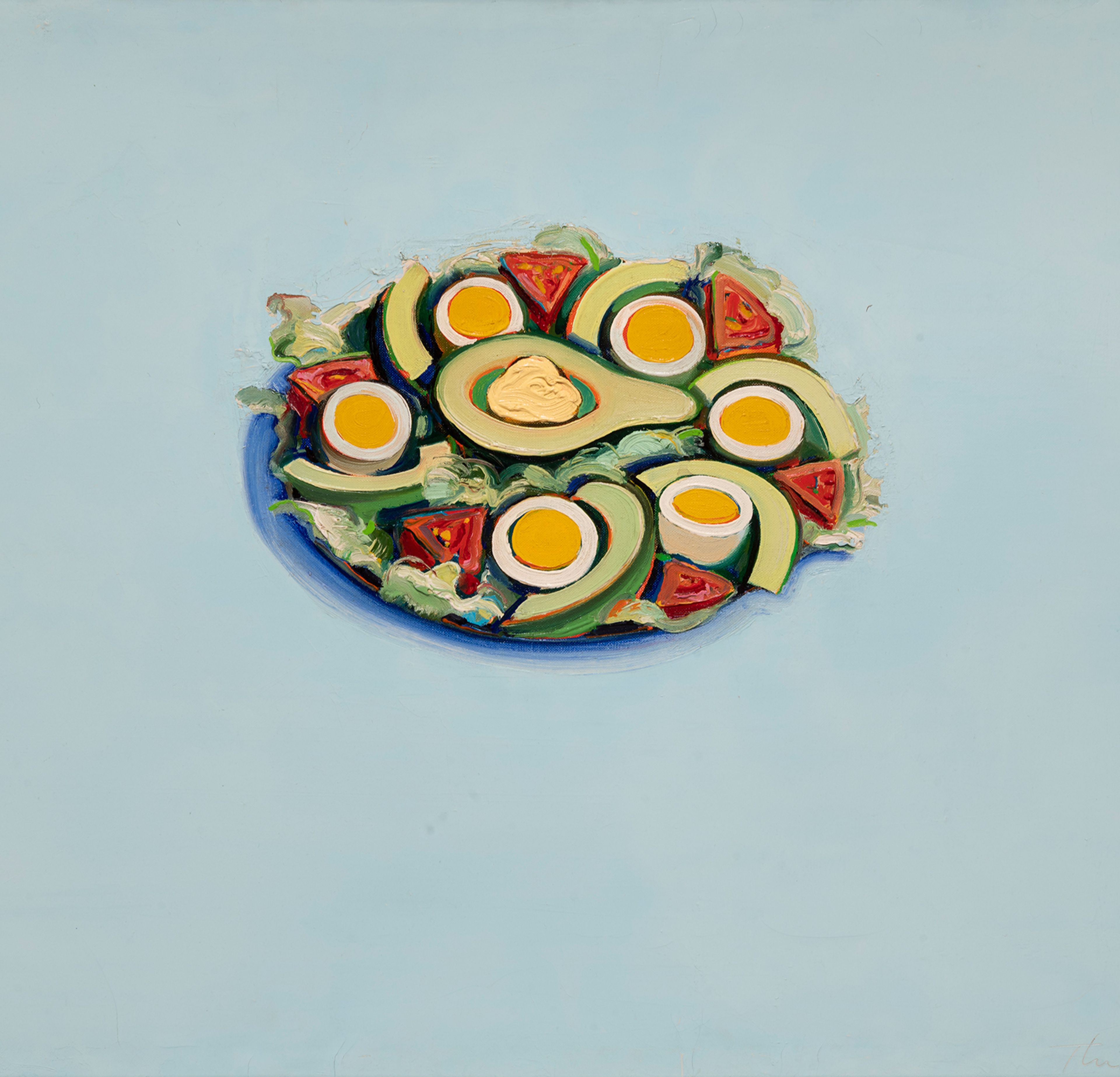
Hindman is pleased to present Wayne Thiebaud's Avocado Salad in our September 28th Post War & Contemporary Art auction. This work comes to Hindman from the Estate of Morton and Estelle Sosland, Kansas City, Missouri. Join us in exploring the couple's legacy as collectors and patrons of the art world. Morton and Estelle Sosland Morton and Estelle Sosland were two well-known patrons of the arts in Kansas City, donating and serving on the boards of several art organizations including the Kansas City Symphony, Kansas City Art Institute, and the American Crafts Council. But perhaps no institution drew their attention and passion as much as the famed Nelson-Atkins Museum of Art. Both were heavily involved with the museum serving on the board, organizing donation drives, and helping guide the museum’s expansion. In 1994, the Soslands donated the massive 17-foot shuttlecock sculptures that adorn the sculpture park at the museum. Although somewhat controversial at the time, the sculptures have become iconic and are among the most photographed art installations in the city. While both were involved with the Nelson-Atkins, it was Estelle who formed the closest bond with it, starting as a volunteer in the Sales and Rental department before eventually rising to the position of chairman, the first woman ever to hold that position. She served on numerous boards including Menorah Medical Center, the Oppenstein Brothers Foundation Disbursement Committee, and the board of Sunset Hill School. Morton Sosland made his living in the publishing business where he served as publisher and editor for many publications but most notably Milling & Baking News. He also served on many high-profile boards of companies with significant Kansas City ties including H&R Block, Commerce Bancshares, ERC Corporation, Hallmark Cards, Kansas City Southern Industries, Stilwell Financial, and Trans World Airlines. Much like his wife, Morton also had a deep passion for the art community and the Nelson-Atkins in particular, serving several key positions at the museum. Over the course of 73 wonderful years of marriage, Morton and Estelle built a remarkable life for themselves in their hometown of Kansas City that saw three children, four grandchildren, and six great-grandchildren. From a very young age, the Soslands learned that giving back was important, starting the charitable Sosland Foundation in 1950 while both were just 25 years old. Their impact on the Kansas City community was so profound that in 2014, Mayor Sly James proclaimed September 19 Morton and Estelle Sosland Day. Not surprisingly for a couple so passionately involved in the art world, they also assembled an enviable collection of painting, sculptures, and other pieces of fine art. No doubt inspired by Morton’s publishing business, the Soslands favored food-related subjects in their collection. This is especially apparent in the delicious pieces offered in this auction, including William H. Bailey’s Eggs and Oranges, Claes Oldenburg and Coosje Van Bruggen’s B B Pie a la mode - Flying Scale B 3/3, and, of course, Wayne Thiebaud’s incredible Avocado Salad.
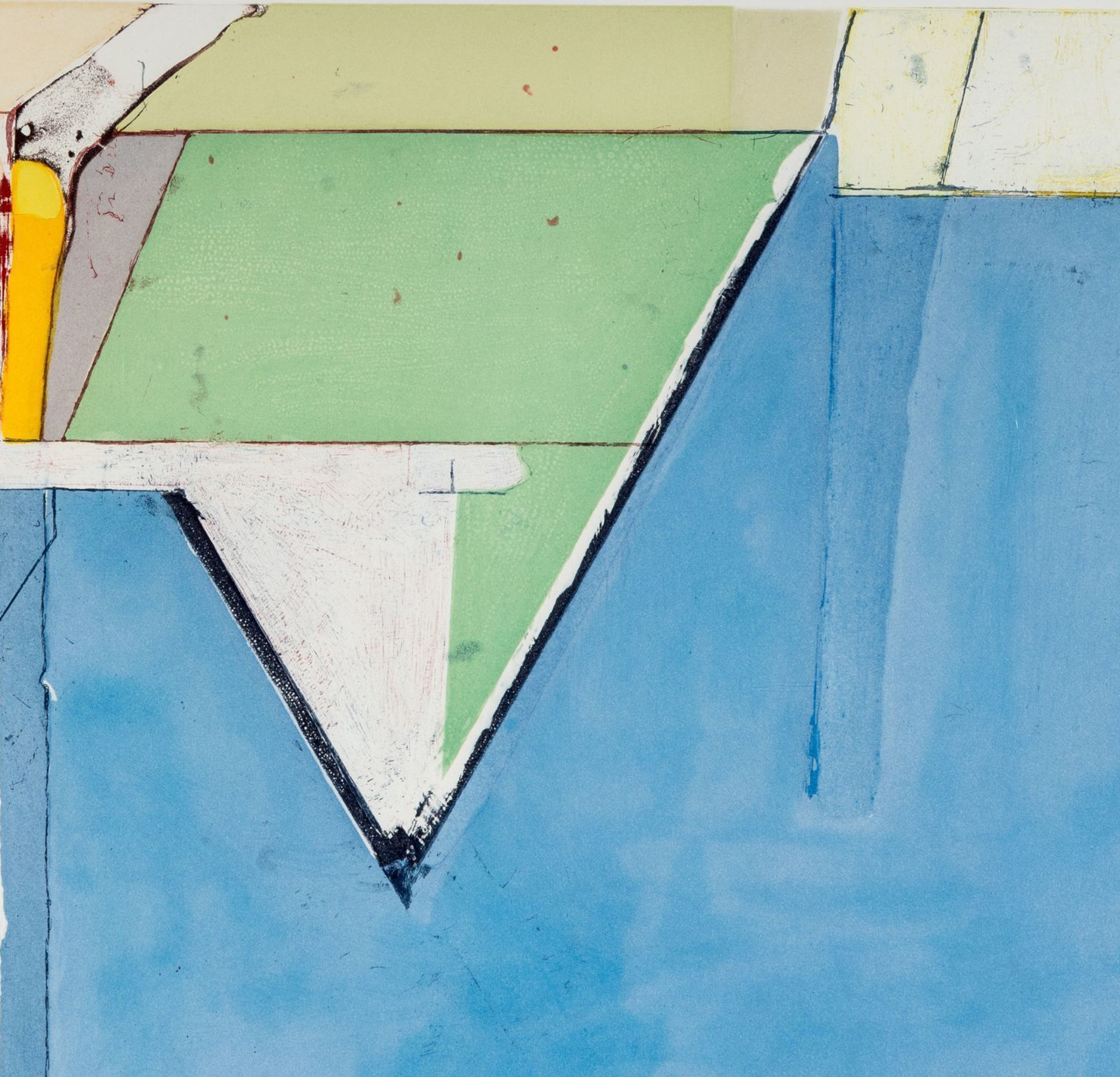
Hindman is pleased to present High Green, Version II, 1992 by Richard Diebenkorn this September 21st in our fall Prints & Multiples auction. Richard Diebenkorn (1922-1993) is most well-known for his large-scale, abstract paintings of carefully arranged geometries in mostly vertical compositions, balancing line, color, and space in the service of his particularly Californian light. Through the application of different printmaking methods, Diebenkorn’s prints allowed him to continue to build upon these themes, on a smaller scale. This is clear in High Green, Version II, 1992, a color aquatint with etching and drypoint. Printed by Kathan Brown at Crown Point Press, San Francisco—with whom Diebenkorn collaborated since he began to explore printmaking in 1961— High Green, Version II emphasizes a satisfying composition reflective of Diebenkorn’s purposeful employment of varied linemaking, balanced forms, and concentrated application of color emblematic of his mature career in the year prior to his death. Born in 1922 in Portland, Oregon, Diebenkorn grew up San Francisco and spent most of his life in California. He worked for much of his career as a teaching artist in various universities such as University of California, Los Angeles and the University of Southern California. Diebenkorn had a wide range of artistic influences from Paul Cézanne and Henri Matisse to Hans Hofmann, to Abstract Expressionism, then well in-vogue on the East coast. However, rather than copying any past or concurring style, Diebenkorn synthesized what interested him into a practice uniquely his own. This culminated in his most well-known series, Ocean Park, beginning in 1967: it features architecturally-balanced abstract compositions dependent on his environment—a celebration of the constant light flooding into his Santa Monica studio. In 1988, Richard and his wife, Phyllis, moved to Healdsburg in northern California where he would remain for the rest of his life. In 1989, Diebenkorn had open heart surgery, after which his health was never quite the same, though his creativity and practice did not falter. He subsequently devoted an even greater amount of time to printmaking in 1991 and 1992 because of the smaller, more manageable, physical scale that printmaking entails and especially given he could offload the most physically rigorous element—the printing itself—to the highly skilled Crown Point team.[i] As seen in High Green, Version II, Diebenkorn was able to use printmaking to his advantage in its elements of unpredictability and range of mark making, including the washes of color achieved through aquatint, to balance his compositions. High Green, Version II is an aerial map of inorganic shapes defined by contour lines and blocks of color. The majority of the composition is awash in soothing, undulating blue, bordered by smaller bands of color and line—greens, yellows, purples, and reds at the top and blacks and grays at the bottom—delineated by the natural edge of the plate to create the white border. The work is inhabited by mostly linear forms defined by various methods—from thick contour lines along edges to short scratches used to apply texture within color fields—such as the gray segment at the bottom right— to drops of aquatint wash in pale blue and pink. Diebenkorn was enchanted with the challenge and occasional unpredictability that printmaking allowed. As he told his daughter at Crown Point’s studio in 1992: “I’m making my drawing in spite of the metal. There are unseen forces there, and it’s always a competition with them. I think I’m going to make a straight line, and it says, ‘Oh no you don’t!”[ii] The stimulating limitations within printmaking nevertheless also allowed for the freedom of reworking the plate to perfect the desired effect, as shown here in this second state of High Green. With his mostly straight edges, the eye is drawn to the one curvilinear form coursing through the center of the composition. Diebenkorn had noted that he was prone to placing more emphasis on intensity in the upper sections of a composition—a more “concentrated” and colorful space—before balancing this field of activity with a “less charged” space.[iii] This print thus emphasizes a spatial hierarchy yet still achieves harmony because there is no tonal hierarchy. The lack of depth achieved by the washes of color allows the eye to glide evenly over the print—particularly the curved line marking the shift from concentrated color at the top to neutral blacks, grays, and whites. Though more subdued in terms of color and activity, the forms of the lower half of the print balance the top through their echoing of the shapes and lines above—such as the white and green inverted triangle at the top repeated below through the white lines over the blue field tapering towards a V across the lower edge of the plate. Meanwhile, the pure expanse of the blue extending to the right edges acts as a calming field balancing the busy left edge. The overall effect is one that continually engages the viewer in this meditative repetition of shapes, variation of line, and soothing color palette—a distillation of Diebenkorn’s lifelong exploration of light and form mediated through printmaking. [i] Kathan Brown, Ink, paper, metal, wood: Painters and Sculptors at Crown Point Press (San Francisco: Chronicle Books, 1996), 24. [ii] Ibid., 20. [iii] Jane Levinson and Andrea Liguori, Richard Diebenkorn: The Catalogue Raisonné, volume 4 (New Haven: Yale University Press, 2016), 193.
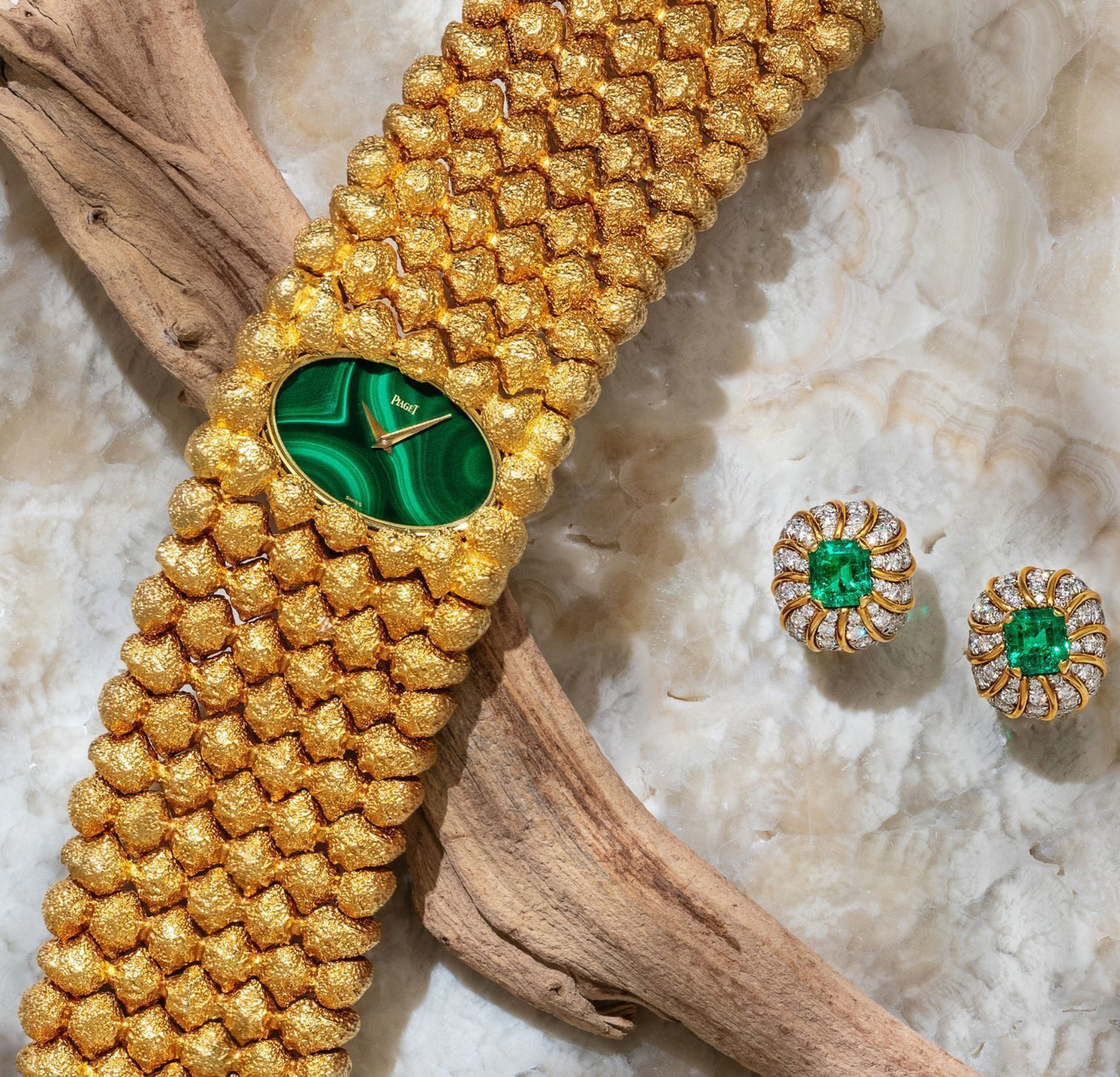
From iridescent pearl earrings to dazzling gold bracelets, necklaces, and rings, treat yourself to unique jewelry this September 12 from Hindman's Important Jewelry auction. Explore selections perfect for an evening cocktail party, the board room, and beyond. Lot 45 – Elegant in Coral Add a pop of bright color to an evening gown or suit with this pair of coral and diamond earrings. These pear-shaped coral drops sparkle and shine against a backdrop of diamonds. Lot 47 – Life’s A Beach….or a Shell This whimsical Verdura brooch features diamonds, turquoise, cultured pearl, and shell in its design, adding both texture and sparkle to any ensemble. Its organic shape combined with reference to the natural world makes it a hallmark of Verdura’s classic style. Lot 54 – Take Me Day to Night This R. Stone Yellow Gold and Diamond Convertible Necklace combines the timeless allure of gold and diamond with the versatility of an adjustable piece of jewelry. Its textured oval links and removal pendant contain 173 round brilliant cut diamonds which can be converted into four bracelets. This piece of signed jewelry is perfect the collector interested in going from day to night! Lot 65 – Shine Bright Like a Diamond Perfect for the gold jewelry collector, this captivating Yellow Gold and Diamond Ring makes a statement on any ring stack. The ring’s rectangular shape juxtaposed against its central circular diamond make it easily pairable with a diverse range of necklaces, bracelets, and more. Lot 200 – Tying Me Up in Knots Make a serious statement in this Bicolor Gold and Diamond Bracelet that features a knotted design and a dusting of diamonds across its front. Pair it with a classic black or white blazer for a pop of texture. Featured Header: Lots 56, 57

Freeman's is pleased to present The Laumeister Collection of Western and Wildlife Art from The Bennington Center for the Arts, Bennington, Vermont in a two-day single-owner auction on August 29-30. With more than 500 lots, the collection was
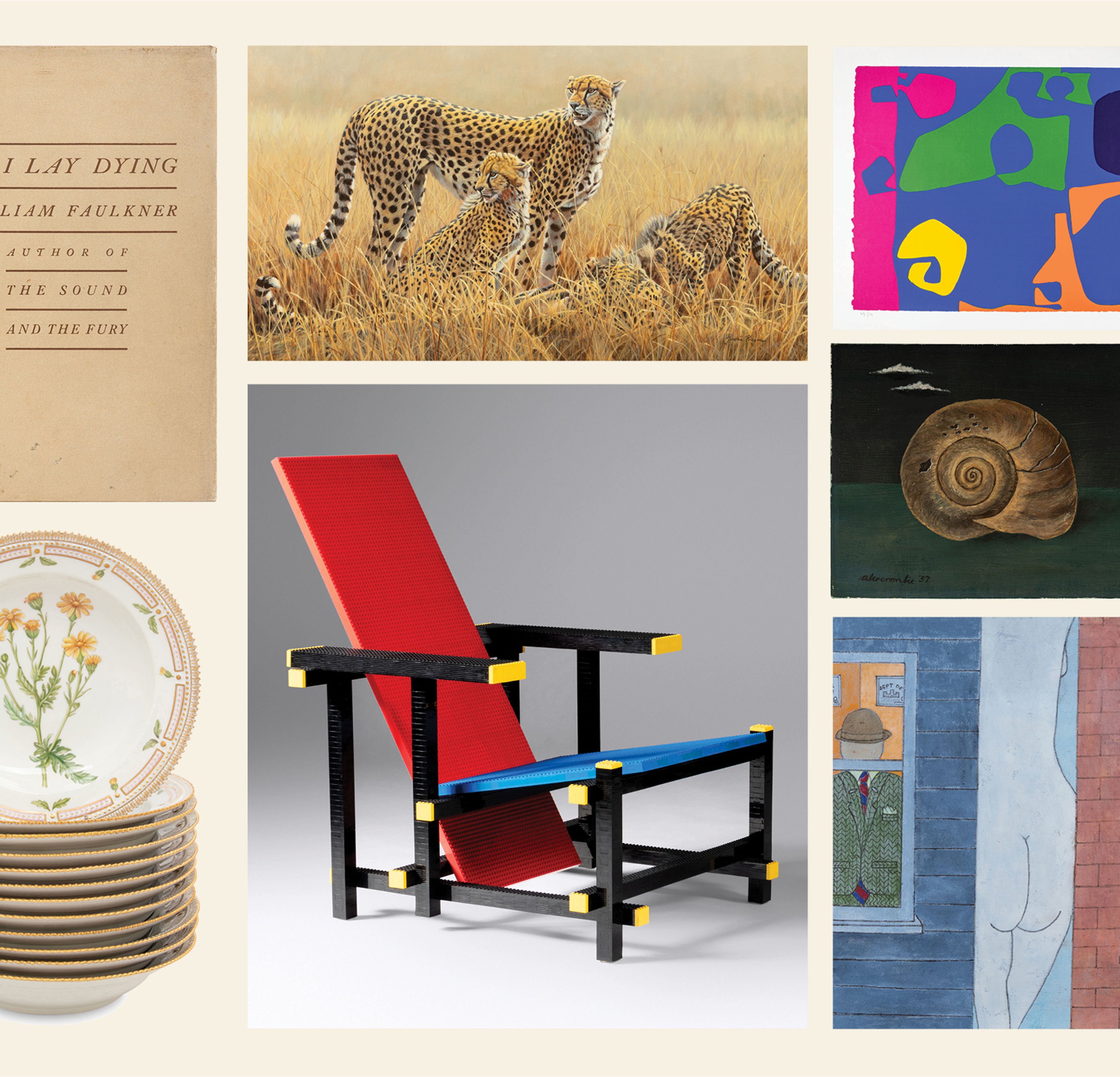
As we round out a sizzling summer at Hindman, I am pleased to present selections from our upcoming auctions that both entice and delight. Explore our New & Noteworthy blog every quarter for an eclectic mix of property from our 52 collecting categories. Within my role as Deputy Chairman, I hope to showcase the breadth and depth of all Hindman has to offer. Sincerely, Featured Auctions: Summer Reading: 20th Century Literature and Biography from a Private Collection | Timed Online | Closes July 26 Never Too Much | Live & Online | Chicago | July 27 Prints & Multiples: Color Theory | Live & Online | Chicago | July 28 Dining at Home | Online | August 24 The Laumeister Collection of Western & Wildlife Art, Part I | Live & Online | Denver | August 29
Being prepared for the curve balls life throws your way involves understanding when to appraise your jewelry, fine art, or other tangible personal property. It is equally important to recognize when an old appraisal needs updating. What are the differences between appraisals? It is essential to know the variations between the types of appraisals and which one is required for specific life events to answer this question. Before we jump into appraisal examples, it is also valuable to understand the training and experience of the appraiser. There are requirements for personal property appraisers and guidelines for tangible personal property appraisal reports. In short, the appraiser should be competent to appraise the jewelry, fine art, or other tangible personal property in the appraisal assignment. This competency consists of familiarity with the items being appraised coupled with incorporating the Uniform Standards of Professional Appraisal Practice (USPAP) into the appraisal assignment. Appraisers need to be active participants in the marketplace, keeping their fingers on the pulse of the ever-changing market. Continuing education and membership in a professional appraisal organization are also essential elements for the personal property appraiser. Below are examples of frequently encountered scenarios that best illustrate the differences between the two most common types of appraisals. The situations describe the life event that triggers the need for an appraisal report. It is impossible to cover every case when a tangible personal property appraisal report would be needed. Having been in the auctions and appraisals business since 1990, these are two of the most commonplace, illustrating the life event, the type of appraisal required, and an explanation of the importance of the service. Scenario 1 - Insurance Appraisal You are a contemporary art collector and live in Palm Beach, Florida. Hurricane season for the region is from June 1st - December 1st. As your collection grows, so do the liability and chances for loss or damage. Your insurance agent states, “You need an insurance appraisal for the art collection to establish the replacement value for the items.” The first step is to find an appraiser to evaluate the fine art and put together the appraisal report. To understand the appraiser’s process, it is critical to recognize the definition and considerations in determining replacement value. The International Society of Appraisers defines replacement value as “The amount it would cost to replace an item with one similar and like quality purchased in the most appropriate marketplace within a reasonable amount of time. Replacement value includes the costs of acquiring or replicating the property and all the relevant costs associated with replacement. These other costs may include all applicable taxes and duties, framing, crating, and transportation.” This definition helps steer the appraiser to the proper marketplace. The retail market is usually where the client can immediately replace the items with an exact or comparable item. The definition also informs the appraiser and collector of what additional elements are included in determining replacement value. This includes the value of the work itself plus the costs for framing, matting, shipping, commissions paid, or sales tax that would be incurred if the asset needed to be replaced. Insurance appraisals are just for that function. They provide replacement value for the assets in case of loss, theft, or damage. Because those values include more than just the asset’s value, insurance appraisals are not relevant for other types of life events, like a loss of a spouse or parent. Scenario 2 - Estate Appraisal A loved one passes away unexpectedly, and there is a jewelry collection. Do you know if the collection is fine jewelry with diamonds, emeralds, and sapphires, or is it all costume jewelry? Your tax advisor suggests you need a tangible personal property fair market value estate tax appraisal. You will need to find an appraiser who is knowledgeable in appraising the “stuff” in the estate and distinguishing the fine jewelry from the costume. The methodology in determining fair market value for items in an estate is to evaluate comparable sales of property found in the auction market, as this is the principal market of open exchange that provides publicly accessible sale records. To appreciate what is considered in a fair market value appraisal, let’s look at the definition. The IRS definition of fair market value states, “the price at which the property would change hands between a willing buyer and a willing seller, neither being under any compulsion to buy or sell and both having reasonable knowledge of relevant facts.” This part of the definition advises the appraiser to look at markets that have informed and willing sellers and buyers. The definition continues, “The fair market value of a particular item of property is not to be determined by a forced sale. Nor is the fair market value of an item to be determined by the sale price of the item in a market other than that in which such item is most commonly sold to the public, taking into account the location of the item wherever appropriate.” This part of the definition steers the appraiser to the most typical market where the items are sold to the public. Most valuable items are typically sold at local, regional, or international auction houses. All fair market value appraisals also consider Technical Advisory Memorandum 9235005 (May 27, 1992), which states, “Fair market value should include the buyer’s premium.” This means that the hammer price plus the buyer’s premium becomes the fair market value for an item. The appraiser must consider this information when determining the fair market value. The value determination for an estate appraisal only considers the asset and does not include the extras listed in the insurance appraisal scenario. This is why an insurance appraisal could not be used in the estate situation. The markets researched are very different and may produce vastly different value conclusions. In summary, appraisals provide relevant information based on the life event to make informed decisions about the assets. Knowing the difference between the most common appraisals will also help you plan for life’s unexpected events. It is never too early to obtain an insurance appraisal for your collection or engage the services of an appraiser to conduct an estate tax appraisal for the items in your estate. Please visit https://hindmanauctions.com/services/appraisals-valuations to learn more about Hindman Appraisals and how to get in touch with our exceptional team of trusted appraisers.
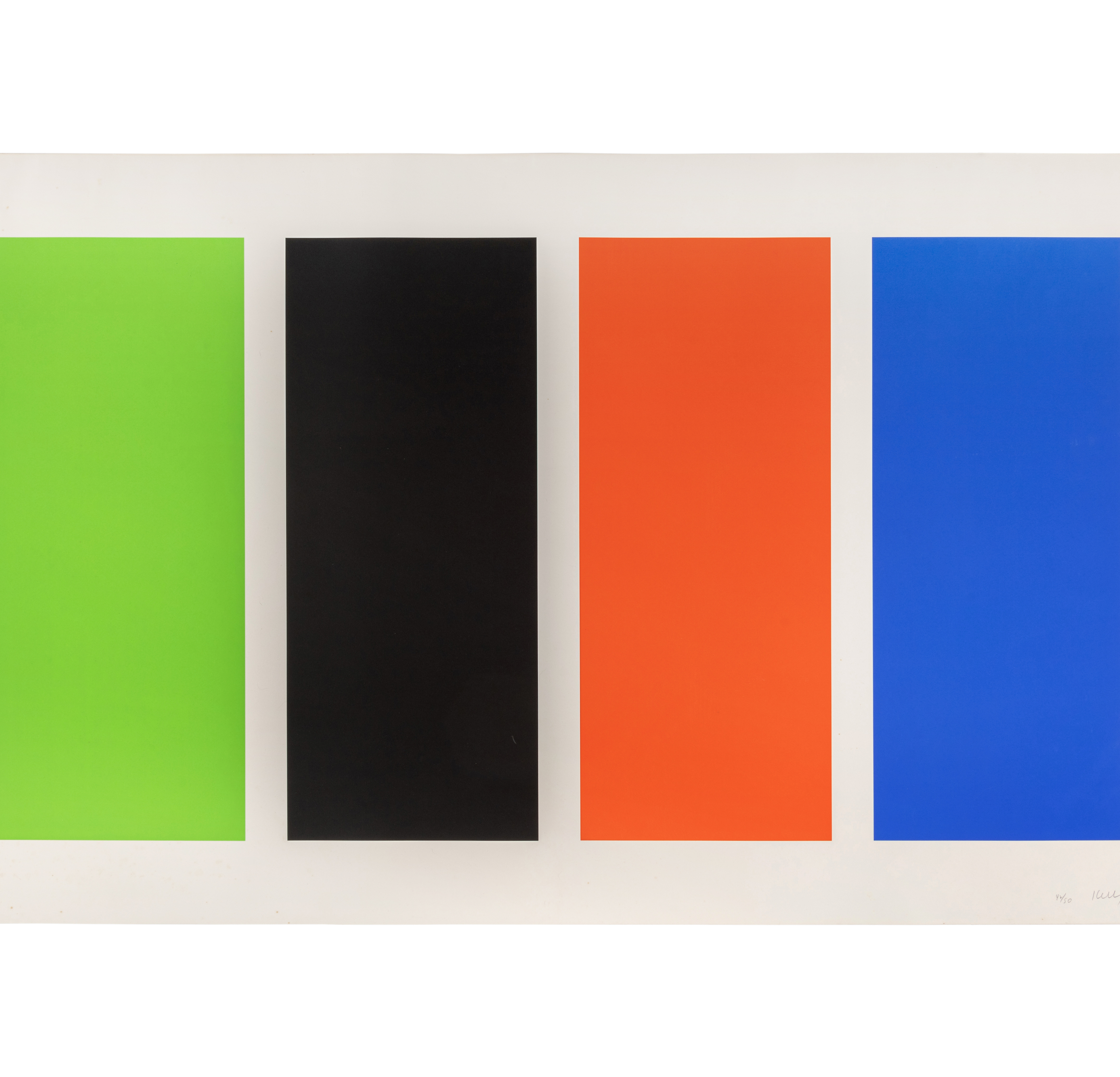
In honor of Pride Month, Hindman reflects on the LGBTQ+ artists whose compelling works we’ve offered. Beyond the creativity and artistic talent exhibited in their works, they all have distinct stories that demonstrate resiliency, a willingness to cultivate community amongst their LGBTQ+ peers, and a passion for raising awareness of queer issues in society. Martin Wong Martin Wong came of age in the heady California dreamscape of late 1960s San Francisco. Wong, an openly gay man of Chinese ancestry, found acceptance in the open-minded hippie counterculture while working mostly in ceramics and performance art. He turned to painting as his primary creative expression when he moved to New York’s Lower East Side in 1978. Hindman was thrilled to offer a quintessential Wong cityscape in its October 2021 Post War & Contemporary Art auction, which realized $1.1 million, a world auction record for the artist at the time. Martin Wong (American, 1946-1999) | Persuit (El Que Gane Pierde - He Who Wins Looses), 1984 Keith Haring Hindman is no stranger to offering works by iconic pop artist, Keith Haring. His bold imagery and artistic language became instantly recognizable, with his subway New York City works among his most famous works. His impact extended beyond the art world itself as also served as a catalyst for social activism and advocating for safe sexual practices and AIDs awareness. Keith Haring (American, 1958-1990) | Chocolate Buddha, 1989 Gertrude Abercrombie Queen of the Bohemians, Gertrude Abercrombie was an outspoken supporter of gay rights and a fervent ally to a teeming community of creatives. Hindman has championed her creativity for many years and the mysterious and whimsical ways she depicted her subjects. Seen below, Eggs and Carnation (1955) is likely a loving memorial to Frank Roy Harriott (1921-1955) and an homage to her life-long friend, artist Karl Priebe (1914-1976). Harriott and Priebe were in a committed same-sex interracial relationship and Priebe cared for Harriott as he battled a degenerative disease. Made the year of Harriott’s death, which Priebe announced to Abercrombie via a postcard decorated with a grieving self-portrait, the pink carnation is a traditional image for mourning, and the eggs connect directly to Priebe’s love of birding and the couple’s relationship of mutual care and protection.” – Robert Cozzolino Gertrude Abercrombie (American, 1909-1977) | Eggs and Carnation, 1955 Roger Brown Among Hindman’s favorite Chicago Imagists is Roger Brown, a gay artist who was very involved in the LGBTQ+ communities in Chicago. Brown went to Chicago’s first gay leather bars. After being diagnosed with HIV in 1988 and living with AIDS, themes surrounding the HIV/AIDS pandemic appeared in Brown’s work. Despite his illness, Brown was able to produce incredibly creative works during this period. Hindman set the world auction record for Brown when we sold his painting A Sunday Afternoon at the "Grand Slam" for $300,000 in our December 2019 Post War & Contemporary Art auction. Roger Brown (American, 1941-1997) | A Sunday Afternoon at the "Grand Slam", 1972 Julie Mehretu A working artist today, Julie Mehretu’s abstract compositions are primarily influenced by music, revolution, and failure. Recently the subject of a major retrospective at the Whitney Museum of Art, the artist has described the future of queerness as a continuous creative invention. This is evident in her monumental abstract works that engulf the viewer in disorienting detail and evoke a “queer optic” in investigations of global capitalism. This lens through which to see her work provides the viewer with a framework to experience the sheer size and scale of her paintings. Julie Mehretu (Ethiopian, b. 1970) | Entropia: Construction, 2005 Ellsworth Kelly Ellsworth Kelly was an openly gay artist during a time when it was not widely accepted by the mainstream. One of the most renowned abstractionists working in the New York School of Painting, Kelly had a famous relationship with pop artist Robert Indiana, reflected in Indiana’s iconic love sculpture. Kelly was renowned for his focus on pure form and color, focusing on it solely as a subject without any additional associations. Kelly invites the viewer to engage with his work on a purely sensory level, experiencing the beauty and power of color in its most fundamental form. Ellsworth Kelly (American, 1923-2015) Jaune avec Bleu Foncé (Yellow with Dark Blue) (from Suite of Twenty-Seven Color Lithographs), 1964-1965 Robert Mapplethorpe Known for his diverse portfolio of work ranging from homoerotic images, floral still lifes, commissioned portraits, and mixed-media sculpture, Robert Mapplethorpe is revered for his bold artistic practice. The artist was an openly queer man that explored gay sexuality and BDSM culture in his photographs and together with partner Samuel J. Wagstaff, Jr., shed light on overlooked queer communities in the 70s and 80s. Their partnership and Mapplethorpe’s artistic talent were major catalysts for queer artists around the world exploring their identities. Robert Mapplethorpe (American, 1946-1989) | Thomas, 1987 Andy Warhol Andy Warhol is among the most influential American pop artists. His repetitive images inspired by American pop culture, from dollar bills to Campbell’s Soup Cans to Elvis Presley, have captured the imagination of the world. Warhol was openly gay at a time when many of his queer colleagues were not, and he took inspiration from camp and gay culture for many of his works. His studio, The Factory, was a communal location for many of New York’s artists and celebrities, including a number who identified as queer. Andy Warhol (American, 1928-1987) | Four Polo Players, 1985 Robert Rauschenberg A titan of the post-war movement, Robert Rauschenberg’s fluid sexuality has largely been ignored by the art world. A member of a vibrant creative community at Black Mountain College that included Susan Weil, Cy Twombly, John Cage, and Merce Cunningham, Rauschenberg’s practice was imbued with a queer visual vocabulary before it was popular. The artist was cited as having romantic relationships with compatriots Cy Twombly and Jasper Johns. His fluidity manifested in his work through finding beauty in the mundane and everyday, a core tenet of queer art. Hindman is proud to offer his 1970 work Signs in our July 27th Color Theory auction. Robert Rauschenberg (American, 1925-2008) | Signs, 1970 Catherine Opie Catherine Opie is a powerhouse photographer known for her portrayals of queer life in the 1990s. With a career spanning over 40 years, the artist showcases poignant themes of people, politics, and places in her photos with a journalistic quality. Seen in the work below, Mx. Justin Vivian Bond depicts a nonbinary subject proudly posing for the viewer in a corset and classic silhouette. In documenting the lives of queer individuals, Opie has preserved the history of a vibrant community that is so often marginalized. Catherine Opie (born 1961) | Justin Vivian Bond, 1993 Header Image: Ellsworth Kelly (American, 1923-2003) | Four Panels, 1971
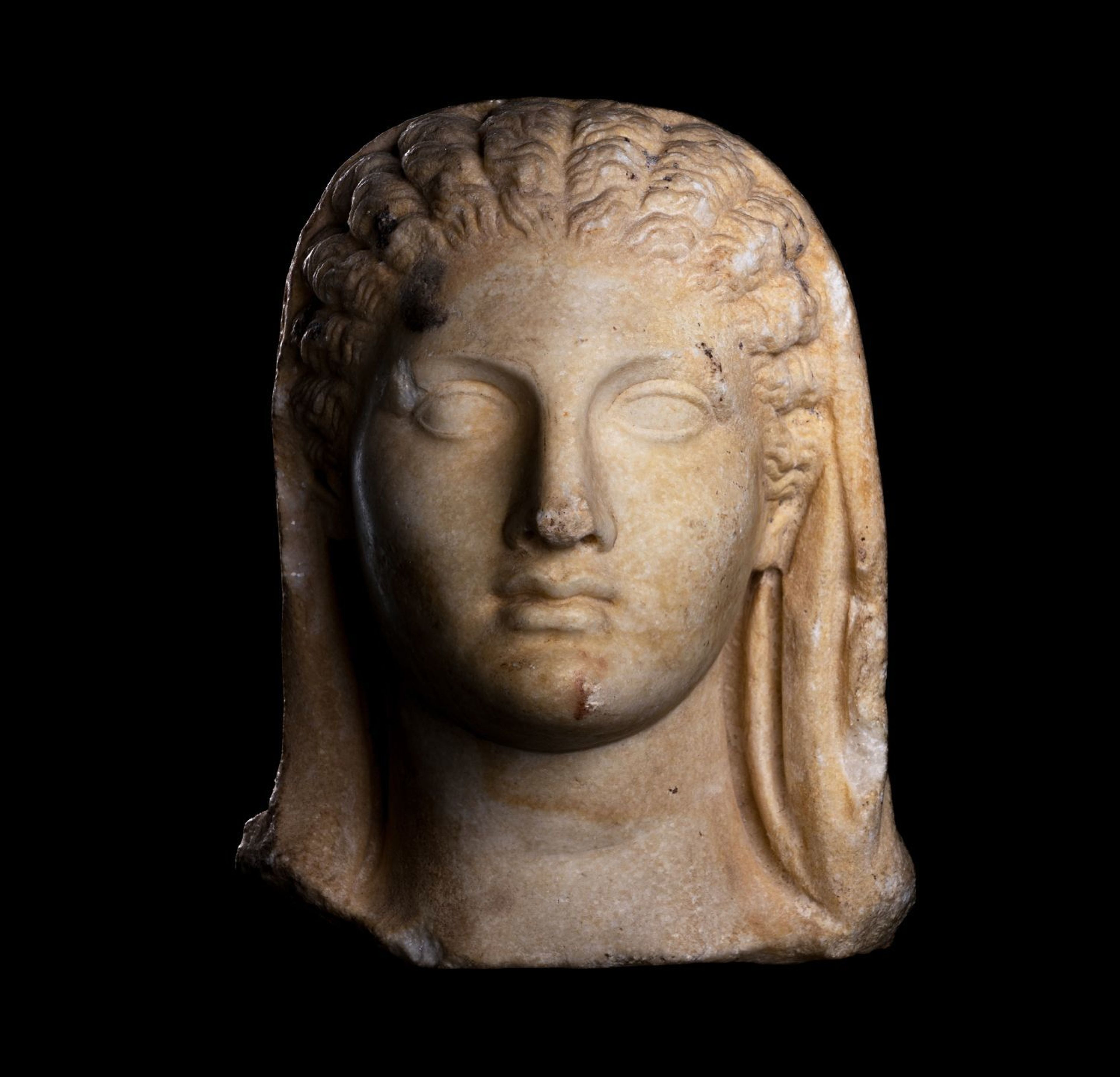
Before social media, ancient societies approximated the likeness and appearance of its citizenry through expertly carved portrait sculptures. Featured in our May 25th Antiquities & Ancient Art auction, lots 191-196 and 198-201 showcase the expert craftsmanship of these ancient sculptors. Join us as we explore the many faces of ancient civilization. Lot 192 | A Roman Marble Head of Venus (Capitoline Type) | Estimate: $30,000 - $40,000 Appropriately for the ancient goddess of love and sensuality, one of the first statues of a nude woman in the Greek world was the Aphrodite from Knidos by the 4th century B.C. master-sculptor Praxiteles. Considered a shocking innovation at the time, the goddess was shown stepping out of the bath, coquettishly covering (as well as drawing attention to) her beautiful, bared body. The format was widely copied in the following centuries. Of the numerous Roman variations known, the so-called “Capitoline” type is thought to be the most faithful to the Greek original. Inclined slightly downwards and to the left, this head surely belonged to a full-length statue of that type. The languorous eyelids, slightly parted lips, and wavy locks piled upon the head all speak to a Roman treatment of the subject of the highest quality, perhaps once intended for a lavish garden setting. Lot 193 | A Roman Marble Portrait Head of a Veiled Woman | Estimate: $25,000 - $35,000 Showing the smooth countenance of a woman, this sculpted head is timeless by design. Once part of a life-sized statue, the voluminous folds of the woman’s mantle would have draped around her body and shoulders before being drawn up at the rear to partially cover her hair in a gesture signaling piety and modesty. The coiffure itself is an ornate configuration of curly strands rolled into rows, pulled back from the brow, and gathered behind in a chignon, creating a ribbed effect termed by scholars as the melonfrisur (‘melon-hairdo’). This distinctive hairstyle originated in Late Classical Greece, where it was deployed to great effect by the master sculptor Praxiteles. Elements of the facial structure, too, reflect this epoch: a somewhat low, triangular forehead, the sharply defined line of the brows descending to a straight nose, and the heavily lidded almond-shaped eyes. These elements were deployed throughout the Hellenistic and Roman periods for depictions of goddesses and queens. Here, the stark frontality suggests a Roman date as does the manner with which the running drill fully separates the lips. The surface is covered by a yellowed, oxidized patina which obscures a white marble with sugary crystals, characteristic of the Greek islands. Although Roman in manufacture, the spirit of the head - if not the material it was carved from - harkens back to the Hellenic past. Lot 194 | A Roman Marble Portrait Bust of an Aristocratic Woman | Estimate: $40,000 - $60,000 This portrait is strikingly attractive because of the sitter’s delicate yet exotic features and her elaborate couiffure. The sculpture was produced during a formative and highly sophisticated phase of Roman art, and one whose portraits of women are much less common, than those from later Imperial times. The preparation for a patch at the back of the head is seemingly ancient. Although she remains anonymous, given the sculpture's scale and scope, one can assume it portrays a person of note, who wished to be represented with the ideal and distinctive features of a Roman aristocrat. For a comparable portrait bust, see Agrippina MInor at the NY Carlsberg Glyptotek, Copenhagen (Acc. no. 755). Lot 195 | A Roman Marble Portrait Head of Julia Titi | Estimate: $35,000 - $55,000 Born to the highest echelons of the Flavian imperial family, Julia Flavia, more commonly known as Julia Titi, was the daughter of the emperor Titus (39 – 81 A.D.). She held an exalted position as such and was one of the very few women of the imperial family to wear a diadem in official numismatic portraiture. After the death of her patrician husband and later that of her father, she was integrated into the household of her paternal uncle Domitian, then emperor. Salacious (and likely apocryphal) accounts by detractors of her uncle report that she became his mistress and tragically died in her early 30s as a result of pregnancy from this alleged union. Julia Titi was a famous beauty, and her portraits are the most attractive of the Flavian women. Surviving portraits of the princess, such as this one, bear this out. Here, her features are idealized, with a delicate heart-shaped face, large almond-shaped eyes, full lips with pronounced ‘cupid’s bow’, and serene brow. The Flavian hairstyle pioneered by her mother - a halo of curls over the brow, with deep drilling - is most appealing here: elegant, flattering, and more restrained. At the rear, what would have been a voluminous braided bun is summarily rendered. This example has most in common with the best-known of Julia Titi’s portraits now in the Museo Nazionale delle Terme in Rome. Lot 198 | A Greek Marble Portrait Head of a Ruler | Estimate: $20,000 - $30,000 Two grooves along the top of this head originally held a royal diadem, presumably made of bronze, and indicates that the man represented is a ruler. A number of royal portraits can be grouped around the Egyptian Greek kings of the second and early first centuries B.C. (Ptolemies IV-VIII), but a precise identification is often difficult because many of these marble portraits were clearly reworked to represent the next king who seized power. In addition, some of the finer marble likenesses, including the head under consideration, were strongly idealized thus further hampering an accurate identification. The splendid series of royal portraits on Ptolemaic coins provides the best surviving evidence for pinpointing individual rulers. For a similar portrait head of Ptolemy IV, see H. Kyrieleis, Bildnisse der Ptolemäer, Berlin, 1975, p. 47 no. 171, Pl. 36.
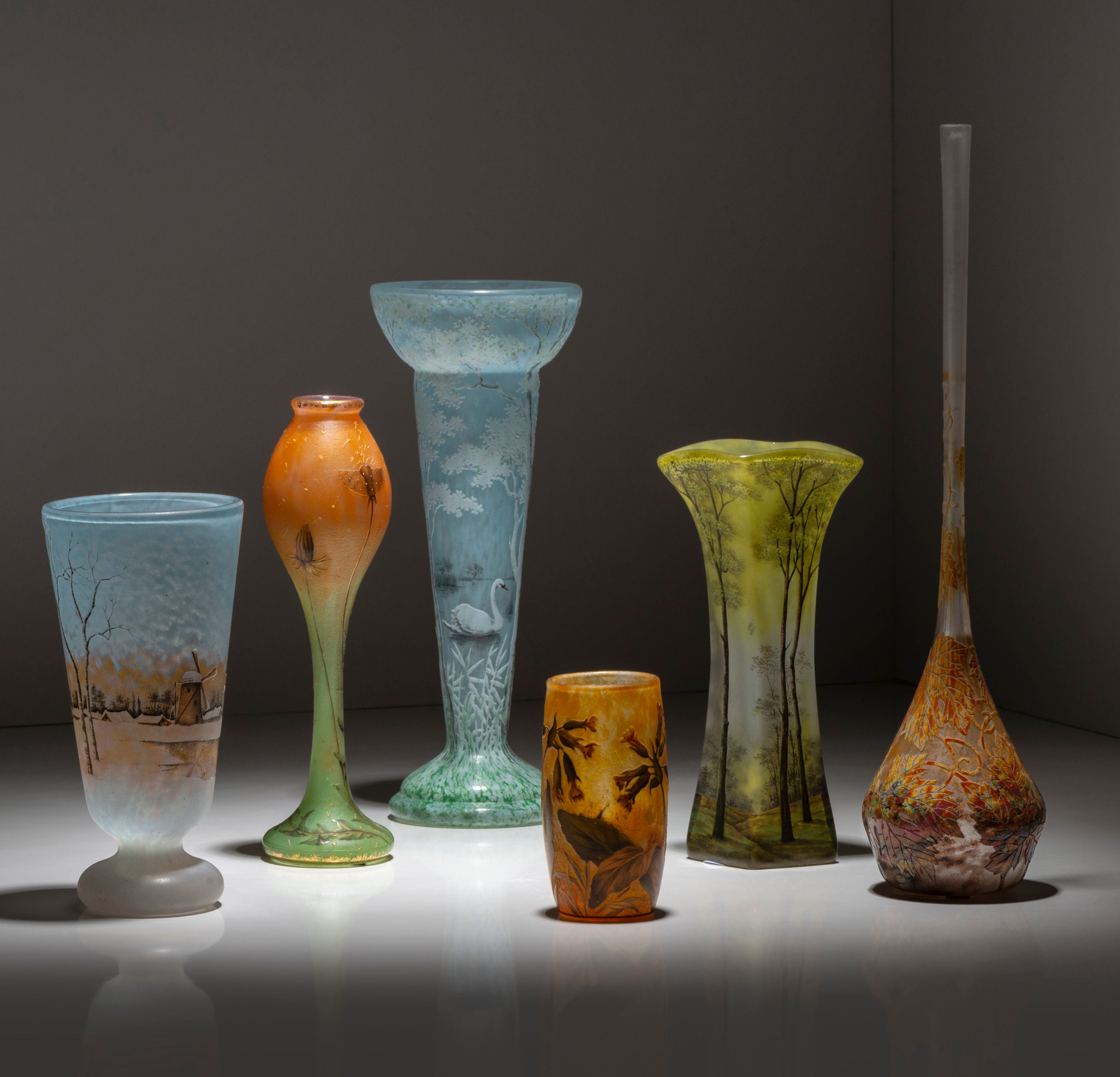
Hindman is pleased to present an impressive collection of early 20th century American and European glass from the Estate of Madelyn Marley, Yakima, Washington in its May 23rd Early 20th Century Design auction. Marley (1899-2000) developed a passion for nature and the outdoors, stemming in part from her family’s ownership of a successful orchard business in Yakima. She became a keen collector of early 20th century glass and was particularly drawn to the scenic and floral vases of Daum, the artistry of Tiffany Studios glass, and the delicate carving and brilliant colors of Thomas Webb cameo glass. Tiffany Studios | American, Early 20th Century | Cypriote Vase | Estimate: $15,000 - $25,000 Marley meticulously built the collection over 50 years ago. It has since remained in her family's care. With over 60 lots, the collection features premiere examples by Tiffany Studios, Daum, Gallé and Thomas Webb. Highlights include a Tiffany Studios Cypriote vase (estimate: Lot 3; $15,000-$25,000) and a Webb Cameo vase (Lot 18; estimate: $10,000-15,000). Thomas Webb & Sons | English, Late 19th/Early 20th Century | Cameo Vase | Estimate: $10,000 - $15,000 “This collection features exceptional examples of craftmanship from the leading glass makers of the early 20th century. Marley had a deep appreciation and understanding of fine art glass and we are excited to have the opportunity to bring this collection to market,” commented Hudson Berry, Director & Senior Specialist of Modern Design. Daum | French, Early 20th Century | Bleuets Vase | Estimate: $3,000 - $5,000