
New & Noteworthy
Stay up to date with news, highlights, & features from across Freeman's.
Stay up to date with news, highlights, & features from across Freeman's.
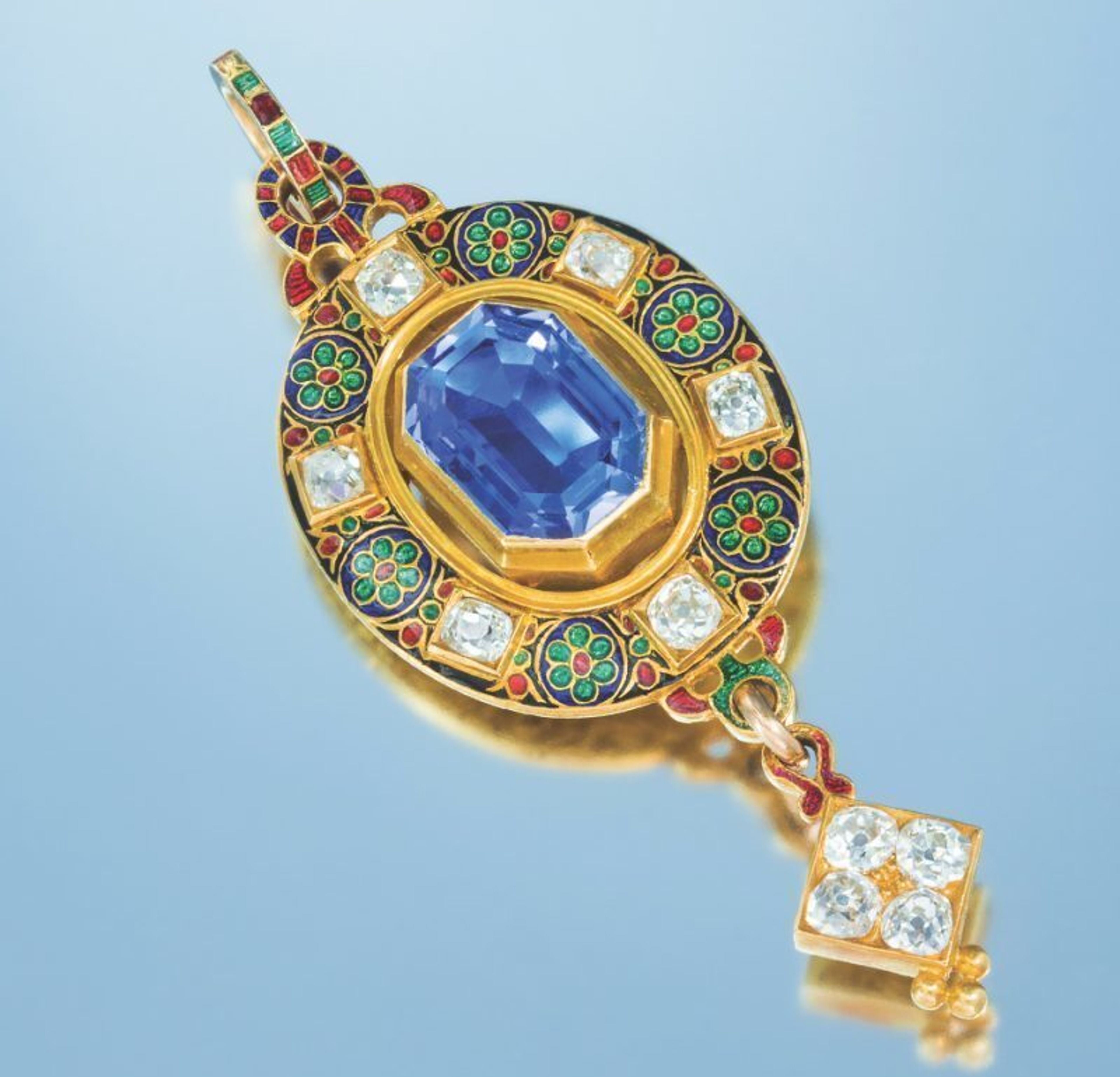
Our upcoming April 10-11 Important Jewelry auction includes a number of works, both vintage and modern, that use classical motifs including micro-mosaics, cameos and polychrome enamel. Micro-mosaics, a technique of jewelry design popular in the eighteenth and nineteenth century, involves carefully inlaying stone together to form an image. This incredibly time-consuming technique is highly sought after by collectors and connoisseurs. Lot 5: This archaeological revival Castellani yellow gold pendant brooch includes subtle micro-mosaics inlaid with black tesserae of the Greek letters, Iota, Chi, Theta, Upsilon and Sigma. While this pendant was made it 1870, it is more modern interpretation of the mosaic than the Gurhan pendant. This Castellani example of micro-mosaic carries a presale estimate of $3,000 to $5,000. Lot 362: This yellow gold and emerald pendant by Gurhan features a central floral motif micro-mosaic. This micro-mosaic is much more traditional than the almost abstract use of the technique in lot 5. This has a presale estimate of $800-$1200. Lot 40: This pendant features a central sapphire cameo, a carved raised relief often of a profile or a mythological scene. In addition to the cameo this pendant is adorned with two cushion cut sapphires, a navette shape cabochon cut ruby and stylized griffins. This carries an estimate of $1,500 to $2,500. Lot 220: This Elizabeth Locke brooch is an example of how contemporary designers are using classical motifs. This yellow gold brooch contains a central mother-of-pearl backed Venetian glass cameo of Medusa. This brooch has an estimate of $1,000 to $2,000. Lot 24: This Edward Tessier pendant is an exemplar of the Renaissance revival style, also known as “Holbeinesque,” that became popular in the late nineteenth-century. The reinterpretation of the Renaissance featured classical motifs, and large oval gemstones in the center of polychrome enamel, as shown in this pendant. It is estimated at $8,000 to $12,000. Lot 308: In addition to fine art, Roy Lichtenstein also dabbled in jewelry design. This pendant brooch is Lichtenstein’s interpretation of the classical polychrome enamel. Unlike the Holbeinesque example, this has a contemporary sensibility. This 1968 work carries an estimate of $1,000 to $2,000.
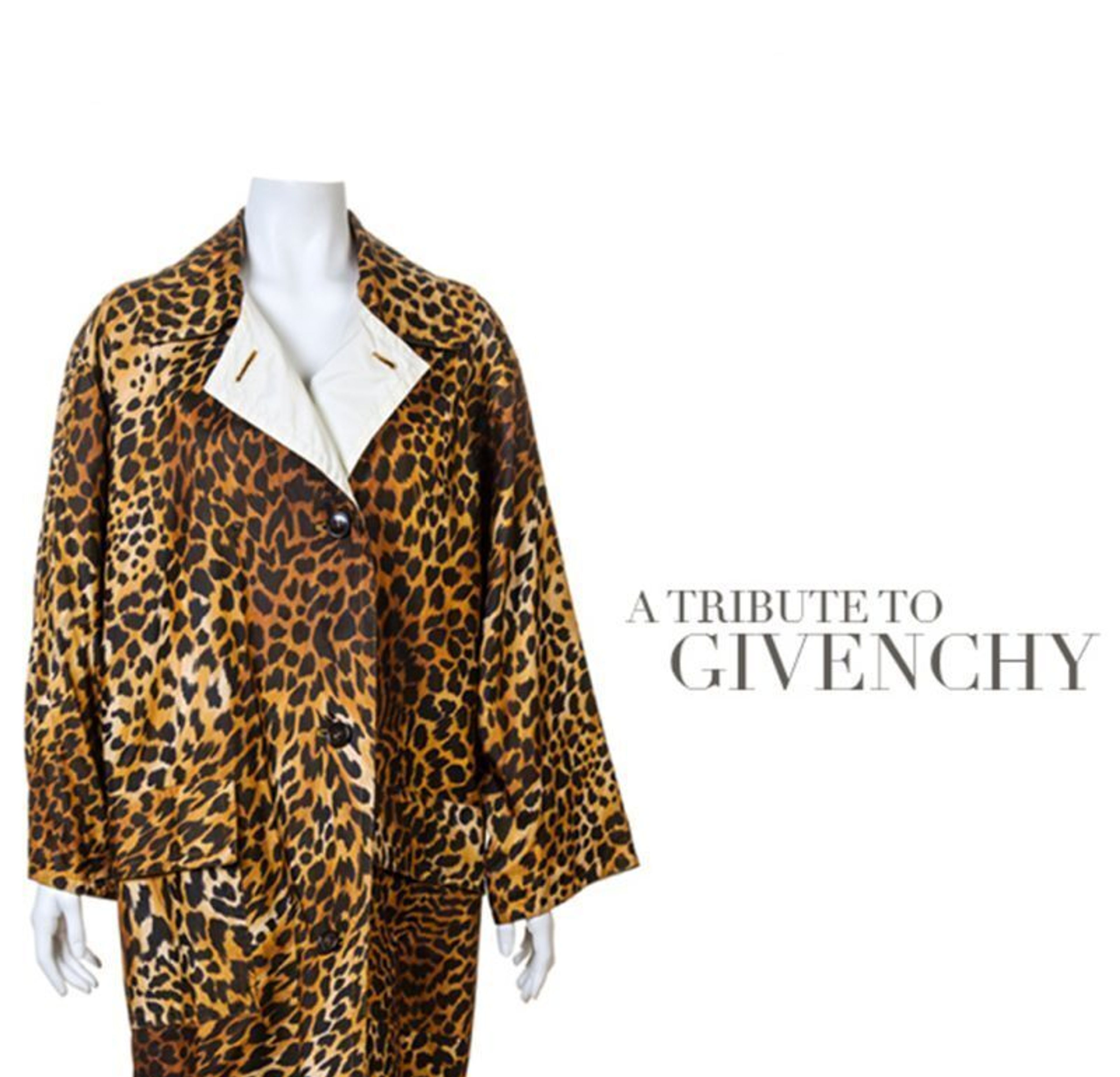
Givenchy opened his design house in 1952 after working for Elsa Schiaparelli, and his classic silhouettes and impeccable tailoring drew immediate interest from the Duchess of Windsor, Jacqueline Kennedy Onassis and Audrey Hepburn. Givenchy and Hepburn would go on to collaborate on a number of projects, the most famous being the sleek black dress she wore in “Breakfast at Tiffany’s.” Hubert de Givenchy was described by the New York Times as a, “pillar of romantic elegance in fashion.” He remained at his eponymous house until the mid 1990s. During his time at the helm, Givenchy developed a reputation as a designer of timeless elegance. We look back fondly on the Givenchy couture and ready to wear collections we’ve handled in recent years. Our upcoming Luxury Accessories and Couture auction includes a number of Givenchy items, such as a silk leopard print trench coat, a black wool a-line dress, a red halter gown and more. A first glance below.
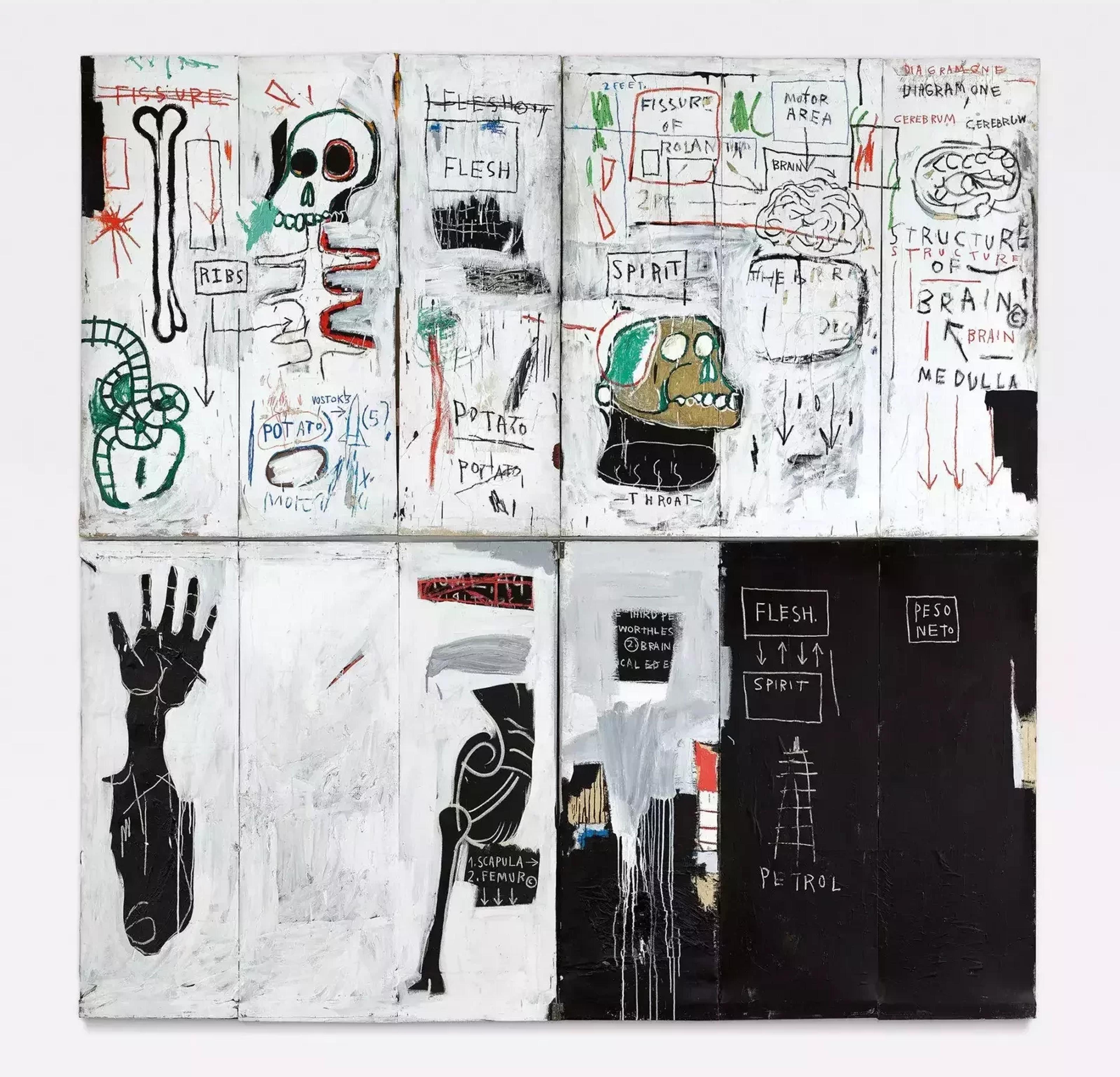
Artistic Allegations: Lawsuit Over Art Auction Price Can a beneficiary of Jean-Michel Basquiat’s Flesh and Spirit sue because the price was driven down? What happens if you think a painting sold for too little at auction? In this case, Belinda Neumann-Donnelly sued her father, Hubert Neumann, saying that he drove down the price of Jean-Michel Basquiat’s Flesh and Spirit, which sold for $30.7 million at auction in May of 2018. Neumann-Donnelly, representing her mother’s estate, claimed that the artwork could have yielded a higher price but for her father’s interference (Neumann had sued Sotheby’s auction house to block the sale). Neumann-Donnelly contended that this frightened potential buyers, which depressed the price of the artwork. In her complaint, Neumann-Donnelly called her father “the epitome of the child with rich parents who wakes up on third base and thinks he hit a triple.” Her complaint also states: “This action arises from a greedy, malevolent, fraudulent, bad-faith and (unfortunately) successful scheme to financially devastate the Estate and, indirectly, Belinda, by destroying the value of the Estate’s most valuable asset—Jean-Michel Basquiat’s masterpiece, Flesh and Spirit—in advance of a scheduled May 16, 2018 auction by Sotheby’s, Inc. of the Basquiat.” In January of 2018, Neumann-Donnelly filed another lawsuit—this one against her father and her two sisters, Melissa and Kristina—in an attempt to force them to sell all the artwork held in trust, which had a value estimated to be more than $50 million. She wanted to see the family’s entire collection liquidated, and argued that the “continued joint ownership of the family’s artwork is impossible.” She asked the New York Supreme Court in Manhattan to allow the works to be sold, and for the proceeds to be divided “in accordance with the parties’ respective ownership interests.” The Basquiat Background The story started when Neumann-Donnelly inherited the Basquiat painting at her mother Dolores’s death in 2016. When she went to sell it, her father tried to stop the sale in court, alleging that she’d applied undue pressure on her mother to sign over the rights to the work while she was receiving medical treatment. Hubert Neumann’s family compiled a world-class collection of 20th-century art. He wanted to block the sale of the 12-by-12-foot painting, arguing that the sale violated an agreement he had with Sotheby’s, which gave him the authority to approve “all matters” concerning the marketing of works from the “Family Collection.” The court rejected Neumann’s request to stop the sale, as Neumann-Donnelly showed that the Basquiat had been owned by Dolores Neumann alone. Neumann-Donnelly’s mother had been separated from her husband for the last 29 years of her life. In her lawsuit she alleges that her mother had been subject to years of repeated “emotional and physical abuse” by her father, a claim he denies. Dolores Neumann’s will explicitly expressed her wish to disinherit Hubert Neumann, her daughter’s lawsuit said. Neumann’s lawsuit was unsuccessful, but when the Basquiat sold at auction, she turned around and sued him for $100 million, claiming that his legal action against her to stop the sale deterred potential buyers, and greatly depressed the painting’s value. Most of the family’s art was given to the three sisters by their uncle, Arthur J. Neumann, in a trust administered by their father. That collection—valued at more than a billion dollars—includes works by Pablo Picasso, Alexander Calder, Vanessa Beecroft, Bruce Conner, Jean Dubuffet, Keith Haring, Jeff Koons, Joan Miró, and Claes Oldenburg. Disinheriting Someone Almost Always Means a Family Fight Neumann-Donnelly claimed that her mother had written her father out of the will and left the painting to her alone. But when artwork, or other valuable assets, are owned jointly, finding an equitable solution may be impossible. In that case, selling the assets held jointly may be the only path. Accurate valuation is therefore critical. Neumann-Donnelly argued in her January court filing that owning the artworks with her father and sisters was no longer possible, and they should be sold and the proceeds divided evenly as a result. But while selling a piece of art and dividing the proceeds is fair in the court’s eyes, it may not resolve the contentious feelings and anger when it concerns a family heirloom. Avoiding a major family dispute, like that of the Neumanns, requires open communication, along with accurate and reliable valuation, in order to formulate a clear estate plan. Freeman’s is committed to offering exceptional trusts and estates services that are uniquely tailored to each client.
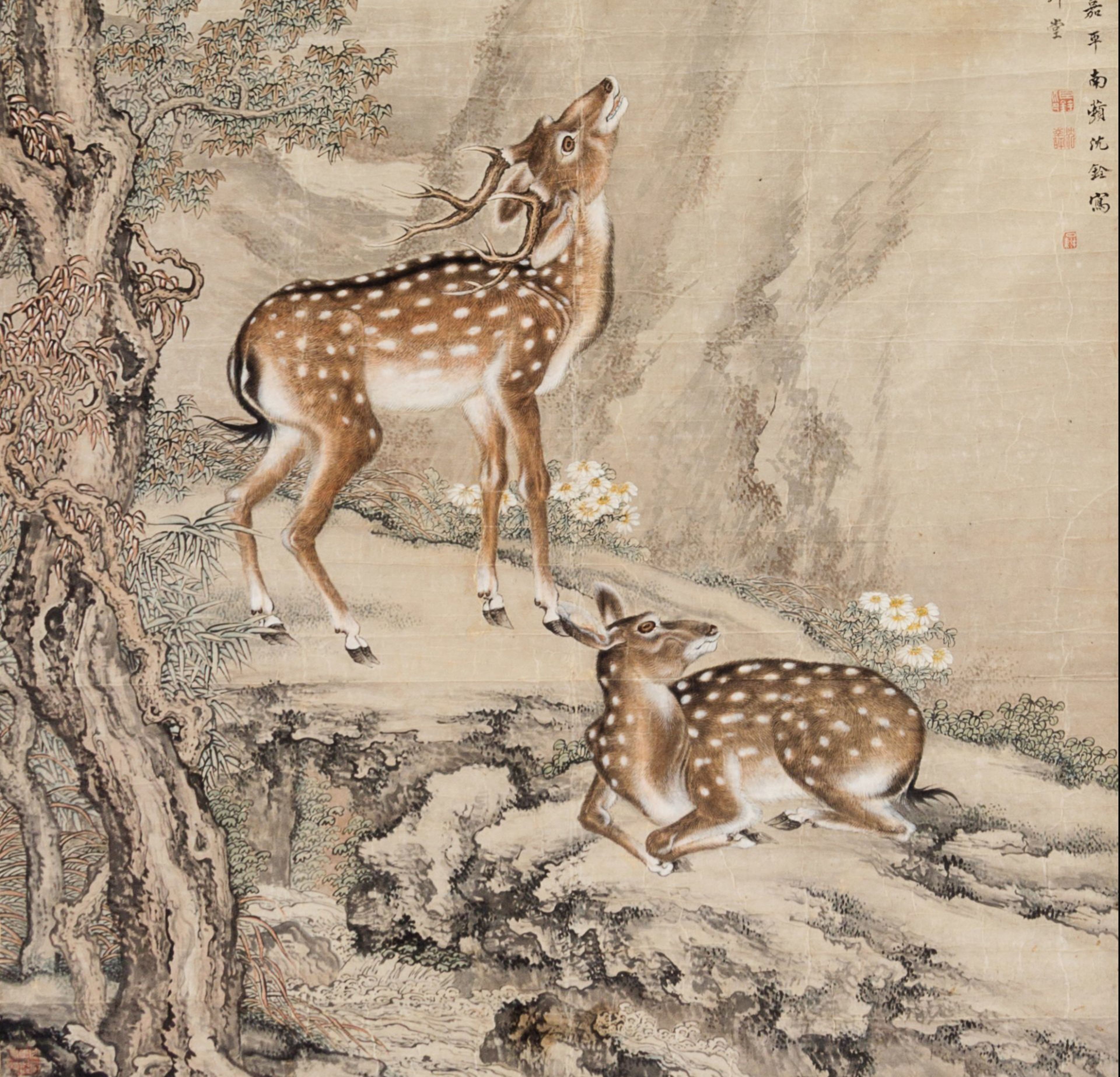
This March, Leslie Hindman Auctioneers will offer Property from the Collection of Ms. Yuan Jiaying and Mr. Li Guoyuan as part of our Asian Works of Art auction. The collection is comprised of 125 Chinese and Japanese paintings and will open the March 26 sale. Our upcoming Asian Works of Art auction features an important collection of 125 Chinese and Japanese paintings amassed by Yuan Jiaying and Li Guoyuan. Mrs. Yuan Jiaying is the granddaughter of China’s first president, Yuan Shikai, and Mr. Li Guoyuan, the son of Chinese entrepreneur Li Suran. The prolific collectors met and married in the 1940s. Highlights from their collection to be sold at auction include calligraphy scrolls by Ming Dynasty scholar Xing Tong; paintings attributed to the Qing Dynasty court painter Shen Quan; calligraphy scrolls by Wu Changshuo; and beautifully painted fan leaves by Ming and Qing Dynasty scholars. This is the first time that the complete collection of Yuan Jiaying and Li Guoyuan will be shown in public. Early on, Li Guoyuan was secretary to the Chinese general Zhang Zhizhong. Later on the couple moved to Indonesia, where Mr. Li became a minister and founded Gamaliel University. The family fled to the United States in 1964 due to riots in Indonesia. They brought with them only a fraction of their painting collection, which is presented here. The Yuan-Li collection will be offered as a session in our March Asian Works of Art Auction, opening the sale.

Leslie Hindman Auctioneers, St. Louis, is nestled in downtown Clayton, a bustling business district within close proximity to the many vibrant St. Louis art districts. Clayton is within minutes of multiple university campuses, museums, galleries and cultural institutions located in each direction. Near the campus of Saint Louis University close to downtown St. Louis, the Grand Center Arts District is home to many of the city’s historic cultural institutions, such as Grandel Theater. Visitors frequent this cultural center to enjoy Broadway performances at The Fox Theater, listen to music at Sheldon Concert Hall or Powell Hall, home to the Saint Louis Symphony, and to take in boundary-pushing exhibitions at the Contemporary Art Museum and the Pulitzer Arts Foundation. St. Louis is also home to smaller cultural hubs throughout the city, each with their own unique local flavor. Gaslight Square, just west of Grand Center, is an entertainment district built in the 1950s and known for its gaslights and ornate Victorian style architecture. Antique Row on Cherokee Street in the Benton Park neighborhood is a small, six-block stretch south of downtown featuring independently owned and operated antique, collectible and specialty shops, art galleries, restaurants and cafes. Throughout the St. Louis metropolitan area, there is a rich history of support for these art communities and institutions to thrive. Many of the area colleges and universities have fostered local talent and attracted internationally acclaimed artists. Washington University in St. Louis’ esteemed School of Fine Art has produced hundreds of noteworthy artists and architects over the years. The global headquarters for Webster University is located in the close-knit neighborhood of Webster Groves, where many noted early 20th century artists lived and where present-day art galleries, studios and locally-owned shops and restaurants abound. This neighborhood is also home to Opera Theater of St. Louis, housed on the university’s campus. Leslie Hindman Auctioneers in St. Louis holds auctions three-times annually and is available for appraisals, trusts and estates and consignments.

Included in Leslie Hindman Auctioneers’ December 14 Post War and Contemporary Art auction is sculpture Metal Negro y Metal by Jesús Rafael Soto. This sculpture by artist Jesús Rafael Soto will be available in our upcoming Post War and Contemporary Art auction. This is the first time the sculpture will be offered for sale since it was purchased by the current owner in 1969, the same year it was made. Venezuelan born Soto is best known for his large-scale installations that draw inspiration from the kinetic and op art movements. Soto’s work often blurs the lines between his interest in movement and also the illusion (accentuate) of movement. This sculpture is one such example of that dynamic. The carefully laid metal strips and the thin black stripes painted on the sculpture’s inner circle offer the suggestion of movement. But with the help of the nylon thread, the thin metal strips do (accentuate) actually move. Together they create a flurry of motion and sound in a work that otherwise looks quite simple.
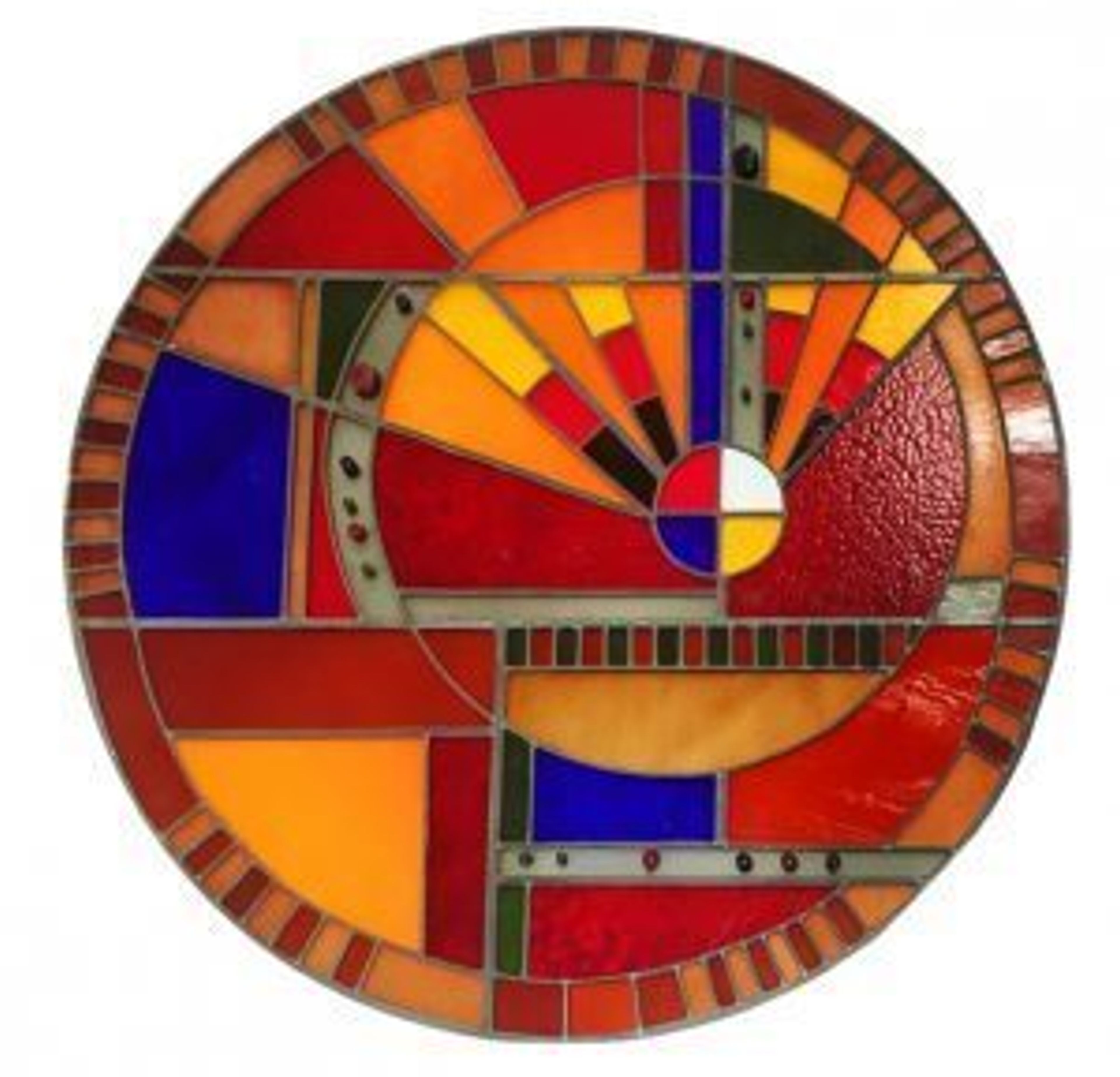
Scottsdale, Arizona is one of Leslie Hindman Auctioneers’ newer locations. Representatives work closely with our Denver office, expanding the reach of our Arts of the American West category to the Southwest, but also appraise property to be sold in Chicago in various collecting categories. The historic art district of Scottsdale, AZ, known as Old Town, is easily accessible in the center of downtown on Main Street and home to over seventy galleries. The best time to visit is Thursday evenings for the weekly Art Walk in which all galleries remain open until 9 pm. The event is not just for art-lovers; it has become a cherished community affair. Not too far from the galleries along Main Street is Scottsdale’s Museum of the West, a Smithsonian Affiliate. The institution celebrates Scottsdale’s and the region’s unique history and visual culture. In addition, the arts district of Central Phoenix is a quick trip from Scottsdale. Recently, prominent galleries including Bentley and Lisa Sette have moved to the area. Visitors can stop by the monthly first Friday’s for a unique experience. The neighborhood also boasts museums such as the Phoenix Art Museum and the Heard Museum along with the opera and ballet. Leslie Hindman Auctioneers’ can accommodate appraisal appointments and consignments through much of southeastern Arizona. Interested parties should contact Logan Browning, our representative in the area.
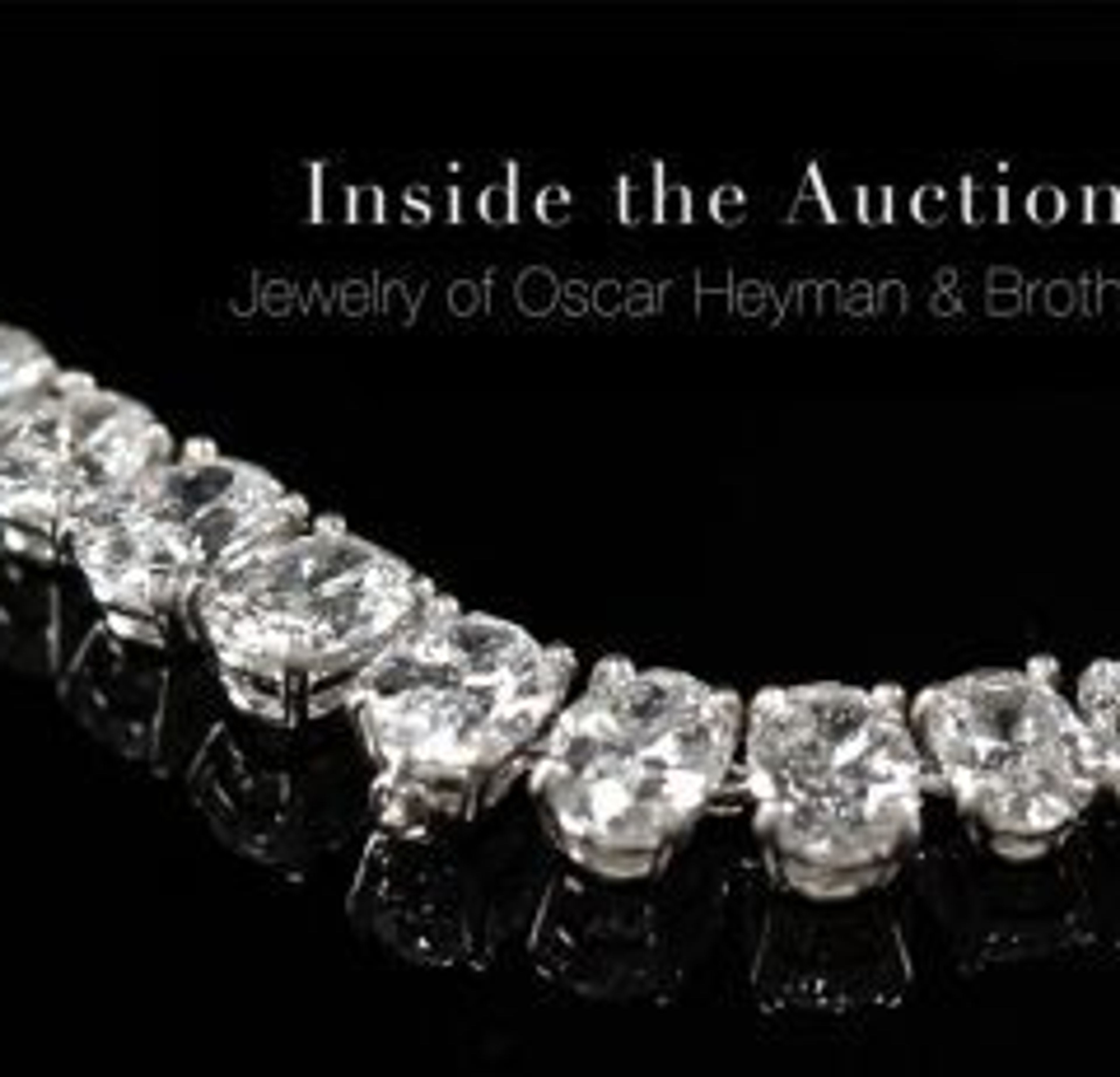
Included in Leslie Hindman Auctioneers’ December 3–4 Important Jewelry auction are a number of pieces by Oscar Heyman & Brothers. Learn more about these additions through the latest segment of our video series, Inside the Auction. Our upcoming Important Jewelry auction includes a number of items designed by famed jewelry house Oscar Heyman and Brothers. These examples display much of what the company is known for: exquisite craftsmanship, impeccable standards and attention to detail. Known in the industry as the ‘jeweler’s jeweler’ the house is known for creating the mystery settings for Van Cleef & Arpels along with the Taylor-Burton diamond for Cartier in addition to their own body of work. An Oscar Heyman Riviera necklace (Lot 104) speaks to the jewelry house’s superior craftsmanship and technique. The necklace features 99 impeccably matched and graduated oval diamonds set in platinum. The fine craftsmanship gives the necklace a fluidity not always found in similar designs. A platinum, diamond and ruby brooch from 1959 (Lot 150) is an example of Oscar Heyman’s very popular floral motif. Each flower has been meticulously designed. The classic form is highlighted by the carefully chosen stones, which offer the brooch symmetry and balance. An Oscar Heyman yellow gold, sapphire and diamond pearl torsade necklace (Lot 137) does not include the typical Oscar Heyman signature, an encircled HB, but a more discreet dash-dot-dash signature. Accompanying bracelet and earrings are also available in our upcoming sale.
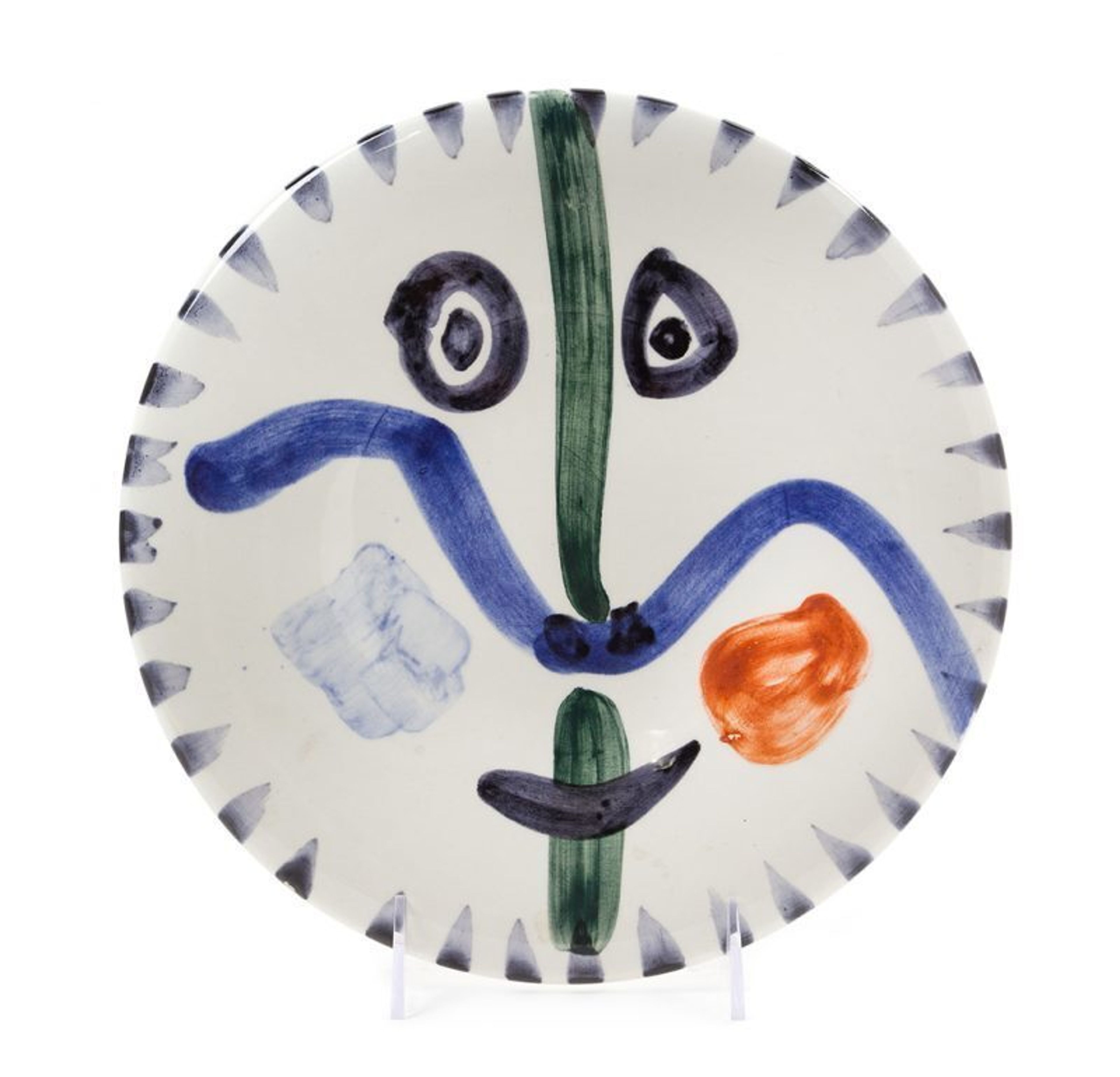
The upcoming Post War and Contemporary Art auction at Leslie Hindman Auctioneers will include a number of ceramics by Pablo Picasso including plates, pitchers and vases. Bid on these 35 lots and more on December 14. Of Picasso’s more than 3,500 ceramic designs, animal themes are recurring with motifs of goats and bulls most common. These ceramics are suggestive of Picasso’s everyday surroundings and the animals he personally kept. Our Post War and Contemporary Art sale features a number of these motifs on plates, including two profiles of goats’ heads, two bull profiles, a picador in action and a pair of lounging bulls. Another common, recognizable theme across Picasso ceramics is the use of the human face and figure as motif. These designs are often colorful and playful, rendered in a disjointed nature that was also translated across mediums in well-known paintings and prints. Picasso often used the ceramic vase to creatively display faces in duality (Lots 26 and 34 above) or in conversation (Lot 27 below) and the plate as head or body, to which he added features (Lots 16 and 44 below). Overlapping with the time period in which he created ceramics, Picasso also met and married his second wife, Jacqueline Roque. She served as his muse in the creation of many works including the glazed ceramics below that bear her profile (Lots 39 and 40). Further additions to the sale include a recognizable Wood Owl (Lot 50) and two partially glazed pitchers featuring “Little Beasts” (Lot 49) and a Picador (Lot 20). Our December 14 Fine Prints sale also includes a number of works by Picasso. View highlights below and browse the full catalogue online.

Included in our December 4 Fine Timepieces auction are a number of timepieces that elevate their traditional styles. From the extreme to the luxurious, below are some of the most recognized of our December collection. LOT 4 – This ‘Santos 100’ wristwatch by Cartier is modern and industrious. The square bezel is of matte rose gold and affixed by carbon steel screws. Combined with its black calfskin lined kevlar strap, this timepiece is rugged while retaining classic elements. LOT 48 – An undeniable staple is the two-tone Rolex. This stainless steel and yellow gold Datejust wristwatch is the image that many conjure when Rolex comes to mind. This example features a date aperture with gold Roman numerals on a champagne dial. LOT 60 – Offering a more sporty feel is this contemporary titanium dual digital-analog ‘Emergency II’ wristwatch by Breitling. The orange dial features digital apertures at its top and bottom for 12/24-hour analog and LCD displays. With the adventurer in mind, the turning bezel has an engraved compass scale and is equipped with other modern tech such as a (PLB) personal locator beacon, making it the world’s first watch to also act as a distress beacon. LOT 61 – Another sporty Breitling (but this time with the racer in mind) is the Bentley B06 S. Manufactured for the famed carmaker, this watch serves the need for speed with its variable tachymeter to calculate average speed over time, distance covered and maximum speed reached. The transparent case-back is crafted in the shape of a wheel rim. LOT 62 – This limited edition (one of only 25 made) Transocean Chronograph QP wristwatch by Breitling gives a nautical feel to a highly complicated piece of machinery containing over 450 parts. The clear measure of time from day to month, moonphase and season, even including leap year, showcases complex yet useful complications for everyday. This example features a blue alligator strap and dial in luxurious contrast to its rose gold elements. LOT 73– Also highlighting the clear and refined measure of time is this all-time classic Ref. 3940 perpetual calendar moonphase wristwatch by Patek Philippe. As one of the first manufacturers of a perpetual calendar wristwatch in the 1920’s, the 18 karat yellow gold finishes complete with a brown crocodile strap make it an elegant yet wearable example of one of horology’s true grand complications.

The December 14 Post War and Contemporary Art auction at Leslie Hindman Auctioneers has a particularly international focus. Continue reading to explore the sale’s top two lots by Liu Kuo-sung and Rufino Tamayo. Liu Kuo-sung is frequently heralded as both a groundbreaker and consequently one of the most significant modern Chinese painters, leading to him being acknowledged as the father of Modernist Chinese ink painting. Originally trained in the centuries old custom of ink painting, Kuo-sung briefly experimented with abstract oil painting in the early 60s, before returning to the traditional medium with a revolutionary approach. Recognizing the limited advancements made over the course of hundreds of years of ink and brush, Kuo-sung sought to innovate radically the approach and bring ink painting to the 20th century and beyond by rejecting convention, adopting new techniques of his own invention and utilizing paper of his own design. The Universe is in My Heart, 2003, from the artist’s Space Series, employs both his personally developed Shuitou or water rubbing technique and Zimo or ink steeping technique and demonstrates the artist’s virtuosity in composition, craftsmanship and expansive scale. Depicting a cycle of seven red moon phases arcing against an atmospherically abstracted planetary surface the work imbues tranquility as science, spirituality and invention harmonize. A teacher as well as a maker, Kuo-sung demonstrates with this spacescape, vast in scope and concept, the infinite possibilities of ink painting when approached with inspired vision. Rufino Tamayo Long revered for his signature stylized abstraction of the human form, Rufino Tamayo’s Tres Figuras, 1969, confirms this acclaim masterfully. Compositionally this work combines Tamayo’s Modernist leaning painting approach with notions of ancestral archetypal themes. The painting depicts three elongated figures, simultaneously futuristic and ancient, floating on an atmospheric brick red ground and softly surrounded by a pinkish lavender halo of hues; perhaps as a nod to Colorfield painting and certainly intended to provide a sense of mystery. The subjects stand full frontal, directly engaging the viewers gaze creating an imperative for conversation between character and audience on topics of humanity and how human, human can be. As well, in typical Tamayo fashion, the central placement of the figures ultimately transcends a visual hierarchy requiring the work to be read as a whole through balance and symmetry. Painted at the height of both the space race and the cold war, the exaggerated structure of the trio reference period science fiction and reality harkening to imagery of robots, astronauts, rocket ships or missiles. Contrasting these fantastical features with materials and process, Tamayo’s heavy paint application, use of sand for texture, limited palate and at times muted earth tones speak to something more primitive, reminiscent in technique of sophisticated cave painting. Considering the predominance of Catholicism in Tamayo’s native Mexico, the religious symbolism of the three cannot be escaped as parallels to the Holy Trinity, or the Three Kings of the Nativity are inherently evoked. Tamayo always one to operate in dualities, as evidenced by his idea that constraining the color choices in a given painting actually expanded the potential for complex organization within said work. In this instance, perceived conceptual opposition between the advanced imagined and the terrestrially historic actually synthesize in Tres Figuras making this work executed in 1969 perpetually in the now.
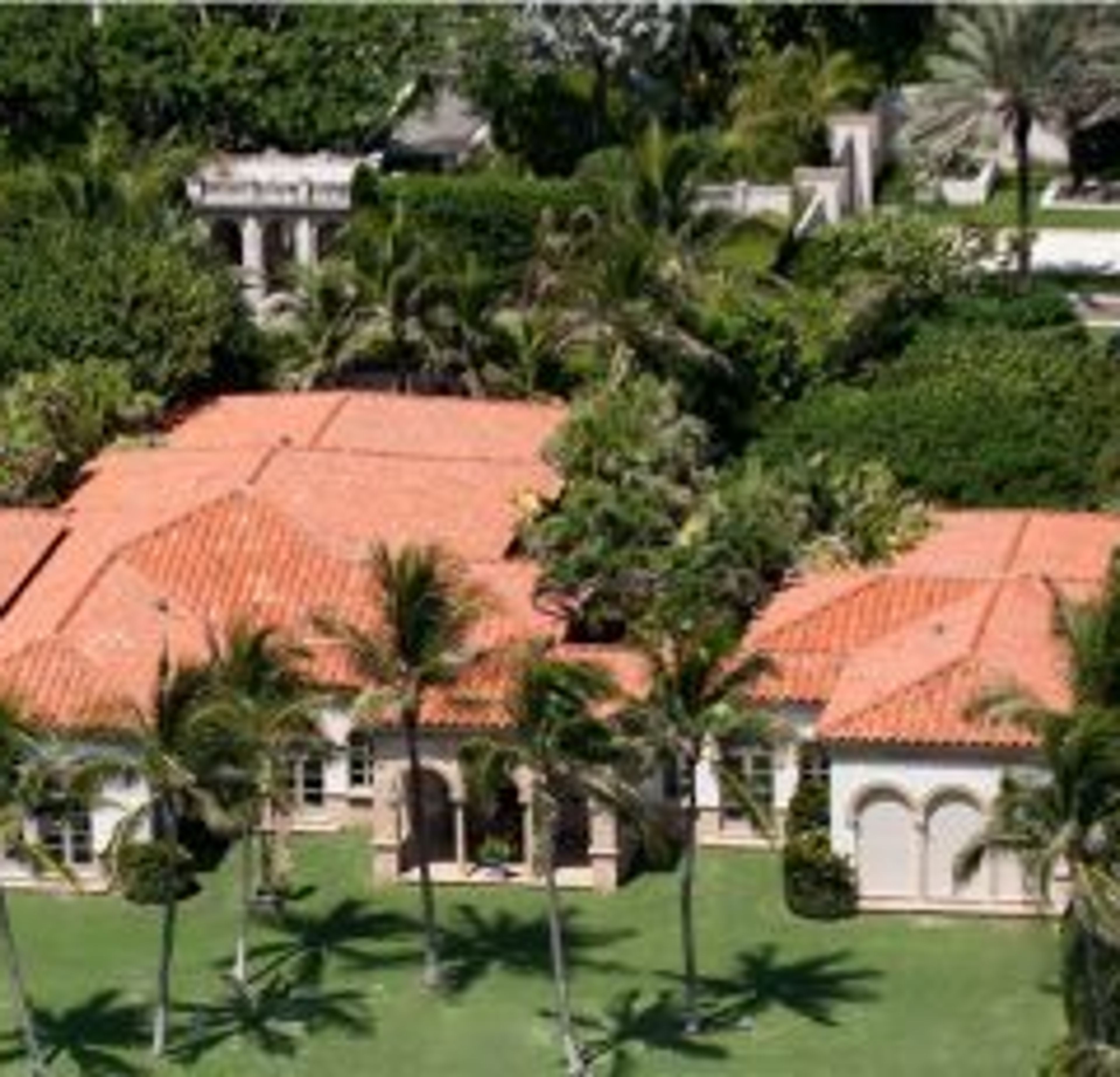
The history of Palm Beach and West Palm Beach is tied to the pursuits of leisure and entertainment. Now, settled with permanent residences and second homes, the Island is known for some of the country’s most sophisticated design and architecture. While Palm Beach remains largely residential, Worth avenue is home to numerous galleries and showrooms while nearby Miami offers access to the international fairs and a plethora of diverse art districts. Off the Island, West Palm Beach is home to the charming Antique Row neighborhood that boasts over forty unique stores where the world’s best interior designers have been shopping for more than 30 years. This is where Leslie Hindman Auctioneers opened its saleroom and conducts nearly a dozen auctions annually of fine furniture, decorative arts, fine art and couture. The quick trip to Miami and its cultural neighborhoods include the notable Wynwood, a district north of downtown. Transitioned from Miami’s garment district to a thriving arts neighborhood, the Wynwood scene was initially influenced by street artists. The introduction of the Second Sunday Art Walks and Art Basel Miami solidified Wynwood’s distinction as an international cultural destination. In contrast to the development of Wynwood, the Miami Design District is a carefully curated neighborhood with shopping, entertainment and galleries. The brain-child of Miami native Craig Robins, the Miami Design District commissions yearly public art installations. While the Island may be too small to accommodate similar art districts, Palm Beach is a community of collectors and tastemakers. The Palm Beach location of Leslie Hindman Auctioneers is the largest of the firm’s regional offices. This is due in part to the number of large estates the team handles across numerous collecting categories. Property from the homes of Lilly Pulitzer, the Kennedy Winter White House, John Kluge and the Lord and Lady Jacobs have all been sold at auction with Leslie Hindman Auctioneers, Palm Beach. Full service auction and appraisal services are available in Palm Beach as well as a number of exciting exhibitions and sales conducted locally each year. For more information or to contact our Palm Beach office please click here.

Naples has a lively cultural scene. Leslie Hindman Auctioneers’ Naples location offers auction appraisals, valuations and trust and estate services just a few blocks from 3rd Street South, the heart of Naples’ arts district. The neighborhood is filled with restaurants, boutiques, antique dealers, galleries and a charming Saturday morning farmer’s market. Visitors can pop in to see the latest wares at Naples native Jett Thompson’s eponymous antique and design store or admire works by contemporary art stalwarts such as Helen Frankenthaler, Jim Dine and more at the HW Gallery. Another Naples neighborhood that is artistically inclined is the Broad St. gallery district. This small, three-block footprint is home to some of the area’s most prestigious galleries including Marianne Friedlander Gallery. The current Naples location of Leslie Hindman Auctioneers on 6th Avenue South is near Cambier Park, home to the community driven Naples Art Association in the Von Liebig building. For more information or to contact our Naples office please click here.

Explore the Modern Design Sale Property from the Avery Coonley Playhouse, a Frank Lloyd Wright construction in Riverside, Illinois, will be sold November 14 in Leslie Hindman Auctioneers’ Modern Design auction. The collection includes numerous works by Gustav Stickley and the Stickley Brothers, which would have been made around 1912 when the playhouse was built. We also have an original chair designed by Frank Lloyd Wright from the playhouse. The collection also includes numerous examples by George Nakashima that were custom built for the Playhouse when it received a modern update in the late 80s. George Nakashima trained under Antonin Raymond, a student of Frank Lloyd Wright. Built in 1989, these are some of the last works by Nakashima before he died in 1990. Explore notable items that will be featured in the upcoming sale. George Nakashima, a pair of Greenrock stools. Crafted from American black walnut and upholstered. Estimated at $5,000 – $7,000. George Nakashima, a low table. Crafted from American black walnut. Estimated at $6,000 – $8,000. George Nakashima, a pair of Conoid cushion lounge chairs. Frame in black walnut hickory and upholstered seat and back cushions. Estimated at $15,000 – $20,000. George Nakashima, a pair of Kornblut cabinets in American black walnut. Estimated at $40,000 – $60,000. Frank Lloyd Wright, a walnut side chair from the Coonley Playhouse, 1912. Estimated at $4,000 – $6,000. A Stickley Brothers oak desk, first quarter 20th century. Estimated at $800 – $1200. George Nakashima, a pair of end tables in American black walnut. Estimated at $10,000 – $15,000. Inside the Auction
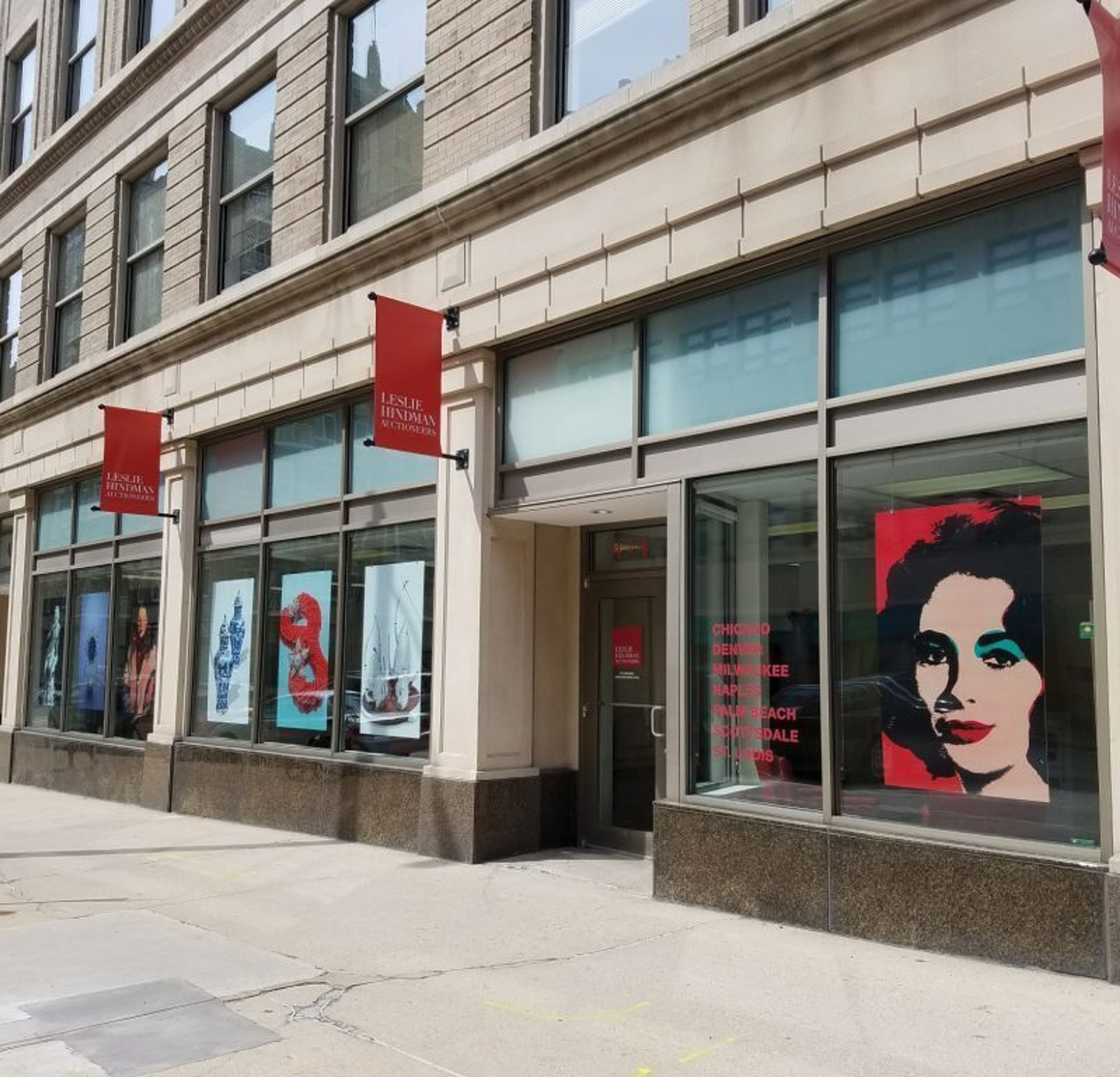
Just south of Leslie Hindman Auctioneers’ East Mason Street location, Milwaukee’s burgeoning art scene is centered out of the Historic Third Ward. Located along Lake Michigan and hugging the heart of downtown to the south, the neighborhood is home to over twenty gallery spaces, performing arts studios, restaurants, bars and the infamous Public Market. For first-timers to the city, this neighborhood is the perfect place to get a taste of all that Milwaukee has to offer. Outside of the Third Ward district, smaller, more avant-garde neighborhoods have cropped up in recent years. Walker’s Point, a traditionally Hispanic neighborhood located to the west of the Kinnickinnic River, has grown in cultural prestige thanks to historic institutions such as the Walker’s Point Art Center. The Milwaukee neighborhood has seen an injection of new resources from contemporary artists such as Michelle Grabner, the 2014 Curator of the Whitney Biennial, who recently moved her highly successful Suburban Project from the Chicago suburb of Oak Park to Walker’s Point. In the heart of downtown, Leslie Hindman Auctioneers makes auction and appraisal services readily available within the bustling art districts of Milwaukee. For more information or to contact our Milwaukee office please click here.

Leslie Hindman Auctioneers is Denver’s leading fine art auction house, adding to its diverse landscape of art districts and neighborhoods. These include the Lower Downtown District, the Art District on Santa Fe, the River North Arts District, the Golden Triangle Creative District and the Cherry Creek Arts District. Each neighborhood offers a unique variety of museums, galleries, restaurants and shops. Lower Downtown Denver, known colloquially as LoDo, is packed with galleries, cultural institutions and public art. Perhaps the most well known institution in the area is the MCA Denver, which has gained a strong reputation over the past twenty years for its thought provoking exhibitions with artists such as Hermann Nitsch, Rashid Johnson and Dana Shutz. In addition, fine art galleries such as Robischon Gallery, David B. Smith Gallery and Tansey Contemporary, all located in the LoDo district, have a reach far beyond Denver, showing at art fairs around the country. Just south of LoDo is the neighborhood of Santa Fe, a designated creative district. The art district on Santa Fe boasts more than sixty art galleries, studios and the Museo de las Americas. The first Friday of each month the Santa Fe art district closes its main street for an art walk from 5:30-9:30pm, showcasing the galleries, antique stores and artist studios along with Denver’s finest food trucks. The Santa Fe art district neighborhood is home to some of Denver’s most famous craft breweries, the Colorado Ballet and the Center for Visual Arts. The River North Arts District is located just north of downtown Denver. Before its emergence as an artistic powerhouse it was an industrial neighborhood. Nicknamed “RiNo,” the Denver neighborhood is home to numerous galleries and studio buildings. The first Friday of each month the art galleries, studios and creative spaces in RiNo open their doors for special openings and studio tours. Many of the bars and restaurants in RiNo also participate and feature live music. RiNo also heavily invests in public art, encouraging artists to produce murals and hosting an event every September that brings artists and galleries outside in a month long celebration called “CRUSH.” The Cherry Creek Arts District has over twenty galleries along with a local live theatre and the annual Cherry Creek Arts Festival. Spanning over sixteen tree-lined blocks, the Cherry Creek Arts District has over one hundred shops and restaurants. Situated near Cheesman Park and Washington Park, the Cherry Creek Arts District offers lots of variety for the art and outdoor enthusiast. Just north of Leslie Hindman Auctioneers’ Cherokee Street location, where auctions are conducted at least three times annually, is the Golden Triangle Creative District. The Golden Triangle creative district is home to some of the oldest and most distinguished cultural institutions in Denver. The main branch of the Denver Public Library, the Clyfford Still Museum, the Denver Art Museum and the Kirkland Museum of Fine & Decorative Art all call the neighborhood home. For more information or to contact our Denver office please click here.