New & Noteworthy
Stay up to date with news, highlights, & features from across Freeman's.
Stay up to date with news, highlights, & features from across Freeman's.
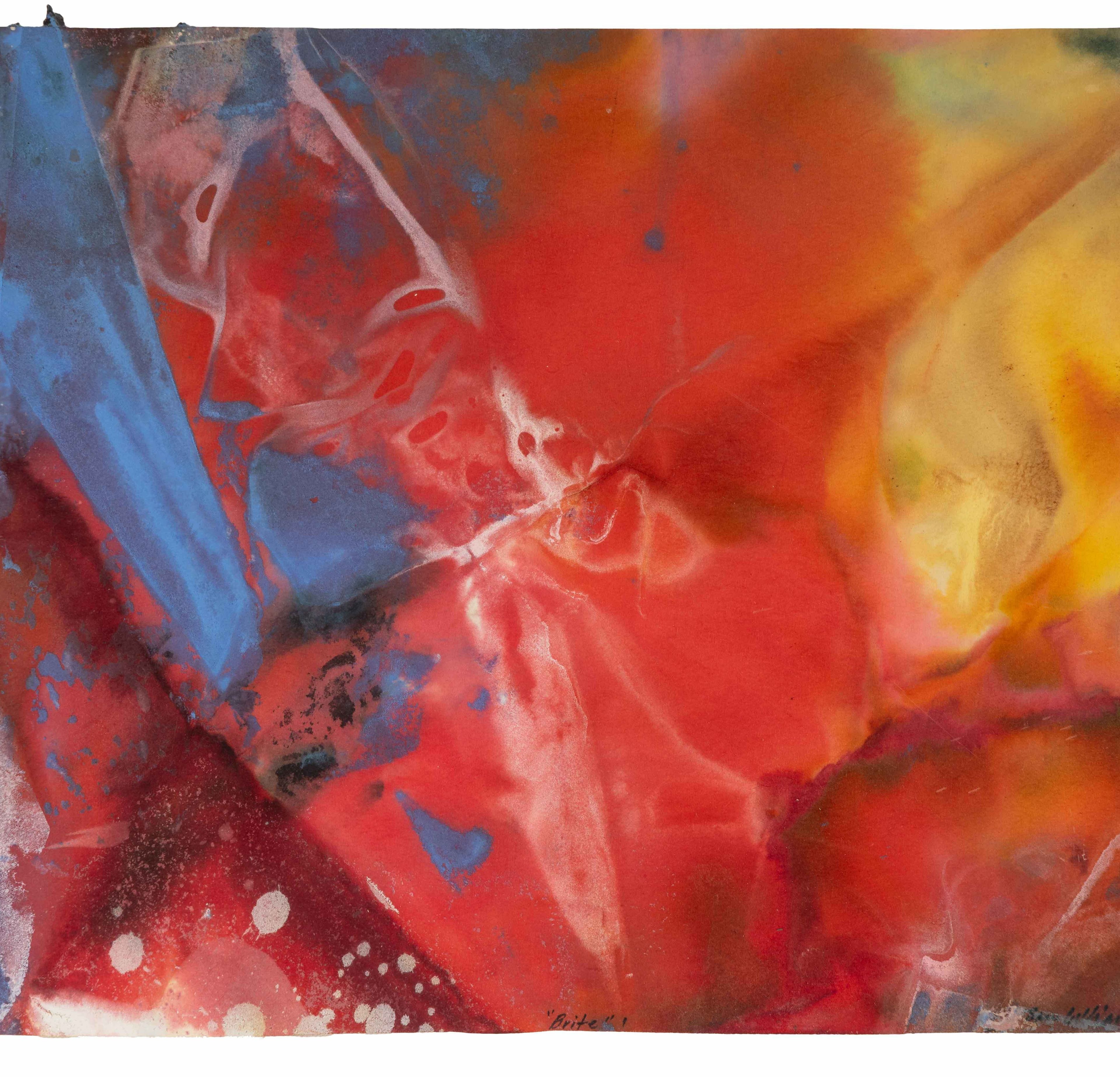
Hindman is honored to present a series of three works by innovative artist Sam Gilliam, available for auction this December 14th in our Modern & Contemporary Art auction. Join us as we explore this artist's practice and oeuvre. Sam Gilliam (American, 1933-2022) is an artist particularly appreciated for his use of experimentation in richly-hued paintings emphasizing color and reimaging physical space. Featured here is a work with acrylic on fiberglass paper, “Brite” I (1971) that fascinatingly capitalizes on these themes central to Gilliam’s mature career, while also displaying the development of Gilliam’s reputation to international heights. Lot 14 | Sam Gilliam (American, 1933-2022) | Phelps, 2016 | Estimate: $20,000 - $40,000 Born in Tupelo, Mississippi in 1933, Gilliam moved to Kentucky at the age of 9, growing up in Louisville and later pursuing his artistic studies at the University of Louisville. He and his family moved to Washington D.C. in 1962 for his first wife’s job, where he began to mix with the local artistic scene. In D.C., he was ranked among the Washington Color School, a movement in part a response to New York Abstract Expressionism in which artists focused on strongly prioritizing color over other formal qualities. Among this movement, Gilliam was particularly noted for his approach to lyrical abstractionism, which can be easily seen in “Brite” I. In this work, weightless yellows, pinks, and blues blossom from a primordial black and blue background, shot through with milky, ethereal strands of white. As described by Ann Mbuti, “It is often said that Gilliam’s painting style is inspired by jazz, since this musical genre is determined equally by clearly defined structures and by improvised variations and deviations. Structure and virtuosity merge and experimentation is an essential part of further development.” This element of randomness in Gilliam’s compositions allows for the examination of interesting effects of color, with the balancing of different pigments, all heavily saturated, as they seep into each other. Rather than an explosion, the effect in Brite I is unfrenzied—a calming, absorbing unfurling of color undefined by spatial limitations. Lot 13 | Sam Gilliam (American, 1933-2022) | Phelps, 2016 | Estimate: $20,000 - $40,000 In the late 1960s, Gilliam would begin to produce what would become some of his most recognizable work, what he referred to as “sculptural paintings” or “suspended paintings,” but would more commonly be called “drape paintings,” in which unstretched canvases were suspended or draped over walls or from ceilings, rejecting previously understood ideas of the ways in which paintings exist in space and also in which the support of the painting becomes a part of the painting itself. In 1971, the year of “Brite” I, these drape paintings would be the subject of an exhibition at the Museum of Modern Art in New York: Projects: Sam Gilliam. Though smaller in scale and on paper, “Brite” I reflects a similar occupation with support. Though with a mostly defined, clean edge, some elements at the upper and lower edges escape the perfect crop, breaking through this neat divide as organic forms. In this, Gilliam questions the implied divide between the work’s beginning and end, allowing the painting to escape the artificially established bounds of the page and bleed into space. Meanwhile, the choice of fiberglass paper adds a certain opaque luminescence which lends to the shimmering suspension of the color fields therein. During this period of Gilliam’s oeuvre, he was making strides in both his local and international reputation (he would represent the United States at the Venice Biennale the next year in 1972), and Gilliam and his dealers would continue to find avenues to further his career development. One way to promote Gilliam’s work to more private collectors was the inclusion of works at the nearby Baltimore Museum of Art’s Rental Gallery, as consigned by Barbara Fendrick of the Fendrick Gallery in Washington D.C., one of Gilliam’s dealers and main advocates in his career in D.C. The Baltimore Museum of Art Rental Gallery allowed for works to be rented by patrons in one- to two-month stints, with an option to purchase. As noted on the label on “Brite” I, this work, as consigned by Fendrick, was available for purchase in May of 1975 at the now-astonishing price of only $580. This work thus not only illustrates the absorbing principles of Gilliam’s experimentation with color and space but also offers an interesting record of Gilliam’s establishment into the local art consciousness. Featured Image: Lot 12 | Sam Gilliam(American, 1933-2022) | "Brite" I, 1971 | Estimate: $30,000 - $50,000
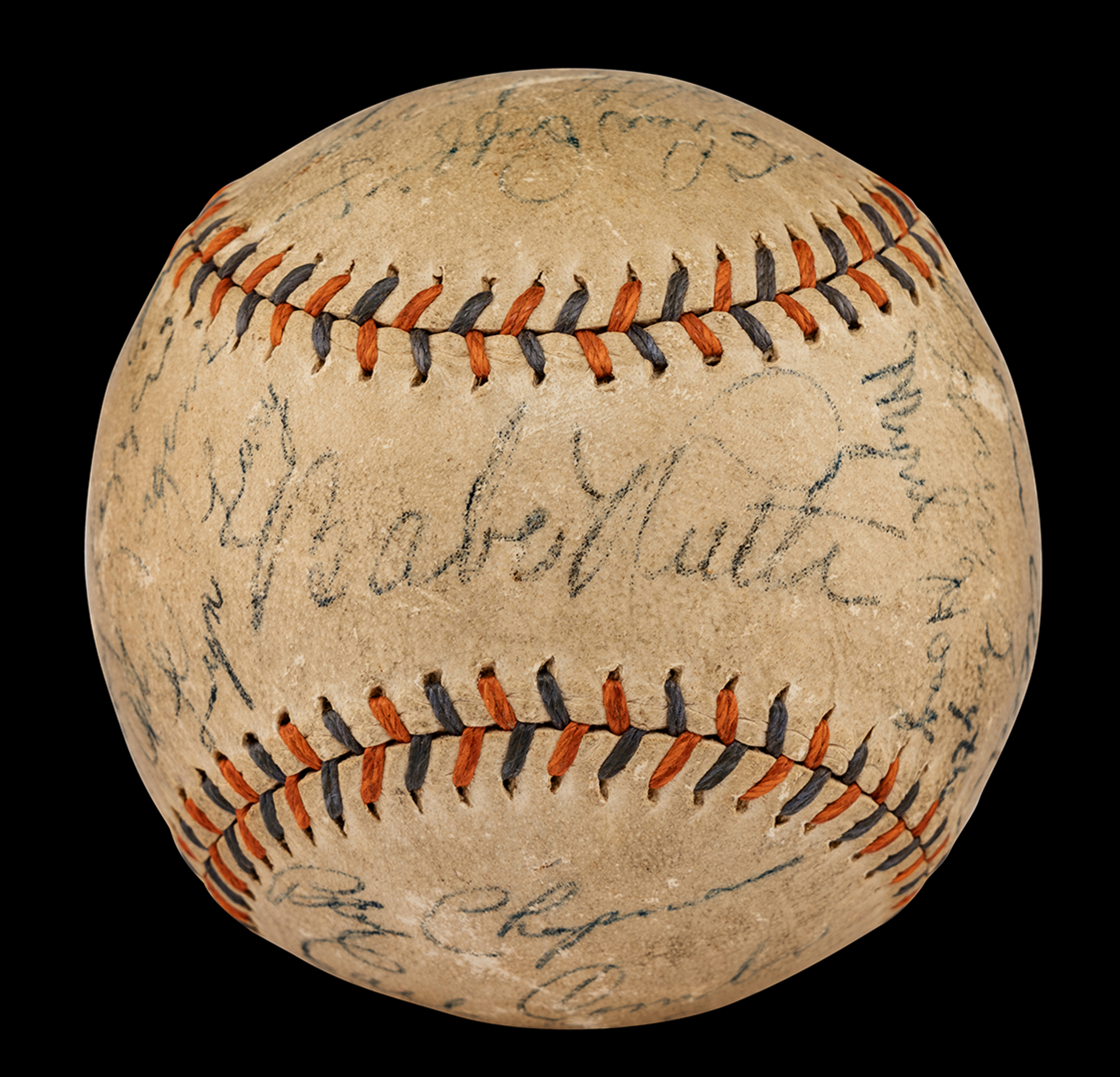
Sports collectibles and memorabilia continues to see incredible growth at Hindman—from 2021 to 2022, Sports Memorabilia sales increased by a remarkable 137%. 2023, in particular, has been a standout year for the firm, as we’ve already nearly matched our sales total of 2022. In March 2023, Hindman sold an unopened box of 1986-1987 Fleer Basketball cards for $114,000, more than $30,000 above the pre-sale estimate. The unopened box featured 36 impeccably preserved packs of cards as originally issued by the factory before the 1986-87 NBA season, one of the most historically significant in the sport’s history. An unopened box presents the ultimate aura of mystery and potential value in the card collecting hobby as they may contain multiple valuable cards that are likely in Mint condition. Adding to the value of the box Hindman sold in March was a Baseball Card Exchange authentication that revealed that one of the packs contained a No. 57 Michael Jordan rookie card, perhaps the most coveted card in the hobby. Overall, across 84 lots, the March sale was impressively 94% sold by lot and 117% sold by value. An October 26, 1984 Chicago Bulls vs. Washington Bullets Michael Jordan NBA Debut Ticket Stub / Chicago Stadium Box Office Example (PSA Authentic) Sold for $16,800 Similarly, our sale in June included cards and memorabilia from luminaries like Michael Jordan, Mickey Mantle, Willie Mays, and LeBron James. Importantly, we offered an exceptional and ultra-rare example of a 1910 Honus Wagner Baseball Card (illustrated on the following page) which sold for $114,000. Only 32 examples of the 1910 Tip Top Bread Wagner have been certified by SGC Grading with this particular issue receiving a 3 Very Good designation. There are a total of seven 3s in the SGC population with only seven graded higher. Further, an October 26, 1984 Chicago Bulls vs. Washington Bullets Michael Jordan NBA Debut Ticket Stub realized $16,800 against a pre-sale estimate of $8,000 - 12,000. An Unopened Box of 1986-87 Fleer Basketball Cards (36 Packs) Featuring All Original Wax Packs As Issued By Fleer With One Michael Jordan Rookie Card No. 57 Showing On Top of Pack and Four Jordan Stickers (BBCE Authenticated) Sold for $114,000 Additionally, given the broad appeal of the material, we also feature early sports photography and memorabilia in our American Historical Ephemera & Photography sales. For example, 19 cabinet cards of baseball players from the early 20th century skyrocketed past pre-sale expectations to sell for $100,800. 19 cabinet cards of baseball players, some representing Cleveland Offered in the American Historical Ephemera & Photography sale, and sold for $100,800 Looking ahead, Hindman is excited to present Having a Ball, a single-owner collection of signed baseballs curated to honor our National Pastime. Hindman’s Director of Sports Memorabilia, James Smith, says, “collectors will find legendary names featured like Ruth, Gehrig, and Cobb along with hard-to-find team signed issues from throughout the 20th century. The passion it took from this private collector to assemble this remarkable collection will undoubtedly make this auction a Fall Classic and a must for baseball enthusiasts and sports fans.” The star of the sale is a 1934 New York Yankees Team Signed Autograph Baseball, including the signature of Babe Ruth who was in his last season with the team, estimated to sell between $8,000 and $12,000. Featured image: Lot 258 | A 1934 New York Yankees Team Signed Autograph Baseball Featuring Babe Ruth and Lou Gehrig (PSA and Beckett Authentication Services Letters of Authenticity) | Estimate: $6,000 - $8,000
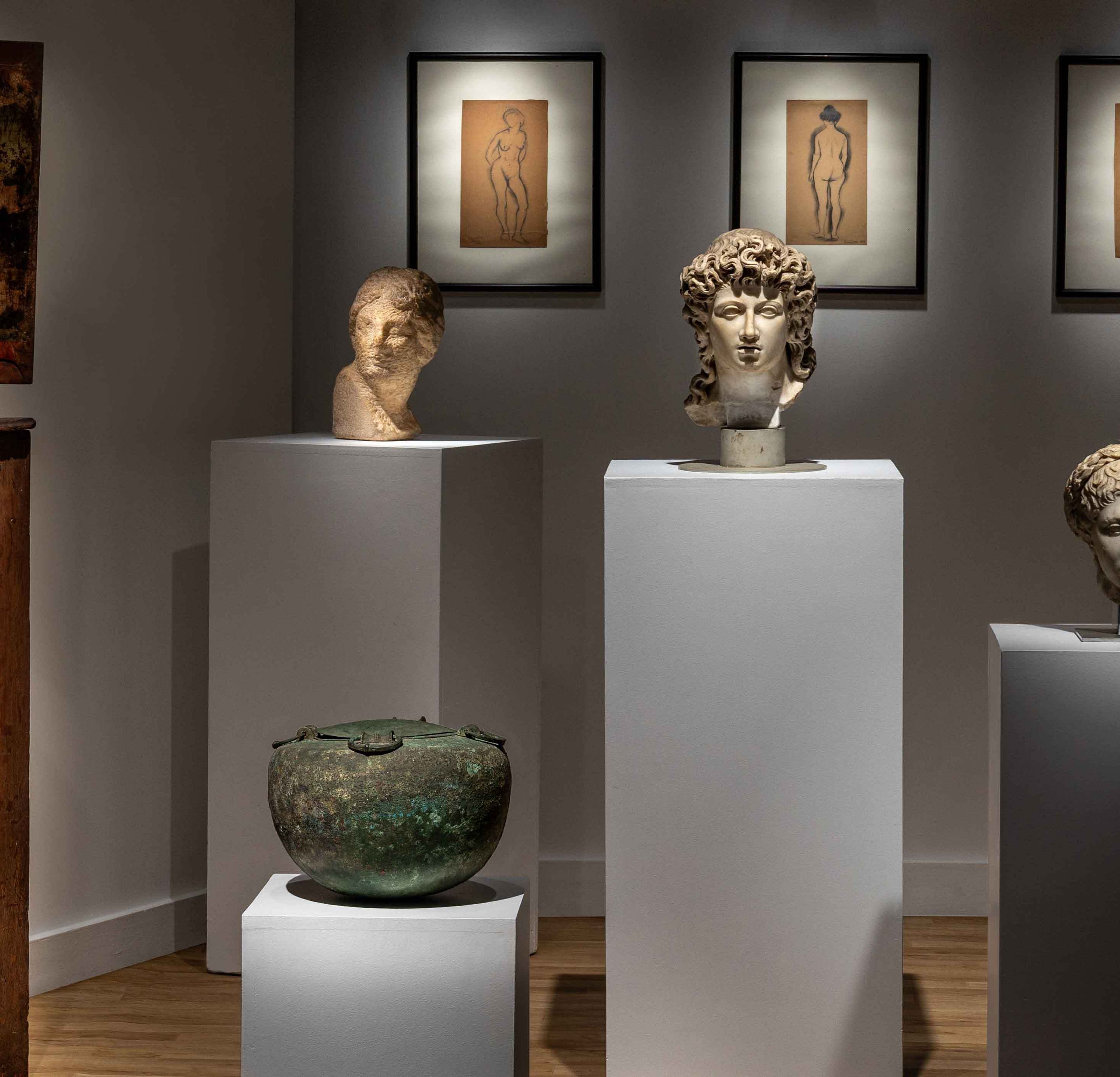
To Our Dear Clients and Friends, Hindman is proud to offer select items from the collection of Ernest and Ella Brummer over a series of auctions, commencing with the highly anticipated Antiquities & Ancient Art sale on December 5. The collection also features fine jewelry, furniture, decorative arts, and fine art to be offered in auctions from December through March of next year. Archival imagery of Ernest Brummer. Ernest Brummer was a renowned art dealer who, along with his brother Joseph, founded the historically significant Brummer Galleries, which held paramount importance in both New York and Paris during the early to mid-20th century. The galleries played a pivotal role in shaping the tastes and collections of art enthusiasts and museums alike. With locations in two of the world's artistic hubs, the Brummer Galleries became vital conduits for introducing European art to American audiences and vice versa. Their carefully curated exhibitions and extensive collection of artworks, ranging from ancient artifacts to modern masterpieces, not only enriched the cultural landscape of both cities but also fostered a deeper understanding of art history among the public. Moreover, the Brummer Galleries acted as influential intermediaries, connecting prominent artists and collectors, thereby contributing significantly to the global art market and paving the way for artistic exchange and appreciation across continents. A Romano-Egyptian Black Basalt Male Portrait Bust Estimate: $80,000 - $120,000 Antiquities & Ancient Art - December 5, 2023 The Antiquities and Ancient Art auction presents a unique opportunity for connoisseurs and scholars alike. One of the standout pieces in this esteemed collection is A Romano-Egyptian Black Basalt Male Portrait Bust (estimate: $80,000 - $120,000). Its enigmatic appearance and historical significance make it a captivating subject for academic study. With a lineage traceable through esteemed collections and notable exhibitions, this collection of ancient art offers a rare glimpse into the ancient world, underscoring the auction's scholarly importance and the Brummers' legacy of preserving and sharing exceptional pieces of historical and artistic value. A selection of jewelry from the Brummer Collection is to be offered on December 6 in Important Jewelry Important Jewelry - December 6, 2023 Hindman’s Important Jewelry sale on December 6 presents an opportunity for connoisseurs and the passionately curious to acquire unique pieces of jewelry history, rarely available to the collecting public. The sale will offer thirteen Renaissance through revival-style jewels and objects from the storied Brummer Collection including nine figured pendants, considered among the masterpieces of the late 16th century jewelry. A French Limestone Figure of the Foolish Virgin | Estimate: $6,000 - $8,000 European Furniture & Decorative Arts - February 8, 2024 Included in the February 8 European Furniture & Decorative Arts auction is a mid-15th century French limestone figure of the Foolish Virgin (estimate: $6,000 - $8,000). The heavily draped figure represents one of ten subjects from the Parable of the Ten Virgins, a popular subject during the Medieval period. A selection of jewelry from the Brummer Collection to be offered in Jewelry Through the Ages: Part I in March 2024 Jewelry Through the Ages: Part I - March 19, 2024 This sale promises a dazzling array of wearable art and engraved gems from the Brummer collection. Particularly noteworthy are the exquisite Sassanian stamp seals, impeccably preserved and showcasing the artistry of ancient civilizations. These seals provide a unique glimpse into Sassanian culture, adding depth and historical significance to the auction. These collections further enrich the sale and highlight the widespread appeal and historical importance of jewelry and wearable art throughout history. Sincerely, Jacob S. Coley Director, Antiquities & Ancient Art
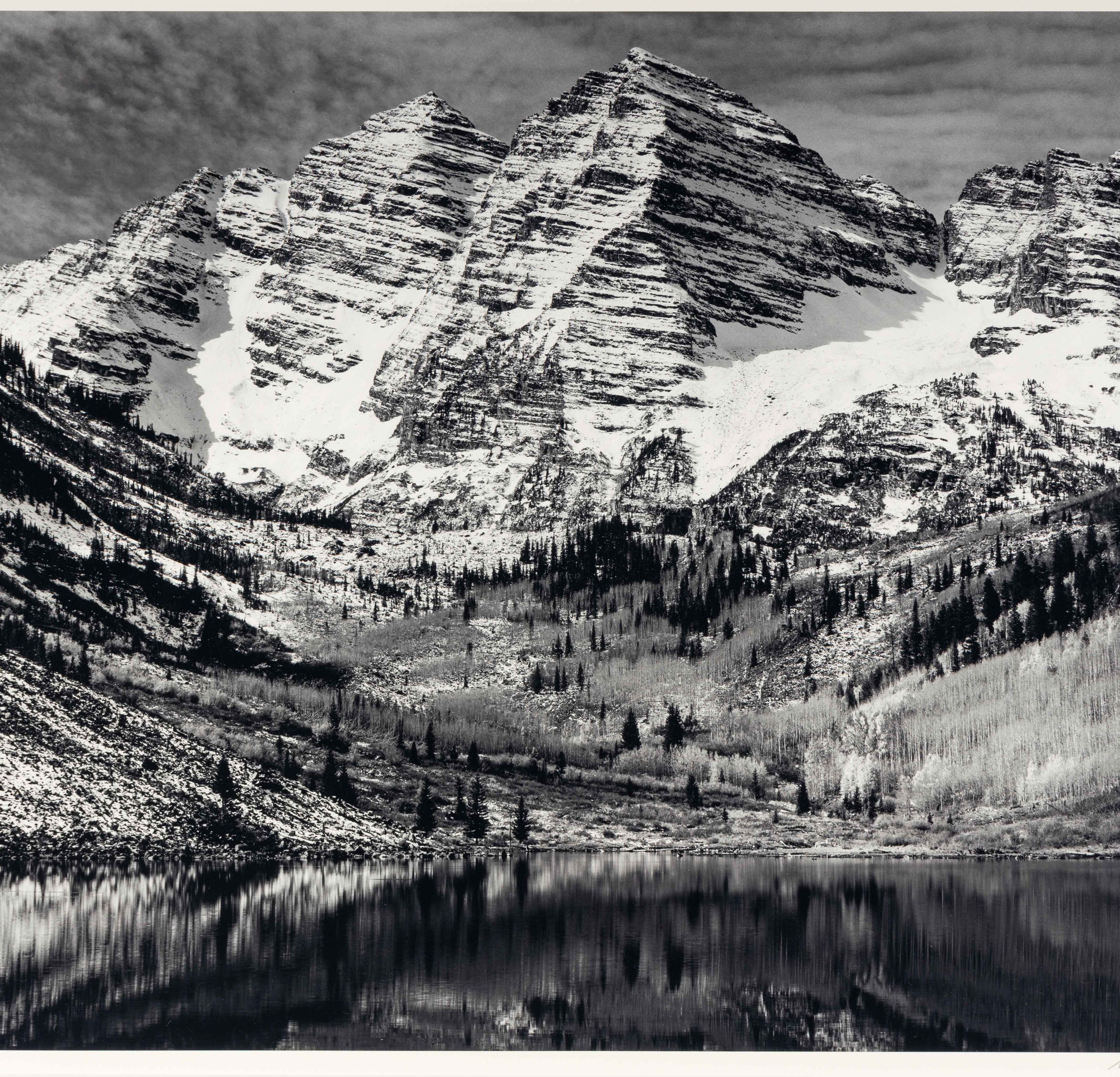
Hindman is pleased to present the work of Ansel Adams this November 28 in our Photographs auction. Join Director, Senior Specialist, Photographs Laura Paterson as she details the grandeur and skill of his work. Ansel Adams' meticulously crafted images of the formidable expanse and variety of the Western American landscape have entranced a huge and disparate international audience for well over a century. The sheer expansive beauty of his work accounts for its perennial popularity, even in these volatile times. From his towering mountain ranges to nuanced plant studies, Adams’s black and white photographs, particularly iconic works taken in the 1930s, 1940s, and 1950s, such as Clearing Winter Storm, Yosemite, 1937; Moonrise Hernandez, New Mexico, The Tetons and Snake River, Grand Teton National Park, Wyoming, 1942; Winter Sunrise from Lone Pine, Sierra Nevada, California, 1944; Mount McKinley from Wonder Lake, Denali National Park, Alaska, 1947; and Maroon Bells, near Aspen, Colorado, 1951, all being offered in Hindman’s forthcoming photography sale on November 28, have provided generations the chance to judge the importance and value of nature through his eyes. Lot 18 | Ansel Adams (1902-1984) | Moonrise, Hernandez, NM, 1941 | Estimate: $35,000 - $45,000 A master technician and perfectionist, who switched from music to photography as a young man, Adams’s creative process was demanding – involving carrying cumbersome equipment into often hostile terrain, and enduring long waits for the best light when he got there. All these challenges had to be overcome before he could undertake the elaborate, often extraordinary, technical feats he accomplished in his darkroom. Adams credited his impact not to his technique, but to his eye, however. He wrote: “The whole world is, to me, very much ‘alive,’ all the little growing things, even the rocks, I can’t look at a swell bit of grass and earth, for instance, without feeling the essential life – the things going on – within them. The same goes for a mountain, or a bit of the ocean, or a magnificent piece of old wood.” Lot 15 | Ansel Adams (1902-1984) | The Teton Range and Snake River, Grand Teton National Park, Wyoming, 1942 | Estimate: $30,000 - $50,000 A staunch environmentalist, Ansel Adams’s preoccupations were Yosemite, the national park system, and the preservation of wilderness. He focused on what he termed the spiritual-emotional aspects of parks and wilderness and relentlessly resisted the Park Service’s exploitation of the natural world which he believed led to its overdevelopment. Although he claimed that his photographs were not specifically created to further the cause of environmental conservationism, the sheer glory of his depictions of the natural world undoubtedly led to the protection of vast swathes of hitherto endangered territories. It is undeniable Adams’s primary subject matter, the extraordinary natural beauty of the American West, captured simply using a camera, still resonates today. Collectors of American art and photography continue to prize his photographs above all others, a unique appeal that was summarized by photo historian, friend, and fellow photographer John Szarkowski: “The love that Americans poured out for the work and person of Ansel Adams during his old age, and that they have continued to express with undiminished enthusiasm since his death, is an extraordinary phenomenon, perhaps even unparalleled in our country’s response to a visual artist.” Featured Image: Lot 25 | Ansel Adams (1902-1984) | Maroon Bells, Near Aspen, Colorado, 1951 | Estimate: $50,000 - $70,000
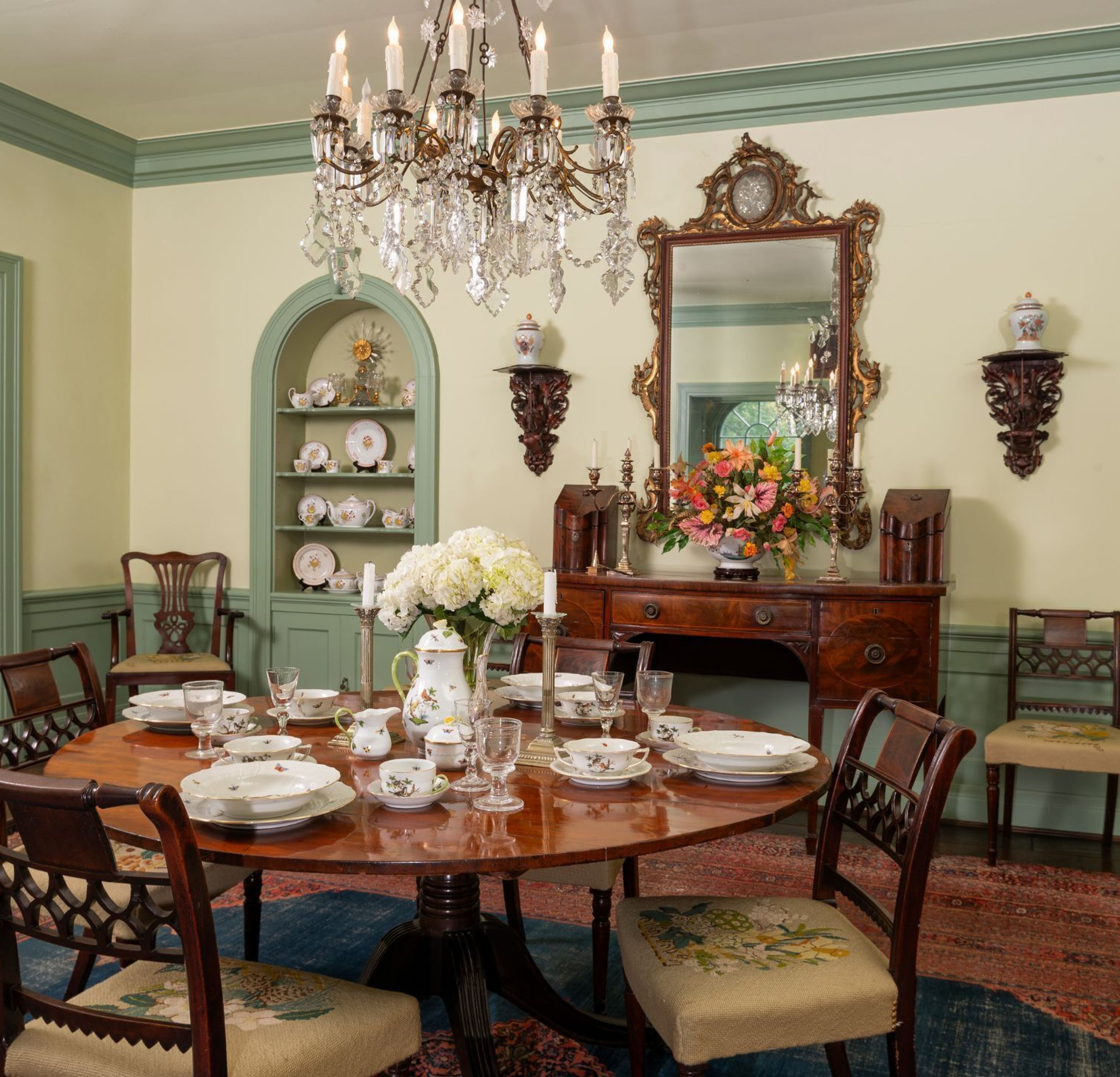
Charles ‘Skip’ Fleischmann III’s great-grandfather, the first Charles, founded the Fleischmann Yeast Company in 1868, several years after immigrating to Cincinnati from Vienna. This began the legacy of the Fleischmann family in the United States, with many notable members making their mark. Charles exhibited at the 1876 Centennial Exposition which led the company to become the largest producer of yeast in the world. Charles’ elder son Julius was a businessman in his father’s footsteps but also an avid sailor, a baseball and equestrian enthusiast, and Cincinnati’s youngest mayor, elected at 28. Julius’ daughter Louise became the president of the Hamilton County League of Women Voters and an advocate for maternal health, among numerous other accomplishments. Image of Fleischmann Home Interior From 1931-32, Julius Fleischmann Jr and his wife Dorette took a nearly year-long trip around the world on their yacht Camargo, and they brought along their newborn daughter Dorette, and four-year-old son, Charles. It was perhaps this trip that helped to spark Charles’ fascination with history and travel. He was a voracious reader who by age ten had read all volumes of the Encyclopedia Britannica from beginning to end. He majored in Classics at Yale, working summertime archaeological digs in Gordion, Turkey. Upon graduating from college and before enrolling in law school, he attended the American School of Classical Studies in Athens. His wife, Blair Fleischmann shared his enthusiasm for history. While initially drawn to early Americana, over time their interests broadened to include the material culture of Europe, especially England. They participated in numerous forums and workshops, first at Colonial Williamsburg and later at the Attingham Trust Summer School in Shropshire, England. They developed lifelong friendships with like-minded people in Europe, and for many years spent the month of May in England, visiting friends and traveling around on their own, always at a leisurely pace and always on back roads, stopping to see historic houses and gardens open to the public. Image of Fleischmann Home Interior Though he was perhaps more private in terms of civic life than his predecessors, Charles, along with Blair, continued the family legacy of serving the city of Cincinnati through philanthropic work. Over the years, the Fleischmann Foundation helped to support the Cincinnati Art Museum, the Cincinnati Symphony Orchestra, the Cincinnati Ballet, the Cincinnati Historical Society, Playhouse in the Park, and other civic organizations – with Charles also serving on the board of many. Image of Fleischmann Home Interior These interests and travels resulted in the marvelous, eclectic collection offered here. While these lots represent only a small percentage of the art that Charles and Blair collected – they donated more than 3,000 objects to the Cincinnati Art Museum – they do exemplify their varied interests and unique collector’s eye. Early 19th-century maritime painting and sailor-made artworks were evident areas of enthusiasm, but highlights come from diverse categories including Chinese Export porcelain, contemporary art, English portraiture, American furniture, presentation silver, and Grand Tour objects – just to name a few. Charles was a scholar of his own collection – as evidenced by the envelopes of research attached to the back of each painting and the endless books on art and history that lined the shelves of studies and hallways. It seems that every addition was thoughtful and meant to be revisited, with a spot in the home already in mind. These are the objects that the couple enjoyed, studied and lived with comfortably in their 1928 Indian Hill home, and with an artistic flair, embodied in the fanciful Italian villa nestled on the property’s lake. The collection presented here celebrates a couple whose family legacy and interests were far-reaching and worldly but who endeavored to use their resources and energy to benefit their hometown, elevating Cincinnati’s artistic and historic institutions with their efforts. Hindman is pleased to offer at auction the lifetime collection of Mr. And Mrs. Charles Fleischmann III.
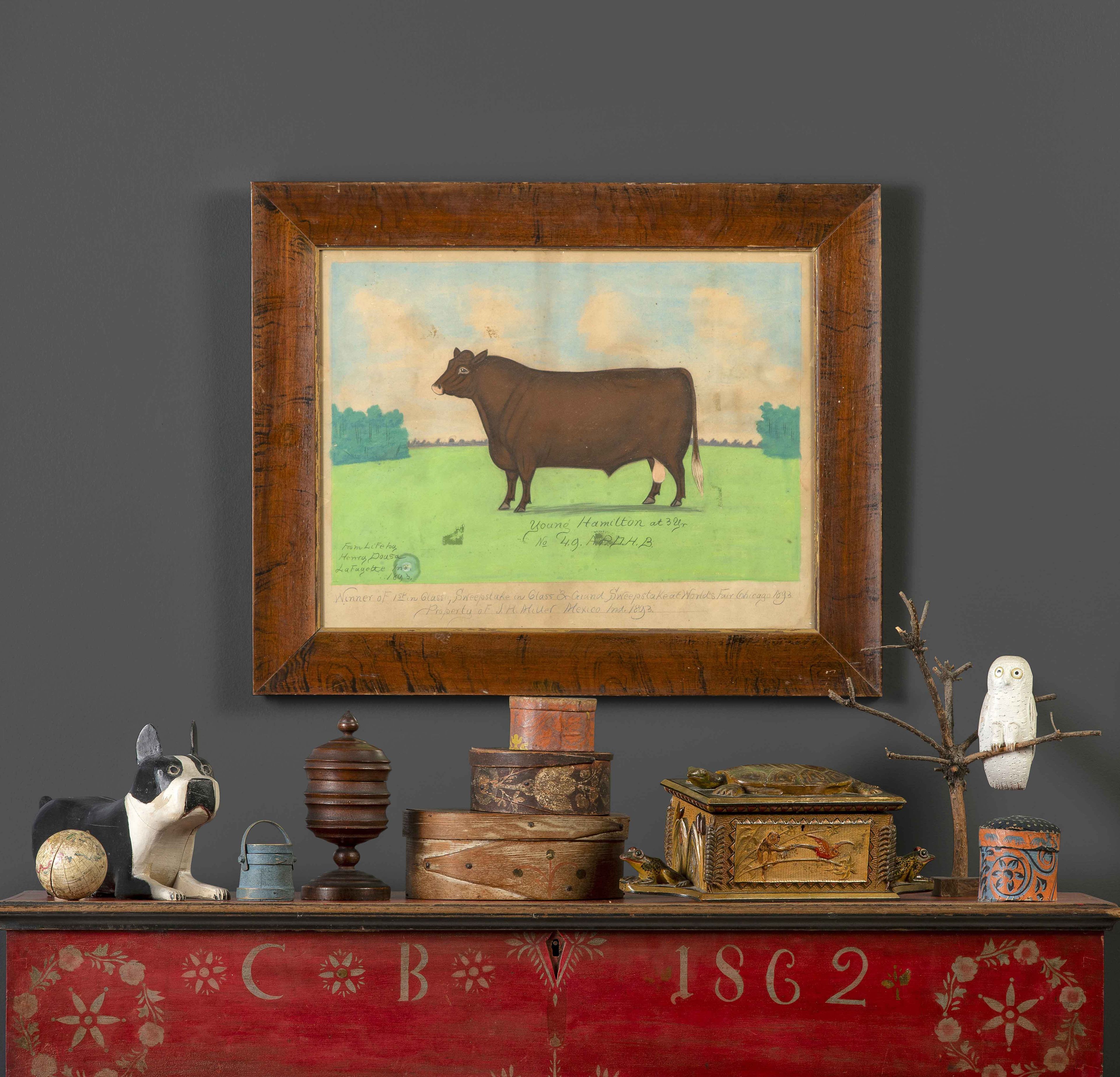
Hindman is honored to present The Donald F. Moylan, M.D. Collection of American Furniture, Folk & Decorative Arts, Part I this November 3 in Cincinnati. Join Wes Cowan in celebrating Dr. Moylan's eclectic collecting tastes and their decades-long friendship. I first met Don at an antique show in Winnetka, Illinois not long after I had started my business (Cowan’s Auctions, Inc.) in the mid-1990s. Don and his partner of nearly a decade, Bob Ketelhut had taken a booth, and I was drawn to the variety of folk art and other antiques they had displayed. I can still remember the thrill of purchasing a rare – and now long gone -- newspaper with blaring headlines announcing the assassination of President Abraham Lincoln. Sometime later I purchased a pair of immense stoneware eagles from Don that sat in my home for nearly 20 years. When Cowan’s began selling American furniture, folk and decorative art, Don was a buyer and consignor – a relationship that lasted more than two decades. In those early days, Don owned a used box truck that he used to haul around purchases and deliver property to auction. As a highly successful urologist, Don’s neighborhood wasn’t exactly déclassé. I suspect that more than one neighbor wondered why the truck was parked in his driveway. It wasn’t much to look at but did the trick – at least until it didn’t. On one trip to Cincinnati Don called to let me know the truck had given up the ghost. I can’t remember the outcome – whether we met him and picked up the consignment, or if the truck was towed and ultimately fixed so that the consignment could be personally delivered. I well remember my first trip to Don’s home; it was an early initiation into an advanced collection. And honestly, I probably didn’t realize just how advanced it was. Now, twenty years later, I have come to recognize it for what it is: one man’s quest for connoisseurship, and a passion for discovery, research and appreciation of Americana. Surface, form, and condition were his watchwords. Don’s love for the hunt, and his equally abiding love of research was evident then and has only become more apparent over the years. Don’s journey began in the early 1970s after his wife Holly introduced him to a friend whose father was a collector. Their mutual interest was piqued, and soon they were visiting local antique shows and eventually, planning vacations to the east coast and making acquaintances of legendary dealers like John Walton and others. Together they traveled widely and bought everywhere. It was through his friends Walton and Jim Rutkowski that Don learned to buy great, not just good. As his knowledge grew, his refinished purchases were replaced by ones with historic surfaces. As this catalog attests, Don’s interests were (and still are) eclectic. Folk art portraits were an abiding concern, and not a single wall in Don’s home didn’t display at least one, if not more delightful visage of a some long-gone American. But folk art carvings, interesting smalls, Both formal and painted country furniture, furniture in near original surface, or an eye-catching form filled his home. And, of course, living in Michigan, Don was naturally drawn to paintings of the Great Lakes shipping industry. At a time when many great collections were assembled with the help of dealers, I think it’s fair to say that Don sourced much of his material himself, scouring auctions throughout Michigan and the Midwest. (He once confided that he thought about 60% of the collection was found in the Wolverine state). With the rise of the internet, Don found treasures further afield, eventually growing to items from more than 30 states and four foreign countries! And he’s still at it. In a recent conversation, Don had been offered a collection of 50 pieces of stoneware: He was considering the deal. Sincerely, Wes Cowan

The renowned French jewelry designer and decorative artist Line Vautrin’s elegant yet whimsical pieces exude a spirit of the fantastical. An autodidact, Vautrin taught herself metalsmithing and successfully opened a shop in Rue de Berri, Paris, after a successful showing at the 1937 Paris International Exposition. Like many artists working during the war years scarcity of materials led Vautrin to varied materials not necessarily associated with luxury. Her early creations included jewelry, belts, powder compacts, and buttons. In the post-war years, Line Vautrin emerged as an iconic celebrity figure and bolstered an art de vivre for French audiences. Her pieces were a joyful reprieve often invoking shapes from nature-creating objects shaped like leaves or shells. Lot 10 | Line Vautrin (1913-1997) | Mirror, c. 1965 | Estimate: $50,000 - 70,000 Vautrin's distinctive style emerged when she developed a material called talosel, consisting of layers of cellulose acetate carved and scratched, and worked with fire with the inclusion of mirror fragments. This breakthrough allowed her to create larger objects, particularly her iconic mirrors. Hindman is honored to present two exceptional pieces by Line Vautrin in our November Modern Design auction that were selected by the late Irish architect and interior designer David Collins for a Private Manhattan Residence. Collins, who favored French design, had a passion for Vautrin’s work and owned a number of her works. Lot 11 | Line Vautrin (1913-1997) | Table Lamp, c. 1965 | Estimate: $10,000 - 15,000 Iain Watson, CEO of David Collins Studio in London, regards the residence as one of the designer’s late masterpieces. “This apartment interior, created by David Collins over two decades ago for his close friends living in Manhattan, has all the hallmarks of The Studio’s extraordinary oeuvre, including a mix of period references, texture, colors, and luxurious finishes. This home looked to redefine timeless glamour for New York living.” The mirror and lamp on offer are a testament to Vautrin’s heightened craft of hand-working materials. The interior border of the mirror displays confident gauged lines to the resin, reminiscent of bark texture, in contrast to the delicate shimmering petals. This particular mirror stands on the larger side of Vautrin’s catalogue that usually did not exceed one meter in overall diameter for these works. The scale, a deliberate choice, is influenced both by her artistic preferences and also by the practical considerations of time and material constraints inherent in working with the resin medium. The cylindrical table lamp features tiled and worked gold talosel resin. The effect of multiple layers of the unique talosel material create a rich patterned mosaic appearing as if the object was forged and cast. These two fantastic examples are fresh to market and will be the cornerstone of Hindman Auctions November 14th Modern Design sale. Featured Photo: Evan Joseph
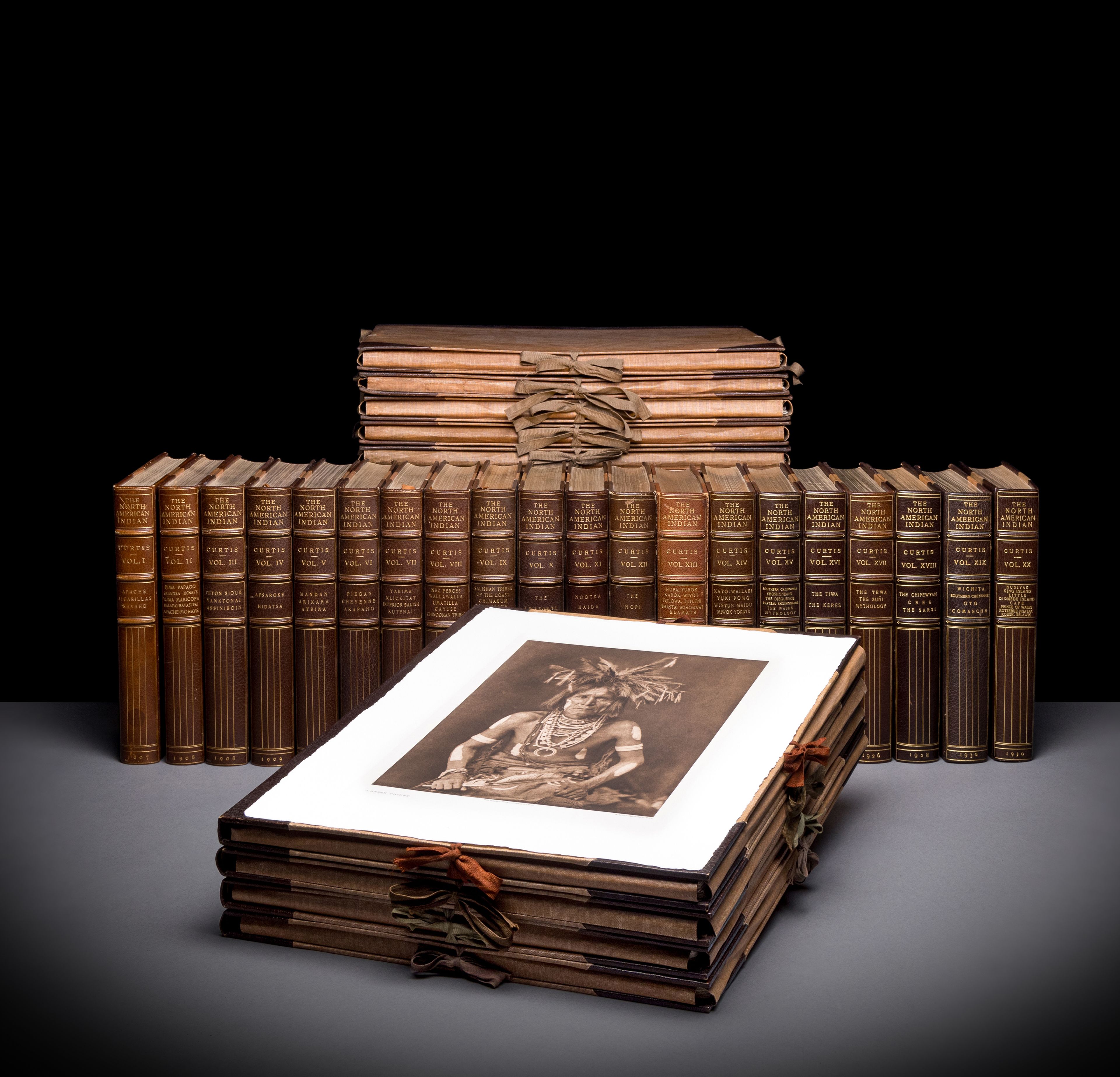
Hindman is honored to present The North American Indian by Edward S. Curtis in our upcoming November 9 auction, Fine Books from the Dorros Family Collection. Join us in celebrating this complete work of over 40,000 photographs documenting Native American peoples. Edward Sheriff Curtis was born on a farm near Whitewater Wisconsin in 1868, and moved with his family to Minnesota in 1874. His life there, living near the Chippewa, Menominee and Winnebago tribes, piqued his interest in American Indians. While in Minnesota, he also developed an interest in photography, and at the age of 12, he built a rudimentary camera consisting of two boxes, one inside the other, based on instructions he found in Wilson’s Photographics; he became an apprentice photographer in St. Paul at age 17. Curtis’s father’s ailing health prompted the family to move to Washington Territory in 1887. In Seattle, he partnered with Rasmus Rothi in a photographic studio, acquiring a 50% share for $150. Less than a year later, he partnered with Thomas Guptill to establish a new studio, Curtis and Guptill, Photographers and Photoengravers, on Second Avenue where he was known for producing the finest photographic work in the city. While in the Pacific Northwest, Curtis became acquainted with the Native American tribes in the area. In particular, he learned about a Lushootseed woman, Kikisoblu, also known as Princess Angeline, who was the last living daughter of Chief Seattle. “When Curtis saw Angeline moving along the shore, the visible nearly dead…she looked at once like the perfect subject. There against the deep waters of Puget Sound, there with the snow-mantled Olympic Mountains framed behind her…with all of that, Curtis saw a moment from a time before any white man had looked upon these shores. He saw a person and nature, one and the same in his mind, as they belonged. A frozen image of a lost time: he must take that picture before she passed” (Timothy Egan, Short Nights of the Shadow Catcher, p.6). While photographing Mount Rainier in 1895, Curtis had a chance encounter with a lost party and guided them to refuge at Camp Muir. The party included George Bird Grinnell, then the editor of Field & Stream and an acknowledged expert on the Plains Indians, C. Hart Merriam, Chief of the U. S. Division of Biological Survey. At Merriam’s suggestion in 1899, Curtis was appointed the official photographer of the Harriman Alaska Expedition, and the following year, he accompanied Grinnell to Montana to photograph the people of the Blackfeet and Piegan tribes. Near the end of that summer, Curtis told Grinnell that his mind was set that he would embark on a plan to photograph all intact Indian communities left in North America, to “capture the essence of their lives before that essence disappeared” (Egan p.50). Curtis believed that “the record, to be of value to future generations must be ethnologically accurate” (qtd. by Egan, p.50). PUBLICATION AND SUPPORT: THE RISE AND FALL OF THE NORTH AMERICAN INDIAN One of the early supporters of Curtis’s work was President Theodore Roosevelt, who Curtis had met through a series of encounters in 1904. Curtis and Roosevelt bonded “over their mutual interests in the outdoors and the changing American West. The two also shared the then widely accepted but mistaken belief that the Indian Nations of the U. S. were a ‘vanishing race’” (Tim Greyhavens, “Duty Bound to Finish,” 2018, p.5). “The years 1904-05 were watershed times in the development of what would become Curtis’s life-long project” (Greyhavens, p.5). Curtis gained support for his work after mounting several successful exhibitions in Seattle and New York, and by the end of 1905, Roosevelt provided Curtis with a letter of introduction to help him find financial support for the project. Curtis's introduction to J. P. Morgan, who would become the largest financial supporter of his work, came through Morgan’s daughter Louise Satterlee, who had seen his exhibition at the Waldorf-Astoria hotel in New York in 1905. Curtis wrote a letter to J. P. Morgan outlining plan to “make a complete publication, showing picture and including text of every phase of Indian life of all tribes yet in a primitive condition, taking up the type, male and female, child and adult, their home structure, their environment, their handicraft, games, ceremonies, etc.; dividing the whole into twenty volumes containing fifteen hundred full page plates, the text to treat the subject much as the pictures do, going fully into their history, life and manners, ceremony, legends and mythology, treating it in rather a broad way so that it will be scientifically accurate, yet if possible, interesting reading” (qtd. in Greyhavens, p.9). Morgan offered $75,000 for a series on the North American Indian, to contain 1,500 photographs in 20 volumes, and in return, he was to receive 25 complete sets of the work and 300 original photographs. The first two volumes appeared in 1907 and 1908, and immediately “the acclaim was seismic. In appearance and texture, the books were among the most luxurious ever printed” (Egan p.154). The images, printed in sepia tones from acid-etched copper plates produced by John Andrew & Son in Boston and printed by the Cambridge University Press, “were better than fine oil paintings” (Egan p.154). The New York Times acclaimed “nothing just like it has ever before been attempted for any people. He has made text and pictures interpret each other, and both together present a more vivid, faithful and comprehensive view of the North American Indian as he is to-day than has ever been made or can possibly made again…In artistic value the photogravures are worthy of very great praise. They are beautiful reproductions of photographs that in themselves are works of art” (qtd. in Egan, p.154). In late 1909, noticing the financial deficits of Curtis’s project, Morgan directed that a new enterprise be formed. The newly-formed organization, North American Indian Company, would manage the finances and business side of Curtis’s work. After J. P. Morgan’s death in 1913, his son continued the family’s financial support of the project, ultimately providing at least half of the $1.5 million it took to complete the work. Though Curtis had received funding from other sources, the cost of the project, in part due to his failure to sell subscriptions, as well as debt from his divorce, crippled his business. By 1928, desperate for cash, Curtis sold the rights to his project to Morgan. In 1930, shortly following the publication of the final volume of The North American Indian, the North American Indian Company went bankrupt. In 1935, the Morgan family sold nearly everything related to The North American Indian to Charles Lauriat Books in Boston for $1,000 plus a percentage of future royalties. LEGACY: “A BROAD AND LUMINOUS PICTURE” Of the 500 planned sets, an estimated 272 were finished. “Only in recent years has the scope and depth of Curtis’s scholarship come to be appreciated. The North American Indian, the monumental work of a self-educated man, ‘almost certainly constitutes the largest anthropological enterprise ever undertaken’” according to Mick Gidley (Egan p.322). In all, Curtis took more than 40,000 photographs, recorded over 10,000 songs, wrote down vocabularies and pronunciation guides for 75 languages, and transcribed an untold number of myths, rituals, and religious stories from oral histories. Edward Curtis never profited from the production of his expansive and comprehensive publication, and lost his friends and marriage to his obsession, but “he always believed his words and pictures would come to life long after he’d passed – the artist’s lasting reward of immortality. A young man with an unlived-in face found his calling in the faces of a continent’s forgotten people, and in so doing, he not only saw history, but made it” (Egan p.325). "Many Native Americans Curtis photographed called him Shadow Catcher. But the images he captured were far more powerful than mere shadows. The men, women, and children in The North American Indian seem as alive to us today as they did when Curtis took their pictures in the early part of the twentieth century. Curtis respected the Native Americans he encountered and was willing to learn about their culture, religion and way of life. In return the Native Americans respected and trusted him. When judged by the standards of his time, Curtis was far ahead of his contemporaries in sensitivity, tolerance, and openness to Native American cultures and ways of thinking" (Laurie Lawlor, Shadow Catcher: The Life and Work of Edward S. Curtis, p.6). His life-work, The Native American Indian, stands as a monument of American photography and illustrated-book production. References: Howes C-965; Truthful Lens 40. See Timothy Egan, Short Nights of the Shadow Catcher, 2012. See Tim Greyhavens, “Duty-Bound to Finish: Edward S. Curtis and His Quest for Money to Complete The North American Indian,” December 2019. See Laurie Lawlor, Shadow Catcher: The Life and Work of Edward S. Curtis, 2005
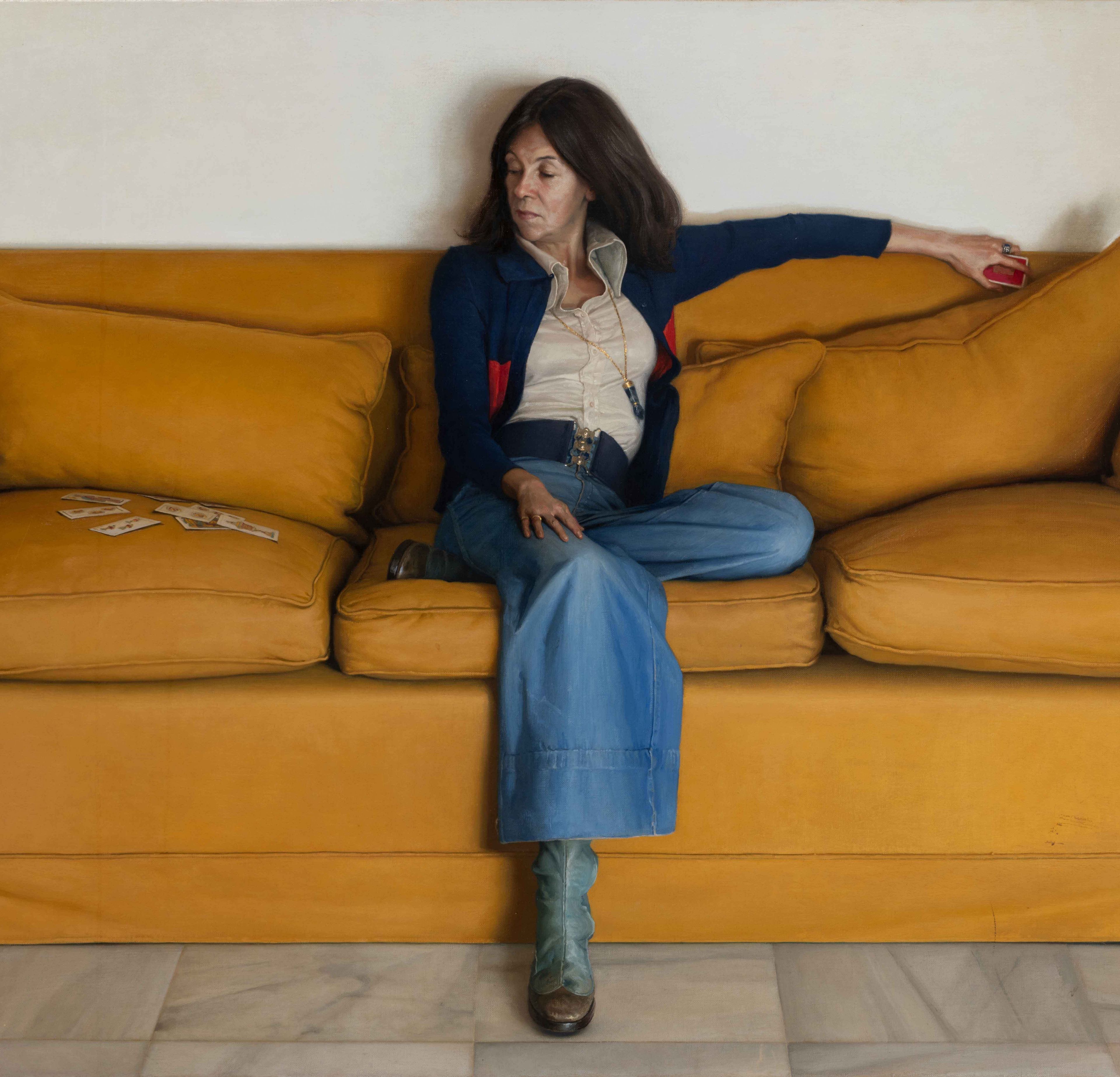
Hindman is excited to present La Colombiana by Claudio Bravo this October 26 in our final New York auction of the season, Canvas & Clay: The Collection of Judith and Philip Sieg, Bellefonte, Pennsylvania. Explore this essay to learn more about the Chilean artist's origins and legacy. Virtuoso artist Claudio Bravo was influenced by the art of the Renaissance in its emphasis on portraiture that reflected both the social position and the temperament of the sitter, as well as Baroque light and the dream-like pastiches of the Surrealist movement, to hone a style both particularly searing and particularly his own. Born in Valparaíso, Chile, Bravo left his family ranch to study at the Colegio San Ignacio in Santiago, where he would gift portraits to his teachers to raise his grades. The school administration took notice, and far from punishing this cheeky behavior, in reflection of his talent, they instead paid for him to study art professionally from ages 11 to 20, the only formal training he would ever receive. His hyper-realist style developed, as Chile remained relatively untouched by the throes of Modernism that were concurrently spreading throughout Latin America. Bravo had his first solo show at the age of 17 – in which everything sold -- and would go on to produce over 500 works throughout his six-decade career. A young Bravo dabbled in poetry, professional dancing, and acting, before deciding to dedicate himself to his art full time and beginning to produce the commissioned portraits that would help make his name. Bravo saved his earnings from these commissions and bought a ticket to sail to Paris, but the journey was fraught with storms and Bravo was forced to disembark in Barcelona, eventually making his way to Madrid, where he stayed. It was in Madrid that Bravo was able to establish himself as a society portraitist. He was in awe of designer Cristóbal Balenciaga, whose works he believed to have a Renaissance quality. He would even force the women of nobility he painted to purchase a Balenciaga piece before he agreed to paint them. The leader of the Philippines, Ferdinand Marcos, extended the invitation to paint him and his wife in 1968, and the six-month trip allowed for a transformation in Bravo’s work as he found the quality of light to be far more intense there than even his native Chile. Indeed, Bravo’s mastery of light and unerring eye for detail throughout his oeuvre has drawn comparisons to the works of classical masters, including Caravaggio, the father of chiaroscuro himself. Lot 28 | Claudio Bravo (Chilean, 1936-2011) | La Colombiana, 1978 | Estimate: $50,000 - $70,000 By the time he returned to Madrid, Bravo’s reputation had gained international renown, with his first exhibition in New York at the Staempfli Gallery in 1970. Seeking solitude away from his busy social life in Madrid, Bravo moved to Tangier, Morocco in 1972. The bold colors, geometric patterns, and deep history of the African town, so unfamiliar to him, was an inspiration and he painted just about anyone who would sit still for him – mostly workers on his house and their friends. Islamic women would not pose for him, however, prompting him to buy apartments in Madrid and New York to keep his options expansive. It is during these years rotating through Tangier that Bravo painted the present work, La Colombiana, 1978, a close-cropped scene of a Colombian woman, one leg folded casually underneath her as she sinks into a yellow couch. Despite the ethnic origin of the woman defined by the work’s title, it is Morocco’s almost theatrical influence that can be seen in the richly hued yellow couch and crisp blues of her denim. With a collection of cards scattered next to her, and then clutched more loosely in her hand, she seems relaxed yet distant in thought. Bravo’s signature perspectival focus brings the gaze directly onto the plane, forcing the viewer to examine the subject without distraction and engage with her emotional state. The Marlborough Gallery hosted its first exhibition of Bravo’s works in 1981, the first of dozens in the next twenty years. Collected internationally by renowned institutions, Bravo was arguably the most prestigious Chilean painter of his time, until his sudden death at his home in Taroudant, Morrocco in 2011. His legacy of especially introspective portraits in lush surroundings, deployed with a fascinating hyper-realistic style, emphasize that of a true Renaissance man.
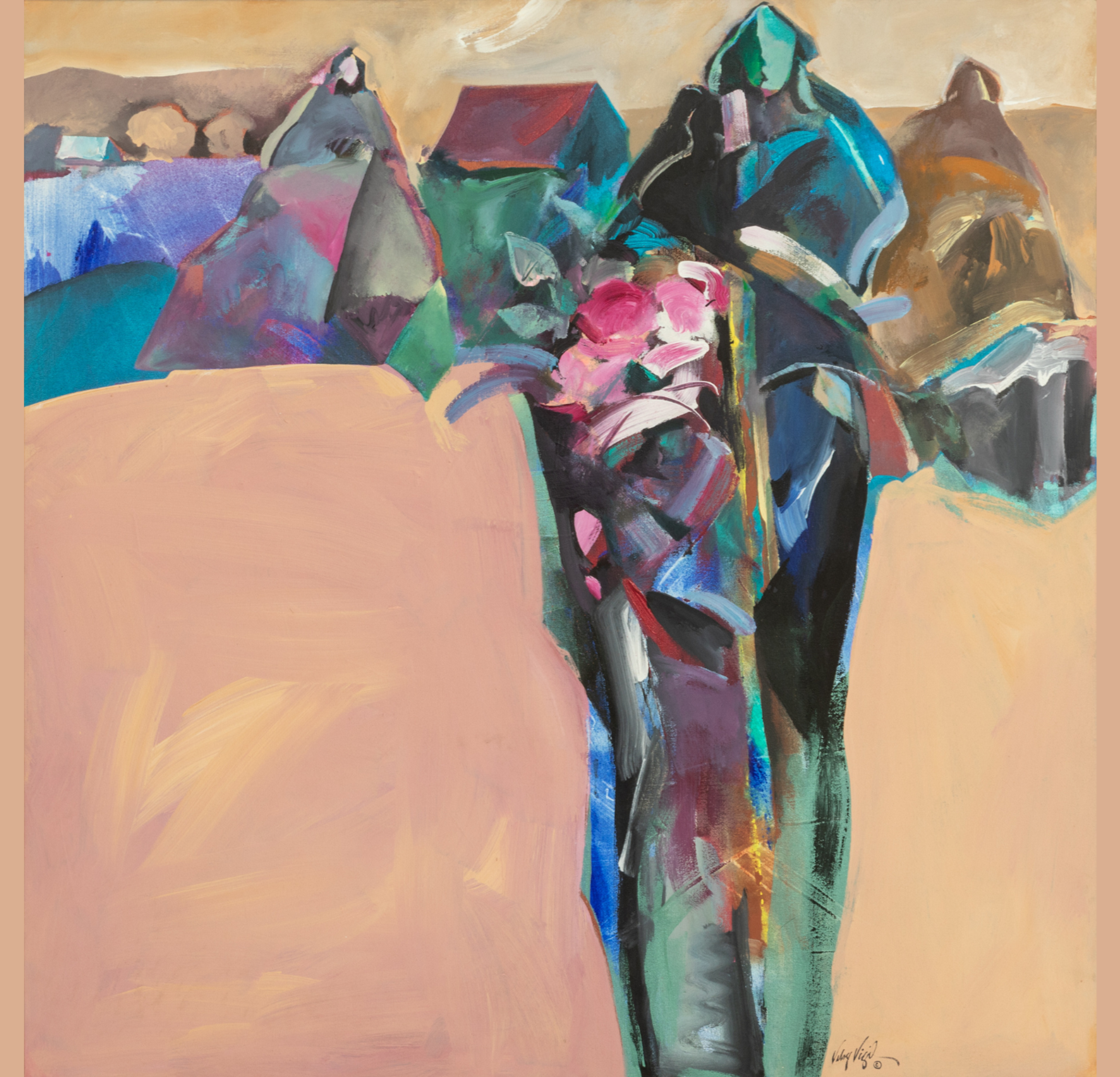
Hindman is honored to present artworks from the Private Collection of Elena and Veloy Vigil in our November 1st Western & Contemporary Native American Art auction. Join us in exploring this talented Puebloan artist's work and career trajectory. A well-respected and prolific painter, sculptor and printmaker, Veloy Vigil is best known for his use of bright colors and abstract expressionistic brushwork. With a career spanning over three decades, Vigil’s body of work is vast and varied, inspired by a love of nature rooted in his rural upbringing, the spirituality that pervaded his everyday life, and the influence of family, friends and artists who surrounded him throughout his career. Lot 127 | Veloy Vigil (American, 1931-1997) | Noon Crossing | Estimate: $3,000 - $5,000 This session of art within the November 1st auction represents a select group of works from the Private Collection of Elena and Veloy Vigil. This group of art showcases an incredible array of artworks - ranging in style, subject, composition, and media – that were not only created by Veloy Vigil but were also inspired by his creations. Born in Denver, Colorado in 1931, Vigil discovered his affinity for fine art early in life. He had a keen awareness of his environment, and spent all of his free time, taking in the light, shapes and colors of nature. Though his skill was obvious to those around him, no one in his rural hometown quite knew what to make of his talent. It was not until after he had already lived a full life – serving in Korea in the Marine Corp, working as an assistant in an animal research hospital, fueling planes for Western Airlines, and raising four children with his wife Elena that – Vigil finally felt emboldened to pursue his passion. In the mid-1950s, the passion that had followed him since his youth led him to art school in Denver, Colorado. The final push to follow his dreams came from Elena, who would continue to be a source of encouragement for the rest of his career. In 1958 Vigil began his professional art career working as a designer at American Greetings Corporation in Cleveland, Ohio. Surrounded by other like-minded, emerging artists, Vigil was able to expand his fine art knowledge with the encouragement of his colleauges. Still, the love of the American West was too much to ignore, and after six years in Ohio, the Vigil family returned to their roots. Lot 125 | Veloy Vigil (American, 1931-1997) | Wyoming Color, 1993 | Estimate: $2,000 - $3,000 Elena and Veloy Vigil opened their first gallery in Orange, California in the mid-1960s. Serving primarily as a studio for Veloy, it was also a space where local artists could come together to create art. The gallery continued to move locations over the years, but always remained a place for artistic collaboration and exploration for Vigil, his contemporaries and eventually his two sons. Over the years, through camaraderie with their fellow artist friends, Veloy and Elena began collecting and trading works of art. Their collection quickly grew and became an eclectic mix of artist expression. It was in 1981 that Elena and Veloy finally settled in Taos, New Mexico. With Veloy spending almost every waking hour in the studio painting, printing and promoting his art, Elena decided it was time to reopen the gallery on New Mexican ground. Naming the space Gallery Elena had been Veloy’s idea; he recognized how diligently she had worked at his side over so many years. Through the studio and gallery, their circle of artist friends continued to grow, as did the family’s extensive collection. The list of artists whose lives intertwined with the Vigils – through friendship, gallery representation, or both – is extensive. They admired these artists and friends, displayed their work proudly in their home and gallery, and were always eager to see new creations. Max Pruneda, Sam Scott, Keith Crown and Ray Vinella are among the artists whose work was shown at Gallery Elena and remained close friends with the family. The Vigils were deeply immersed in many facets of the fine art world, propelled by Veloy’s passion for innovation and bolstered by the steadfast support and business acumen of Elena. Lots 119 through 143 showcase 15 of Veloy Vigil’s finest works in tandem with some of the artwork that shared space with the Vigil family – held in the family’s private collection, until now. Featured Image: Lot 120 | Veloy Vigil (American, 1931-1997) | Altar Flowers, 1994 | Estimate: $1,000 - $2,000
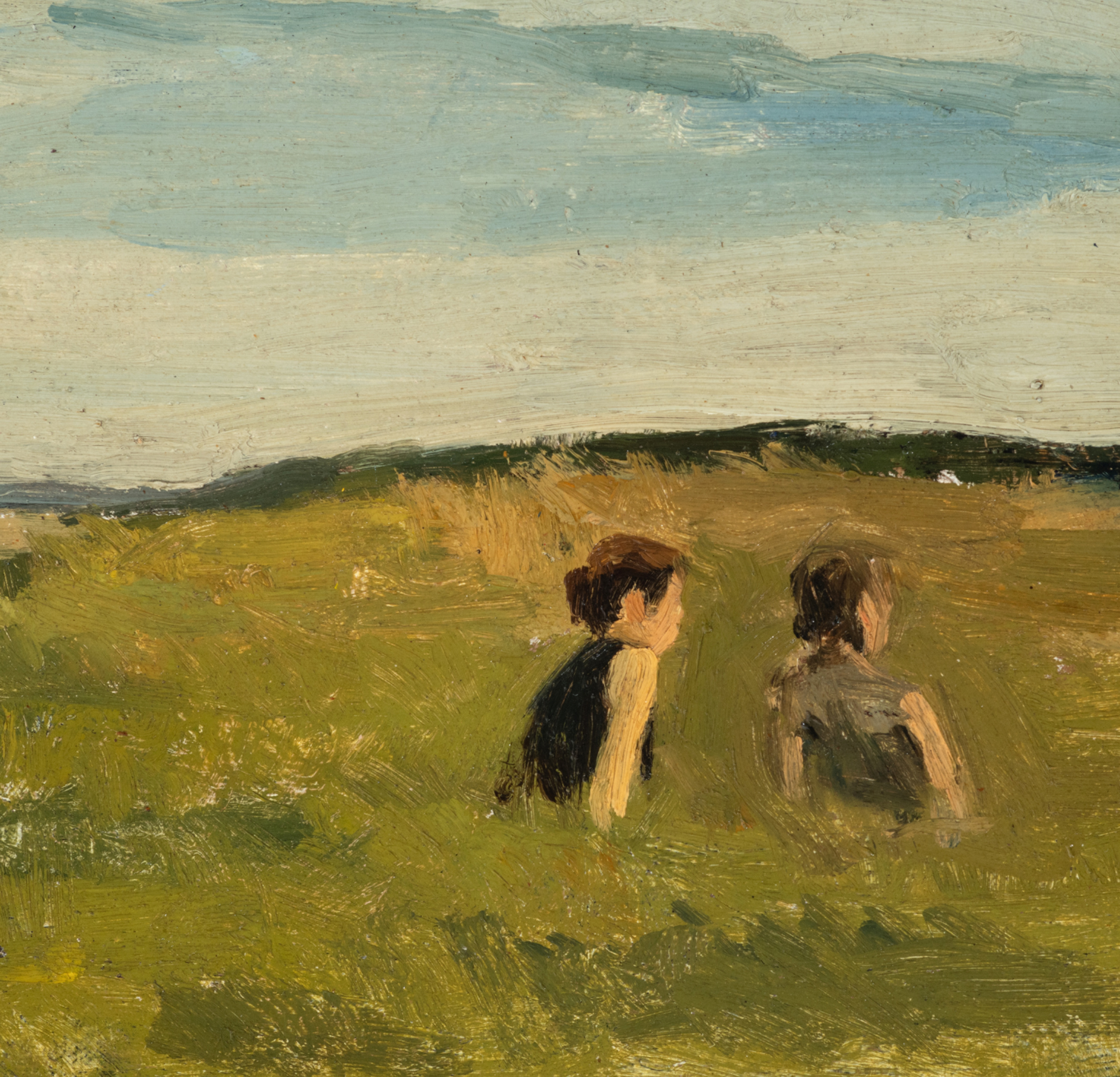
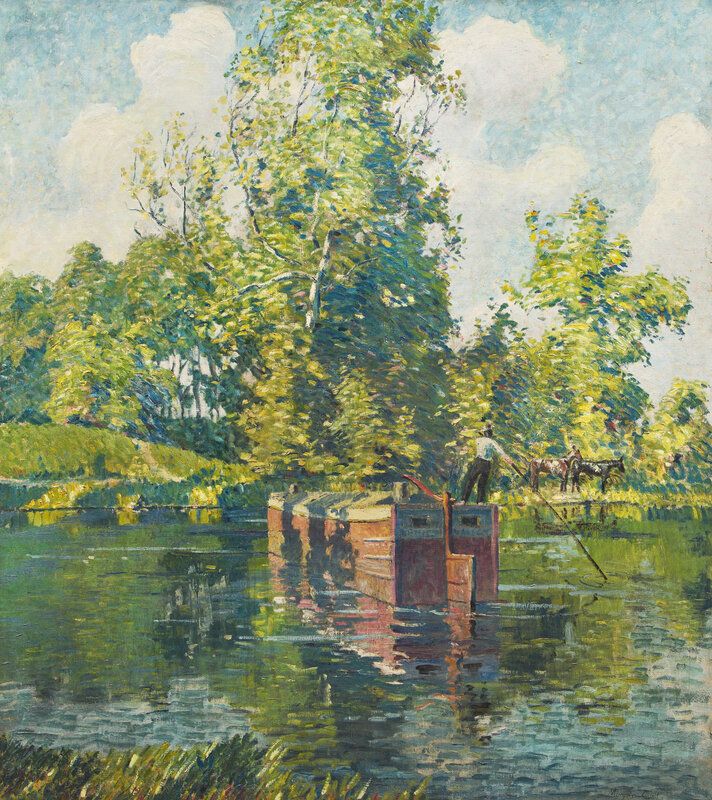
Hindman is pleased to present the work of Albert York this October 26 in our single-owner auction entitled Canvas & Clay: The Collection of Judith and Philip Sieg, Bellefonte, Pennsylvania. Join us as we explore the artist's practice and his many works coming up for auction in New York this season. In his 1995 New Yorker magazine profile, art critic Calvin Tomkins said Albert York was perhaps "the most highly admired unknown artist in America." The artist was described as a shy man who shunned the art world, who worked painstakingly slowly, and who was perpetually unhappy with his work, often scraping down his wood panels and starting over. At rarely more than 12 inches on a side, his paintings evoke a contained world in which time and art seem to stand still or even move backward through history. They purposefully seek to reject interpretations of narrative and ignore the more widespread trend towards abstraction popular throughout the 20th century. Lot 1 | Albert York (American, 1928-2009) | Zinnias in a Glass Vase, 1981| Estimate: $80,000 - $120,000 Born in Detroit in 1928, York was raised by his father but lived mostly in boarding schools and foster homes while his father worked in the automobile industry. In his teens he lived with an aunt and uncle in Belleville, Ontario and he studied at the Ontario College of Art, and then at the Society of Arts and Crafts in Detroit. He saw active duty in the Army during the Korean War, and once discharged, moved to New York in 1952. York briefly enrolled at the Art Students’ League, but he could not afford the fees, and instead enrolled in Raphael Soyer’s evening classes on West 56th Street. Soyer’s admiration for Degas and the French School was to later influence York in style and subject matter. For a time, York stopped painting so he could instead support himself with odd jobs. In 1957, he found full time work as a gilder with the frame maker Robert Kulicke. He began to paint again in earnest in 1960, after taking a four-month trip to France with Virginia Mann Caldwell, his future wife, and her two children. Inspired by the French countryside, York took elements of the landscape and rearranged them as he worked, creating small, concentrated pictures in halftones of green and blue. In 1962, he reluctantly showed his paintings to Kulicke, who enthusiastically recommended them to Roy Davis, an art school friend and business partner. Davis proved incredibly important to York and the advancement of his standing within the New York art scene, with his first exhibition at the Davis Galleries in 1963 and his last (at Davis & Langdale) in 2007, for a total of 16 exhibitions there. That same year, York and his family moved to Long Island, where the artist was to live and work for his remaining life. After the move, he would send new paintings to Davis Galleries in brown parcels via regular post, promising that next time he would “do better,” revealing his brutal artistic standards. Lot 68 | Albert York (American, 1928-2009) | Landscape with Three Trees and Pond, June 1984 | Estimate: $80,000 - $120,000 York’s oil paintings are simple and compelling, reflecting an introspective awareness of art history while also projecting a sense of modern unease. His carefully balanced landscapes, such as Landscape with Three Trees and Pond, June 1984 (Lot 68), are in the pastoral tradition established in the 17th century by Claude Lorrain. Porch Bench with Seated Figure (Lot 38) and Figures in a Field (Lot 39) evoke the leisurely idylls of Impressionists such as Claude Monet and Edgar Degas, while at the same time channeling the profound solitariness of an Edward Hopper painting. The various still lifes of flowers and plants in tin cans, glass vases, and terracotta pots (Lots 1-3), always seeming to be in danger of sliding off the table surfaces on which they precariously sit, bring to mind the tumbling apples of Paul Cézanne. Seascape with Sailboat (Lot 67) is rendered with the impressionistic strokes of Eugène Boudin, though stripped of his fashionable, promenading figures. Lot 67 | Albert York (American, 1928-2009) | Seascape with Sailboat, c. 1970 | Estimate: $60,000 - $80,000 Despite the numerous art historical references, York’s paintings exude a quiet modernity, with their geometric simplicity, flatness of form, and economical brushwork. Likewise, his palette of greens and blues-tinged with gray creates a sense of muted stillness and isolation in his work. Although his subject matter is realistic and inspired by his rural Long Island surroundings, there is a tension between what is real and what is imaginary. The art critic Bill Berkson poetically described this seemingly painted agitation: There’s something inclement beneath all that idyllic sunlight, a bruxism out of key with the blithely tumbled midday glow, and an elegiac mood that turns the convex pressure of accumulated dabs and dry swishes of paint teetering reflectively back on itself. The light could falter, the whole scene evanesce or fall apart as you look on. (“The Idylls of Albert York, Art in America, September 1988, p. 174) An exacting perfectionist, the artist is said to have only created 200 to 250 paintings during his lifetime, partly due to his slow rate of production, and that he stopped sending works to his gallery in 1992. This may have been a result of his reaction to a three-person exhibition, Painting Horizons: Jane Freilicher, Albert York, April Gornik, at the Parrish Art Museum, Southampton, New York, in 1989. In a rare interview, the artist told Calvin Tomkins that after seeing his artwork at the Parrish, he was "pretty upset about what I'd been doing for these last years."(“Artist Unknown,” The New Yorker, June 19, 1995, p. 81) As a result, the present nine artworks by the artist are an unprecedented group; never before have this many examples been offered at auction at one time. The seven oils here, as well as the two works on paper (Lots 6, 83), were acquired from York’s lifetime dealers, Roy Davis, and Cecily Langdale, and they show the appreciation of a collector who delighted in the artist’s depictions of simple, familiar subjects that also speak of intense psychological mysteries. His spare, efficient brushstrokes reveal a unique willingness to look deeply and profoundly and to set aside conventional notions of how objects are supposed to exist in the world. Featured Image: Lot 39 | Albert York (American, 1928-2009) | Figures in a Field, c. 1963 | Estimate: $60,000 - $80,000
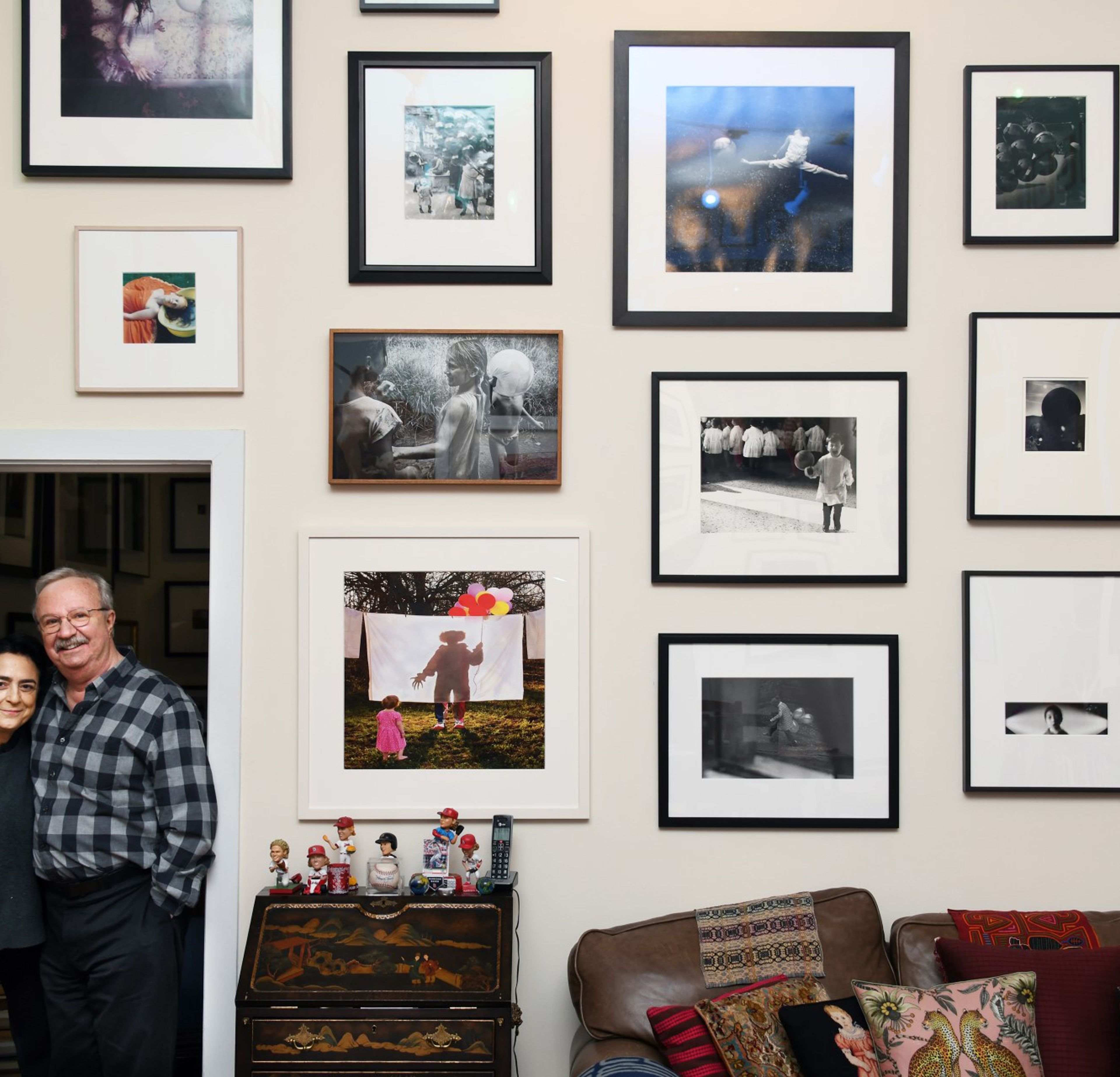
Hindman is thrilled to present Joe Baio in conversation with Hindman’s Director and Senior Specialist of Photographs Laura Paterson. Ahead of our New York auction Forever Young: Photographs from the Joe Baio Collection, hear Joe speak about his experience with collecting, how he got his start with photography, and this showstopping collection coming up to the auction block. Laura Paterson: Hello, Joe. What prompted you to start collecting photographs? Joe Baio: When I had my children, and even before that, I was a casual photographer. As they got older, I spent perhaps obsessive amounts of time taking pictures of them. We would go on vacation, and I would take 115 rolls of film and, shoot them, so to speak. At a certain point, of course, they would say, "That's enough, Dad, put the camera down. We're on vacation." From there, I took a bunch of courses at ICP, including, if you can believe it, seminars with Sally Mann, Nan Goldin and Larry Fink, the only area, the only art form that a complete rank amateur can actually rub elbows with a master. Which they were. Lot 34 | Sally Mann (born 1951) | Tobacco Spit, 1987 | Estimate: $5,000 - $7,000 It's a little less so now that they make money, but back then, this was 1988 and '89, it was a very different era. So, seeing these amazing photographers and them showing the work, and Sally Mann in particular laying out five or six examples of, let's say, Emmett, the last time he modeled nude, showing how she didn't get it, she didn't get it, she didn't get it, over a two-year period. And then, the hand of God reached in and created that remarkable picture, where his finger's just barely touching the water, the sky is perfect, the trees are behaving, and his gaze is magnificent. I, of course, would've accepted any one of the earlier ones with great joy. So, I caught on that these folks know what they're doing, (laughs). And it got to be a bug. I'm a bit obsessive; obviously, any collector is. So, I started collecting and really, you don't start as a collector, you start as kind of an acquirer. I didn't have any grand scheme or plan. In fact, I know that one of the things that you've been interested in is what's the first thing I ever bought? I'm jumping to it. It was a portfolio, not a single picture. I saw Sally Mann's show, Immediate Family, 1989, while I was taking the course. I remember walking through, saying, "This is the most remarkable thing I've ever seen." I did not buy anything because I was afraid, and they were expensive, $3,000 each. So, (laughs) of course, I should have bought the whole show. This is what got me started. And you start by buying a certain number of things; that started in 1989. By 1994, I think, I considered myself a collector because I had more pictures that I could hang. That was sort of my own internal definition of ... that's when you're collecting when you can't even see them all. And from '94 on, it just took off like a rocket ship and has been a great source of joy for me. LP: What are you looking for now when you're collecting? What attracts you? JB: Well, the thing about collecting is, now there's a big body of work that I have, and it's all related to childhood and adolescence, family. But there are all these sub-themes that are running through. You know that when I hang the work, we take it down every year, and put up a new hang. I have all these sub-themes. And it could be geographic, Eastern photography; it could be emotional, sheer joy. It could be water. It could be anything: athletes, kids in trouble. I have an endless supply of alternatives. So, with this body of work that I have, I'm sort of looking for things that will supplement and make the collection more playful, more interesting to me, and give me more opportunities. But ultimately, the image itself has to wrestle me to the ground. LP: Like the Heath. JB: That's right, Dave Heath is a good example. But really, it's almost true for everything I've ever gotten, you know? At some point, it takes my breath away. Lot 28 | Dave Heath (1931-2016) | Vengeful Sister, Chicago, 1956 | Estimate: $10,000 - $15,000 JB: I don't buy things instantaneously, I usually let them marinate a bit. My first big fair was AIPAD in 1998. I remember just being absorbed. I bought 14 pieces. I remember every piece; I remember how I felt when I saw it. It's an idea of building something. And that way, when I hang, if I have an upcoming theme of sports, and I don't think about that as I'm looking. But when I see an image and it's Roy DeCaravain a playground, kids in a playground, that one might be oh, my goodness. Now, the image has to be commanding of my attention and my feelings. After that, I think about, does it fit? You would think that limits the amount that you would collect; it actually is expanding the possibilities and it's just so much fun. LP: Do you find yourself gravitating towards more contemporary photography versus historical photography? JB: No. No, not really. It could depend on the fair, right? There was a New York fair that just happened, and it was predominantly contemporary. So, that sort of puts you in the mood. I also thought it was a good show. But I have a lot of vintage and traditional work and street photography and studio photography, and some unknown. But for the most part, my tastes are very broad, and I'm open to being surprised, a big part of what I like. LP: Yes. The curious collector. That's nice. My next question is what prompted you to sell this group of photographs from your larger collection? JB: Well, as you know, I've been doing this for quite a while and I have probably more photographs than I will need, (laughs). It's not about "need", it's about love. So I had to make a decision: am I a collector or a collected? In other words, (laughs), am I done? Because I can keep doing this forever, and you must identify what it is that you love and want to continue to do. I have seven aspects of collecting, but one of them obviously is buying work and adding it to the collection. Did I want to stop that? Because at a certain point that can happen. I didn't want to stop. I loved the collecting aspect of it. So, by selling this group, I'm creating the means to continue the hunt, the search, and wrestling the picture down to the ground and putting it in my collection. I'm sort of going to be net neutral. So, what goes out will come back in, in a different form, because that's a great part of the fun. Every picture that's in this sale I have already had up, sometimes multiple times, in the decades that we've been doing hangs. And I take pictures of the pictures as they're hanging. So, I still have them all. Once you owned one of these it has a special place. They’re still part of- LP: Still part of the chain of ownership. JB: That's right. All part of the chain. And anytime I see another version of it, or even mine, it echoes in whatever I've already had, another source of joy. So, it stays with me even when it's gone, and it provides the means to keep this crazy passion going. LP: Yes, your children will support you. JB: Yes. That's the idea, (laughs). LP: Wonderful, we’ve almost come to the end of my questions. I wondered if you had any favorites in the selection that you're quite sorry to part with? JB: You had told me before you were going to ask me that, so I went through the catalog with that in mind. And every time I turned the page, I was, "Oh! Oh." "That one? Oh, no." I've had sales in the past, in part because of a divorce, so that was a painful separation. But I do understand that this is all temporary. And in that sense, yes, the pang would be there. Every photographer who has a work that's in the sale, has another work that's still in the collection. So, I didn't say goodbye to Robert Frank. I'm not saying goodbye by any means to Justine Kurland, although I'm selling one piece I just acquired, 32, from her Girl Pictures series, which I'm going to hang around the upper floor of my apartment. Lot 82 | Justine Kurland (1969) | Hula Girls, Christianburg, Virginia, 2000 | Estimate: $1,500 - $2,000 That's true of every photographer except one: Outerbridge. I only had one of his works; it is such a quirky, unusual, and remarkable photograph. Everything about it, (laughs), the pose, the background ... It's just wild, and intriguing that that photographer, who really is unique in the pantheon of photographers. LP: Very interesting guy. JB: He was a very interesting guy and really, an experimental photographer in lots of ways, and yet also, he did advertising and other stuff. I mean, just a really fascinating person. So, he's the only one that I don't technically own anymore, so I'll probably be on the lookout for Outerbridge going forward; we'll see. But everybody else is still part of the family. LP: My final question is you've been collecting for decades now, and you know the ropes, and you have a very particular sensibility. Do you have any advice that you'd give to someone who's starting out on the journey of collecting photography? JB: Sure, I try to keep it simple. I work at a law firm and I'm starting up talks for young collectors, people who want to do something - they don't necessarily know what - and I'm going to talk to them about opportunities, the benefits, et cetera, et cetera. A couple of things that I would say as sort of a base: number one, don't even think of yourself as a collector et, if you're really just starting. It's too vast. I mean, you could be intimidated by somebody who has 6,000 prints, or 500, or 200, and an extreme focus. Relax. You have walls, you want beautiful things on the walls? Start with that. Figure out what you like, what you love, and then go about it. Now, you must learn how to go about it, and that's where the fear factor is. You must recognize all these impediments to your collecting, and kind of let loose. For example, "Well, boy, if I spend $3,000 on this, how much will I get later? What is it worth? Are they going to make another copy?" Think of a beautiful work of art that you're going to live with for a long time. And maybe you won't. Maybe your tastes will change. But for now, this thing has taken your breath away. Think of it as it brings me as much joy as Starbucks coffee and croissants every day. You've paid for the $3,000 picture in one year. Now it's free, right? Now you have this beautiful thing that you live with. Are you getting $10 of joy a day out of it? Then it's free, basically. So, don't worry about resale and they can make another one and maybe somebody else has it. That's an important thing for you to eliminate. And, the fear of, "Am I getting ripped off? It's too intimidating. I don't know what I'm doing." You don't have to know what you're doing. It's a relatively modest beginning, keep it as such, and proceed as the emotions and as your pocketbook allows you. I started with this one portfolio, and who knew? LP: What was it? JB: (laughs). It wasn't even childhood or adolescence. It was a Double Elephant portfolio of Ralph Gibson. LP: Ah. Fascinating. JB: ... my partner was involved with Double Elephant, and he said, "Look, there’s this thing, you get 15 pictures, you can put them up. And then in a couple of years, you can donate them, and they'll be worth more." So, it truly is free. So, I said, "Oh, that sounds interesting." And I did donate the Ralph Gibson one, but the next one was a Larry Fink... and I couldn't donate it. That was a good sign for me. I wanted to keep it. So, that one and a Mary Ellen Mark one, I kept them. And then I realized, "Well, I don't need that part of it. I'm just going to now start collecting." And then I went to auctions, and of course, I'm not suggesting any young collector go directly to auctions, but I kind of did that early. I don't know why, even before gallery visits. LP: Although if it's a decent auction specialist, they're quite a good touchstone on what people should be looking at and whether it's a "good buy". So, people shouldn't necessarily be afraid of auctions. JB: No. They're not. My fear always was, "Okay", I'd look around the room, and that was when everybody was in the room. Which was a scary moment; you'd see Larry Miller, Howard Greenberg, Barry Singer from ... LP: These are big gallerists. JB: ... the West Coast. LP: Yes. All the big people. JB: Yeah, they were all in there, right? Now I'm raising my stupid little paddle, and I know more than they do? That could be a thought. And then I thought to myself, "Well, no, they have to be able to sell it for a lot more, because they're trying to make money. I just want the thing." So, I had room, in a sense. And one of the pieces that I won really changed my collection. It was in 1990... when did I buy that? '99. It was an Atget, from the Tristan Tzara collection. LP: Oh, I remember that so well. JB: A stunning picture. The Organ-grinder, right? LP: Yeah. Those prints were extraordinary. JB: Just gorgeous. Well, this was one of four. I think they found one more since then, that he himself had printed, that is Atget. And it was in the collection of Tristan Tzara. It had this unbelievable provenance of one of the founders of surrealism, with a surrealist without even knowing he was, Atget. It was the first one up. I bid. I had a number that I wouldn't go above. My hands were trembling. I had never spent anywhere near the amount of money that I was going to spend on this, but I was obsessed. I went to that number; someone else bid one more time, and normally, I'm disciplined in auctions, and I said, "All right, let's do it one more and see what happens." My heart beating, I raised my paddle. And after the auctioneer tried to squeeze a little bit more out of the room, there was nothing to be squeezed and I got it. And I felt joyous! I really thought I was going to feel frightened, or "Oh, my God, what have I done?" And it was fantastic. 10 years later, I sold it for 10 times what I bought. Now, that was not the goal; it's never the goal, for me. I'm not looking down the road for what I can get. But that was a happy accident, which the picture gave me great joy. LP: And I think it is a vindication of taste, and faith. JB: Like for example, this upcoming sale, (laughs). If it sells, God bless America. If it doesn't sell, what is the consequence? I still own it. I still own the thing I love. So, the way I'm looking at this auction coming up, I hope it's very successful, for all of us. LP: Me too! JB: (laughs) If some don't sell and they stay in their happy home, I'll probably put them up in the next hang, just to celebrate. LP: That's a great idea. JB: That will be its own section: things I was able to maintain. LP: Well, Joe, thank you so much for your time, I have no more questions. Looking forward to a successful sale.

Hindman invites you to celebrate the life and legacy of Glen de Vries with this collection of horological masterworks. As an American entrepreneur focused on medical sciences and technology, Glen de Vries dedicated his life to providing the public with smarter treatments and creating a healthier world. He was the co-founder of Medidata Solutions, a software provider that revolutionized clinical trials and medical research. A visionary business leader and passionate scientist, de Vries’s book “The Patient Equation” describes a bold future for medicine, informed by his decades in the field. De Vries was also a long-time supporter and trustee of Carnegie Mellon University, his alma mater. A man of many diverse talents, de Vries frequently credited his outside interests for his success. He was a true polymath; he was an accomplished ballroom dancer, musician, athlete, Japanophile, and aviator — passions which informed his charitable work, as well as his collecting. De Vries had a lifelong fascination with space travel and, in 2021, was one of four individuals to travel to space aboard the second voyage of Blue Origin NS-18. Describing the impact of his flight in the New York Times, de Vries said, “The passage of time, just like resources on Earth, feels more precious with expanded perspective.” Excellence in the disciplines of science and technology led de Vries to an interest in timekeeping. Over the course of his adult life, he assembled an enviable collection of watches from the most esteemed manufacturers around the globe, seeking out some of the rarest and most sought-after examples from independent makers and highly sophisticated complications. Encompassing more than 100 watches from 30 watchmakers, the collection of this trailblazing entrepreneur displays de Vries’ passion for science, space, aviation, and speed. The legacy and impact of Mr. de Vries as an innovator in the field of clinical trials cannot be overstated. The opportunity to tell the story of this visionary businessman, philanthropist and thought leader as a collector adds a new dimension to celebrating his life and impact. We are honored to be launching our inaugural sale season in New York with this superlative collection. Sincerely,
Freeman's to Present Landmark Single-Owner Fine Art Collection in 2024 Important Works by Renoir, Diebenkorn, Soutine, and Others Resurface in Philadelphia After More Than 40 Years In Winter 2024, Freeman’s will present What Do You See? The Collection of Sidney Rothberg, offering art lovers the opportunity to collect important 19th- and 20th-century fine art by internationally acclaimed artists. The single-owner sale brings many works to the public for the first time in over four decades and is preceded by highlights exhibitions in Paris, New York, and Philadelphia. "Sid Rothberg was known for his expert eye and impeccable taste,” says Alasdair Nichol, Freeman’s Chairman and Director of Fine Art. “He was a familiar presence in the auction world over several decades. A lifelong Philadelphian, Sid regularly attended Freeman’s auctions, and we are incredibly honored, after all these years, to present his extraordinary collection.” “What Do You See?” Sidney Rothberg (1924–2008), widely known as a “collector’s collector,” gravitated toward bold experimentation in the works he collected. Motivated by a deep passion for art and artists, Rothberg used his collection to provoke, challenge, and question, a distinctive outlook reflected in the sale title. Rothberg was known to ask people for their individual interpretations, and as they stood in front of museum walls, his daughter and granddaughter remember being continually asked, “What do you see?” In honor of Rothberg’s inquisitive spirit, Freeman’s will launch an interactive experience inviting the public to offer their own interpretations of works in the collection. An International Scope A longtime Philadelphian, Rothberg also had deep French roots: he first explored his passion for art during his WWII deployment in France, later attending classes at the University of Burgundy in Dijon. Collection highlights will first travel to Paris in October in homage to Rothberg’s French influences; a second highlights exhibition will be held in New York City in early 2024 before the sale is then launched in Philadelphia. "Sid was as private about his collection as he was proud of it,” says Freeman’s Fine Art specialist Raphaël Chatroux. “To be able to present so many gems in Paris—the city where it all started—is a special occasion. It is also an incredible opportunity for a worldwide audience to rediscover works that were long admired, often sought-after, but also deeply loved by this impressive Francophile Philadelphian.” A Passion for Experimentation As a student at the University of Pennsylvania’s Wharton School, Rothberg was an avid gallery-and museum-goer; he also enrolled as a student at the Barnes Foundation, eventually becoming a guest lecturer there. He had strong connections to the Barnes: his insatiable curiosity about artists and their influences was shaped by his longtime friendship with Barnes curator Violette de Mazia (1896–1986). Sidney Rothberg’s daughter, Saranne, explains: “My dad was passionate about discovering the one piece which showed how an artist explored a new technique, palette, subject matter, or medium. He would then compare this artistic inflection to other, better known works, and excitedly track down who or what influenced that shift. He could effortlessly explain the context of his collection in relationship to movements, artistic friendships, historical events, scientific discoveries, and economics.” This penchant for experimentation birthed an extraordinarily diverse collection, one that brings blue-chip names in conversation with underappreciated artists like Alice Baber and Bob Thompson. With highlights ranging from French Impressionism to European Surrealism to 1960s New York avant-garde, Rothberg’s collection reflects his unique approach and confidence in his own taste over market trends. BROWSE PART I AUCTION BROWSE PART II AUCTION View Catalogue PICTURED, FROM TOP Collector Sidney Rothberg (1924-2008) celebrating his December 17 birthday Chairman and Head of Sale Alasdair Nichol with Richard Diebenkorn's Girl in Tiled Room, 1957
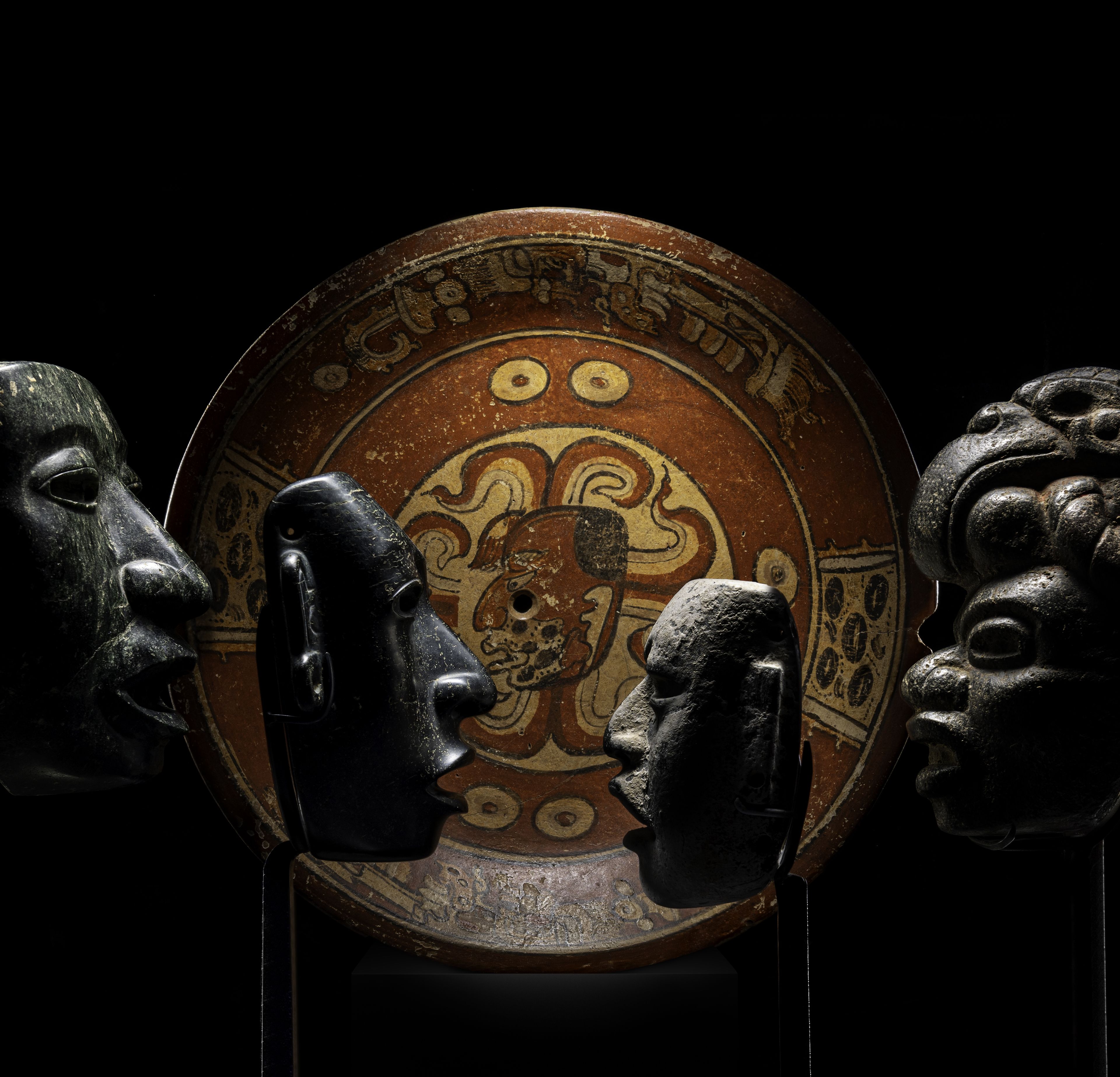
Hindman is pleased to present our Pre-Columbian & Ethnographic Art auction this October 12 featuring 197 exceptional lots that encompass ancient Central and South America, as well as a diverse array of tribal art from across the globe. Join us in exploring a timeline of abstract expressions across Central and South American cultures. Olmec (1200 - 400 B.C.): The Olmec civilization, often regarded as the "Mother Culture" of Mesoamerica, left behind enigmatic art forms marked by abstract symbolism. Their colossal stone heads, characterized by exaggerated facial features and intricate headgear, exhibit an abstract representation of powerful individuals. The intricate designs often carved in jade also showcase abstraction through the transformation of human to animal features, hinting at a deeper spiritual connection. An Olmec Jade Transformation Figure Mezcala (300 - 800 B.C.): The Mezcala culture's artistry revolves around abstract minimalism. Their stone sculptures, primarily small figurines, emphasize simplified geometric shapes that transcend specific human features. These sculptures often portray elongated bodies and smooth, polished surfaces, reflecting a fascination with form and symmetry. The Mezcala people's abstraction focuses on essential characteristics, encouraging contemplation of the universal rather than the individual. A Mezcala Green Stone Seated ‘Stargazer‘ Maya (200 - 900 A.D.): The Maya civilization is renowned for its intricate hieroglyphs and breathtaking architecture, but their art also embraces abstraction in a distinctive way. Maya murals and pottery employ a complex visual language that blends human and divine elements, often merging into abstract representations. Their glyphs and motifs intertwine to form narratives of the cosmos, bridging the gap between the concrete and the metaphysical in an abstract tapestry of meaning. A Maya Polychrome Plate with Deity and Glyphs Teotihuacan (100 - 750 A.D.): Teotihuacan's artistic legacy is marked by a masterful fusion of abstract symmetry and grandeur. Beyond its iconic monumental architecture like the Pyramid of the Sun and the Pyramid of the Moon, Teotihuacan is known for its intriguing stone masks, exemplifying their unique approach to abstraction. These masks, carved with meticulous precision, convey both human and divine features in a harmonious blend. The deliberate arrangement of elements in these masks illustrates the Teotihuacan people's commitment to abstract representation. Furthermore, the geometric patterns adorning Teotihuacan's murals and ceramics reveal a society deeply attuned to cosmic order. A Teotihuacan Stone Mask Valdivia (3500 - 1800 B.C.): The Valdivian culture, originating in present-day Ecuador, presents a unique abstraction through its ceramic art. Their pottery showcases abstract facial features with elongated eyes and noses, highlighting a departure from naturalistic representation. The Valdivian people's abstract expression is perhaps most evident in their anthropomorphic figurines, where the manipulation of proportions and features transcends the mundane into the mysterious. A Valdivian Stone Figure
Hindman invites you to step into The Collected Home this October, featuring star selections from our monthly auction series. As a novice collector or interior designer, dive into a world of approachable, unique finds. Please note that our Collected Home auction series is in a Timed Online format. Don't wait to snag your favorites, lots begin to close for this month's edition at 10 AM CT this Wednesday, October 11. Featured Selections: Glass Sculpture A Pair of Bernhardt Mother of Pearl Veneered Side Tables A Pair of Chinese Export Porcelain Jardinières with Wood Stands A George III Style Scalamandré-Upholstered Wingback Armchair Untitled (No. 8) (from Iron Butterfly), 1968 A Heriz Wool Rug A Kelly Wearstler-Designed Strada Chandelier Five Framed Hand-Colored Engravings Depicting Mineral and Shell Specimens