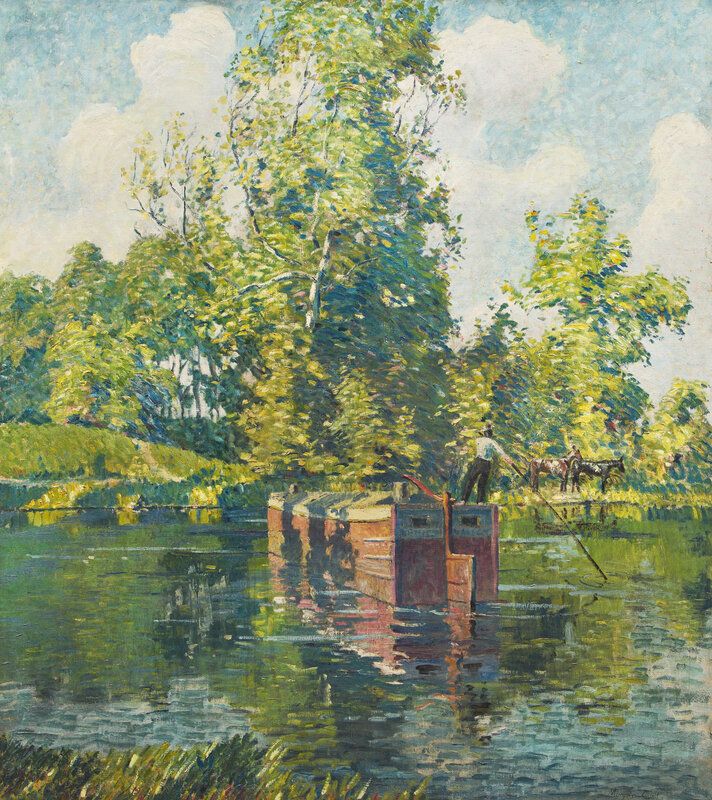
New & Noteworthy
Stay up to date with news, highlights, & features from across Freeman's.
Stay up to date with news, highlights, & features from across Freeman's.
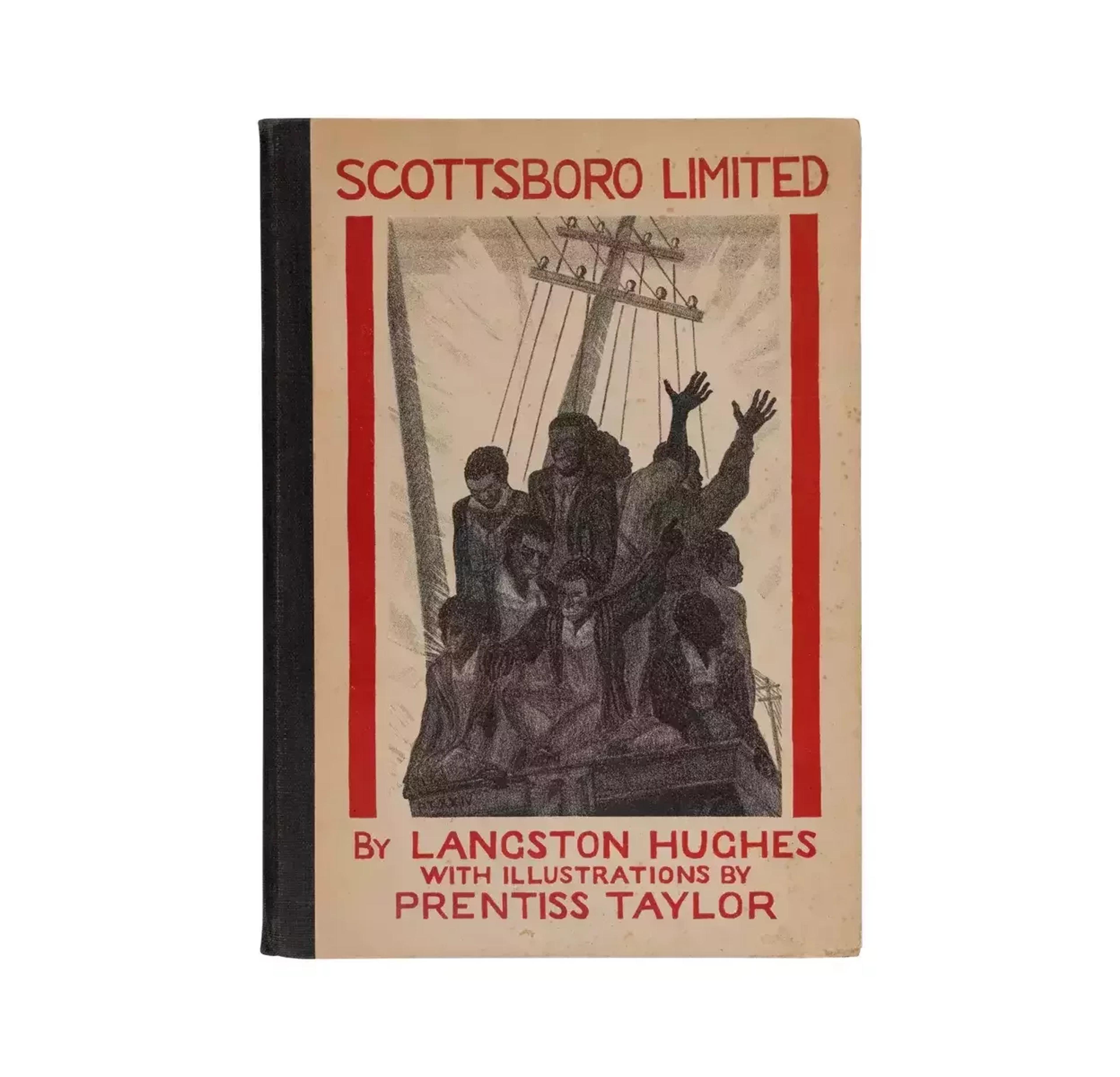
Langston Hughes and Noel Sullivan came from drastically different worlds but were brought together by fate and the extraordinary power of idealism and human sympathy. They first met late in 1932, when Hughes arrived in San Francisco near the end of an arduous cross-country reading tour that he had put together to fund his writing career and bring “poetry to the people.” Friends had told him about a wealthy white liberal San Franciscan, a classical singer of local note, and a devout Roman Catholic with a special interest in black Americans and their struggle for social justice. Sullivan owned a mansion on fashionable Hyde Street, employing a largely African American staff. Although Hughes’ visit lasted only a few days, he made an indelible impression on Sullivan. Sullivan had met many black leaders, but “never has anyone of them inspired in me the unqualified regard and admiration that I feel for you. Indeed, had I been told ten days ago that your integrity (and by that word I think I mean more than is implied in its customary usage) existed anywhere—I should have been skeptical. . .. The contact with you has extended immeasurably for me a sense of tenderness toward everyone.” By the time they met, Hughes had published one novel and two books of verse that had made him greatly admired in some circles but also increasingly controversial. Although his sensitive evocations of African American life had led some to call him “The Poet Laureate of the Negro Race,” his choice of the lowly Blues as the primary source of his inspiration led to sharp criticism by some middle-class blacks. However, the main cause of criticism of Hughes was the radical socialist perspective that burned in his work almost from the start, intensely provoked by the Great Depression. That perspective dominated his verse in the year following his first meeting with Noel Sullivan when Hughes found himself living in the Soviet Union. One poem in particular, “Goodbye Christ,” which expressed Hughes’ hostility to religious charlatanism, would haunt him for the rest of his life. Although Sullivan could not have liked “Goodbye Christ,” he remained loyal and generous to Hughes. When Hughes returned in near-poverty from the Soviet Union in 1934, Sullivan gave him free use of a cottage he owned in Carmel-by-the-Sea, down the coast from San Francisco. There Hughes composed one of his best books, a collection of charged short stories called The Ways of White Folks. He dedicated the work to Sullivan. That Carmel year ended with Hughes practically chased out of town, as part of a surge in right-wing activity in California. Later in the decade, when supporters of the right ruined the launching of his autobiography The Big Sea (1940) and threatened Hughes as never before, Sullivan gave him sanctuary at Hollow Hills Farm in Carmel Valley, to which he had relocated from San Francisco. Sullivan’s loyalty to Hughes was capped when he built a cottage for Hughes at the Farm, where the poet could come and go as he liked. When Hughes suffered probably the greatest public humiliation of his career, an appearance in March 1953 before Senator Joseph McCarthy’s infamous Permanent Sub-Committee on Investigations. The purpose was to grill him about his leftist, possibly Communist affiliations. Hughes survived the ordeal and again headed to Hollow Hills Farm for rest and recovery. “To say what your friendship has meant to me,” he once wrote to Sullivan, “would take more pages than I have ever written in any of my books.” Sullivan’s loyalty and generosity to him “make me believe in you like the early Christians must have believed in that rock on which . . . the church was founded.” His admiration was certainly reciprocated. When Sullivan died in September 1956 from a heart attack, Hughes was broke and could not travel from New York for the funeral. However, he wrote to a Carmel friend, “We who had the good fortune to share his friendship knew that he lived so beautifully he had no fear of going. I wish I were there to sorrow with those close to him in Carmel.” In his will, Sullivan left Hughes the sum of $2,000.

The 20th century was a period of rapid scientific and technological advancement which fundamentally altered human life and shaped the modern world. The first half of the century saw groundbreaking discoveries in the development of quantum mechanics, the beginnings of genetic understanding, and early space exploration. The study of the atom and the development of nuclear physics ultimately lead to the discovery of nuclear fission and the atomic bomb. Technological advancements included improvements in transportation and electronics and communication. These advancements had profound impacts on society, altering the conduct of warfare, transforming daily life, setting the stage for the rapid pace of innovation in the second half of the century culminating in the Space Age. As the world adapted to the rapid developments of the age, the genre of science fiction developed and boomed in the 20th century as authors and filmmakers integrated the science and inventions of daily life into literature and films that explored the relationship between technology, science and the individual. American science fiction as a self-conscious genre dates to 1926, when Hugo Gernsback founded Amazing Stories magazine. Fritz Lang’s film Metropolis (1927) included the first humanoid robot. Writers and filmmakers experimented with new ways of treating time and space, exploring the themes of alienation and dystopia. The technological optimism of the era was marked by society’s belief in the power of technology to change the world. Real-world advancements included the exploration of space, which was echoed in science fiction through stories about space travel, exploration, and the possibility of extraterrestrial life. As scientists made groundbreaking discoveries in a variety of fields, science fiction explored the social, ethical, and moral implications of scientific progress. The era’s scientific endeavors were also heavily influenced by the discovery and use of atomic energy. Despite the optimism of the era, there was a prevalent fear of the unknown. Society’s concerns about the potential dangers of nuclear power and the limits of human understanding of the cosmos were manifested in works of science fiction through stories about alien invasions and nuclear apocalypse. Worlds of Tomorrow explores the relationship between the scientific and technological advancements of the 20th century and the literature and film that developed in response to those rapid advances, presenting historic photographs, artifacts and manuscripts alongside works of literature, film props, posters, and literary archives. These objects represent the reciprocal relationship between science fiction and actual scientific progress: where science fiction anticipates or inspires future technologies, technological advancements provide new fodder for the speculative imagination of authors and filmmakers.
Freeman’s | Hindman is delighted to announce Center Stage: The Laura Pels Collection, a series of single-owner auctions beginning on June 20 in New York. The suite of sales will kick off with a live fine art auction held from Freeman’s | Hindman’s new Upper East Side location at 32 East 67th Street. It will be followed by concurrent online sales of American and European furniture and decorative arts as well as important handbags and couture by luxury makers such as Chanel, Pierre Cardin Haute Couture, and Hermès. ACT I | Center Stage: Fine Art from The Laura Pels Collection A dedicated philanthropist and supporter of nonprofit theater through her eponymous foundation, Laura Pels forged important relationships with playwrights, actors, and creative directors in the United States and abroad. She was also a close friend and confidante of artist Françoise Gilot, whose paintings and drawings feature prominently in this stunning River House collection alongside works by contemporaries Jean Cocteau, Joan Miró, Alexander Archipenko, and Sam Francis. Gemma Sudlow, Executive Vice President and Managing Director for the New York region comments: “We are honored to be the auction house of choice for this distinguished River House collection. Laura Pels was a dedicated supporter of the dramatic arts, and we are delighted to pay tribute to her philanthropy and connoisseurship through this suite of sales where her legacy will be celebrated center stage. The recent announcement of a new room dedicated to the life and work of Françoise Gilot at the Musée Picasso in Paris is the perfect context to re-evaluate the importance of Gilot’s work and there are many fine examples in this sale that speak to the unique and enduring friendship Ms. Pels enjoyed with the artist.” Among the 16 works by Françoise Gilot to be offered is The Model (estimate: $40,000-60,000), a stunning female nude standing against a Matisse-inspired red background. Executed in 1958, the work bears strong Fauvist and Cubist influence, and is a testament to Gilot’s ever-changing, creative style. This is especially evident when comparing it to the later examples of the artist's work included in the sale, which consist of a variety of portraits and landscapes from the 1980s, 1990s, and 2000s. To honor this historic friendship with Françoise Gilot and pay tribute to Ms. Pels’ French origins, a selection of highlights will travel to Paris for a special exhibition this spring. Raphaël Chatroux, Head of the American Art Department, comments: “Ms. Pels was born near Bordeaux and studied acting in Paris, where she owned an apartment and ran Le Théâtre de l’Atelier together with her daughter. Her collection undoubtedly reflects how much of a Francophile she was. It was particularly important for us to celebrate her legacy and commitment to the arts by exhibiting treasured works from her collection in her home country, which granted her the Légion d’Honneur in 2002." Additional Fine Art Highlights Include: A graphite on paper self-portrait, Françoise and Geneviève, from 1944 (estimate: $6,000-8,000) A rare, blue-colored crayon composition by Constantin Brancusi from (estimate: $150,000-200,000) Two organic sculpturesby Jean Arp (estimates: $50,000-80,000 and $30,000-50,000) Pictured above: Fleur de Rêve au Musaeu L'Oiseau à L'Œil de Verre, a whimsical tempera by Max Ernst framed in an impressive brass structure (estimate: $150,000-200,000) ACT II | Center Stage: Furniture and Decorative Art from The Laura Pels Collection The furniture and decorative objects collected by Ms. Pels illustrate her broad interest in this category. From colonial American furniture to the Chinese export ceramics and modernist silver by Elsa Peretti, Ms. Pels appreciated the beauty and craftsmanship of artisans across the globe. Furniture and Decorative Art Highlights Include: An American Sterling Silver Flatware Service, Mark of Tiffany and Company (estimate: $5,000-8,000) A Chippendale Carved Cherrywood Desk and Bookcase(estimates: $3,000-5,000) A Set of Four Elsa Peretti 'Bone' Sterling Silver Candlesticks (estimate: $3,000-5,000) A Chinese Porcelain Lobed Double Gourd Vase (estimate: $5,000-7,000) ACT III | Center Stage: Luxury Handbags and Couture from The Laura Pels Collection The couture collection of Laura Pels features runway pieces from Karl Lagerfeld’s collections for Chanel, Pierre Cardin Haute Couture from the 1980-90s, and an important collection of Geoffrey Beene. Many of the pieces were custom-made for Ms. Pels’ specifications. The collection also features forty plus Chanel handbags. Much like the art and jewelry collections of Ms. Pels, her couture reflects her deep appreciation for French culture. Luxury Handbags and Couture Highlights Include: Chanel Medium Flap Bag in Quilted Navy Lambskin Leather(estimate: $3,000-4,000) Chanel Skirt Suit, Spring 2008 (estimate: $1,000-2,000) Pierre Cardin Haute Couture Butterfly Gown (estimate: $700-900) I n addition to the single-owner sales of fine art, furniture and decorative arts, andhandbags and couture, Ms. Pels’ peerless taste is also reflected in a beautiful collection of jewelry highlighted within the May 14 Important Jewelry auction in Chicago. Her jewelry includes pieces by renowned and timeless French makers such as Cartier and Boucheron, alongside more avant-garde works designed by artist Jean Cocteau.
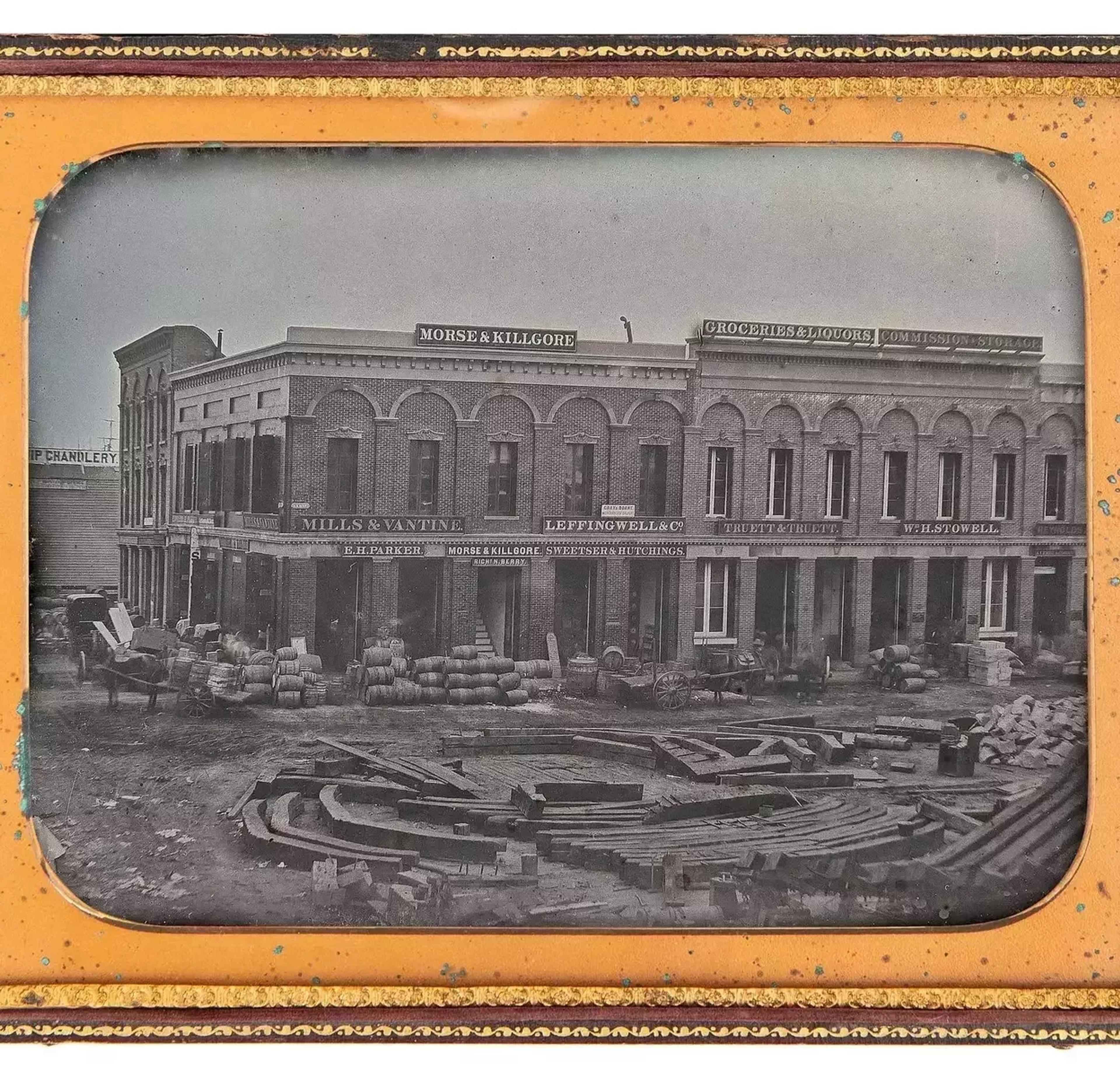
The discovery of gold at Sutter’s Mill forever changed the identity and landscape of the American West. While miners from across the world scrambled to make their fortunes, practitioners of a recently discovered technology–the daguerreotype–raced to record the prospectors and rapid changes in the towns and landscapes that would define the era. These pioneering photographers left behind a body of work that brings to life a pivotal moments in American History: The California Gold Rush. From studio portraits of “Forty-Niners” to views of the cities and camps in which they lived and worked, Freeman's | Hindman has been entrusted with offering a remarkable selection of Gold Rush-era photography at auction over the last 30 years. This whole plate daguerreotype capturing San Francisco at the height of the Gold Rush is no exception. Taken between 1852-1854, the image shows the southeast corner of Front and Sacramento Streets, focusing on a series of buildings that once served as the headquarters for the San Francisco Committee of Vigilance. Located close to the waterfront (as evidenced by the ship masts just visible behind the “Ship Chandlery” at left), this busy intersection was occupied by commission merchants and importers who offered various wares to fortune-seeking miners. The daguerreotype’s exceptional clarity and contrast reveal many details within the composition, including figures seated in doorways, horse-drawn carts parked in the street between stacks of barrels, and timber that almost certainly would have been used in the construction of wooden ship hulls. This historic image encapsulates the rapid growth that transformed San Francisco from a settlement of approximately 200 residents in 1846 to a boomtown representing the epicenter of the California Gold Rush. A daguerreotype of this size and importance has not appeared at auction for nearly 20 years. To be offered in our American Historical Ephemera & Photography auction this May 31. Lot 356 | [CALIFORNIA - EARLY PHOTOGRAPHY]. Whole plate daguerreotype of San Francisco, California. Circa 1852-1853. | Estimate: $30,000 - $50,000
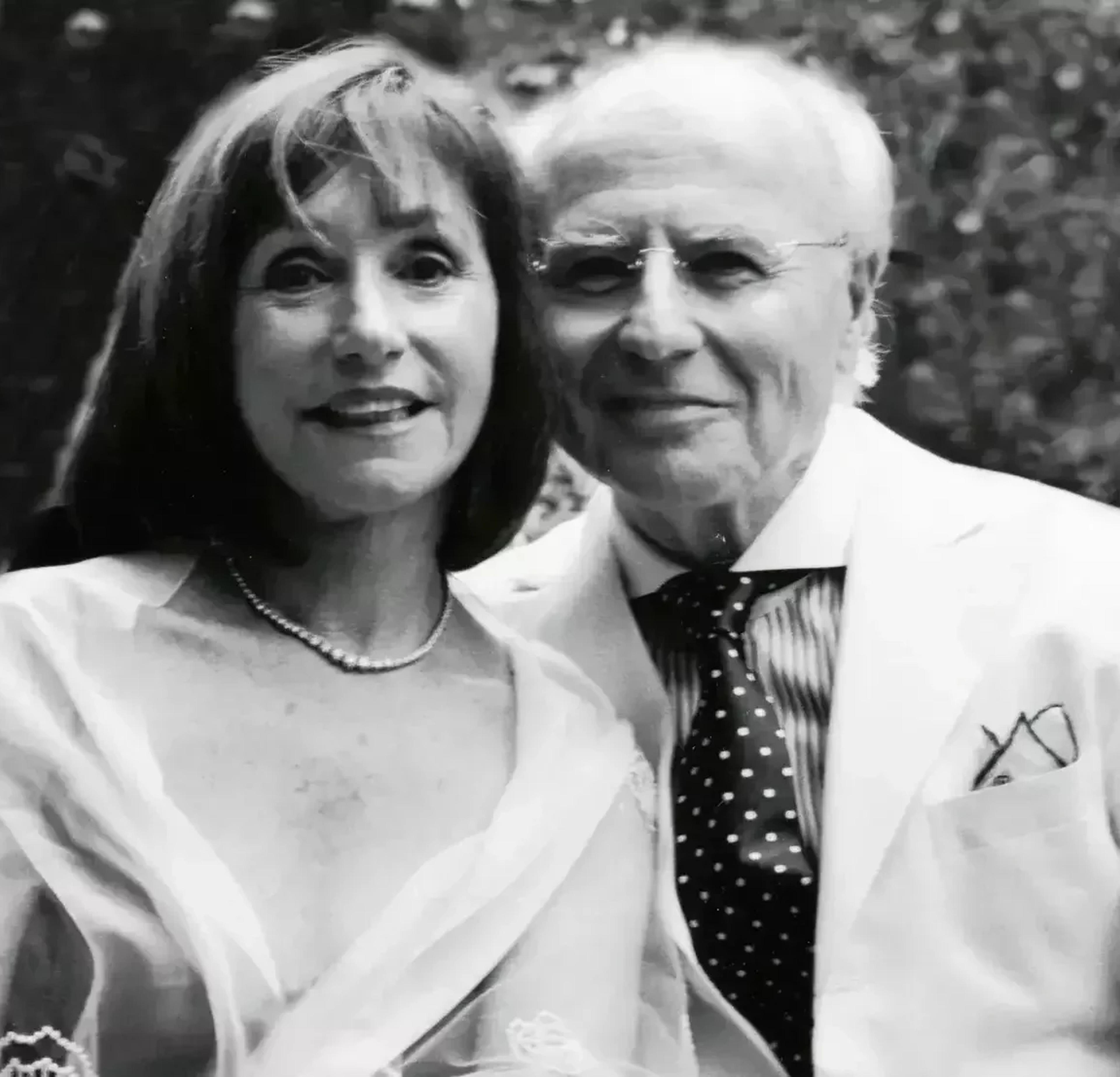
On May 21, Freeman’s | Hindman is proud to offer Post War and Contemporary Art from the Estate of Jordan and Cynthia Katz, a single-owner sale of approximately 39 lots representing over 30 years of passionate collecting. Featuring a curated selection of fresh-to-market paintings, prints, and sculptures, this auction promises to be a testament to the couple’s discerning taste and dedication to art of the 20th century. Beginning as a modest art collection in the early 1980s, the Collection of Jordan and Cynthia Katz blossomed over the following decades under the guidance of gallerist Margaret Lipworth. The couple traveled to New York, London, and Palm Beach to visit the galleries and studios of the artists represented in this sale. Jordan was an amateur artist himself, creating paintings and sculptures that were inspired by the art in their collection. According to their daughter, the experience of collecting was an activity that gave them both great pleasure, and their art was proudly displayed on the walls of their three homes. Within this meticulously curated private collection is a captivating group of works by renowned artists of the 20thcentury, such as Alex Katz, Tom Wesselmann and Lynn Chadwick. Each piece within this collection exemplifies contemporary art's diversity of aesthetics, methods, and expressions–the vibrancy of Katz's iconic figurative paintings features alongside the boldness of Wesselmann's Pop Art compositions and the emotive power of Chadwick's sculptural forms. A notable highlight from the Katz collection is Rackstraw and Pamela, a tender study by Alex Katz for a much larger work from 1976. Known for his distinctive style–characterized by bold colors, simplified forms, and flattened compositions–Rackstraw and Pamela is a notable example of Katz's portraiture and showcases his unique approach to capturing the essence of his subjects. In this painting, Katz depicts realist painter Rackstraw Downes and his wife at the time, Pamela Berkley, who were both artists and friends of the painter. Set against the serene backdrop of coastal Maine, the composition is particularly striking due its close cropping, which eliminates extraneous details and focuses attention squarely on the sitters captured at an intimate moment. Seated together at a yellow picnic table, Rackstraw turns to Pamela, as the wind gently tousles their hair and their elbows gently touch. Despite the simplified forms, flat planes of color, and minimal shadow, there is depth and complexity to the figures, emphasizing both their individual personalities and the dynamic energy between them. The small-scale work is packed with emotion and Katz’s signature bravado. Known for his bold and vibrant depictions of everyday objects, Tom Wesselmann often explored themes of consumer culture, sexuality, and the female form in his artwork. Bedroom Face with Tulip, a large work on paper from the Katz collection, exemplifies the artist’s distinctive style, featuring a graphic representation of a face alongside a tulip against the backdrop of a bedroom setting. Through the use of bright colors, simplified forms, and sharp lines, Wesselmann creates a visually striking composition that captures Pop Art's playful yet provocative aesthetic, and invites viewers to reconsider the familiar in a new light. The Katz collection also features works from Lynn Chadwick’s sculptural œuvre. Lynn Chadwick was a British sculptor known for his innovative and dynamic abstract sculptures. He often created small-scale models–or maquettes–usually made from metal or bronze, that served as preliminary studies for his larger works. The two angular seated figurines that comprise Maquette II Diamond (2 Figures) are a particularly enchanting example of Chadwick’s small-scale work. Each figure has their own identity and individual body shape–one has a more soft and feminine figure, featuring an accentuated waist and hips, subtle belly, and slender legs; while the other has much broader shoulders and a more traditionally masculine torso. Furthermore, each figure has a polished bronze face, which was a trait Chadwick would occasionally incorporate into his sculptures. These faces, often characterized by their smooth and reflective surfaces, exist in striking contrast to the sculpture's otherwise rough texture and sharp angles. Chadwick's use of polished bronze faces imbued his otherwise abstract compositions with humanity and introspection, creating a captivating interplay between the organic and the industrial within his art. The collection also includes a geometric candelabra, Three Branched Candle Holder III, which illustrates the expansiveness of Chadwick’s repertoire. Together, these artworks contribute to the rich tapestry of the Collection of Jordan & Cynthia Katz, and invite viewers into a world where artistic innovation and expression flourish. Featured Lots: Lot 25 | Alex Katz (American, b. 1927) - Rackstraw and Pamela (Study) Lot 30 | Tom Wesselmann (American, 1931-2004) - Bedroom Face with Tulip Lot 11 | Lynn Chadwick (British, 1914-2003) - Maquette II Diamond (2 Figures) Lot 12 | Lynn Chadwick (British, 1914-2003) - Three Branched Candle Holder III
Philip Pearlstein (1924-2022), a celebrated American artist, was known for his masterful figure paintings, capturing the human form with exquisite detail. When the COVID-19 pandemic hit and physical distancing measures prevented him from inviting models into his studio, Pearlstein found new inspiration in his extensive collection of antiquities and ancient art. This remarkable collection, accumulated over decades of devoted collecting, became the central theme for a series of watercolors created during this unique period called Treasures from the Studio (2022). Pearlstein's collection of art, which is now being offered by Freeman's | Hindman in a series of auctions starting with Antiquities and Ancient Art, Modern and Contemporary Art and concluding with Timeless Treasures: Exploring Antiquities & Americana from Philip Pearlstein’s Studio, includes a wide range of ancient objects that he carefully curated over his 98-year life. His keen eye for artifacts and historical treasures is reflected in these watercolors, where he arranged and depicted various clay, terracotta, and earthenware art in unique compositions. Join Gemma Sudlow, Managing Director, New York as she speaks to Sophie Pearlstein, Philip Pearlstein’s granddaughter, and revisits some of her most fond memories with the visionary artist. Sophie, thank you for agreeing to share your experiences with us. We are excited at the prospect of offering your grandfather’s collection of fine art, antiquities, americana and folk art in our upcoming auctions at Freeman’s I Hindman. I wonder if you could share some of your earliest memories of him and visiting his studio. My grandfather’s studio was a very special place to visit when I was young. It was full to the brim with eccentric furniture, antiquities, toys and much more. Whenever I visited, it felt like I was at some sort of amusement park. I would spend hours going from object to object, asking my grandfather where each thing came from. No matter how obscure the object, its commercial value, or how many years prior it had been purchased, my grandfather was always able to tell the story of each acquisition. Philip was a very joyful person, and his studio was a reflection of his personality. Photo credit: Arturo Sanchez The studio in Chelsea was such an inspirational space – dense with colors, lines, forms, and patterns. How did your grandfather collect and to what extent do you think his collecting influenced his artistic journey? My grandparents were scholars and collectors and had an extensive knowledge of the art historical canon. Whenever they were interested in an object, they would learn about the culture that it came from and the given historical context. By rendering the objects he owned in his paintings, my grandfather expanded upon the subject matter available to him. Painting these objects also allowed him to further study and admire each one. The larger his collection grew, the more they populated his compositions. What always amuses me is that Philip saw no hierarchy between very valuable, historic objects and knick-knacks that he bought in Hell's Kitchen. He always just painted what he thought was interesting and visually challenging. Photo credit: Arturo Sanchez Your grandfather was friends with other very prominent artists such as Andy Warhol, Alex Katz, Tom Otterness and others whose works are represented in our suite of sales. Did he ever share stories of these friendships and to what extent was he influenced by his peers versus artists in the historical canon? Philip often told stories about his early years with innumerable now prominent artists. He deeply appreciated and respected the work of his friends and peers. I think that, especially in the 60s, his work developed in conversation and in tandem with these artists. Each drew from the art historical canon in his or her own way while finding their footing in the post-Ab-Ex art scene. Photo credit: Arturo Sanchez Your grandfather’s paintings have enjoyed a resurgence of interest in the marketplace this past year. Tell us about the important work you are doing to preserve his legacy and grow the audience for his important body of work. The Estate’s priority is to maintain Philip’s status in 20th-century art history while also presenting his work in the context of the contemporary art world today. His work is equally as relevant now as it was in the mid to late 20th century and has informed the work of so many cutting-edge painters today. What has struck me in the past year is that his work evokes nostalgia for those who recognize it and excites people who are seeing it for the first time. Photo credit: Arturo Sanchez You have chosen a career path in the art world yourself, to what extent have your personal choices been inspired by his life and work? Almost every choice that I have made so far in my professional life is thanks to my grandfather. When he was alive, my interest in art history and the commercial art world allowed us to connect and since he passed away, working in the art world has allowed me to still feel close to him. Having such an intimate knowledge of his oeuvre has given me a better understanding of contemporary figuration, as many of the artists that I follow have studied his work. What contemporary artists working today do you think he would admire? I would always show my grandfather photos of works by contemporary artists that I liked to try to get his opinions and criticisms. His taste was wide-ranging and his go-to phrase was, “I don’t understand it, but I like it.” I’m sure he would have been very taken with the works of young figurative painters like Louise Giovanelli, Chloe Wise, and Anthony Cudahy.
To the collectors of Fritz Scholder’s art, the name Donna Fuller may not spark any recognition. The image of his “Mystery Woman”, however, looms large in his body of work; his imagery of a petite, blonde model populates many of his mid-career canvases. For years, the identity of this figure has been the subject of speculation and intrigue, in part because Scholder himself was often cryptic about his work, preferring to leave interpretation open to the viewer. Despite, or perhaps because of the mystery surrounding her identity, the “Mystery Woman" remains an iconic and enigmatic figure in Scholder's oeuvre, embodying themes of intrigue, introspection, and the complexity of the human experience. The story of the woman behind the mystery, however, is one that deserves to be told. Donna Fuller was a woman of passion, vision, complexity, and spirit. Born in Decatur, Alabama in 1946, Donna was a southern belle with a kind heart and a great sense of humor. She was petite and blonde, with an eye for fashion and a larger-than-life personality. After moving to New York City in the early 1970s to pursue her career in the world of fashion, she was hired at Yves Saint Laurent, where she spent the next twenty years working as the US representative for the company. Donna was gregarious, outgoing, and beloved, and she never left home wearing anything less than her most fashionable outfits, her hair and makeup styled to perfection. She loved talking on the phone, and conversations were never short! Donna first met Fritz at one of his birthday parties in Scottsdale, Arizona. Quickly, they discovered their shared love of art and adventure; their connection was undeniable. Donna became Fritz’s muse and companion for more than two decades to follow. Together they traveled the world, created art, and reveled in the joy of living life to its fullest. Scholder was known for his colorful personality and unconventional lifestyle. He lived and worked in various locations throughout his life, including the New Mexico, Europe, New York, and Arizona, where he established a studio. Donna made frequent trips to Scottsdale to visit Fritz and his studio and explore the American Southwest. Donna’s home was a veritable cabinet of curiosities, with items from her vast collection displayed from floor to ceiling. Only her closest friends were permitted to enter. She was a very private person and felt that her collection was deeply personal. Brimming with mementos from her many adventures, her collection was eclectic, vast, and inclusive of some truly remarkable gems. The lots presented in this auction from the Donna Fuller Collection were revered with the utmost love and respect. Donna’s collection, which encompassed the whole of her Manhattan apartment, was truly emblematic of the incredible life she lived. Featured: Lot 176 | Fritz Scholder (Luiseño, 1937-2005) | Rider on Horse | Estimate: $20,000 - $40,000 Lot 172 | Fritz Scholder (Luiseño, 1937-2005) | Mystery Woman in Chair | Estimate: $10,000 - $15,000 Lot 170 | Fritz Scholder (Luiseño, 1937-2005) | Mystery Woman, edition 9/12 | Estimate: $4,000 - $6,000 Lot 182 | Fritz Scholder (Luiseño, 1937-2005) | Return to Rancheros | Estimate: $3,000 - $5,000
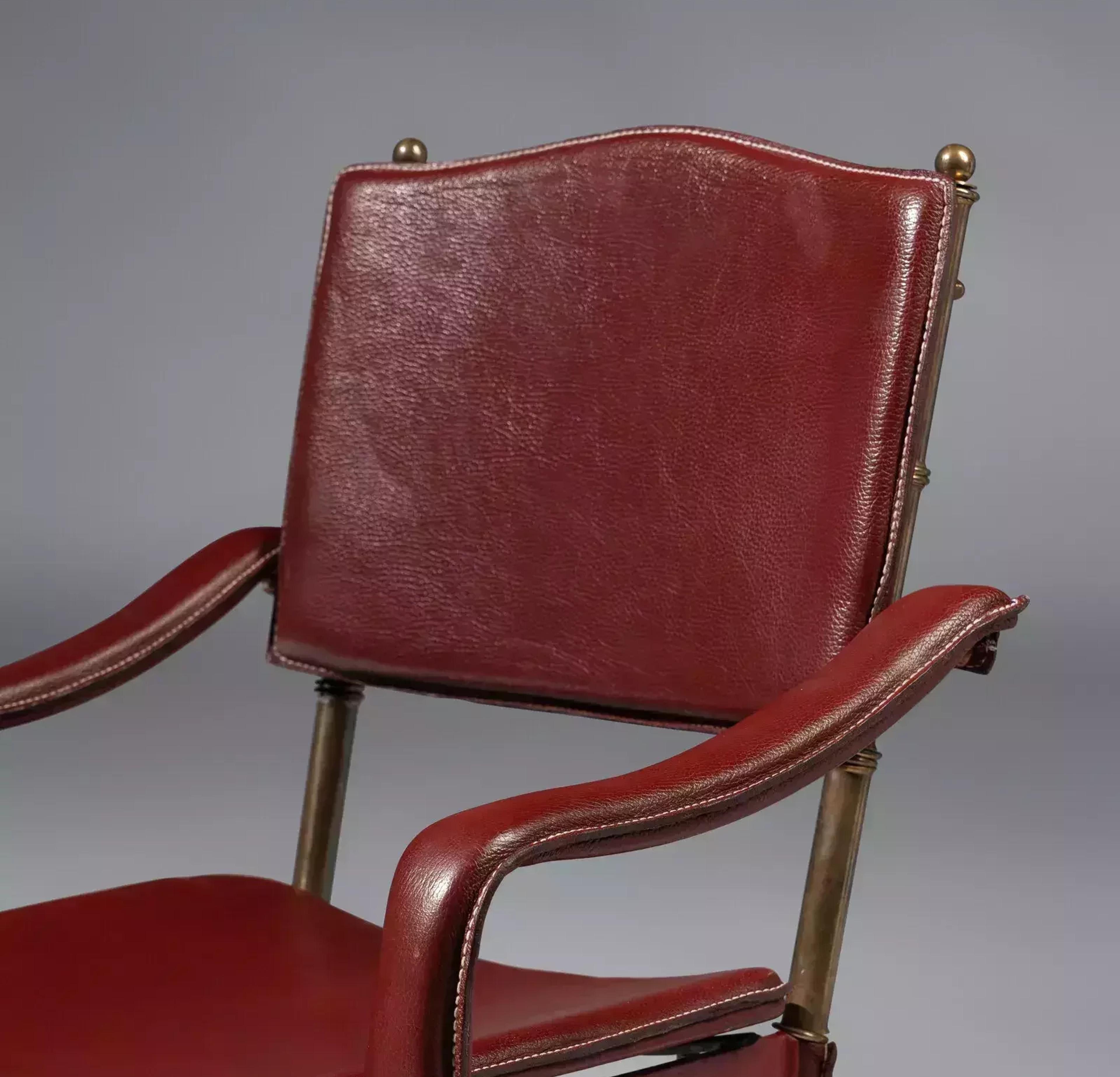
The May 21 Design auction features a single-owner collection of nearly a dozen pieces by preeminent french 20th century furniture designer Jacques Adnet. Originally trained as an architect, Jacques Adnet first came to prominence in the heyday of Paris’s Art Deco movement. He and his twin brother, Jean, established their first firm, J.J. Adnet, in Paris in 1916, and they exhibited in the 1925 Exposition Internationale des Arts Décoratifs et Industriels Modernes, where they gained notoriety–recognized for their vision and ability to stage areas as both furniture designers and interior decorators. Despite their successful partnership, Jacques and Jean ultimately pursued separate careers: Jacques became Design Director at Compagnie des Arts Français (CAF), while Jean went on to become a sales manager at Les Galeries Lafayette. While at CAF, Jacques collaborated with numerous design luminaries, including Serge Mouille, Charlotte Perriand, Georges Jouve, and François Jourdain. Though Art Deco influences always surrounded his design, his furniture matured towards a restrained simplicity that would visually define his legacy. Adnet's distinct pared-down aesthetic and exquisite craftsmanship garnered the attention of decorators and design houses. He was asked to design a variety of common rooms for luxury ocean liners, the Riviera Casino owner Frank Jay Gould’s mansion, the main meeting room in Paris for UNESCO’s international headquarters, and the French President’s studio. Throughout these prestigious commissions, he retained his vision and strove to create practical, useful pieces for everyday life, believing furniture should be functional and geometrically simple. Adnet's most iconic designs feature hand-stitched leather wrapped on deceptively simple metal frames, and many of these were sold through the luxury powerhouse brand, Hermès. Though the collection on offer includes a range of Adnet's popular and lesser-known designs, each piece is a testament to his careful construction and reflects his unique take on luxury and commitment to simple, functional beauty. Amongst the more iconic designs is a circular mirror wrapped in a leather frame with an integrated, adjustable leather hanging strap. The piece’s buckles and straps emulate the fashionable styling of Hermès’ belts and handbags. A lesser known piece is a chic magazine rack (see page 32), whose leather-wrapped frame features an integrated loop handle for portability–a feature that is at once functional and also its most notable design feature. Perhaps the red leather and brass chair best epitomizes Adnet’s work from this period. The alluring warmth of the leather is accented with exquisite exposed stitching in a contrasting cream tone celebrating the fabrication. Featuring a simple frame and a restrained use of curved elements, the unexpected faux-bamboo brass legs give the chair a hint of attentive exoticism. Though heavily focused on the work of Adnet, the collection also includes works by other European masters of design, including Piero Fornasetti, Alessandro Pianon, Gio Ponti, and Napoleone Martinuzzi, among others. Featured Images: Lot 11 | Jacques Adnet (French, 1900-1984) Leather Covered Floor Lamp, c. 1950 France | Estimate: $3,000 - $5,000 Lot 9 | Jacques Adnet (French, 1900-1984) Leather Covered Mounted Shelf, c. 1960 France | Estimate: $3,000 - $5,000 Lot 1 | Jacques Adnet (French, 1900-1984) Saddle Stitched Leather Armchair, c. 1950 France | Estimate: $5,000 - $7,000

Freeman’s | Hindman is proud to present a selection of works from the Collection of Dr. Julian Katz and Dr. Sheila Moriber Katz, of Gladwyne, PA via a series of auctions throughout the Spring season. Julian and Sheila met at the University of Chicago and received additional training at Duke, Yale, and Harvard before moving to Philadelphia in 1969. They were caring and compassionate individuals who adored their 2 children and 6 grandchildren, and both Julian and Sheila took interest in other fields than medicine. Art remained a unifying passion throughout their more than 50 years of marriage. Julian was a leading academic gastroenterologist, author, and editor who was instrumental in defining the condition known today as lactose intolerance. During Vietnam, he joined the Navy, rising to the rank of Lieutenant Commander, and upon arriving in Philadelphia, he started a solo gastroenterology practice that he eventually developed into one of the leading gastroenterology centers in the nation. As a Professor at the Medical College of Pennsylvania and later Drexel University, he trained generations of medical students, residents, and fellows. A brilliant and compassionate clinician, when the population of his practice aged, Julian became board-certified in geriatrics as well. He also served as a member of the Philadelphia Board of Health. Sheila was a celebrated pathologist, business owner, poet, educator, lecturer, and mentor, and the first to identify the lethal bacteria known to cause Legionnaires’ Disease, an experience she described as like “touching the sun.” She received countless awards for work within her field, published extensively, and obtained millions of dollars in research grants, eventually becoming Dean of the Hahnemann University School of Medicine. A strong advocate for women in medicine, Sheila’s groundbreaking discoveries over her career also led to numerous other distinguished appointments including as Executive Director of the White House Medical Commission in 1999 under President Bill Clinton. The fine art pieces included in Freeman’s | Hindman series of Spring auctions represent work that Sheila and Julian collected throughout their lifetime and particularly enjoyed. Bold, enigmatic and cerebral, the works of Robert Rauschenberg, Will Barnett, Milton Avery and Purvis Young (among others), show the creative side of these eminent physicians and scientists, who always loved to learn and think. They also contribute to the lasting legacy of their keen eye for art. Featured Lots: Milton Avery (American, 1885-1965) - Draped Nude | Estimate $20,000 - $30,000, to be sold on June 2. Milton Avery (American, 1885-1965) - White Vase | Estimate $50,000 - $80,000, to be sold on June 2. Purvis Young (American, 1943-2010) - Hey Man When Purvis Comin? | Estimate $1,000 - $2,000, to be sold on June 4. Robert Gwathmey (American, 1903-1988) - Two Field Workers | Estimate $10,000-$15,000, to be sold on June 2. Robert Rauschenberg (American, 1925-2008) Bellini #3, 1988 | Estimate: $8,000-$12,000 to be sold on July 18. Darrel Austin (American, 1907-1994) - Girl Resting in a Meadow | Estimate: $1,000-$2,000 to be sold on June 4. Morris Blackburn (American, 1902-1979) - Abstraction with Blue Dot, 1946 | Estimate $2,000 - $4,000, to be sold on June 4. Ed Garman (American, 1914-2004) - No. 296 | Realized $33,020 in our May 11 Modern and Contemporary Art sale. Please note that a portion of the proceeds of each sale will go to the Julian and Sheila Katz Scholarship Fund at the University of Chicago Pritzker School of Medicine.
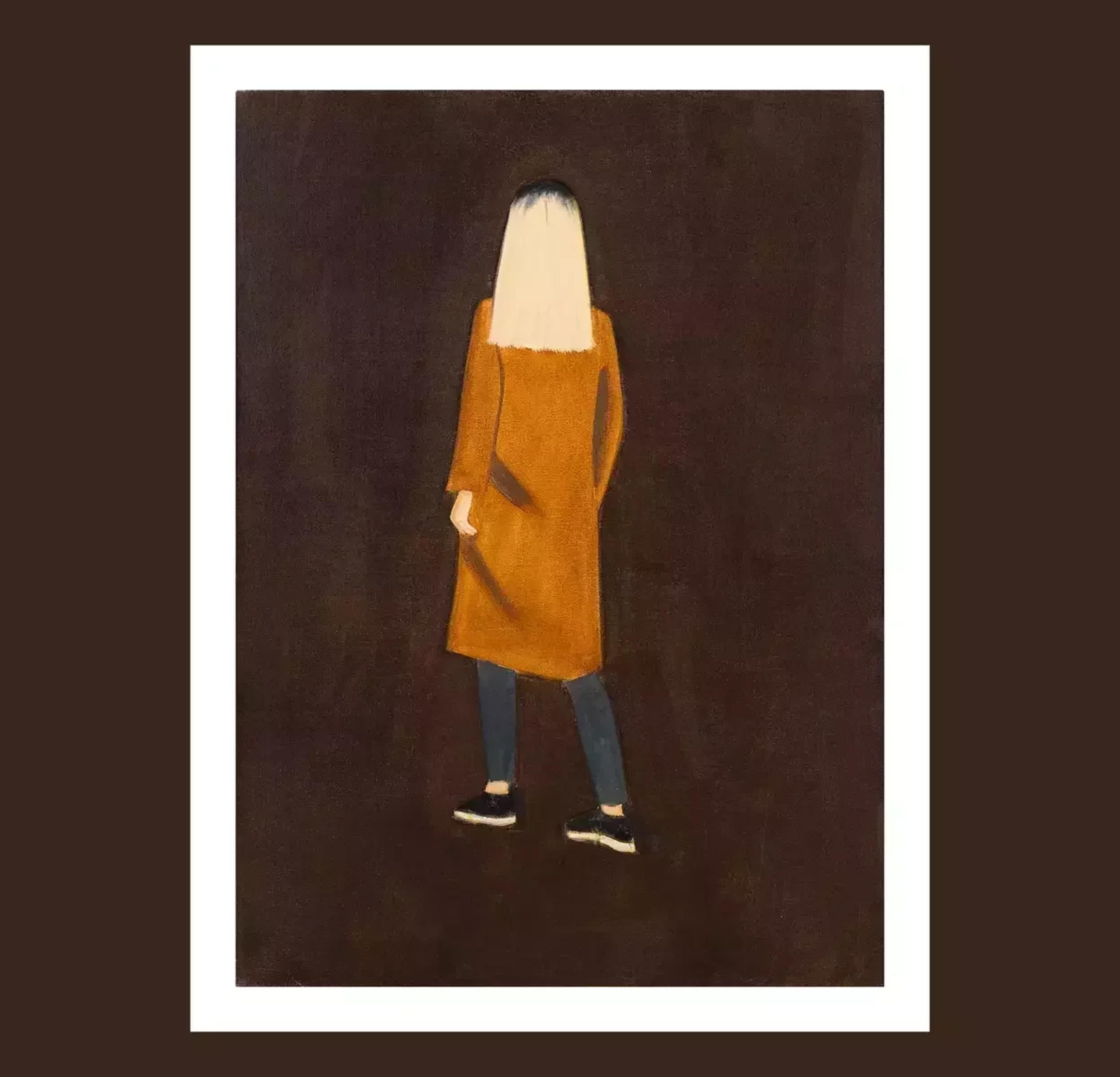
The subject of more than 200 solo exhibitions and international acclaim, the signature style of Alex Katz (American, b. 1920) is a deliberately vibrant visual language between realism and abstraction, ambivalence and intimacy. Coming of age alongside the titans of New York’s Abstract Expressionism of the 1950s, Katz boldly favored flatness of color and form rather than gestural primacy and raw emotion. His work is deceptively simple; his technique of painting wet on wet evokes a lustrous finish to his canvases, defying two-dimensionality even in their flatness. The bulk of Katz’s oeuvre can be divided into two categories: portraiture and landscape, and we are pleased to offer you an excellent example of each in Ariel (2016-17) and Golden Field #1 (2001). Part familiar figure and part otherworldly specter, Ariel is a quietly moody portrait of Ariel Vieth, a model and frequent muse of Katz’s. Her back is turned to the viewer, the shock of brightness in her hair balancing out the darkened background; you can somehow tell she is beautiful without even seeing her face. Ariel feels like spotting a friend across the street, like the anticipation of wondering if she will turn around and see you, too. Ariel is not the only recurring character in Katz’s work – in their 60–year marriage, Katz has painted over 250 portraits of his wife, Ada. "It's a conceit in a way," Katz said in an interview. "It's like you can paint the same river twice differently. I often paint in the same place. It's like painting Ada over and over again—to see if you can get something else out of the same subject matter." (Quoted in Alex Katz is Cooler Than Ever, Smithsonian Magazine, August 2009) This repetition is also found in Golden Field #1, the first in a series of landscapes drenched in a buttery yellow light. In both Golden Field #1 and Ariel, Katz is simply painting his environment, flash-in-the-pan moments he captures in thick brushstrokes and meditatively stylized forms. In both works, Katz shares his world, either in downtown New York City among the cultural avant-garde, or in the heart of nature at his home in coastal Maine. In looking at his work, the viewer is transported and feels as though they too are in on it, that they are someone who sees the specialness in otherwise normal moments, seeing beauty just as Katz can. "Realist painting has to do with leaving out a lot of detail,” said Katz in an interview, “I think my painting can be a little shocking in all that it leaves out. But what happens is that the mind fills in what's missing. It's about being able to see something in a specific way. Painting is a way of making you see what I saw." (Quoted in I prefer Stan Getz to Sartre, The Irish Times, March 3, 2007) Featured Image: Lot 13 | Alex Katz (American, b. 1927) | Ariel, 2016-17 | Estimate: $300,000 - $500,000 Lot 14 | Alex Katz (American, b. 1927) | Golden Field #1, 2001 | Estimate: $150,000 - $250,000
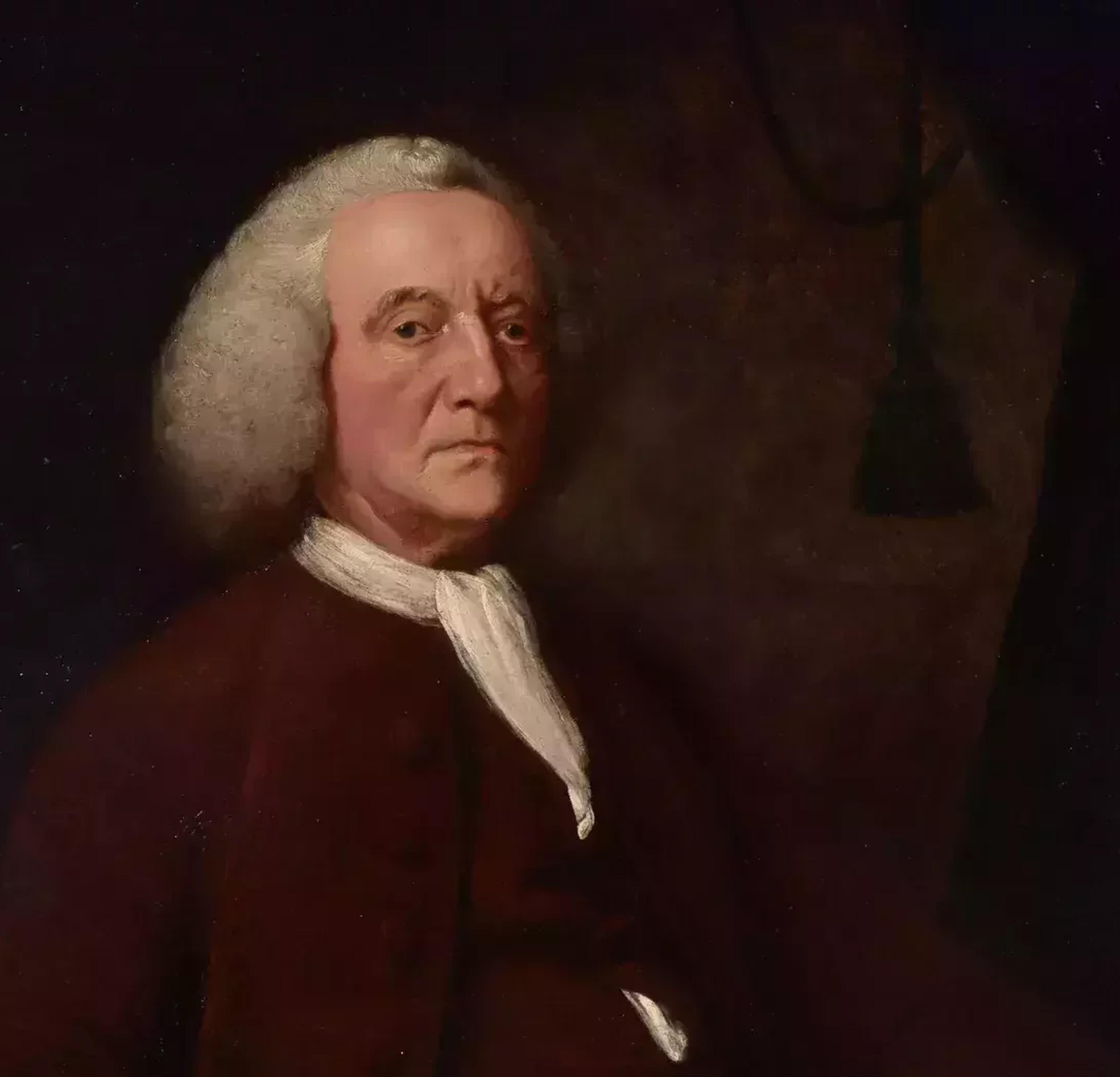
From different consignors and continents, a selection of remarkable and rare 18th century objects commemorating the great Founding Father, Benjamin Franklin, have found their way back to Philadelphia where they will be featured in our April 30 American Furniture, Folk and Decorative Arts auction. The first item, consigned from Italy, is a previously unrecorded portrait of Benjamin Franklin, attributed to the English portraitist Mason Chamberlin. Sharing many characteristics with the famous Chamberlin portrait of Franklin in the collection of the Philadelphia Museum of Art (1956-88-1), the Founding Father is seated in his study, wearing a powdered wig and brown suit. One hand rests on an open book while the other holds his iconic folding spectacles. The contours of the face, cleft chin, and eyes are unmistakenly Franklin’s. The portrait was acquired by the consignor in 1970 from a family friend, priest, and fellow collector, Don Ermanno Volta (1925-2016). Volta had purchased the portrait in Rome with an attribution to Pietro Longhi (Venetian, 1701-1785) and decided to sell it upon learning that the Longhi attribution was unsupported. The portrait is joined by a unique, double-sided composition snuff box attributed to Jean-Martin Renaud and purportedly presented to Franklin by French King Louis XVI. One side depicts the mythical Fame carrying portrait medallions of the two Founding Fathers, “Franklin Wassington [sic].” The other side, entitled “Americana Prosperitas,” depicts a family group watched over by Mercury with a trading ship beyond. Descending directly in the Bache-Scott Family to the present owner, the snuff box was included in the 1936 exhibition Benjamin Franklin and His Circle at the Metropolitan Museum of Art and was illustrated in the accompanying exhibition catalogue. It is also illustrated in B. Stephens's, H. Lewis Bullen's, and W. Rowlands's The Pictorial Life of Benjamin Franklin (1923) and discussed in Charles Coleman Sellers’s Benjamin Franklin in Portraiture (1960), pp. 387-388. The final item is an unglazed porcelain figural group depicting Louis XVI and Benjamin Franklin by Charles-Gabriel Sauvauge. It commemorates the treaties signed in 1778 by France and the United States, recognizing American Independence and guaranteeing trade rights between the two nations without British interference. Inscribed “Liberte Des Mers,” the king is shown in court dress in contrast to Franklin’s plain dress. Dating to about 1785, this figural group was included in the 1989 exhibition, La Revolution Francaise et L’Europe at the Musée de L’Impression sur Etoffes, Muhouse, France, no. 146. Featured Lots: Lot 34 | Attributed to Mason Chamberlin (English,1727-1787), An unrecorded portrait of Benjamin Franklin (1706-1790), circa 1778 Lot 30 | A unique commemorative Neoclassical double-sided composition "Americana Prosperitas" snuff box, attributed to Jean Martin Renaud (French, 1746-1821), circa 1785 Lot 31 | A rare commemorative unglazed porcelain figural group of French King Louis XVI and Benjamin Franklin, attributed to Charles-Gabriel Sauvauge (French, 1741-1827), Niderviller Factory (France, active 1754-1827), circa 1780
Action Picture is a unique screenprint and trial proof. It offers rare insight into Andy Warhol’s work from 1984 to 1986, shortly before his untimely death in 1987. The work reflects not only the greater shift in Warhol’s oeuvre from references drawn from mass culture to art historical sources, but also tells the fascinating story of Warhol’s collaboration with his publishers and his printer in the creation of his well-known Cowboys and Indians series. 1984 was an important year for the evolution of subject matter in Warhol’s artistic canon. It was this year that he began to diverge from appropriating images from popular culture (celebrity portraits, advertisements, his own polaroids, for example) and venture into using paintings from museum collections, or ‘high art’. In his print series Details of Renaissance Paintings (1984), for instance, he utilized paintings by Piero della Francesca, Sandro Botticelli, Leonardo da Vinci, and Paolo Uccello as his source material. In that year he also produced four unique screenprints based on paintings by Edvard Munch. It was also between 1984 and 1986 that Warhol created his magnificent series of paintings, The Last Supper, based on Leonardo’s iconic mural. In Action Picture, Warhol appropriated the center section of Charles Schreyvogel’s seminal painting Breaking Through the Line (Gilcrease Museum, Tulsa, Oklahoma), (fig.1), from the early 1900s, of a cavalry officer brazenly charging towards the viewer amid an altercation between Native Americans and American soldiers. This engagement with both high art and themes distinctly tied with the history of the American West proves to be unique in all of Warhol’s artistic oeuvre. However, interestingly, as the work was omitted from the final portfolio, it exists, much like the painting from which it was based, only in unique form. 36 trial proofs of this image were created, each experimenting with different colors and compositions that are wholly individual. In 1984, when Warhol embarked upon the project of creating Cowboys and Indians with the publishers Edmund Gaultney and Kent Klineman, he did not realize that the project would require two years of work involving battles over the content with the publishers and continual delays. Contract negotiations for the series were ongoing into 1985 and, when the dust settled, one of the unique provisions of the contract was that Gaultney and Klineman had final approval of all images in the suite. This seemingly small provision led to an unusually drawn-out production process whereby Warhol and his printer, Rupert Jasen Smith, created images of multiple subjects and an array of trial proofs where they would experiment with color and composition until they landed on an image that Gaultney and Klineman approved. In the end, there were 10 images published in the regular portfolio (John Wayne, Annie Oakley, General Custer, Northwest Coast Mask, Kachina Dolls, Plains Indian Shield, Mother and Child, Geronimo, Indian Head Nickel, and Teddy Roosevelt) (fig. 2). These final images hearken back to Warhol’s days as a portrait artist and his prints that utilize his polaroids as subject matter. It is only when you look at the proofs for the rejected images that it is possible to fully see Warhol’s intended artistic vision as it developed between 1984 and 1986, unimpeded by the external demands of his publishers. Indeed, when looking at the final selections for the portfolio of 10, each print on a white background, stark in their handling, Action Picture stands out as an appropriately titled scene. In this impression, the coloration of brash red set against cool blues and light pink emphasizes the composition which bursts with the same intensity, urgency, and emotion present in Schreyvogel’s painting, but brought forward for the contemporary viewer in Warhol’s own distinctive style. While it may not fit with Gaultney and Klineman’s vision for the portfolio, Action Picture and the other experimental trial proofs for this series provide small clues to the innerworkings of Warhol’s vision and the potential trajectory of his artistic output exploring high art and mythmaking in a distinctly American artistic framework. Header Image: Lot 30 | Andy Warhol (American, 1928-1987) | Action Picture, 1986 | Estimate: $60,000 - $80,000 Figure 1: Breaking Through the Line by Charles Schreyvogel Image Source Figure 2: Complete Cowboys and Indians Series
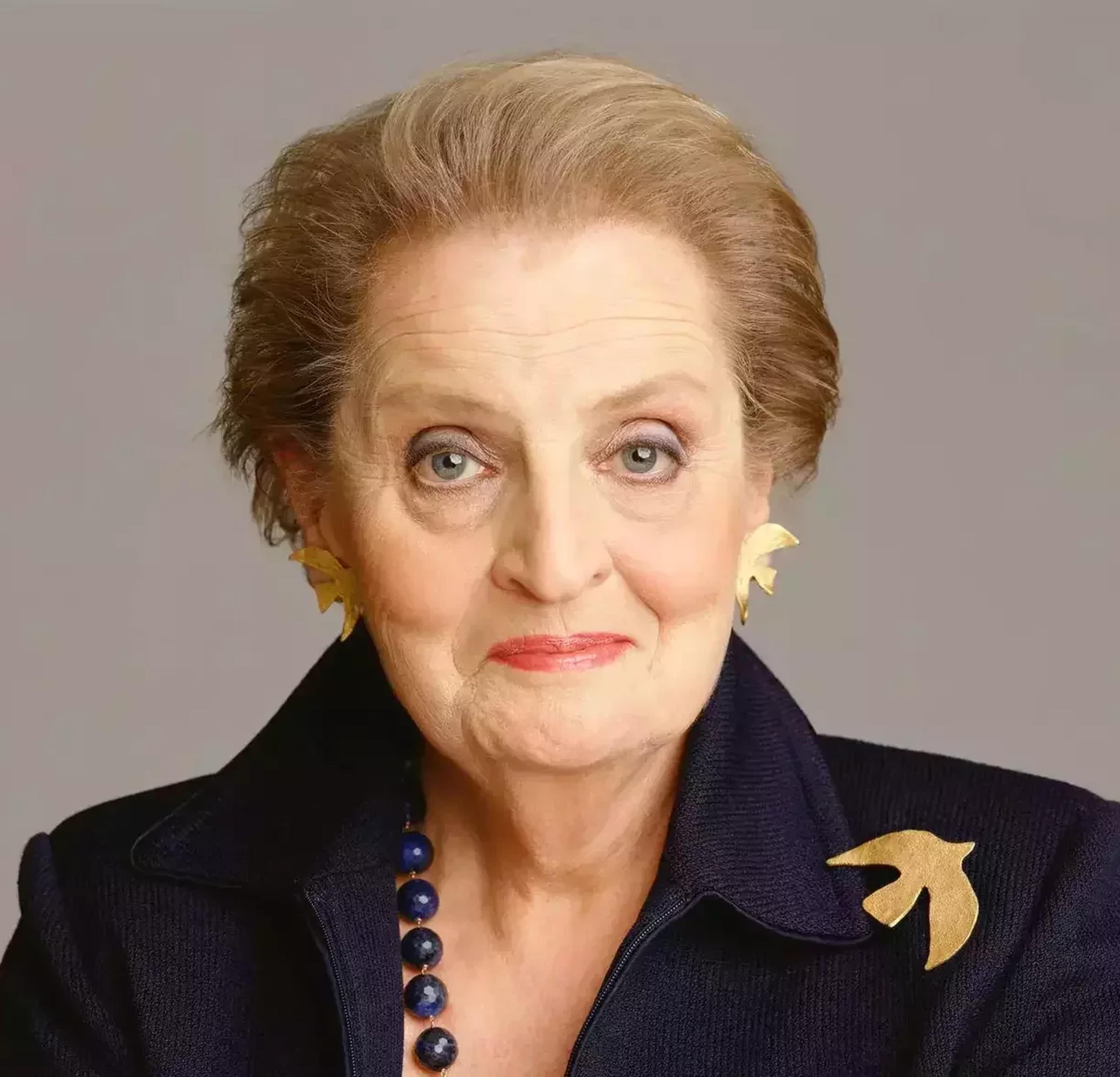
It is the distinct honor of Freeman’s | Hindman to present the private collection of the late former U.S. Secretary of State Madeleine K. Albright across a sequence of live and online sales this May. Featuring a range of personal property, from her distinctive pins to the beautiful fine and decorative arts that populated her Georgetown home and her offices, The Private Collection of Secretary Madeleine K. Albright shines a spotlight on the collecting sensibilities of this deeply influential national and international icon. “Madeleine Albright’s name and career are synonymous with reaching a pinnacle of female achievement” says Gretchen Hause, Senior Vice President, Co-Head of Department, Books and Manuscripts. “Presenting her biography in objects at auction is a professional and personal honor, and will no doubt excite new generations of global citizens.” Extraordinary Legacy, Trailblazing Style Madeleine K. Albright lived a life of service and leadership. She was appointed U.S. Ambassador to the United Nations in 1993 and shattered a glass ceiling when she was sworn in as the nation’s first female Secretary of State in 1997, becoming at the time the highest serving woman in the history of the United States government. Fiercely committed to democracy and human rights, Albright championed America’s alliances, promoted the expansion of NATO, supported non-proliferation efforts, and supported the expansion of free trade. Secretary Albright received the Presidential Medal of Freedom, America’s highest civilian honor, in 2012. During her trailblazing diplomatic career, Secretary Albright discovered the power of jewelry to convey foreign policy messages. Before long, she began selecting appropriate pins to communicate her point of view. As shared in her book Read My Pins: Stories from a Diplomat’s Jewel Box, she deployed pins within her “personal diplomatic arsenal” to express her hopes, mood, and often a pointed message. She donated a collection of her pins to the National Museum of American Diplomacy at the U.S. Department of State, but Freeman’s | Hindman is delighted to offer at auction many other signature pins and jewelry that she wore throughout her life – including those worn at celebrated events and special occasions. Also available are selections of decorative objects, fine porcelain, silver, and books that she collected during her travels around the world. Bring Home Part of Her Story The Private Collection of Secretary Madeleine K. Albright presents the singular opportunity to acquire some of the objects that Albright wore, lived with, and treasured throughout her life. Standout highlights include many of Albright’s hallmark pins; diplomatic and political memorabilia; historical books; designer scarves, hats, and handbags; and, antique furniture and decorative objects. Exhibitions: Chicago 2-9 April 2024 Monday-Friday 10 am – 4 pm 1550 West Carroll Avenue, Chicago, IL, 60607 New York 2-6 May 2024 Monday-Friday 10 am – 4 pm Saturday 4 May, 11 am – 4 pm 32 East 67 Street, New York, NY 10065 Auctions Live Auction, 7 May 2024, 10 am ET Online Auction, 8 May 2024 10 am CT 32 East 67 Street, New York, NY 10065 Head of Sale Gretchen Hause Press Inquiries Thomas Brown [email protected]

Pioneering Auction House, Hindman, to Merge with America's Oldest Auction House, Freeman's Today, the pioneering, full-service auction house Hindman announces that it will continue to expand its national footprint by merging with venerable, 200-year-old Philadelphia-based Freeman’s. With a combined six salerooms and 18 regional offices across the country, Freeman’s and Hindman stand to have the largest, coast-to-coast presence of any auction house in the United States, with plans to expand into international markets. The union of these two preeminent businesses represents the foundation of a dynamic and comprehensive company well-positioned to lead the upper-middle auction market. Under the name Freeman’s | Hindman, the company is combining their robust digital infrastructures into a singular website and highly targeted online initiatives. As one of the first actions, Freeman’s | Hindman will be opening its new permanent New York saleroom in January 2024. Located at 32 East 67th Street in the heart of the Upper East Side’s art district with up to 5,000 square feet of space available to the company, it is truly setting its sights on New York as a major center of growth. For Freeman’s, it is a return to the city with a physical presence, although both companies have had senior specialists working with clients in New York for many years. This move is in response to the strong demand they have established in this vibrant and key area of the art market. “I’m truly excited to bring together these two esteemed auction houses under one roof,” asserts Executive Chairman, Jay Frederick Krehbiel. “The merger strengthens our advantage in an increasingly competitive auction market and sets us up for continued growth across the United States and globally, especially with Freeman’s existing international relationship with Lyon & Turnbull.” Driven by a client-first approach, dedication to excellence, and innovative strategy, the two houses are natural partners. As America’s oldest auction house, Freeman’s adds more than two centuries of achieving market-setting results to Hindman’s 40-year record of realizing stellar prices while providing outstanding service, particularly to trusts and estates professionals nationwide. A strength also lies in both firms’ specialist teams, whose profound knowledge and unrivaled expertise span all fine art and luxury collecting categories. Alyssa D. Quinlan will serve as the merged company’s Chief Executive Officer after being appointed CEO at Hindman in January 2023. “On the heels of Hindman’s most successful year in 2022 and continued strength in 2023, I’m thrilled to build upon our momentum and oversee a merged Freeman’s | Hindman,” says Quinlan. “Our clients are always our top priority, and I am confident that a combined company will only benefit our buyers and sellers as we further expand both our national and global reach. I look forward to working with and learning from the Freeman’s team, as our shared vision will ensure a unique company culture, underpinned by integrity and professionalism, and overlaid with enthusiasm and empathy.” The new company will boast an extensive network and continue to offer a full suite of services including auctions, appraisals, private sales, and art advisory. By combining strengths, knowledge, and resources, the joint team will be better able to meet the evolving needs of their global client base without sacrificing accessibility. Freeman’s | Hindman will integrate technology including a combined online presence and a personal touch to offer adaptable solutions, provide dedicated attention, and deliver impactful, tailored experiences that belie the impressive scale of their operations. “This merger heralds an exciting new chapter, continuing Freeman’s long-standing tradition of embracing change and adapting in response to the times,” remarks Alasdair Nichol, Deputy Chairman. “Great things are bound to happen when passionate people with aligned goals collaborate, and I can’t wait to see what our two creative and client-centric companies achieve together.” Molly Morse Limmer, Deputy Chairman, says, “Hindman’s merger with Freeman’s is an incredible opportunity to pool knowledge and expand our expertise. I am eager to see even more international competition in the saleroom as we further elevate and diversify the material we bring to market.” In addition to the exciting plans for an expanded auction calendar, Freeman’s | Hindman is also considering other opportunities at a time of consolidation in the auction art market. Fraser Niven, President of the company said, “I will be focusing on ways to expand across the United States as well as overseas in line with our aim to provide our valued clients access to the international markets they desire. Both businesses have a formidable reputation for service in their local markets, which in Hindman’s case is extensive given its footprint. Freeman’s also has considerable experience in promoting locally consigned property to an international marketplace. This will only increase and develop in the future as our growth plans are achieved.” In 2024, marquee auctions will continue to be held in salerooms across the country, with plans to present a coordinated sale schedule in the coming months.
From several broken records to nearly a dozen single-owner collections, 2023 at Freeman’s brought many noteworthy successes. In nearly forty auctions across diverse collecting categories, Freeman’s 2023 sale season brought distinguished successes, from record-breaking results to the presentation of nearly a dozen single-owner collections. Outstanding Single-Owner Collections Bring Noteworthy Results Freeman’s kicked off the year with The Personal Collection of Vladimir Kagan, a rare opportunity to own the works of one of the 20th century’s most inventive and influential designers—an opportunity collectors recognized as such. The white-glove sale meant that every well-loved item in Kagan’s iconic collection now enjoys a new home with new owners. This success set the precedent for several other strong single-owner collections throughout the year, from the Wedgwood Collection of Dr. Ellis F. Rubin and Suzanne Borow Rubin to the Mira Nakashima Collection of Geoffrey Halaburt, the Estate of Angela Gross Folk, and the Papageorge Family Collection. The latter helped catapult Freeman’s American Week to new heights, achieving $7M over four consecutive sales this June. N.C. Wyeth’s Jetty Tree (Port Clyde, Maine) headlined the week’s American Art and Pennsylvania Impressionists sale; strong market demand drove the sale price eight times above its presale high estimate to achieve a record-breaking $2,450,000. The painting was on long-term loan to the Brandywine Museum of Art before arriving fresh to market at Freeman’s. “Works like Jetty Tree were important to Wyeth, as they provided him the opportunity to transcend the constraints of commercial work to create personally meaningful compositions,” says Freeman’s Chairman Alasdair Nichol. “Clearly, this work and its subject matter resonated with collectors. We’re honored to bring impactful canvases like this to market, and delighted that it far exceeded expectations.” N.C. Wyeth's Jetty Tree. Lot 40 in American Art and Pennsylvania Impressionists Featuring the Papageorge Family Collection In keeping with the Wyeth family’s tradition of artistic excellence, Henriette Wyeth’s Portrait of Peter Hurd (sold for $138,600) also broke previously held auction records for the artist; Henriette was the daughter of N.C. and sister of Andrew Wyeth, and an acclaimed American Realist. Strong Market Results for Books and Manuscripts The year saw consistently strong results in Freeman’s Books and Manuscripts sales, with particular demand for rare and early Americana, as well as objects with impressive provenance. The department’s leading lot—a volume from the personal library of George Washington that achieved a remarkable $441,000 in May—bears this out. As books from Washington’s library seldom come to auction, this volume represented a very rare market appearance, with corresponding results: the first edition of The Transactions of the Royal Humane Society exceeded its presale high estimate of $18,000 by more than 24 times following a spirited bidding war. “The market for presidential books, documents, and autographs is quite strong, and this exceptional result really drives that home,” says Darren Winston, Head of Freeman’s Books and Manuscripts department. “As rare as material like this is, it’s still Freeman’s bread and butter, right in our wheelhouse, and we’re thrilled with the result.” George Washington's signature on Transactions of the Royal Humane Society, which sold for $441,000. Additional Books and Manuscripts sales throughout the year boasted similarly strong collector interest, with a rare, inscribed, highly sought-after 1924 first edition of Ernest Hemingway’s in our time selling for $277,200 in February, and the department’s November sale achieving a 98.8% sell-through rate. Consistent Demand for Pennsylvania Impressionists Collectors eagerly anticipate Freeman’s twice-yearly American Art and Pennsylvania Impressionists sales, and with good reason: Freeman’s remains the nation’s premier destination for works by New Hope School artists. The market for Pennsylvania Impressionist paintings is robust and competitive, as evidenced in several of Freeman’s 2023 standout sales: Fern Coppedge’s autumnal Bucks County scene, The Mill at Bowman’s Hill (October), blew past its presale estimates to achieve $138,600 in June, and in the same sale, canvases by Daniel Garber, Edward Redfield, and George Sotter commanded strong prices. Three paintings by Francis Speight—who studied under Garber at the Pennsylvania Academy of Fine Art—exceeded presale estimates in the department’s December sale. The Philadelphia-area landscapes, particularly a striking scene of the city from the Manayunk Bridge, captivated collectors and achieved a total of $185,220. Looking Ahead: Freeman's Winter 2024 Season In January 2024, Freeman’s will present the first installation of What Do You See? The Collection of Sidney Rothberg, an esteemed single-owner collection that brings many works to the public for the first time in over four decades. Rothberg’s singular eye and penchant for experimentation birthed an extraordinarily diverse collection, with highlights from Paul Klee, Odilon Redon, and Chaïm Soutine, as well as underappreciated artists like Alice Baber and Bob Thompson. Œdipe, by Odilon Redon, to be featured in What Do You See? The Collection of Sidney Rothberg. With a full roster of sales bringing everything from jewelry and design to Americana and Asian art to market, Freeman’s 2024 sale season features unmissable opportunities for collectors across categories.
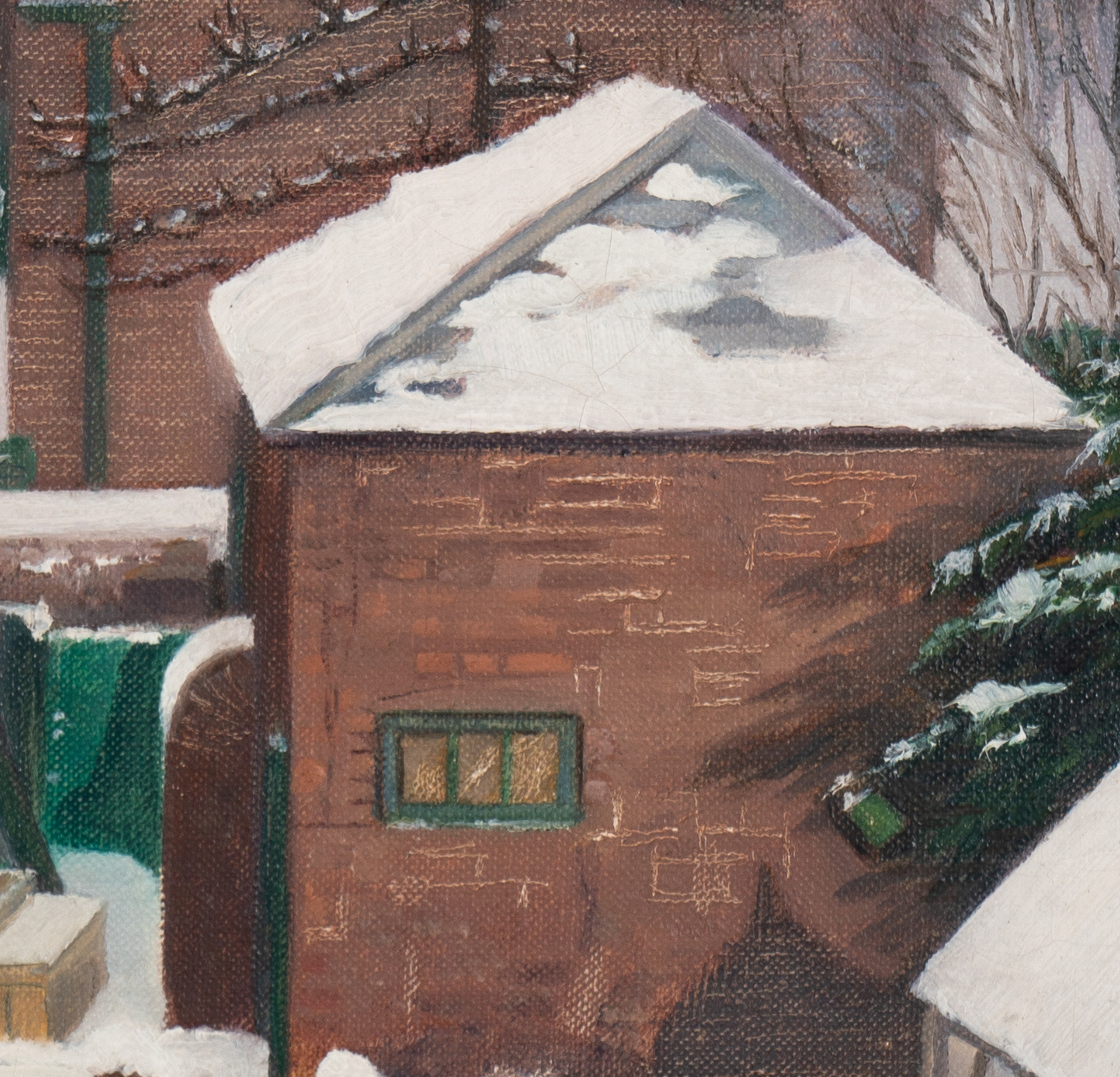
Hindman is thrilled to present work by enigmatic British modern artist Gluck this December 14 in our Modern & Contemporary Art auction. Explore the artist's background and practice below. Gluck (British, 1895-1978), born Hannah Gluckstein to an aristocratic family, shed their name down to a single syllable as they crafted their identity as a pioneering figure in British modern art. Known for their strikingly androgenous appearance and subversive fashion, they used their work to explore themes of crucial importance to their identity -- famously through reflections of gender and sexuality through vibrant biomorphic and geometric forms -- but also, here, a space held particularly dear to them. Though disapproving of both their personal and professional endeavors, Gluck’s father bought them a home with its own studio in 1926, a three-story red brick Georgian building called Bolton House in Hampstead Village, of which The Old Stable, Bolton House, Hampstead, was painted. This painting represents a unique bookend to Gluck’s storied exhibition history. Retained by the artist throughout their career, it was exhibited in two major solo exhibitions with The Fine Art Society, first in 1932 and then in 1973. For the first show, Gluck—a trailblazer in all aspects-- was able to patent their “Gluck Frame” for the exhibition. Designed in three tiers and specially produced by the artist’s approved frame-maker, Louis Koch, the frames gave the illusion that they were an extension of a room’s architecture, becoming an integral part of Modernist and Art Deco interiors. 1932 also marked the beginning of Gluck’s romantic and collaborative relationship with society florist and designer Constance Spry, after the pair was introduced by a mutual friend. Spry decorated the Fine Art Society galleries for Gluck's exhibition, the paneled walls of each room featuring Spry’s arrangements. Their relationship ended in 1936; Gluck tossed letters, diaries, and paintings into a bonfire at Bolton House. Gluck rejected forenames and honorifics, once resigning from an art society that referred to them as “Miss Gluck” on their letterhead. Homosexuality was illegal for men and unclassified for women at this time. Gluck’s work featured bouquets and flora, spellbinding landscapes, and portraits – frequently of their lovers – and these emotional, intimate depictions challenged a society that scorned the very idea, becoming a distinctive voice in early modern British art. Affiliating themselves with no artistic school or movement, Gluck showed only in solo exhibitions, before abruptly stopping their practice at the height of their fame to wage a “paint war” to improve the quality of available materials. After a long and all-consuming campaign lobbying for the use of cold-pressed oil and hand-ground pigments, Gluck succeeded in persuading the British Standards Institution to create a new standard for oil paints. They returned to painting in their seventies, mounting a well-received solo show in 1973 of fifty-two paintings spanning their entire oeuvre, their first since 1944 and also their last, in which The Old Stable, Bolton House, Hampstead was included. Even with a relatively small body of work throughout their life, Gluck’s enduring influence on the art historical cannon through their unapologetic embrace of queer identity, particularly through the championing of their own identity, cannot be overstated. In this example, a small-scale landscape, invitingly cropped and telescopically focused with the help of the Gluck Frame, offers a brief glimpse of the personal life and identity of this fascinating artist at home. Featured Image: Lot 84 | Gluck (British, 1895-1976) | The Old Stable, Bolton House, Hampstead, 1930 | Estimate: $5,000 - $7,000