New & Noteworthy
Stay up to date with news, highlights, & features from across Freeman's.
Stay up to date with news, highlights, & features from across Freeman's.
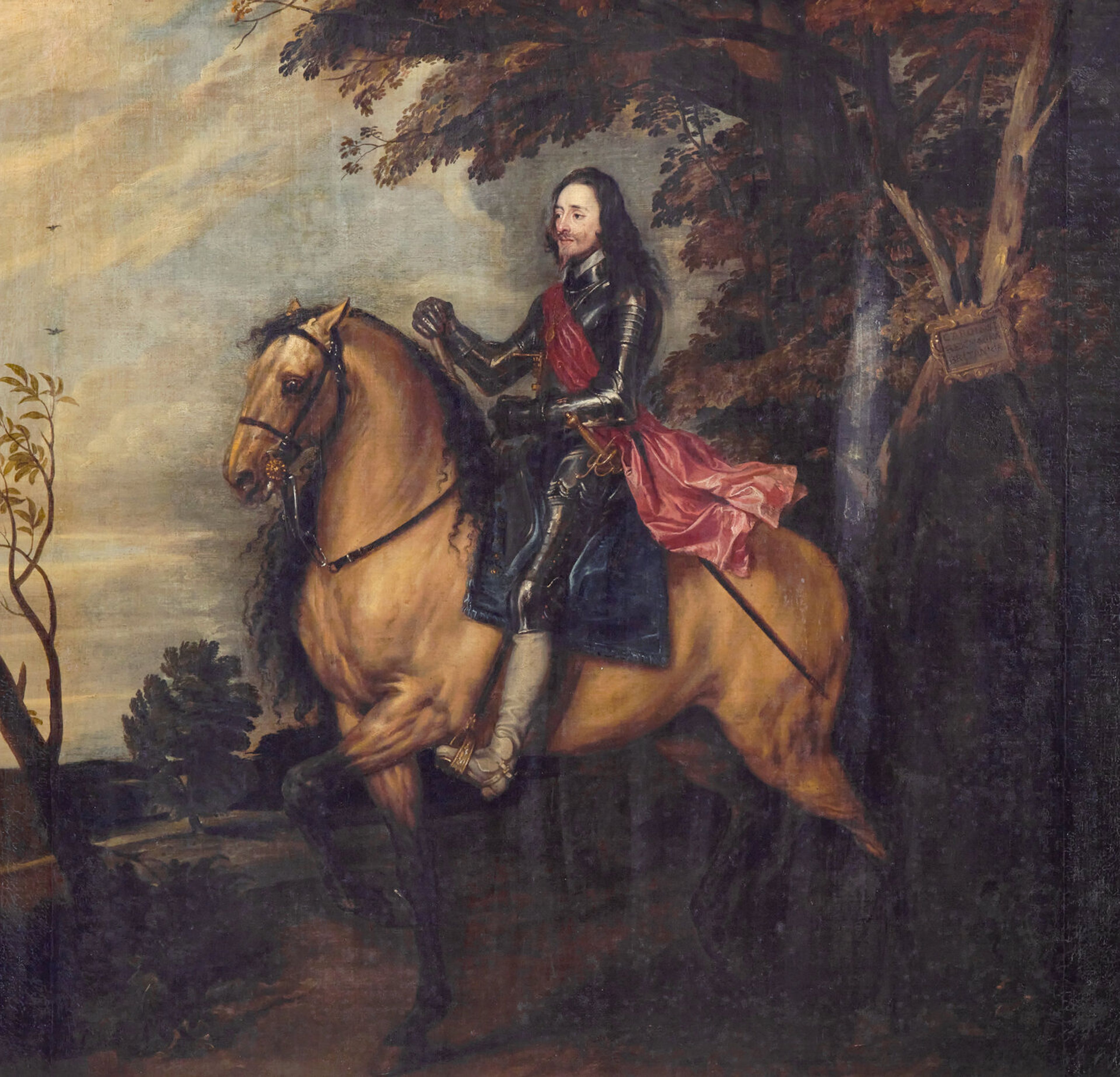
As an English woman living in New York, I’ve made it my mission these past few years to celebrate British Royal events with a zeal never before known to me growing up in the UK. Last spring was no exception: my Westchester home was bedecked with bunting, the Victoria Sponge was sagging with jam and cream, and the gin and Pimms were flowing for the coronation of King Charles III. I find delight in the moments, then, where my former life and country of birth come to me in the most unexpected ways in my role as an auctioneer. The discovery, earlier this year, of a time-capsule collection from the country house of Copped Hall in Essex by way of an estate in Greenwich, Connecticut, has been a wonderful example of my old life colliding with my current one as I celebrate ten years as a New Yorker. The sale this June on behalf of the Aline Elwes McDonnell Trust was a highlight of our spring season where bidders from around the globe competed for a slice of English history with superb country house provenance. We kept one work as a highlight for our fall auction season and Old Master and 19th-century pictures sale this November in Philadelphia. At first glance, the work is a copy of the famous and larger-than-life equestrian portrait of King Charles I in the National Gallery, London. Pentiments, however, (the lack of the equerry offering up the helmet behind the horse, the red sash to King Charles I’s waist, and differences in color to the saddle) all point towards this being an unusual copy with variations. Analysis indicates that this is likely a late 17th or early 18th-century canvas with later additions to left and right (presumably added when the work was united with the present carved and gilded frame), with the central panel closely resembling in size the modello in the Royal Collection (RCIN 400571). Whilst not attributed to Van Dyck or his studio, the work joins the esteemed group of known country house copies listed in Susan J. Barnes et al., Van Dyck: A Complete Catalogue of the Paintings, New Haven and London: Yale University Press, 2004, pp. 468–71 and the early full-size copies in the collection of the Prado and (formerly) at Hitchin Priory. Reduced-size copies have been recorded at Hellens, Much Marcle, Ickworth, and the Clarendon Collection.
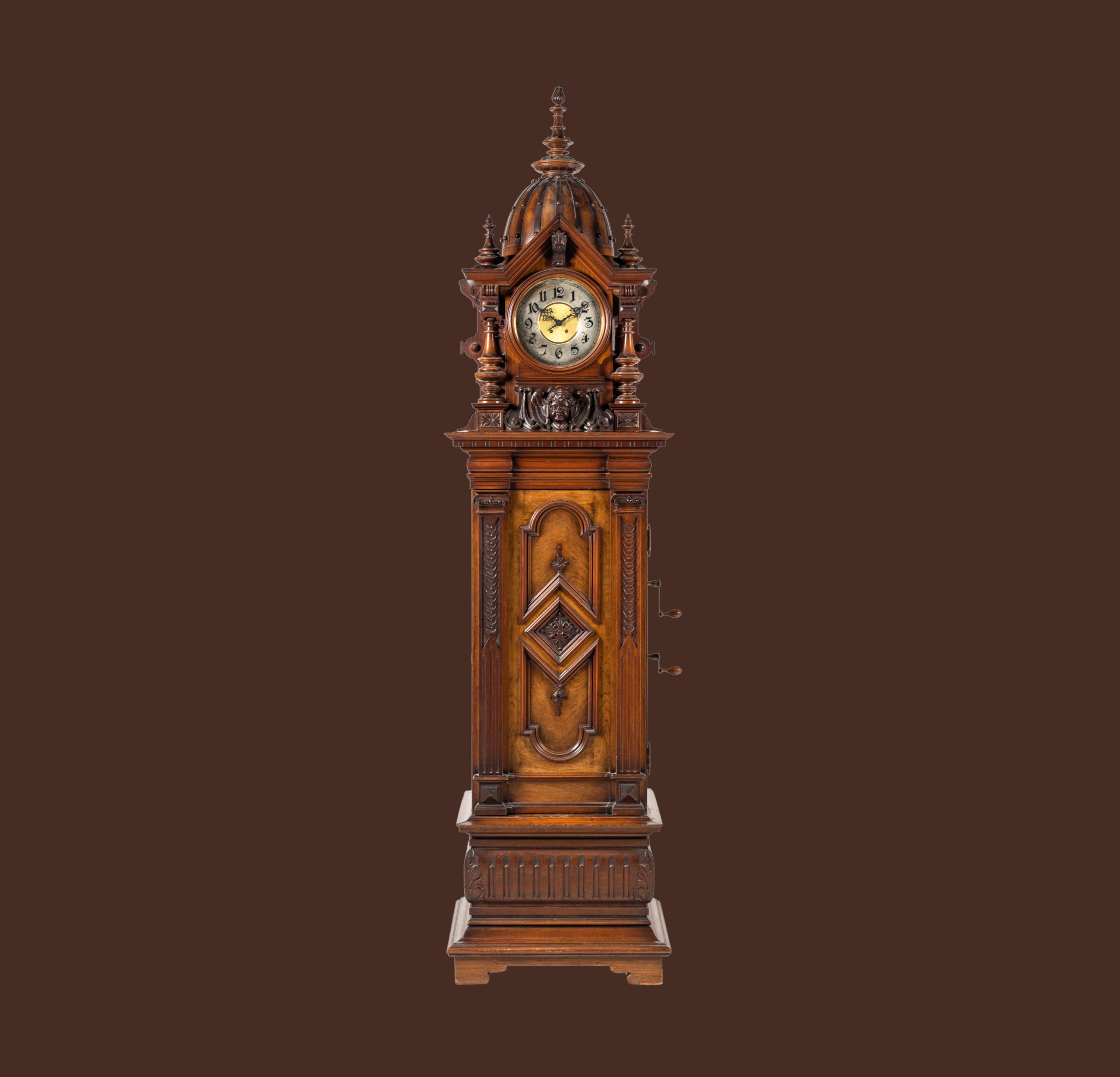
Presented in our European Furniture and Decorative Arts auction this October 15-16, the Myra and late Dr. Larry Karp Collection showcases one of the finest selections of mechanical music in recent years. This collection — encompassing musical boxes, automata, roller organs and more — represents forty years of collecting born from the couple's passion for this unique art form, which flourished in the mid-to-late 19th century. Few couples have been as deeply involved in the mechanical music community as Myra and Larry Karp. Myra, a former Musical Box Society International president, was the consummate organizer, expertly coordinating everything from large annual meetings to intimate gatherings in their home. Larry, a dedicated researcher and writer, contributed numerous articles to the Society’s publications and played a pivotal role on the Publications Committee, helping to guide the mission of educating members and the public. Larry’s adventurous spirit led him to travel extensively, searching for new instruments and forming friendships with top dealers and auctioneers across the UK and Europe. His keen eye for quality and rarity allowed him to discover early machines like sectional comb boxes, overture boxes, and clock bases. Yet his collecting ethos went beyond value; he was drawn to the unusual and whimsical, exemplified by a musical carpet sweeper in this auction. The collection features standout pieces that reflect the couple's discerning taste and commitment to the craft. Highlights include: Lot 44: A Rare Libellion Book Playing Music Box with Clock | Estimate: $7,000 - 10,000 Lot 30: A Rare "Revolver" Music Box by M.J. Paillard & Co. | Estimate: $10,000 - 15,000 Lot 28: A Chamber Barrel Organ by John Baptiste Rolin-Thomassin | Estimate: $2,000 - 3,000 Lot 6: A Nicole Frères Grand Format Overture Cylinder Music Box | Estimate: $15,000 - 20,000 Lot 24: A Symphonion Style 38B Eroica Upright Three Disc Music Box with Clock | Estimate: $20,000 - 25,000 Part II of the Karp collection will be featured in Freeman's | Hindman's April 2025 European Furniture and Decorative Arts auction, followed by Part III in a Collected Home auction. Many objects from this collection were documented in Musical Box Society International (MBSI) publications, underscoring the couple’s integral role in the community. As these treasures come to auction, they invite enthusiasts and collectors to celebrate the joy in each object, honoring a legacy that has enriched the world of mechanical music.
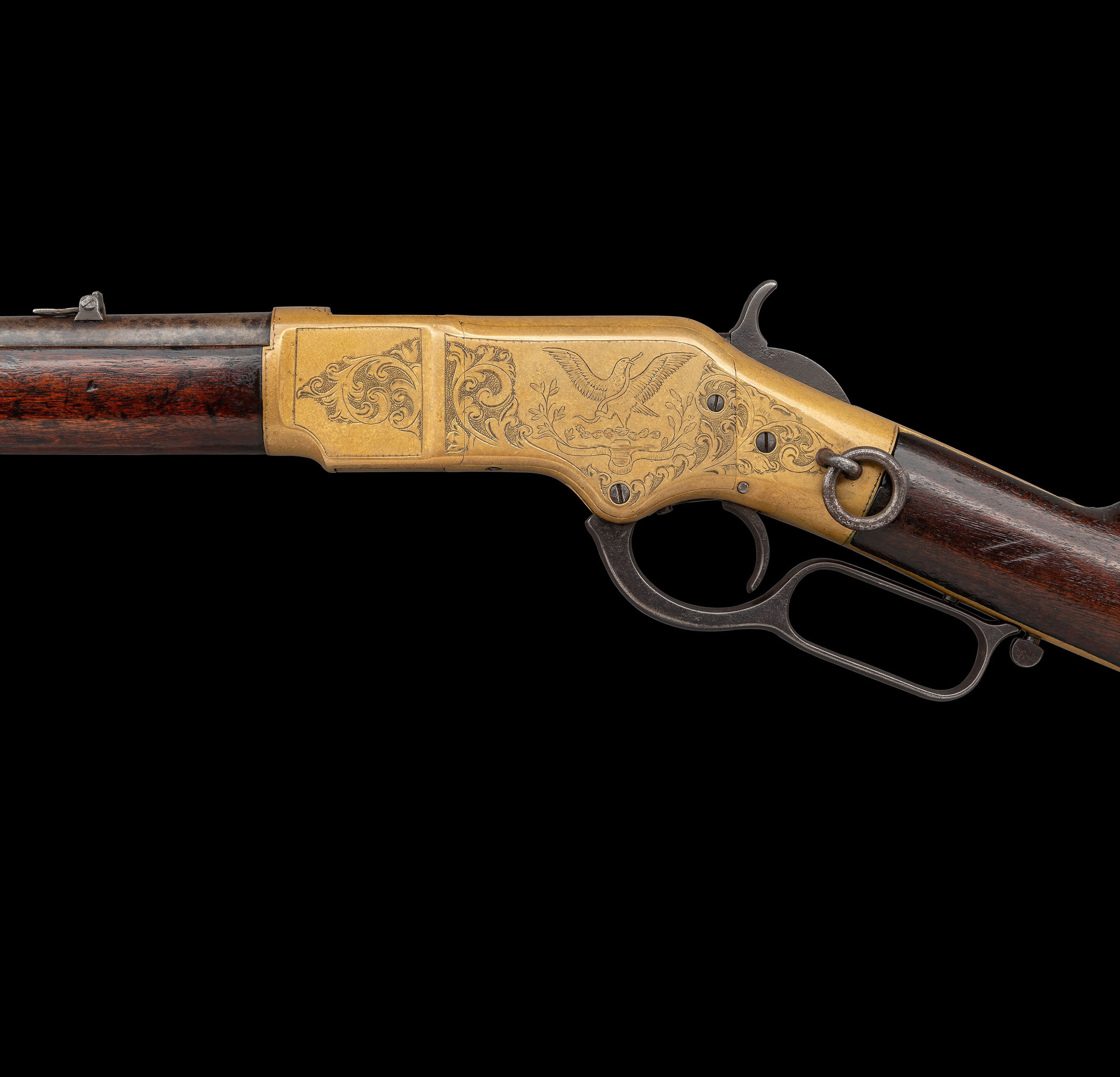
The Winchester Model 1866 Rifle revolutionized the firearms industry and became the first product to be offered by the famous Winchester Repeating Arms Company. Nicknamed the “Yellow Boy” due to the use of “gunmetal,” a brass-bronze alloy, for the gun’s frame, the 1866 quickly became a popular repeating rifle used throughout the American West by settlers, lawmen, outlaws, and Native Americans alike. The guns were produced in three primary models, a 24” barreled rifle, a 27” barreled musket, and a 20” barreled saddle ring carbine. While never adopted by the US military, the 1866 was acquired in some numbers by the French during the Franco-Prussian War, by the Ottoman Empire during the Russo-Turkish War, and by the Mexican government as well. Despite becoming somewhat outdated by the introduction of Winchester’s Model 1873 Rifle which fired the new centerfire, rather than rimfire ammunition, the Model 1866 remained in production for slightly more than three decades with some 170,101 being produced between 1866 and 1898. For collectors, one of the most desirable variants of the 1866 is the Saddle Ring Carbine, as these shorter, handier versions of the gun were popular with horsemen in the American West. The carbines were also produced in fewer numbers than the rifles, making them less common on today’s collector’s market. The most desirable of these guns are either those with provenance connecting them to a specific western luminary or those enhanced with engraving by the most famous engravers of the period—Nimschke, Young, or the Ulrichs. This particular example was produced in 1887 and is engraved with the Mexican “Eagle & Snake” motif. Several similarly decorated Model 1866s are attributed as engraving done by the Ulrich Brothers. The decoration suggests that this gun may have stories to tell of bandits and Federales south of the boarder during the turbulent decades that preceded the Mexican Revolution. INQUIRIES: [email protected] TO BE OFFERED, OCTOBER 23, CINCINNATI Lot 179 Engraved Winchester Model 1866 Saddle Ring Carbine Attributed to the Ulrich Brothers Estimate: $9,000 - 12,000
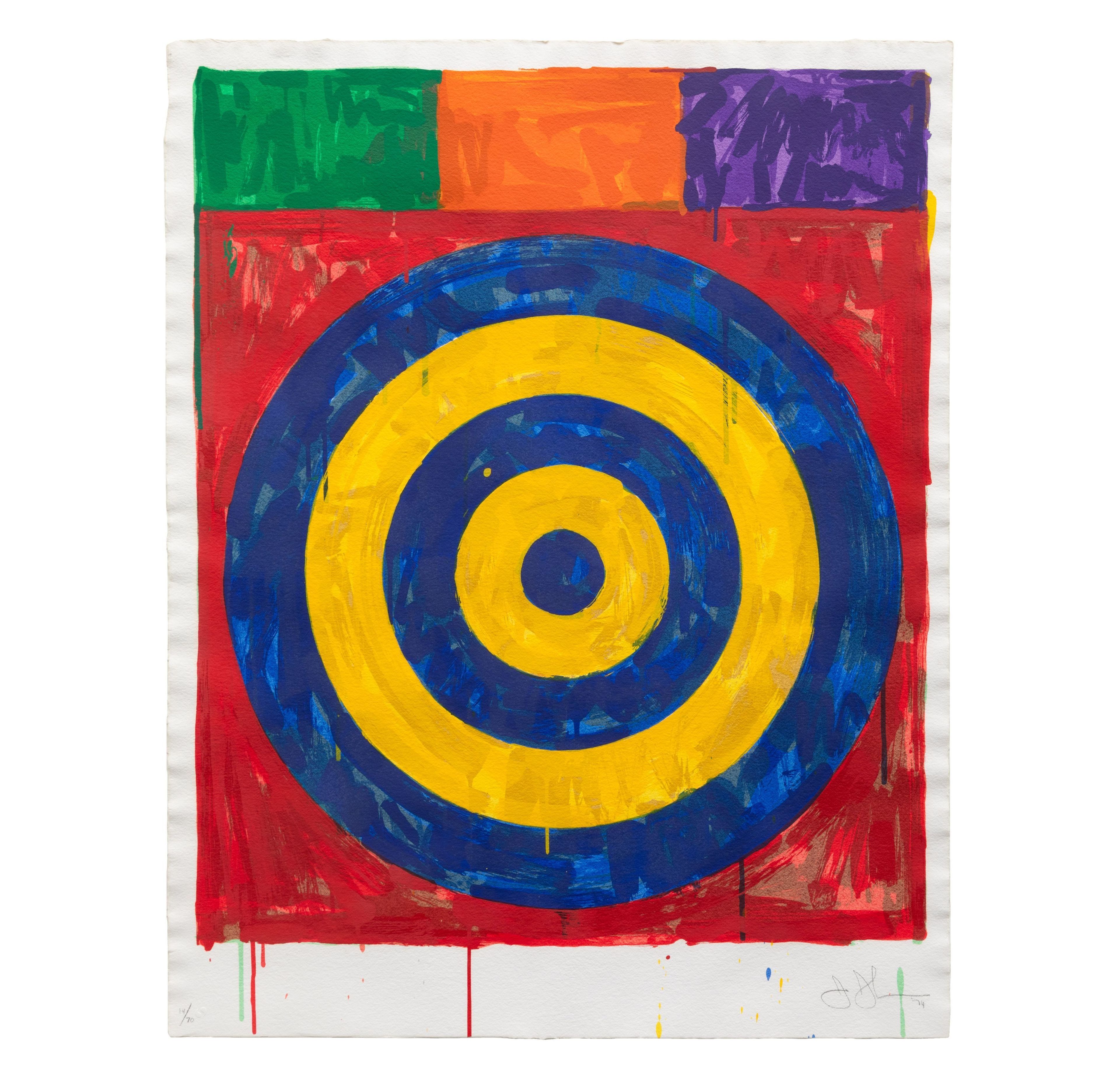
Offered from the collection of Velma Engels, Denver, Colorado, the striking screenprint Target (1974) by celebrated American artist Jasper Johns (b. 1930) exemplifies Johns’ preoccupation with the intersections of abstraction and representational objects and the mechanical and the manmade. In the work, concentric circles of blue and yellow sit on a field of mostly bright red, the boldness of the red heightened by undertones of green, while a band of the secondary colors of green, orange, and purple span the upper edge of the image. Though a screenprint, printed by Simca Print Artists, New York, the application of color is purposefully painterly, building up layers of pure color in brushstroke-like swipes and complete with surgically applied “accidental” streaks and drips of pigment, as though of wet media applied to a work hanging on a wall. Heralded for his work in reintroducing representational forms back into abstraction, including series of flags, numbers, and targets beginning in 1954, Johns offers a unique perspective on how the formal properties of creating art can affect the relationship the viewer has with previously overlooked quotidian forms. Johns described in a 1965 interview how he became drawn to such forms: The target seemed to me to occupy a certain kind of relationship to seeing the way we see and to things in the world which we see, and this is the same kind of relationship that the flag had. We say it comes automatically. Automatically you tend to do this, but you see that there are relationships which can be made and those seem to me the relationships that could be made between two images. They’re both things which are seen and not looked at, not examined, and they both have clearly defined areas which could be measured and transferred to canvas. i In taking an easily recognized form and decontextualizing it through artistic intervention, the viewer can reexamine the object's formal abstract possibilities. In employing the use of screenprinting to this artistic intervention, Johns was also able to complicate the relationship between the mechanical and the manmade and further invite his audience to reengage with previously familiar elements. For Johns, “in making a painting, you work with what you see and what you do and the painting seems to me to be primarily concerned with those two things. The physical actions you take to make the painting, and the responses to looking at it.” ii Typically, the making of targets is a mechanical process. This target, however, takes the imagery associated with a target, repurposed through Johns’ intervention, and then likewise mechanically reproduced through the screenprinting process in order to make a uniform edition. The contrast of Johns’ target with the original mass-produced one is his use of composition and bold color that affects the response to the image, including the perfectly repeatable imperfect drips and ink dabs that provide testament to his intervention. Thus, this tour-de-force image offers a fascinating study of the abstraction of identifiable symbols and our understanding of them as well as the dichotomy between the hand of the artist and that which is exactly reproduced in this age of commercial reproduction. INQUIRIES: [email protected] CHICAGO VIEWING: 25 - 26 September 1550 West Carroll Avenue, Chicago, IL i Walter Hopps, “An Interview with Jasper Johns,” Artforum, March, 1965, https://www.artforum.com/features/an-interview-with-jasper-johns-211898/. iiIbid. Lot 45 | Jasper Johns (American, b. 1930) | Target, 1974 | Estimate $150,000 – 250,000 Property from the Collection of Velma Engels, Denver, Colorado
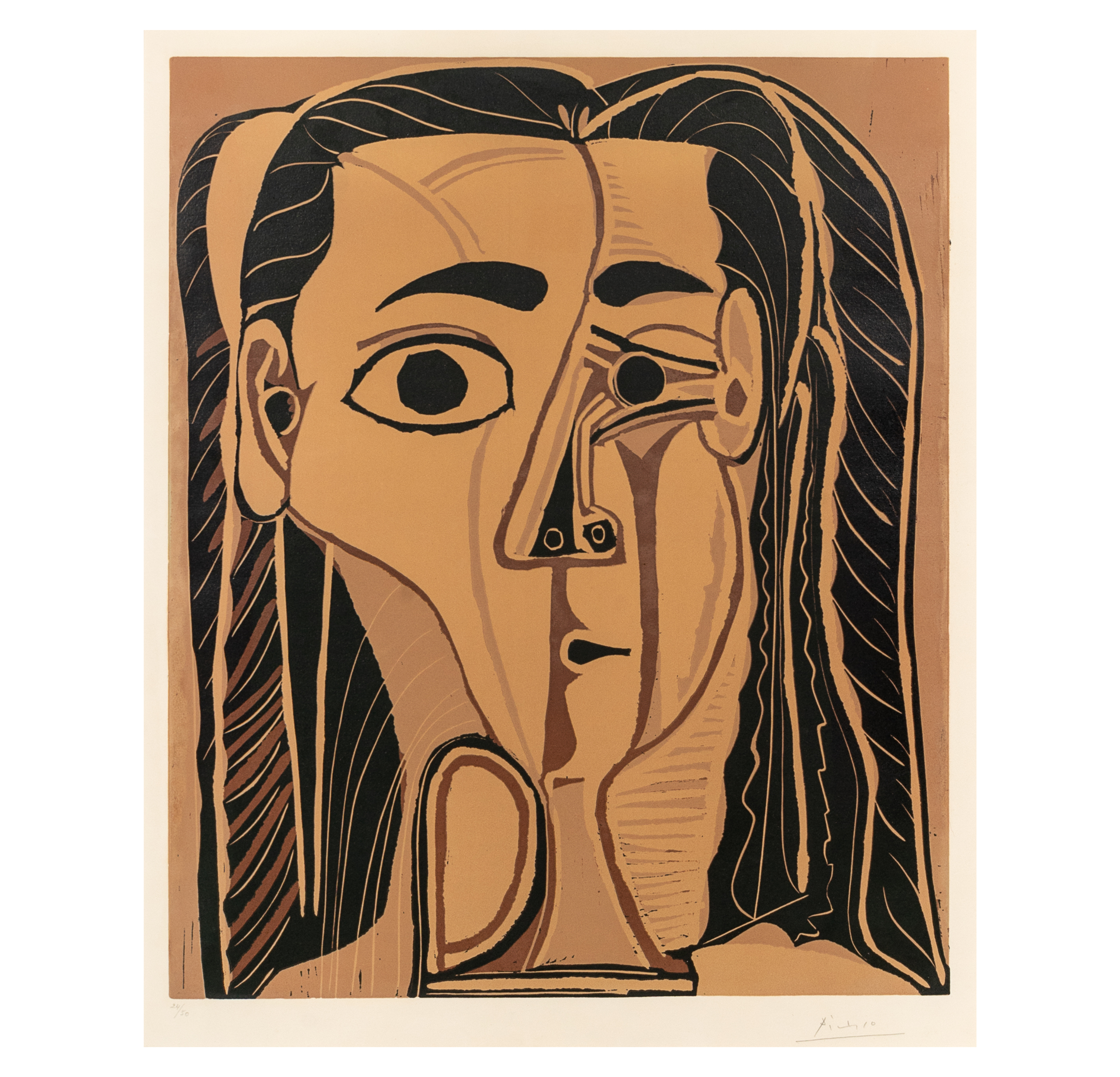
Pablo Picasso’s lifelong commitment to experimentation was applied to a truly prolific use of theme and media. Freeman’s | Hindman is pleased to offer a fantastic survey of Picasso’s career through a dedicated sale showcasing the artist’s works on September 26. This sale reflects the artist’s particular advancement of prints and ceramics, including examples of etching, drypoint, lithograph, linocut, and various ceramics from plates to vases to pitchers, emphasizing both Picasso’s artistic preoccupations as well as his spirit of collaboration, highlighting lifelong relationships. Through the prints and ceramics included here, Picasso explored artistic influences and new approaches, including past art historical tradition and mythology as well as new experiments based on the world around him such as those seen during his Blue Period and the development of Cubism. The artist’s early masterpiece, Le Repas Frugal (1904; printed 1913)—The Frugal Repast—was one of his first etchings. Made during his Blue Period, it echoes the impoverished experiences of the artist at the start of his career, depicting a blind man and the artist's then lover, Madeleine, sitting down to a sparse meal. Meanwhile, the linocut L'Homme à la fraise echoes the Spanish art historical tradition of Golden Age portraits by such artists as Diego Velázquez and El Greco of distinguished men with ruffled collars. Another example of Picasso’s examination of the Spanish Golden Age translated into twentieth-century aesthetics are the two original copper plates for etchings from his 1948 suite illustrating the poems of Luis de Góngora. These plates allow a unique insight into Picasso’s working process for printmaking. Important among this sale is the role of Picasso’s personal relationships and the subsequent effect on his work. This can be seen in his Cubist works of Jacqueline Roque, his second wife and muse, in both print—including the particularly striking linocut Jacqueline au Bandeau de Face (Grand Tête de Femme) (1962)—and ceramic, such as in Jacqueline au chevalet (1956). But, in addition to Jacqueline, also clearly defined are Picasso’s relationships with the printers, publishers, and ceramists so crucial to the use of this media, a network of friends the artist grew and maintained throughout his career. For his prints, among Picasso’s most important collaborators represented is Ambroise Vollard, Picasso’s early gallerist and publisher, who published both Le Repas Frugal and the well-known eponymous Vollard Suite in 1939. Works made possible by gallerist and publisher Louise Leiris are highlighted, including examples by printers Hidalgo Arnéra and the brothers Piero and Aldo Crommelynck, such as from Picasso’s late etching series, Séries 347 (1968). In 1946, Picasso and Louis Fort, the 1913 printer of Le Repas Frugal, were together in Vallauris, France, at a pottery exhibition where, impressed, Picasso asked to be introduced to the owners of Madoura, a local pottery workshop. By the following year, this original meeting with Suzanne and Georges Ramié would lead to a collaboration between Picasso and Madoura for 24 years. In addition to the range of Madoura works presented here which illustrate the fruits of this partnership, a particular highlight is the beautiful ceramic pitcher, Visage au nez noir, offered with the original crate from Madoura, complete with their signature stamps, as acquired by a noted Philadelphia collection directly in 1969. This amazing selection of works thus embodies Picasso’s artistic vision and development from his twenties to his eighties, especially in highlighting the strength of his close circle of loved ones and collaborators who helped translate this developing vision into print and ceramic. Featured Images: Lot 14 | Pablo Picasso (1881–1973) L’Homme à la fraise, 1963 $20,000 - 30,000 Property from a Private Collector, Milwaukee, Wisconsin Lot 15 | Pablo Picasso (1881–1973) Jacqueline au Bandeau de Face (Grand Tête de Femme), 1962 $70,000 - 90,000 Lot 32 | Pablo Picasso (1881–1973) Visage au nez noir (A.R. 609) including original wooden crate from Madoura, 1969 $30,000 - 50,000 Property from a Private Collection, Philadelphia, Pennsylvania INQUIRIES: [email protected] VIEWING: 23 - 25 September 1550 West Carroll Avenue, Chicago, IL
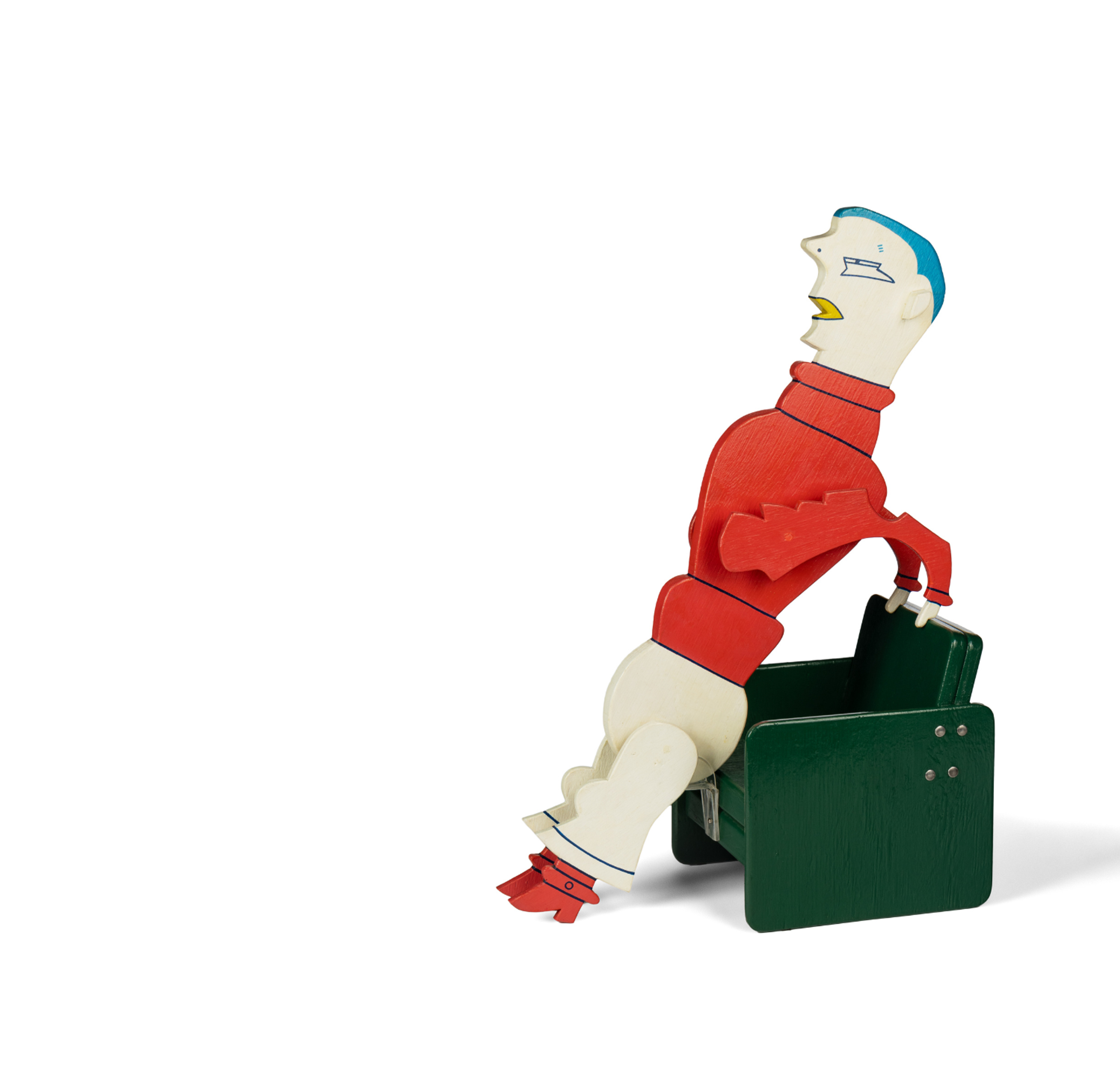
Since its founding in 1982, Hindman Auctions has long championed the works of hometown artists and earned the distinguished reputation of being the go-to destination for the best examples by the Chicago School including, but not limited to, the Hairy Who?, the Chicago Imagists, the Monster Roster, and Midwestern Magical Realists and Surrealists. Hindman’s unparalleled expertise and dedicated passionate promotion of these important artists has pushed their respective markets to new heights and propelled many from a regional audience to a worldwide stage with international demand from collectors, setting numerous auction records along the way. Now better together, we look forward to carrying on this tradition of supporting locally sourced material as Freeman’s | Hindman is thrilled to have one of the strongest and widest ranging selections of works to come to auction in recent years by some of the most sought after Chicago makers in our September 25th Post War and Contemporary Art auction, serving as an introduction to the uninitiated and a reminder of our market-pacing excellence to those already in the know. 2022 was a benchmark year for the Surrealist sorceress Gertrude Abercrombie led by the single-artist, single-owner sale Casting Spells: The Gertrude Abercrombie Collection of Laura and Gary Maurer at Hindman Auctions in September. This sale was followed by the record setting result of Untitled (Woman with Tethered Horse and Moon) for $437,500 in December also at Hindman, breaking our own auction record established in February of that year. The season of the Jazz Witch has continued with more impressive results since and a major retrospective, Gertrude Abercrombie: The Whole World is a Mystery, poised to open in early 2025 at the Carnegie Museum of Art traveling, thereafter, to the Colby College Museum of Art, appropriately including many superb examples placed by Hindman over the years. It is no sleight of hand surprise that among the highlights of the upcoming sale is a spectacular example of Abercrombie’s painterly witchcraft, the aptly titled The Magician from 1957, the peak era of her powers. Under the influence of Magical Realist stylings of close friend John Wilde during this era the paint handling in this work is more precise and refined than we often see from Gertrude—depicting a raven haired stand in for the artist being levitated by the outstretched paw of a spooky black cat above a simplified version of the chaise lounge that graced the artist’s Dorchester Avenue apartment, pleasingly puzzling set pieces and performers in an eerily theatrical austere interior. Adding to the significance of this spell binding masterwork is the painting being still housed in its original frame, featuring a rarely seen original handwritten label. The label came from the famed Hyde Park fixture, the 57th Street Art Fair, where the current owner was present as a ten-year-old for the purchase of the work from Abercrombie by his father for $90—three zeros less than the high end of the current auction estimate. Also, of note in the auction from the Chicago Surrealist circle are two compellingly complex in content and concept 1946 gouaches by Abercrombie contemporary and friendly competitor Julia Thecla, Young Lady with a Bird and The Fire. These enigmatic dreamlike narratives artistically process the horrors of World War II into mesmerizing visual intrigue and are both from the same distinguished Milwaukee collection regifted to the family by artist, bird watcher, and friend Karl Priebe, to whom Thecla had originally gifted the works. Priebe was also a dear friend of Abercrombie who makes appearances in her paintings in the form of birds and bird eggs. So, it is not a large leap to assume the landing bird in Young Lady with a Bird could also represent him or his energy. Carrying on the tradition of fantastical and deeply personal imagery set forth by the Surrealist and Monster Roster artists before them—but with a groundbreaking youthful exuberance—were a group of School of the Art Institute of Chicago graduates who would later become known as the Imagists. They rose to prominence through a series of late 1960s raucous group shows curated by Don Baum at the Hyde Park Art Center as the short lived more specified collectives the Hairy Who?, the Nonplussed Some, and the False Image. All the artists in the movement studied under Whitney Halstead, Katherine Blackshear, and Ray Yoshida who each encouraged the investigation of non-traditional and non-western influences resulting in a unique brand of expression, dually of the moment and evergreen, generally characterized by high-key coloration, graphic intricate linework, playful humor, and low brow leaning pop culture influences. The September sale excitingly includes a wide range of extraordinary examples by many of the brightest Imagist stars. Roger Brown is most renowned for his hallmark stylized silhouetted figures at play in emblematic snapshot vistas or voyeuristically back-lit in signature gray architecture, and we are thrilled to have a trio of works from his 1970s salad days amongst top billing in the sale. His 1973 Bus Stop is a rare three-dimensional work—at once painting and sculpture it explores a favored Brown theme of the search for the elusive American Dream through the lens of tourism with a charming nod to Hopper’s The Nighthawks in the station window. Desert Crater from 1971 is another variation on the concept. Like a passport stamp or a sticker on a suitcase, it focuses on an idealized sightseeing destinationand the ambiguous activities of the vacationing visitors. Continuing Brown’s road trip slide show is the Tramp Art framed shaped canvas of Cattle Mutilation Crucifix, made during a brief residency in New Mexico. The piece references both the Christian cross and the intersection Brown lived at. In the tradition of his disaster paintings, it addresses the disturbing mystery of livestock dismembering. These unexplained mutilations that plagued ranches were a far cry from the wholesome romanticism of the cowboy. In a broader sense, they reflected an America at a crossroads of a fabled history and uncertain future with its dark conspiracy theories and ufology paranoia. Also in volume and variance in the sale are seminal works by fellow Imagist and Hairy Who? coiner Karl Wirsum, led by the 1980 painted sculpture Please Don’t Get Up that depicts a whimsical red, white, and blue figure springing forth from a green chair. Executed at the same time as the artist object show Hare Toddy Kong Tamari at the Museum of Contemporary Art, this work bridges the gap between his mixed media marionettes of the 70s and his wood cutout paintings yet to come. The work displays fine carpentry and craftmanship, one of the blue-collar calling cards of the group. With a tip of the hat to H.C. Westermann—one of the Imagists' heroes—it is also worth noting that the sculpture was part of the personal collection of Phyllis Kind, the gallerist with whom all the Imagists and associated artists showed. Of a similar vintage is a group of three Alien mugshot paintings, a fascinating precursor to his later Alien Dating Service series. These interstellar villains are also importantly reverse painted on acetate, a technique Wirsum cribbed from sign painters and became identifiably part of the Imagist visual repertoire. Rounding out the Wirsum offerings are two 1970s drawings by the artist. Drawing was a daily exercise where he initially worked out ideas and his preferred form of expression. Both works captivatingly illustrate the immediacy of inception that appealed to him so. There is always a lot to unpack in the respective works of Imagist power couple Jim Nutt and Gladys Nilsson. The auction includes remarkable works on paper by the husband and wife—the respective works contradictorily balance the naive and the naughty as both feature the underlying subject of underwear with virtuosic artistic execution. A 1972 specimen drawing by the aforementioned mentoring Ray Yoshida charting for classification abstracted humanoid forms gleaned from the negative spaces of comic book pages is also crucially included in the auction. On the heels of the closing of her critically acclaimed and stunning eponymous retrospective at the Art Institute of Chicago, we are delighted to be offering Christina Ramberg’s 1973 etched diptych, Back to Back, presenting two oppositional prints from separate plates of headless figures in convoluted, contorted garments bound together on a single sheet, perhaps separate parts of the same fractured physical frame. As well, the auction will thrillingly include Ramberg’s uncommon and wonderful 1986 quilt Japanese Showcase, an intriguing departure from her more well-known figurative work. The decisively patterned geometric abstraction of the textile utilizes the same meticulous precision and color sensibility as her paintings. After a stop at the Hammer Museum in Los Angeles this incredible comprehensive show will serendipitously make its final stop at the Philadelphia Museum of Art further reinforcing the Chicago, Philadelphia bond. We invite you to explore the auction as an introduction to or to re-familiarize yourself with the eclectic group of exceptional artists, and discover the powerful visual threads that tie their individual visions together. Featured images: Lot 46 | Karl Wirsum (American, 1939-2021) Please Don’t Get Up, 1980. $30,000 – 50,000 Lot 75 | Gertrude Abercrombie (American, 1909-1977) The Magician, 1956 $70,000 - 90,000 Property from the Estate of Charles H. Reich Sr., Chicago, Illinois Lot 47 | Roger Brown (American, 1941-1997) Bus Stop, 1973-74 $40,000 - 60,000 Property from the Collection of Joe Valerio and Linda Searl, Chicago, Illinois Lot 77 | Julia Thecla (American, 1896-1973) The Fire, 1946 $8,000 - 12,000 INQUIRIES: [email protected] VIEWING: 20 - 24 September 1550 West Carroll Avenue, Chicago, IL
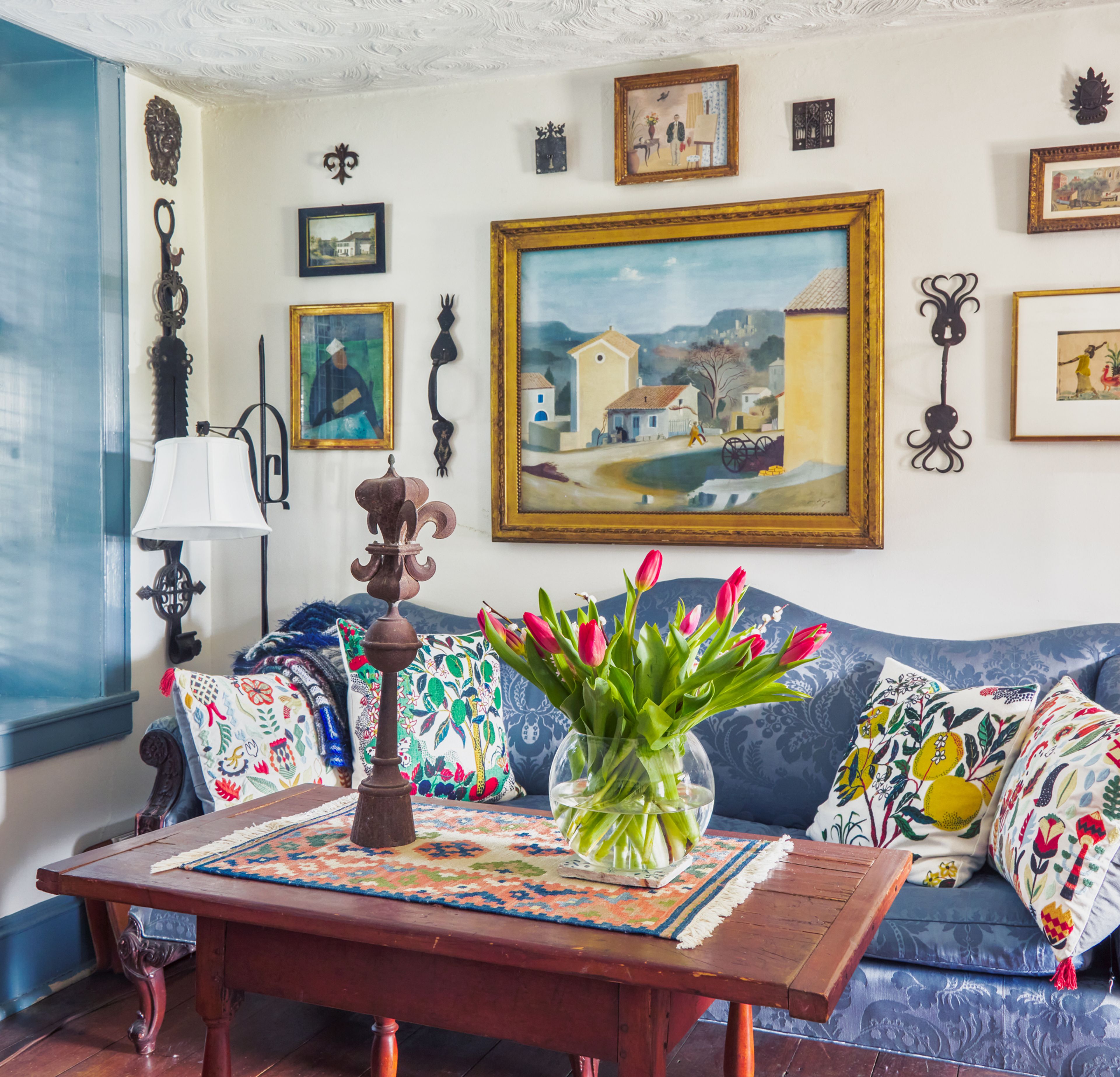
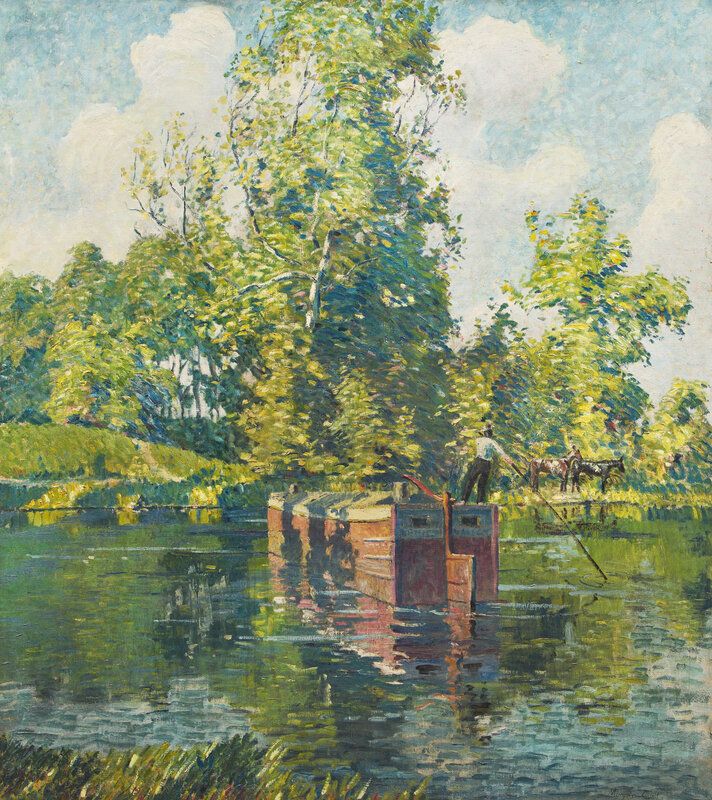
Freeman’s | Hindman is honored to present the sale of the Collection of Dr. Richard J. Wattenmaker on September 22, 2024. Comprised of American and European Fine Art, Furniture and Decorative Arts, the single-owner event pays tribute to the Philadelphia author, teacher, and scholar's eclectic taste and extensive knowledge. Richard J. Wattenmaker was often described as an art savant. Born in Philadelphia in 1941, he enrolled at the University of Pennsylvania in 1963, while also studying at the Barnes Foundation under Violette de Mazia and Barton Church, where he met his wife Eva, then fresh off the boat from Sweden. He continued his education at the Institute of Fine Arts at New York University, where he received his MA and PhD following his dissertation on The Art of William Glackens. Starting his career as the Director of Rutgers University Art Gallery, Wattenmaker subsequently became the Chief Curator of Toronto’s Art Gallery of Ontario, Director of the Chrysler Museum, and Director at the Flint Institute of Arts. Wattenmaker also worked as the Director of the Smithsonian's Archives of American Art for seventeen years, and taught at the Barnes Foundation, where a yearly scholarship is still offered in his name. Throughout his career, Wattenmaker oversaw major shows and lectures dedicated to many of the artists for whom he would eventually become the leading reference, such as William Glackens, Pierre Puvis de Chavannes, brothers Maurice and Charles Prendergast, as well as Jean Hugo, great grandson of poet and novelist Victor Hugo, whom Wattenmaker and his wife Eva knew personally and regularly visited in the South of France. The Wattenmaker Collection marks the first time so many works by the artist, whose 40th death anniversary is being loudly celebrated in France, are offered on the market. Almost naturally, Wattenmaker also started his own personal collection that echoed his many overlapping specialties and interests. He collected the artists he knew best, either personally or academically speaking. His penchant for the bold, shimmering colors of his many Modern, Surrealist, and Fauve works blended effortlessly with his appreciation for Pennsylvania history in his assortment of Fraktur and redware ceramics. Above all, Wattenmaker’s primary passion and a great source of his intrigue, pride, and joy was wrought iron, which he collected avidly, both in America and Europe, especially France. The Wattenmaker residence was a harmony of textures, colors, media, and aesthetics. In each room, fine art, furniture, and decorative arts not only lived and worked together, but actively engaged in dialogue–a bold and dynamic exchange of European and American influences. By doing so, Wattenmaker underscored his confidence in their equal status. Clearly indebted to Dr. Albert C. Barnes’ exhibiting and collecting philosophies, Wattenmaker displayed gridirons, hinges, locks, and other trammels next to Modern oils and drawings on walls punctuated by stepback cupboards filled with glazed redware. He curated his own home with an enigmatic and deeply personal arrangement that spoke to him and revealed inherent connections. In his award-winning book, American Paintings and Works on Paper in the Barnes Foundation, Wattenmaker quotes a letter from Henri Matisse, who thought such juxtapositions “help students understand a lot of things that the academies don’t teach.” Matisse found it “beneficial for the formation of American artists; a preparation for the flowering of American Art.” Freeman’s | Hindman's exhibition allows for a fresh, enlightening rediscovery of Dr. Wattenmaker's collection. This can be understood as both a tribute to the artists and craftsmanship represented in it and a way to educate all art lovers. The once intimate and very private Collection is now officially proudly out and open to the public—similar to Barnes’ historic move from Little Merion, PA, to Philadelphia in 2011. EXHIBITION DATES AND TIMES: SEPTEMBER 13-22 10:00 AM - 5:00 PM
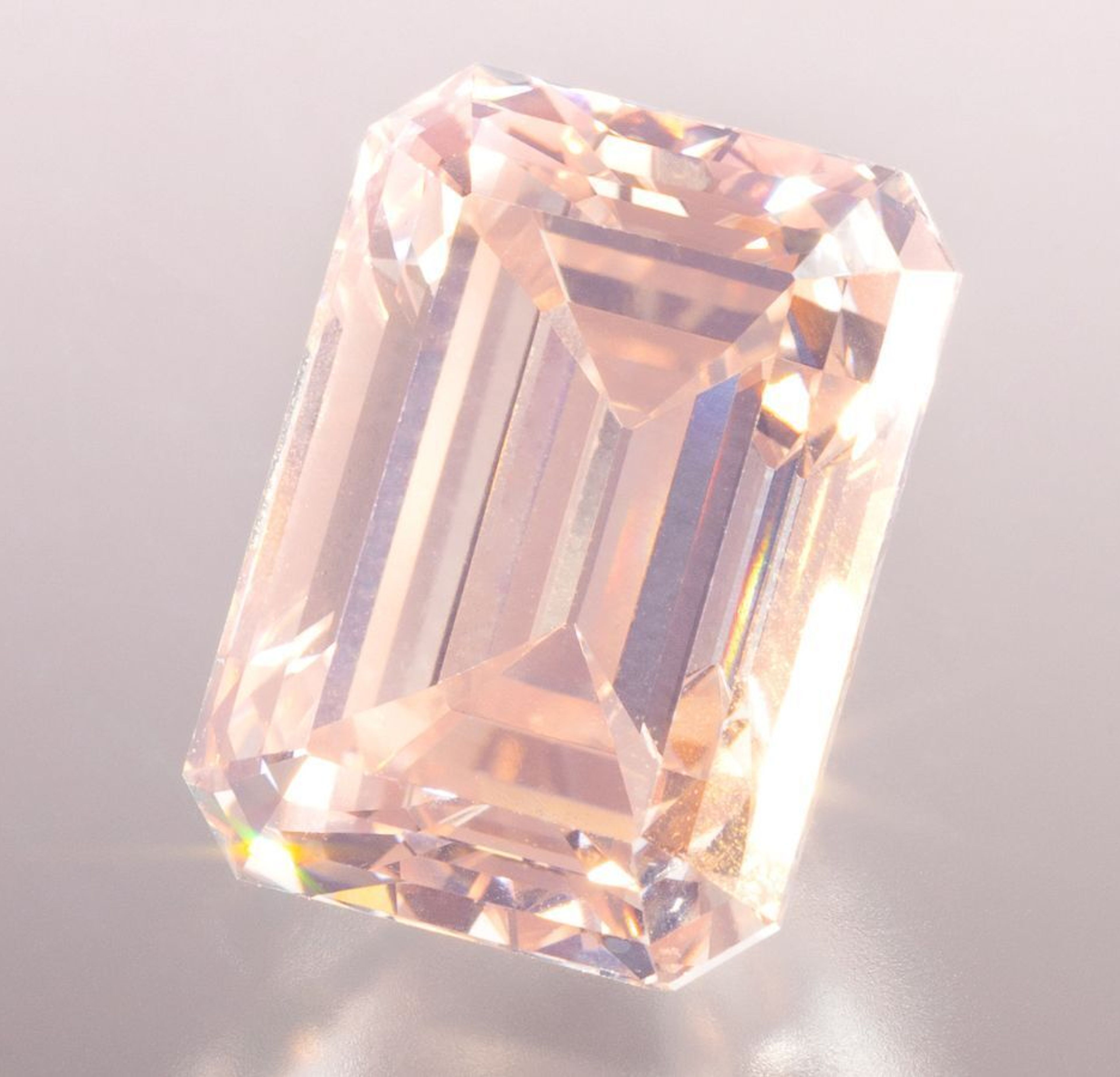
CHICAGO—A Fancy Brownish Pink Diamond Ring (Lot 263) boasting 5.42 carats led Freeman’s | Hindman’s September 12th Important Jewelry auction, fetching $203,200 against a pre-sale estimate of $100,000 - $150,000. This ring was offered amongst a dazzling array of colored diamonds and jewelry from many notable collections, including Property from the Collection of Audre Deckmann Carlin and Jewelry from The Shawver Art Collection Trust. These collections achieved a sell-through rate by lot of 97% and 95%, respectively. The auction attracted529 participants from 20 countries. Continuing the day's theme was an alexandrite ring by Oscar Heyman with a mesmerizing and prominent color change (Lot 256) that sold for $190,500, far beyond its pre-sale estimate of $60,000 - $100,000 and an Oscar Heyman fancy deep orange-yellow diamond and diamond ‘Toi et Moi’ ring (Lot 261) that sold for $127,000 against a low estimate of $80,000. The sale of these extraordinary colored gemstones and diamonds punctuates a desire in the market for rare, one-of-a-kind pieces. Additionally, stand-out lots in the sale included three rare and unique Bulgari Monete, Cameo, and Intaglio necklaces from a private collector in Wisconsin. These extraordinary pieces are on trend with bold looks from the 1980s, that are synonymous with Bulgari. The storied house is celebrating its 140th anniversary this year. Leading the charge was the Bulgari, agate cameo, diamond, and yellow gold necklace (Lot 91), realizing a price of $114,300 against a low estimate of $20,000. Speaking to the sale is April Matteini, Senior Vice President, Head of Department, Jewelry, “It was an honor to present the extraordinary gemstones in the sale today. The fancy brownish pink diamond, alexandrite, and so many of the colored diamonds sold for well above their estimates, proving that collectors are paying strong prices for rare, colored gems.” “Today’s sale shows the growing interest in rare colored gems in all price ranges. From moonstones, orange garnets, and pink sapphires to an alexandrite and colored diamonds, clients are seeking the rare and unusual. It is our pleasure to offer such rare gems, and we look forward to offering our next selection in December,” says Dianne Batista, Senior Vice President, Jewelry and Watches. Additional Highlights | Important Jewelry Auction Lot 283 | 7.31 CARAT EMERALD CUT DIAMOND RING | Sold for $177,800 Lot 103 | BULGARI, COIN AND YELLOW GOLD 'MONETE' NECKLACE | Sold for $66,040 Lot 127 | HEMMERLE MOONSTONE, SAPPHIRE AND PORCELAIN EARRINGS | Sold for $24,130 Lot 262 | FANCY GREENISH YELLOW DIAMOND AND COLORED DIAMOND PENDANT | Sold for $76,200
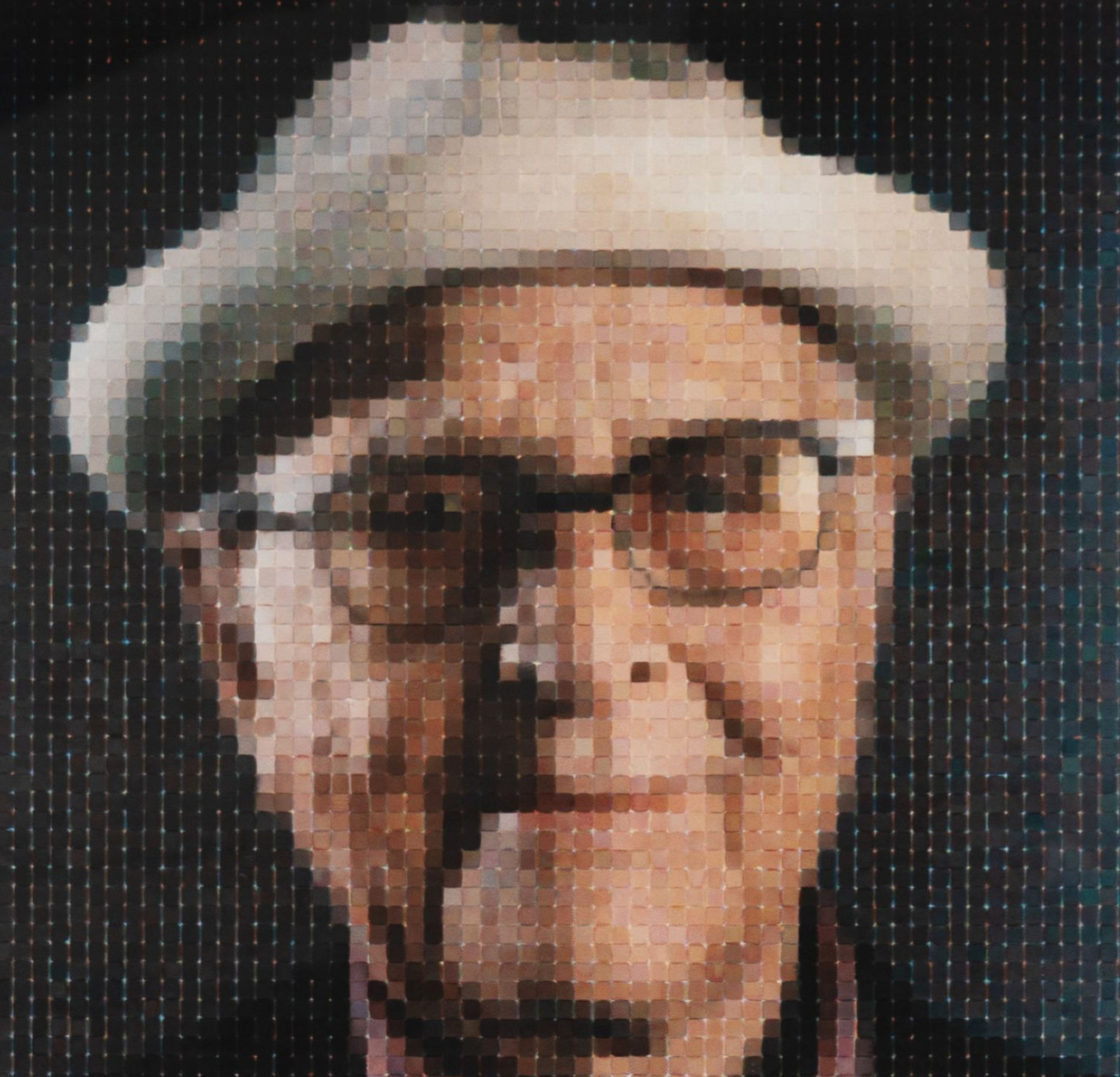
Freeman’s is excited to offer a selection of limited-edition, contemporary prints by renowned artists from the collection of People For the American Way and People For the American Way Foundation in our September 25 Prints and Multiples auction.
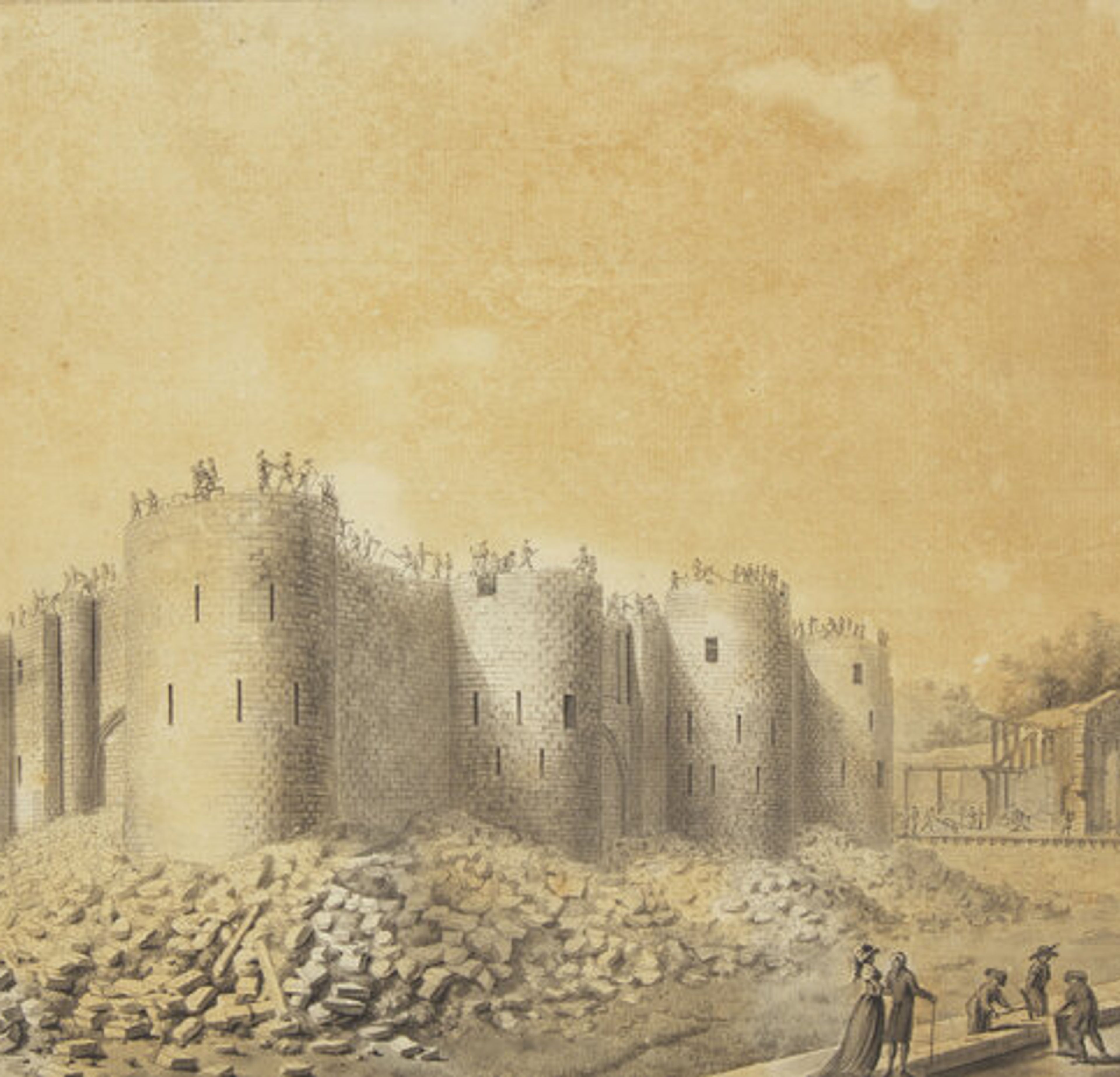
Historic The Destruction of the Bastille Drawing, Once Owned by President George Washington, Skyrockets Past Expectations with a Nearly $2 Million Sale PHILADELPHIA – A rare ink-wash drawing, The Destruction of the Bastille (Lot 35), created just weeks after the fall of the Bastille at the onset of the French Revolution, soared past expectations during Freeman’s | Hindman’s September 10 Books and Manuscripts auction, nearly quadrupling its pre-sale estimate of $500,000 - 800,000. Following an intense ten-minute bidding war in Freeman's | Hindman’s Philadelphia saleroom, the historic piece was sold via phone for an extraordinary $1,996,000. The drawing was originally gifted to George Washington, the first President of the United States, by the Marquis de Lafayette, a key figure in both the French and American Revolutions. It became one of the President’s most treasured possessions, hanging prominently in the presidential house during his two terms and then in the entryway of his Mount Vernon home. “Over the past six years, I’ve had the privilege of working with thousands of incredible items, but The Destruction of the Bastille is truly extraordinary,” says Darren Winston, Head of the Books and Manuscripts department in Philadelphia. “When you're handling something that George Washington—the man whose face is on the quarter in your pocket—once had hanging in his home, it truly takes your breath away. We are delighted that the proceeds will benefit the worthy cause of the Shriners Hospitals for Children and the Masonic Charity Foundation. Their decision six months ago to partner with their advisor, Art Peritus, and Freeman's | Hindman allowed us to do what we do best: work collaboratively with private clients, institutions, advisors, and collectors to achieve an outstanding result.” Darren Winston, Head of the Books and Manuscripts Department, Philadelphia The Destruction of the Bastille | Sold for $1,996,000 A Symbol of “Liberty over Despotism” As the French Revolution unfolded, the Marquis de Lafayette sent his dear friend and former commander, George Washington, two gifts on behalf of the French people in appreciation of his embodiment of worldwide liberty: a drawing of the demolished Bastille and the main key to the prison. Less than a month after Parisians stormed the Bastille, in August 1789, Étienne-Louis-Denis Cathala—an architect and inspector overseeing the prison’s demolition— captured the historic moment of its destruction in this ink-wash drawing. For Lafayette, these items signaled his gratitude and indebtedness to his mentor, both for Washington's leadership as well as his friendship that began over a decade earlier on the battlefields of America when Lafayette was only 19 years old. And, as the prison served as a symbol of French royal oppression, the drawing capturing its demise reflected their shared experience and victory over British oppression during the American Revolution. While Lafayette continued to serve as commander of the Paris National Guard, he entrusted the delivery of the gifts to Thomas Paine, who gave them to South Carolinian John Rutledge, Jr., who was then returning to America. Four months later, in August 1790, the drawing and key were presented to Washington in New York during his first term as President. Upon receiving them, Washington would enthusiastically declare them tokens of “victory by Liberty over Despotism.” An International Journey In its over 200-year history, the drawing had rarely been exhibited to the public. However, in the lead up to the auction, the drawing retraced its original steps during an international tour beginning with a stop in Paris, France. Its appearance at Didier Aaron & Cie gallery marked the first time the drawing was on French soil since it departed for the newly created United States in 1790. The drawing then returned stateside where it was exhibited in New York at Freeman’s | Hindman’s Upper East Side gallery, followed by Philadelphia. Marking the impending 200th anniversary of Lafayette’s 1824-25 tour of America, the drawing was prominently displayed at the Museum of the American Revolution for the month of August, four blocks from where it once hung in Washington’s Philadelphia home, and only blocks away from where Freeman’s first set up shop only 15 years later, in 1805. Illustrious Provenance In 1858, John A. Washington III, the last member of the Washington family to live at Mount Vernon, sold the estate to the Mount Vernon Ladies' Association, gifting several of George Washington's personal belongings including the key to the Bastille—though not The Destruction of the Bastille drawing. The Washington family held onto the drawing until 1891, when it was auctioned in Philadelphia as part of "The Final Sale of the Relics of George Washington." Prominent autograph dealer Walter E. Benjamin purchased it, later selling it to media mogul William Randolph Hearst. After World War II, Connecticut resident Alan Carswell acquired the piece and passed it on to his wife, who bequeathed it to the Shriners Hospitals for Children and the Masonic Charity Foundation. As a result, the proceeds from the sale of The Destruction of the Bastille at Freeman’s | Hindman will directly support these two charitable organizations. Additional Highlights | Books and Manuscripts Auction A fine association copy of the rare first edition of The Federalist (Lot 34), from the library of George Washington’s nephew, Bushrod Washington, heir to his Mount Vernon estate and a Supreme Court Justice achieved $53,975. A Fine First Edition of Izaak Walton's The Compleat Angler or the Contemplative man's Recreation. Being a Discourse of Fish and Fishing... (Lot 108) realized $34,925. A group of vibrant prints by John James Audubon was led by Hooping Crane (Lot 128) which tripled its pre-sale estimate of $30,000 – 50,000 to sell for $95,250. A handsome set of Giovanni Ramusio Battista’s early travel narratives, Delle Navigationi et Viaggi...(Lot 149), sold for $13,970.
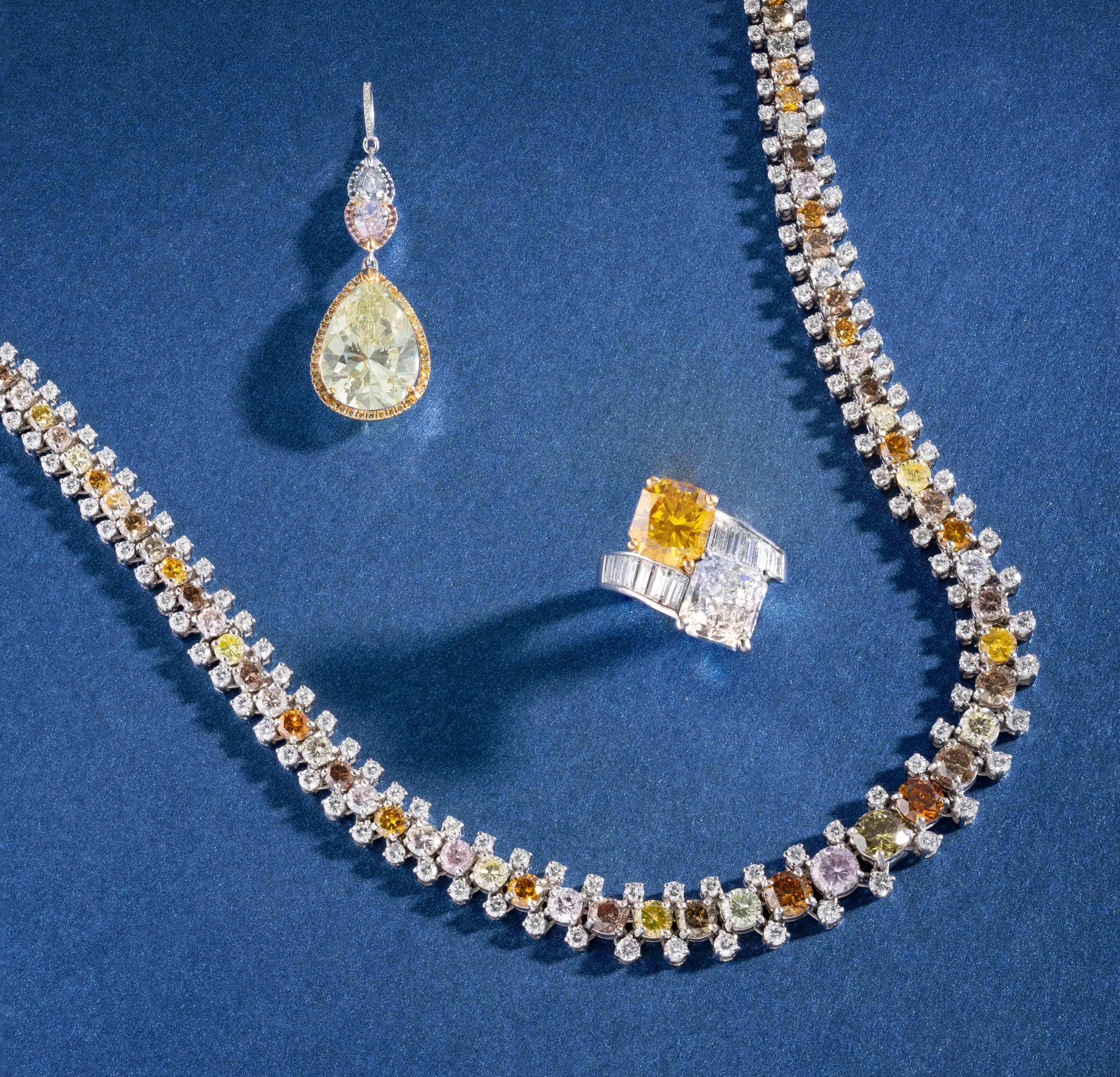
Some of the most famous diamonds in the world are not white or, as a diamantaire might say, “colorless.” The ‘Hope’ diamond is blue; the ‘Tiffany’ diamond—most recently worn by Beyoncé—is yellow, and the ‘Winston Pink Legacy’, an 18-carat fancy vivid pink, joined this roster setting a world record price in 2018 of $2.65 million per carat. This September, Freeman’s | Hindman’s Important Jewelry auction will offer an impressive selection of rare fancy-colored diamonds, which come in a rich array of colors including pink, green, yellow, and orange. Natural fancy-colored diamonds are exceptionally rare, occurring in only about 1 in 100,000 diamonds. Among these, the majority are small, typically weighing less than 1 carat. Spotlighting the Freeman’s | Hindman auction is an impressive Fancy Brownish Pink Diamond weighing 5.42 carats set in a beautiful ring. Like the ‘Pink Legacy,’ it is a classic rectangular shape, not commonly seen with pink diamonds. This clean, modern cut shows off its elegant hue. But, how did the diamond become pink? Unlike other colored diamonds which obtain their color from trace elements, pink diamonds are formed by further intense pressure and heat in the earth, distorting the atoms' lattice structure to only allow pink to be reflected. They are truly nature’s miracle and the second-rarest color in diamonds. Pink diamonds have become a celebrity favorite—a declaration of love in engagement rings for J. Lo, Blake Lively, and Victoria Beckham amongst the celebrities. The important jewelry collection from The Shawver Art Collection Trust will be offered across several auctions this fall/winter and features both colored gems and diamonds. Patricia Shawver, a Phoenix native, had an eye for color and collected both colored sapphires and diamonds among other rare gems. Three highlights are an Oscar Heyman Multi-colored Diamond Line Necklace featuring 20 carats of fancy color diamonds, a 10.43 cts. Fancy Greenish-yellow Pear-shaped Diamond Pendant, and an Oscar Heyman Fancy Deep Orange-yellow and Colorless Diamond ‘Moi et Toi’ Ring. Yellow diamonds are the most prevalent of the fancy colors. Their color is created by the trace element of nitrogen in the diamond. Rather than being judged for lack of color, as white diamonds are, they are graded by hue and saturation of color. Among several yellow diamonds to be offered in this auction is the Fancy Intense Yellow Diamond and Diamond Ring, set with a 6.14 cts center stone. All from private collections, these gems are fresh to market, providing a unique collecting opportunity. INQUIRIES: [email protected] VIEWING: 7 - 11 September 1550 West Carroll Avenue, Chicago, IL TO BE OFFERED SEPTEMBER 12, CHICAGO FANCY BROWNISH PINK DIAMOND RING $100,000 - 150,000 FANCY INTENSE YELLOW DIAMOND AND DIAMOND RING $30,000 - 50,000 The Collection of Audre Deckmann Carlin OSCAR HEYMAN, COLORED DIAMOND AND DIAMOND NECKLACE $40,000 - 60,000 FANCY GREENISH YELLOW DIAMOND AND COLORED DIAMOND PENDANT $60,000 - 80,000 OSCAR HEYMAN, FANCY DEEP ORANGE-YELLOW DIAMOND AND DIAMOND RING $80,000 - 120,000
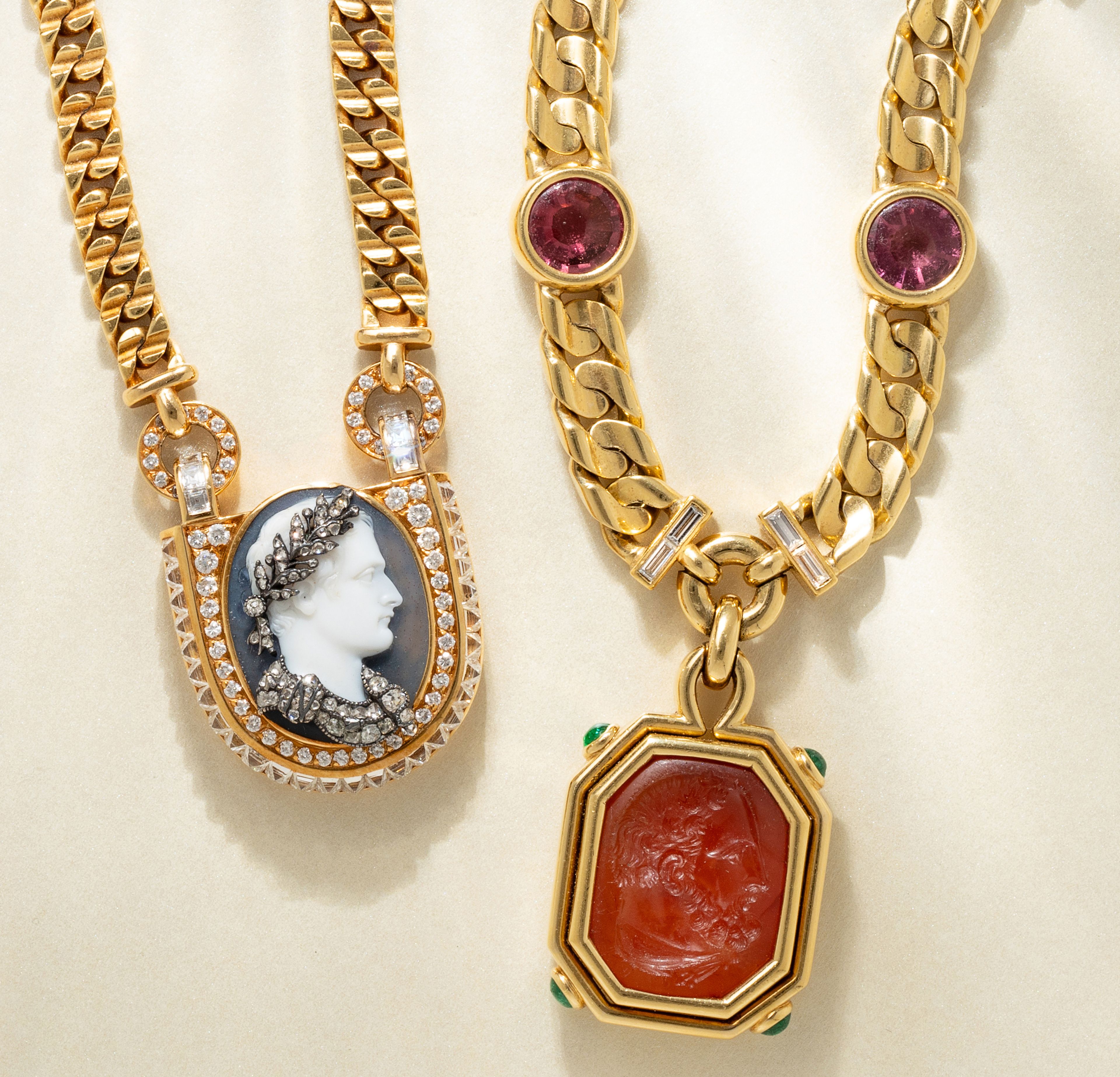
Coming up in Freeman’s | Hindman Important Jewelry auction on September 12, 2024 are three extraordinary Bulgari necklaces, circa 1980, consigned from a private Wisconsin collection. The attention to detail, superior craftsmanship, fine engraved gems, and rare coin featured in these pieces make them highly collectible. 1970-1980’s jewelry from Bulgari is particularly in demand, as the company was in an international expansive mode and at the top of fashion trends during this time. Founded in 1884 by Sottiro Bulgari in Rome, Italy, the house had risen to become the place to shop for amazing jewels and gemstones. By 1960, Bulgari was frequented by celebrities from around the world including movie stars like Elizabeth Taylor, Sophia Loren, Isabella Rossellini, and Audrey Hepburn and was synonymous with the Italian La Dolce Vita era of cinema. When the third generation Bulgari brothers took over the family business in 1966, a flurry of creativity and expansion happened at the firm. The younger generation wanted to bring Bulgari to the world, especially jewelry that women could wear anytime, anywhere. In this spirit, they opened the first store outside of Rome in New York City’s Pierre Hotel in 1971. The Bulgari Historical Archive & Museum Office indicated that all three of these necklaces were likely produced by Bulgari for the American market although only one of the trio has written confirmation that it was, in fact, purchased at the Pierre Hotel boutique. The Bulgari Agate Cameo, Diamond and Yellow Gold Necklace showcases a 19th century hardstone cameo of Napolean embellished with a diamond laurel wreath around his head. It is accented by diamonds in a scroll design and hangs from a gold curb link chain. It is accompanied by a receipt dated 1985 confirming it was purchased at the Bulgari New York boutique which opened in 1971 in the famous Pierre Hotel. Featured in the Bulgari Multigem, Intaglio, Yellow Gold Necklace is a carnelian intaglio suspended from bold multicolored gemstones in pink, lavender, and orange. This bold color palette and use of cabochons is a typical Bulgari style characteristic. Finally, the Bulgari Coin, ‘Monete’ Necklace centers a rare Sicilian silver coin suspended from a signature Bulgari curb link chain. This example is of an extraordinary size, 2¼ inches in diameter, so, it really makes a statement! Coin jewelry became synonymous with Bulgari ever since it was launched in 1966. Nicola Bulgari, the youngest brother, was fascinated by coins from an early age and collected them. Wanting to bring his passion to Bulgari jewelry, he began mounting coins in long gold chain necklaces. The necklaces were a hit. In the 1970s through the 1990s a Bulgari coin choker graced the necks of countless women and became a huge fashion statement. The coin jewelry was named, “Monete”, the Italian word for coin and remains highly sought after and collected. Freeman's | Hindman recently sold a smaller Monete necklace for $28,575. These necklaces are excellent examples of Bulgari’s commitment to using an historical element in many of their jewels. The founder of Bulgari, Sottiro, started his business selling antiques as well as jewelry. This passion for collecting continued in the family with his son, Giorgio and then his grandson, Nicola. Whether a coin or a one-of-a-kind cameo or intaglio connecting a fragment of the past to modern, bold jewelry is a winning combination. INQUIRIES: [email protected] VIEWING: 7 - 11 September 1550 West Carroll Avenue, Chicago, IL TO BE OFFERED SEPTEMBER 12, CHICAGO BULGARI, AGATE CAMEO, DIAMOND AND YELLOW GOLD NECKLACE $20,000 - 30,000 BULGARI, MULTIGEM, INTAGLIO AND YELLOW GOLD NECKLACE $7,000 - 9,000
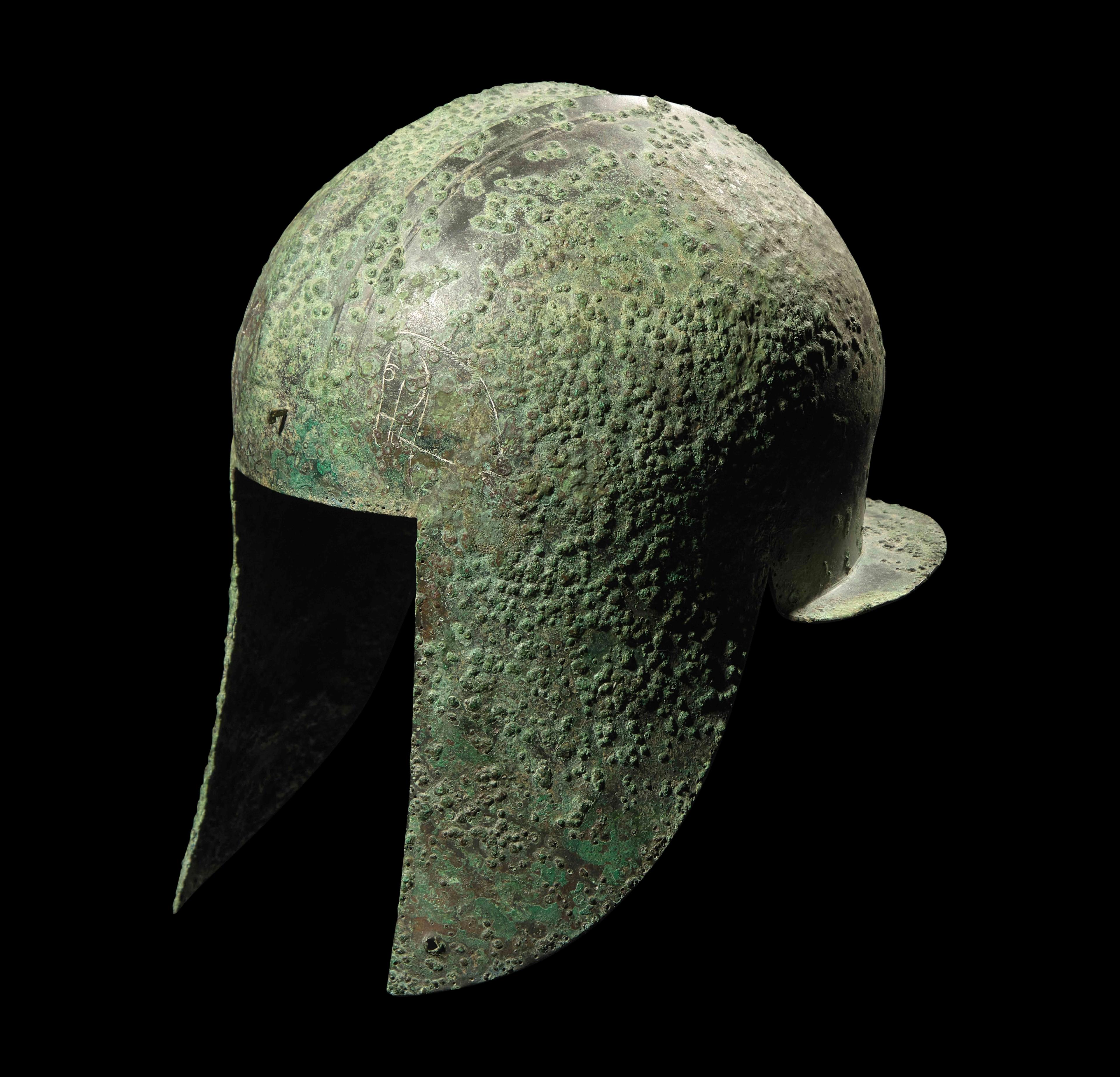
Running from 25 September to 4 October 2024 at Freeman’s | Hindman’s New York gallery, the upcoming exhibition Love and War explores the enduring themes of conflict and affection through the lens of ancient and neoclassical art. This small but evocative display brings together a curated selection of Greco-Roman arms and armor, pottery, and wearable art, complemented by Old Master paintings. At the heart of the exhibition is a stunning terracotta figure of a goddess, draped in a beautifully flowing himation, embodying the delicate balance between vulnerability and power. Alongside this, the collection features helmets and weaponry that have borne witness to the brutality of ancient conflicts, juxtaposed with delicate jewelry and intaglios that celebrate mythological tales of love and desire. The intersection of these themes—love as a force that can both heal and destroy, and war as an act of passion and fury—resonates across millennia. The exhibition not only offers a glimpse into the material culture of ancient societies but also invites reflection on the human experience. From the formidable armor that protected warriors to the exquisite adornments that symbolized status and attraction, each piece tells a story of its own. Love and War promises to be an engaging experience for visitors, a showcase of how these universal themes have been expressed through the ages in art and objects, reminding us that love and war have always been intertwined, driving human history forward. INQUIRIES: [email protected] VIEWING: 25 September - 4 October 32 East 67th Street, New York, NY TO BE EXHIBITED SEPTEMBER 25 – OCTOBER 4, NEW YORK Featured images: An Illyrian Bronze Helmet Incised with Two Horse Heads Circa 5th Century B.C. A print from a terracotta antefix once in the collection of Giampietro Campana, now in the Louvre, inv. Cp 3747 (list 53), that depicts Venus, the goddess of love, looking seductively at Mars, the god of war, each deity in its characteristic way “dressed to kill.”
To Our Dear Clients and Friends, As we welcome the changing of the seasons, Freeman’s is excited to present a season of remarkable firsts across our six salerooms.
"Give me leave, My dear General to present you with a picture of the Bastille, just as it looked a few days after I Had ordered its demolition...it is a tribute Which I owe as A Son to My Adoptive father, as an aid de Camp to My General, as a Missionary of liberty to its patriarch." (Lafayette to Washington, March 17, 1790) Paris, August 8, 1789. Ink and ink wash on laid paper, mounted to larger sheet; triple black ruled ink border (possibly added at a later date). 11 3/4 x 18 1/2 in. (image), 13 1/8 x 20 3/4 in. (sheet). Presented by the Marquis de Lafayette to President George Washington and inscribed by Lafayette at top: "From the M. de Lafayette to General Washington"; inscribed at bottom by the artist, Étienne-Louis-Denis Cathala: "Cathala Architecte Inspecteur de la Bastille fait le 8 Aoust 1789". In modern frame, 15 x 22 1/2 in. A remarkable drawing attesting to the historic friendship between George Washington and the Marquis de Lafayette, and the confluence of the American and French Revolutions. On July 14, 1789, the people of Paris stormed the Bastille prison, igniting a full-blown revolution in France. The very next day, the Marquis de Lafayette, hero of the American Revolution and then one of the most powerful figures in France, was appointed leader of the newly mobilized Paris militia. The city’s municipal government was unanimous in its choice of Lafayette to lead this citizen army. He was the ideal candidate, given his well-known military experience in America, which was instrumental in the United States' victory over Great Britain, and because of his political influence in France that contributed to the rise of the French Revolution. The militia was formed only two days prior to his appointment, on July 13, and it was its members, along with the citizens of Paris, who stormed the prison-fortress in search of weapons to defend themselves during the uprising. Charged with upholding law and order in a city seething with anger, frustration, and hunger, Lafayette's leadership of this militia was shaped by his experience while serving under General George Washington in America. Like his mentor, Lafayette sought to wield his immense power in the service of liberty, and he demonstrated this by subordinating his command to civic control, subjected his appointment to election, refused compensation, and declined opportunities that would have allowed him to usurp complete power. In the process, he transformed the militia into a well-disciplined volunteer army. He renamed it the Garde Nationale, or National Guard, and through his actions garnered the affection of the unruly Paris populace. To inspire confidence among the public, Lafayette designed an emblem for its troops to wear, a tri-color cockade comprised of blue, white, and red: a combination of the red and blue colors of Paris and the white of the House of Bourbon—a lasting symbol that is now the tricolor of the French national flag. 1849 print showing The Destruction of the Bastille and the key at Mount Vernon Soon after Parisians conquered the Bastille, the process of its demolition began. As early as the night of July 14, architect Pierre-Francois Palloy and his crew began to raze the prison. Aware that its continued presence inflamed public sentiment, on July 16 the municipal government of Paris authorized its destruction, and tasked Lafayette with seeing to its orderly demolition. Lafayette signed an order authorizing Palloy's work, and government officials were then sent throughout Paris to proclaim in Lafayette's name the fortress's imminent destruction (1). Less than four weeks later, on August 8, Étienne-Louis-Denis Cathala, one of the site's six demolition inspectors, drew the above image for Lafayette. Once an imposing fortress and symbol of the French monarchy’s tyrannical oppression, here Cathala shows the “citadel of arbitrary power” (as Lafayette called it), in complete ruin at the hands of the French citizenry (2). On March 17, 1790, after eight months of tirelessly meeting the many-sided demands of his new position, Lafayette wrote to Washington to inform him of the Revolution’s unfolding events. Lafayette was then at the height of his power, and he was optimistic about the Revolution’s direction, which he was steering in a moderate course toward a constitutional monarchy. The National Assembly was assembling its first Constitution (whose eventual preamble, the Declaration of the Rights of Man and of the Citizen, he had written) and casting off the most odious vestiges of aristocracy. Due to Lafayette's own efforts at the helm of the National Guard, violence had subsided in Paris and a relative peace had settled among the populace. “My dear General,” Lafayette wrote, “I will tell you With the Same Candour that We Have Made an Admirable, and Almost incredible destruction of all abuses, prejudices…that Every thing Not directly Useful to, or Coming from the people Has been levelled—that in the topographical, Moral, political Situation of France We Have Made More changes in ten Month than the Most Sanguine patriot could Have imagined—that our internal troubles and Anarchy are Much Exagerated—and that upon the Whole this Revolution, in which Nothing will be wanting But Energy of Government just as it was in America, Will propagate implant liberty and Make it flourish throughout the world…” Enclosed with that letter were two items, gifted to Washington on behalf of Lafayette and the French people, in appreciation of Washington’s embodiment of worldwide liberty: Cathala’s above drawing of the demolished Bastille, as well as the main key to the prison. For Lafayette, these items signaled his gratitude and indebtedness to his mentor, both for Washington's leadership, as well as his friendship that began 13 years earlier on the battlefields of America when Lafayette was only 19 years old—and that now informed his own role in charting France’s revolution. At the end of the letter, he wrote “Give me leave, My dear General, to present you With a picture of the Bastille just as it looked a few days after I Had ordered its demolition, with the Main Kea of that fortress of despotism—it is a tribute Which I owe as A Son to My Adoptive father, as an aid de Camp to My General, as a Missionary of liberty to its patriarch" (3). For their delivery, Lafayette entrusted them to Thomas Paine, who gave them to South Carolinian John Rutledge, Jr., who was then returning to America. Four months later, in August 1790, the drawing and key were presented to Washington in New York during his first term as President. Upon receiving them, Washington enthusiastically declared them in his reply to Lafayette as tokens of "victory by Liberty over Despotism” (4). He would prize them for the rest of his life, displaying them at his Presidential homes in New York and Philadelphia during the entirety of his time in office. At the end of his two terms, he had them sent to his home, Mount Vernon, where he had them prominently showcased for all to see in the entrance hall of his residence, “a mark of his appreciation to his French pupil and a recognition of their symbolic importance in America” (5). They would remain on display at his home at Mount Vernon—the key encased in a crystal and iron lantern with the framed drawing hung below—for the rest of Washington’s life, and then through three generations of Washington’s family who resided there. The Marquis de Lafayette and George Washington first met in Philadelphia on the night of July 31, 1777. It was a critical and dire moment for the fledgling American army, then reeling from the loss of Fort Ticonderoga, and anticipating the British Army's imminent invasion of the capital city. Despite the differences in their backgrounds, as well as their physical and emotional demeanor, the 19-year-old Lafayette and 45-year-old General Washington both shared a similar lust for military glory. Lafayette, an orphan and wealthy aristocrat, was married into one of France's most prominent families with close ties to the family and court of King Louis XVI. Not suited to Versailles's court life, and with his military commission terminated following reforms to the French military, Lafayette is said to have become inspired by the cause of American liberty after dining with English King George III’s brother, the Duke of Gloucester, who supported the rebelling Americans. "When I first learned of that quarrel, my heart was enlisted, and I thought only of joining my colors to those of the revolutionaries," Lafayette later wrote (6). Seeking the military honor denied him in France, in early 1777 Lafayette attained a commission as Major General in the Continental Army from American agent in France, Silas Deane. Defying orders from the King forbidding French soldiers from fighting in America, Lafayette purchased his own ship, La Victoire, and sailed for the United States. After weeks at sea he arrived in Charleston that summer, and then made a grueling overland journey north to Philadelphia. Upon his arrival, he was initially spurned by the Continental Congress, who had grown frustrated with the numerous foreign adventurers who came to America with high commissions, but who often offered little in return. Due to his wealth and noble connections, Lafayette was reassessed as a crucial means for attaining much-needed French support and was attached to General Washington's command. Unlike previous foreign volunteers that Washington had begun to loathe, Lafayette quickly showed himself to be an adept and skilled leader, both on and off the battlefield. Lafayette's idealism, his ebullient personality, and his willingness to learn, quickly won the affection of General Washington, who brought him into his inner circle and treated him as something akin to a son. Whether seeing in the young Frenchman a reflection of his younger self or expressing "some suppressed craving for paternal intimacy" (7), Washington began to treat Lafayette as his protégé, and they became trusted friends and confidants. As Washington later wrote to Gouverneur Morris, “I do most devoutly wish that we had not a single Foreigner among us, except the Marquis de Lafayette, who acts upon very different principles than those which govern the rest” (8). Through the years he fought for America, Lafayette continually proved his commitment to the cause of American liberty, and in the process became beloved among his fellow soldiers and the American public alike. This was shown at the Battle of Brandywine Creek—his first battlefield action—where he bravely coordinated retreating troops, getting wounded in the process; at the Battle of Gloucester, his first battlefield command; through the harsh winter at Valley Forge, where he supplied clothing and supplies for his fellow soldiers, purchased at his own expense; at the Battles of Barren Hill and Monmouth, where he showed courage and tactical proficiency; in Rhode Island, where he acted as an intermediary between the American and French armies; and finally, in the southern theater of war and at the siege of Yorktown, where his command of troops was instrumental in Lord Cornwallis's surrender that secured American independence. Through all of this, Lafayette remained devoted to Washington, even as many in the army and in Congress questioned his leadership. “I am," Lafayette wrote to Washington during the Conway Cabal, "now fixed to your fate and I shall follow it and sustain it as well by my sword as by all means in my powers" (9). This was crucially felt in Lafayette’s successful lobbying of King Louis XVI to provide more French military support to the American army, without which the war would not have been won. In response to his unwavering commitment to the American cause, Washington wrote to Congress that Lafayette "has been, upon all occasions, an essential friend to America" (10). Following the war, Lafayette returned to France a hero and a celebrity, where he became known as the "Friend of Washington", and later, the "Hero of Two Worlds". Like many foreign volunteers who fought for America, Lafayette brought back with him burnished republican ideals, and the goal of changing French society. During the period anticipating the French Revolution, he became a fixture in Paris's elite salons, where Enlightenment ideas fermented, and the American Revolution provided an example for societal change. A leading voice that agitated for civil and economic reform, Lafayette became an outspoken proponent of democracy, and led efforts for religious freedom and the abolishment of the slave trade. An ardent supporter of continued French-American relations, he lobbied for increased trade and commerce, and through his unofficial diplomacy, acted as an intermediary between the United States, France, and other nations. In 1787, during the fiscal crisis that precipitated the French Revolution (partly a result of French support for America), he was selected to sit on the Assembly of Notables, where he called for the reinstatement of the Estates General, and further called for the formation of a national representative assembly—a radical proposition at that time. When the Estates General was convened in May 1789, Lafayette was elected to the Second Estate of Nobles. That June, French society was reeling from rising food prices and increasing civil discord. By mid-June, the Third Estate declared itself the National Assembly and in the Tennis Court Oath of June 20 vowed to create the country's first constitution. On July 10, Lafayette submitted to the Assembly his Declaration of the Rights of Man and of the Citizen, penned with the assistance of Thomas Jefferson, and whose opening language echoed America's own Declaration of Independence, stating that “Nature made men free and equal". Four days later the Bastille fell and catapulted Lafayette to the forefront of the Revolution. In October 1824, thirty-five years after gifting the Bastille relics, and twenty-five years after Washington’s death, Lafayette was reunited with them when he visited Mount Vernon during his triumphal tour of America. He was 67 years old, and this was his fourth, and final, visit to America. As a legendary figure in the lore of America’s founding, he was celebrated throughout all 24 states, visiting each during his over year-long tour. At the end of this trip, President John Quincy Adams defined Lafayette’s meaning to America: "We shall look upon you always as belonging to us, during the whole of our life, as belonging to our children after us. You are ours by more than patriotic self-devotion with which you flew to the aid of our fathers at the crisis of our fate; ours by that unshaken gratitude for your services which is a precious portion of our inheritance; ours by that tie of love, stronger than death, which has linked your name for endless ages of time with the name of Washington..." (11). While visiting Mount Vernon that October, Lafayette was accompanied by his son, George Washington Lafayette, who was named in honor of his friend. For the Marquis, then the sole prominent Major General from the American Revolution still alive, the return to Washington’s home, where he visited Washington’s tomb and was reunited with the Bastille relics, provided moment of reflection on his and Washington’s long friendship as well as their mutual accomplishments that helped create two nations. In 1858, John A. Washington III, the last of the Washington family to reside at Mount Vernon, sold the property to the Mount Vernon Ladies Association. Alongside this he gifted a dozen objects once owned by Washington, including the key to the Bastille, but not the drawing. The family retained ownership of it for the next 33 years, and, in 1891 it was sold at auction at Thomas Birch’s Sons, in Philadelphia, as lot 268 in the “The Final Sale of the Relics of George Washington”. It was purchased there by prominent autograph dealer Walter E. Benjamin, who sometime after sold it to William Randolph Hearst. Following World War II it was acquired by Connecticut resident Alan Carswell, who left it to his wife, who then left it to the Shriners Hospital for Children and the Masonic Charity Foundation. A unique and remarkable encapsulation of the historical connection between the United States and France, this drawing is a testament to Washington and Lafayette's deep and consequential bond, and their mutual pursuit of liberty, forged across two worlds and two world-changing revolutions. It now returns to Philadelphia at an auspicious moment that marks the 200th anniversary of Lafayette's tour of America, and on the eve of the 250th anniversary of America's independence. Footnotes 1. Louis Gottschalk and Margaret Maddox, Lafayette in the French Revolution, p. 117, Chicago, 1969 2. Lafayette, Memoirs of Gilbert M. Lafayette, p. 104. Geneva, 1835 3. Marquis de Lafayette to George Washington, March 17, 1790. The Papers of George Washington, Presidential Series, vol. 5, 16 January 1790 – 30 June 1790, ed. Dorothy Twohig, Mark A. Mastromarino, and Jack D. Warren. Charlottesville: University Press of Virginia, 1996, pp. 241–243. 4. Washington to the Marquis de Lafayette, August 11, 1790. The Papers of George Washington, Presidential Series, vol. 6, 1 July 1790 – 30 November 1790, ed. Mark A. Mastromarino. Charlottesville: University Press of Virginia, 1996, pp. 233–235. 5. Christine Meadows, Souvenir of the French Revolution, p. 29. Mount Vernon Ladies Association, Annual Report, 1987. 6. Tom Chaffin, Revolutionary Brothers, p. 18, New York, 2019 7. Ron Chernow, Washington, p. 296, New York, 2010 8. Stuart Liebiger, Sons of the Father: George Washington and His Proteges, p. 217. Charlottesville, 2013. 9. Ibid, p. 218 10. The Writings of George Washington, Vol. VII, 31.H, Boston, 1838 11. Harlow Giles Unger, Lafayette, p. xxii, Hoboken, 2002
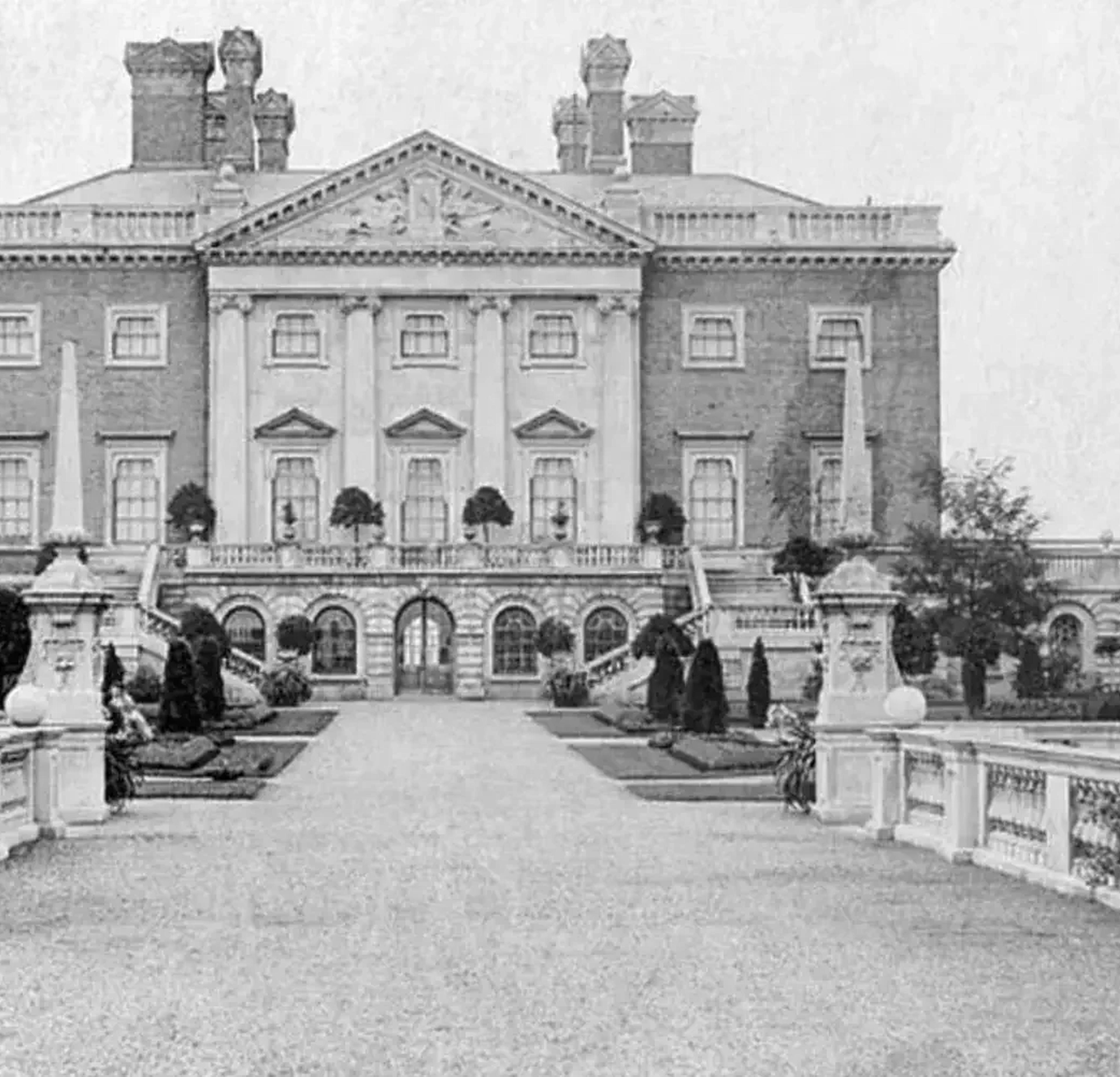
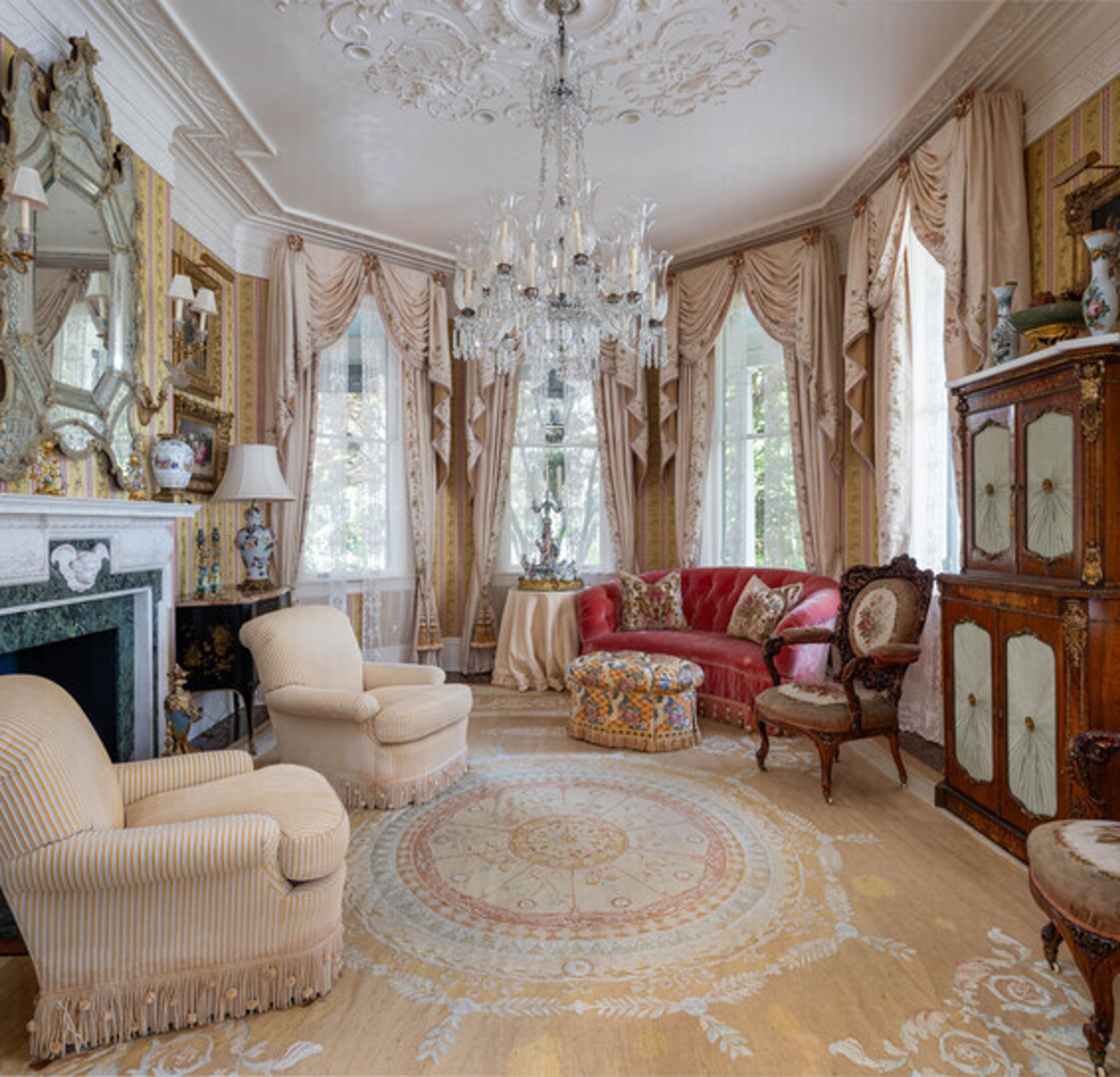
Houses live and die: there is a time for building And a time for living and for generation And a time for the wind to break the loosened pane And to shake the wainscot where the field-mouse trots And to shake the tattered arras woven with a silent motto.” T.S. Eliot, East Coker If T.S. Eliot’s J. Alfred Prufrock measured his life in coffee-spoons, then mine is surely measured in auctions: I’ve devoted twenty years of my life to bringing rich tapestries of collecting to sale and it still gives me a thrill to find the stories imbued in historic objects. And so it goes – a day in the life of an auctioneer: the 21st century bombardment of emails and zoom calls is intercepted by an old fashioned phone call – the opportunity to visit a private collection in Greenwich, Connecticut of “English Furniture” from the estate of Aline Elwes McDonnell. I volunteered immediately for the chance to bathe in memories of my youth (far too well-spent, I might add, in the Country House Collections department of a prominent London auction firm). The visit did not disappoint! In an unassuming home (much loved – the pink-walled kitchen bore the hallmarks of any loving family’s growth with tattered and refreshed lines denoting who grew tallest first) the cottage continued through the adjacent dining room to the library and beyond, by means of a modest passageway, to the extension built in the 1950s to house the extant collections long since removed from Copped Hall, Essex, UK. What lay before me was a glorious recreation of an 18th century English Country House drawing room: a finely woven Brussel’s tapestry circa 1680, a rare form of commode with the signature hallmark marquetry inlay and neoclassical style of circa 1775, Regency period cockpen faux-bamboo armchairs, Fahua vases from the Ming Dynasty, all bound together by an illustrious group of portraits on the walls led by the tantalizing and unfinished depiction of a young woman with a fashionable late 18th century coiffure. With stories passed down through the Elwes family, Country Life articles from 1910 and 1959 respectively, a flashlight and an insatiable curiosity as my only guides, it has been a challenge and a thrill to explore the collection and present it here. Aline Elwes McDonnell’s lineage is traceable back as far as King George II of England (one branch of the family lays claim to having researched their ancestry yet further to the late 1400s and the reign of Edward IV!) and Copped Hall in Essex was a site near the town of Epping that dates to medieval times – originally home to the FitzAucher family who held the office of Foresters. The meaning of ‘Copped’ has its roots in the old English term for peak and denotes the vantage point of the site upon which the 18th century version of the house was built. No fewer than three grand country houses graced the site until the demise of the Wyatt aggrandized version (now thankfully undergoing restoration by a local trust) in a devastating fire of 1917. The story goes that the few household staff and gardeners that remained during the war years, armed with only a small handpump to quell the flames, dragged furniture, paintings and objects out onto the lawn to save them from destruction. Much was sold off or dispersed thereafter to offset the huge losses incurred at the time but what remained was rehoused at The Wood House (an 1898 confection in the high Tudor revivalist style on the estate grounds) where the family moved following the catastrophic event. A number of the objects in this auction are featured in imagery from aforementioned Country Life article on The Wood House in 1959. This time capsule of 100 or so items made the transatlantic journey following Aline Mary Margaret Elwes marriage to the well-heeled New Yorker, Hubert McDonnell Jr. (1919-2004), in the Brompton Oratory in 1948. The pair settled in Connecticut and shipped the extant portion of the collection, bequeathed to Aline, by slow boat in the early 1950s, where they have been lovingly preserved ever since. The family hopes a new generation of custodians will care for these heirlooms and Freeman’s I Hindman is honored to be the auction house of choice for this beautiful group of forgotten treasures. Please join me this June in Philadelphia to be inspired and transported with what Disraeli described as that “soul-subduing sentiment, harshly called flirtation, which is the spell of a country house”. Property from the Aline Elwes McDonnell Trust will be offered in a live auction in Philadelphia at 2400 Market St, Philadelphia, this June 21, 2024 at 10 am ET.