New & Noteworthy
Stay up to date with news, highlights, & features from across Freeman's.
Stay up to date with news, highlights, & features from across Freeman's.
In anticipation of Freeman’s third annual Western Manuscripts and Miniatures auction on July 9, Christopher Brink, Associate Vice President, Head of Sale, and Senior Specialist, Books & Manuscripts, sat down with Senior Consultant, Medieval and Renaissance Manuscript Illumination, Sandra Hindman. Gain insights into market trends, Sandra’s expertise in the world of manuscripts and miniatures, and the ever-changing landscape of the category in the age of technology.
Eric C. Caren, one or the foremost private collectors of historical paper and documentary material in the United States, is widely regarded as "The Babe Ruth of Historical Collecting," reflecting both the scope of his holdings and the singular impact he has had on the market for primary-source history.
Join us as we spotlight Erin Rust, Associate Vice President and Specialist in Native American Art, ahead of our Native American and Southwestern Jewelry auction on June 15. Learn about her journey in the world of Native American art and jewelry, notable achievements at Freeman’s, and her favorite lots from our upcoming sale.

The first Patrick Mavros production studio was opened in 1983 on the family estate in the picturesque jungle of the Umwinsi Valley, Harare, Zimbabwe. Today, two generations of the Mavros family run the company which has expanded to include flagship stores in London and Harare and six boutiques throughout Africa. Although the company initially focused on jewelry, they expanded to include table decorations, luxury home goods, silver flatware, and small- to large-scale figurines, created from sterling silver and gold using the cire-perdue, or lost wax, casting method. The finely crafted Patrick Mavros oeuvre is exclusively conceived by family members, drawing inspiration from the natural beauty of African flora and fauna, and produced in Africa. Silver and gold used for all of the company’s creations is recycled from post-consumer sources, reducing the brand’s environmental footprint. Freeman’s is delighted to offer an expansive early collection of vintage Patrick Mavros sterling silver gorilla figurines and foliate table decorations in our June 16, 2026, Dining at Home sale. The collection includes fourteen members of the playful gorilla families, including a formidable large-scale sculpture of the “Chairman” and a few adorable infants. Over half of the marvelously detailed gorillas were cast in 1996 when the treasured line debuted, and many are now out of production. Posed in lifelike positions, the gorillas appear poised to spring into action. Completing a fantasy miniature jungle, the collection is rounded out by groups of botanically precise sterling silver palm tree- and bamboo-form candlesticks and a darting Springbok antelope that is part of Patrick Mavros’ line of freestanding, smaller-scale animal figurines. The Mavros brood is known for their commitment to environmental conservation and protection of the African wilderness. In 2016, they began raising awareness and funds for conservation of the pangolin, a remarkable scaled mammal threatened with extinction from illegal poaching. Although the pangolin remains the world’s most-trafficked mammal, thanks in part to the company’s activism, the species has gained significant protection measures from critical governments worldwide since 2020. Dining at Home Live Online | Chicago Jun 16 | 10:00 AM CDT

This 1975 painting, Trishie and Laddy (Lady), a close-cropped view of a woman and her dog amid a sunlit park, highlights Katz’s ability to distill personality and explore broader thematic concerns through portraiture. The subject of international acclaim, including more than 200 solo exhibitions, Alex Katz (American, b. 1927) came of age in New York during the 1950s alongside the rise of Abstract Expressionism, which he deliberately eschewed, preferring instead to champion representational painting. To this end, he applied a now characteristic and vibrant visual language, balancing realism and abstraction, ambivalence and intimacy. Katz has sought to share his world through his painting, whether through hundreds of portraits of his wife of almost 65 years, Ada, his home in coastal Maine, or, as in Trishie and Laddy (Lady), scenes and characters from downtown New York City among the cultural avant-garde, and his love of dogs. Katz has created numerous paintings and prints featuring dogs throughout his career, with his dog Sunny as a frequent model. A double portrait, Vincent and Sunny (1967), of Katz’s son and the Skye Terrier, even hangs in the foyer of the Katz apartment.[i] With his typical flat handling of color and form bordering on the edge of abstraction, Katz strips away extraneous detail in order to center the personality and spirit of these animals, lavishing the same care as for any other portrait. This is especially apparent in these double portraits of dogs and people, such as Trishie and Laddy (Lady), where Katz relies on a shared visual language to contrast their personalities and emotional states in the snapshot of his encounter with them. Within the painting, elements of Trishie and Laddy mirror each other. The V-neck of the woman’s shirt echoes the triangular open mouth of the pup, possibly a Borzoi or other aristocratic hound. The soft fringes of Trishie’s bangs are reminiscent of the waves of Laddy’s ears, while the short dark strokes of the dog’s whiskers are seen again in the lashes covering the woman’s downcast eyes. Balanced by the complementary greens in the surrounding park, each is defined by a shared palette of pinks, warm oranges, and browns, with some white highlights and only a hint of cooler grays in the dog’s nose and the woman’s irises. In highlighting the connection between Laddy and Trishie, their different personalities are laid bare: Trishie’s shadowed eyes, bleary from sleep or otherwise unfocused in comparison to Laddy’s exuberance, and Laddy’s panting in excitement in opposition to Trishie’s closed mouth and narrowed eyes. The woman’s careful grooming, set off by her vertical beehive hairstyle, reiterates stillness and a sense of buttoned-up composure, offset by the horizontal darting of Laddy’s long snout into the frame. Katz, when describing how he chooses his subjects, explained his goals of illustrating real people while also examining social types and themes through carefully presented pictorial information. He shares: When you made it clear and the environment in a real, clear way, it tended to abstract into a more general statement. The particular person became A Woman.... I figured if I could paint a particular subject, it could be both specific and universal. It could be a certain person and a generalized woman.[ii] This dual appeal of balancing the familiar with the universal is captured in Trishie and Laddy (Lady). Apparently awoken and thus faced withthe quotidian task of taking her ecstatic dog for a walk, the woman pauses, arranging and shellacking a complicated hairstyle into place before heading to a New York park with her well-heeled dog. Trishie and Laddy reflect a generalized pair that contrasts energy and composure, coolness and fervor, and might be encountered on New York City streets, as well as a very specific woman and dog the viewer would like to know more about. Bibliography: Fortini, Amanda. “Alex Katz Is Still Perfecting His Craft.” T Magazine, The New York Times, August 18, 2022. https://www.nytimes.com/2022/08/18/t-magazine/alex-katz.html. Katz, Vincent. “The Look of a Certain Person.” In Alex Katz Portraits. Silvana Editoriale, Milan, 2003.http://vincentkatz.net/abc2/books_abc2_AK2.html. [i] As of 2022. Amanda Fortini, “Alex Katz Is Still Perfecting His Craft,” T Magazine, The New York Times, August 18, 2022, https://www.nytimes.com/2022/08/18/t-magazine/alex-katz.html. [ii] Vincent Katz, “The Look of a Certain Person,” In Alex Katz Portraits. Silvana Editoriale, Milan, 2003.http://vincentkatz.net/abc2/books_abc2_AK2.htm.
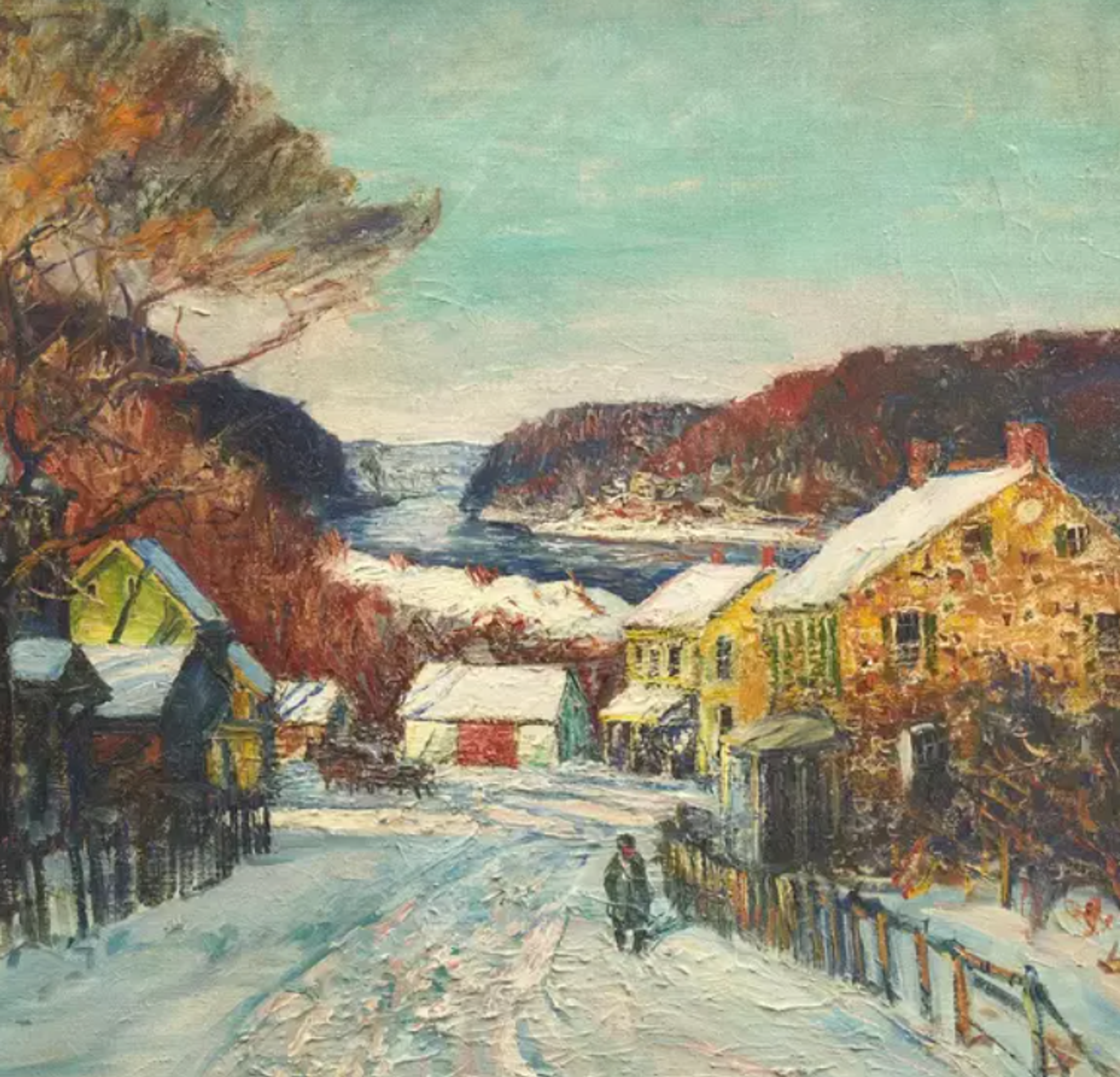
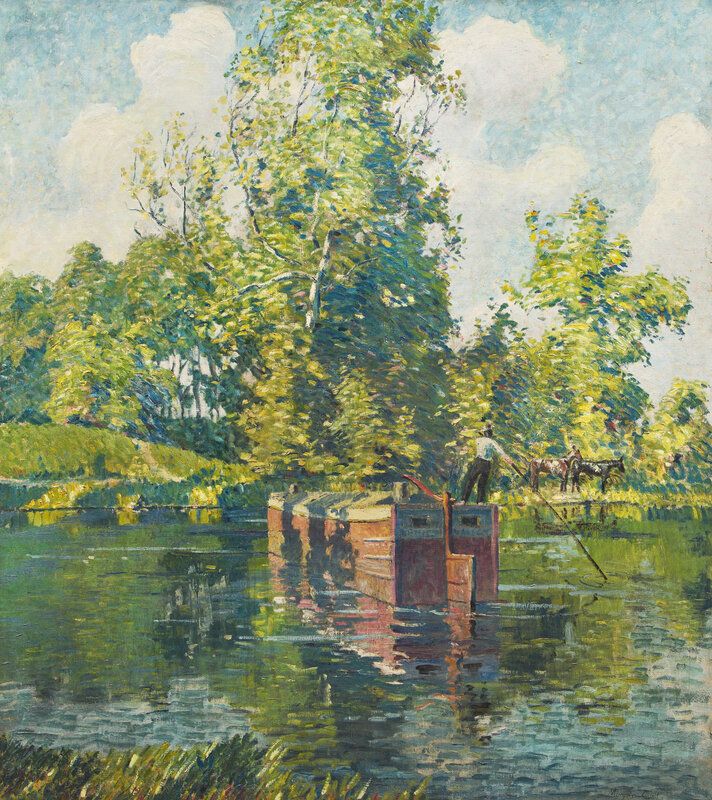
Late Afternoon (1933), a visual combination of local color with a breathtaking sense of wilderness, is arguably one of Walter Baum’s most accomplished winter scenes. The artist’s painterly rendition, recalling the bravado of Edward Redfield with its fast, muscly brushwork, endows the scene with texture and depth, the heavy snow and tumultuous flow of the river almost palpable.

Freeman’s American Art and Pennsylvania Impressionists auction on June 7th features a fine selection works by famed Hudson River School artists, led by a scenic view of Dover Plains by Asher Brown Durand, an exquisite panorama of Blue Mountain Lake by Levi Prentice, and a tumultuous seascape by William Trost Richards. Durand’s View of Dover Plains encapsulates the Arcadian qualities of American landscape painting at the dawn of the Civil War, an effort to bolster the nation’s conception of itself as a virgin land full promise. Durand, arguably the father figure of the Hudson River School, used images of boundless wilderness and rustic scenery as the pristine backdrop against which to draw the national narrative in pictorial terms, emphasizing the grandeur, both geographical and spiritual, of the New World. Here, Durand fashioned the scene around a lofty off-centered oak towering over a pasture with grazing cows. From the tree, the eye wanders down the sloped pasture to the river flowing towards the layered horizon, the valley and mountains stretching in the distance beneath a sliver of the golden sunset and an airy sea of clouds above. In Prentice’s Blue Mountain Lake, the foreground is framed by tall trees and a rocky ledge. From there, the eye follows the water towards the distant mountains. The artist’s brushwork resembles a patchwork of red and green hues to convey the autumnal beauty of the region. The land appears vast and rich, as far as the eye can see and beyond, subtly instilling the notion that humankind cannot fully grasp or subdue an ultimately untamable nature. A second-generation Hudson River School artist, Richards also paid attention and tribute to the sublime qualities of nature. Sea at Cornwall depicts a steep and rugged coast, seemingly unapproachable as the waves resonantly crash onto it. The tempestuous sea and the jagged land are both awe-inspiring, fraught with danger, yielding a feeling of terror we subconsciously experience from the safety of our inland vantage point. The market for 19th century American landscapes, having recently shown encouraging signs of strength, is again drawing significant attention from collectors who are seeking high-quality examples. Freeman’s is thus honored to present these impressive paintings along other exceptional works by the likes of Henry Pember Smith, James Hope, Edward Lamson Henry and David Johnson. Additionally, two landscapes by Hermann Herzog, offered at auction to benefit the Acquisitions Funds of the Brandywine Museum of Art, nicely round up the sale’s Hudson River School session.
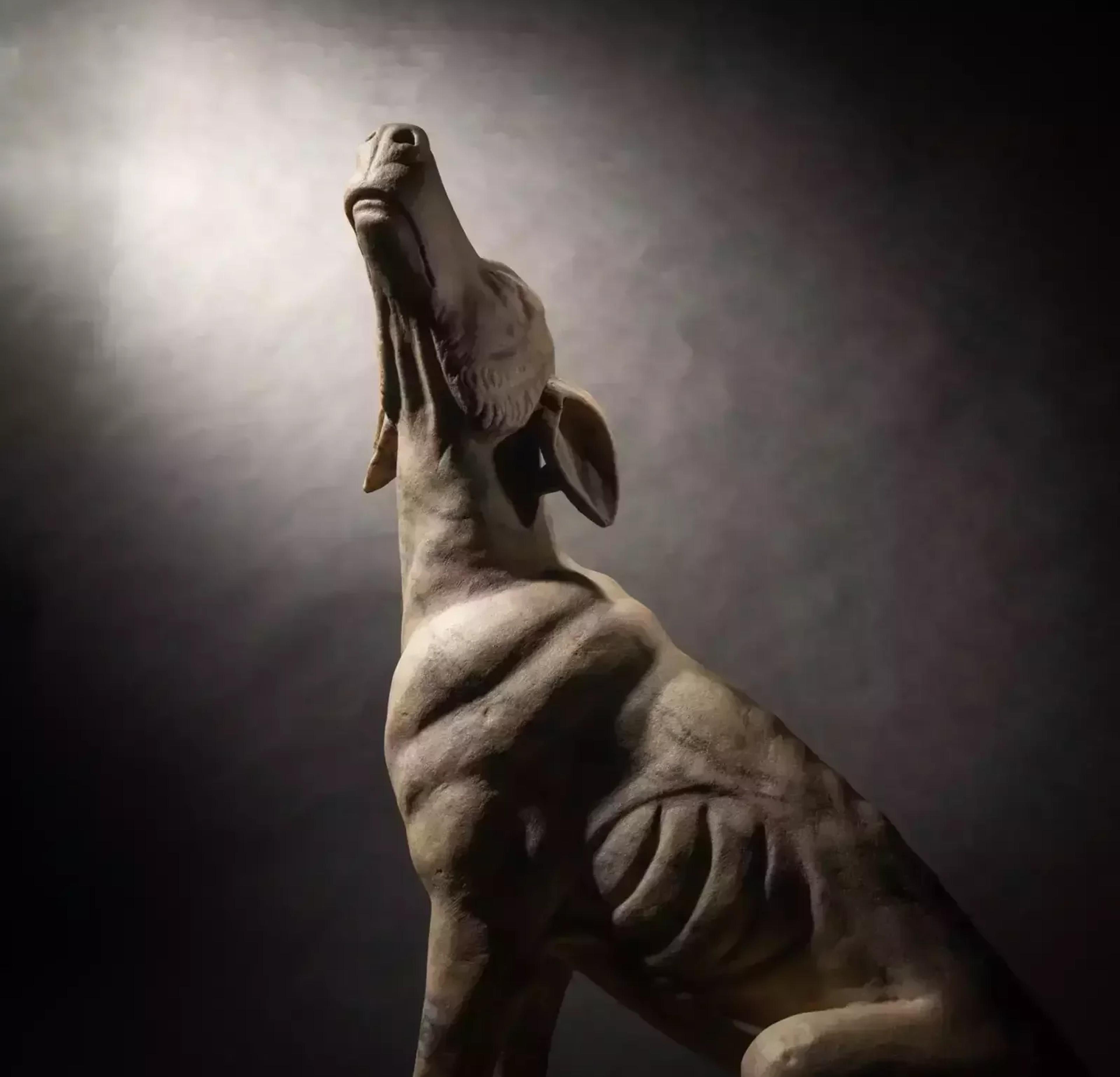
With an inquisitive, upturned head, the seated hound is captured in a moment of heightened alertness as if responding to a distant sound. The planted forelegs and massive paws, along with the alert torsion of the head and body, attractively combine to render the hunting dog in a state of latent, barely contained energy. The head is characterized by a narrow muzzle with a line of plastically rendered scruff along the jaw, with long pendent ears set low on the head and falling close to the neck. These aspects of the head, along with a deep muscled chest and abdominal tuck, are all characteristic of Laconian hunting hounds, immensely popular throughout the ancient Mediterranean. Idiosyncratic treatment of anatomy, such as selective thickening of vulnerable paws and forelegs and schematically conceived ribs, might be explained by vagaries of workshop production. It could also reflect technical challenges posed by the heterogeneous structure and pronounced veining of the pavonazzetto marble chosen, an attractive yet notorious stone for complicating precise carving due to the increased risk of fracture. Sculpted animals and dogs in particular were ideally suited to display within garden and funerary contexts where their lifelike presence and associations with loyalty and vigilance would have resonated strongly. The tradition was rooted in Greek naturalism and deeply appreciated by Roman sculptors. Colored marbles were frequently chosen for animals, used to enhance vivid, lifelike effects. Hounds in colored marble and stone have been found in metropolitan Rome during the 19th century, notably a strikingly similar seated hound rendered in serpentine excavated on the Esquiline (Musei Capitolini inv. no. MC1110) and a striding pointer carved in pavonazzetto with a verde antico base (Musei Vaticani, inv. no. MV.425.0.0). The enduring appeal of such sculptures was not lost on enthusiasts of later eras: the famed ‘Jennings Dog’ (an imposing Molossian now in the British Museum, inv. no. 2001,1010.1), notably, was one of the earliest and most admired antiquities to enter an English collection. Antiquities of the Garden: A Collector's Living Ancient World Live | ChicagoMay 20 | 9:00 AM CDT For dogs in Greek sculpture, see the section in G.M.A. Richter, Animals in Greek Sculpture (London, 1930). Vermeule’s analysis of the function and meaning of such statues remains useful C.C. Vermeule, “Greek Funerary Animals, 450-300 B.C.” AJA 76 (1972): 49-59, as does his earlier article, which takes up aspects of Roman craftsmanship: “The Basel Dog: A Vindication” AJA 72, no. 2 (1968), pp. 95-101. For the “Jennings Dog” and aspects of antiquarian interpretation, see F. Haskell and N. Penny, Taste and the Antique (New Haven, 1981).
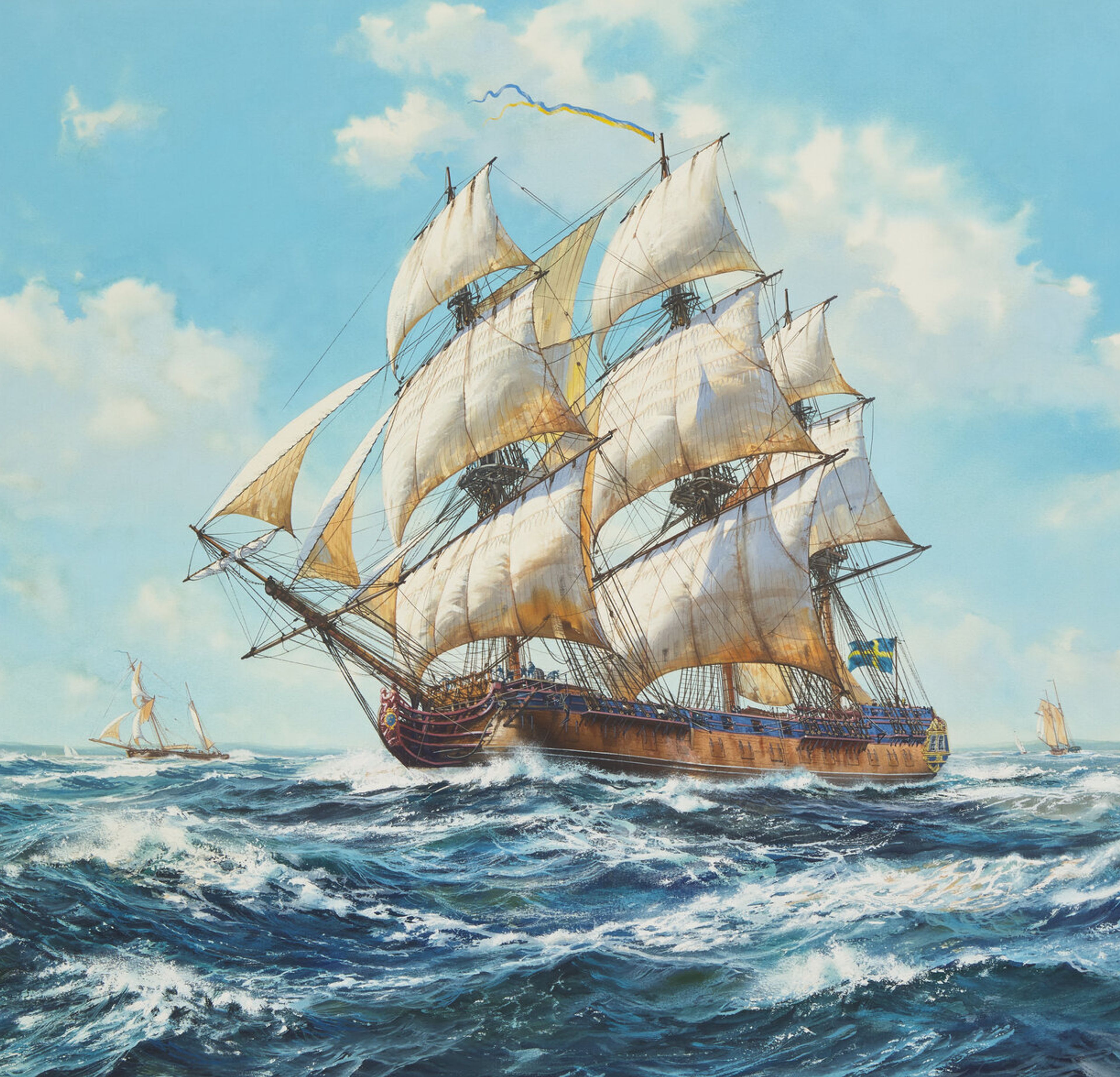
To mark 100 years of service, Freeman’s is honored to present a collection of works being sold to benefit the United Way of Southwestern Pennsylvania’s 100th Anniversary Campaign. The collection appears in Freeman’s May 12 Old Masters & 19th Century Art sale, May 13 Post-War & Contemporary Art auction, May 14 Collect: Post-War & Contemporary Art sale, and June 17 Collect: American & European Art auction. Collectors are invited to participate not only in acquiring art but also in supporting the community. Explore selections from specialists Zack Wirsum and David Weiss, including works from different centuries and styles, selected for their quality and broad appeal. Each purchase supports the United Way’s mission to strengthen communities across Southwestern Pennsylvania. “Lot 96, The Old Port of Marblehead, c. 1840, in our May 12 auction, is a great example of Roy Cross’s marine art. There is a strong tradition of recording ships that dates to the 17th century in Europe, and Cross, a largely self-taught British artist who initially began as an illustrator of aircraft subjects, proudly carried on this tradition of depicting marine subjects with great optical fidelity, as in the present work. “ – David Weiss, Senior Vice President, Fine Art “Janet Fish’s Pink Ribbon and Yellow Ribbon, 1981, is an extraordinary representation of the artist’s unique approach to photorealistic still-life painting, well composed and richly colored with implications of deeper meaning. Beyond the superficial technical and formal virtuosity of the rendering of light, reflection, and illusionistic space, the painting conceptually ponders traditional notions of femininity through the loaded,layered arrangement of domestic objects. The titular ribbons, a clear focal point commonly associated with wrapping presents and tying things with a bow, are significantly unfurled, drawing the viewer’s gaze further into the picture plane and revealing the gorgeous gift of the painting itself.” – Zack Wirsum, Senior Vice President, Head of Department, Post War & Contemporary Art

Join us as we spotlight David Weiss, Senior Vice President, Fine Art, ahead of our Old Masters & 19th Century Artauction, to be held live in New York on May 12. Learn about his journey in the world of fine art, notable achievements at Freeman’s, and his favorite lots from our upcoming sale.

“As a kid I was a voracious reader. I was accumulating books through my twenties, and by my thirties I could afford the ones I really wanted.” For Stephen J. Farber, collecting was never simply about acquisition—it was about connection. Over decades, he assembled a library that reflects not only literary history, but a life shaped by curiosity, discipline, and enduring passion. Born in New York City and raised in Miami Beach, Farber built a distinguished career in medicine, with professional chapters spanning cities across the United States. Throughout these years, books remained a constant. What began with a love of reading in childhood evolved into a lifelong pursuit of rare and meaningful works across literature, science fiction, philosophy, and social thought. Farber’s approach to collecting was guided not by market trends, but by personal resonance. His library was built on instinct, intellectual engagement, and a deep appreciation for the written word. The result is a collection that feels cohesive yet expansive—each volume contributing to a broader narrative of inquiry and discovery. The collection includes first editions and important works by some of the most influential writers in history. Among the highlights is George Orwell’s Nineteen Eighty-Four, a defining work of twentieth-century literature. Also featured is J.R.R. Tolkien’s The Lord of the Rings, a cornerstone of modern fantasy, as well as Mary Shelley’s Frankenstein, a foundational text in both literature and science fiction. These works sit alongside important philosophical writings, including Mary Wollstonecraft’s A Vindication of the Rights of Woman, reflecting the intellectual breadth of the collection. Equally notable is the care with which the collection has been preserved. Housed in custom-built shelving with glass enclosures, Farber’s library reflects a commitment not only to collecting, but to stewardship. The condition and presentation of each volume underscore a reverence for the book as both object and artifact. The decision to bring this collection to auction marks a new chapter—one that extends its life beyond a single collector. As Farber himself expressed, the goal is simple: to place these books in the hands of those who will value and appreciate them. The Library of Stephen J. Farber is more than a collection—it is a testament to a life shaped by reading, reflection, and an enduring pursuit of knowledge.

Few designers capture the spirit of the 1920s quite like Clarice Cliff. Bold, unconventional, and unapologetically joyful, her work redefined ceramic design—bringing color, abstraction, and artistic authorship into the home. Cliff emerged as one of the defining voices of the Art Deco movement, creating pottery that stood in stark contrast to traditional English wares. Her early Bizarre line—both a brand and a philosophy—celebrated experimentation, asymmetry, and expressive freedom. At a time when many designers remained anonymous, Cliff signed her work, asserting creative ownership and elevating ceramics into the realm of fine art. Her production model was as innovative as her designs. Cliff trained and oversaw a team of young decorators—some as young as 14—who hand-painted her bold patterns across ceramic forms. This approach allowed for scale while preserving a sense of individuality, resulting in pieces that feel both dynamic and deeply personal. Her forms were designed with intention, with broad surfaces serving as canvases for geometric and architectural compositions. Travel and exposure to European modernism shaped Cliff’s visual vocabulary. Influences from Cubism and abstraction merged with a distinctly British sensibility. Patterns such as Sunray exemplify this synthesis, with radiating color fields, stylized landscapes, and strong graphic symmetry that evoke the optimism and energy of the interwar years. Among her most iconic works are the Jazz Age figures—stylized ceramic sculptures that capture movement, performance, and modern femininity. Equally notable are her sculptural vessels, including the Lotus Jug, and her vividly patterned wares inspired by leisure and contemporary life. These objects blur the boundary between function and art, embodying a new vision for domestic design. Nearly a century later, Cliff’s work remains strikingly contemporary. Her fearless use of color and form anticipated modern design movements, and her pieces continue to resonate with collectors for their vibrancy and originality. As Cliff herself declared, “Women today want continual change—they will have color and plenty of it.” Explore works by Clarice Cliff in our upcoming Design sale.

In his one hundred years on this Earth and eight decades devoted to art making, Richard Mayhew (American, 1924-2024) left an indelible mark on the world he represented so beautifully in his lyrically colored, ethereal landscapes, which uniquely synthesized the painterly languages of abstraction and objectivity. Born in Amityville, New York, in 1924 to parents of Native and African American ancestry, Mayhew fittingly and foreshadowing his future output first drew artistic inspiration from the moody atmospheric canvases of Tonalist George Inness, the figurative father of American landscape painting, during boyhood trips to New York City museums with his mother. As a teenager, Mayhew honed his artistic skills, specifically his observational draftsmanship, training as a medical illustrator, before having his educational journey interrupted by service in the Marines during World War II. Mayhew’s immediate Post War years saw him return to his studies, enrolling in academic courses at Columbia University and studio classes at the Art Students League of New York and the Brooklyn Museum Art School, while supporting himself with work as a jazz singer and painting decorative patterns on porcelain China. Mayhew entirely turned his attentions to the visual arts as his primary mode of expression following his first solo exhibition in 1955 and a return to Europe, this time for enlightening scholarship, on a John Hay Whitney Fellowship in 1958. After returning stateside, Mayhew impactfully became a foundational member of Spiral, a creative collective of African American artists that included Romare Bearden, Norman Lewis, Charles White, and Hale Woodruff, among others, and became a forum for exploring the Civil Rights Movement’s impact on the respective artists and the role their art practices could play in promoting the cause. Inspired by the socially conscious concerns of his work with Spiral, Mayhew came to believe that art could serve as the great unifier, with true equality achieved through the shared emotion expressed and observed in the beauty of pigment and shapes composed on the surface of an artwork. Using the literal common ground of the landscape as an anchoring framework, Mayhew established a visionary visual language that distills the diverse, essential experiences of both his historically oppressed heritages through sublimely saturated, abstractly rendered liminal natural spaces, in hopes of achieving a greater understanding and equitable empathy for all aspects of individual and universal humanity. These painted environments, poignantly devoid of figural subjects, demonstrate a ubiquitous dichotomy of hope and pain, with the emptiness displayed ambiguously open to interpretation, either reflecting the potential for progressive occupation or the loss of those removed from the static scene. In content and concept, we see that the sky, fields, and trees were here before us and will remain after us, and the knowledge of this reality is so powerfully human; it is this that Mayhew meaningfully captures in his poetically transcendent paintings. Painted at the dawn of a new millennium and amid the autumn of Mayhew’s life, in Finale, 2001, we see a mature artist at the peak of his powers, flexing his creative muscles while employing his full repertoire of painterly tricks. This dazzling work depicts a hazy mirage, the fuzzy frequency of memory, a vivid otherworldly dancing dreamscape, at once invitingly comfortable and unsettlingly ominous, either way a magnetically attractive place to be, all set for the final act, as the title would suggest. In the frontstage foreground, fiery foliage in orange, magenta, and purple blazes vibrantly, rhythmically vibrating against a soft landing of buttery yellow pillows and smudgy smears of pale green; a spotlit playfield, an open arena poised for a punctuating performance. A seductive ribbon of a sultry blue stream winds through the central plane, tracing a path and drawing the viewer’s gaze deeper into the hypnotic hues of the introspective created realm. Providing a tethering backdrop is a weighty wall of trees, deeply toned and gestural, giving gravitas to the scene as the transportive gloaming of the magic hour blue punctures the dark leaves, both lightening the mood and lighting the stage, signaling that soon the curtain will close. Planted firmly in naturalistic painterly perfection, Finale is a standalone class act, a masterwork and testament that there is truth in Mayhew’s belief that we can all come together as one to behold the magnificence of the collective conscious landscapes we all inhabit. Post-War & Contemporary Art Live | New York May 13 | 10:00 AM EDT
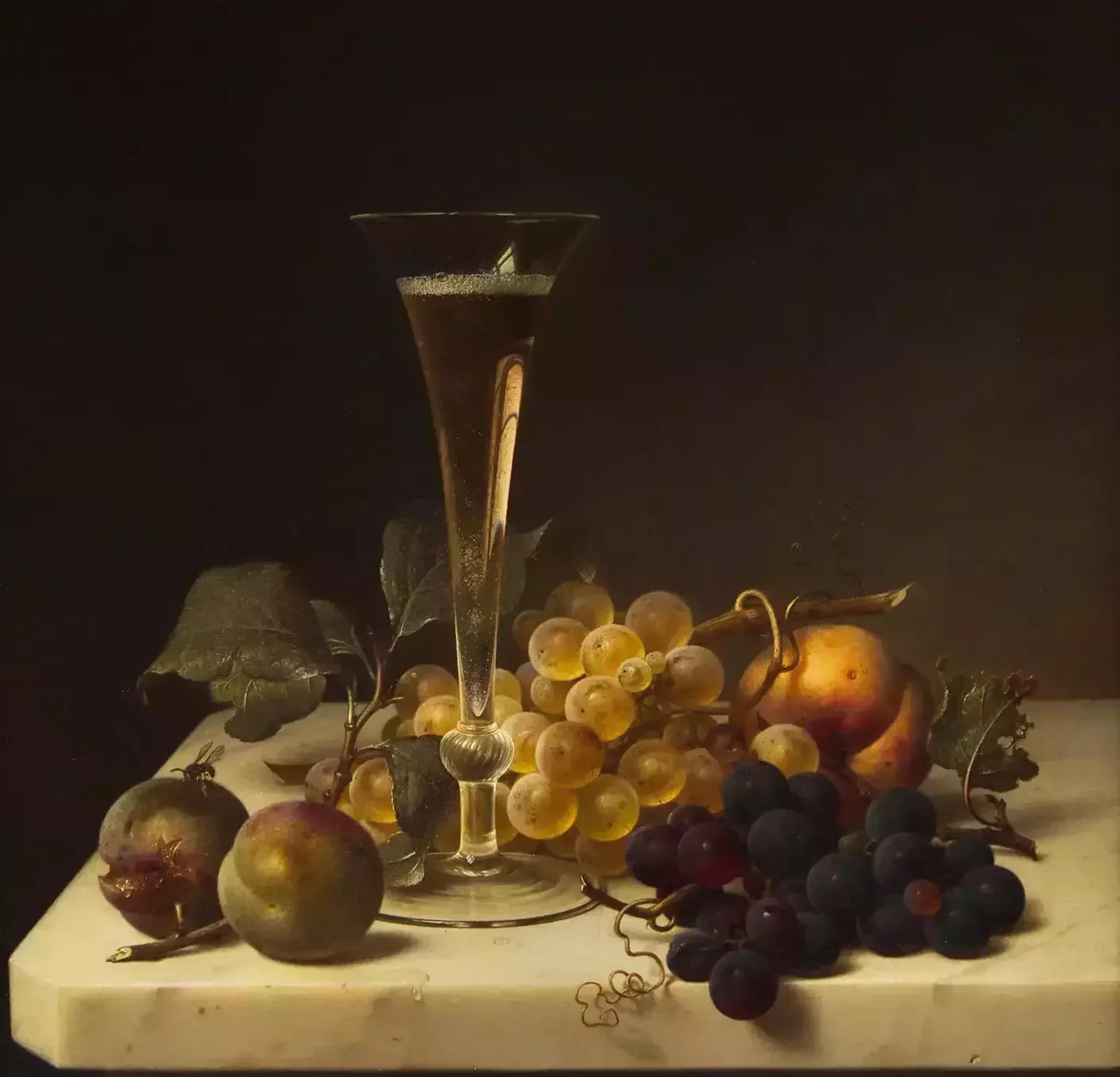
This exquisitely rendered still life is by the artist Johann Wilhelm Preyer, a student of the Düsseldorf School of painting, and one of the few of that school to specialize in still lifes.
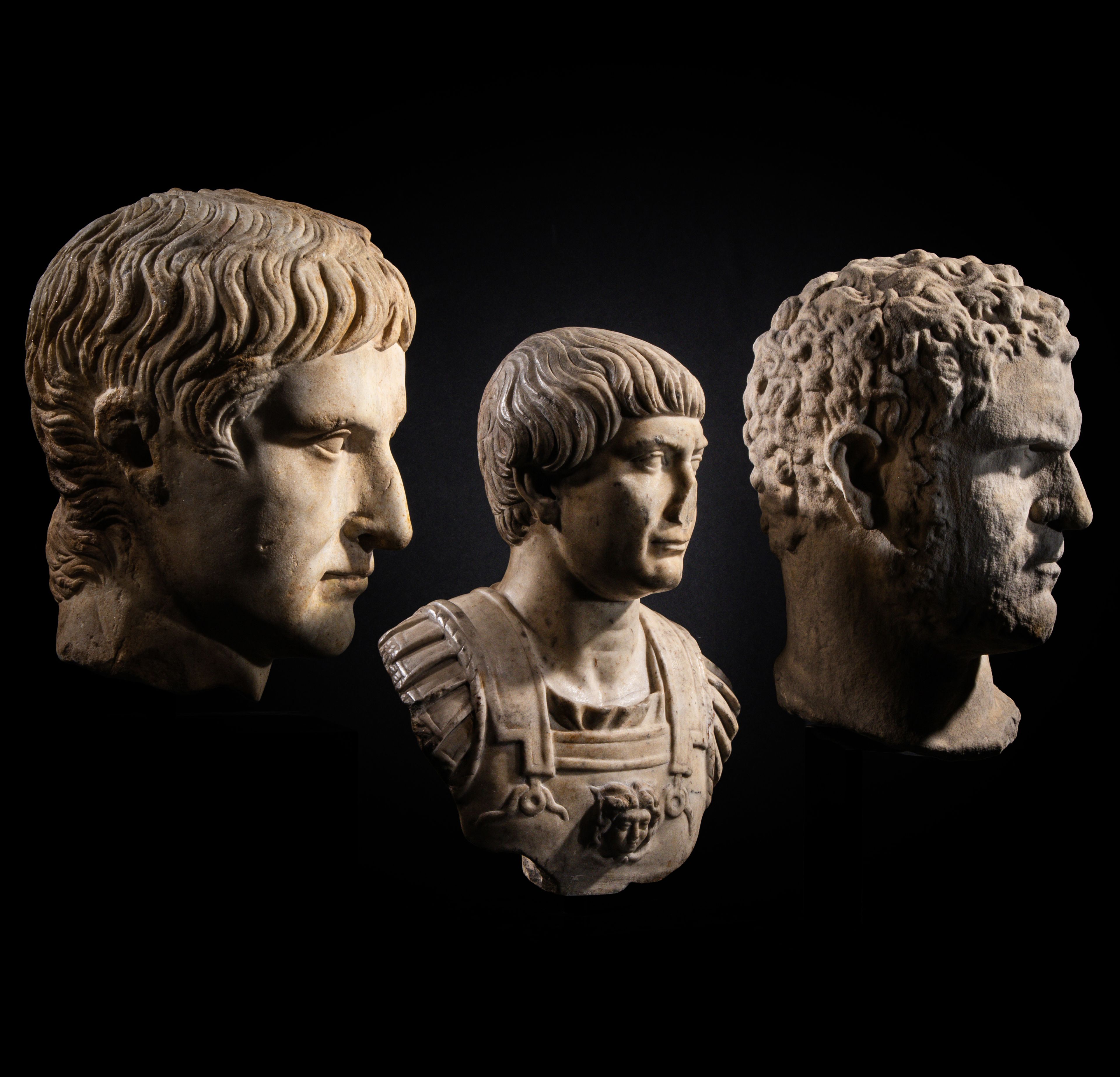
A great collection is never only about ownership; it is about recognition. The more than 120 works in this single-owner collection span centuries and civilizations, from Roman marble sculpture and Greek arms and armor to Egyptian amulets, South Arabian works, Near Eastern votives, and precious objects in silver and gold.
Join Darren Winston, Senior Vice President, Head of Department, Books & Manuscripts, Philadelphia, as he speaks to renowned Titanic Historian William Brower ahead of Freeman’ssale ofJohn Jacob Astor IV's Tiffany & Co.-Signed Patek Philippe pocket watch and gold Battin & Co. pencil to auction in our upcoming April 22 Watches sale. Darren Winston: Tell us a bit about your journey studying the RMS Titanic and what sparked your scholarly interest in this vessel and its ultimate demise? William Brower: I’ve always had an interest in history and shipwrecks. I saw Raise the Titanic at age five with my grandfather, and the opening sequence shows the real ship. Since I was captivated, my grandfather bought me a copy of A NIGHT to REMEMBER by Walter Lord and read one chapter each night before I went to bed. My summer visits with him included random aspects of the Titanic that helped shape my future, such as writing formal letters and making international calls, where I soon became friends with four survivors of the wreck. Before he passed from cancer when I was thirteen, he regifted me a copy of DISCOVERY of the TITANIC with a typed dedication to me and asked me to promise him I’d continue my research and share it with others as he’d done with me. In the fall of 1994, after I graduated high school, I developed a touring museum of the collection that I’d been building since age five and wrote a monologue based on the survivors’ accounts, who gave me permission to share their stories. I titled it Titanic: The Legacy Remains, and of my forty published works, five are strictly on Titanic herself; this summer marks forty-six years of research for me. DW: For those who may not be as familiar, can you share the significance of John Jacob Astor IV aboard the Titanic and what we know about his final hours? WB: JJ was quite a progressive man for his time, and although his marriage to Madeline drew quite a scandal, his reputation beforehand was forward-thinking and cunning. He even had one of the first science fiction books published in the States, in which he envisioned what life would be like in the year 2000! The return home on the Titanic was to finish the honeymoon with the new Mrs. Astor and their Airedale Terrier, Kitty. During the early moments after the collision, Madeline grew nervous amid the commotion on deck and was equally concerned about the baby she was carrying. JJ brought her into Titanic’s Gym on the Boat Deck, and while they waited in the heat for further instructions, he casually produced a penknife and cut one of the life jackets to show her what was inside. Once she was comfortable, he escorted her down to the Promenade Deck and helped her aboard Lifeboat 4. When asked about joining, given her five-month pregnancy, Second Officer Charles Lightoller declined, stating that it was women and children first. JJ kissed Madeline’s hand and stepped aside as the boat was lowered. During the last hour, he’s reported to have gone aft and released the dogs from their kennels near the stern. Of the twelve on board, only three would survive. He was last seen during the Titanic’s final plunge, being washed overboard from the roof of the Officer’s Quarters with Chief Officer Wilde, plus many others. DW: From your perspective as a Titanic historian, how rare is it to encounter personal objects that can be directly connected to passengers from the voyage? WB: Personal items are quite rare outside of the artifacts recovered by RMS Titanic Inc. however, they still bring chills and draw attention when produced. DW: Based on your research and understanding of the Astor family history, what makes this watch and pencil particularly compelling within the broader story of Titanic artifacts? WB: JJ was famous before boarding the Titanic, but his presence as the richest man on board drew much coverage once his travel plans were confirmed. Knowing his actions, I’ve often pictured him using his methodical personality by glancing at the watch on occasion while on the deck waiting to see whatever fate lay ahead for him. DW: Why do objects like these continue to resonate more than a century later—with historians, collectors, and the public alike? WB: One hundred and fourteen years have passed since the Titanic went down. She’s become more of a legend or film prop, but with the items available, it's the reverence and gravity that remind us that this actually happened. Lucien Smith, like JJ, was on his honeymoon and joined the Astors in Egypt and the holy lands. He wrote to his sister at home, announcing their plans to return on board the Titanic. A week later, Lucien’s sister sent her mother a package containing his letter and a note attached to the NEW YORK TIMES newspaper for April 16, 1912, saying “Go to page 2.” Lucien was among those who went down with the ship. Today, his granddaughter has the wedding band he gave to his bride before departing on their voyage, and every April, she takes the package and ring out before putting them away again once the anniversary passes. Robert Millar was twenty-six years old when he signed on to the Titanic as her Sixth Engineer. Before leaving for Belfast to join the crew, he asked his little brother to hold his lucky pen knife for him until he finished his tour of duty and came home. During the two hours and forty minutes of the sinking, Robert and his close friends fought the onslaught of seawater, trying to keep the lights and power going. Recent evidence has shown that even after breaking in half, the Titanic’s emergency dynamos kept power running until the final plunge. The entire engineering department went down with the ship, all thirty-five men. His great niece and her mother will be traveling to Belfast, where on the anniversary, she’ll gather at the slipway where the Titanic was first built and join other family members of the crew and passengers in a candlelight vigil before placing a rose at the memorial where his name is listed with his brothers in arms. These were everyday people overshadowed by the tragedy that took and immortalized them.