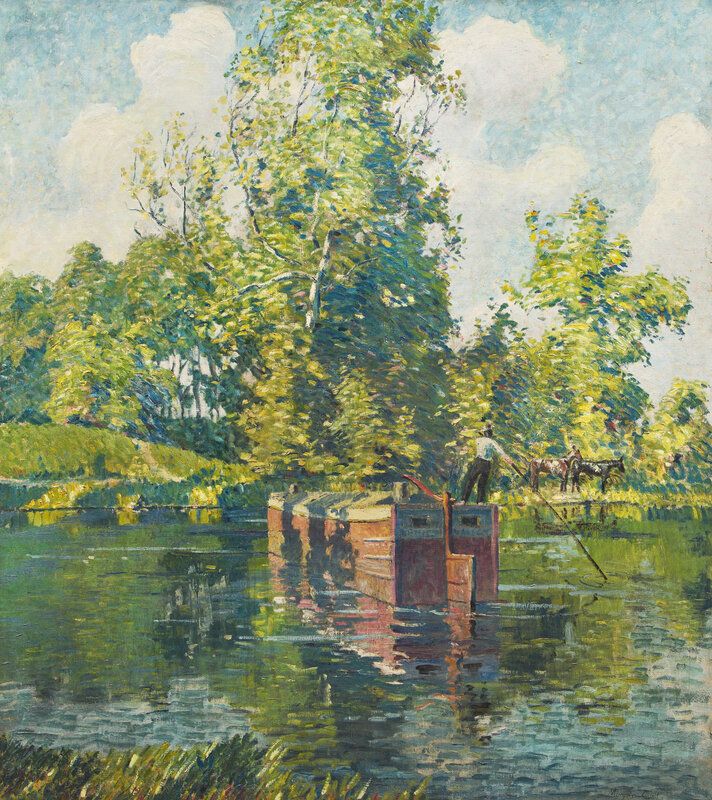
New & Noteworthy
Stay up to date with news, highlights, & features from across Freeman's.
Stay up to date with news, highlights, & features from across Freeman's.
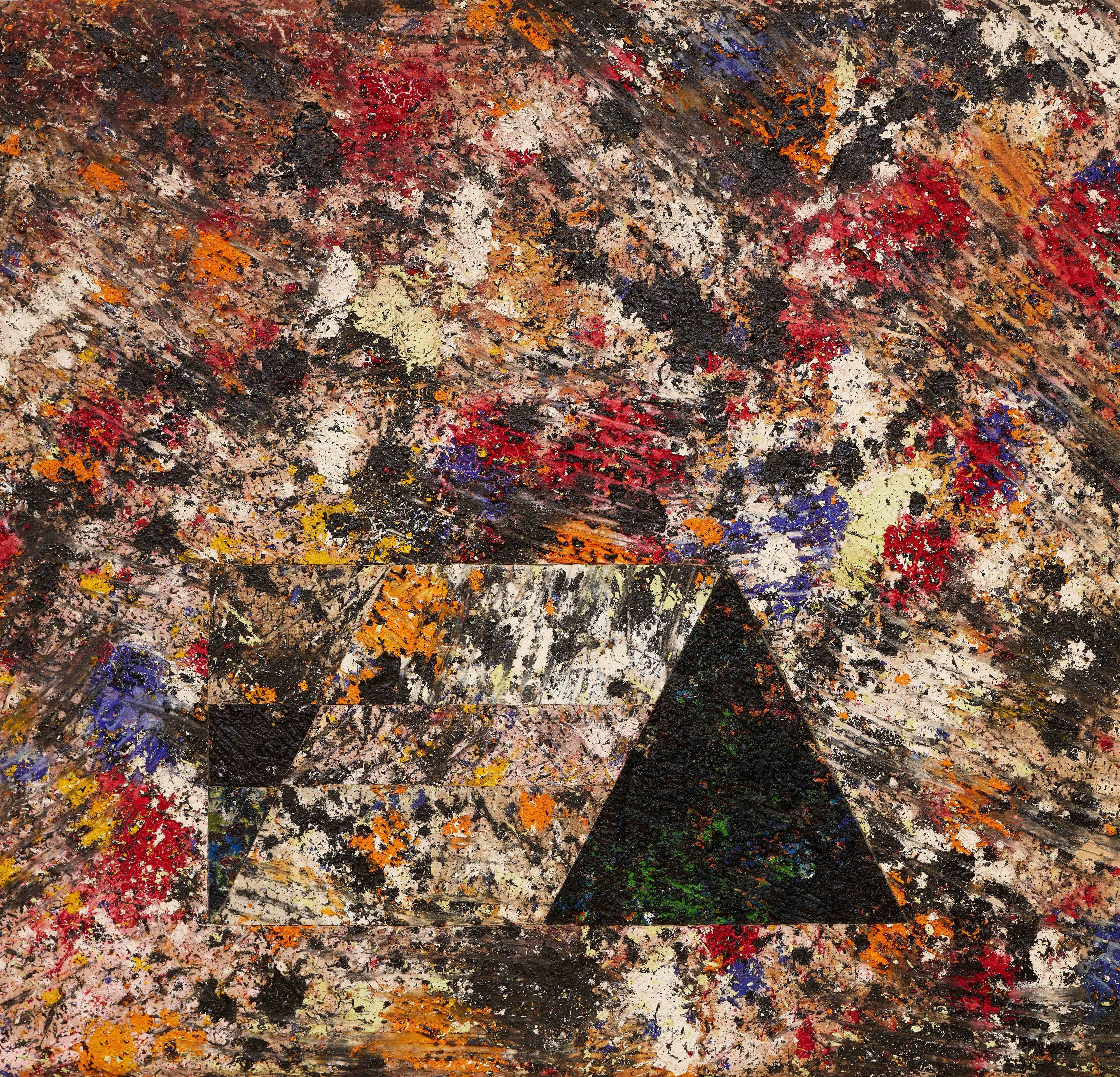
Sam Gilliam’s 'Dorothy’s Mondays' Painting Featured in Upcoming Post War and Contemporary Art Sale — November 14, New York In an interview for the 2008 Smithsonian exhibition, Sam Gilliam: Thinking Outside the Frame, the artist said of his work: “I was free to try anything I really wanted to. I was free to be easy or mysterious. I was free to be the artist that I really wanted to be. ... I think that even as an artist is that I discover new things every day, every time I go to a museum, and that’s what the works are there for.” This freedom is evident throughout Gilliam’s long and prolific career, as the artist manipulated paint, color, and canvas in innovative and surprising ways. In the early 1960s, he liberated the canvas from its stretcher and pushed it out into three dimensions. These “drape paintings” became some of his best-known works, large painted and stained swaths of loose canvas that Gilliam tacked to walls, hung from the ceiling, or draped over sawhorses. The paintings broke free of the picture plane, creating sensual, sculptural, all-encompassing objects for viewers to experience viscerally. After the draped canvases, in the 1970s, Gilliam began engaging the stretcher again, but with a more architectural structure, beveling the edges to bring the picture plane forward into the viewer’s space in a new way. Around 1975, he began a series of White and Black paintings, typically created on beveled canvases, incorporating collaged painted canvas and many layers of paint applied with shag-rug brushes and splatters. A prime example of this series is Abacus Sliding (1977), in the Denver Art Museum's collection, with its intricately impastoed surface and incorporation of geometric shapes. The present lot, Dorothy’s Mondays, was painted that same year and shares many commonalities in its lively application of paint and its geometric details. Dorothy refers to Dorothy Butler Gilliam, a journalist, author, advocate, and educator, who married the artist in 1962. She was the first African American female journalist hired by The Washington Post and went on to cover the major events of the Civil Rights movement, becoming a well-known and respected writer and editor. The couple had three children and later divorced in the 1980s. Dorothy’s Mondays epitomizes Gilliam’s salient Black Paintings series, a riot of color in its geological strata, gestures sweeping and swirling around the canvas, but anchored by the steady black triangle at the center. Fresh to the market, the painting has resided in the present owner’s collection for nearly fifty years, acquired the year after its making at Fendrick Gallery in Washington, D.C., the second gallery to exclusively represent him. Freeman’s is a premier American auction house offering services in multiple categories including fine art, jewelry, design, books and manuscripts, furniture, decorative arts, antiquities, couture, and Asian works of art. With 16 regional locations nationwide, the firm provides auctions, appraisals, private sales, and art advisory services, connecting clients to the global art market. Freeman’s strives to bring art, history, and design to life by connecting people with extraordinary objects through exceptional service and expertise.
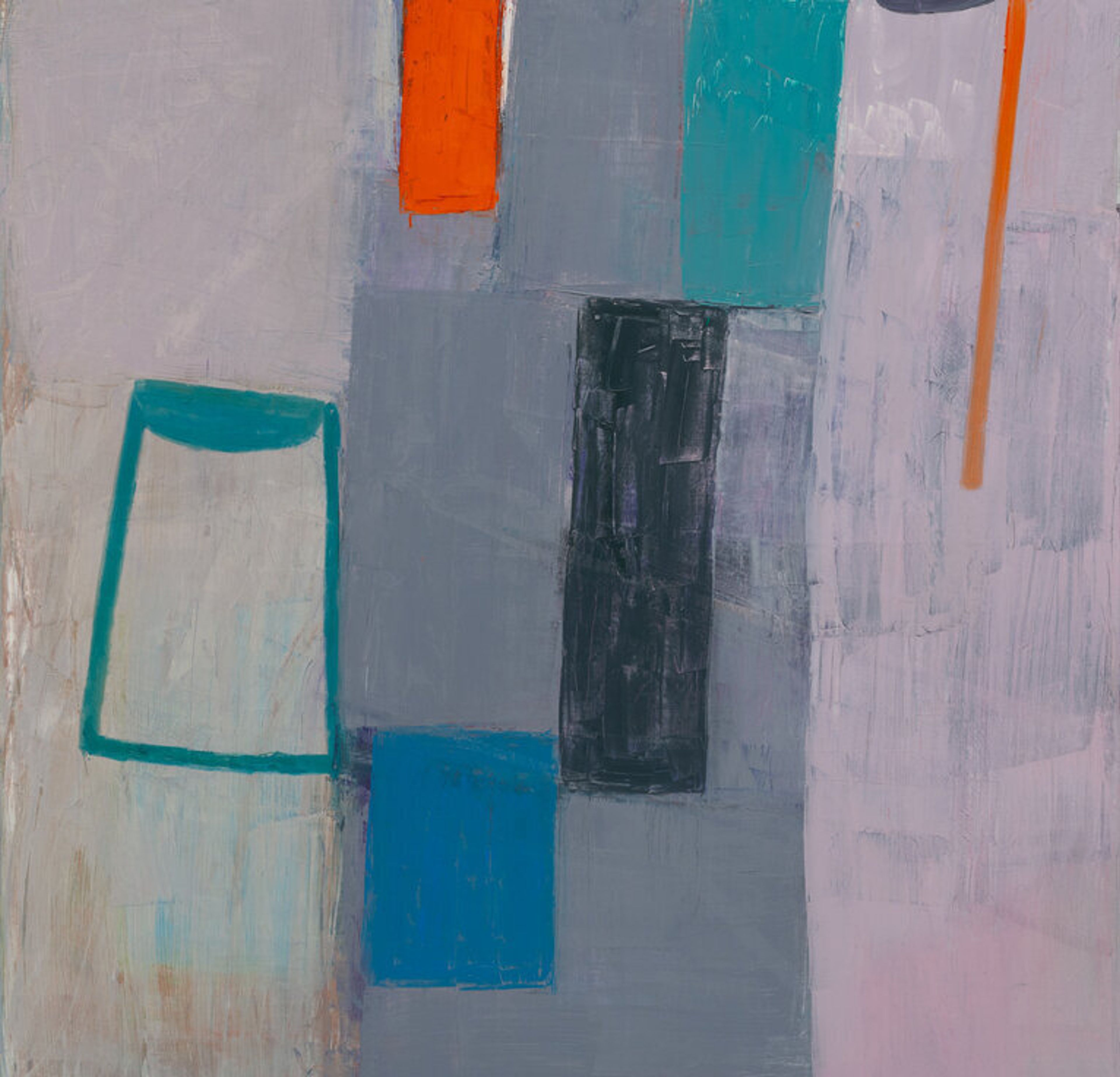
Property from a Distinguished Private Collection, Florida, headlines Post War and Contemporary Art Sale, November 14, New York

I think it's fair to say that postmodernism is the cilantro of the design world - there are those who love it, and those who would sooner welcome a bedbug infestation into their home before taking in a piece of postmodern furniture. As the design world continues to unpack the last quarter of the 20th century, postmodernism is enjoying a moment in the spotlight as a younger generation of collectors moves to the forefront. Essentially, postmodernism is a colorful and spirited rejection of modernism and Mies van der Rohe’s edict “less is more”. Whereas classic modern design distilled forms down to their functional essence, postmodernism turns this approach on its head and celebrates ornament for its own sake, especially ornament that references historical periods and recontextualizes them. Despite its intellectual underpinnings in art, architecture and literature, postmodern design comes across as playful, cheeky and ironic, every bit the class clown. Rather than following a rigid set of rules and principles, postmodernism defiantly breaks norms, defying easy categorization. The movement was global but found its highest expression in Italy, the crucible of so many design movements, and was elevated in the noted design collective Memphis Milano, founded by Ettore Sottsass. Other prominent designers within the movement include Martine Bedin, Mihael Graves, Alessandro Mendinin, Mattheo Thun and Marco Zanuso. To appreciate the breadth of design that the Postmodern movement celebrates, consider three examples featured in our upcoming Modern Design sale on November 20. Gaetano Pesce’s Amazonia vase (estimate $600-900) plays off the polished and idealized beauty of Murano glass and presents us with what looks to be melting blob of plastic with platypus-like feet. Early versions of this vase were hand-built, allowing the resin to flow and expand freely – the disorder and irregularity being precisely the point. And lastly, when one critic described postmodernism as a “shotgun wedding between Bauhaus and Fisher-Price” they may well have been referring to Matine Bedin’s Super Table Lamp ($800-1,200) which takes the form of a toy car, complete with functional wheels. Playful and whimsical, who could resist a traveling lamp? Like it or not, postmodernism is back. Whatever the reason, it’s bold, brash, and begging for attention. INQUIRIES: [email protected] TO BE OFFERED NOVEMBER 20, CHICAGO Martine Bedin (French, b. 1957) | Super Table Lamp, Memphis $800 - 1,200 TO BE OFFERED NOVEMBER 20, CHICAGO Gaetano Pesce (Italian, 1939–2014) Amazonia vase $600 – 900
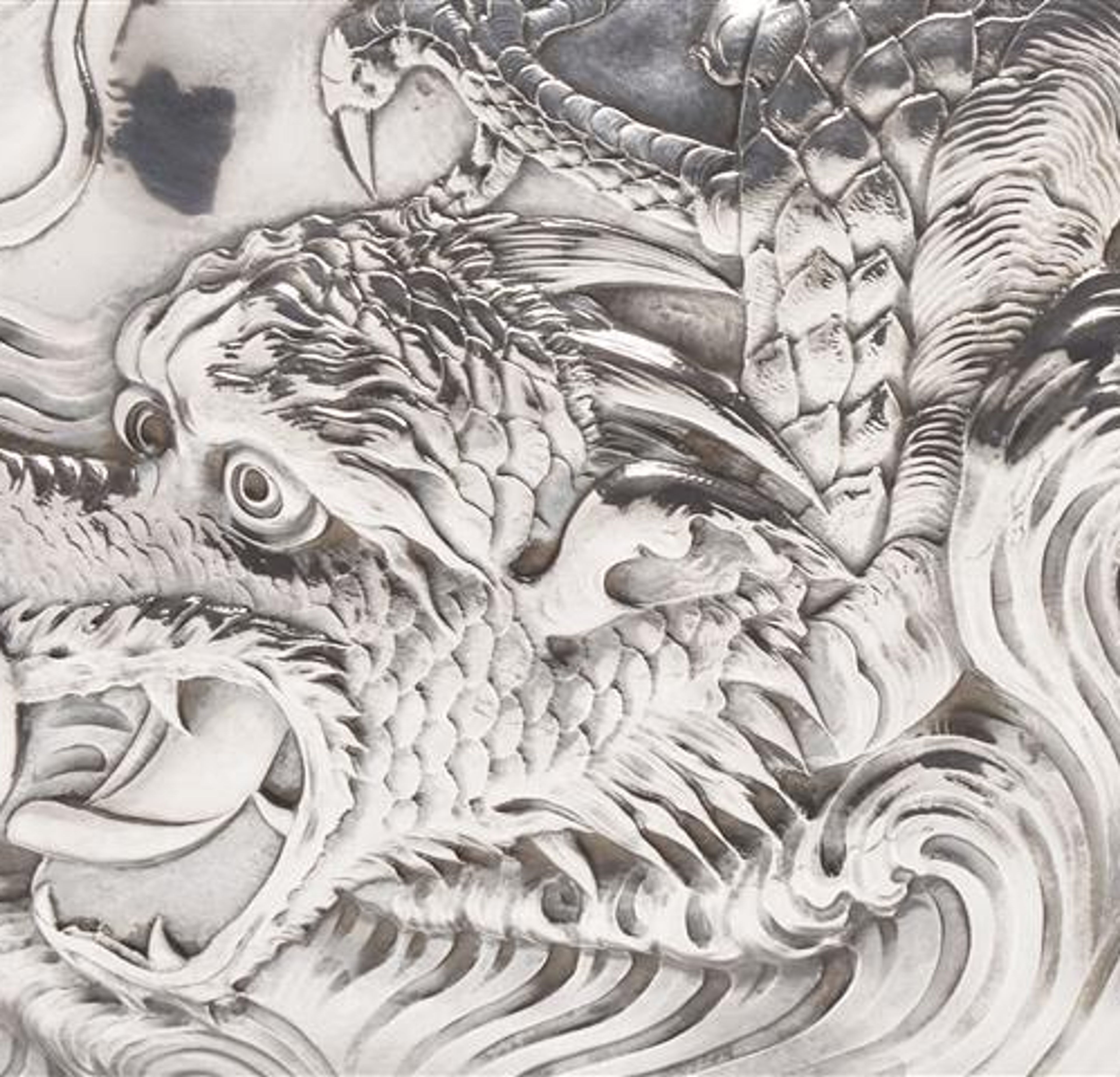
This November's American Furniture, Folk and Decorative Arts auction brings a remarkable selection of American Aesthetic Movement sterling silver to the marketplace. Aestheticism was a relatively short-lived but significant cultural movement of the late 19th century that valued aesthetic qualities above all else in the creation of literature, decorative, and fine art. It encouraged a lifestyle that sought beauty in everyday household objects. The movement's sources of beauty were found in nature, and most importantly for American decorative arts, in the traditional designs of non-Western cultures. The Aesthetic Movement in America was ignited by the Philadelphia Centennial Exposition in 1876. Nearly ten million visitors had first-hand exposure to the decorative arts, including textiles, glass, ceramics, and furniture of Asian, North African, and Middle Eastern countries. The Japan Pavilion was a sensation, and a mania for everything "Japonesque" ensued. Exhibits of traditional goods from Islamic nations sparked a craze for the "Saracenic" style. America's silver manufacturers responded quickly and passionately to the demand, pushing their craftsmen to extraordinary accomplishments in chasing and casting. No one was more inspired by the artistry of non-Western influence than silversmith, collector, and Tiffany & Company chief designer, Edward C. Moore (1827-1891). During the Aesthetic Movement, Moore's collection of exceptional decorative arts from ancient Greece and Rome, and the Far and Near East, inspired the designs of Tiffany & Co. His collection and influence were presented in the exhibition and publication, Collecting Inspiration: Edward C. Moore at Tiffany & Co., at the Metropolitan Museum of Art, June 9- October 20, 2024. The November 12th auction offers a dramatic three-piece "Saracenic" sterling tea set (Lot 250) created at Tiffany & Co. under Moore's leadership. This tea service is illustrated and discussed in John Loring's Magnificent Tiffany Silver (2001), p. 147, and incorporates varied and complex Middle Eastern designs. Other New York manufacturers answered the demand for Aesthetic products, including Theodore B. Starr (1837-1907), a Madison Avenue, New York, importer and silver manufacturer. A five-piece "Persian" tea service (Lot 252) by Starr will be offered. Engraved on the undersides, the tea set was presented to Eliza Bishop Emery (1833-1906) of Massachusetts on the occasion of her 25th wedding anniversary to William Henry Emery (1822-1893) in 1881. The Gorham Manufacturing Company of Providence, Rhode Island, was not to be outdone by the competition in its Aesthetic production. This large and remarkable "Japonesque" punch bowl (Lot 249), with a date mark of 1885, is hand-chased with sea serpents and fish in a tumultuous sea and accented with realistically cast seashells, seaweed, and crustaceans. The cast sea forms belong to Gorham's "Narragansett" line. Introduced in 1884, the pattern was named after a Native American tribe from the Rhode Island Sound area. The punch bowl overwhelmingly illustrates a brilliant confluence of Japanese influence and Atlantic Ocean reality. A near mate to this punch bowl, retaining its original ladle and bearing the same maker's markings, is in the collection of the Boston Museum of Fine Arts (1980.383).
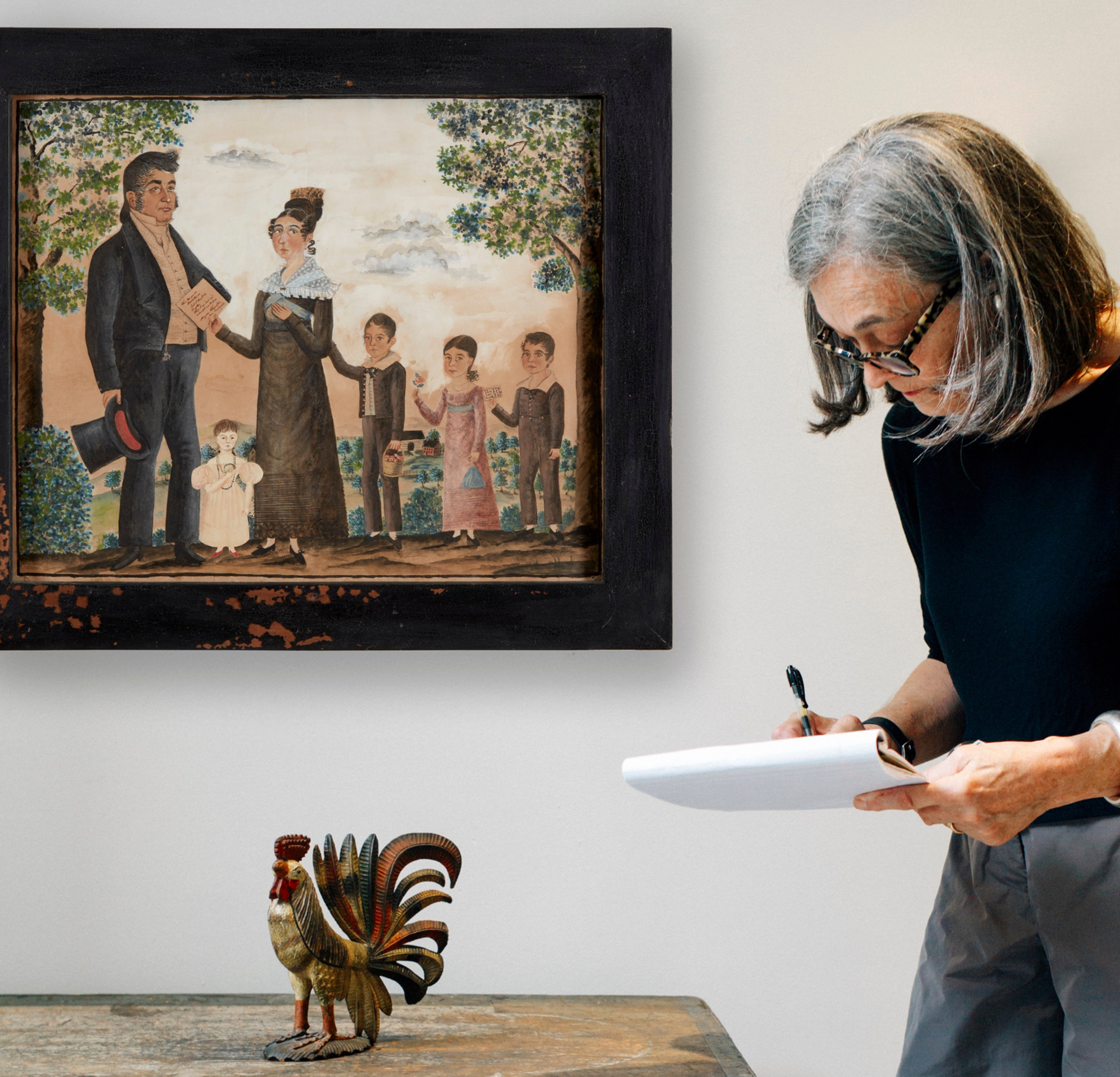
Today, we're spotlighting Lynda Cain, Vice President, Head of Department, American Furniture, Folk, and Decorative Art. Learn about her journey in the world of American furniture and decorative arts, and notable achievements at Freeman’s ahead of our American Furniture, Folk & Decorative Arts auction, to be held live in Philadelphia on November 12. Freeman’s: What originally attracted you to the world of American furniture, folk and decorative art? What about this type of decorative art appealed to you? What drew you to becoming a specialist and translating your passion into your career? Lynda Cain: I have wanted to work with 18th - and 19th-century American furniture and decorative arts since a very young age. I was fortunate to grow up near museums and educational institutions with great American collections and with parents who were fascinated by American history, design, and antiques. My mother's passion for antiques took us frequently to the halls of the Henry Ford Museum (now The Ford) and to the Detroit Institute of Arts American galleries and period rooms. Visits to the Cranbrook Art Museum offered examples of Modern Design by most of the 20th century's key figures. My father was a manufacturer's representative for several furniture companies. He would sketch interesting furniture details— stretcher turnings, handholds, crests, etc. —from museum pieces and suggest them to the makers of the Colonial Revival furniture lines he carried. There was a lot of attention to detail. F: How did your career journey lead you to Freeman’s? LC: I began my journey in the world of museums before transitioning into the auction industry. I spent two summers at the Detroit Historical Museum working on their Bicentennial projects and publication, Symbols of a New Nation. Shortly after graduating from college, I was hired as Assistant Curator of Social History at the Detroit History Museum. During this time, I also earned my MA in American Culture from the University of Michigan. I eventually became Costume Curator, a position I held for eight years. In 1986, my husband and I moved to Cambridge, Massachusetts, where I joined the Americana Department at Skinner, Inc., under Steve Fletcher. My exposure to the furniture and folk art of New England was truly eye-opening. In 1993, with the birth of my second child, I returned to museum work with the Society of the Preservation of New England Antiquities (now Historic New England) and ran the cataloging project of the Folk Art Collection at Cogswell's Grant Essex Massachusetts, the summer home of pioneer collectors Bertram K. and Nina Fletcher Little. My time working with Jane, Richard Nylander, and Nancy Carlisle was wonderful. We spent three years in Minneapolis, where I bought and mid-century Modern and sent it to East Coast dealers. I also did research for a filmmaker—both uncharacteristic jobs for me. We moved to Philadelphia in 2000. I commuted to Sloan's in Washington, DC, organizing American Furniture and Decorative Arts auctions, and in 2002, joined Freeman’s as their first specialist of American Furniture, Folk & Decorative Arts. F: Are you personally a collector of American furniture and decorative art? What are some of your favorites that you’ve acquired? LC: I am not really a collector. I enjoy the property while it is in the house and love to see it go to an appreciative buyer. F: Can you describe a collection that you are proud to have brought to auction? LC: I have worked with so many consignments that it is difficult to pick a favorite. I have many special memories of working with collectors and the families who have inherited large collections. I am as proud of selling a single item as I am of a huge collection. Some consignments stick with you more than others. At times, the consignor is more memorable than the consignment. The Meade Easby house in Chestnut Hill was an unforgettable treasure chest. It took days to uncover the riches of the attic. It held layers of property, including the great Campeche chair, now at the Philadelphia Art Museum, bushel baskets of significant historical documents, and fabulous sketches and artwork. I remember the moment when I opened the door to the guest house in the Easby backyard, used as a storage facility, and just barely visible over the piles was the tip of one of the pair of Carved and Parcel Gilt Classical fruit-filled cornucopia, published in Hornor's Blue Book Philadelphia Furniture (1935). F: Describe a typical workday for you at Freeman’s. LC: My typical day consists of answering emails and phone messages, writing proposal letters for consignments, consulting with colleagues, examining property that has arrived in our storage, and conducting research. I probably go on 2 to 3 house calls per week. F: What are some market trends you’ve observed in the category? LC: I have seen so many collecting trends in my nearly 40 years in the business, and these have been well documented. You can't compare many auction values from 1998 to today. I am excited about the number of young people who are enthusiastic about antiques, as well as the group of fine young collectors active in the market today. A great object or historic rarity- one of the best of its genre in form, condition, surface, with provenance will always bring a strong hammer price. We’d like to thank Lynda Cain, our Managing Director, Vice President, and Head of Department for American Furniture, Folk, and Decorative Arts, for sharing her incredible story and expertise with us. Lynda’s passion for American history and design shines through in everything she does—from uncovering hidden treasures to guiding collectors and families as they share their pieces with new generations. With nearly forty years in the field, Lynda continues to inspire both seasoned collectors and newcomers alike with her deep knowledge, curiosity, and genuine love for the objects and stories that shape our shared past. If you’d like to learn more or discuss consigning with Lynda, she’d love to hear from you: Lynda Cain Managing Director, Vice President, Head of Department American Furniture, Folk & Decorative Arts [email protected] +1 267.414.1261
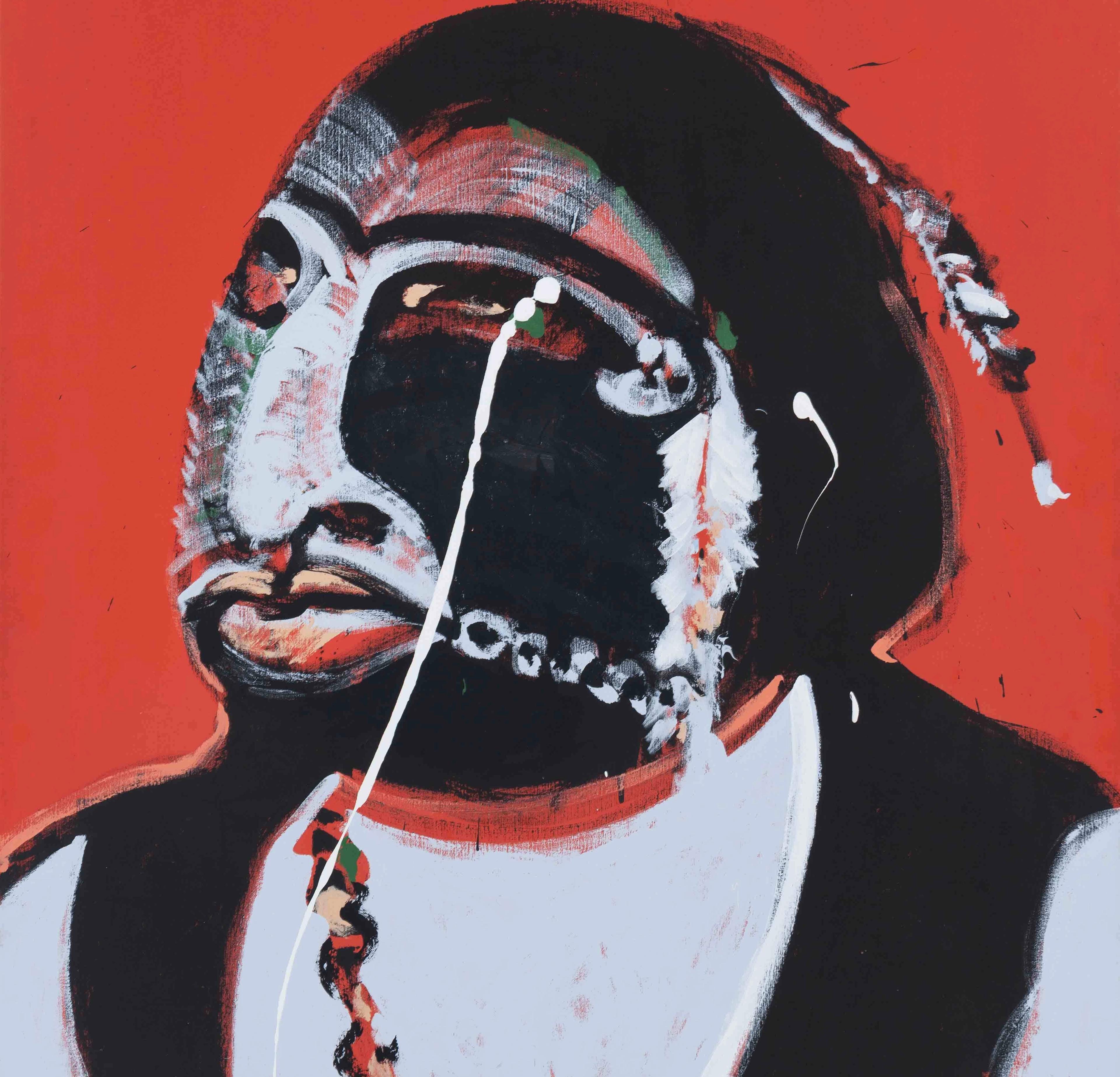
“People don’t really like Indians. Oh, they like their own conceptions of the Indian — usually the Plains Indian, romantic and noble and handsome and somehow the embodiment of wisdom and patience. But Indians in America are usually poor, sometimes derelicts outside the value system, living in uncomfortable surroundings. We have really been viewed as something other than human beings by the larger society.”- Fritz Scholder to the Chicago Tribune, 1973 Set against a vivid red background, Fritz Scholder’s Insane Indian No. 25 (1972) presents a haunting, emotionally charged portrayal of a Native American figure. Cloaked in dark shadow, with a single feather suspended from his hair and frenetic, colorful brushstrokes animating his face, the figure pulses with intensity. This work, number 25 in Scholder’s groundbreaking Indian series, embodies the artist’s commitment to unflinching honesty in depicting Native American subjects. Rather than conforming to the romanticized stereotypes perpetuated by the Western art canon, Scholder offers a more complex, human, and often unsettling view of Indigenous identity. Created during a time of immense social upheaval—the Vietnam War, the Civil Rights Movement, and the rise of psychedelia and rock and roll—Insane Indian No. 25 channels the emotional undercurrents of its era. The painting strips away illusion, offering a raw look into the psyche of its subject. Yet, despite its grim thematic content, psychosis, alienation, and inner turmoil, Scholder imbues the work with empathy. His bold, expressive use of color and gesture conveys not just intensity but compassion. “The positive does not exist without the negative,” he once said. “And the role of the artist is not to compromise, but to express the truth with all the power of which he is capable.” To be offered this November 14 in Freeman’s Post-War and Contemporary Art sale in New York, the strategic placement of Insane Indian No. 25 underscores Scholder’s stature not only as a Native American artist but as a major figure in contemporary American figurative painting and colorism. Throughout his career, Scholder resisted the narrow label of "Native artist." Instead, he embraced the visual language of Pop Art —its vibrant palette, confrontational themes, and cultural immediacy —to depict Native American subjects with unprecedented directness and emotional depth. He sought to redefine how these subjects were seen and understood, placing them at the center of contemporary artistic discourse. At Freeman’s, we are honored to present Scholder’s work within the context of Post-War and Contemporary Art, where it belongs. As market leaders in Scholder’s oeuvre, we have proudly sold 10 of the top 20 highest-priced works by the artist at auction. Insane Indian No. 25 comes to us from a distinguished private collection and is being offered as part of Property from the Collection of Barbara Berger. Acquired from Nedra Matteucci Galleries in Santa Fe, the work made an unforgettable impression on the consignor. “Upon visiting the gallery, I was immediately drawn to it because it was just so striking,” Berger recalled. “I was absolutely transfixed. I had no idea who Fritz Scholder was, but I was in awe. Actually, a spiritual moment! Nothing else we have acquired has had that impact on us.” Scholder’s Insane Indian No. 25 stands as a powerful testament to his fearless vision, disrupting convention, challenging perception, and insisting on truth. Its inclusion in this season’s Post War and Contemporary Art sale affirms his rightful place among the most vital American artists of the 20th century.
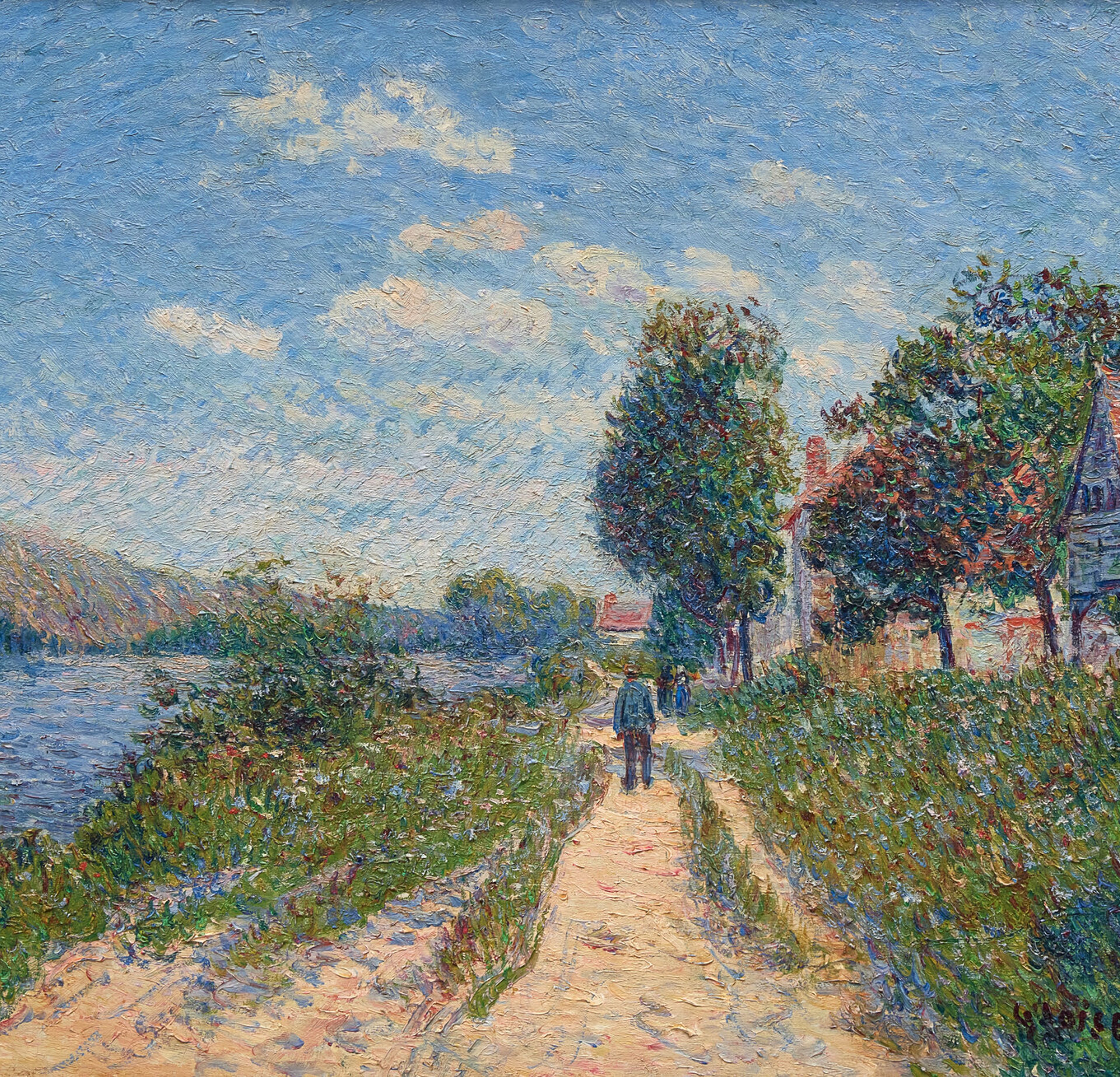
Ahead of our October 28 sale in New York, we sat down with Raphaël Chatroux, Vice President, Head of Department, Impressionist and Modern Art, to discuss the origins of the department, notable successes, and key highlights from the upcoming auction. Freeman’s | Hindman: The firm began offering dedicated Impressionist and Modern art auctions last fall. What initially drew you to this collecting category, and what inspired you to formalize these standalone sales? Raphaël Chatroux: Given my French background, working in Impressionist and Modern art has always felt inevitable. I grew up surrounded by the artists of this period in the classroom and in museums, so I’ve always felt naturally drawn (and maybe committed) to them. Now that I’m based in New York, this focus feels even more meaningful: it allows me to stay connected to my roots while championing a category that resonates strongly with an American audience. It truly is the best of both worlds! I had long wanted to create dedicated sales in this field, if only to present these artists’ work in a more focused and meaningful way. With our firm’s consistent successes in the category (both separately and, since our 2024 merger, jointly), it felt like the right time to formalize that commitment, particularly as we opened our New York galleries. These auctions are our way of celebrating artists we deeply revere and a category we profoundly believe in, one that can sometimes be overlooked or dismissed as passé at a moment when many collectors are drawn to the immediacy of contemporary art and “wet paint.” Pierre-Auguste Renoir (French, 1841–1919) Roses | Sold for $302,400 FH: Since launching these dedicated auctions, what key market trends have you observed in the Impressionist and Modern Art category? RC: It’s remarkable to see how quickly the market continues to evolve, even for a category as established as Impressionist and Modern Art. There’s a clear and growing appetite for Surrealism, which is wonderful to witness: it’s allowing lesser-known names to emerge and take center stage. Another fascinating development is the extraordinary rise of the Vietnamese School of Painting. From an art historical perspective, it’s a compelling manifestation of East meets West; from a market standpoint, it reflects a new generation of passionate collectors who are eager to rediscover these artists and reclaim their cultural legacy. Watching that dynamic unfold and speaking directly with collectors has been one of the most exciting aspects of our recent seasons, I must say. Berthe Morisot (French, 1841–1895) Apollon Révélant sa Divinité à la Bergère Issé (after François Boucher) | Sold for $212,500 FH: Freeman’s | Hindman has a rich legacy of handling works by Impressionists and early 20th-century artists. Which sales or standout lots from our past auctions have been especially meaningful or memorable to you? RC: Indeed, our firm has a long and distinguished history of handling works by the great Impressionists and Modernists, going back to landmark moments such as the Nelle Sisters sale, which featured major works by Matisse, Renoir, and de Chirico in Philadelphia. I still remember feeling genuinely giddy when entrusted with the sale of a charming Renoir still life from the Virginia Museum of Fine Arts, with impeccable provenance. Looking back, I’m particularly proud of our sale of Berthe Morisot’s Apollon Révélant sa Divinité à la Bergère Issé (after François Boucher), which was acquired by the Musée Marmottan Monet in Paris and almost immediately included in a dedicated exhibition, which felt deeply meaningful. More recently, achieving a world record for Carl Moll’s White Interior, now on view at the Neue Galerie in New York, was another unforgettable highlight, especially as our team felt it was where it belonged. Moments like these truly affirm the caliber of the works we’re handling, but also the impact they can make in the history of art. Carl Moll (Austrian, 1861–1945) Weißes Interieur (White Interior) | Sold for $4,756,000 | World Record FH: Many of your department’s offerings come from distinguished estates and private collections. Can you share some standout highlights from the October 28th sale that reflect this tradition? RC: I’m particularly proud of our October 28 sale, as it shows our consignors’ commitment, and really hammers our presence in this field. One of my personal favorites is Bernard Buffet’s Le Jacquet, an imposing still life from what I consider his finest period aka the Pierre Bergé years. It’s everything one hopes for in a Buffet: austere, deeply human, and charged with that unmistakable sense of solitude and quiet angst that captures the mood of post-war France. To balance that intensity, we’re offering several luminous, color-filled landscapes, including a standout view of the Seine by Gustave Loiseau. The painting is remarkably fresh and will no doubt resonate with collectors. I’m also thrilled to present a remarkable group of works from a Private New York Family Collection, featuring important examples by Signac, and Rodin, as well as a captivating van Dongen portrait, which really sucks you in by the model’s hypnotic eyes. It also pairs beautifully with the three drawings by Matisse we are presenting. Finally, have I said how much I love Jean Hugo and proud of being the house that has offered the most of his work, globally? Left: Kees van Dongen (Dutch/French, 1877-1968) Portrait of Dora, 1935 | Estimate: $120,000 - 180,000 Right: Bernard Buffet (French, 1928-1999) Le Jacquet, 1955 | Estimate: $100,000 - 150,000 FH: How do you see the department evolving in the next few years, and what opportunities do you foresee for collectors engaging with Impressionist and Modern Art today? RC: I’d love to be able to develop more thematic sales, engaging on market trends such as Surrealism, Women Artists or even the Vietnamese School. I would also like to see us engage more with Europe, which remains a very vital source of consignment and buyers. I think I’d like to be able to position our sales as a great venue to discover new artists, invest in them, and compare them with established names. I also hope to strengthen our dialogue with Europe, which remains a vital pool of both consignors and collectors. Ultimately, my goal is to position our sales as dynamic spaces of discovery—places where seasoned collectors and new audiences alike can encounter emerging artists, invest in them with confidence, and view their work in conversation with the great established names of the period. Our strength lies in the care and focus we dedicate to each sale, and I want that to be reflected in both our offerings and our position in the market. Gustave Loiseau (French, 1865-1935) Bords de Rivière (Possibly Tournedos-sur-Seine), circa 1899 | Estimate: $80,000 - 120,000 Henri Matisse (French, 1869-1954) Portrait de Femme (Liban), 1948 | Estimate: $70,000 - 90,000

Freeman’s | Hindman is honored to present several important works deaccessioned from the Philadelphia Museum of Art (recently renamed the Philadelphia Art Museum) in its upcoming Fall fine art auctions. Earlier this year, the Museum’s Board approved the deaccession of a select group of works to support the institution’s broader goals: advancing public engagement, fostering meaningful access to its collection, and ensuring the sustainability of its holdings for future generations. Three of these works will be offered across Freeman’s | Hindman’s Fall auctions, thus continuing a partnership between two storied Philadelphia institutions whose shared history extends for more than a century. Founded in 1805, Freeman’s is America’s oldest auction house, while the Museum traces its origins to 1876 and the Centennial Exhibition that first established Philadelphia as a center of artistic innovation and exchange. Leon Underwood’s Negro Rhythm: A Study in Movement and Modernity A highlight of the October 28 Impressionist and Modern Art auction will be Negro Rhythm: Harlem, N.Y., a dynamic bronze sculpture by British artist Leon Underwood, which entered the Philadelphia Museum of Art’s collection in 1962. Born in Shepherd’s Bush, London, in 1890, Underwood was a sculptor, painter, and teacher whose impact has been more deeply appreciated posthumously than during his lifetime. A restless traveler and scholar, he immersed himself in non-Western art traditions (African, Mexican, and Native American) which profoundly shaped his understanding of form and movement. His 1934 publication Art for Heaven’s Sake was among the first English-language works to advocate for African art as a complex and spiritual tradition, rather than a purely ethnographic curiosity. Underwood’s fascination with rhythm and vitality translated directly into his teaching at the Brook Green School of Art, where he urged his students to draw from life models in motion, capturing not stasis but the pulse of life itself. Negro Rhythm embodies this philosophy. Art historian Christopher Neve described the sculpture as “an inspired scribble in the air, the patinated bronze as compulsive as a 12-bar chorus from New Orleans with its insistent syncopated beat... the whole object, twenty-two inches high, an inspired exercise as vividly period as Edith Sitwell’s allegro negro cocktail shaker.” With its sinuous energy and spiraling form, the dancer seems to pivot around an invisible axis, crystallizing Underwood’s lifelong quest to express the movement of the human spirit through sculptural form. A Vision of Splendor: Hondecoeter and de Coninck Two magnificent still lifes will take center stage in Freeman’s | Hindman’s 19th Century European Art & Old Masters auction on November 4 in Philadelphia. Both exemplify the grandeur and refinement of seventeenth-century Dutch and Flemish painting, as well as the complex histories of authorship and collaboration that continue to intrigue scholars today. The Poultry Yard: After Hondecoeter This large and lively Poultry Yard reflects the enduring appeal of Melchior d’Hondecoeter’s celebrated bird scenes, which set the standard for Dutch animal painting in the late seventeenth century. The composition, featuring a peacock, rooster, and a lively array of domestic and exotic fowl, derives closely from d’Hondecoeter’s Revolt in the Poultry Coop(Hamburger Kunsthalle) and other known variants. However, the Philadelphia version reveals intriguing differences. Enlarged along the left and lower edges, and showing clear variations in handling between the central and peripheral figures, the work likely emerged from a collaborative or workshop context. Correspondence from 1990 between the Museum and Dutch scholar Fred Meijer proposed that the exuberant floral passages were painted by Philip van Kouwenbergh (1671–1729), a still-life specialist who often borrowed motifs from d’Hondecoeter’s compositions. The delicate blossoms and luxuriant vegetation indeed align with Kouwenbergh’s style, while the birds themselves repeat signature Hondecoeter motifs (such as the cluster of chicks in the foreground, echoing the Seven Chicks study now in the Rijksmuseum). Whether executed collaboratively or entirely within Kouwenbergh’s studio, the painting captures the diffusion of Hondecoeter’s imagery in the decades after his death, as his spirited barnyard scenes continued to inspire new interpretations for an eager collecting public. The Pronk Still Life: Andries de Coninck Equally sumptuous is a grand Pronkstilleven still life long attributed to Jan Pauwel Gillemans, now convincingly reattributed to Andries de Coninck (active 1643–1659). With its gleaming silverware, vibrant lobster, and array of musical instruments, the painting epitomizes the opulent still-life tradition developed in mid-seventeenth-century Antwerp. Recent scholarship by Professor Fred Meijer identifies the signature and date as later additions, instead linking the work to de Coninck, one of the earliest Antwerp painters to reinterpret Jan Davidsz. de Heem’s lavish banquet scenes on a more intimate scale. Here, the central lobster perched atop a wicker basket serves as a compositional anchor, drawing the viewer’s eye through the surrounding fruit, glass, and reflective metal. Subtle chiaroscuro, a restrained palette, and de Coninck’s characteristic attention to texture—seen in the curling sheet of music, the half-filled goblet, and the glistening fruit—imbue the work with both grandeur and quiet melancholy. Beneath its surface splendor, however, lies a meditation on transience. The overturned glass, the drooping vine, and the fading light remind us that earthly pleasures are fleeting. In uniting opulence and impermanence, de Coninck transforms luxury into allegory: a feast suspended between abundance and decay, beauty and its inevitable passing. "I have always considered the Philadelphia Museum of Art as one of my favorite museums, so so I am particularly pleased that we will be offering these two magnificent Dutch 17th-century paintings. It’s impossible not get drawn to both works for their richness of detail and elaborate compositions. While many Dutch paintings of this period are modest in scale, these two are remarkable for their ambition and visual complexity." -David Weiss, Senior Vice President, Fine Art
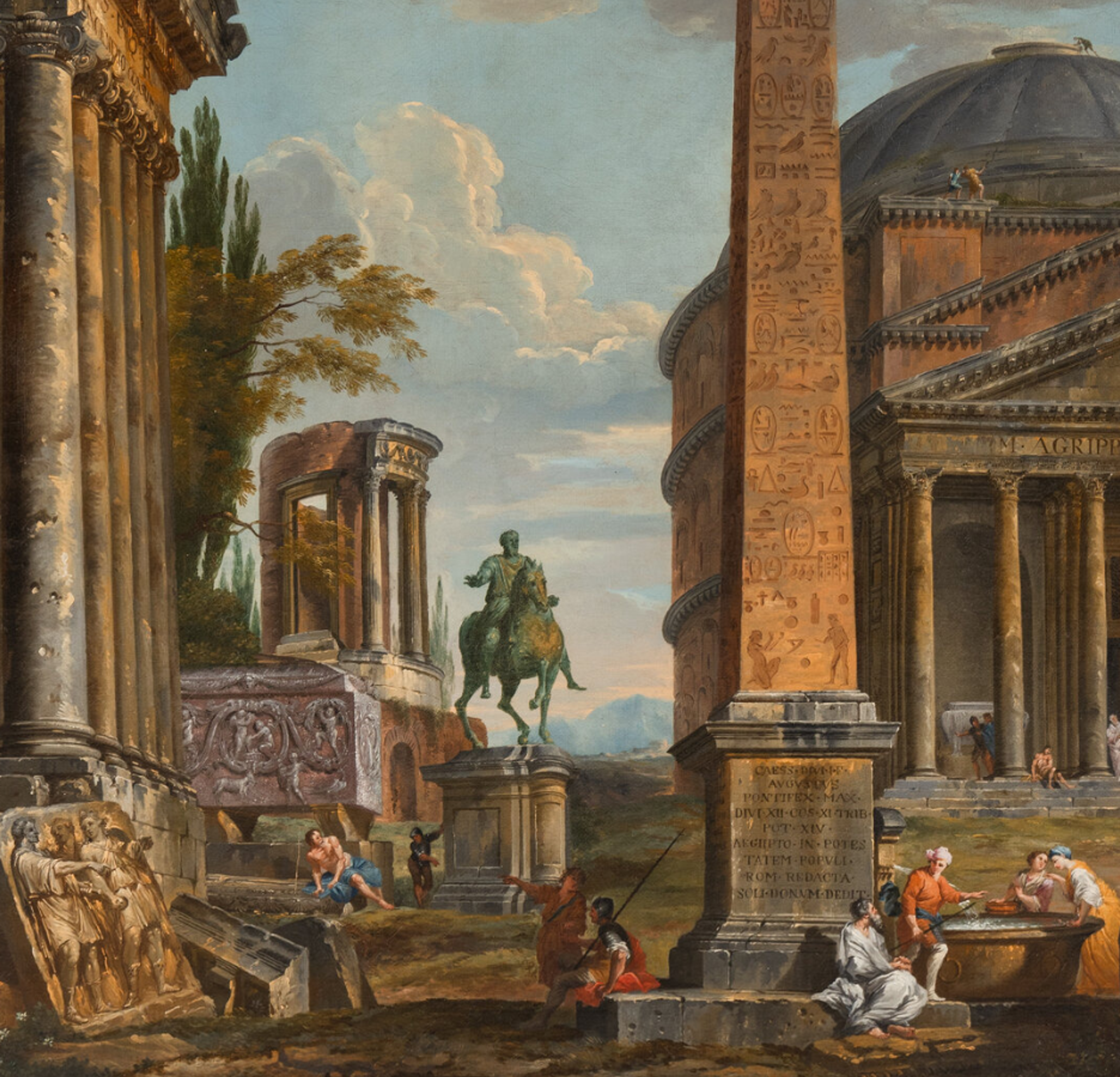
Rome's ancient architectural treasures have captivate artists and travelers for centuries.
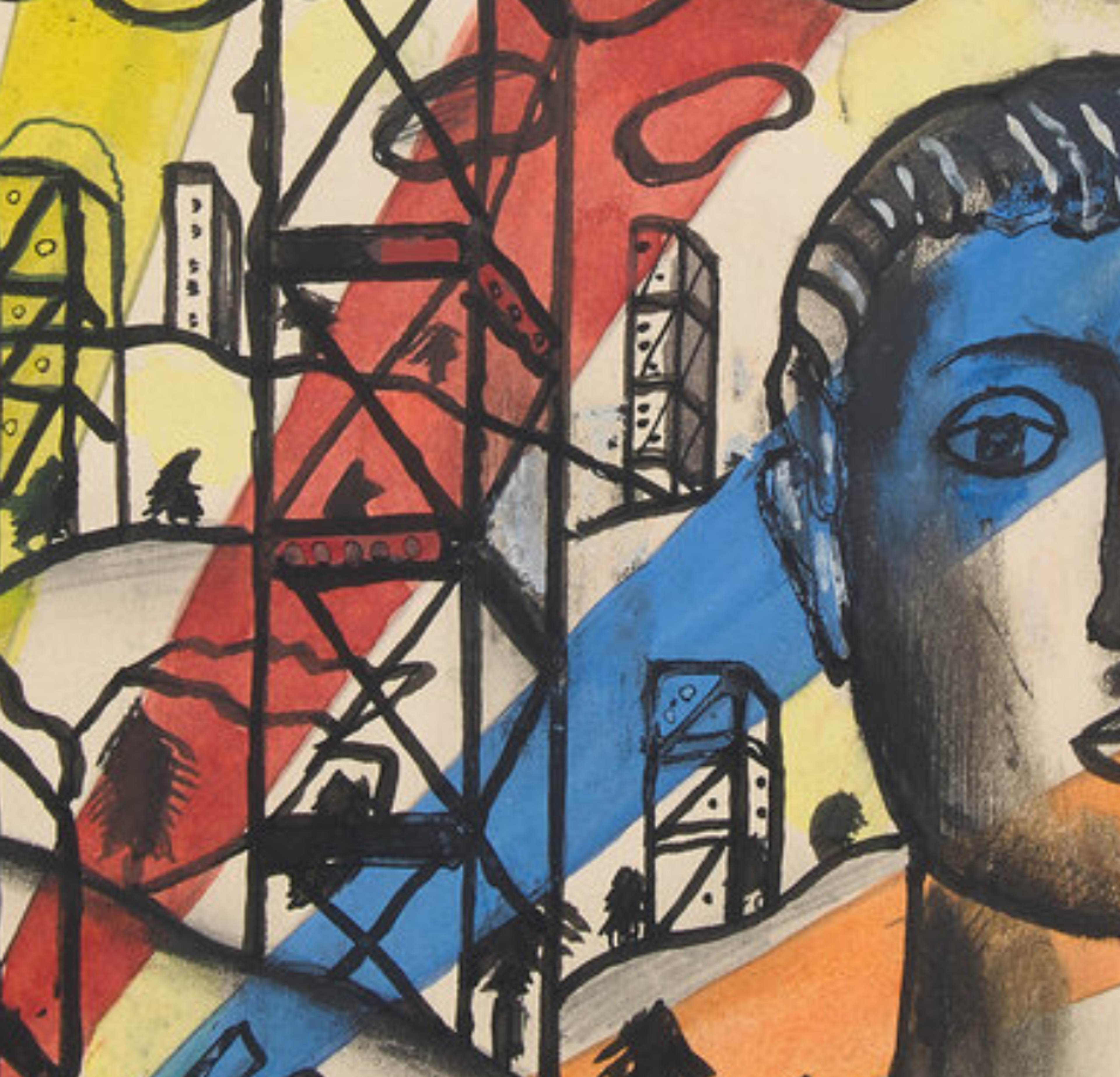
A visionary collection built on decades of passion and discernment takes center stage in Philadelphia on November 4 at Freeman's | Hindman. Assembled by a distinguished European collector, it brings together Old Master drawings and paintings of exceptional quality, complemented by 19th- and early 20th-century works from artists whose reputations have stood the test of time-among them Giuseppe De Nittis, Giovanni Boldini, and Federico Zandomeneghi. TO BE OFFERED NOVEMBER 4 | Girolamo Mazzola, called Parmigianino (Italian, 1503-1540) A Group of Figures standing by a Column, Two Women, one with a Baby, and a Man in the Background | $70,000 - 90,000 With a strong emphasis on Italian art, the collection also includes exceptional French works, such as a delicate pastel by François Le Moyne and a striking portrait of the actress and demimondaine Sarah Bernhardt by Louis-Albert Besnard. The collector's unique sensibility is further revealed in the inclusion of two early cartoons: one for the tomb of the humanist Niccolò Perotti, and another for a magnificent 16th-century Florentine tapestry. TO BE OFFERED NOVEMBER 4 | Carlo Dolci (Italian, 1616-1686) The Holy Family with God the Father and the Holy Spirit above: a Sacra conversazione | $80,000 - 120,000 A standout of the Echoes of the Past sale is a diminutive, exquisitely rendered oil on copper Sacra Conversazione by Carlo Dolci, dating to around 1630, when the artist was still in his youth. Exceptionally rare, the painting has remained in private hands for the past twenty years. It is a significant early work that shows the influence of Dolci's master, Jacopo Vignali. Its unusual composition presents the mature Christ between the Virgin and Saint Joseph, with the Holy Spirit and God the Father above-uniting the Terrestrial and Celestial Trinities. This theological interpretation reflects Dolci's intellectual depth even at a young age. Also featured is a newly discovered drawing by Parmigianino, depicting a group of women gathered near a column. Once known only through an etching by Francesco Rosaspina, the drawing is now identified as an original work from Parmigianino's Roman period. It is closely related to his Marriage of the Virgin (École des Beaux-Arts), Christ Healing the Sick (Angers), and The Worship of Jupiter (British Museum), and is inspired by Raphael's Vatican frescoes. TO BE OFFERED OCTOBER 20 | Fernand Léger (French, 1881-1955) Le Combattant (Design for the Cover of Fortune Magazine), 1942 | $100,000 - 150,000 Among the 20th-century highlights to be offered in the October 28 auction of Impressionist and Modern Art are works on paper by Henry Moore and Auguste Rodin. Foremost among them is Fernand Léger's original 1942 design for the cover of Fortune magazine, the influential American business magazine renowned for its innovative, boldly illustrated covers. Executed during Leger's wartime exile in New York, this dynamic gouache captures the renewed creative vitality the artist found in America. Against sweeping rays of yellow, red, and blue-hallmarks of his distinctive palette-Léger arranges monumental oil derricks, industrial structures, and the colossal head of a man gazing directly at the viewer. His bold, unflinching stare serves as a silent witness to humanity's grave reckoning with the escalating global tensions of the era. VIEWING: October 25-November 1 32 East 67th St, New York, NY
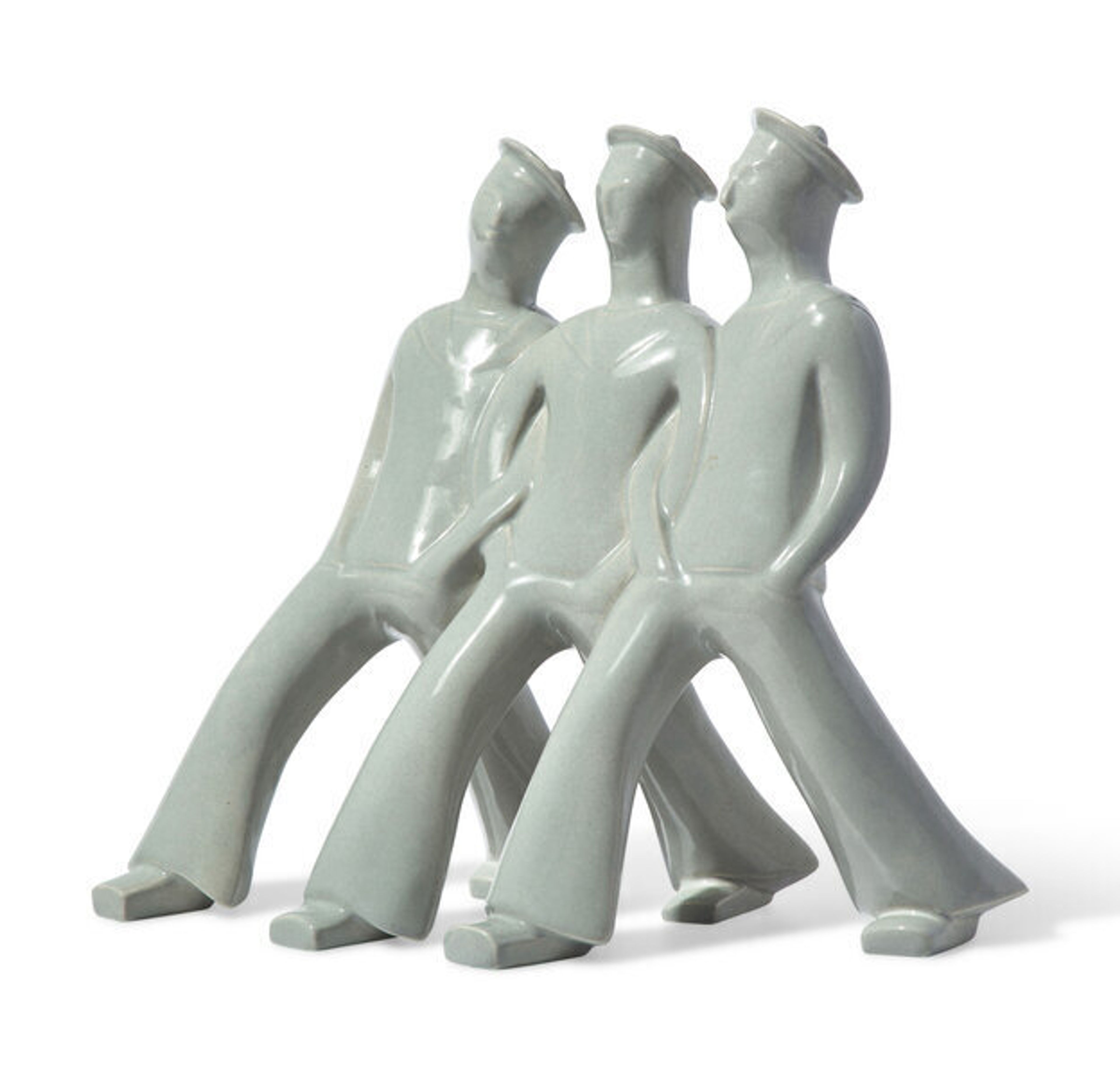
As Freeman’s | Hindman presents Property from the Collection of Phyllis and Fred Pressman, the spotlight turns to a couple whose influence reached far beyond the fashion world. Through their transformative leadership at Barneys New York and their decades-long commitment to artful living, the Pressmans redefined American luxury. Join us as we highlight specialist selections that capture the essence of their multifaceted legacy—from Phyllis Pressman’s bold vision behind Chelsea Passage to their personal trove of fine art, iconic jewelry, and design. With each curated chapter of the sale, Freeman’s | Hindman honors not only the Pressmans’ impeccable taste but also their cultural impact, entrepreneurial spirit, and enduring sense of humor. Interiors: The Phyllis and Fred Pressman Collection | Lots Close by October 24 at 10 AM ET Lot 85: An Art Deco Silver-Plated Airplane Cocktail Shaker Set Samantha Minshull, Specialist, Furniture & Decorative Arts “This Art Deco airplane form cocktail shaker set by J.A. Henckels is the epitome of jet-set chic. It can rest on your bar as a piece of sculpture until happy hour, when it comes apart into over a dozen pieces including two flasks (the wings), four shot glasses (in the tail), a funnel and more. It’s charm and whimsy are, I think, emblematic of the style that Mrs. Pressman brought both to Chelsea Passage and her own life.” Interiors: The Phyllis and Fred Pressman Collection | Lots Close by October 24 at 10 AM ET Lot 24: A Tiffany & Co. Seven-Piece Sterling Silver, Copper and Enameled Tea and Coffee Service Samantha Minshull, Specialist, Furniture & Decorative Arts “This fabulous seven-piece sterling silver tea service was produced by Tiffany & Co. in the first half of the 20th century under the directorship of the legendary New York silversmith, John C. Moore. Its elegant tapering simplicity is a form emblematic of the period, but its delicate floral enamel and copper-inlays are a rare jewel-like addition. This exceptional service was right at home in the Manhattan dining room of the Pressmans.” Interiors: The Phyllis and Fred Pressman Collection | Lots Close by October 24 at 10 AM ET Lot 106: Piero Fornasetti (Italian, 1913-1988) | A Fiori Nella Notte Commode Roger Ward, Head of Department, Design “This rare cabinet is a delightful blend of the functional and the decorative. The floral motifs are less commonly found on Fornasetti's works, and that, along with the dark body and tapered brass legs, sets this beauty apart.” Interiors: The Phyllis and Fred Pressman Collection | Lots Close by October 24 at 10 AM ET Lot 67: A French Art Deco Earthenware Figure Group of Three Sailors on the March Roger Ward, Head of Department, Design “This highly stylized trio evokes a decidedly different era. It is celebratory in feel, and the soldiers marching together make it both playful and celebratory. Put this on any tabletop and it's guaranteed to spark a conversation.” The Holiday Edit: Jewelry and Luxury Handbags Live | Chicago | November 18 | 10AM CT Rochas, Black Cloqué Skirt Suit Tanner Branson, Associate Vice President, Head of Department, Luxury Handbags & Couture “This suit embodies the quietly sophisticated glamour for which Phyllis Pressman was known. Designed by Olivier Theyskens for Rochas’ Fall/Winter 2005 collection, it exemplifies timeless elegance. Much like Barneys, Phyllis Pressman remains a beacon of style and enduring glamour.” American Art and Pennsylvania Impressionists Live | Philadelphia | December 7 | 12 PM ET Edward Henry Potthast (American, 1857-1927) | Beach Scene #5, c. 1920 Adam Veil - Vice President, Head of Department, American Art “Within the Pressman Collection is a tightly edited survey of American Impressionism. The bright colors and painterly brushwork that distinguish the movement are exemplified in works by Edward Henry Potthast, Robert Reid, and Frederick Carl Frieseke –highlights of Freeman's December 7 American Art & Pennsylvania Impressionists auction. Together, they reflect the Pressman's discerning taste and profound understanding of the very best of American Art."
Woven Art: A Private Collection of Tapestries and Carpets presents more than 150 works from an impressive private collection and offered via our Cincinnati and Chicago salerooms. Including sixteenth and seventeenth century mythological tapestries as well as Anatolian and Caucasian carpets, the collection is a cross section of those sumptuous tactile art forms spanning four centuries.
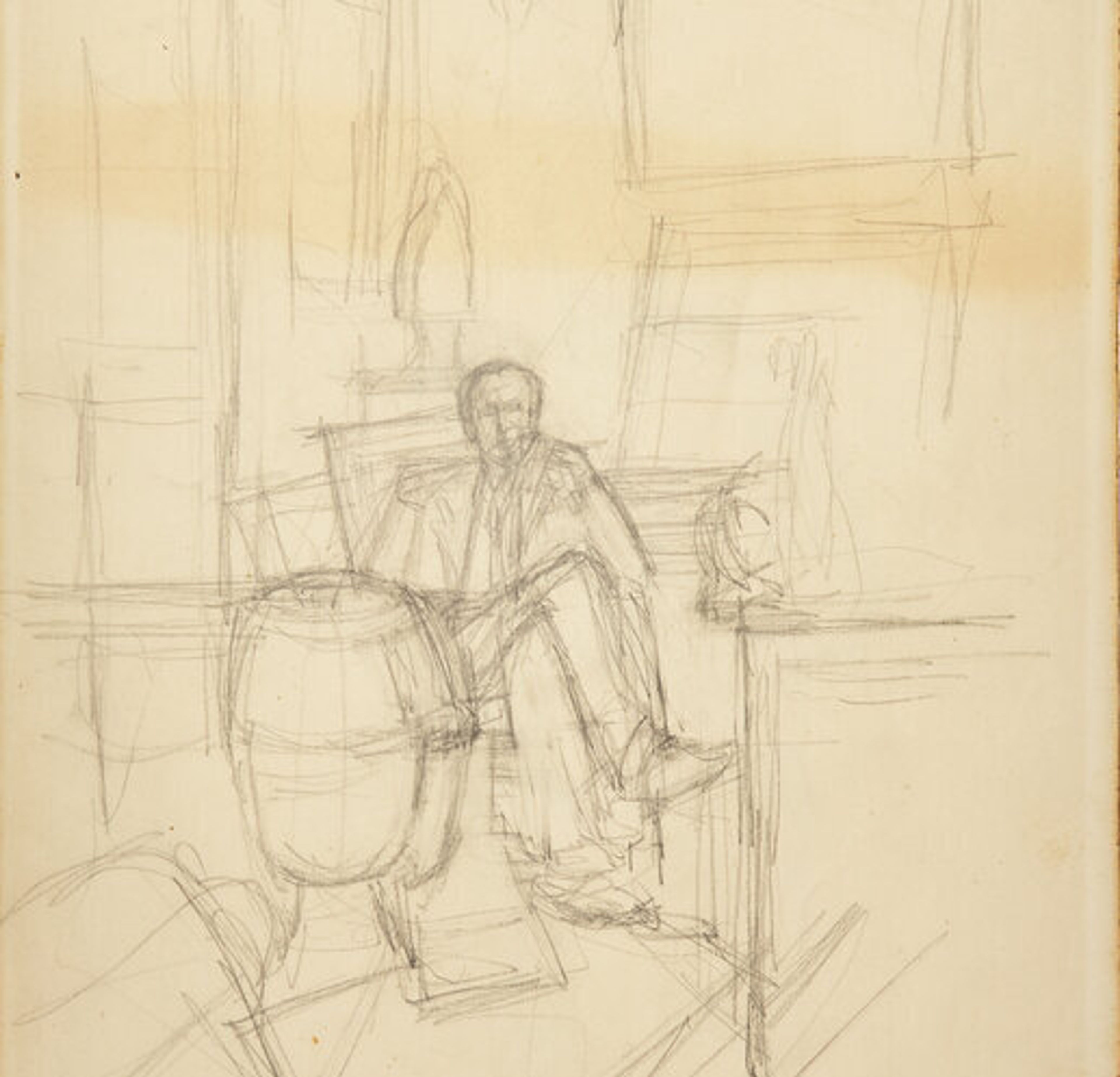
Alberto Giacometti (Swiss, 1901-1966) Pierre Loeb Seated in the Office of the Galerie Pierre / Pierre Loeb Seated (verso), 1946 | $40,000-60,000 On October 28, Freeman’s | Hindman will present a rare drawing by Alberto Giacometti from the Estate of Helen Scott of Philadelphia in its Impressionist and Modern Art auction. Executed in 1946, the work depicts the legendary Paris dealer Pierre Loeb in the intimate setting of his legendary Galerie Pierre, capturing in a few swift, searching lines the strength of their historic friendship. Portrait of Pierre Loeb next to sculptures from Papua New Guinea and Lake Sentani (the « Hunchback » on the right), Denise Colomb (1902-2004), 1949. © Archives Galerie Albert Loeb. By the time Giacometti completed this portrait in the immediate aftermath of the Second World War, Loeb had already secured his place among the most influential figures in the 20th-century art world, championing Surrealism from the early 1920s and introducing French audiences to Masters such as as Max Ernst, Pablo Picasso, and Jean Dubuffet. Alberto Giacometti and Pierre Loeb, 1954 (Archives Denise Colomb) The two men first met in 1929 through sculptor Jacques Lipchitz. Loeb was the first gallerist to offer Giacometti a contract, enabling him to exhibit alongside Arp and Miró during their year of collaboration. After returning to Paris from wartime exile in Switzerland in 1945, Giacometti set about rekindling old friendships, turning in particular to Loeb, who had remained a steadfast supporter and followed his career with interest. At the time this portrait was drawn, the pair was planning an exhibition of Giacometti’s latest sculptures—a promising event that ultimately never came to fruition. Here, Loeb is shown seated in his gallery office, legs crossed in his characteristic pose, head tilted in a familiar, slightly quizzical manner. Behind him, the outlines of canvases and frames both anchor him in the physical space of the gallery and serve as reminders of his illustrious career. Giacometti’s hatched, searching pencil strokes capture not only the sitter’s unmistakable likeness, but also the commanding presence and incisive personality of the dealer. Despite the unquestionable likeness, there is a degree of elusiveness to the sitter’s facial features and body, a certain “lack of precision” to his portrayal that highlights its, “forever changing,” fleeting nature (Paul Moorhouse, Giacometti: Pure Presence, London, 2015, p. 150). The real subject matter of the artwork is “…space, this three-dimensional matter which has neither substance nor color, which is a sharply felt presence, but can only be negatively located between and around the objects which obstruct it.” (Alberto Giacometti, 1974, p. 35) The short lines used to compose this space accumulate to form a web between crossing objects, and may stand for the trace of the artist’s eye, “…swiftly and incessantly moving around the composition from one object to another, measuring the distances between them.” (Ibid., p. 35). This previously unrecorded drawing belongs to a small group of works Giacometti made of Loeb in 1946 and 1947, including head studies that, like those of his brother Diego, accentuate the sitter’s lean features and haunting gaze. In 1950, Giacometti would even contribute four etchings as illustrations to Loeb’s Regard sur la Peinture. More than a portrait, this double-sided drawing stands as a testament to the enduring bond between two figures whose shared sensibilities helped shape the course of postwar modernism.
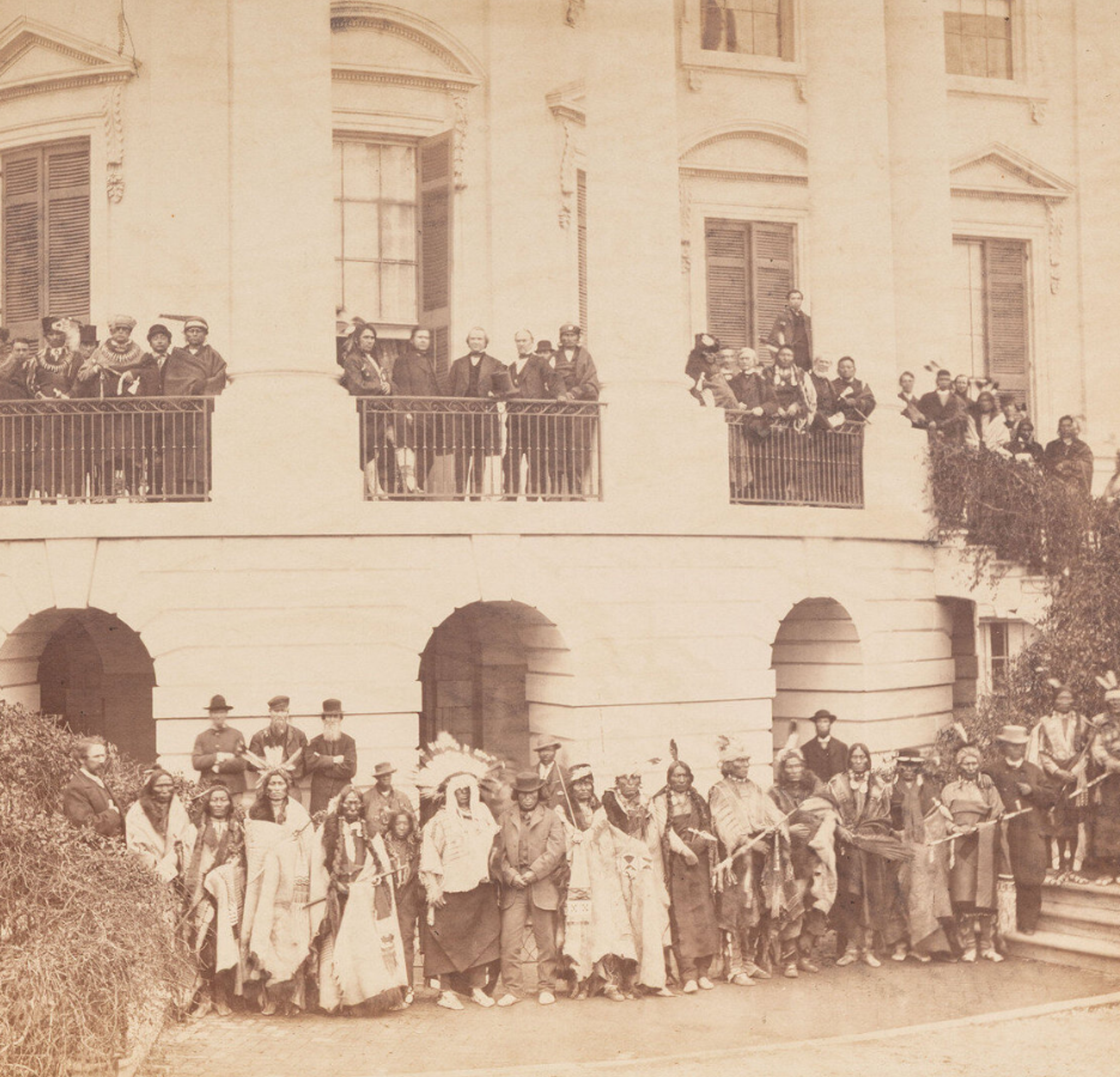
"As I began collecting and researching Plains Indian art and artifacts like beadwork, quillwork, tools, and weaponry, I came upon published images of Plains Indians and soon found myself compelled to seek original photographs to enhance my collection." Larry Ness
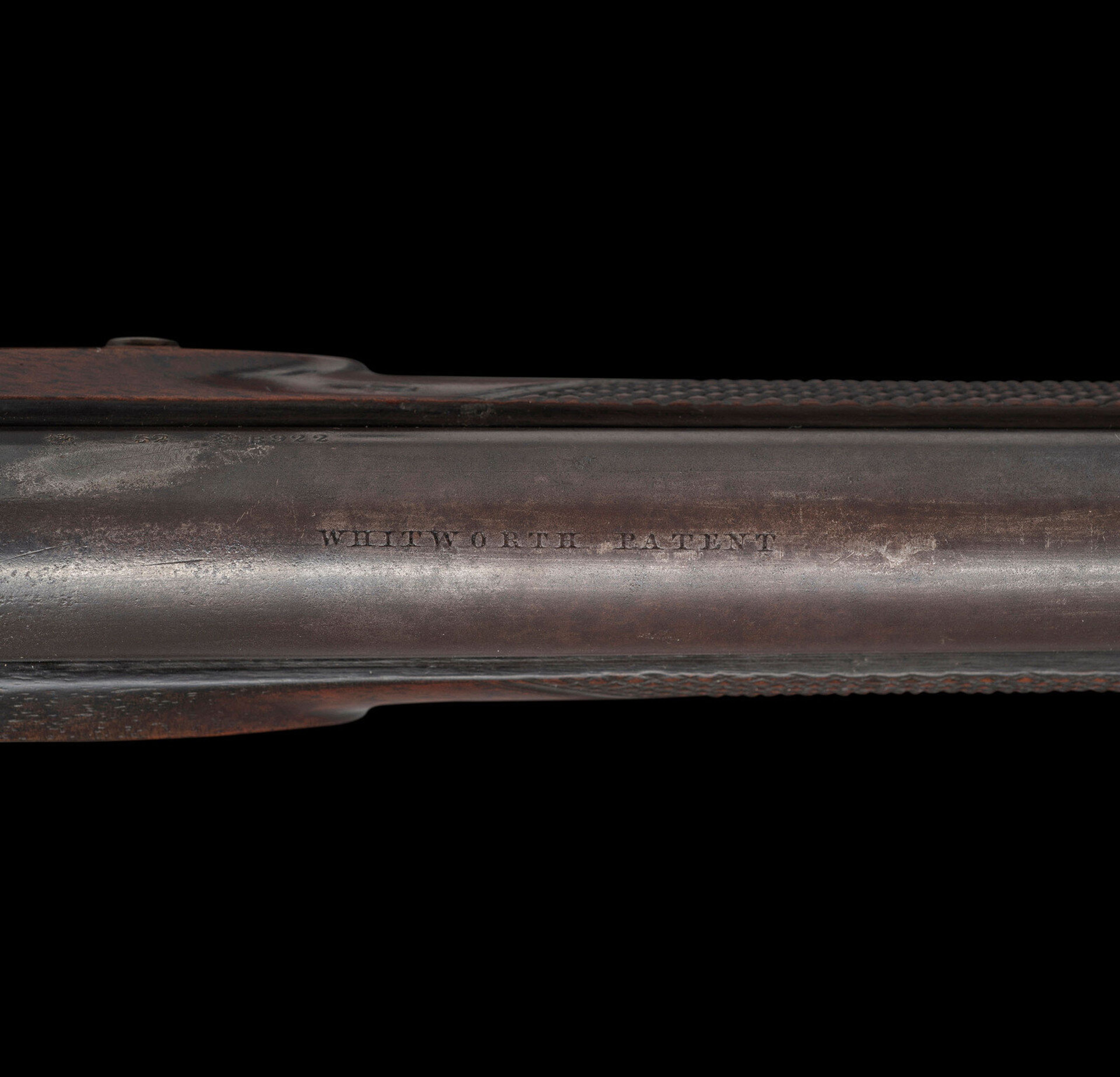
One of the rarest, most expensive, and most desirable firearms from the American Civil War is the handful of Whitworth Rifles purchased by the Confederacy and put to devastating use by Southern sharpshooters against the Union Army. These guns were all 2nd Quality Military Match Rifles, and at least some of the later deliveries were equipped with 4-power Davidson telescopic sights. Earlier deliveries used Whitworth’s conventional long-range ladder rear sights and globe front sights. TO BE OFFERED OCTOBER 22, CINCINNATI | From the Flem Rogers Collection, A 2nd Quality Marked Confederate Whitworth Rifle #B922 American Civil War, 19th Century | $50,000 – 80,000 Although it is unlikely that more than fifty or sixty of these mechanically rifled, hexagonal bore rifles were imported to the South during the war, their legendary long-range accuracy and battlefield effectiveness have made them iconic pieces in the history of American arms collecting. During 1861 and 1862, while the Confederacy was actively attempting to acquire these extremely accurate and expensive rifles, Confederate Major Anderson noted that they cost as much as "about $1,000, in the equivalent of gold, for each rifle and one thousand rounds of ammunition." That price in 1861 would be equivalent to roughly $37,000 today. Surviving examples of these guns are exceedingly rare, with only about twenty legitimate specimens known. Authentic examples appear within a limited serial number range—typically from the mid-B prefix (around B-5XX) through to the mid-C prefix (around C6XX)—and all bear the “2nd Quality” mark engraved on the triggerguard tang. Some of the best-known examples include: #B509, donated by Confederate General A.P. Stewart to the Tennessee State Historical Society (now at the Tennessee State Museum) #B547, formerly part of the George Wray Collection and now in the Atlanta History Center #C321, in a private collection and pictured on page 183 of The English Connection: Arms, Material and Support Furnished to the Confederate States of America by Great Britain by Pritchard, Huey, Prince, Nichols & Thomas #C619, formerly in the collection of Richard D. Steuart and now held by the Virginia Historical Society This fall, Cowan’s Arms, Armor & Militaria department will offer Confederate 2nd Quality Whitworth Rifle #B922. In October 2022, Cowan’s sold Whitworth Rifle #B902 for $108,000, including the buyer’s premium. The #B922 example has been known since the 1960s, when it was first discovered and brought to market by pioneering antique arms collector and dealer Turner Kirkland of Dixie Gun Works. At the time, the rifle had been smoothbored and half-stocked, but retained its original components from the rear barrel band to the butt, including the rear sight, lock, and triggerguard. The rifle was later returned to its original configuration by the legendary Ned Hipp, renowned for museum-quality restoration work for institutions such as the Museum of Early Southern Decorative Arts (MESDA). Now fully restored to its original appearance, this rifle represents a rare opportunity for advanced collectors to acquire one of the scarcest and most coveted firearms of the American Civil War—without necessarily having to spend the $100,000+ that these rifles typically command. INQUIRES: [email protected] VIEWING: October 20-21 | 5030 Oaklawn Dr, Cincinnati, OH 45227 By Appointment
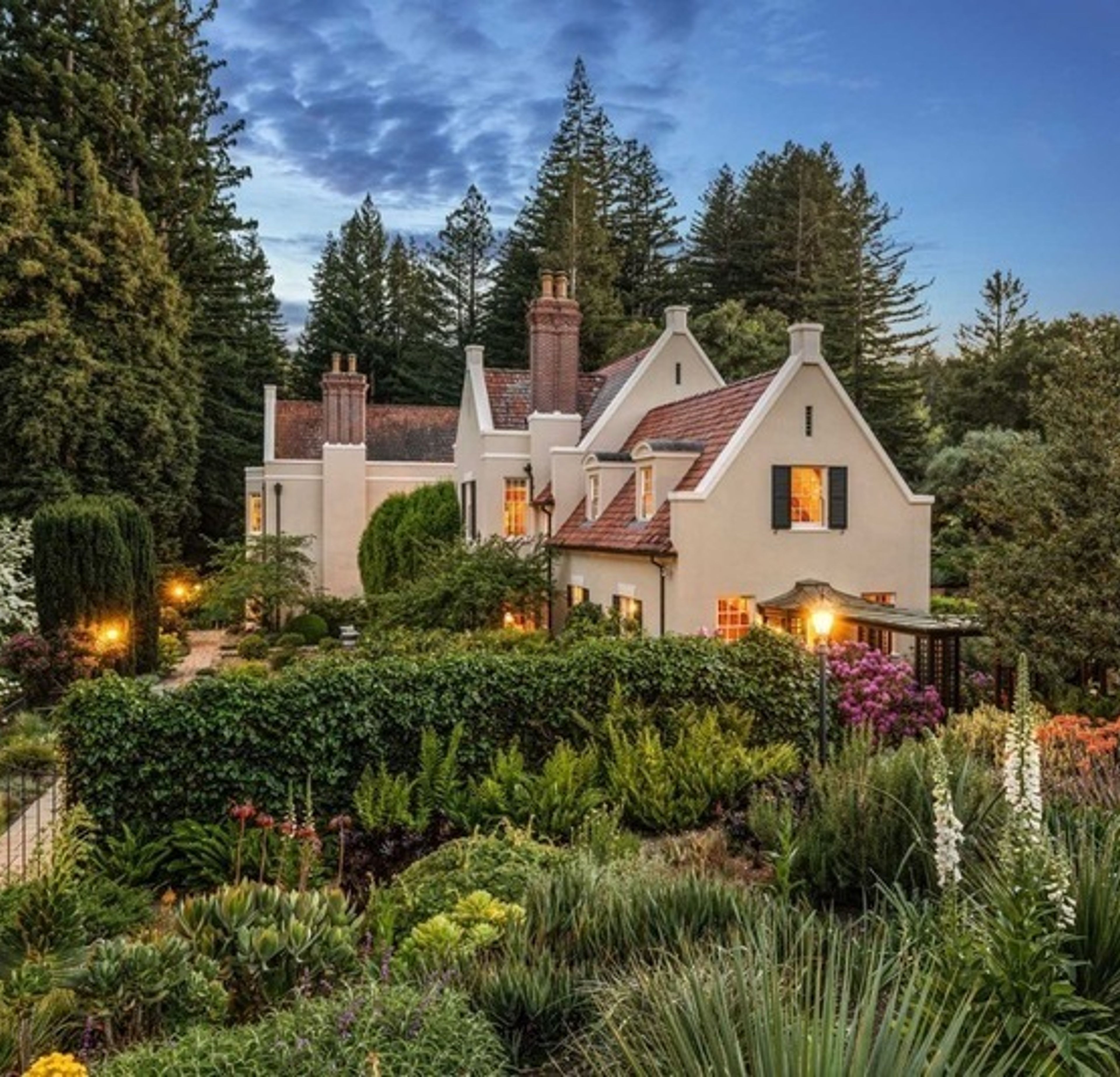
Positioned atop the verdant Santa Cruz foothills along the San Francisco Peninsula, a Tudor Revival structure by renowned turn-of-the-century architect Gardner Dailey rises amongst the towering redwood trees that surround the splendid property. For more than 30 years, this estate—christened Mountain Meadow—has been the home of Betty and Gordon Moore. Alongside art advisor Tim Corfield, the Moores assembled a collection of fine, rare, and unusual English and Irish Georgian furniture and decorative arts to suit their Tudor idyll. On October 8th, the interior contents of Mountain Meadow will be offered at Freeman’s | Hindman in a single-owner auction to benefit the charitable endeavors of the Gordon and Betty Moore Foundation. Assembled over several decades, the collection at Mountain Meadow became a reflection of the interests and personalities of Betty and Gordon as they scoured the world for superlative British furniture. As co-founder of Intel Corporation, Gordon’s spirit of scientific curiosity is perhaps best represented by several clocks in the collection—most notably, an unusual Scottish tall case clock from the mid-18th century, originally built for the aptly named Duke of Gordon (1743–1827). This extraordinary piece, likely created for the Duke’s hunting lodge beside a stream, lacks a traditional pendulum and weights and is instead powered by flowing water. Gordon Moore had the clock ingeniously plumbed at Mountain Meadow using the original 18th-century water-wheel propulsion system to drive the movement. TO BE OFFERED OCTOBER 8, CHICAGO | A George III Mahogany Side Chair, Mid 18th Century | $600-800 In addition to sitting on the Fine Art committee for neighboring Filoli Gardens, Betty Moore drove the acquisitions of Mountain Meadow with a discerning eye for quality design and emblematic examples English and Irish furniture. From pronounced hairy-paw feet on a pair of Irish George III side chairs to the deep-shell carvings on the back of hall chairs that could only come from the famous English firm of Gillows, Betty’s taste and understanding of furniture would continue to elevate the collection as their acquisitions grew in the latter part of the 20th century and beyond. The sale of this collection will benefit the Gordon and Betty Moore foundation’s advancement of scientific discovery, environmental conservation, and stewardship of the special character of the San Francisco Bay area, core values of the philanthropic mission that Gordon and Betty continually championed in their lifetime. INQUIRIES: [email protected] NEW YORK VIEWING: September 22-26 32 East 67th St, New York, NY CHICAGO VIEWING: September 29-October 6 1550 W Carroll Ave, Chicago, IL By Appointment 220 N Maplewood Ave, Chicago, IL